

Tour review · TOUR REVIEWS
Tour of the Archaeological Museum of Naples
Pompeii and Herculaneum make sense here. This guided tour of the Archaeological Museum of Naples turns scattered artifacts into clear stories, with a big focus on finds from Pompeii and Herculaneum plus the museum’s Egyptian section after its recent reopening. I like the small-group format because it keeps you moving at a comfortable pace without feeling rushed. The only real drawback is that 2 hours flies by if you want to linger over every statue and inscription.
I also like that you are not left to figure things out alone. You get a professional guide and admission tickets included, so you can focus on the objects instead of paperwork and queues. From the way the tour is described, you’ll have headsets for better audio, which matters inside a museum where people naturally drift.
This is a practical, English-language outing with a maximum of 8 travelers, offered multiple times during the day. It’s set up for most visitors, and children must be with an adult. Plan to combine it with other Naples sightseeing, and you’ll get a lot more out of your day.
Key things to know before you go

- Small group up to 8 means more time with the artifacts and fewer bottlenecks in busy rooms
- Pompeii, Herculaneum, and Stabiae finds are the main event, with extra context from nearby regions like Bacoli and Baia
- Egyptian section reopened gives you a rare second theme beyond Roman life
- Greek-Roman statuary linked to the Farnese donation adds depth to how elite culture looked
- Guides like Anna, Fiorenza, and Maria are praised for clear structure, strong English, and flexible pacing
Why this Naples museum tour is more useful than wandering
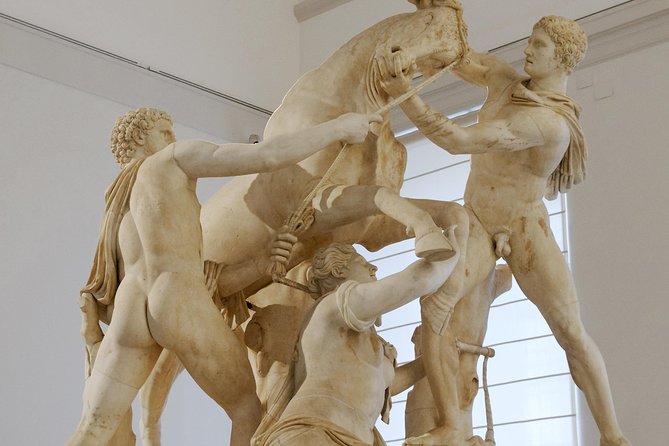
Naples has no shortage of museums, but this one is special because it is built around objects you can actually connect to real places. The Naples Archaeological Museum collects major material from the region, and a lot of it comes from the same world you’ll hear about on day trips: Pompeii and Herculaneum. When a guide points out why an item was made a certain way, you stop seeing it as a random display and start seeing it as daily life, social status, and belief.
I like that the tour does not try to cover everything equally. Instead, it gives you a tight run through the highlights that make the rest of the museum easier to understand after your tour ends. That is how you get more value out of your time in a crowded city.
One more thing: the tour includes admission tickets, which sounds obvious, but it matters. It removes a common headache, and it lets the guide keep things moving without you losing momentum.
You can also read our reviews of more museum experiences in Naples


The 2-hour plan, and what it means for your time
This is an approx 2-hour, one-stop tour at the Museo Archeologico Nazionale di Napoli, the National Archaeological Museum of Naples. There aren’t multiple sites stitched together, so you do not spend your time on transit or regrouping. Instead, you get a focused visit that works well as either the day before Pompeii or the day after it.
Here’s why that timing structure is a big deal. If you visit Pompeii first, you already know the broad layout and the big visuals, but the museum clarifies the artifacts that were removed for preservation. If you visit the museum first, the tour gives you a mental map for what to look for during Pompeii, so you spot details faster instead of reading labels for an hour.
You also get multiple tour departures through the day, which helps you fit it into your itinerary. And with a maximum group size of 8, it stays manageable compared to the long, slow shuffle you often get in large groups.
What you’ll see inside the Museo Archeologico Nazionale di Napoli
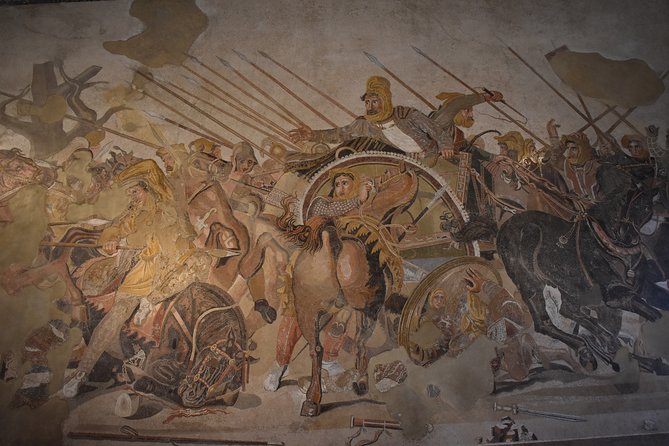
The museum collection here is anchored in the archaeological areas around Naples and beyond. Most of the items you’ll notice are linked to the excavations at Pompeii, Herculaneum, and Stabiae. That matters because those sites are not just famous, they are central to how people understand Roman domestic life.
But the tour does not stop at the headline names. It also points you toward pieces connected to places such as Bacoli, Cumae, Baia, and the Flegreian fields area. That regional mix is helpful if you want your Roman story to feel like it belongs to the broader Bay of Naples, not only to one disaster site.
The Egyptian section reopened, and why it’s worth your attention
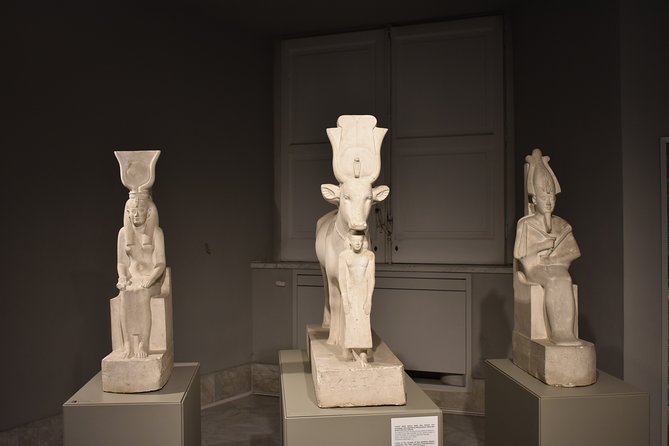
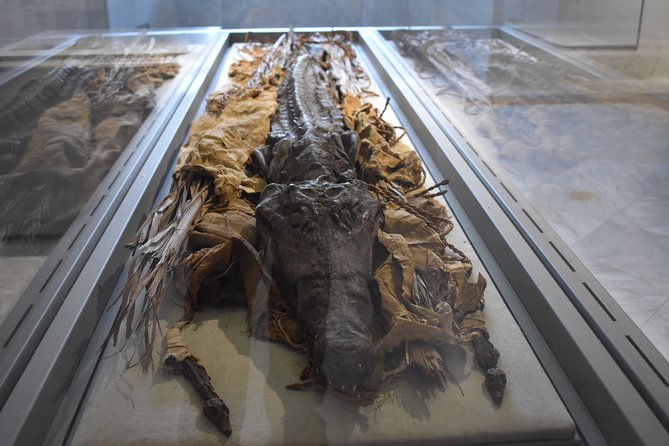
One of the standout elements is the Egyptian section, which has been lately re-opened to visitors. That’s a big advantage because Egyptian collections are often treated as a side room in day tours, if they are included at all. Here, it is framed as a must-see, which tells you the guide intends to spend actual time on it rather than rushing through it.
What you can expect from this part is a shift in tone. You go from the very recognizable Roman world to something else entirely: different religious symbols, different art styles, and different ways of handling the idea of the afterlife. Even if you only catch the main points, you’ll leave with a broader view of how Mediterranean cultures interacted and how collectors and museums chose to organize these stories.
If Egyptian art is part of what you love most, this tour is especially strong because it gives you permission to prioritize that room, not just treat it as a quick detour.
Greek-Roman statues and the Farnese connection
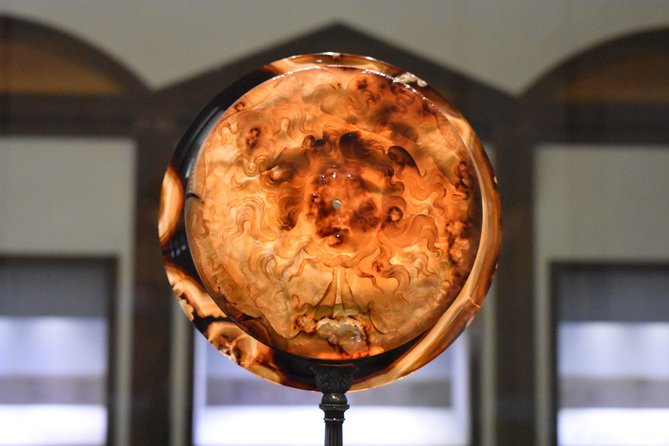
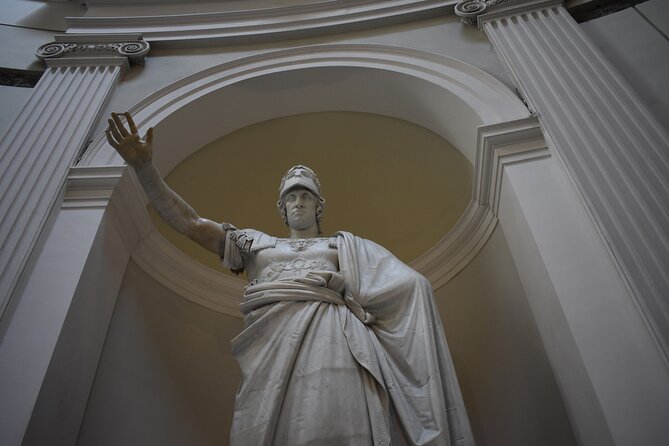
Beyond everyday artifacts, the museum is also known for its Greek-Roman statuary collection, including pieces tied to a donation by the Farnese family. The Farnese name comes up often in Italy when people talk about Renaissance and early collecting, and here it connects the ancient sculptures to a much later chapter of art history.
During the guided portion, you’ll get help seeing these statues as more than pretty stone figures. A good guide will explain how the sculptures were constructed and what their use or meaning likely was in their original setting. The difference is simple: without guidance, a statue can feel like a decorative stop. With guidance, it becomes evidence of status, taste, and beliefs.
This is also one reason the tour works even if you are not a hardcore art person. Statues are visually powerful. The guide makes them readable.





Pompeii and Herculaneum artifacts, translated into real context
Pompeii and Herculaneum are already vivid places in your imagination, but the museum collection is where you slow down. You can look at fragments and objects that were removed for preservation and understand why they mattered to the people who owned them.
A big plus of this tour is how it frames the artifacts as part of daily life, not as isolated masterpieces. You are guided to specific objects and shown how construction and function fit into Roman society. That is the kind of explanation that turns the museum into a bridge between archaeology and human behavior.
It’s also why I think this tour pairs so well with Pompeii. If you are heading there next, the museum makes you feel prepared because you already know what the museum is preserving and why certain pieces ended up here. If you already saw Pompeii, the museum helps you re-see it through the objects that survived only because someone moved them out of the danger zone.
Your guide can change everything, and the tour has strong track record
This tour is run by Raphael Tours & Events, and it’s led by a professional guide. The results you want are consistent: clear explanations, organized pacing, and the flexibility to adjust to your pace.
There are a few guide names worth calling out because they show up with detailed praise. Anna is described as an expert in the museum’s works of art, with a structured approach that fits well if your schedule includes Pompeii the next day. Fiorenza is praised for strong organization, great English, and staying extra time to make sure the highlights match your interests and pace. Maria is also credited with teaching you a lot about ancient Roman society through the artifacts.
Now, I cannot promise which guide you’ll get. But I can tell you that the tour’s format is built for interpretation, not just marching. When the guide is truly comfortable with the collection, the museum stops feeling like a maze and starts feeling like a set of connected stories.
Small group up to 8, plus headsets, for a smoother museum visit
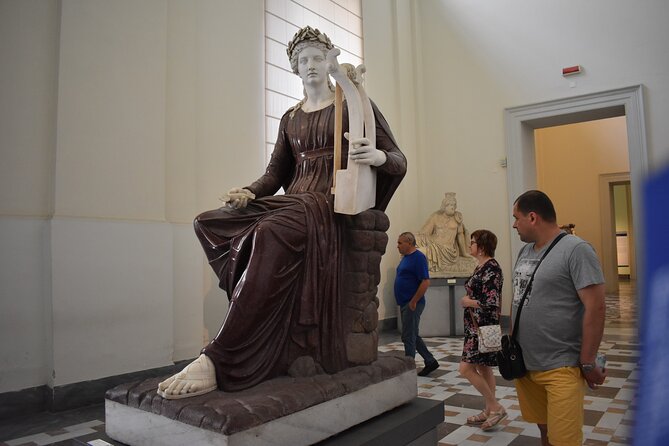
Museums punish slow communication. If you cannot hear your guide, you lose the thread and you wander. That’s why I like that this experience uses headsets, which improves clarity inside the galleries.
The small group size also helps with a different problem: bottlenecks. With a maximum of 8 travelers, you are less likely to get stuck in long clusters in front of popular objects. You can also ask questions without feeling like you are taking the guide off script. The tour is designed with that kind of back-and-forth in mind.
The pace is described as flexible, which is the right word for a museum visit. Even with a guide, you want to be able to pause if something grabs you, or speed up if you already understand the basics.
Price and value at about $223.75 per person
At $223.75 per person for approx 2 hours, this is not a budget-only activity. But it has two built-in value levers: you get a professional guide and admission tickets included. That combination matters because museum entry alone is one variable, and guided interpretation is another.
I think this price makes sense if you:
- care about context for Pompeii and Herculaneum beyond quick headlines
- want a tighter visit instead of trying to self-navigate the museum’s scale
- prefer a small group rather than a crowded, fast-moving tour
If you are the type who loves reading every label and wandering on your own, you might feel the 2-hour window is too short. If that is you, consider pairing a short guided visit with self-guided time afterward in the parts you loved most.
Best times to book and how to plan around it
This tour is offered multiple times throughout the day, which makes it easier to choose a time that fits your energy level. It’s also commonly booked about 17 days in advance on average, so if you have a fixed schedule, I would not wait until the last minute.
I also like the idea of using it as a setup day. Museum first, Pompeii next tends to work well because you enter Pompeii with better expectations. Pompeii first, museum next works too, because the museum explains what you cannot get back once objects are removed for preservation.
If you only have one museum day and you want it to lead to better understanding later, this is a good candidate.
Who should book this Naples Archaeological Museum tour
This is a strong fit for cultural travelers who want structure and explanation, not just sightseeing. It’s also a good match if you like art history, since the tour touches Greek-Roman statuary and also Egyptian material.
If you are traveling with kids, note that children must be accompanied by an adult. Most people can participate with no health restrictions noted for this experience.
If you are short on time in Naples but still want something meaningful, a 2-hour guided focus is easier to protect than a half-day museum marathon.
Should you book this tour of the Archaeological Museum of Naples?
Book it if you want your Pompeii and Herculaneum experience to feel connected. The guide-led focus, the small group size (max 8), and the inclusion of admission tickets turn the museum into a learning session without making it feel like school. I especially recommend it if you want the Egyptian section, because the tour explicitly treats it as a must-see.
Skip it only if your style is purely self-directed. If you enjoy wandering for hours, reading slowly, and controlling every minute yourself, you might prefer an audio guide or a self-guided plan. For most people, though, the guided structure is the difference between seeing artifacts and understanding why they matter.
FAQ
How long is the Archaeological Museum of Naples guided tour?
The tour lasts about 2 hours.
What does the tour cost?
The price is $223.75 per person.
Is admission included?
Yes. Admission tickets are included in the tour.
How large is the group?
The experience has a maximum of 8 travelers.
What language is the tour offered in?
The tour is offered in English.
Where does the tour take place?
The tour stop is at Museo Archeologico Nazionale di Napoli, the National Archaeological Museum of Naples.
What if I am traveling with children?
Children must be accompanied by an adult.
Is it near public transportation?
Yes, it is near public transportation.
What is the cancellation policy?
Free cancellation is available. You can cancel up to 24 hours in advance for a full refund.
More Museum Experiences in Naples



More Tours in Naples

More Tour Reviews in Naples
Not for you? Here's more nearby things to do in Naples we have reviewed







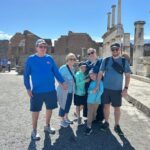



Tour Reviews, compared.
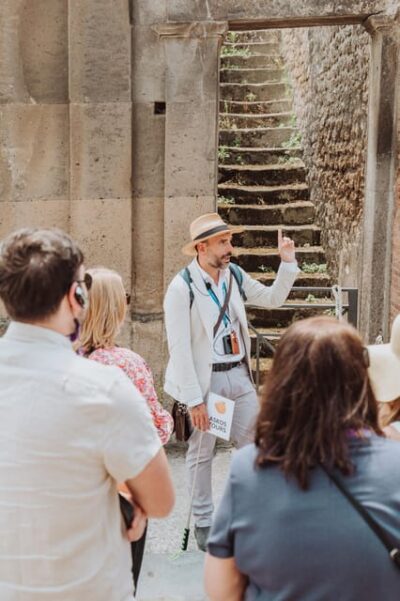 ★ 4.8Pompeii: Entry Ticket and Guided Tour with an ArchaeologistFrom $3519,459 reviews
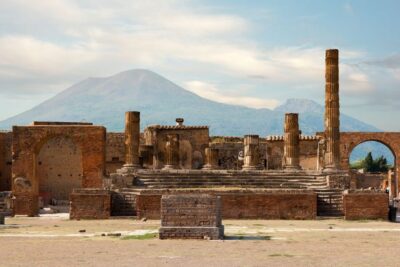 ★ 4.2Pompeii: Entry Ticket with Optional Audio GuideFrom $2612,360 reviews
 ★ 4.8Pompeii: Small Group Tour with an ArchaeologistFrom $4012,264 reviews
 ★ 4.3Pompeii Ruins & Mount Vesuvius Day TourFrom $12011,459 reviews
 ★ 4.6Sorrento, Positano and Amalfi Full-Day TourFrom $10710,988 reviews
 ★ 5.0Sorrento, Positano & Amalfi Coast – Small Group TourFrom $768,643 reviews
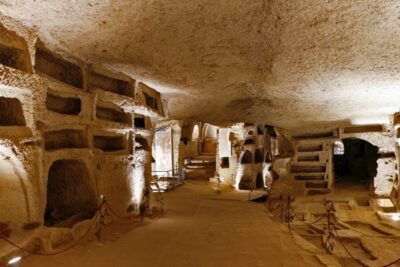 ★ 4.6Catacombs of San Gennaro Entry Ticket & Guided TourFrom $157,941 reviews
★ 5.0Pompeii Small Group Tour with an ArchaeologistFrom $356,593 reviews
★ 4.6Catacombs of San Gennaro Entry Ticket & Guided TourFrom $157,941 reviews
★ 5.0Pompeii Small Group Tour with an ArchaeologistFrom $356,593 reviews
Browse the lists this tour appears in