
Tour review · TOUR REVIEWS
Visit to the Lapis Water Museum in Spanish
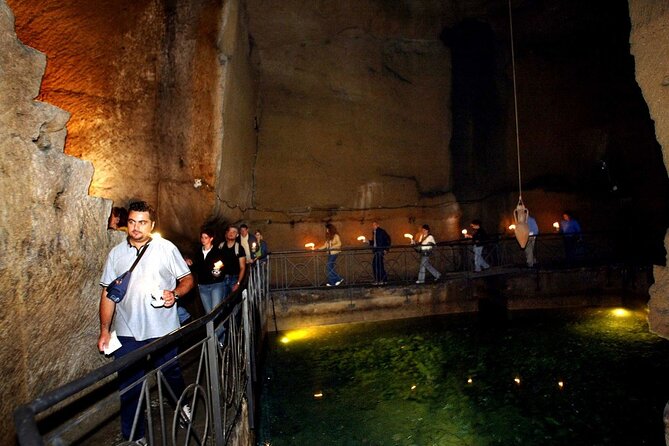
If you think Naples is only above ground, you have not seen this yet. The Lapis Museum (Museo dell’Acqua) turns ancient water infrastructure into a guided walk through layers of the city. Greco-Roman aqueducts and cisterns meet a striking stop at the prince’s pool and a World War II shelter, all in about 1 hour 15 minutes.
I love that the tour gives you real context, not just sightseeing. Two standout parts for me are the move from the basilica down into the underground at 35 meters, and the chance to understand how Naples’ water system worked long before modern plumbing. The storytelling is strong, and the experience includes films that help you picture what life was like below the city.
One possible drawback: this is a Spanish-only guided tour. If your Spanish is limited, you may enjoy the visuals, but the full impact depends on following the guide’s explanations, and one experience note specifically calls out language expectations.
Key highlights at Lapis Museum, Naples
- 35-meter descent from Santa Maria de la Pitra Sagrada into the ancient Neapolis water world
- Greek and Roman aqueduct views tied directly to how Naples collected and stored water
- The prince’s pool, described as the largest cistern area in Naples underground
- A World War II refuge section that adds a hard, human layer to the archaeology
- Films and guided explanations that help you understand the underground spaces, not just look at them
- Small-group feel, with a maximum of 20 travelers
Why this underground water museum matters in Naples
Neapolitan history is not flat. It stacks. Every time you think you are done looking, the city reminds you there is another layer underneath.
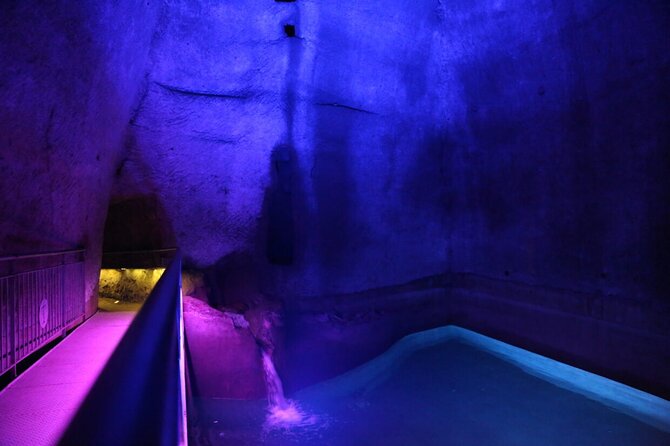
Lapis is built around a simple idea: ancient water structures are still part of what Naples is. The WATER MUSEUM project, launched in 2021, worked to bring Greco-Roman cisterns back to life, recreating streams and cisterns as they were in ancient times. That matters because water in Naples was never a side story. It shaped where people lived, how cities functioned, and how communities endured hard moments.
You also get a second thread running through the visit. You do not only see water. You see how Naples’ story changed over time, from early settlement references linked to the name Partenope, to later architecture tied to Greco-Roman origins, to wartime survival underground.
You can also read our reviews of more museum experiences in Naples



Piazza Dante to the museum entrance at Piazzetta Pietrasanta
The tour begins at Piazza Dante (meeting point), then you head as a group to the Lapis Museum location in Piazzetta Pietrasanta 17. Your guided portion is in Spanish, and the full tour is listed at about 1 hour 15 minutes, with the admission ticket included.
This format is practical for a day in Naples. You are not committing to half a day, and you are not trying to coordinate a self-guided descent plus church plus underground route all on your own. It is also a small group activity, capped at 20 people, which usually makes it easier to hear the guide without shouting over everyone.
You can also plan around the location. The meeting point is central, and the experience is described as near public transportation. That helps if you are pairing it with other historic sights in the Centro Storico area.
Basilica of Santa Maria de la Pitra Sagrada, the surface layer you shouldn’t skip
The first stop is the basilica complex connected to Santa Maria de la Pitra Sagrada, located above the underground spaces. Even before you descend, this matters because it frames the visit as a layered city, not a random underground attraction.
You will also hear about Greco-Roman origins tied to the area. One detail I found especially meaningful is the reference to early settlers naming Partenope where this basilica stands today. It is a small piece of information, but it helps you connect the above-ground religious site with the ancient geography below.
If you are short on time, do not rush this part. People sometimes treat churches as photo stops, but here it works as your orientation point. It tells you what you are standing on and why it makes sense to go down 35 meters to see the water system and cisterns.
Descending 35 meters: aqueducts, cisterns, and ancient Naples water
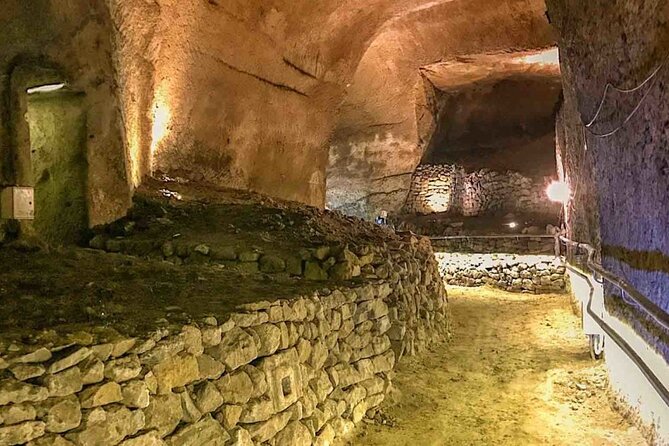
Here is the moment the tour becomes real. After visiting the basilica, you go down 35 meters to the deepest part of the city connected to the ancient Neapolis water network.
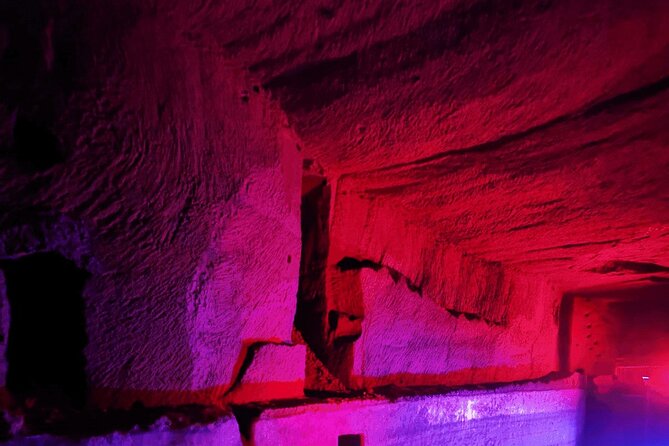
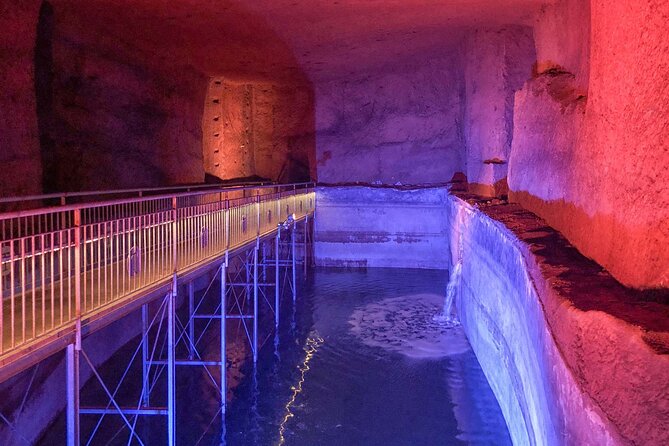
This is where you can admire the Greek and Roman aqueduct structures and the underground cistern systems. The museum project aims to recreate streams and cisterns as they were in ancient times, which helps you understand these spaces as functional infrastructure rather than just ruins.
One of the most talked-about spaces is the prince’s pool. It is described as the largest of Naples underground and a key cistern area. Standing in a place with that scale changes how you interpret the entire city above it. You start to see why Naples could grow and endure through different eras.
Practical tip: underground spaces tend to require a bit of attention on steps and surfaces. Take your time on the descent and listen for what the guide wants you to focus on. You will get more out of it if you treat this as a guided route, not a casual wander.
The World War II shelter stop, where the stones turn personal
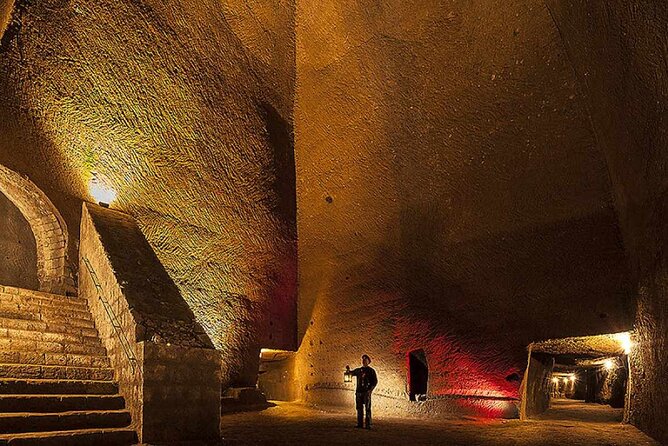
The Lapis experience does not stop at ancient engineering. You also visit an area that was used as a shelter during the Second World War.
That contrast is powerful. One moment you are learning about aqueducts and cisterns that served the city in Greco-Roman times. The next moment, the underground space is framed as a refuge. It is not the kind of history that stays in the past. It lands in your body, because you can imagine what it means to hide in underground rooms during bombardment.
You may also benefit from the museum’s films. The experience includes films that help you understand the spirit of those who lived in these underground cellars during difficult moments. I like that these media elements do not replace the guide. They support the story so it feels less abstract.




Pietrasanta complex and Partenope connections, tying architecture to water
One of the tour’s strengths is that it does not treat the architecture and the underground water systems as separate worlds. You are guided through the Pietrasanta architectural complex of basilica and chapels with Greco-Roman origin.
The tour’s framing is that each layer of Naples corresponds to a historical era. That approach helps you build a mental map. You start to understand how religion, settlement patterns, and water infrastructure relate to the same geography.
When you hear about Partenope and how the name connects to the area above the underground, the visit becomes more than a descent. It becomes a lesson in how Naples keeps its identity even as times change.
Group size, timing, and how to get more from 75 minutes
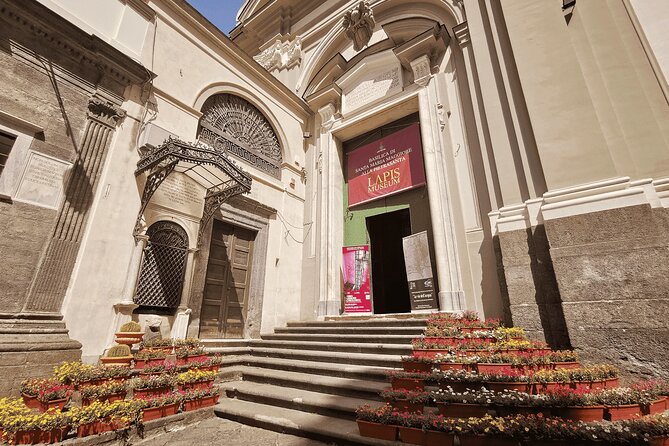
This tour is about 1 hour 15 minutes and limited to up to 20 travelers. That is a good length for a guided underground site because you get enough time to see key areas without turning the visit into a long endurance test.
To make the most of it, I suggest you show up ready to listen. With Spanish-only narration, your best strategy is to follow the guide’s cues. Even if you miss a few words, the route itself is clear: basilica first, then descent, then aqueduct and cistern spaces, then the wartime shelter area, and the tour ends directly at the museum.
If you tend to get distracted easily underground, slow down. This is one of those experiences where small details are worth catching. The sheer scale of the cistern spaces and the idea of reconstructed ancient water streams reward attention.
Also, you might want to plan your day around the fact that your visit ends at the museum, not back at the original meeting point. It is efficient, but it changes where you’ll continue your day afterward.
Price and value of a Spanish guided underground site
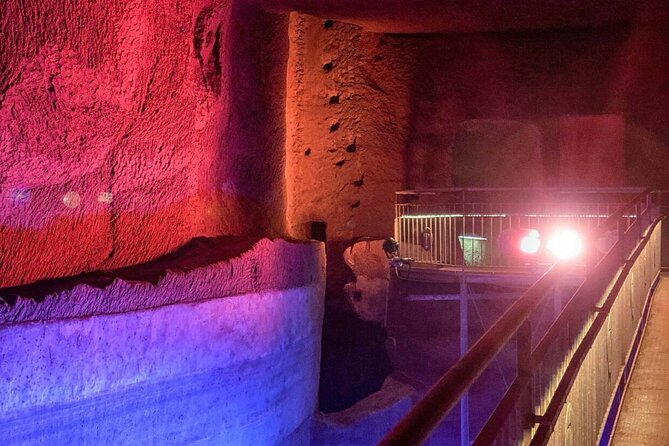
The price is $46.34 per person, with the admission ticket included. On average, this tour is booked about 35 days in advance, so it is not a last-minute add-on if you want the specific timing.
Is it worth it? For me, the value comes from three things you usually cannot get with a quick self-guided visit:
- A guided explanation in Spanish that connects structures to story, especially around how the cisterns functioned and how the museum project recreates ancient streams.
- Access to the route in a way that makes sense, from basilica context down into the deepest spaces.
- Time efficiency. At 1 hour 15 minutes, you cover a lot of underground context without turning it into a half-day project.
At the same time, the value depends on language comfort. If Spanish is a barrier, you might still enjoy the architecture and the underground setting, but you will get less from the interpretation and films.
Who should book (and who should think twice)
This is a great choice if you like sites where you can understand how people actually lived and planned their city. You’ll enjoy it if you are curious about ancient water systems, impressed by engineering scale, or moved by history that connects architecture to real human hardship.
You might also find it appealing if you want Naples in layers. The tour is built around the idea that the city’s history is literally stacked under your feet, from Greco-Roman origins to later eras and wartime use.
Consider thinking twice if:
- You want an experience in English. This tour is guided only in Spanish.
- You expect a kid-focused visit. There is an experience note where expectations for young children did not match the outcome. Even if the site can be interesting, the guide’s narration level matters.
On the positive side, one experience note states it is suitable for everyone, including people with disabilities. That suggests the experience has thought behind it, though you should still plan to move carefully in underground areas.
Should you book the Lapis Water Museum tour?
Book it if you want something more than another church photo. This tour connects ancient water engineering to Naples identity, then adds the wartime shelter layer so the underground feels human, not just historical. The small group size and the 1 hour 15 minute pace are ideal if you like focused guided experiences.
Hold off if Spanish is a dealbreaker for you, because the interpretation is the main engine of the tour. If you do speak Spanish or are comfortable catching the gist, this is one of the most memorable ways to understand why Naples feels endlessly old and always changing.
FAQ
Where do we meet for the Lapis Museum tour?
You meet at Piazza Dante. The guided tour starts there at the time of your choice, and then you go together to the museum.
How long is the guided visit?
The tour runs about 1 hour 15 minutes (approx.).
Is the admission ticket included?
Yes. Admission Ticket Included is listed as part of the experience.
Is the tour in Spanish?
Yes. The guided tour is offered in Spanish.
What is the group size limit?
The tour has a maximum of 20 travelers.
Can I cancel for a full refund?
Yes, it is listed as free cancellation. You can cancel up to 24 hours in advance for a full refund.
More Museum Experiences in Naples



More Tour Reviews in Naples
Not for you? Here's more nearby things to do in Naples we have reviewed








Tour Reviews, compared.
 ★ 4.8Pompeii: Entry Ticket and Guided Tour with an ArchaeologistFrom $3519,459 reviews
 ★ 4.2Pompeii: Entry Ticket with Optional Audio GuideFrom $2612,360 reviews
 ★ 4.8Pompeii: Small Group Tour with an ArchaeologistFrom $4012,264 reviews
 ★ 4.3Pompeii Ruins & Mount Vesuvius Day TourFrom $12011,459 reviews
 ★ 4.6Sorrento, Positano and Amalfi Full-Day TourFrom $10710,988 reviews
 ★ 5.0Sorrento, Positano & Amalfi Coast – Small Group TourFrom $768,643 reviews
 ★ 4.6Catacombs of San Gennaro Entry Ticket & Guided TourFrom $157,941 reviews
★ 5.0Pompeii Small Group Tour with an ArchaeologistFrom $356,593 reviews
★ 4.6Catacombs of San Gennaro Entry Ticket & Guided TourFrom $157,941 reviews
★ 5.0Pompeii Small Group Tour with an ArchaeologistFrom $356,593 reviews
Browse the lists this tour appears in