
Tour review · TOUR REVIEWS
3-Days Audio Guide for Pompeii, Herculaneum, Vesuvius and Naples
Naples and the Vesuvius area are famous for a reason, and this audio plan keeps you moving without rushing. I love how offline it is, so you can keep listening even when data is spotty. I also love the focus on major Naples stops, especially the Sansevero Chapel and its Veiled Christ section.
The only real drawback to keep in mind is that most sites do not include admission in this deal, so you’ll still need to plan your entry tickets for Pompeii, Herculaneum, and Vesuvius on your own.
Key highlights worth planning around

- Offline audio download on your phone so you can keep going even with weak service
- Sansevero Chapel coverage in the Naples audio, with special attention to the Veiled Christ
- Simple on-the-go use inside big sites, reported as clear and easy to follow
- Maps and GPS caution for archaeological areas where phone location can be off
- Value that beats buying single guides at the site, with the provider claiming about 50% savings
- A “private for your group” setup, meaning you can take it at your own pace
A 3-day audio route that strings together Naples and the ancient sites
This is a self-guided experience built around one idea: you should be able to see Naples and the ruins of Vesuvius country without feeling chained to a group schedule. You get a mobile ticket for a 3-day window and audio content designed to carry you from baroque churches in Naples to two different kinds of Roman city ruins.
The rhythm works. Day 1 is all about Naples proper, with a strong art-and-architecture sequence. Day 2 is the big one, Pompeii. Day 3 switches your perspective, first to Herculaneum, then up to Vesuvius for the view.
You spend less energy on logistics and more on paying attention to what you’re actually standing in front of. That matters at these places, because your eyes can glaze over if you do not have a simple way to connect buildings, people, and time.
You can also read our reviews of more guided tours in Naples

How ITGUIDES works: mobile ticket, offline listening, and phone maps
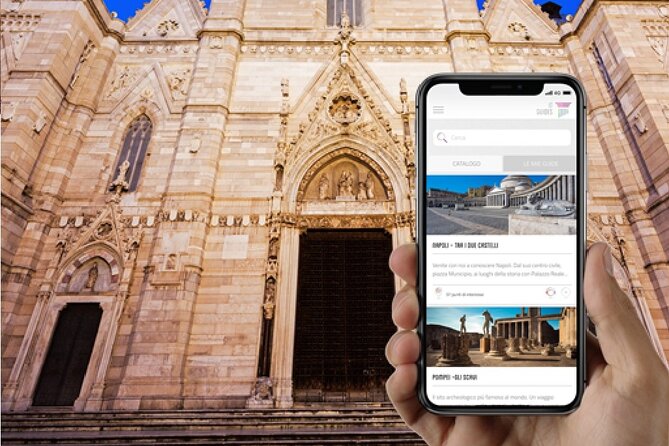
The audio comes through the ITGUIDES app per smartphone. Your ticket is mobile, and the content can be downloaded for offline use. That’s a practical win in this region because you cannot always count on consistent coverage, especially once you’re at larger archaeological zones or moving around between sites.
Here’s the useful part: the app includes maps with points of interest for where you’ll be visiting. You should still treat phone GPS accuracy as a maybe, not a guarantee, because the data can be unreliable inside archaeological sites. The tour info specifically warns that GPS may not be accurate there, and it also suggests using the maps you receive at the ticket office.
That combination is smart. You get the convenience of your phone, plus the reassurance of a physical or official map if your location dot looks suspicious.
Day 1 in Naples: baroque churches to the Veiled Christ
Day 1 concentrates on Naples’ older core, and it does it with variety. You go from dramatic baroque to Renaissance details, then into one of the most talked-about sculpture rooms in Italy, and finish in one of the loveliest cloister spaces.
Stop 1: Chiesa del Gesu Nuovo (15 minutes, ticket included)
This is the start point for a reason. Chiesa del Gesu Nuovo is described as the most famous baroque church in Naples, and even if you only give it about 15 minutes, it’s a strong way to wake up your eyes. Baroque churches can be overwhelming if you do not know what to look for, so having audio here helps you pick out the visual priorities instead of wandering randomly.
Also note this is one of the few places where the admission ticket is included in the package you booked.
Stop 2: Complesso Monumentale Sant’ Anna dei Lombardi (20 minutes, ticket not included)
This stop is framed as a Renaissance jewel in the heart of Naples. That timing works well because it gives you contrast right after baroque. Renaissance details reward slow looking, and a 20-minute audio-supported visit is often enough to catch key features without burning the day.
Admission is not included here, so plan on purchasing entry separately if you want into the specific areas the visit expects.
More Naples tours, ruins, coast days, and city experiences to compare



Stop 3: Museo Cappella Sansevero, including the Veiled Christ focus (20 minutes, ticket not included)
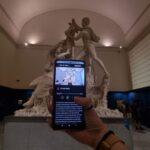
This is the anchor stop on Day 1. The Naples audio guide has a large section dedicated to the Sansevero Chapel and the Veiled Christ. That matters because the Veiled Christ is the kind of artwork where context changes the whole experience. Without a guide, you can just see something beautiful and move on. With the audio focus, you’re more likely to notice why people still talk about it centuries later.
Admission is not included at this stop, so budget for that ticket.
Stop 4: Complesso Monumentale di Santa Chiara, cloister time (1 hour, ticket not included)
You finish Day 1 with the Complesso Monumentale di Santa Chiara, highlighted as the most beautiful cloister in the world. Whether or not you agree with that superlative, the structure is right for the ending. A cloister is made for lingering, and this stop is timed at about 1 hour.
If you like taking breaks, this is your best Day 1 moment to slow down. Let the audio guide you, then give yourself space to look up, notice the courtyard rhythm, and simply absorb the architecture.
Day 2 at Pompeii: the audio that helps you navigate the big site
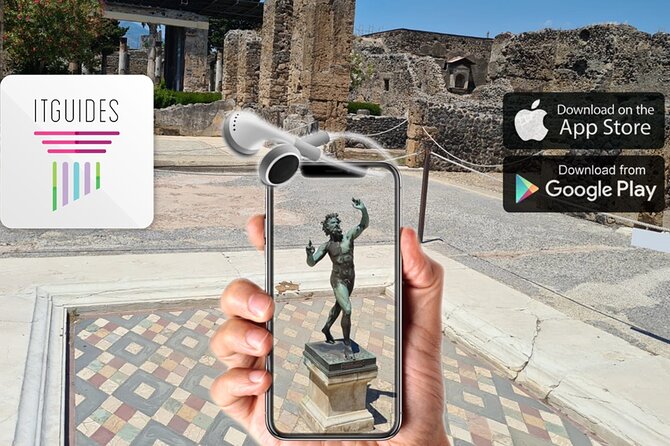
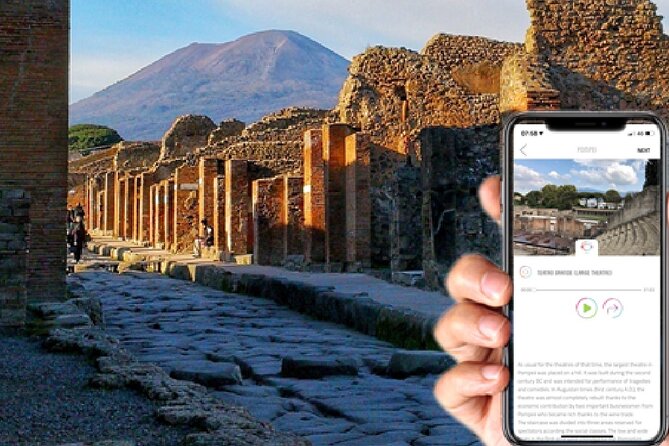
Day 2 is Pompeii Archaeological Park for about 2 hours. Pompeii is not “one thing.” It’s a whole city turned into an open-air puzzle, and the hard part is deciding what to focus on. Audio is useful here because it can give you a thread, so you understand why a street corner matters and what you’re looking at in the bigger Roman story.
This deal does not include admission for Pompeii, so you will need to handle entry separately. Once you’re inside, the app’s content is built to keep you engaged without having to wait for anyone else.
One thing I really like about audio at Pompeii is that it helps you enjoy the site even if you do not want a full guided group lecture. Some people come to Pompeii wanting independence, and the simpler language and clear delivery described in the reviews suggests this format works for exactly that type of visit. The tone matters at a place this large, and the feedback points to a voice that is easy to listen to and explanations that do not overcomplicate.
Practical tip: even with phone maps, remember GPS can be unreliable in archaeological spaces. Use the map guidance inside the app, but also keep your official map nearby so you can sanity-check your route.
Day 3 at Ercolano and Vesuvius: two different perspectives on Roman life
Day 3 has a nice two-part structure. First you visit Parco Acheologico di Ercolano for about 2 hours, then you shift to Vesuvius National Park for about 1 hour 30 minutes.
This combo works because Pompeii and Herculaneum do not feel identical. Herculaneum is often described as a more complete look at what daily life was like in a Roman city, and this audio plan leans into that. Then Vesuvius gives you the big visual payoff, the Gulf of Naples view, which is the emotional reason most people make the trip in the first place.
Ercolano (Herculaneum): life as you can almost feel it (2 hours, ticket not included)
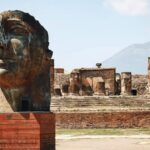
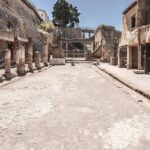
The audio guide frames Ercolano as an archaeological park that helps you see daily life in a Roman city from about 2,000 years ago. That’s a helpful goal. If you go in expecting only buildings, you might miss the idea of routine, movement, and living spaces. Audio can gently steer you to what to pay attention to so you leave with more than photos.
As with the other archaeological stops, assume phone GPS might be off. Follow the app map guidance, and if anything looks inconsistent, use the maps you receive at the ticket office.
Vesuvius National Park: the view and the feeling behind the ruins (about 1.5 hours, ticket not included)
Then you move to Vesuvius National Park for about 1 hour 30 minutes. The highlight here is the perspective: the Gulf of Naples view. This is where the ruins gain meaning. Standing in the landscape’s shadow helps you understand why people feared the volcano and why ancient disaster can still shape modern places.
Admission is not included here in the package, so plan for that ticket separately.
Who wrote the content, and why that matters on-site
The content is produced and supervised by Rosella Gallo, a professor of Art History at the Academy of Fine Arts in Rome. That kind of oversight matters because you’re not just getting random facts.
On-site audio can either be a list of dates, or it can be explanation that helps you look. Based on the way the audio is described as simple and clear, the goal seems to be guiding you through what you’re seeing, not drowning you in scholarly detail.
You’ll also get an extra advantage if you plan to explore beyond this route. The app is not limited to one tight tour. It includes audio guide content for other major sites, and one example given is the Royal Palace of Caserta, with descriptions of both the palace and the garden. Even if you do not use those extras on your first try, knowing the app has more content can make your day-to-day touring more efficient.
Price and value: why this can be a smart deal for Naples, Pompeii, and Herculaneum
The listed price is $11.45 per person for the 3-day audio package. That looks low compared with the way most people imagine paying for audio guides at major attractions.
Two value angles make this feel reasonable:
First, you’re getting multiple destinations bundled into one audio setup across three days, rather than paying separately each time you enter a new site.
Second, the provider states that you save about 50% compared to options available at the ticket office. One review also describes the practical side: single-site audio guides at the ticket office can cost around 8 to 10 euros each, and this package was purchased for under 10 euros. That kind of comparison is exactly how you should judge value for audio in Italy: do the package cost less than several standalone purchases combined?
Even if you’re a careful budget traveler, audio can be worth it when it saves you from buying multiple separate things you might otherwise forget to pack, or when it prevents you from missing the key details you came for.
Timing and pacing: how to make the itinerary feel good, not rushed
The schedule is structured like this:
- Day 1: about 4 stops across Naples, with a longer 1 hour cloister moment
- Day 2: Pompeii for about 2 hours
- Day 3: Ercolano for about 2 hours, plus Vesuvius for about 1.5 hours
That timing matters because Pompeii and Herculaneum are intense places. If you try to do everything with a guide book alone, you can end up spending more time searching than observing. Audio helps you keep motion flowing while still learning.
It also helps that this is a private activity, meaning it is just your group. You’re not forced into a meeting-time stampede. In practice, that usually means you can stop, listen, and walk on without the awkward feeling of trailing or lagging behind someone else.
Where this plan might frustrate you
This isn’t a perfect fit for every style of travel.
First, admission tickets for most stops are not included. Only Chiesa del Gesu Nuovo includes admission in the listed stops. You’ll need to buy entry tickets for places like Pompeii, Museo Cappella Sansevero, Santa Chiara, Ercolano, and Vesuvius. If you want a one-stop ticket that covers everything, this is not that package.
Second, GPS in archaeological sites may be off. If you rely purely on the little dot on your phone, you might feel annoyed. If you’re willing to use the app map plus the official maps at the ticket office, you’ll likely be fine.
Finally, this is audio, not a live human guide. If you want spontaneous Q&A, real-time correction, or a deep lecture style, you might prefer a guided tour. Audio is best when you want control, clarity, and a steady narrative while you walk.
Best places to use this audio package
You’ll enjoy this most if you match the following style:
- You like going at your own pace, especially in Pompeii and the Roman ruins
- You want explanations that are simple and easy to follow, not just a list of what year something happened
- You plan to use offline content, so you’re not stuck waiting for signal
- You like art and architecture as much as archaeology, since Day 1 includes several major Naples sites
If you’re the type who hates joining a formal group, this setup fits well. The structure also helps solo visitors because it gives you a direction and context without requiring you to “perform” in front of anyone.
Should you book this 3-day Pompeii and Naples audio package?
If your goal is to experience Naples and the ruins efficiently, without paying for multiple single audio guides, this is a strong option. The price is low for the number of destinations, and the app format makes it easy to keep learning while you walk. The Sansevero Chapel focus is a great add-on for anyone who cares about sculpture and dramatic Baroque-era art.
I would skip it only if you want admission included everywhere, or if you strongly prefer a live guide. Audio is powerful, but it is still audio.
For most people planning a first serious trip through Naples, Pompeii, Herculaneum, and Vesuvius, this kind of self-guided audio plan can be a practical way to turn “I saw it” into “I understood what I saw.”
FAQ
What locations are covered in this 3-day audio experience?
The audio covers Chiesa del Gesu Nuovo, Sant’ Anna dei Lombardi, Museo Cappella Sansevero (Veiled Christ), Complesso Monumentale di Santa Chiara on Day 1. Day 2 includes Pompeii Archaeological Park. Day 3 includes Parco Acheologico di Ercolano and Vesuvius National Park.
How long is the audio experience?
It runs for 3 days, with the listed time at each stop adding up to about that window.
Is the ticket mobile?
Yes. The experience uses a mobile ticket.
Can I use the audio guides offline?
Yes. You can download the contents on your smartphone and use them offline.
Where does the experience start?
It starts at Piazza Monteoliveto, 1, 80134 Napoli NA, Italy.
Do I get admission tickets included for every stop?
No. Chiesa del Gesu Nuovo includes an admission ticket. The other listed stops do not include admission tickets.
Is it a private tour for just my group?
Yes. Only your group participates.
What are the opening hours listed for the experience?
The posted opening hours are Monday to Sunday, 10:00 AM to 5:00 PM, across the stated date range.
Is GPS reliable at these archaeological sites?
GPS on your phone may not be accurate in archaeological sites. The guidance is to also use the maps you receive at the ticket office.
What is the cancellation policy?
Free cancellation is available. You can cancel up to 24 hours in advance for a full refund, based on local time.
Is public transportation nearby the meeting point?
Yes. The meeting point is near public transportation.
More Self-Guided Tours in Naples
More Guided Tours in Naples



More Tour Reviews in Naples




Not for you? Here's more nearby things to do in Naples we have reviewed









Tour Reviews, compared.
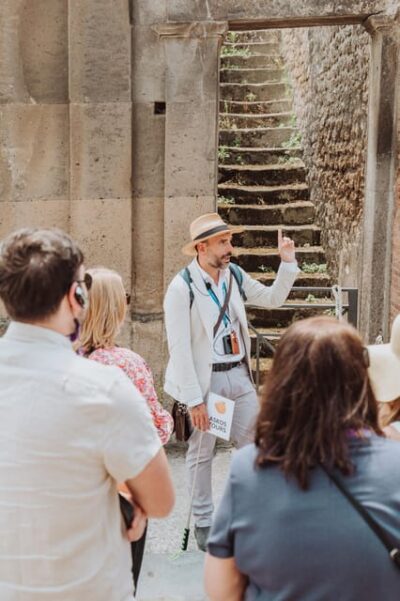 ★ 4.8Pompeii: Entry Ticket and Guided Tour with an ArchaeologistFrom $3519,459 reviews
 ★ 4.2Pompeii: Entry Ticket with Optional Audio GuideFrom $2612,360 reviews
 ★ 4.8Pompeii: Small Group Tour with an ArchaeologistFrom $4012,264 reviews
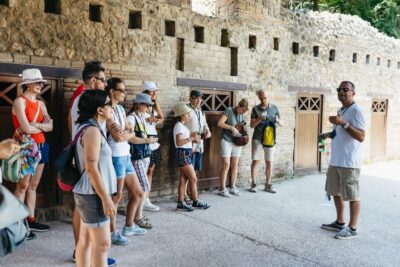 ★ 4.3Pompeii Ruins & Mount Vesuvius Day TourFrom $12011,459 reviews
 ★ 4.6Sorrento, Positano and Amalfi Full-Day TourFrom $10710,988 reviews
 ★ 5.0Sorrento, Positano & Amalfi Coast – Small Group TourFrom $768,643 reviews
 ★ 4.6Catacombs of San Gennaro Entry Ticket & Guided TourFrom $157,941 reviews
★ 5.0Pompeii Small Group Tour with an ArchaeologistFrom $356,593 reviews
★ 4.6Catacombs of San Gennaro Entry Ticket & Guided TourFrom $157,941 reviews
★ 5.0Pompeii Small Group Tour with an ArchaeologistFrom $356,593 reviews
Browse the lists this tour appears in