
Tour review · TOUR REVIEWS
From Naples: Day Trip to Pompeii with skip the line
Roman ruins can feel like a time machine. This Pompeii day trip gets you there smoothly from Naples, then hands you the site with skip-the-line priority entrance so you start walking sooner. You also get roundtrip shuttle transport that keeps logistics simple, especially if you do not want to fuss with buses or tickets.
I like the freedom built into the plan. You spend your Pompeii time wandering the streets and stopping where you want, instead of being locked into a rushed script. The payoff is seeing the everyday details of Roman life, from public baths to villas and temples, without waiting around for a long ticket line.
One thing to keep in mind: there is no guide included. That can be great if you like self-guided exploring, but you may want to bring your own context (or add an audio guide on site) so the ruins feel less like a checklist.
Key points to know before you go
- Priority entrance helps you start exploring faster at Pompeii’s main area
- Naples pickup at Piazza del Gesù Nuovo makes departure easy in the historic center
- Free time on site means you control your pace, from street walks to photo stops
- You can focus on public baths, temples, shops, and theaters without a fixed route
- Highlights include mosaics from luxury villas, the House of the Faun, and more
Naples to Pompeii by shuttle from Piazza del Gesù Nuovo
The best part of this tour is how little it asks of you. You meet in Naples at Piazza del Gesù Nuovo in the historic center, then ride in a shuttle bus to Pompeii with roundtrip transportation included. That alone saves the brainpower of figuring out schedules, transfers, and what stop is closest to the ruins.
Pompeii is not just “a place you visit,” it is a place you walk. Streets are cobblestone and old, built over 2,000 years ago, which makes the route feel like you are moving through the city itself. Because the shuttle handles the travel leg, you arrive with less stress and more energy for actual exploring.
One practical note: the departure time is approximate at booking, and the exact time is confirmed the day before by the local operator. I recommend double-checking your confirmation the evening before, then showing up a bit early at the selected meeting point. That habit keeps your day from starting with uncertainty.
More Naples tours, ruins, coast days, and city experiences to compare



Priority entrance: saving real time at the ruins
Skip-the-line matters more at Pompeii than it does at some sites. The ruins are popular, and ticket queues can eat up part of a short day. With this trip, you get priority entrance and get dropped at the main entrance, so you can get into the archaeological area quickly.
Here is what that means for your experience: you do not have to spend your limited time staring at a gate. You get to put that time toward the things that make Pompeii special, like preserved street layouts, shop spaces, and the way public buildings still read as public. It also means your first steps into the ruins are not just efficient, they are more fun, because you begin exploring while you still have the freshness of arrival.
Also, because this is self-paced once you are in, the time you save up front gives you more freedom later. If you want longer at mosaics, baths, or a specific house, you can adjust without feeling like you are losing ground.
A self-paced Pompeii walk: streets, shops, and public buildings
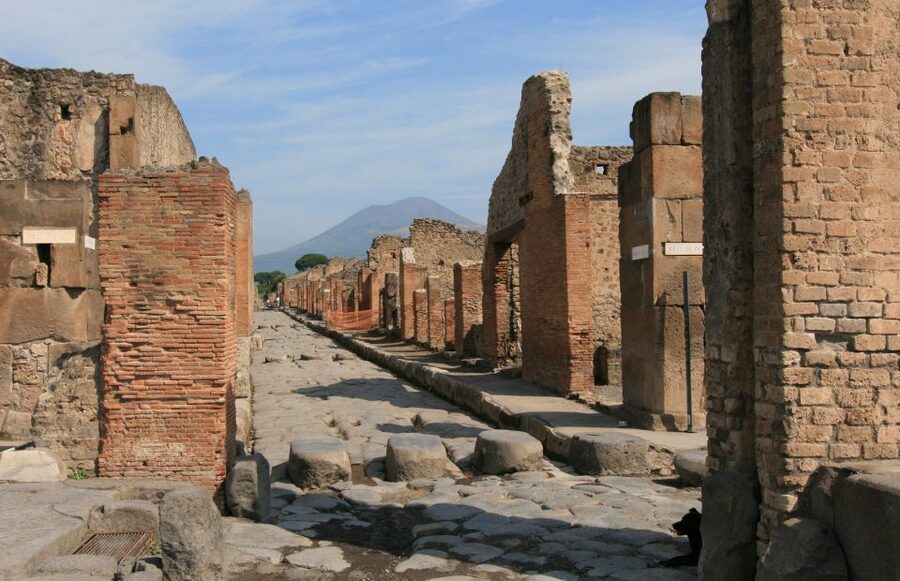
Your Pompeii time is hands-on walking, not sitting and listening. After you enter, you get free time to explore the ruins at your own pace. That is a smart fit for many people because Pompeii rewards curiosity. You can pause to look closely at shop fronts, then follow streets toward larger civic spaces.
On the public life side, you are set up to see major reminders of how Romans gathered and worked. You can look for remains of shops, temples, and theaters, plus the wider street grid that helps you understand how the city functioned. It is one thing to hear that Pompeii was a city. It is another to walk along the cobblestones and recognize how a street could lead to entertainment, religion, commerce, and daily life.
Because the experience is self-paced and you are not required to stay with a group, you can also spend extra time on the details. Pompeii is visual. Even without a guide, you can connect the dots as you move from commercial spaces toward larger public buildings.
Possible drawback: without a guide included, you might miss some of the “why” behind what you see. The ruins show plenty of information, but you need either your own research or some on-site interpretation to connect it into a clear story.
What the eruption explains as you walk cobblestones
Pompeii’s layout is powerful because it stopped mid-life. You are looking at a city that was covered in lava and ash after the eruption of Mount Vesuvius in 79 AD. That context turns the ruins into more than architecture. They become evidence of everyday patterns that were interrupted in an instant.
As you stroll along those 2,000-plus-year-old streets, the city stops being an abstract concept. You can imagine the movement of people, the flow between shops and temples, and the rhythm of public spaces like theaters. Even if you are not an archaeology expert, the physical layout helps you build a mental map quickly.
This is where self-guided time can shine. When you are not rushing to follow a commentary, you can pause longer at places that trigger questions. Why is that space shaped that way? What might people have done there? Pompeii is good at prompting those thoughts because so much of the city plan remains readable.
Luxury mosaics and villas: seeing wealth without a lecture
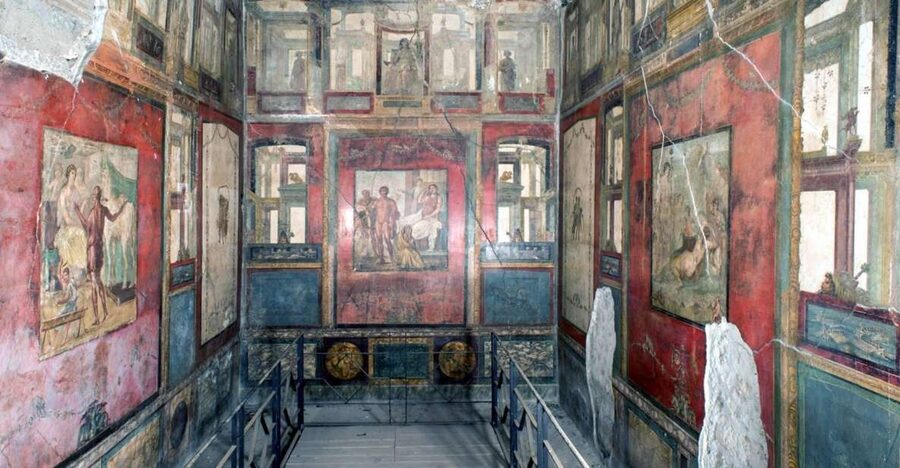
One of the most memorable parts of Pompeii is how it shows different lifestyles side by side. This tour highlights the mosaic tiles of the luxury villas of rich merchants in a prosperous city. That contrast helps you grasp that Pompeii was not only public monuments and crowds. It had private wealth, taste, and display.
When you look at luxury villa mosaics, you are not just viewing decoration. You are seeing how people wanted to represent themselves. Tiles like these also help you understand that Roman daily life was visual and crafted, not only functional. Even a self-guided walk can turn into an art moment when you pause at the right spot and let your eyes do the work.
The tour also sets you up to explore villas, plus the presence of temples. That mix of private residences and sacred spaces gives you a sense of the city’s priorities. It is a useful way to build a whole-city impression in a short day.
Tip for getting more out of it: spend a bit of time letting the mosaics and house details sink in before you move on. If you rush, you will get the broad strokes, but you will lose the emotional punch of seeing how carefully the rich lived.
More Naples tours, ruins, coast days, and city experiences to compare


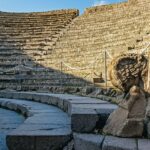

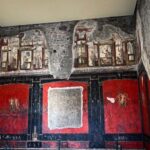

The House of the Faun, baths, and temples in focus
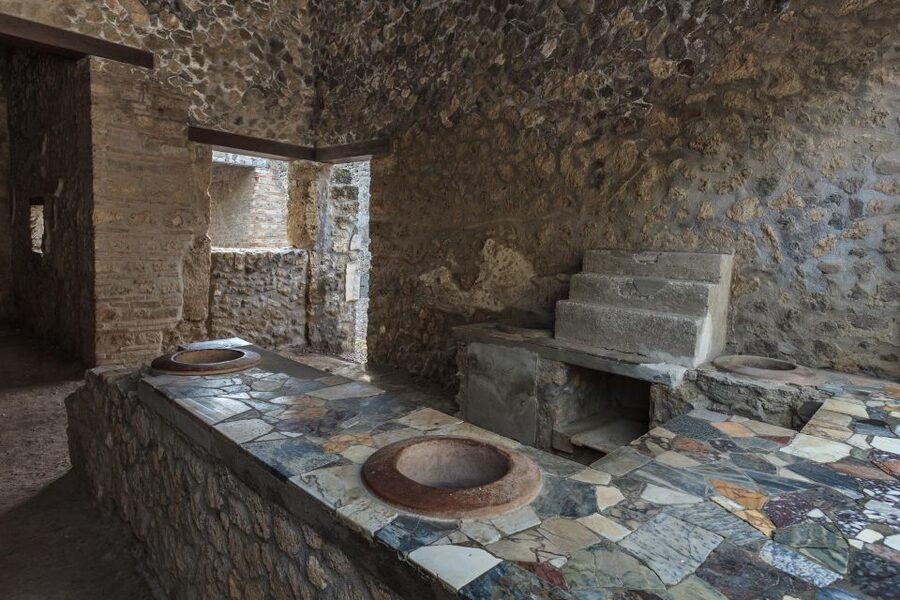
Some Pompeii highlights hit you harder because they feel specific. Here, you get the chance to seek out the House of the Faun, plus remains of public baths and other everyday structures. Those elements are valuable because they show daily life, not just grand spaces.
Bathrooms and baths, in particular, are a powerful window into Roman culture. When you see remains of public baths, you can think about how social and routine life overlapped. Baths were not only about cleanliness. They were also places to meet, talk, and spend time.
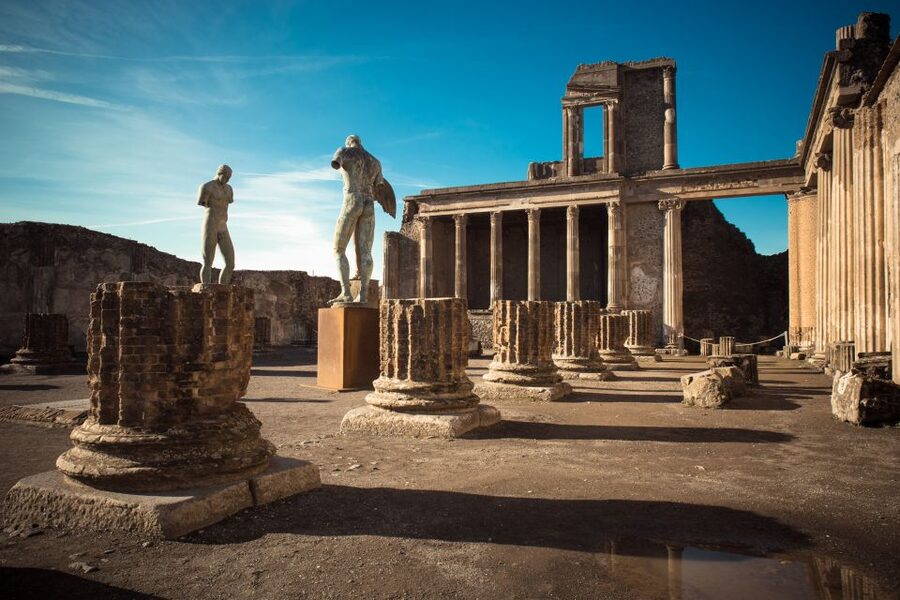
Then there are the larger civic and religious landmarks, including temples. Temples help you understand the city’s spiritual framework and how public belief was built into the urban fabric. Combined with the street network, you start seeing Pompeii as a place with systems, not just ruins scattered in a field.
And yes, there is entertainment. The tour highlights a theater among the remains you can see. So you can connect the dots between the places people worked, worshipped, shopped, and spent leisure hours.
The big takeaway: the route gives you access to many “life categories.” That is why a self-paced approach can work so well. You can choose which category you want to linger on, then move when you want a change of scenery.
A brothel and public life: Pompeii’s blunt honesty
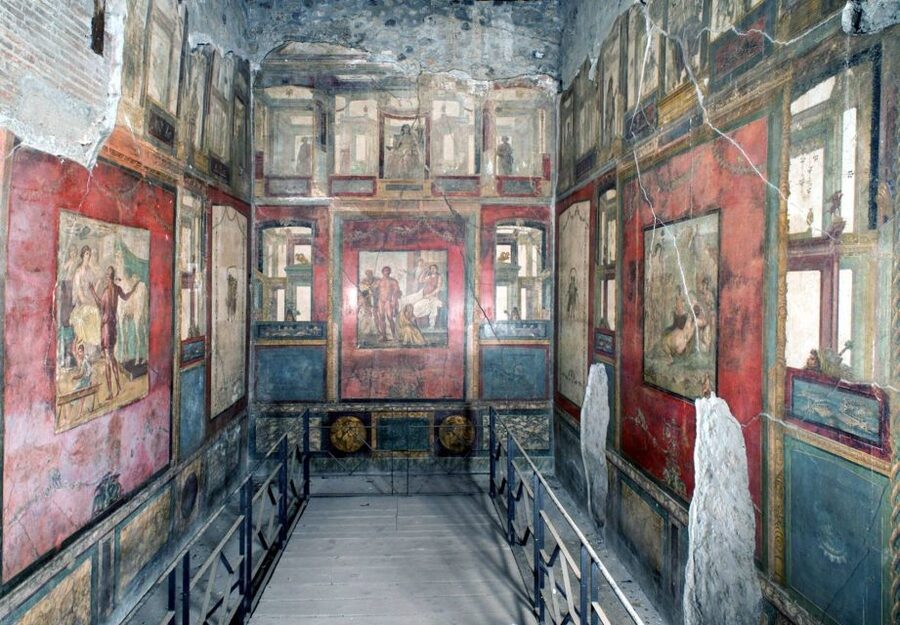
Pompeii does not sanitize. You can see remains of a brothel, and it is part of what makes the city feel real. Even if you prefer not to focus on that side of the ruins, knowing it is there changes your perspective. Pompeii includes the full spectrum of Roman life, including activities people preferred to keep quiet elsewhere.
Paired with public baths and entertainment spaces, the presence of a brothel helps you understand that daily life had both formal and informal edges. Romans lived in a city with routines, but those routines included social habits and venues that were not always about politics or religion.
If you want to handle this kind of content thoughtfully, a simple strategy works: decide in advance how long you want to spend on the more graphic or sensitive areas. Then stick to that plan. Pompeii rewards pacing, and you get to choose yours.
This is also a reason why the “no guide included” format can be great for some people. You can avoid feeling pressured to engage with anything. You can choose what to look at, what to skip, and what to revisit later.
The value of $71 for a 4-hour Roman reality check
At $71 per person for a roughly 4-hour experience, you are paying for two things: transportation and time saved. The included roundtrip shuttle bus removes the hassle of independent travel, and priority entrance is a real perk when queues are long.
Is it cheap? Not exactly. But it is not overpriced either when you consider what you receive within a short window. You are not paying extra for a guided narrative that you might not even want. Instead, you get the key advantages that help you enjoy your day: easy Naples pickup, direct transfer to the ruins, priority entry, and then time to explore on your own.
What you should watch for is your own preferred style. If you want a guide to explain why certain rooms were used the way they were, this may feel thin. The tour does not include a guide or an audio guide, so you may need to add context yourself.
If, however, you like exploring at your pace and you are comfortable reading a site with help from a phone map, guidebook, or notes, this is a strong value. You get the site access plus the logistics, and Pompeii does the storytelling through what remains.
Pickup and return: how to avoid small day-starters
Most days go smoothly, and the setup is simple: the driver picks you up at your designated city bus stop, and you get dropped off at the main entrance in Pompeii. Still, I have seen enough travel stories to know that meeting and return points can be easy to mess up when everyone is rushing.
One review mentioned being deliberately dropped at a wrong stop on the return. That does not mean it will happen to you, but it is a reminder to stay alert.
Here is how you reduce the risk:
- Confirm your exact meeting point before you board.
- At pickup, double-check the return location in your confirmation.
- If you are unsure, ask the driver where you should meet after your Pompeii visit.
Also, departure time is approximate, with the exact time confirmed the day before. That timing detail matters. Show up early, not late, and you will feel more in control.
Who this Pompeii shuttle tour fits best
This trip is a good match if you want a practical day trip without complicated planning. It is especially good for people who:
- Prefer walking and exploring at their own pace
- Want to save time with priority entrance
- Like seeing major Pompeii categories such as public baths, villas, temples, theaters, shops, and even the brothel remains
- Would rather spend their time inside the ruins than trapped in long lines
It may not be ideal if you want heavy interpretation baked into the experience. Since there is no guide included, you need to be the driver of your curiosity. If you love a spoken story, you might prefer a different tour format that includes narration.
Family note: children up to 3 years old are free, and there are reduced prices for children between 4 and 17. That can make this a more workable option for families with younger kids, as long as you are okay with a self-paced site visit.
Should you book? My take on whether it makes sense
I would book this Pompeii shuttle tour if your priority is simple logistics plus faster entry. The combination of shuttle transport from central Naples and priority access is exactly what you want for a half-day style visit. You spend your energy in the ruins, not fighting lines.
I would skip or supplement it if you know you want guided explanations. Without a guide or audio guide included, you may leave with photos but fewer answers. In that case, you can still use this trip for the transport and access, then add your own interpretation plan for Pompeii.
One last decision tip: be honest about your patience. If you hate queues, the priority entrance is a big win. If you love structured storytelling, look for a guided option. If you want freedom and you are comfortable exploring, this format fits nicely.
FAQ
How long is the Pompeii day trip from Naples?
The duration is 4 hours.
Where do I meet in Naples for pickup?
Pickup is from Piazza del Gesù Nuovo in the historical center of Naples, at the designated city bus stop.
Is priority entrance included?
Yes. You get priority entrance to the ruins of Pompeii.
Do I get a guide on this tour?
No. A guide or audio guide is not included.
What’s included in the price?
Roundtrip shuttle bus transportation, free time to visit the archaeological site, and priority entrance.
Are children free?
Children up to 3 years old are free. Children between 4 and 17 years old have a reduced price.
What ID do children need?
The information provided says to bring a passport or ID card for children.
When will the exact departure time be confirmed?
The departure time is approximate at booking, and the exact time is confirmed the day before by the local operator.
More Skip the Line in Naples
More 1-Day Tours in Naples


More Tour Reviews in Naples





Not for you? Here's more nearby things to do in Naples we have reviewed










Tour Reviews, compared.
 ★ 4.8Pompeii: Entry Ticket and Guided Tour with an ArchaeologistFrom $3519,459 reviews
 ★ 4.2Pompeii: Entry Ticket with Optional Audio GuideFrom $2612,360 reviews
 ★ 4.8Pompeii: Small Group Tour with an ArchaeologistFrom $4012,264 reviews
 ★ 4.3Pompeii Ruins & Mount Vesuvius Day TourFrom $12011,459 reviews
 ★ 4.6Sorrento, Positano and Amalfi Full-Day TourFrom $10710,988 reviews
 ★ 5.0Sorrento, Positano & Amalfi Coast – Small Group TourFrom $768,643 reviews
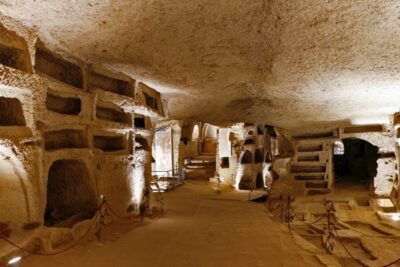 ★ 4.6Catacombs of San Gennaro Entry Ticket & Guided TourFrom $157,941 reviews
★ 5.0Pompeii Small Group Tour with an ArchaeologistFrom $356,593 reviews
★ 4.6Catacombs of San Gennaro Entry Ticket & Guided TourFrom $157,941 reviews
★ 5.0Pompeii Small Group Tour with an ArchaeologistFrom $356,593 reviews
Browse the lists this tour appears in