
Tour review · TOUR REVIEWS
Pompeii 3-Hour Walking Tour
Pompeii feels close enough to touch. In just three hours, this private walk strings together the city’s most important sights, from Porta Marina to the Forum, so you leave with a clear picture of Roman life right before disaster. I love how you skip the ticket line and get expert archaeologist guidance, and I especially love the moment you see the plaster casts of people and animals frozen in 79 A.D.
The main drawback is the price, especially since it’s priced per group up to 1 person. Add in that it runs in any weather, and you’ll want to dress for walking more than for sightseeing photos.
Key Highlights You’ll Actually Use
- Skip the ticket line so you start seeing Pompeii faster
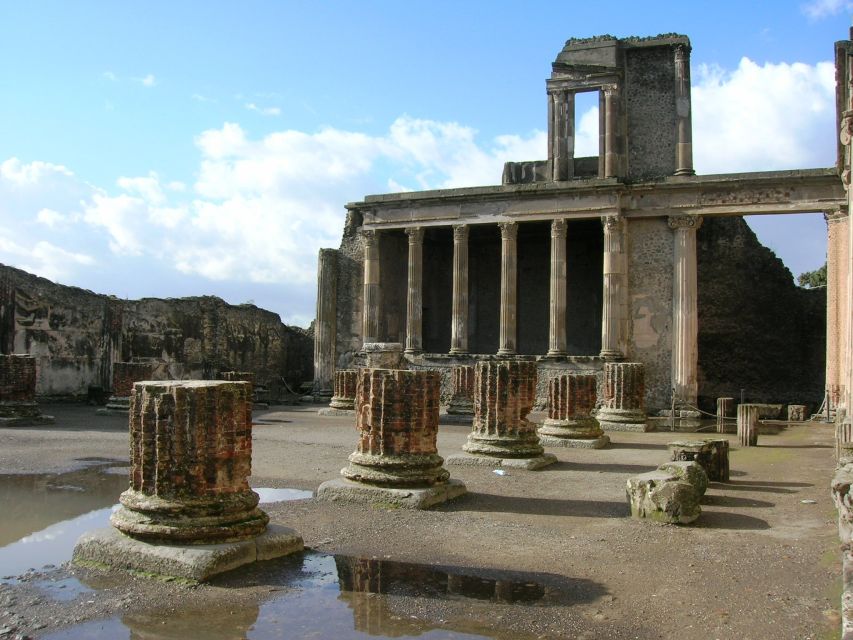
- Forum and Basilica for the big civic and legal sites of ancient Roman life
- Sarno Baths and Forum Baths to understand daily routines, not just monuments
- Lupanar (brothel) plus private-life details that make the city feel human
- Plaster casts of humans and animals to connect the eruption story to real bodies
- Multilingual archaeologist guides with many language options, plus wheelchair access
Why Pompeii Still Hits Hard, Even After All These Centuries
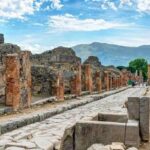
Pompeii is a rare kind of museum: not a building preserved on purpose, but a whole city that was buried under molten ash and lava from the eruption of Vesuvius in 79 A.D. That cover turned ordinary streets and homes into something like time storage. When you tour, you’re not just learning dates, you’re learning what daily life looked like in the Roman Empire right at the moment it stopped.
What makes this tour feel grounded is that the story is built into the route. You’ll connect the city’s layout and public spaces to what happened, and then you’ll get the rediscovery piece too. Pompeii and nearby Herculaneum were later brought back into the world in the 18th century, and UNESCO recognized both sites for the complete and vivid picture they provide of society and daily life at a single past moment.
That UNESCO context matters. Without it, Pompeii can feel like a pile of ruins. With it, you understand why these stones were worth saving, and why they still teach us how people lived, worked, shopped, prayed, and entertained themselves.
You can also read our reviews of more walking tours in Pompeii Archaeological Site
Starting Point and “First Steps” at Porta Marina
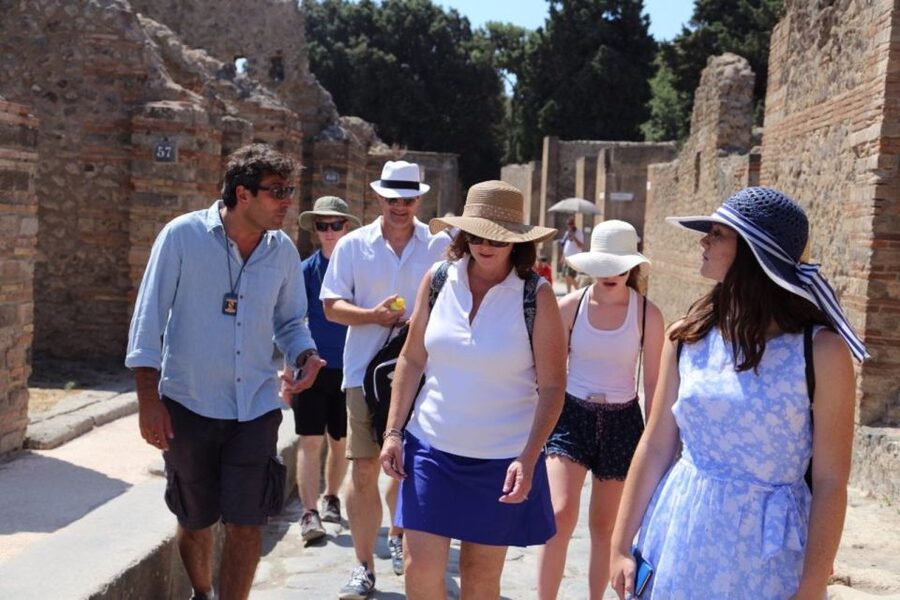
Your experience begins with a private group, with a meeting point that can vary depending on which starting option you book. From there, you head toward Porta Marina, one of the entry points to the ancient city. Even in a short tour, getting oriented early helps a lot, because Pompeii’s sites are spread out and the names can sound similar.
A big practical win here is that you skip the ticket line. That matters in peak season, when waiting can steal time from the best parts of the archaeological area. In a three-hour format, you want your time to go toward actually walking between major locations, not burning minutes on entry.
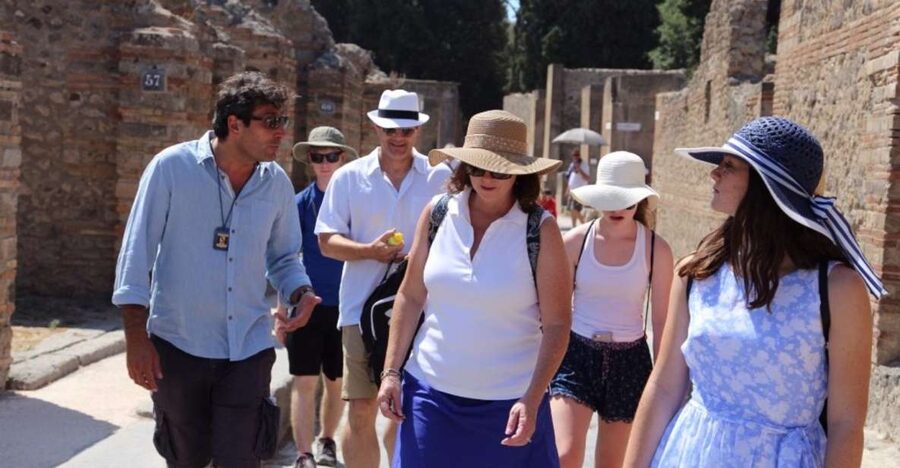
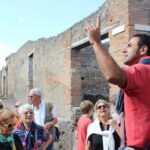
Once you’re at Porta Marina, the guide’s job is to help you read what you’re seeing. You’ll get the bigger city story first, then the smaller details as the route continues. It’s the difference between wandering and understanding.
Villa of the Mysteries: One Stop That Sets the Mood
Villa of the Mysteries is a highlight because it signals you’re moving beyond street corners and into a world of wealth and private culture. This is the kind of site that helps you imagine how different social classes lived inside Pompeii’s borders.
What I like about including a villa stop in a short tour is the contrast. After learning how the eruption froze a city in place, you also see how people shaped their homes and spaces for status and identity. Even if you’re focused on the big public structures, you’ll understand why the Romans cared about what visitors saw, and what residents kept for themselves.
In a three-hour walk, you won’t get unlimited time in each place. But you do get enough guidance to turn each stop into a meaningful chapter instead of a quick glance.
Temple of Apollo and the Sacred Side of Pompeii
Pompeii isn’t only about buildings, it’s also about belief. This tour includes stops at major religious sites, including Temple of Apollo and visits connected to the temples of Jupiter and Venus. Religion showed up in the city’s daily rhythm, not just in ceremonies.
When you stand near places like these, you start noticing how the city’s layout supports public gatherings and shared identity. The Romans did not separate civic life and sacred life into neat categories. They intertwined them, and Pompeii preserves that relationship in stone.
The guide’s role here is key. With live interpretation, you can connect what you’re looking at to what people were doing and why they would care. Without guidance, temples can become labels on a map. With guidance, they become part of the daily story.
Forum and Basilica: Where Roman Public Life Gets Real
If you want the “main stage” of Pompeii, the Forum and Basilica are where the city turns into politics, law, and public business. This tour takes you through the Foro Civile di Pompei and the Basilica, described as a court house. Those two labels matter, because they help you interpret the purpose of the spaces you’re viewing.
The Forum is also where you understand why Pompeii was not just a place to live, it was a place to act. You’ll learn how the Roman Republic and Roman Empire worldview shaped everyday behavior, and you’ll connect that to the way people used public buildings.
One of the most valuable parts of having a guide is learning how to look. You’ll get expert insights that help you see what’s intact, what’s missing, and what that tells you about the city’s sudden stop. That’s how ruins become a lesson instead of a scenic backdrop.


Baths, Snacks, and Street-Level Routine
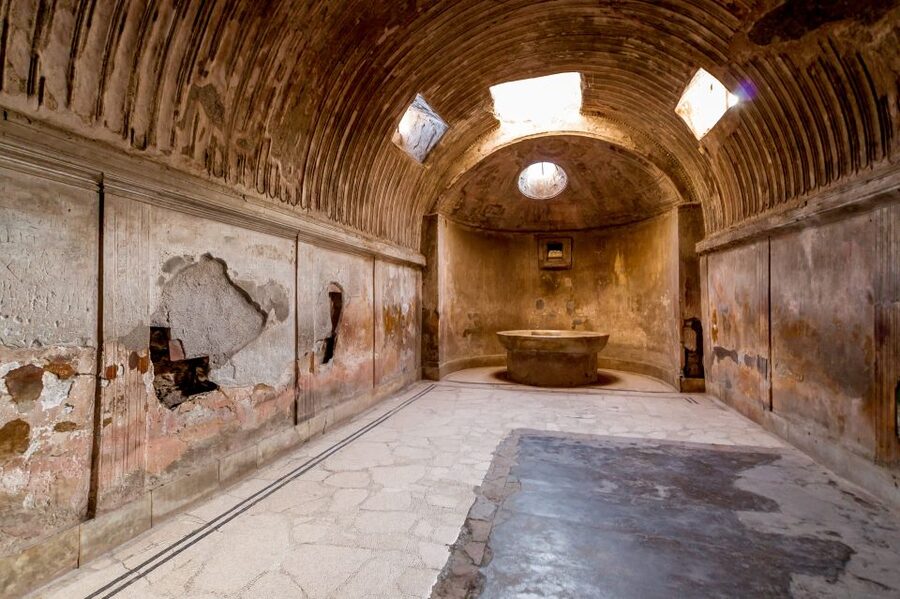
Pompeii feels vivid because you can picture the day. This tour includes the Sarno Baths and Forum Baths, which are perfect for understanding that Romans didn’t treat bathing as an occasional luxury. It was social and routine, and it shaped how people interacted.
You’ll also see places tied to everyday commerce, including a bakery and Termopolium Capuano, which is a kind of snack bar setting. These stops are gold for first-time visitors because they translate big archaeological ideas into small human habits.
If you’re tempted to think Pompeii is only grand temples and theatres, the baths and food spots correct that fast. They remind you the city ran on daily rituals, schedules, and local neighborhoods. When the eruption buried everything, it preserved not only monuments, but also the rhythms of normal life.
Theatre Grande, Odeion, and the Amphitheater
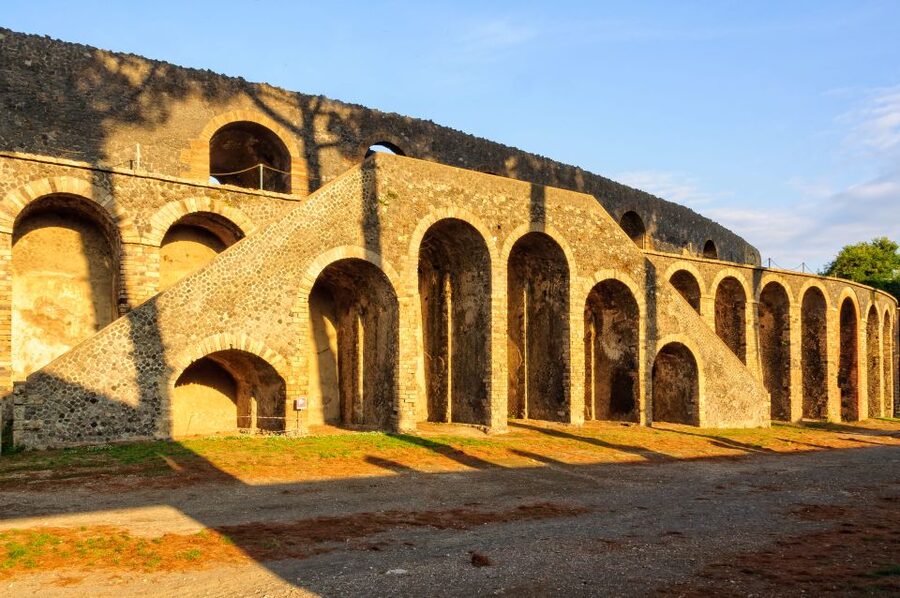
Entertainment was part of Roman life, and Pompeii gives you multiple angles on it. You’ll visit the Large Theatre, plus you’ll learn about the Teatro Grande and Odeion (a small theatre) as part of the highlights. Then the tour also includes the Amphitheater of Pompeii.
What I like about covering several venues in a short time is how it helps you avoid a one-note impression. Different performance spaces suggest different event styles, different crowds, and different roles for spectators. With guidance, you can connect the dots instead of just ticking off landmarks.
If you’re an architecture person, this is where the city starts feeling like a system. The guide’s interpretation helps you see why the Romans invested in these venues and how they fit into the city’s social structure.
Houses of Wealth: Menander, Faun, Tragic Poet, and Vettii
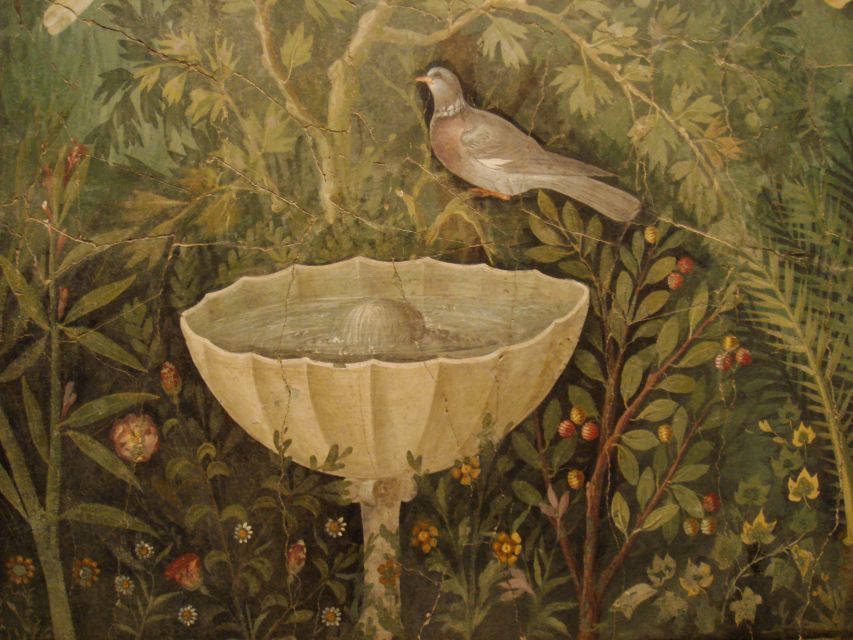
When the tour turns toward the residential side, you get a different kind of Pompeii. You’ll visit the House of Menander and the House of the Faun, and you’ll also see the House of the Tragic Poet. Later, you’ll reach the House of the Vettii.
These houses matter because they show how daily life worked behind public facades. Even without being able to step into everything, the layout and preserved details help you understand how Romans moved through private space, organized property, and displayed identity.
This is also a good place to slow your brain down. In a three-hour tour, it’s easy to rush. But residential stops reward attention. The guide’s archaeologist insights help you connect what you’re seeing to the people who lived there, not just to the building materials.
Lupanar: A Stop for Realism, Not Shock Value
The Lupanar, an old brothel, is one of the most memorable parts of this tour. It can be uncomfortable, but it’s also useful. Pompeii did not preserve only respectable spaces, and the city’s story is more complete when you acknowledge the darker corners.
The guide helps frame what you’re seeing in context, so it becomes about understanding society rather than turning the stop into a sensational photo stop. You’ll learn how this private commercial space functioned within the city, and you’ll connect it back to broader ideas about public versus private life.
If you’re sensitive to adult themes, you’ll want to know this is part of the route. But if you want Pompeii to feel real, including the Lupanar is exactly what makes the city’s daily life feel whole.
Plaster Casts That Make the Eruption Story Personal
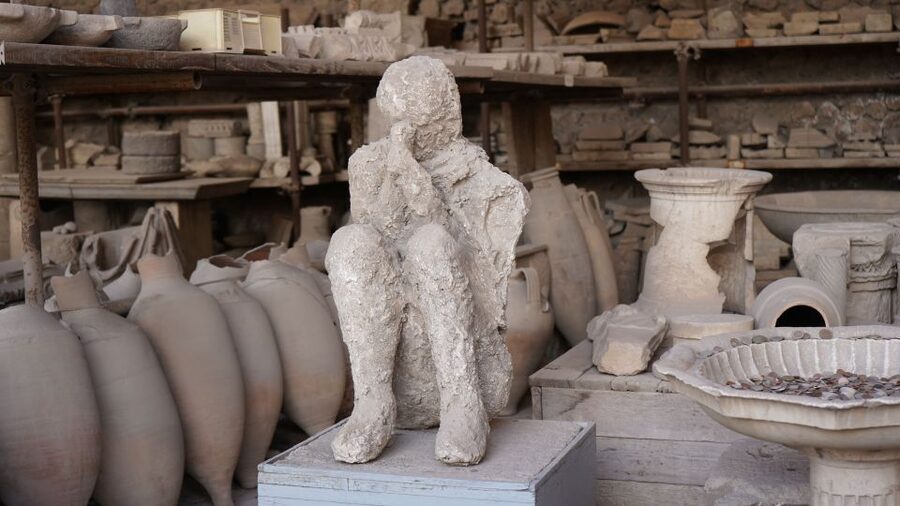
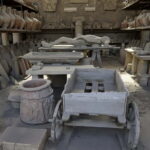
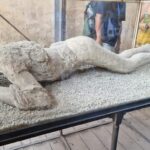
The plaster casts of humans and animals at the time of death are the emotional anchor of the tour. This is where Pompeii stops being a history lesson and becomes a human moment. You see bodies preserved in the act, frozen by conditions created by the eruption.
These casts are powerful because they don’t let you stay abstract. After earlier stops about civic life, baths, theatres, and homes, the casts bring you back to the reality of what happened when life abruptly ended.
Having an expert guide here is essential. The guide’s job is to explain the significance of what you’re seeing and to keep the meaning respectful and clear. It’s the difference between being overwhelmed and being able to understand.
How to Handle a 3-Hour Walk in Any Weather
Pompeii is an outdoor archaeological site, and this tour runs in any weather condition. When it rains, you’re told to bring a small umbrella and/or a raincoat, but umbrellas are listed as not allowed. In practice, I’d plan around a raincoat so you stay compliant and dry.
Also note the rules that protect the site and keep the experience moving: no umbrellas, no backpacks, and pets are not allowed (assistance dogs are allowed). You’ll want to travel light, with just what fits in a small day bag or pocket system.
Bring your passport or ID card, because it’s listed as required. And wear shoes built for uneven ground. A three-hour Pompeii walk can be harder than it sounds when you stop often to look closely.
Price and Value for a Private Pompeii Group
This tour is priced at $508.15 per group up to 1 person, which makes it a premium option. If you’re comparing it to group tours, yes, the cost is high. But for many travelers, the value comes from what you get in return.
Here’s the practical math: the price includes private guidance and Pompeii admission fees, and you also skip the ticket line. It’s three hours with an archaeologist guide, not a rushed group format. You’re paying to avoid time waste, get interpretation at every major stop, and keep the pacing aligned with your questions.
This is best value if you want focused attention, like if it’s your first time at Pompeii and you want the story connected across sites. It’s also a good match if you care about language comfort since the tour guide options include many languages, including English, Italian, Spanish, German, Russian, Chinese, Japanese, and Portuguese.
A possible consideration is endurance. Three hours is intense in hot sun or wind, and you’re walking. If your goal is a slow wander with lots of breaks, a longer format might feel better. But if you want a guided path through the core highlights, this is a strong fit.
Should You Book This Private Pompeii 3-Hour Tour?
Book it if you want a guided route through Pompeii’s must-see zones in a short window, with expert interpretation and less time lost at entry. I think this is ideal for first-time Pompeii visitors, and also for travelers who like their sightseeing explained in plain language.
Skip it only if the price feels hard to justify for your travel style, or if you prefer to explore without structure. Also consider skipping this exact format if you’re not comfortable with adult themes, since the route includes the Lupanar.
If you’re aiming to understand Pompeii as a complete snapshot of Roman life before Vesuvius shut it down, this private three-hour approach gives you that, fast.
FAQ
How long is the Pompeii private walking tour?
The tour lasts 3 hours.
What is included in the price?
The price includes private guidance and Pompeii admission fees.
Does the tour skip the ticket line?
Yes, the tour includes skipping the ticket line.
Where do you meet for the tour?
The meeting point may vary depending on the option booked, and there are two start location options listed near Via Villa dei Misteri (2 or 3).
Which places will we visit during the 3-hour route?
You’ll visit Pompeii highlights including Porta Marina, Villa of the Mysteries, Temple of Apollo, the Foro Civile di Pompei, the Basilica, House of Menander, Forum Baths, Lupanar, House of the Faun, Large Theatre, House of the Vettii, and the Amphitheater, plus plaster casts and other listed highlights.
What languages are available for the live guide?
Live guide languages include Spanish, German, Russian, Chinese, English, Italian, Japanese, and Portuguese.
Is the tour wheelchair accessible?
Yes, it is listed as wheelchair accessible.
Are umbrellas, backpacks, or pets allowed?
Umbrellas are not allowed, backpacks are not allowed, and pets are not allowed (assistance dogs are allowed).
What should I bring?
Bring your passport or ID card.
Is transportation or meals included?
No. Meals and transportation are not included.
More Walking Tours in Pompeii Archaeological Site
More Tours in Pompeii Archaeological Site
More Tour Reviews in Pompeii Archaeological Site
Not for you? Here's more nearby things to do in Pompeii Archaeological Site we have reviewed



Tour Reviews, compared.
 ★ 4.8Pompeii: Entry Ticket and Guided Tour with an ArchaeologistFrom $3519,459 reviews
 ★ 4.2Pompeii: Entry Ticket with Optional Audio GuideFrom $2612,360 reviews
 ★ 4.8Pompeii: Small Group Tour with an ArchaeologistFrom $4012,264 reviews
 ★ 4.3Pompeii Ruins & Mount Vesuvius Day TourFrom $12011,459 reviews
 ★ 4.6Sorrento, Positano and Amalfi Full-Day TourFrom $10710,988 reviews
 ★ 5.0Sorrento, Positano & Amalfi Coast – Small Group TourFrom $768,643 reviews
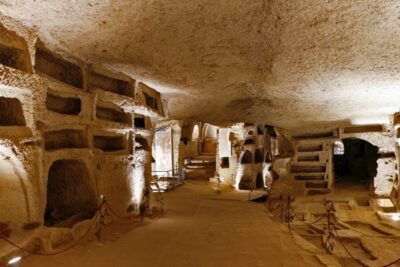 ★ 4.6Catacombs of San Gennaro Entry Ticket & Guided TourFrom $157,941 reviews
★ 5.0Pompeii Small Group Tour with an ArchaeologistFrom $356,593 reviews
★ 4.6Catacombs of San Gennaro Entry Ticket & Guided TourFrom $157,941 reviews
★ 5.0Pompeii Small Group Tour with an ArchaeologistFrom $356,593 reviews
Browse the lists this tour appears in