
Tour review · TOUR REVIEWS
Pompeii: Group Tour with an Archeologist Guide
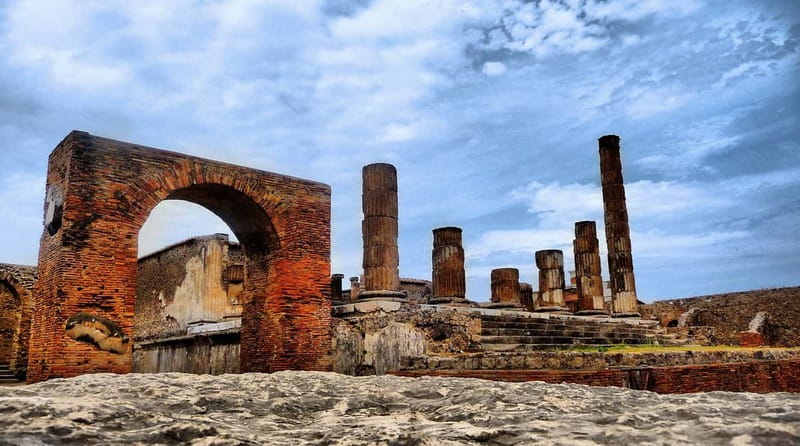
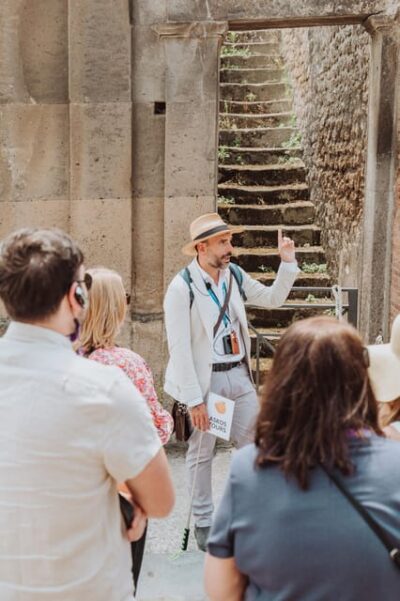
Two hours in Pompeii, with a real expert. This archaeologist-led group tour gets you moving fast through key areas of the ancient city, buried by Vesuvius in 79 AD, with context you will not get from wandering alone.
What I like most is the skip-the-line entry, so you can spend your limited time actually looking at Pompeii.
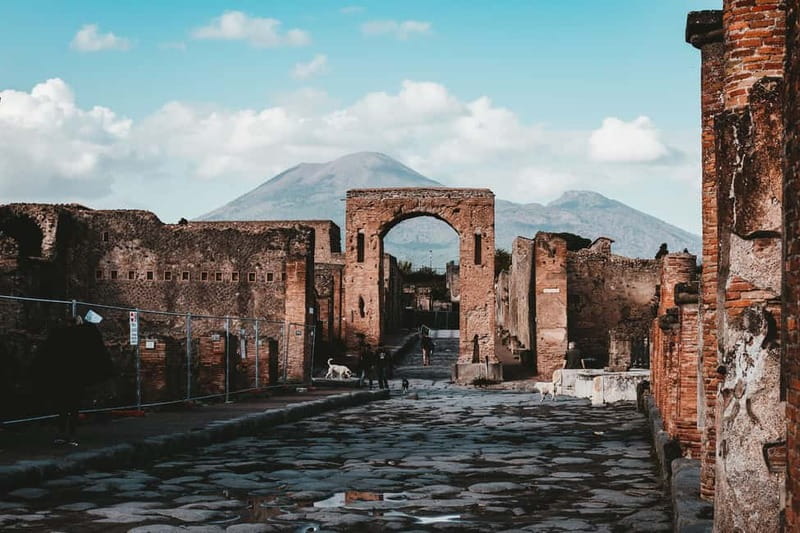
I also like the tour’s tight focus on the western side of Pompeii, where the most memorable public buildings and famous landmarks sit close together. You end up seeing the Forum area, the baths, the Basilica, the Lupanar brothel, major street sections, and the theaters without losing your bearings.
One thing to plan for: this is not a slow, linger-all-day visit. It is a group walk with whisper headsets, so the pace stays steady, and it is not suitable for people with mobility impairments.
Key Things You’ll Notice on This Pompeii Tour
Skip-the-line tickets so you do not burn time stuck at the entrance
Whisper headsets to stay in sync with a larger group
Western Pompeii route covering the Forum, baths, Lupanar, and theaters efficiently
Named houses and gardens like the House of the Tragic Poet and the Garden of the Fugitives
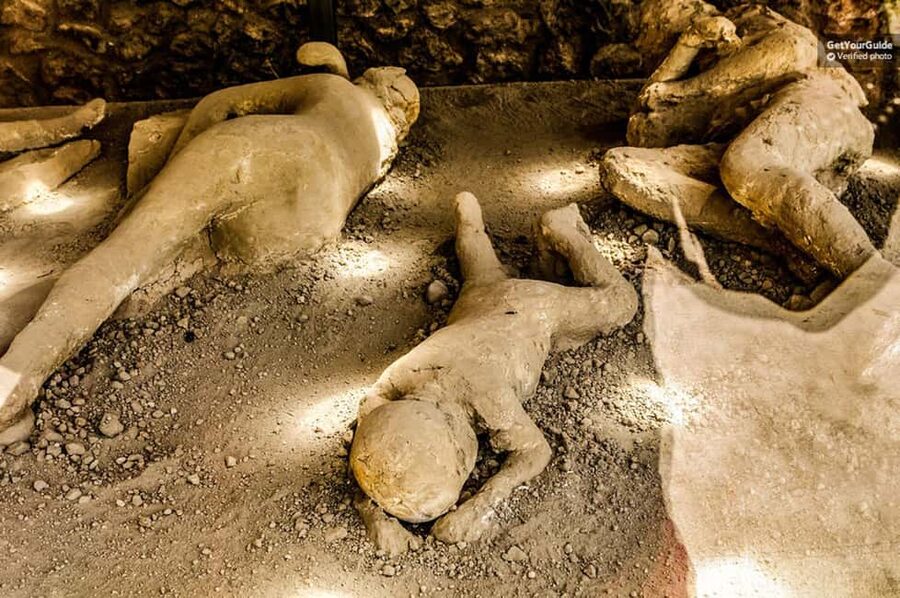
Plaster casts that bring the tragedy into sharper human focus
Guide close to you who can explain what you are looking at and help you connect the dots
Starting at Tempio Travel, then Straight Into Pompeii
Your tour begins with a practical meeting point: the Tempio Travel office on the 1st floor of Vircumvesuviana train station. From there, the group processes through the site entrance and gets into the ruins as a unit, which matters at Pompeii. Even when the weather is kind, the site can feel chaotic if you go solo. This format trades uncertainty for a clear start.
I like how this setup reduces the mental load right away. You do not have to figure out which gate to use, how to route yourself, or how to spend your first 15 minutes in a place that is spread out. Instead, you get immediate orientation, then the guide starts building a story around what you see.
If you are a first-timer, that first push into the ruins is huge. Pompeii can look like a collection of stones unless someone explains what each space was for. A guide also helps you spot the details that would otherwise blend together, especially in fresco areas and residential zones.
You can also read our reviews of more guided tours in Pompeii Archaeological Site

Porta Marina to the Forum: Pompeii’s Public Heart in One Flow
Early on, you pass through Porta Marina. It is not just a pretty entrance. It is a reminder that this city had movement, trade, and daily routines, not only dramatic moments. From there, the tour leans into Pompeii’s public life.
The big win here is the way the route connects buildings to daily behavior. You move through spaces tied to administration, religion, commerce, and social gatherings, including:
- Basilica and the core civic zones
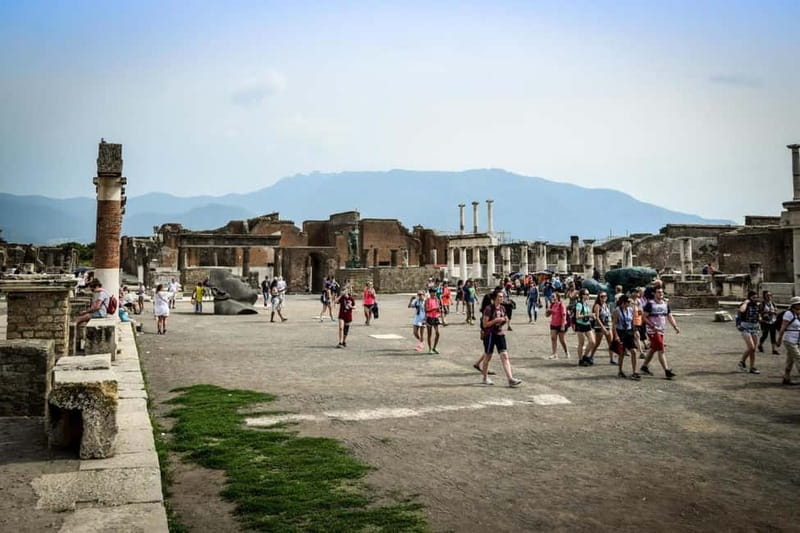
- The Forum, where public life concentrated
- The surrounding street layout, so you understand where people walked and gathered
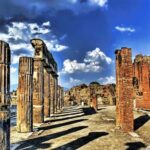
The Forum area is especially valuable in a group tour because it is easy to misread. Without context, you can stand in the right place and still miss the meaning. With a guide, you learn what the layout suggests and why certain structures mattered to Pompeians.
Also, this portion of the tour is where you start seeing fresco culture in the right way. Pompeii is famous for wall paintings, and the tour specifically highlights frescoes as part of what makes this archaeological site so iconic. The guide help is not about turning it into an art history lecture. It is about helping you look like you are supposed to be looking.
Baths, the Lupanar, and the Main Street Details You Would Miss Alone
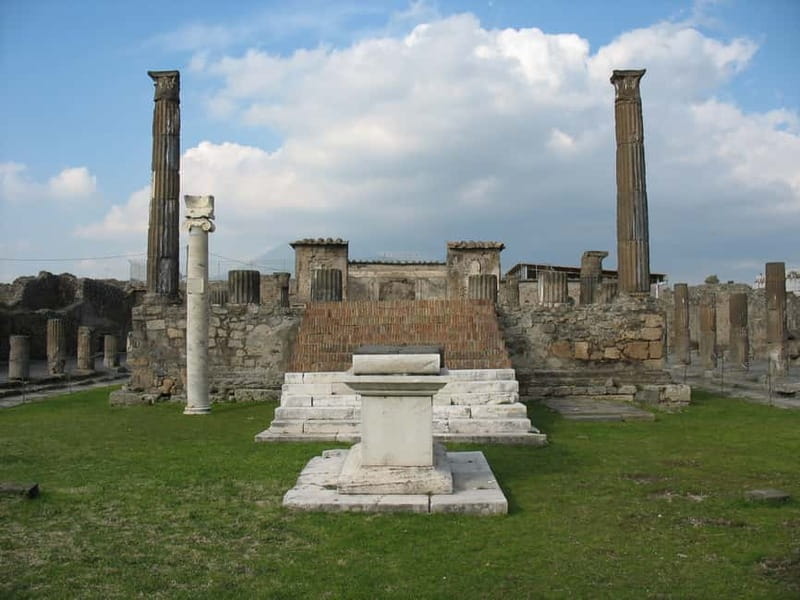
Next comes a section that feels more vivid than the grand monuments. You get into the baths, which are a great bridge between public and private life. If you have ever wondered how Romans relaxed and socialized, baths are one of the clearest answers you will find at Pompeii. They were routine hubs, not special events.
Then the tour heads to the Lupanar brothel. This is one of those sites that can feel uncomfortable if you come in with vague expectations. A good guide keeps it grounded, explaining what you are seeing in terms of function and design rather than sensational headlines. It is also one of the fastest ways to understand that Pompeii was a real working city with real people, not a museum staged for your visit.
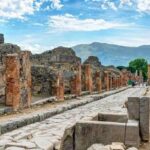
The route also includes the main street sections and the commercial street rhythm. This helps you build a mental map. Without that, you can walk between highlights but still not understand how the neighborhoods connected. With the guide’s pacing, you come away with a sense of where daily traffic and storefront life would have been.
This is also where whisper headsets do their job. In a large group, you might not always be able to stand perfectly still or hear every word. The headsets keep the storytelling clear enough that you can stay engaged while the group moves.
Theatres, Plus Houses Like the House of the Tragic Poet
Pompeii is not only about public buildings. It is also about how people lived, and this tour makes sure you see that shift.
You visit the theaters, which add a cultural layer. Seeing performance spaces helps you connect Pompeii to Roman leisure and community events. Even if you do not know the names of plays or performers, you can grasp the idea that crowds gathered here. That crowd energy is the missing ingredient when you visit alone.
Then the tour moves into named residential highlights, including:
- House of the Tragic Poet
- House of the Golden Cupid
- other famous named houses
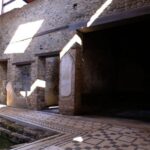
These are not random stops. Named houses help you anchor the city. Once you have a few specific residences in your mind, the layout of homes becomes more legible. You start noticing how spaces organized around daily movement, privacy, and household display.
From the guide perspective, this is where great group tours shine. People often ask where they should look, what matters in a room, or why a certain feature exists. The reviews back up that many guides handle these moments well. Names that show up in prior groups include Alfonso (praised for detailed explanations and answering questions) and Lena (praised for clear communication and a good balance of humor and history). Even when the group is active, these guides seem to keep the experience from turning into a rush-through.
Plaster Casts and the Garden of the Fugitives: Tragedy With Human Scale
The tour does something important with the emotional weight of Pompeii. It includes plaster casts of Pompeii’s tragic citizens and visits the Garden of the Fugitives.
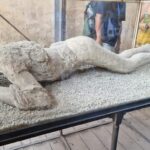
Plaster casts can feel shocking if you do not have framing. A guide helps by explaining what the casts represent and why the information matters historically. The result is that you do not just stare at figures. You understand them as evidence, tied to the eruption and what people tried to do during the crisis.
The Garden of the Fugitives is another key stop because it shifts you from buildings to a landscape of flight and survival. Again, that is where context helps. A solo walk can turn it into a series of stops. With narration, it becomes a clear chapter.
This part is also a reminder that Pompeii is not only about architecture. It is about people. If you want a tour that gives you both the spectacle and the human stakes, these stops are the reason to choose a guide.


What You’ll Actually See in 2 Hours, and Why It Works for Limited Time
A common fear with Pompeii is simple: it is too big. So a 2-hour tour can feel like either a great starter or a rushed sampler.
In this case, the value is that the tour chooses a logical cluster. By sticking to the western part of town, you reduce backtracking and you keep the walking focused. You are not trying to cover the entire site. You are trying to understand the main story beats: civic center, daily life, leisure spaces, and residences, plus the human evidence of the eruption.
That is also why this works well if you are on a cruise day, have a tight schedule, or just want the core Pompeii experience without turning it into a half-day marathon. In groups like this, the guide also helps with transitions, keeping you from losing the trail.
The tour ends back at the meeting point, and your guide will offer suggestions for how to spend more time in the modern town of Pompeii. You may also get directions toward the Sanctuary Dedicated to Our Lady of the Holy Rosary, which sits just steps from the archaeological site.
Practical Tips: Shoes, Bags, and the Weather Reality
Pompeii rewards comfortable planning.
Bring:
- Passport or ID card
- comfortable shoes
Do not bring:
- luggage or large bags
If you are hoping for a smooth visit, shoes are the big one. Ruins means uneven ground, and you will be walking steadily. This is not the time for soft sandals or narrow footwear that punishes you after an hour.
Also, do not assume the weather will cooperate. Heat can be intense, and one practical tip from previous visitors is to plan for sun protection. People have bought simple umbrellas outside the site when conditions were very hot. On rainy days, another practical tip that came up is to bring your own umbrella or raincoat, since you may find umbrellas sold outside rather than inside.
Finally, if you are sensitive to crowds, arrive with the mindset that Pompeii is popular. This tour is designed for group logistics, which is why the headsets exist.
Who This Pompeii Tour Fits Best
This experience is best if you want:
- A guided Pompeii orientation that helps you understand what you are seeing
- A focused route across major highlights rather than an overwhelming free-for-all
- A professional archaeologist guide who can translate structures into meaning
It is also a good option if you travel with family and want structured explanations. Guides have been praised for patience with kids in at least one group scenario, and that tells me the style is usually approachable rather than overly academic.
It is not the best fit if you need mobility accommodations. The tour is marked as not suitable for people with mobility impairments, likely due to walking conditions across uneven ground.
Is $50.11 Good Value for Pompeii?

Let’s talk value in real terms, not just the headline price.
At $50.11 per person for a 2-hour guided tour, you are paying for three things that add up at Pompeii:
- Skip-the-line entrance tickets, which protects your time
- whisper headsets, which keep you connected to the guide in a bigger group
- A guided route through high-impact sites that would take longer to plan and interpret on your own
If you are short on time, this is where the math often works in your favor. Pompeii is not only about seeing stones. It is about learning what to look for, and the guide is doing the heavy lifting. Without that, you might spend more time trying to figure out where to go, then miss the meaning of what you reach.
If you are the type who loves slow, independent exploration and you already know Pompeii well, you might choose to build your own route. But for most people, the combination of efficient coverage and expert framing is what turns a visit into a real experience.
Should You Book This Pompeii Archaeologist Group Tour?
Yes, I would book it if your priority is getting the Pompeii story in a smart, time-efficient way. The tour’s strengths are clear: skip-the-line access, a focused western route, and emotionally powerful stops like plaster casts and the Garden of the Fugitives, all guided by an archaeologist.
Book it especially if:
- you only have a couple of hours
- you want structure so you do not waste time figuring out what matters
- you like learning as you walk, with a guide close enough to answer questions
Skip it if:
- you need mobility accommodations
- you want a long, slow, self-paced wander with no group pace at all
If Pompeii is high on your list and time is limited, this is a solid way to get there, see the right places, and leave with a clearer understanding of what the city really was.
More Guided Tours in Pompeii Archaeological Site
More Tours in Pompeii Archaeological Site


More Tour Reviews in Pompeii Archaeological Site
Not for you? Here's more nearby things to do in Pompeii Archaeological Site we have reviewed



Tour Reviews, compared.
 ★ 4.8Pompeii: Entry Ticket and Guided Tour with an ArchaeologistFrom $3519,459 reviews
 ★ 4.2Pompeii: Entry Ticket with Optional Audio GuideFrom $2612,360 reviews
 ★ 4.8Pompeii: Small Group Tour with an ArchaeologistFrom $4012,264 reviews
 ★ 4.3Pompeii Ruins & Mount Vesuvius Day TourFrom $12011,459 reviews
 ★ 4.6Sorrento, Positano and Amalfi Full-Day TourFrom $10710,988 reviews
 ★ 5.0Sorrento, Positano & Amalfi Coast – Small Group TourFrom $768,643 reviews
 ★ 4.6Catacombs of San Gennaro Entry Ticket & Guided TourFrom $157,941 reviews
★ 5.0Pompeii Small Group Tour with an ArchaeologistFrom $356,593 reviews
★ 4.6Catacombs of San Gennaro Entry Ticket & Guided TourFrom $157,941 reviews
★ 5.0Pompeii Small Group Tour with an ArchaeologistFrom $356,593 reviews