
Tour review · TOUR REVIEWS
Herculaneum: Private Walking Tour with Archeologist Guide
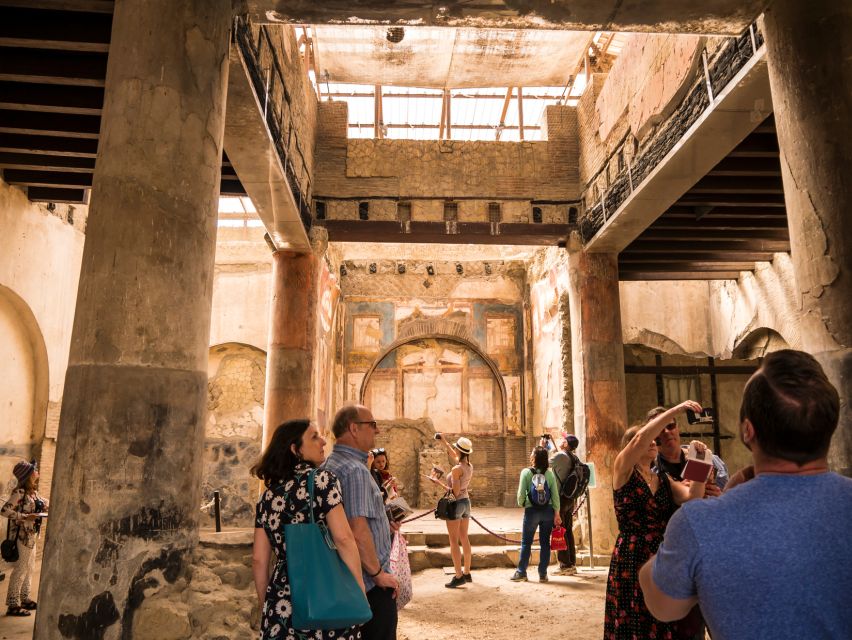
Herculaneum hits different because the past feels close and personal. On this private walking tour with an archeologist guide, you connect the dots between the 79 A.D. eruption of Vesuvius and what you can still see today, from Roman homes to public spaces. You’ll also understand why this site preserves details that Pompeii does not.
I love two things most. First, the way the guide explains the preservation story, including how an avalanche of mud buried Herculaneum far more deeply than the ash that covered Pompeii, which is why so much looks remarkably intact. Second, I like that the experience feels human and fun, especially with guides like Luciano and Paola, who kept it engaging for teens and even worked hard to find shade when possible.
One thing to keep in mind is the 2-hour format. This is a highlights-focused route, not a slow, free-form wander where you can linger in every corner.
Key highlights at a glance
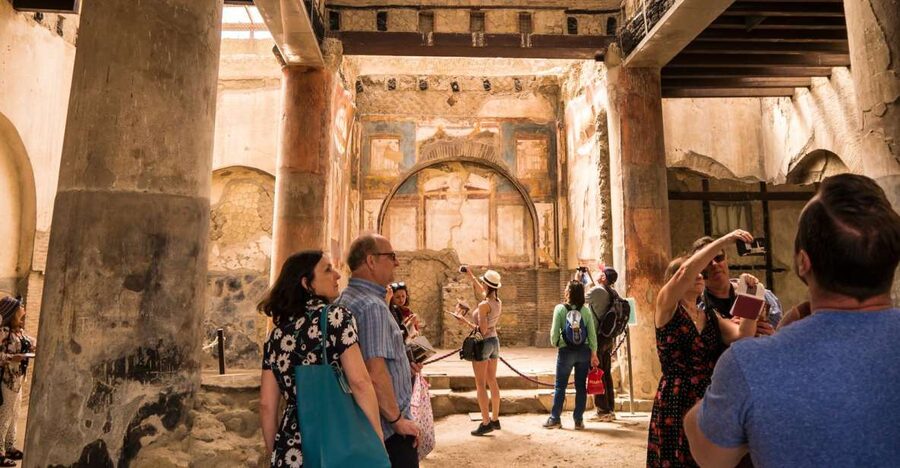
- Archaeologist-led private tour: a licensed expert guiding you through the ruins
- Better preservation than Pompeii: mud burial about 20 meters deep versus Pompeii’s 4 to 5 meters of ash
- Roman daily life, up close: houses and public areas like the Forum
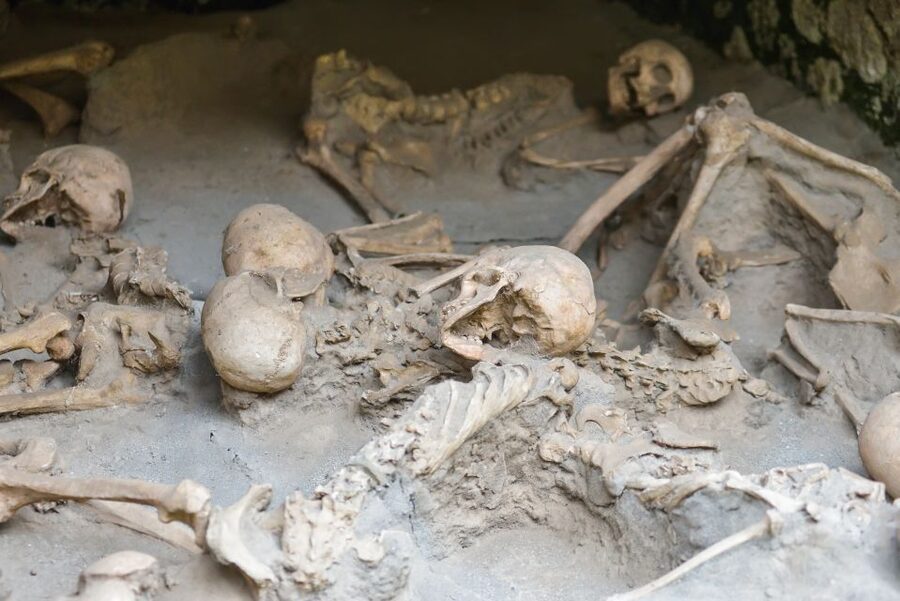
- Big emotional stops: the House of Skeletons and the nearby beach where victims were found
- Smart pacing for highlights: a tight 2-hour walk that still covers major named sites
- Guides who make it click: Antonio and Luciano are praised for making the site fun and relatable
Why Herculaneum Feels More Personal Than Pompeii
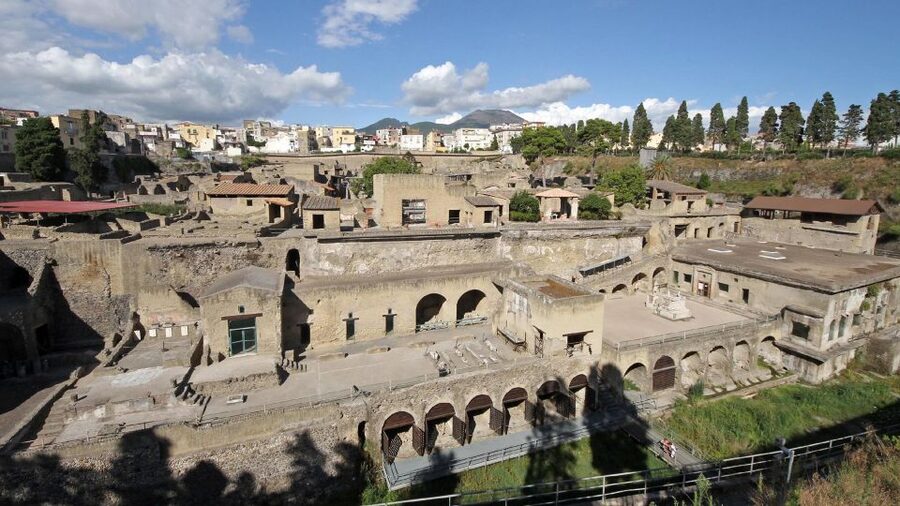
Yes, Herculaneum is often called Pompeii’s sister. But once you’re inside the ruins, it doesn’t feel like a copy. What stands out is the level of preservation and how that turns archaeology into a kind of time travel you can actually picture.
Here’s the key comparison your guide will keep returning to. Pompeii was buried under roughly 4 to 5 meters of ash. Herculaneum, on the other hand, was covered by a heavy avalanche of mud that reached about 20 meters deep. That difference matters because mud and ash did different things to materials over time. The result is that you get an easier view of Roman interiors and belongings, including wooden objects, plus paintings and mosaics that seem surprisingly intact for something nearly 2,000 years old.
You’ll also get the sense of the place as lived-in, not just impressive ruins on a postcard. Because you’re walking between named homes and gathering spaces, you start to understand where people ate, met, worked, and worshiped. It’s still tragic, but it’s also specific, which is what makes it memorable.
You can also read our reviews of more walking tours in Ercolano
Your 2-Hour Game Plan (Including the Skip-the-Line Moment)
This is a private group tour designed for a focused window. Plan on about two hours on foot through the archaeological area. That length is the tradeoff: you’ll see a lot of the big named stops, but you won’t have time to treat every room like a museum exhibit with zero pressure.
The meeting point can vary depending on which start option you choose, and the route loops back to the meeting point at the end. The main on-the-ground location you’re looking at is the Parco Archeologico di Ercolano area, with Via dei Papiri Ercolanesi, 21 showing up as a common reference point.
The tour also includes skip the ticket line, which is practical at a site that can get busy. It won’t change the walking part, but it can cut down on the waiting so you spend more time seeing and less time standing around.
Comfort shoes matter here. The terrain is uneven and you’ll be outside, so you want footwear you trust. If you tend to run cold or hot easily, dress in layers, because the site can feel sunny in one area and shaded in another depending on the route your guide chooses.
Getting an Archeologist Guide, Not Just a Script
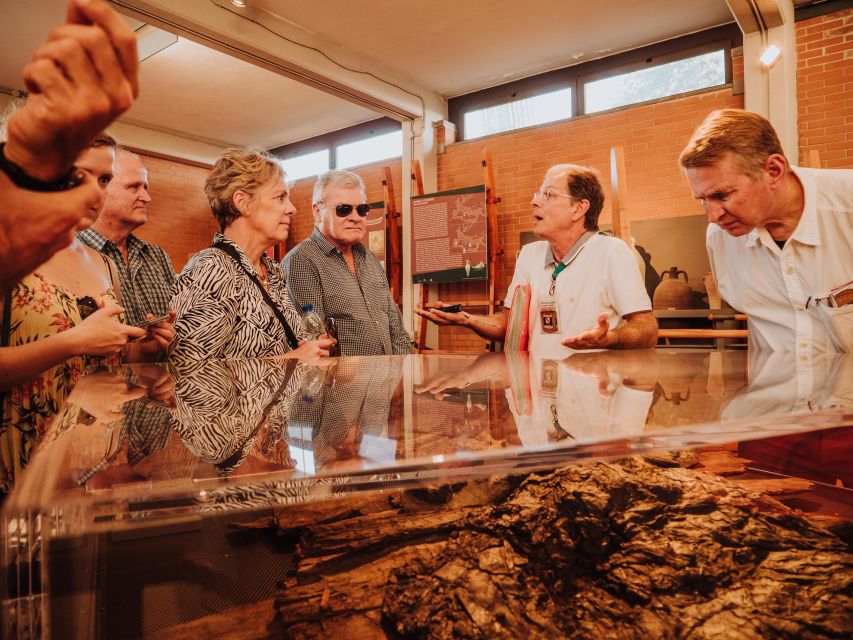
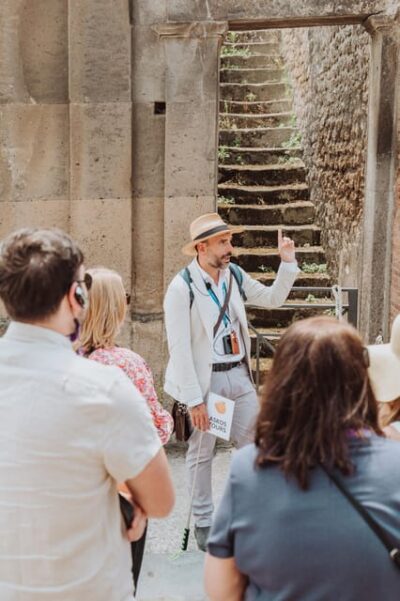
One of the best parts of this tour is that it’s led by a licensed archeologist guide, and you can feel the difference in the pacing. An expert can point out what you’re looking at and explain why it matters, without turning it into a lecture that loses people.
The vibe matters too. The guides named in past tours, like Antonio, Luciano, and Paola, are repeatedly described as engaging and fun, with the ability to hold attention from adults down to kids. Luciano is praised for bringing the city to life in a way that felt relatable for teenagers. Antonio gets credit for being both informative and amusing while guiding a group through the highlights. Paola is noted for pointing out key sights and also trying to keep the group in shade.
Also, you can choose among several tour languages, including Italian, Spanish, English, Japanese, Russian, French, Portuguese, Chinese, German. That means you’re more likely to get explanations you actually follow, not just sound-bites you smile at.
Bottom line: you’re not just collecting facts. You’re learning a way to read the ruins as evidence of real routines, real rooms, and real choices people made before the eruption changed everything.
Stop-by-Stop at Herculaneum: Forum, Homes, and the House of Skeletons
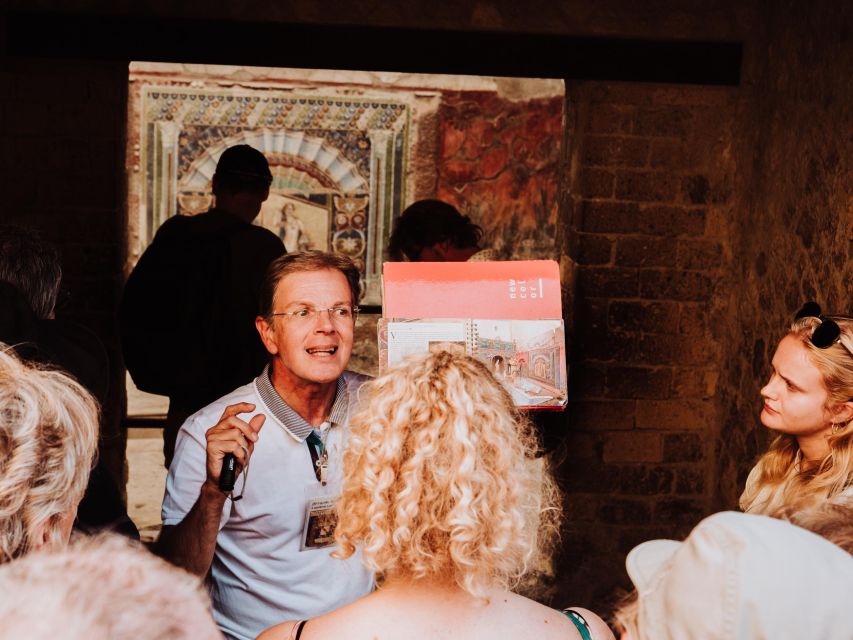
Your walk is structured around a sequence of major areas. Along the way, your guide will connect the names of places to the larger story of the eruption and the daily life that existed before it.
Starting at the park and getting oriented
You begin at a designated start point at the Parco Archeologico di Ercolano area. This early time is useful because it sets context. Your guide will frame what Herculaneum is, why it was preserved, and what you’ll be seeing over the next two hours. If you’re new to Roman sites, this is where you get your bearings fast, so the rest of the walk feels coherent.
You can also read our reviews of more guided tours in Ercolano
The archaeological site and the Forum area
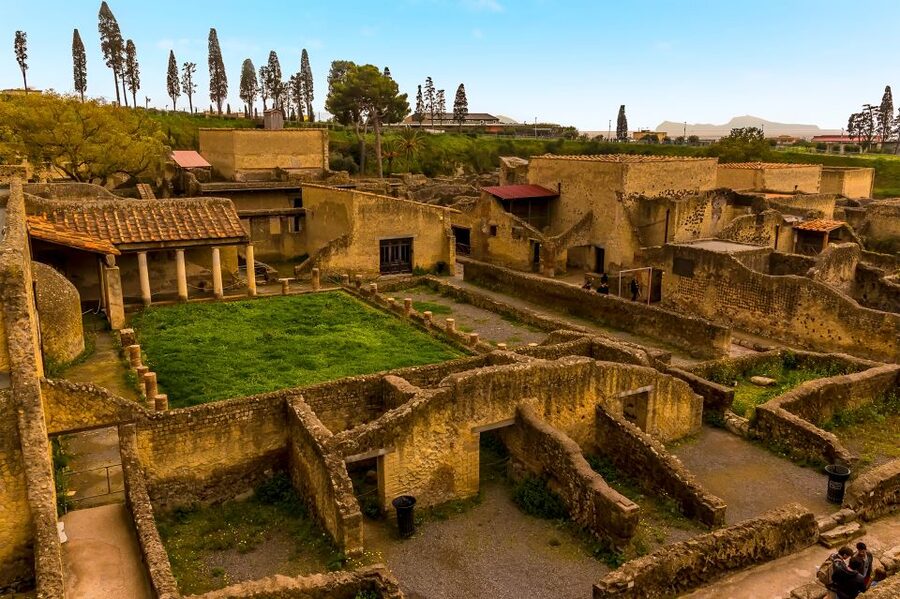
Next comes the Archaeological Site of Herculaneum, where you’ll focus on big public-space highlights. One of the named anchor stops is the Forum. This is where the city’s civic life shows up, and your guide uses it to explain how Roman communities organized themselves. Even if you don’t know Roman architecture names, you can still track meaning: this is where people gathered, discussed, and moved through shared space.
As you move through the area, you’ll also be pointed toward other major highlights tied to daily life, including the bakery and the Terrace of Marcus Nonius Balbus. Your guide will point out how these places fit into everyday routines, so you’re not just chasing impressive-looking corners.
Casa del Salone Nero
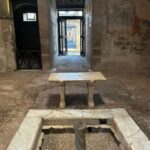
You’ll visit Casa del Salone Nero. Houses like this matter because they’re where personal life lived on top of public life. On this stop, you should pay attention to layout and decoration, because the tour emphasizes how well-preserved elements help you picture real interiors. It’s one of the stops that helps the ruins feel less abstract.
Herculaneum Thermopolium
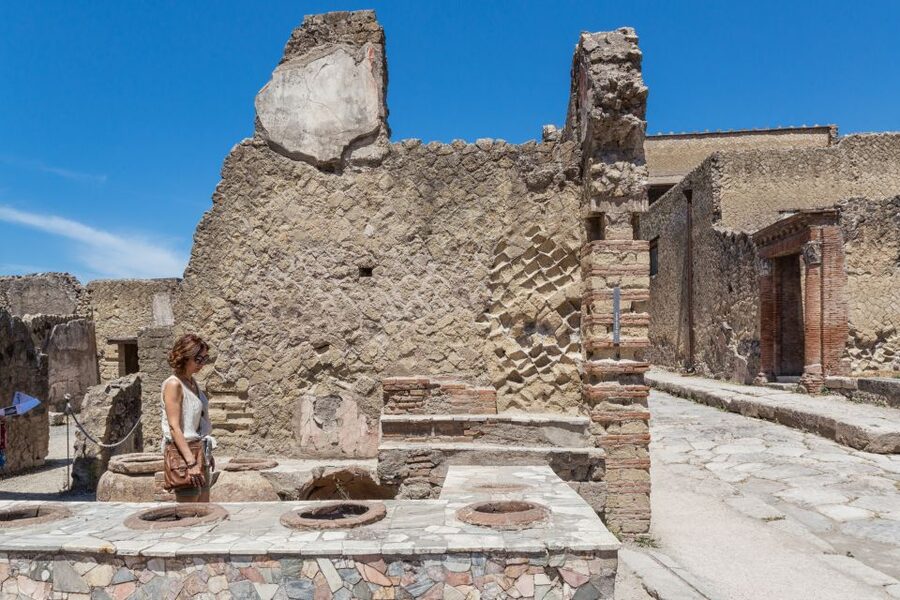
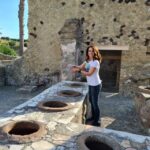
Then you go to the Herculaneum Thermopolium. This is another everyday-life stop that helps balance out the larger civic picture. These are the kinds of places that make a Roman city feel like a functioning neighborhood rather than an outdoor ruin.
Casa dell’Albergo and Casa di Nettuno ed Anfitrite
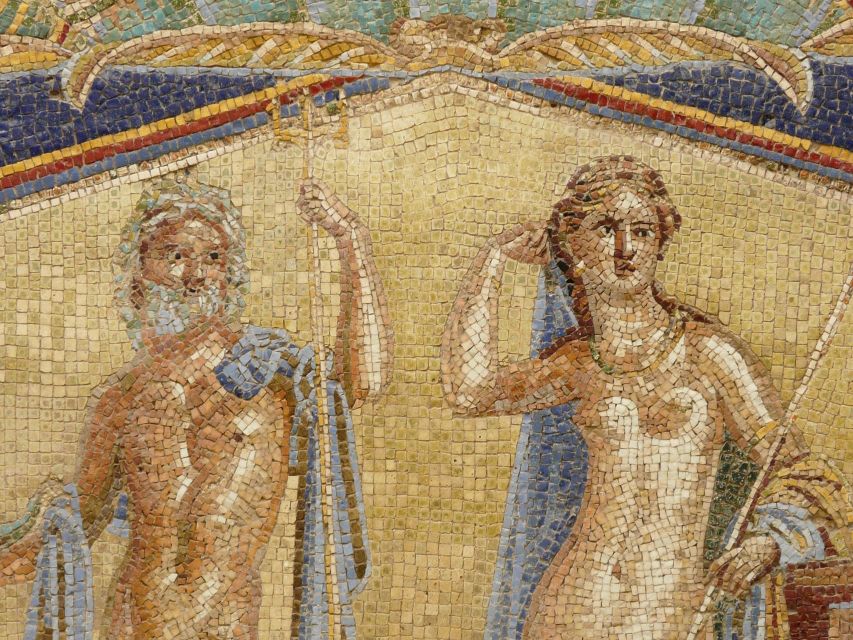
You’ll also visit Casa dell’Albergo and Casa di Nettuno ed Anfitrite. These stops build your sense of variety within the city. Instead of treating Herculaneum as one uniform setting, the tour uses these named homes to show how Roman domestic spaces could differ, and how the preservation can make those differences visible.
Casa dei Cervi and the preserved interior details
Casa dei Cervi is next, and this is where you may especially appreciate the tour’s emphasis on preservation. Herculaneum is known for keeping everyday materials you’d normally expect to lose to time. The guide’s explanations help you understand why you can still encounter wooden pieces and why paintings and mosaics can look legible enough to matter.
This tour also aims to include highlights connected to those preserved interiors, such as the House of the Wooden Partition. That’s a big deal because it shifts the experience from seeing stone walls to seeing how people arranged spaces and objects.
House of Skeletons and the beach where victims were found
One of the most impactful parts of the route is the House of Skeletons. This is where the tragedy becomes visible in a direct, human way. Your guide explains what happened when Vesuvius erupted and how the city was buried, so the remains and the surrounding spaces connect to a clear sequence of events.
The tour also includes the beach where hundreds of skeletons of victims were discovered. Even if you don’t spend long there, it’s an essential stop for understanding what the eruption meant on the ground. It turns the story from disaster in the abstract into something you can actually visualize.
Sacellum of The Augustales
You end this main run with the Sacellum of The Augustales. A stop like this adds another layer, because it reminds you that Roman life included religious practice alongside social and domestic routines. Your guide uses this to tie the city’s public and private worlds together.
Preservation Lessons: How Mud Burial Changes What You Can See
The most educational part of this tour is the preservation lesson, because it explains why Herculaneum can feel so detailed. Your guide will walk you through the contrast in burial conditions: ash in Pompeii versus mud in Herculaneum, with Herculaneum reaching about 20 meters in burial depth compared with Pompeii’s roughly 4 to 5 meters of ash.
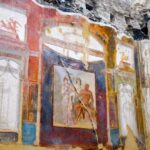
That difference helps explain why Herculaneum can show amazingly well-preserved wooden objects, as well as paintings and mosaics. This is the kind of detail that changes how you experience the site. You’re not stuck only with structural ruins. You can often see hints of material life, which is what makes Roman cities feel like they had texture, not just shapes.
It’s also where a good guide adds real value. Without context, wood and wall art might look like interesting artifacts. With context, you understand why these survivals are rare and how that survival changes what historians can infer from the evidence.
And because the tour is private, you can ask questions when something catches your eye. That small flexibility helps you turn curiosity into understanding instead of letting it fade as you move on.
Price and Value: What $317.76 Covers (And What It Does Not)
The price is listed at $317.76 per group, up to 1 person, for a two-hour private walking tour. That can sound steep until you break down what’s included.
What you do get:
- A licensed archeologist guide
- Admission fees to Herculaneum, included at 16.00 euros each
- Skip-the-ticket-line entry
- A private experience, so the pacing and language support come directly from your guide
What you do not get:
- Transportation
So the value depends on your situation. If you’re traveling solo or as a small group that wants a tight, expert-led route without waiting around, this price starts to look more like a practical way to buy time and understanding. If you’re a larger party, you might compare whether a group rate from another provider or standard entry makes more sense.
The best way to think about this tour is as a short, paid “shortcut” to meaning. You’re buying interpretation, not just access.
Practical Tips for a Smooth Herculaneum Walk
A few on-the-ground points will make your visit easier.
Wear comfortable shoes. The tour is walking-focused, and you’ll want to stay steady and unhurried.
Oversize luggage is not allowed, so travel light. If you have a standard day bag, you’ll be fine, but keep it simple.
The first Sunday of each month is special: entrance is free. The catch is tickets can’t be reserved ahead of time, so entry is not guaranteed. If you’re planning around that, treat it like a bonus day, not a reliable plan.
One more practical note: the activity information says wheelchair accessible, yet it also states it is not suitable for wheelchair users. Because that’s a mismatch, you should confirm directly with the provider before relying on wheelchair access.
Who Should Book This Private Herculaneum Tour?
This tour fits best if you want a guided, high-signal visit in a short window. It’s a good match for:
- People who like science meets storytelling, especially the eruption and preservation explanation
- Families with teens, since guides like Luciano are described as making it relatable for younger minds
- Travelers who prefer a private pace rather than a big group march
- Anyone who wants their visit to feel structured, with named stops instead of a wandering guess
If you prefer to roam slowly with no plan and no guided interpretation, you might feel rushed. But if you want your time in Herculaneum to turn into understanding, this is an efficient choice.
Should You Book This Herculaneum Archaeologist Walk?
I think it’s worth booking if you care about the story behind what you’re seeing. The standout value here is the combination of an archeologist guide and the preservation focus, especially the mud burial explanation that clarifies why wood, paintings, and mosaics survive when you’d expect them to disappear.
It’s also worth it if you want the emotional weight of the House of Skeletons and the beach area handled with context, not just as a quick photo stop. The guides named in past tours, like Antonio, Luciano, and Paola, are praised for being engaging and practical, and that makes a huge difference at a site that could otherwise feel overwhelming.
If you’re only in Campania for a short stop and you want one well-organized way to see Herculaneum, this private two-hour format is a smart pick.
FAQ
How long is the private walking tour of Herculaneum?
The tour lasts about 2 hours.
Is this a private tour?
Yes, it’s a private group tour.
What’s included in the price?
The tour includes a licensed archeologist guide and admission fees to Herculaneum (16.00 euros each). Skip-the-ticket-line entry is also included.
What languages are available for the live guide?
The live guide can be in Italian, Spanish, English, Japanese, Russian, French, Portuguese, Chinese, or German.
Where does the tour start and end?
The meeting point may vary depending on the option booked. The tour ends back at the meeting point.
What should I bring, and what’s not allowed?
Bring comfortable shoes. Oversize luggage is not allowed.
Is it possible to get free entry on the first Sunday of the month?
Entrance is free on the first Sunday of each month, but tickets cannot be reserved ahead of time and entry is not guaranteed.
More Walking Tours in Ercolano
More Tours in Ercolano

More Tour Reviews in Ercolano


Not for you? Here's more nearby things to do in Ercolano we have reviewed
Tour Reviews, compared.
 ★ 4.8Pompeii: Entry Ticket and Guided Tour with an ArchaeologistFrom $3519,459 reviews
 ★ 4.2Pompeii: Entry Ticket with Optional Audio GuideFrom $2612,360 reviews
 ★ 4.8Pompeii: Small Group Tour with an ArchaeologistFrom $4012,264 reviews
 ★ 4.3Pompeii Ruins & Mount Vesuvius Day TourFrom $12011,459 reviews
 ★ 4.6Sorrento, Positano and Amalfi Full-Day TourFrom $10710,988 reviews
 ★ 5.0Sorrento, Positano & Amalfi Coast – Small Group TourFrom $768,643 reviews
 ★ 4.6Catacombs of San Gennaro Entry Ticket & Guided TourFrom $157,941 reviews
★ 5.0Pompeii Small Group Tour with an ArchaeologistFrom $356,593 reviews
★ 4.6Catacombs of San Gennaro Entry Ticket & Guided TourFrom $157,941 reviews
★ 5.0Pompeii Small Group Tour with an ArchaeologistFrom $356,593 reviews
Browse the lists this tour appears in