
Tour review · TOUR REVIEWS
Herculaneum: Skip The Line Entrance ticket + Audioguide
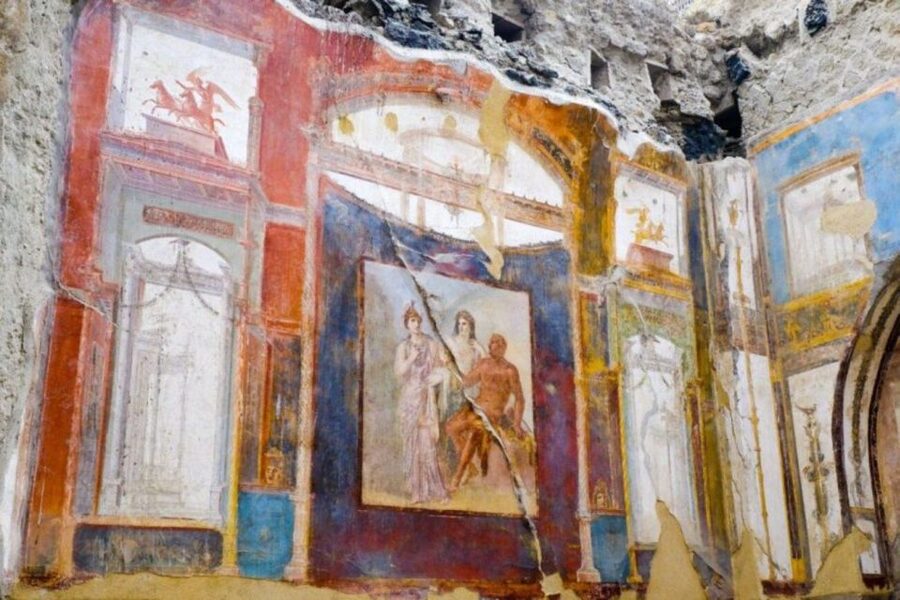
Vesuvius buried a whole town, intact. This skip-the-line ticket plus an audio guide turns Herculaneum into a walk you control, with help navigating the streets, alleys, and building numbers at your own pace. It is an ideal way to see Roman daily life in a place that still feels eerily close to the people who lived there.
I also like that the visit is self-guided. You can slow down for the houses, villas, and mosaics that grab you, and move on when you want. One possible drawback: headphones are not included, and the audio device can be a bit fussy if you show up without your own earphones.
Key things to know before you go
- Skip-the-line entry saves time at a site where every minute on the ground matters.
- Self-guided 3-hour visit means you set the pace, not the group.
- Audio guide + detailed map helps you navigate the site with numbered points.
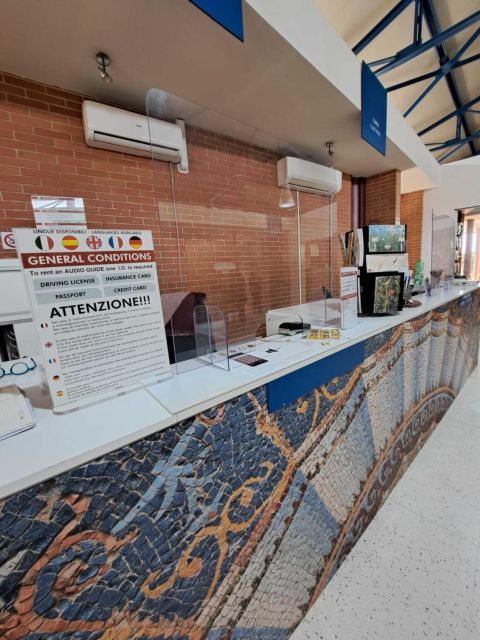
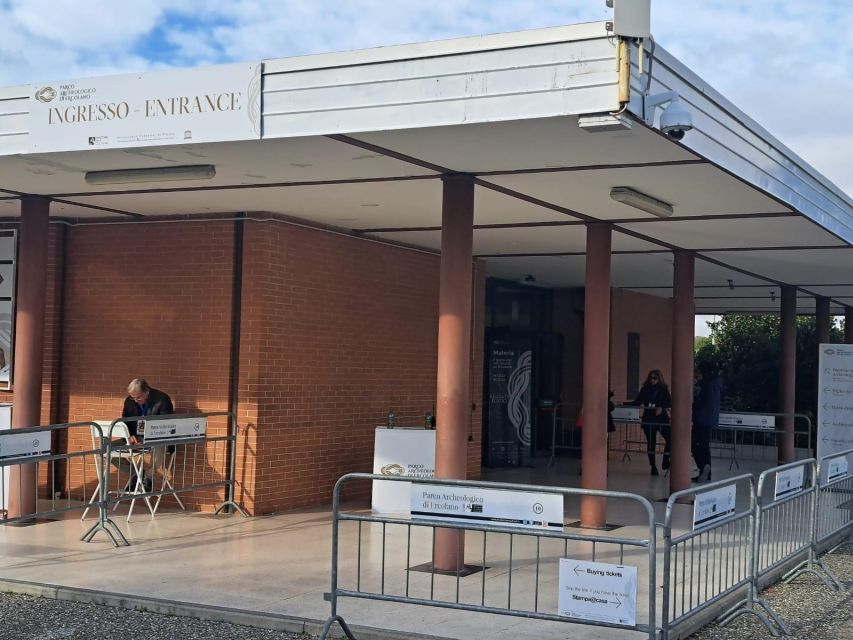
- Pick up at the Entrance and look for the Audioguide Desk to get started fast.
- Bring ID because the audio guide hire requires a valid passport or ID card.
Herculaneum Skip-The-Line + Audio Guide: what you’re really buying
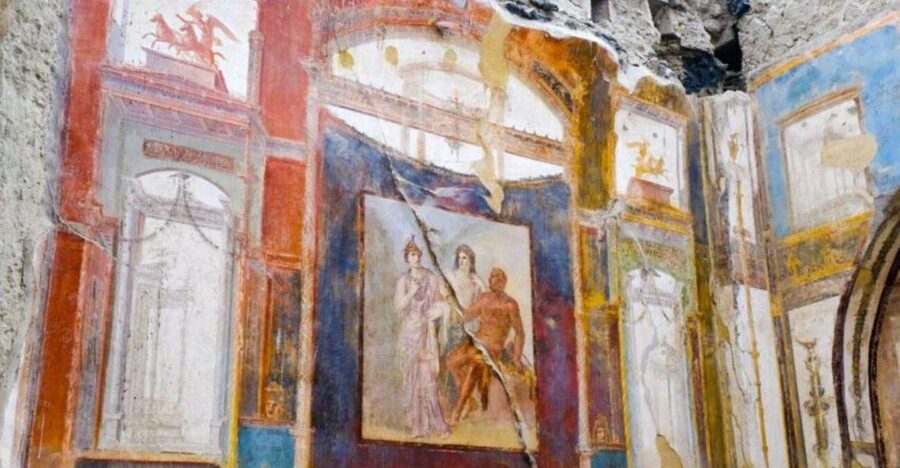
For about $35 per person, you get an entrance ticket, an audio guide, and a map. The ticket is self-guided, so you are not stuck listening to someone else’s priorities. You are free to wander Herculaneum during opening hours and stay as long as you like within that window.
The audio guide is the star of the show. At Herculaneum, the ruins can be visually obvious, but the meaning is not always. The audio guide fills in the gaps with clear explanations designed to match what you are looking at. It is available in Italian, German, English, French, and Spanish, which is a big plus if you are traveling as a mixed-language group.
The big context: Herculaneum preserves a Roman town that was buried by the eruption of Mount Vesuvius in 79 AD. Because the remains are so well preserved compared with many other archaeological sites, you can get a stronger sense of daily life, not just grand monuments.
Value-wise, this combo makes sense if you like independence. It also helps if you are visiting on a day that has other moving parts, like trains, boats, or a second stop nearby.
More Naples tours, ruins, coast days, and city experiences to compare

Finding the Audioguide Desk at the Entrance (and starting smoothly)
Your meeting point is simple: go to the Entrance and look for the Audioguide Desk. In practice, this is the part that can cost you a few minutes if signage is confusing or you arrive fast and distracted. I recommend building in extra time before your planned start, then get your audio guide sorted before you start walking.
What you need on arrival:
- A valid passport or ID card (required for audio guide hire)
- Comfortable shoes, because you will be on uneven surfaces and stairs
- Your patience, since the device handling rules matter
One more practical detail: the audio guide device needs to be returned before the office closing time. And if something goes wrong, like loss or damage, you are responsible for repair or replacement costs. That is normal for rented equipment, but it is worth keeping in mind so you handle the device carefully.
Also, this visit runs rain or shine. That means you should think about slipping risk on wet stone and bring a light layer if the weather changes.
Planning your self-guided 3-hour walk without feeling rushed
The duration is listed as 3 hours, but the real goal is how you spend that time on site. Herculaneum is often described as smaller and more manageable than Pompeii, which is exactly why this audio-guide format works so well. You can cover a lot without the sprint feeling you get on crowded guided tours.
A smart way to use your time:
- Start by following the audio guide’s numbered points so you do not waste energy trying to guess what matters most.
- When you hit a space that feels interesting, stay longer. When it does not, move on.
- Save your energy for the best-preserved areas, especially the houses, villas, and mosaics.
If you are combining this with other plans in the area, the compact nature is a plus. People also note the site involves a walk from the train station, described as about a half mile downhill. That means you should factor in return time and your own walking comfort, especially if you have limited mobility or you are traveling with kids.
Food is another timing issue. There are vending machines, but there is no café or restaurant on-site. So if you want a real lunch break, bring your own food and plan to eat outside or on the move. This is one of those small planning details that can make your visit feel effortless or stressful.
What to look for: houses, villas, and mosaics guided by the device
Herculaneum’s power is in what it shows you about everyday Roman life. The ruins are not just walls. You can understand spaces as rooms, courtyards, and settings for daily routines. The audio guide helps you connect each viewpoint to the bigger story of 79 AD and what made Roman houses work the way they did.
Here is what you should plan to notice as you go:
- Well-preserved houses that show how people lived, moved through space, and used rooms for different purposes
- Villas that feel different in scale and design, giving you a contrast to the more standard home
- Mosaics, which can look stunning even when you only pause for a minute
A key detail: the audio guide uses a map and points you toward specific buildings and areas. Several people point out that the site itself has limited information on the ground, so the audio becomes your main interpretive layer. In other words, you are not just buying time-saving tickets. You are buying context.
Also, because this is self-guided, you can tailor your priorities. If you care about domestic life, you naturally spend more time around the houses. If mosaics are your thing, you slow down when those come up. If your attention wanders, you can quickly reset by switching to the next numbered stop.
Why this works so well after Pompeii (and for a full Vesuvius day)
If you have already been to Pompeii, Herculaneum can feel like a smart follow-up rather than a repeat. Pompeii is huge and dramatic, but it can also be tiring. Herculaneum is smaller, and the preservation is astonishing, which means you often get a clearer sense of how spaces were used.
Many visitors pair the two. That pairing makes sense because you can cover Herculaneum in a focused chunk and then keep the rest of the day for another major experience, like a Vesuvius trip. If you are trying to build a tight itinerary, Herculaneum’s manageable size and a self-guided audio format make it easier to stick to your schedule.
The tradeoff is straightforward: you will not get the same scale as Pompeii. But you get something arguably more intimate: you are closer to the texture of everyday life. And the audio guide helps you turn that closeness into understanding, not just sightseeing.
More Naples tours, ruins, coast days, and city experiences to compare

Practical comfort: headphones, pacing, and device care

The site’s practical needs are simple, but they can surprise you if you are not prepared.
Headphones matter more than you think
Headphones are not included, and you will need your own. One person found the audio device a bit sensitive, especially when held up close, and it could cut out when touched. So bring earphones you know fit well, preferably wired ones that stay put.
A second practical tip: if you plan to use Bluetooth headphones, do not assume it will pair smoothly. The audio device experience can vary, and you do not want a tech headache eating your best ruins time.
Wear shoes for real stone
Bring comfortable shoes. You are walking on uneven archaeological ground, and the route includes changes in elevation. Even in good weather, your feet will appreciate traction and support.
Keep the device safe
You must return the device before the office closing time. And if it is lost, stolen, or damaged, you are responsible for repair or replacement costs. That means you should treat it like the rented item it is, not like a disposable gadget.
Price and value at around $35: who this ticket suits best
At $35 per person, the value depends on how you like to travel.
This is a good deal if you:
- Prefer self-guided freedom over group schedules
- Want to spend time where you personally care, instead of being pulled onward
- Like using a guide that matches what you see, not a lecture that moves faster than your eyes
- Are visiting with limited time and want to cut wasted moments at the entrance
If you are the type who loves a lively live guide and questions answered on the spot, then a guided tour might feel more satisfying. But this package is designed for independence, and it delivers that well with the included audio guide and map.
One more value angle: Herculaneum is described as manageable in size. That means 3 hours can be enough to feel like you experienced the site, not just passed through it. If your day is packed, this helps you keep control of your schedule.
Should you book this Herculaneum Skip-The-Line + Audio Guide?
If you want a smooth, independent visit to Herculaneum, I would book it. The combination of skip-the-line entry, a working audio guide in multiple languages, and a map makes it easier to understand the ruins without needing a person beside you.
Book with confidence if:
- You want control over your pace
- You plan to bring your own headphones
- You can handle about 3 hours of walking and stopping
Skip or reconsider if:
- You hate audio devices and would rather have a live guide doing the talking
- You are not willing to bring and care for rented equipment
My practical advice: arrive a little early, find the Audioguide Desk, test your headphones once you have the device, then let the numbered points lead you. It is one of the best ways to turn a preserved Roman town into something you actually understand.
FAQ
What’s included with the Herculaneum ticket?
You get an entry ticket for Herculaneum, an audio guide, and a map.
Is this a guided tour with a person?
No. This is a self-guided visit using the audio guide.
How long do I have for the visit?
The experience duration is 3 hours. You explore at your own pace within opening hours.
Where do I pick up the audio guide?
Go to the Entrance and look for the Audioguide Desk.
What languages are available for the audio guide?
The audio guide is available in Italian, German, English, French, and Spanish.
Are headphones included?
No. Hearphones or headphones are not included.
Do I need to bring ID?
Yes. A valid passport, identity card, or driving licence is required for audio guide hire.
Does the visit run in bad weather?
Yes. This takes place rain or shine.
Do I have to return the audio guide?
Yes. Devices must be returned before office closing time.
Can I cancel and get a refund?
Yes. Free cancellation is available up to 24 hours in advance for a full refund. Reserve now & pay later is also offered.
More Skip the Line in Ercolano

More Tickets in Ercolano

More Tour Reviews in Ercolano


Not for you? Here's more nearby things to do in Ercolano we have reviewed


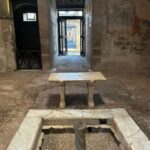
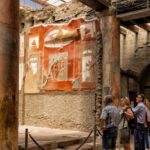


Tour Reviews, compared.
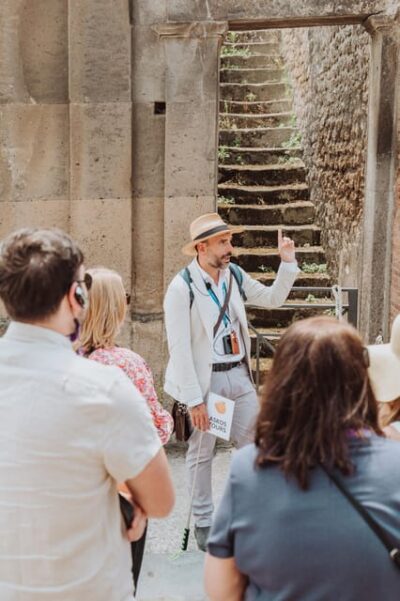 ★ 4.8Pompeii: Entry Ticket and Guided Tour with an ArchaeologistFrom $3519,459 reviews
 ★ 4.2Pompeii: Entry Ticket with Optional Audio GuideFrom $2612,360 reviews
 ★ 4.8Pompeii: Small Group Tour with an ArchaeologistFrom $4012,264 reviews
 ★ 4.3Pompeii Ruins & Mount Vesuvius Day TourFrom $12011,459 reviews
 ★ 4.6Sorrento, Positano and Amalfi Full-Day TourFrom $10710,988 reviews
 ★ 5.0Sorrento, Positano & Amalfi Coast – Small Group TourFrom $768,643 reviews
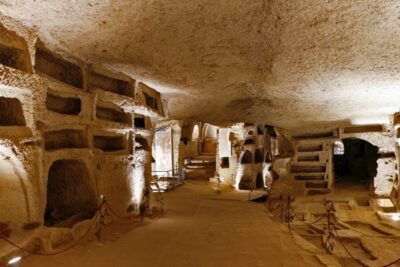 ★ 4.6Catacombs of San Gennaro Entry Ticket & Guided TourFrom $157,941 reviews
★ 5.0Pompeii Small Group Tour with an ArchaeologistFrom $356,593 reviews
★ 4.6Catacombs of San Gennaro Entry Ticket & Guided TourFrom $157,941 reviews
★ 5.0Pompeii Small Group Tour with an ArchaeologistFrom $356,593 reviews
Browse the lists this tour appears in