
Tour review · TOUR REVIEWS
Naples Pizza-Making: From Dough to Dessert & Wine at Pizzeria
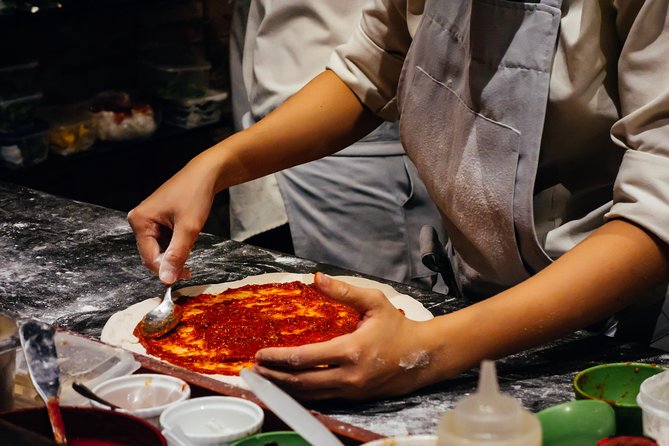
Wood-fired pizza starts as dough. I love the precision, especially the Neapolitan crust goal, then the hands-on shaping step where you cut and form the panetti. My other favorite part is eating your own Margherita at the end, with a drink and good laughs. The only downside is it is active work, so plan on standing at your station and moving with the group.
This is a small class, capped at 15 travelers, which matters because you actually get coaching. The session is offered in English, and in practice that means the host keeps you on track even if the pizzaiolo speaks mostly Italian.
Expect a full loop: dough work, topping, wood-fired baking, then dessert plus a limoncello toast. If you want a souvenir you can cook with later, the class also shares what you need so you can repeat the results at home.
Key highlights worth timing your day for
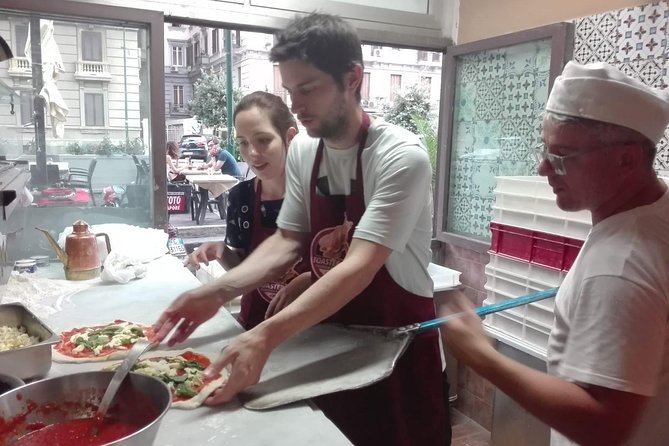
- Wood-fired oven time: you bake your own Neapolitan pizza, not just watch.
- Dough technique focus: you learn kneading, rising, and how to aim for that thin, soft crust.
- Staglio and panetti shaping: the cut-and-portion method is taught as part of the craft.
- Small-group teaching: max 15 people, so your questions do not get lost.
- Dessert with your pizza meal: fried pizza with chocolate spread comes at the end.
- Drinks and limoncello: beer or wine or soda plus a classic finish.
Why Neapolitan pizza dough in Naples hits different
This class is interesting because it teaches you pizza as a process, not a recipe. Neapolitan pizza is about simplicity, but that simplicity only works when the dough, timing, and shaping are right. In Naples, that craft culture is part of everyday life, so learning it feels less like a cooking gimmick and more like joining a real tradition for a couple hours.
I also like that the lesson is anchored in practical technique. You are not just getting instructions, you are getting feedback while you work. That is what makes the difference between making a decent pizza and making one that tastes like it belongs in Naples.
You can also read our reviews of more wine tours in Naples

From Toto’ Sapore to your station: how the class really flows
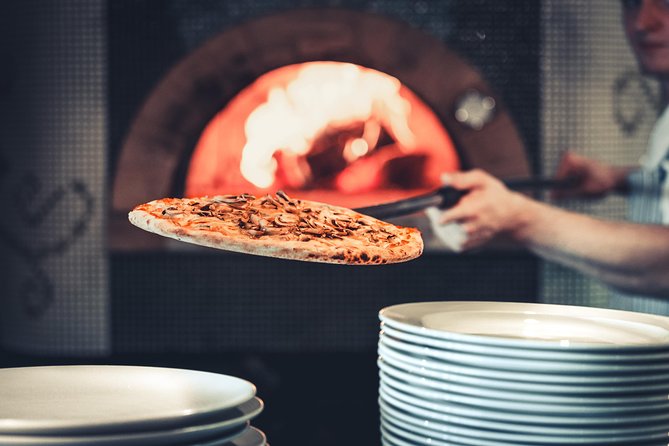
You meet at Toto’ Sapore, Viale Antonio Gramsci, 18/B, 80122 Napoli. The session runs about 2 hours, and it ends back at the meeting point. Since it is near public transportation, it is usually easier to get there without a complicated taxi mission.
Once you arrive, the atmosphere is relaxed but focused. You get set up with your own station and the tools and ingredients you need, so you are not hunting around or guessing what comes next. A host runs the experience in English, and the pizzaiolo handles the craft teaching at the work area near the oven.
Group size matters here. With a cap of 15, your host can check in with more than just the loudest person in the room, and the pizzaiolo can correct hands-on issues before they snowball.
Kneading and rising: the dough part you should pay attention to
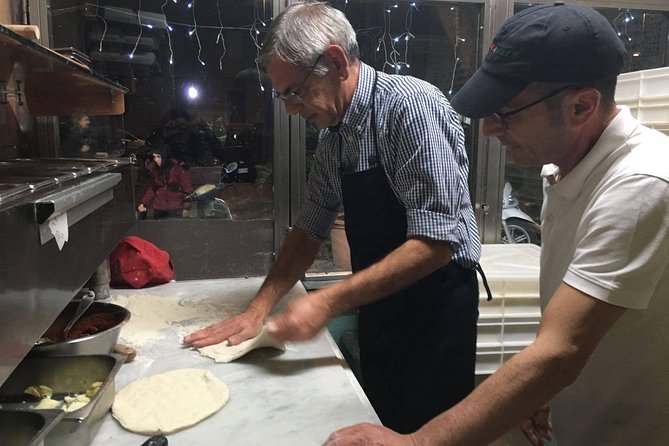
The dough lesson is the heart of the experience. You work on the dough using guided steps, including kneading and the right rise timing. This is where many home cooks get stuck, because “making pizza dough” sounds simple until you try to match the texture and stretch you want.
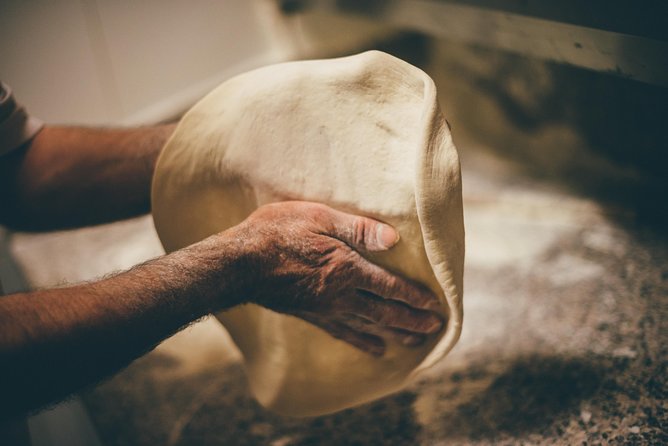
You learn the approach to reach that classic Neapolitan crust, thin and soft. It is not about making paper-thin dough by force. It is about building dough strength early, then shaping it so it stays supple without springing back.
One reason I value this portion is that the dough skills apply beyond pizza. If you can handle stretching, keeping thickness even, and not tearing the dough, you can adapt the method to other dough-based dishes later.
Staglio and panetti: the shaping step that controls your outcome
The “staglio” technique, cutting the dough into portions called “panetti,” is not just ceremonial. It sets up fermentation and baking results. If you cut wrong or handle the dough carelessly, the pizza can bake unevenly or lose that tender bite.
In class, you practice this step at your station with guidance from the pizzaiolo. You learn the precise, repeatable approach rather than a vague “cut into equal pieces” instruction. That precision is what helps the final pizza look right and taste right.
This is also a fun moment because it is physical and quick. You go from ingredients to dough portions you can actually shape into pizzas. It is a turning point in the session, where you feel the lesson switch from learning to doing.
Topping a Margherita the Neapolitan way, then baking in a wood-fired oven
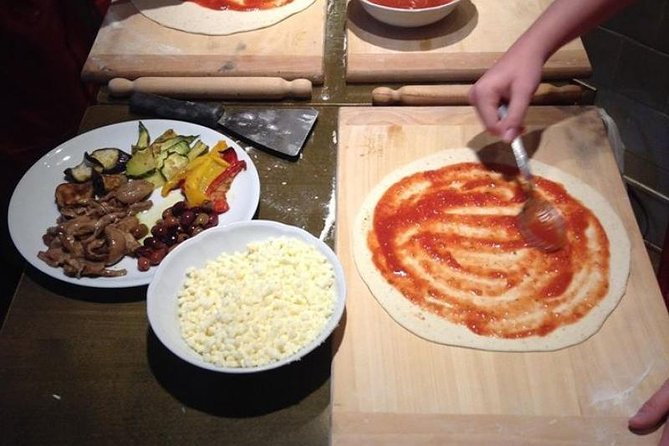
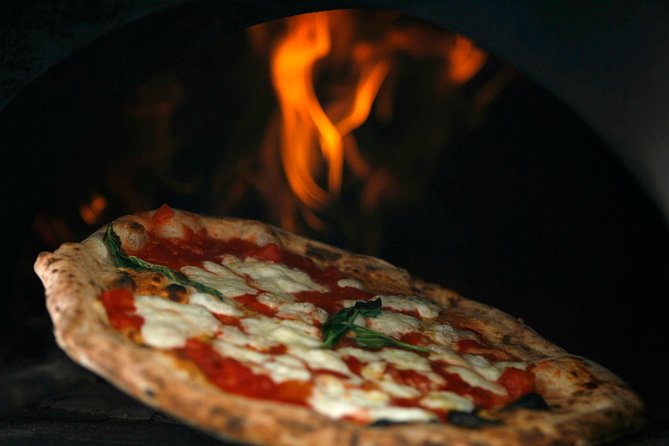
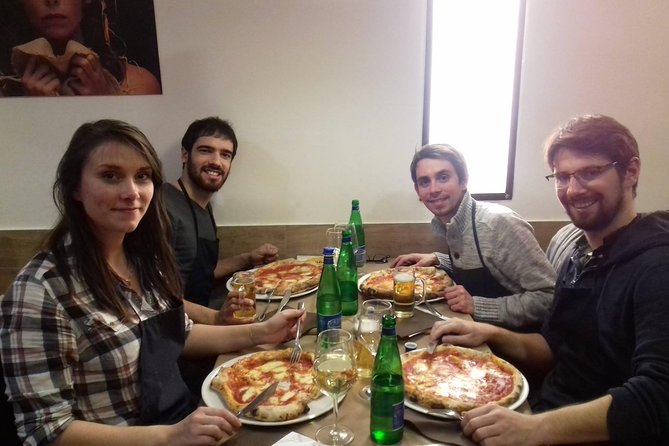
Your main pizza is Pizza Margherita. That matters because Margherita is simple on purpose. You taste the dough, the sauce, the mozzarella, and the basil more clearly. The class uses local ingredients like fresh tomatoes, buffalo mozzarella, basil, and DOP olive oil, so you are not just learning technique, you are learning flavor balance.
Then comes the wood-fired bake. You watch the pizzaiolo while you learn how the pizza behaves in the oven, and you also get time to bake your own. Neapolitan ovens move fast, and heat quality changes everything. That is why the lesson is built around actually cooking in the real setup, not using a home oven and hoping for the best.
A small practical detail that stood out from the teaching style: you get instruction on how to handle and place the pizza, including how to manage the pizza peel to rotate the pizza for even baking. That is the kind of skill you cannot guess from a cookbook.
More Naples tours, ruins, coast days, and city experiences to compare
Dessert, wine or beer, and a limoncello toast to close the circle
The dessert is part of the point: Neapolitan pizza dough can do more than dinner. You get a sweet dough dessert called fried pizza with chocolate spread, listed as Straccetti di pizza al Cioccolato. It is served after the main meal, so you finish with something warm, indulgent, and clearly different from the savory lesson.
Drink is included too. You get a glass of Birra alla spina (draft beer) or wine, or you can choose soda. Bottled water is also included. In most cases, that makes the meal feel like a real dinner break rather than a class where you just snack.
Toasting with limoncello is the classic finish. It is a quick cultural note, but it also signals the transition from cooking to eating together. One of the best parts of the night is that you share the table with the people who worked next to you, so the “everyone made their own pizza” moment lands harder.
Value check: is $82.68 per person worth it?
At $82.68 per person for about 2 hours, this is not the cheapest thing you can do in Naples. But it includes a lot that adds up fast if you tried to recreate it on your own: hands-on lesson time, your Margherita pizza lunch or dinner, dessert, a drink, bottled water, and a limoncello (or coffee). You also get a Napoli Football Store Virtual Experience included in the package.
So the value comes from bundle pricing and from instruction you cannot easily substitute. Buying ingredients and renting a wood-fired oven set-up at home is not realistic. Even if you have a pizza stone, you would still miss the method, timing, and shaping coaching that helps you get that thin-soft crust.
My practical advice: if you are the kind of person who likes to learn a “do it right once” technique, this price starts to feel fair. If you only want to eat pizza and you are not curious about dough, you might prefer a straightforward meal and skip the class.
Who this pizza-making class suits best
This is a strong fit for:
- You if you want hands-on cooking and not just a tasting.
- You if you are a pizza lover who wants real technique, especially dough handling and staglio.
- You if you enjoy casual group experiences, small enough to feel personal.
It is also family-friendly in the age range given. Children are allowed starting at age 6. If you are traveling with younger kids, this one will not work, because children under 6 are not allowed to participate, including access to the work area and oven zone.
One more fit detail: it is offered in English. That makes it easier for non-Italian speakers to follow what you are doing and why. In practice, some of the craft teaching comes from the pizzaiolo, and the host helps translate the instructions clearly.
A few smart planning tips so you do not lose dough time
- Wear comfortable shoes. You are at your station for a chunk of the session, and the work is physical.
- Go in expecting a fast pace near the oven. Wood-fired baking needs quick coordination.
- If you are driving, be prepared for parking friction. One helpful note from experience is that parking can be tough in this neighborhood area.
- If you arrive late, you may miss parts of the dough workflow. The class is built as a sequence, so timing matters.
Also, if you have dietary needs, tell the operator when booking. The class asks you to let them know about dietary restrictions, which is the only responsible way to handle substitutions in a dough-and-ingredients lesson.
Should you book this Naples pizza lesson or skip it?
Book it if you want to learn the craft behind Neapolitan pizza and you like the idea of leaving with more than a photo. You get wood-fired baking, dough technique, staglio and panetti shaping, plus dessert and drinks. The small-group size helps you actually feel guided, not rushed.
Skip it if your main goal is just eating the best pizza in Naples without any cooking. In that case, you could spend that time on a top-rated pizzeria meal and use your money elsewhere.
If you decide to go, I suggest booking early if your trip dates are fixed. On average, this class is commonly reserved about a month in advance, which usually means it can fill.
FAQ
How long is the Naples pizza-making class?
It runs for about 2 hours.
What is included in the price?
You get a hands-on pizza lesson, lunch or dinner with the Pizza Margherita you create, a glass of beer or wine or soda, bottled water, limoncello or coffee, and fried pizza dessert with chocolate spread. A Napoli Football Store Virtual Experience is also included.
What kinds of drinks are available?
The class includes beer (Birra alla spina) or wine, or soda. Bottled water is included as well, and you finish with limoncello or coffee.
Is the class offered in English?
Yes, the experience is offered in English.
Is this class suitable for children?
Yes, it is only suitable for children aged 6 and over. Children under 6 are not allowed to participate, including access to the work area and oven zone.
Where does the class meet?
The start meeting point is Toto’ Sapore, Viale Antonio Gramsci, 18/B, 80122 Napoli NA, Italy. The activity ends back at the meeting point.
What is the cancellation policy?
You can cancel for free up to 24 hours in advance for a full refund. If you cancel less than 24 hours before the start time, the amount paid is not refunded.
More Dessert Tours in Naples
More Wine Tours in Naples


More Tour Reviews in Naples


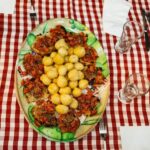
Not for you? Here's more nearby things to do in Naples we have reviewed




Tour Reviews, compared.
 ★ 4.8Pompeii: Entry Ticket and Guided Tour with an ArchaeologistFrom $3519,459 reviews
 ★ 4.2Pompeii: Entry Ticket with Optional Audio GuideFrom $2612,360 reviews
 ★ 4.8Pompeii: Small Group Tour with an ArchaeologistFrom $4012,264 reviews
 ★ 4.3Pompeii Ruins & Mount Vesuvius Day TourFrom $12011,459 reviews
 ★ 4.6Sorrento, Positano and Amalfi Full-Day TourFrom $10710,988 reviews
 ★ 5.0Sorrento, Positano & Amalfi Coast – Small Group TourFrom $768,643 reviews
 ★ 4.6Catacombs of San Gennaro Entry Ticket & Guided TourFrom $157,941 reviews
★ 5.0Pompeii Small Group Tour with an ArchaeologistFrom $356,593 reviews
★ 4.6Catacombs of San Gennaro Entry Ticket & Guided TourFrom $157,941 reviews
★ 5.0Pompeii Small Group Tour with an ArchaeologistFrom $356,593 reviews
Browse the lists this tour appears in