
Tour review · TOUR REVIEWS
2-Hour Private Walking Tour of Pompeii
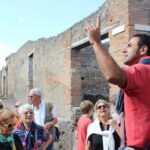
Pompeii hits different when you walk it. This 2-hour private route gives you skip-the-line entry and a guide focused on everyday Roman life, not just big monuments. You will move through forum sights, street-level details, and entertainment areas all inside Pompeii’s city walls.
I especially love the chance to walk the original basalt road and catch how people used the street during the day and at night. I also like how the tour pulls in practical, human stuff, like the bakeries and the plaster casts that show the exact poses people died in.
One possible drawback: it is not suitable for wheelchair users or people with mobility impairments, and there is a lot of walking on uneven ancient surfaces. Even so, the itinerary is described as flexible based on interests and physical ability, so if you have limitations, talk to Leisure Italy ahead of time.
Why this Pompeii tour is worth your time
- Skip-the-line tickets (Pompeii Express) that cover all areas within the city walls
- A private guide for a small group (up to 10), with a flexible plan
- Street-level Pompeii details, including the basalt road and torch-light reflectors
- Key civic sights in the Forum, plus temples and major public buildings
- A mix of everyday life stops, from bakeries to taverns, shops, and villas
- Entertainment and after-hours Pompeii, including three theaters and erotic frescoes
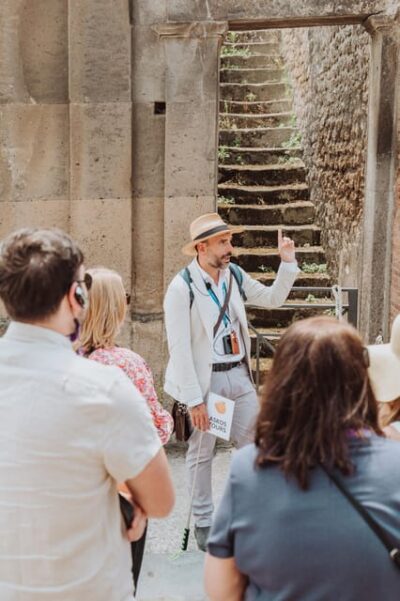
Walking Pompeii at a human pace with a private guide
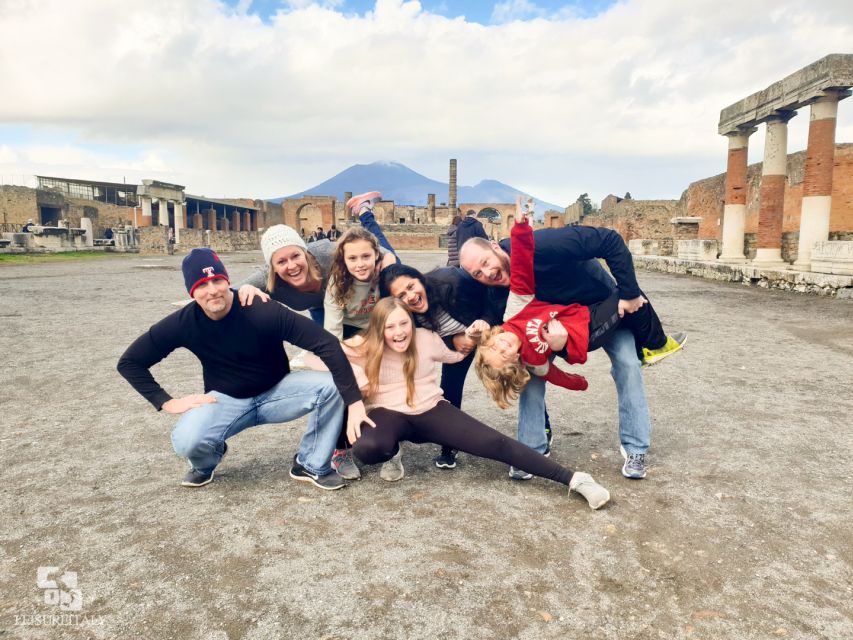
Pompeii is big. Even the best self-guided plan can feel like stone hopping. This is different because you are walking with a guide who can steer you through the city like a living place, with religion, trade, and daily routines all stacked next to each other.
What makes it work in just two hours is the structure. The tour aims to hit at least one example from each type of building, so you get the full feel of a Roman town, not only the headline sights. And because it is flexible around your interests and physical ability, you can shift emphasis toward forum life, entertainment, or everyday commerce.
If you want Pompeii to feel less like a museum and more like a neighborhood, this is the style of tour that usually clicks. You will spend less time guessing and more time seeing the city through Roman eyes.
Meeting at Café Hortus Pompeii, then getting in fast
Your tour starts at Café Hortus Pompeii, in front of the entrance at Via Villa dei Misteri 2, Pompeii Archeological Park. The tour ends back at the same meeting spot, so you are not left scrambling at the end.
The biggest practical win is Pompeii Express skip-the-line tickets. You do not just get help navigating, you get tickets that allow you to visit all areas within the city walls. In a place where lines and entry rules can slow you down, that matters.
If you travel on the first Sunday of each month, entrance is free of charge. The tradeoff is that tickets cannot be reserved ahead of time, so entry is not guaranteed. If that date matters to you, plan for the possibility of delays and keep your expectations flexible.
You can also read our reviews of more walking tours in Pompeii Archaeological Site
The basalt road, torch reflectors, and the small details that change everything
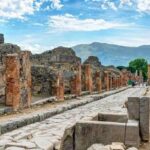
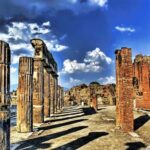
One of my favorite parts of any Pompeii visit is when the tour pulls you down to street level. This one does, with a walk along the original road made of volcanic basalt rock.
As you move along, your guide points out the hundreds of little white travertine spots set into the street. They were used to reflect torch light, which is an astonishing detail once you can see it. Even during daylight, it helps you picture night-time Pompeii and how people navigated the streets after dark.
You also notice how the road was designed for weather. Big blocks of basalt emerge from the road, used by pedestrians to avoid getting wet when it rained. It is a small thing, but it instantly makes the place feel engineered for real people, not staged for tourists.
This is where a private guide pays off. Without someone explaining what you are looking at, it is easy to walk right past the story embedded in the stone.
Forum landmarks: Temple of Apollo, Emperor, Capitolium, and Basilica
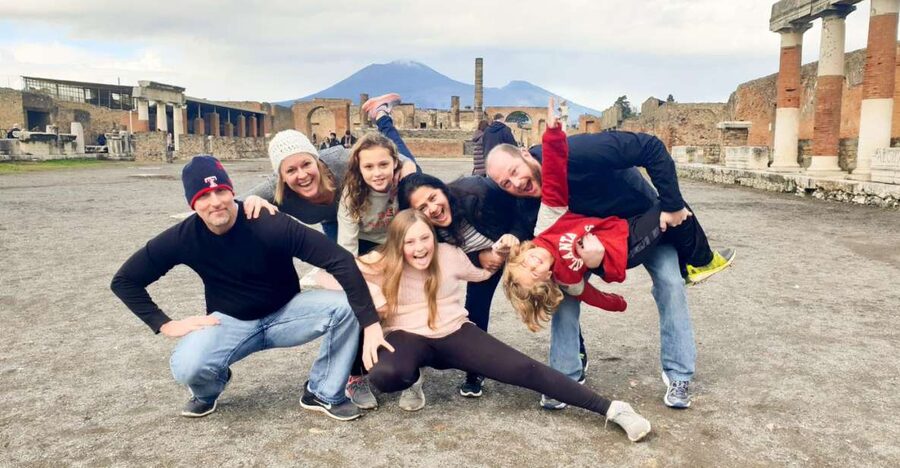
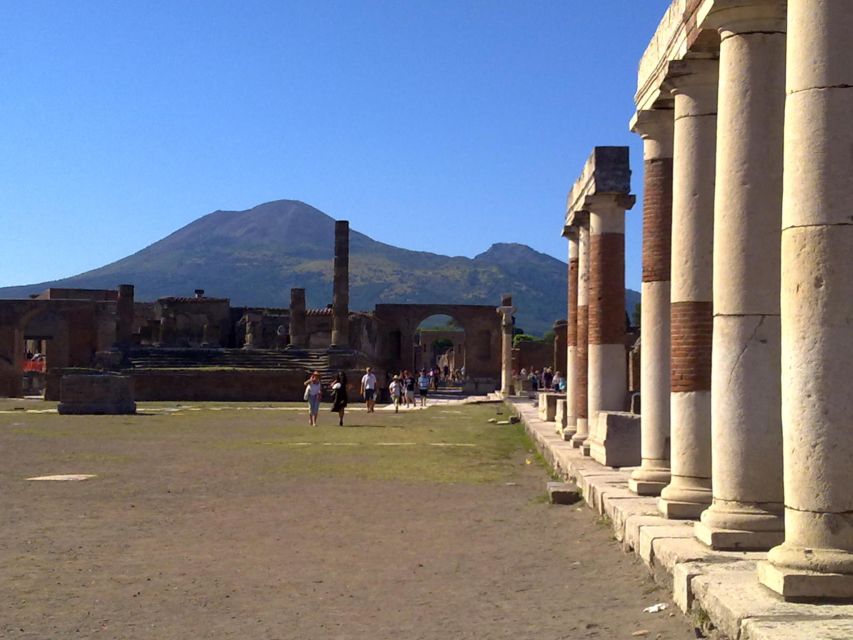
The Forum is Pompeii’s civic heart. In two hours, you cannot cover everything, but the tour makes sure you hit the kinds of buildings that defined public life. You walk through the Forum area and see major religious and governmental spaces.
Among the sights you will see are the Temple of Apollo and the Capitolium, plus the Temple of the Emperor and the Basilica. These are the buildings that signal power, belief, and authority in the daily rhythm of the city.
Here is why I think this matters for your understanding. Pompeii is frozen in time, but the Forum shows how the Romans organized society. Religion was not separate from politics and administration. It was the same system, built into the architecture you would have walked past every day.
Take your time with these stops, even if you want to rush ahead. The mix of temples and civic buildings is what turns Pompeii from scenery into a functioning model of how Romans lived.
More than monuments: baths, villas, taverns, and shops
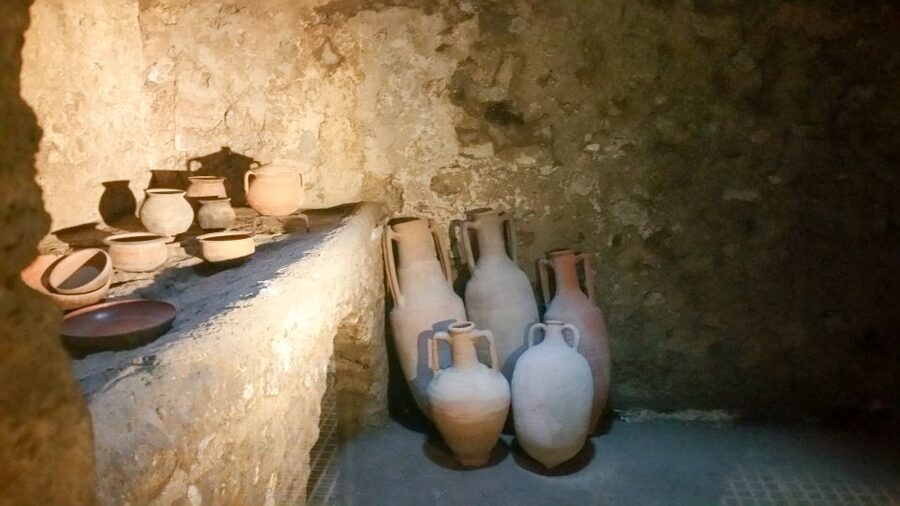
A big reason to book a guided route is balance. You do not want a Pompeii day that is 90 percent grand buildings and 10 percent daily life.
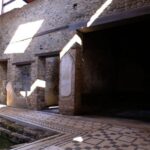
This tour includes stops designed to show life in an everyday Roman town, including public baths, villas, taverns, and shops. You also see how commerce and community played out at street level, where neighborhoods overlapped with business.
Even if you are not an architecture fanatic, these stops are useful. Baths tell you about social routine. Taverns and shops hint at what people ate, bought, and discussed. Villas connect domestic life to the city’s bigger public spaces.
If you like learning from visuals, ask your guide what you are looking at and why it was placed here. The best Pompeii tours are the ones where you can connect the dots without doing homework first.
Roman fast food: Pompeii bakeries and carbonized bread finds
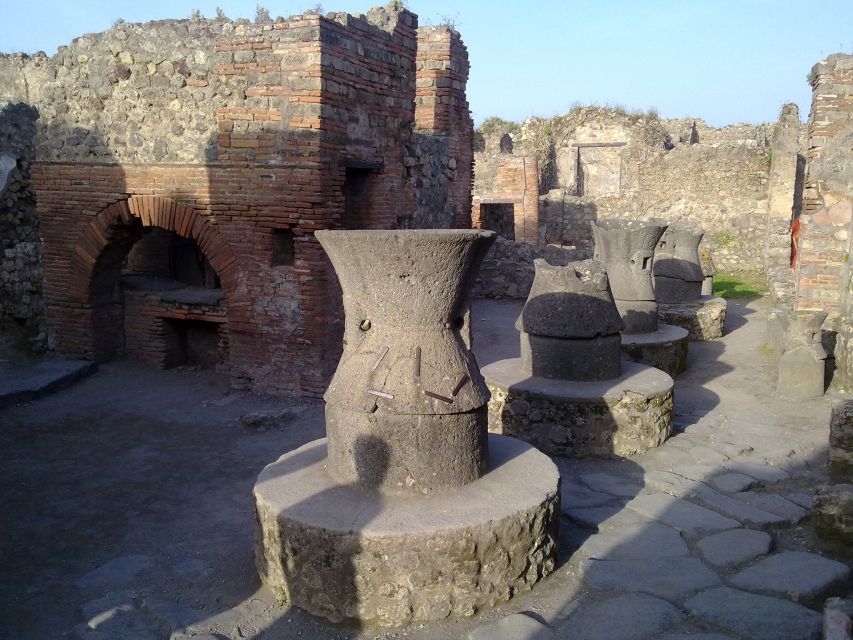
One of the stops that tends to land hardest is the bakery section. You visit one of Pompeii’s bakeries and get a sense of the Roman version of quick food.
Your guide shows the places where carbonized loaves of bread were found during excavations. Seeing that evidence in context changes the visit. It is no longer just an old oven in a wall. It is a clue to how people fed themselves right before the eruption.
Why it works on this tour: bakeries are tied to daily urgency. Food had to be made often. That means bakeries were part of the normal city tempo, not a special occasion.
This is also a strong stop for families and casual travelers. It gives you something easy to imagine and a straightforward question to ask your guide, like what the process might have looked like and who relied on it.
You can also read our reviews of more private tours in Pompeii Archaeological Site
Human casts: the tragedy you cannot ignore, told with care
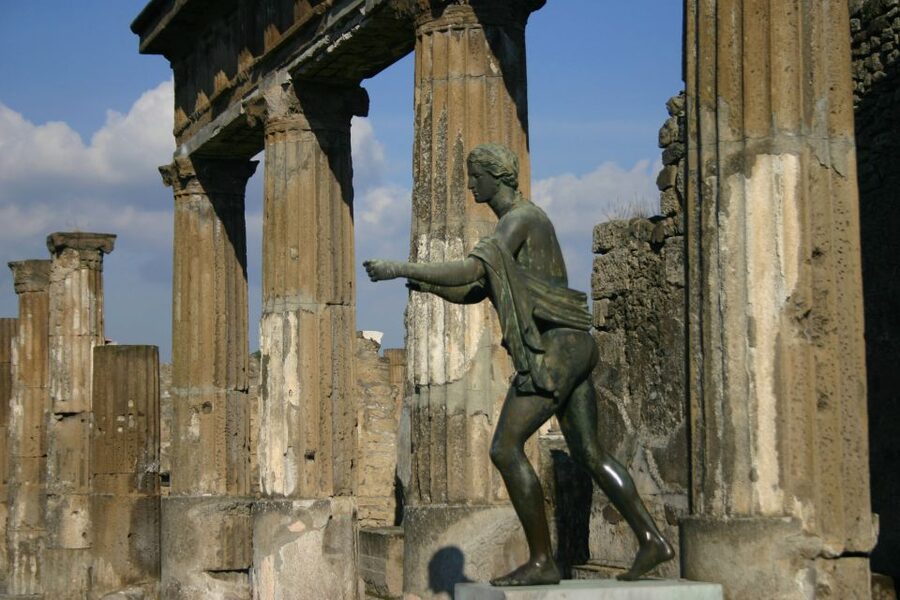
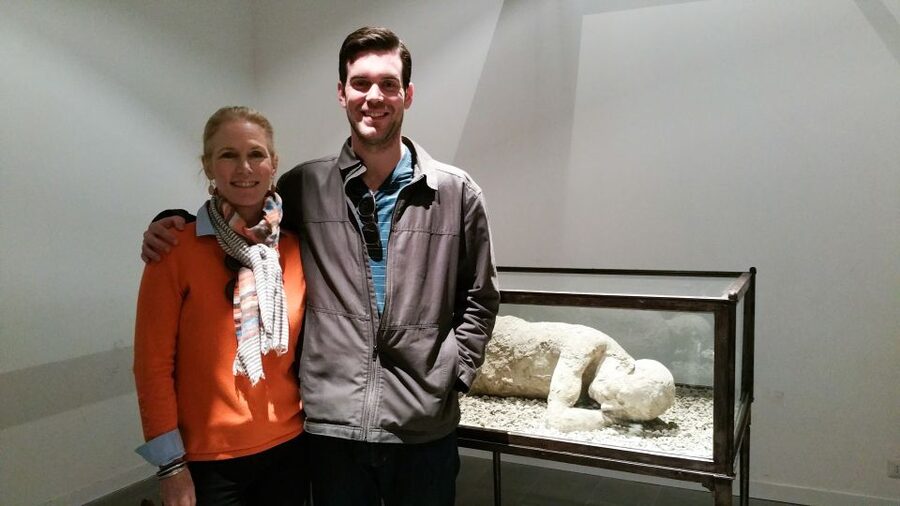
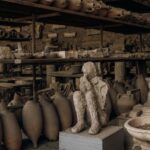
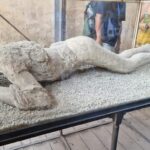
Pompeii is famous for the human remains and the plaster casts. This tour includes a display of human casts of Pompeii residents, caught by the volcano in the exact pose that they died.
This is the portion of Pompeii that demands slower attention. I like guides who treat it with respect and keep the focus on what it means for people, not shock value. A good guide also helps you understand why the casts matter, because they turn a disaster into real lives and specific moments.
The value here is emotional and historical at once. You get the context of a city that was not prepared, and you understand how suddenly daily routines ended.
If you want a gentler pace, tell your guide. A flexible itinerary helps you take breaks without feeling like you are falling behind.
The former Red Light District and erotic frescoes
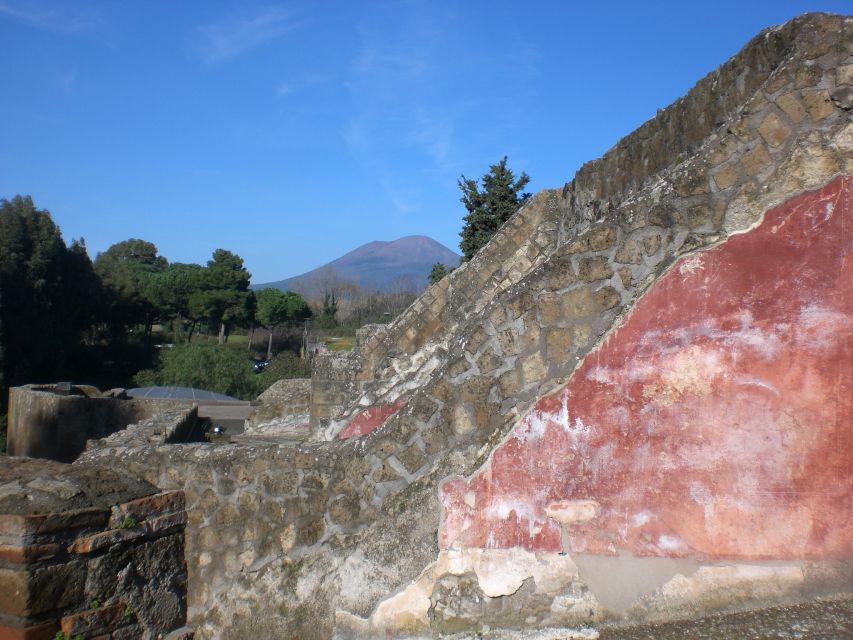
The tour continues to what is often called Pompeii’s former Red Light District. You will see Roman frescoes of erotic images.
This can be surprising, especially if you have the idea that Pompeii is only about temples and ruins. But erotic art is part of everyday culture in Roman life, and frescoes like these show how openly people recorded desire and humor on household walls.
It also helps to think about why this stop belongs on a “whole town” tour. Pompeii was not sanitized. People had sex lives, fantasies, and social signals just like anywhere else.
If you are visiting with kids or want to avoid adult content, tell your guide up front. The tour is described as adaptable, so you can adjust what you choose to prioritize.
Pompeii’s three theaters: outdoor performances, mime and poetry, tragedies and comedies
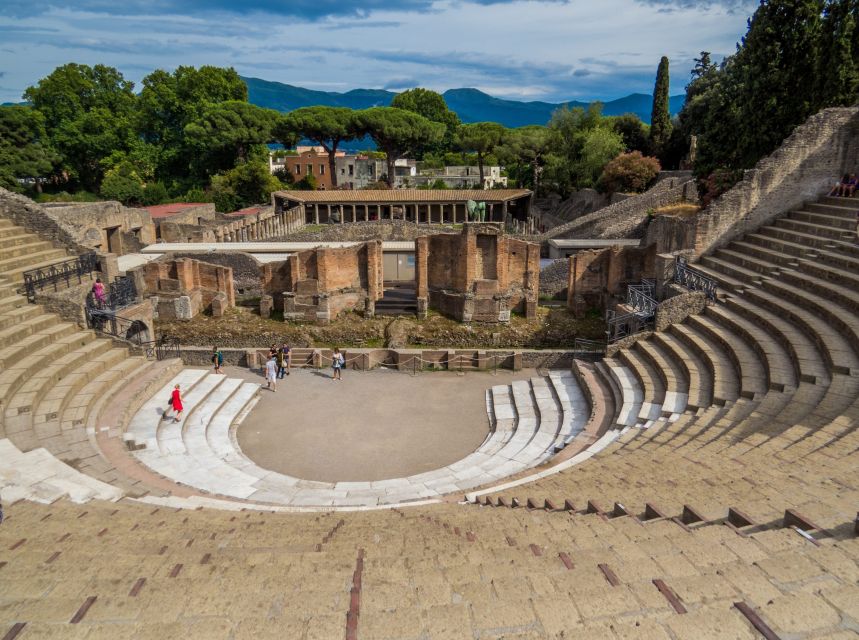
Roman entertainment is a major theme, and this tour includes a visit to one of Pompeii’s three theaters. You can see an outdoor arena for public performances, an indoor theater for mime and poetry, or an outdoor theater for tragedies and comedies.
Here is how you can make the most of the stop. Watch how the space is arranged, then ask your guide what kinds of events each theater hosted and how the setting changed the audience experience. Theater architecture is practical, and it often explains social behavior better than a textbook.
I also like that you are not forced into one theater if you have a preference. Your guide can steer you toward the style of performance you care about most, within the time window.
It is also a good way to break up the day. After temples, market life, and street details, theaters feel like a shift into how Pompeii spent its free time.
Timing, shoes, and how to get the best from 2 hours
Two hours in Pompeii goes fast, but that is the point. You will cover key areas without feeling trapped on a long walking marathon.
Bring comfortable shoes. The tour is not suitable for wheelchair users, and it is also not suitable for people with mobility impairments. Pompeii surfaces are uneven, and you will be walking through outdoor archaeological areas.
One smart move is to plan your expectations. This is not a slow stroll with endless stops. It is a focused walk where your guide helps you hit a range of building types, plus the street details that make Pompeii come alive.
If you are traveling with someone who needs pacing or extra time, tell your guide early. The tour description emphasizes flexibility based on interests and physical ability, and the best guides use that flexibility to keep everyone comfortable.
Price and value: what $175.22 per person buys you
At $175.22 per person for a 2-hour private walking tour, the price may feel steep at first glance. But for Pompeii, you are paying for two things that are hard to replicate on your own: a live guide and skip-the-line tickets that cover areas within the city walls.
A private guide is not only about commentary. It is about time. It is also about knowing what to look for, like travertine torch reflectors in the basalt road, carbonized bread evidence in bakeries, and the meaning behind major Forum buildings.
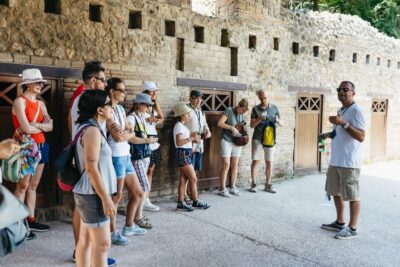
The small group cap of up to 10 participants helps keep the experience from turning into a crowded shuffle. You get a more personal flow, and with a flexible itinerary, you are not stuck on a rigid script.
If you are the type of traveler who wants Pompeii to make sense quickly, the value is strong. If you prefer silence and self-paced wandering, you might find it easier to visit on your own. But if you want Pompeii interpreted for you, this style is often worth the spend.
Who this Pompeii walk suits best
This tour is a good fit if you want a balanced snapshot of Roman town life in a short window. It is also a nice match for travelers who appreciate tangible details, like street materials and everyday food evidence, not just grand structures.
You will likely enjoy it if you:
- Want to see a range of building types, Forum civic life, commerce, entertainment, and residential streets
- Like guided interpretation, especially for complex ruins
- Are comfortable walking outdoors for about two hours on ancient surfaces
You should think twice if you have mobility challenges. The activity is listed as not suitable for wheelchair users and people with mobility impairments, and Pompeii is physically demanding in many areas.
Should you book this Pompeii private walking tour?
I would book this tour if your top goal is to understand Pompeii fast, with a guide who points out the everyday details that make the ruins feel human. The combination of skip-the-line entry, a private guide, and a two-hour plan that spans Forum landmarks, bakeries, human casts, theaters, and erotic frescoes is a strong value package for people who want meaning, not just photos.
Skip it if you need low walking stress, because the surfaces and the pace are not designed for mobility assistance. And if you enjoy totally self-directed travel, you might prefer a do-it-yourself visit where you control every turn without a set route.
If you are in the sweet spot, this is one of those Pompeii experiences that helps the city click. You leave with scenes you can explain, details you can still see in your mind, and a clearer idea of how the town actually worked.
FAQ
How long is the 2-Hour Private Walking Tour of Pompeii?
The tour duration is 2 hours. Starting times depend on availability, so you need to check what is offered for your date.
Where do I meet the guide?
Meet your guide at Café Hortus Pompeii, in front of the entrance at Via Villa dei Misteri 2, Pompeii Archeological Park.
Does this tour include skip-the-line tickets?
Yes. It includes Pompeii Express skip-the-line tickets that allow you to visit all areas within the city walls.
Is this tour private?
It includes a private guide and is described as a private sightseeing tour. It is also limited to a small group of up to 10 participants.
What language will the guide speak?
The live tour guide is available in Spanish, English, French, and Italian.
What does the tour usually cover in terms of sites?
You will see a mix of buildings and experiences, including Forum landmarks, a walk along the basalt road, a bakery visit, and a stop at one of Pompeii’s three theaters. You may also visit places like human casts displays and Roman frescoes in the former Red Light District.
Are the theaters all included?
You visit one of Pompeii’s three theaters. Which one you see depends on the tour flow and your interests.
Are there any restrictions on who can join?
The tour is not suitable for wheelchair users or for people with mobility impairments.
What should I wear?
Wear comfortable shoes. The tour involves walking across outdoor archaeological areas.
Do I need to provide participant names?
Yes. You must provide the full names of all participants because they are required for the tickets.
More Walking Tours in Pompeii Archaeological Site
More Tours in Pompeii Archaeological Site

More Tour Reviews in Pompeii Archaeological Site
Not for you? Here's more nearby things to do in Pompeii Archaeological Site we have reviewed




Tour Reviews, compared.
 ★ 4.8Pompeii: Entry Ticket and Guided Tour with an ArchaeologistFrom $3519,459 reviews
 ★ 4.2Pompeii: Entry Ticket with Optional Audio GuideFrom $2612,360 reviews
 ★ 4.8Pompeii: Small Group Tour with an ArchaeologistFrom $4012,264 reviews
 ★ 4.3Pompeii Ruins & Mount Vesuvius Day TourFrom $12011,459 reviews
 ★ 4.6Sorrento, Positano and Amalfi Full-Day TourFrom $10710,988 reviews
 ★ 5.0Sorrento, Positano & Amalfi Coast – Small Group TourFrom $768,643 reviews
 ★ 4.6Catacombs of San Gennaro Entry Ticket & Guided TourFrom $157,941 reviews
★ 5.0Pompeii Small Group Tour with an ArchaeologistFrom $356,593 reviews
★ 4.6Catacombs of San Gennaro Entry Ticket & Guided TourFrom $157,941 reviews
★ 5.0Pompeii Small Group Tour with an ArchaeologistFrom $356,593 reviews
Browse the lists this tour appears in