
Tour review · TOUR REVIEWS
Pompeii: Skip-the-Line Guided Archaeological Discovery Tour
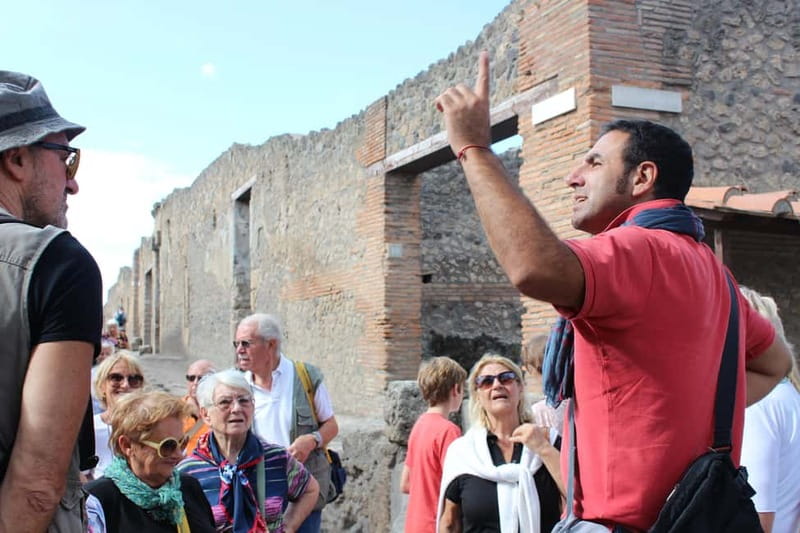
Pompeii is louder when you have context. This 2-hour guided walk gives you skip-the-line access and puts an archaeologist’s explanations directly onto the streets you are standing on. I like that the tour is led by a professional archaeologist guide using monolingual English or Spanish, so your time stays focused instead of getting diluted. One thing to plan for: even with priority entry, there is still a compulsory security check, plus you cover a lot of ground on uneven ancient paths.
I also really like the practical setup for hearing the guide: you get earphones designed for small groups (max 5 people), which helps a lot in crowded Pompeii areas. And the route is built to hit the big moments fast, from public life to elite villas, with frequent photo stops.
The main downside is physical. This tour is not suitable for people with back problems, mobility impairments, heart problems, or anyone needing wheelchair access. If your legs tire easily, consider a slower format.
Key things to know before you go
- Skip-the-line entry with express security, but not a zero-delay guarantee
- Monolingual English or Spanish keeps the stories clear and organized
- Earphones for groups of up to 5, so you can actually hear the guide
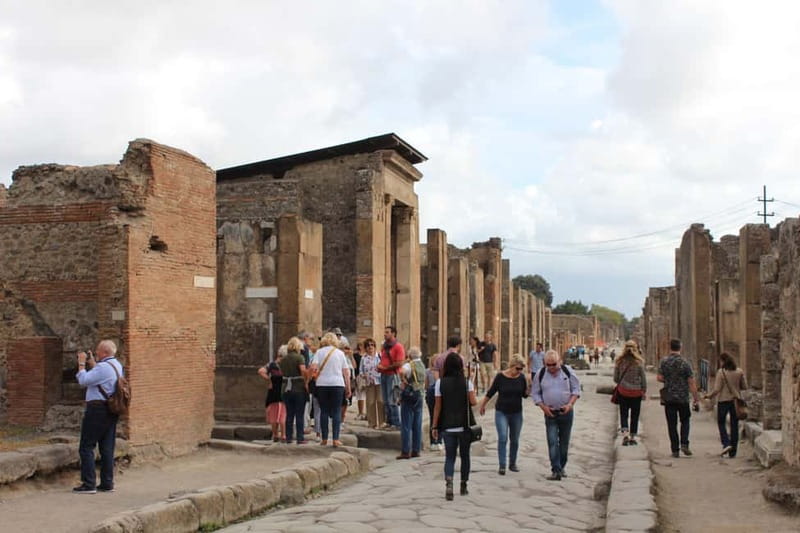
- A tight 2-hour route across major areas, including baths, amphitheater, and elite homes
- Dress code is enforced for entry into the Pompeii Archaeological Park
- Photo-stop rhythm means you can both look closely and keep moving
Price and value for a 2-hour Pompeii archaeologist tour
At about $42.19 per person for a 2-hour guided visit, you are paying for three things that matter in Pompeii: a guided plan, priority access, and the ticket itself. If you do Pompeii on your own, you can save money, but you also spend more time figuring things out and often get stuck waiting in lines.
What you get here is a structured route through the city’s most talked-about spaces, explained by an expert archaeologist. That combination is what makes the time feel efficient. The 2 hours also means you are not trying to do the entire archaeological park, which can be overwhelming when you are tired and surrounded by crowds.
If you are a first-time visitor, this is a good “starter Pompeii” tour. If you are a die-hard Roman-history person who wants hours in one house or one museum room, you might later want a second visit to go deeper.
You can also read our reviews of more guided tours in Pompeii Archaeological Site

Meeting point at Piazza Esedra, and how to avoid the late problem
Your tour starts in Piazza Esedra, at the Towns of Italy-Vox Kiosk, next to the Coffeeshop Vittoria. Do yourself a favor and arrive at least 15 minutes early. Latecomers cannot join, and there are no refunds if you miss the start time.
This early arrival is more than a formality. Pompeii security and on-site bag rules can create small bottlenecks, and the tour is short enough that every minute counts. Get there, check in, and take a quick moment to plan your water break so you do not lose time later.
Getting into Pompeii: priority entry still comes with security
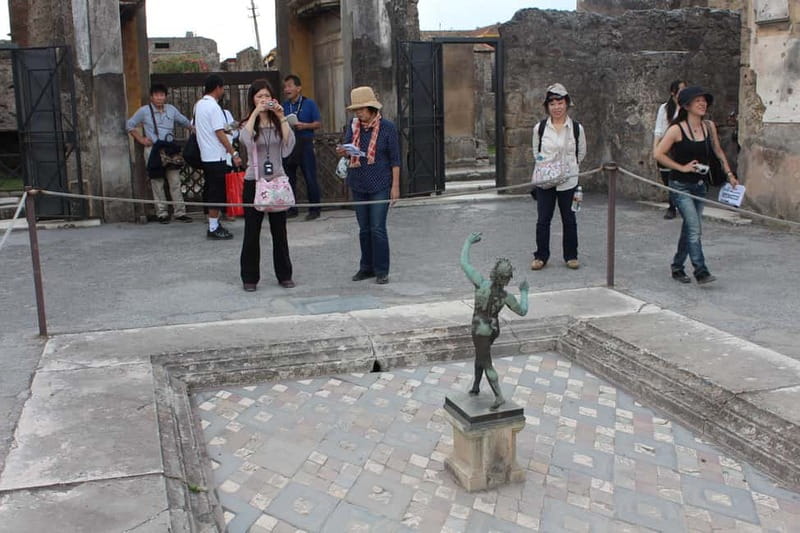
Even with skip-the-line privileges, you still go through a compulsory security check. So yes, the lines are usually shorter, but you should still expect a little slowdown at the entrance. The practical move is to travel light and keep your ID ready.
You also need to follow the Pompeii park dress code. Disrespectful clothing and shirtless entry are not allowed, and your entry can be refused if you do not comply. Bring your passport or a valid ID card, because you will need it for entry.
On timing, this is an all-weather walk. Good walking shoes matter, and flip-flops are a bad idea on uneven surfaces and stone steps.
The 2-hour route, what the pacing feels like
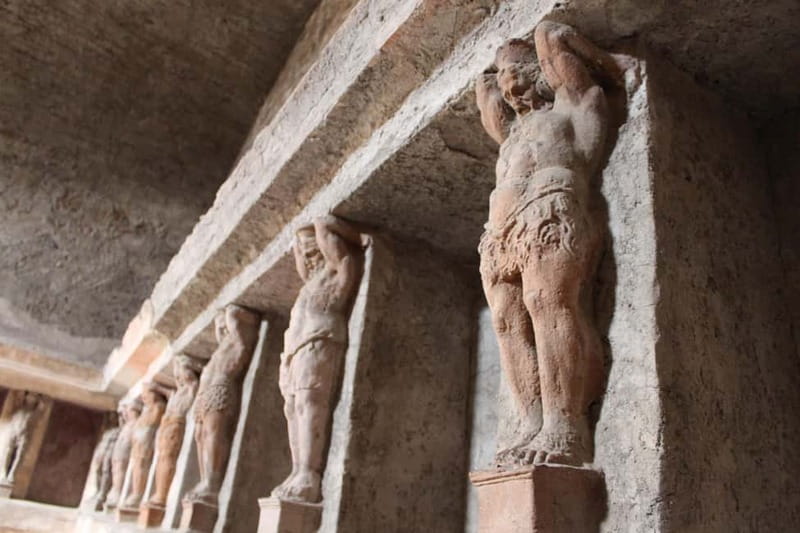
The tour is designed as a loop that gets you from the main meeting point into the site and back again. Expect a mix of guided walking and short photo stops. Some stops are brief, around 5 to 10 minutes, so you will want to be ready to look, listen, and move.
That pacing is ideal for most people because it keeps your brain engaged. Pompeii is huge and easy to oversaturate. Here, you get multiple “wow” moments without losing the thread of what you are seeing.
You can also get great photos, but treat them as moments rather than long sessions. If you stop to take 40 shots of the same doorway, you will feel rushed later.
Garden of the Fugitives photo stop, then you move into city life
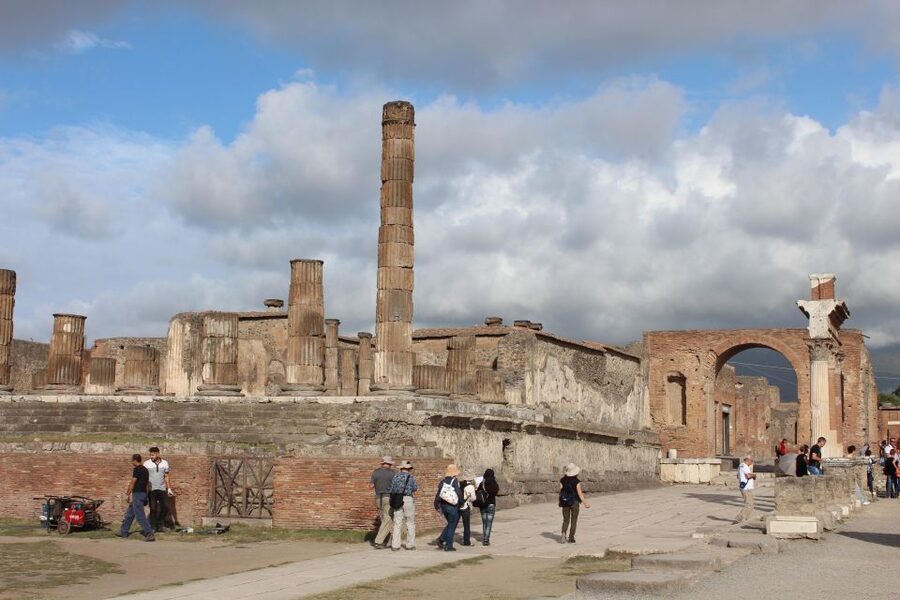
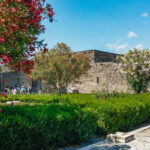
After meeting in Piazza Esedra, you head into the Pompeii Archaeological Site. You get a quick photo stop at the Garden of the Fugitives. This is the kind of place that makes you realize Pompeii is not just ruins, it is a whole lived-in city plan.
Even if you only spend about 5 minutes here, the guide’s framing helps. You start connecting the layout of spaces to the way people moved through daily life, not just what was dramatic when Vesuvius struck.
Practical tip: this is a good moment to orient yourself visually. Once you understand where you are relative to public and residential areas, the rest of the route reads more clearly.
More Naples tours, ruins, coast days, and city experiences to compare
Forum Baths: where the city cleaned up and talked politics
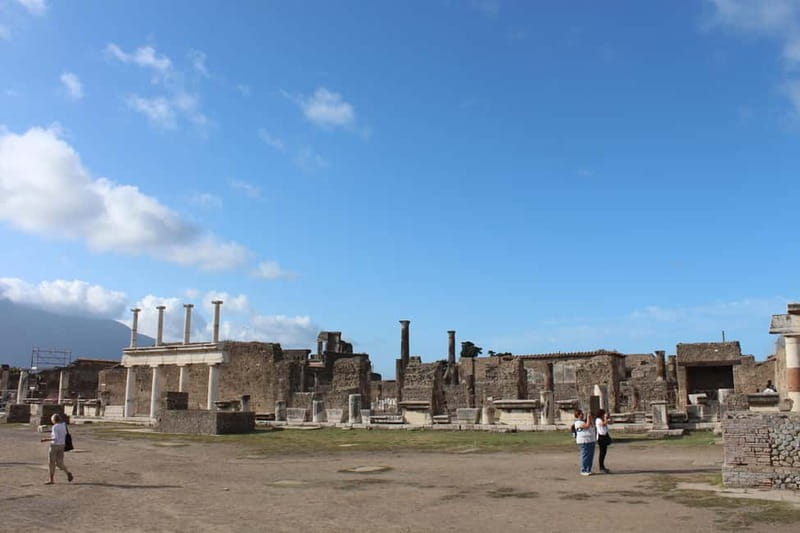
Next comes the Forum Baths, with another short photo stop and guided explanation. Baths in Roman cities were more than hygiene. They were social centers where people gathered, chatted, and kept up with civic life.
This stop helps you understand why Pompeii feels so real. You are looking at a public space that was built for routine, not spectacle. When the guide connects daily routines to the architecture, the ruins stop looking like random stone blocks.
Drawback to keep in mind: since the time here is brief, if you love baths as a topic, you may want additional time in Pompeii later. This tour is about breadth and clarity, not deep specialization.
Amphitheater of Pompeii: Roman entertainment in stone
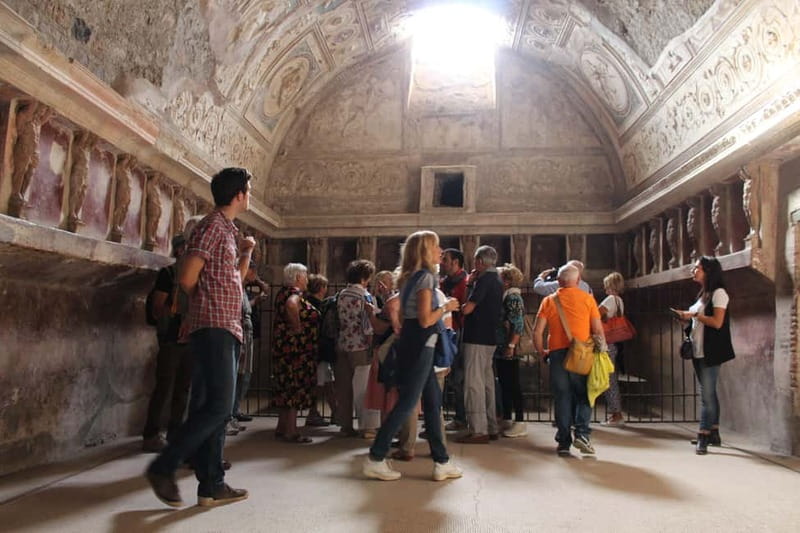
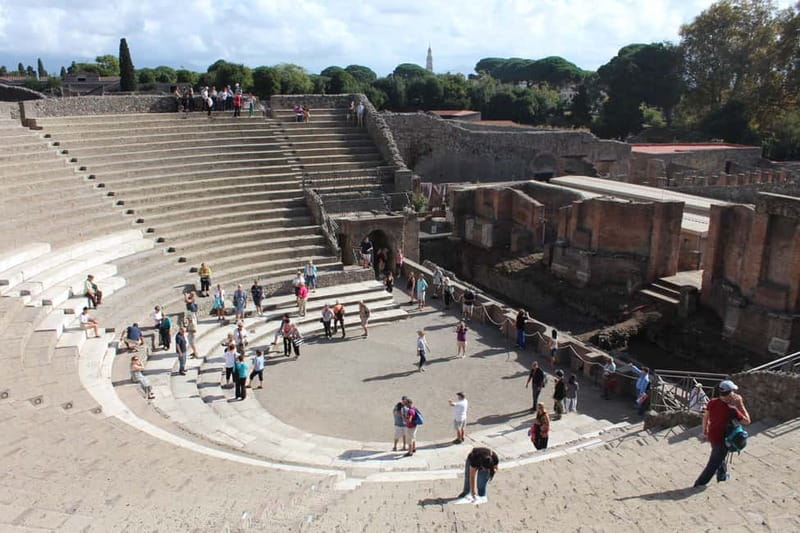
The Amphitheater stop is short but memorable. Pompeii’s entertainment spaces are a reminder that this city had crowds, performances, and a steady calendar of public events.
This is the kind of area where your photos often come out better than you expect, because you are capturing seating layers and sightlines that still show how people watched. The guide’s explanations matter here too. You can stand in the right spot and suddenly understand what the geometry was doing for spectators.
Also, because you are moving through multiple key sites, you avoid the common first-visit trap of only seeing one famous building and missing the bigger city story.
Lupanare: Pompeii’s frank street-level side
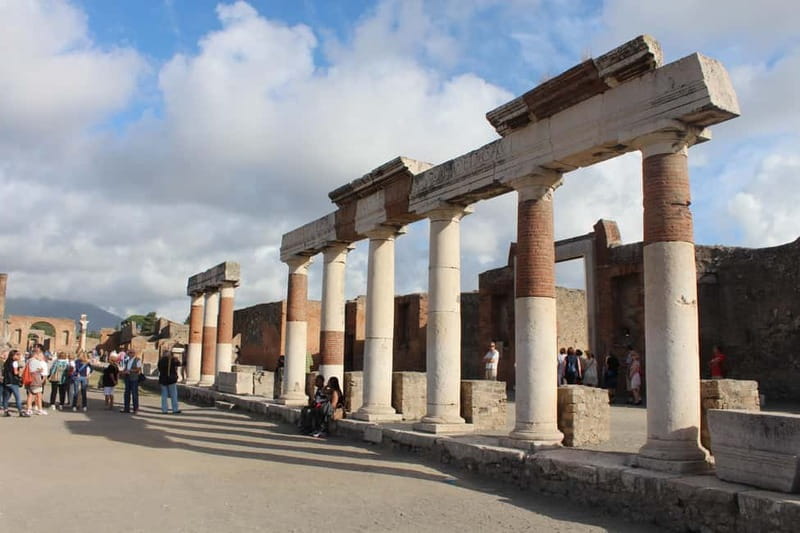
Then you reach the Lupanare, an adult-oriented building often discussed for how directly it reflects private commerce and behavior in Roman street life. The tour gives you about 10 minutes here, including a guided visit and photo opportunities.
This is not a stop for faint hearts, and it is also not a stop that reads like a museum exhibit behind glass. You see the space as part of the city’s everyday economic reality, which is one reason Pompeii feels so human.
Practical consideration: if you are traveling with kids or people who are uncomfortable with explicit themes, you might want to know this stop is part of the route. Even if the guide keeps things factual, the building’s purpose is unmistakable.
House of the Vettii: elite life, frescoes, and status
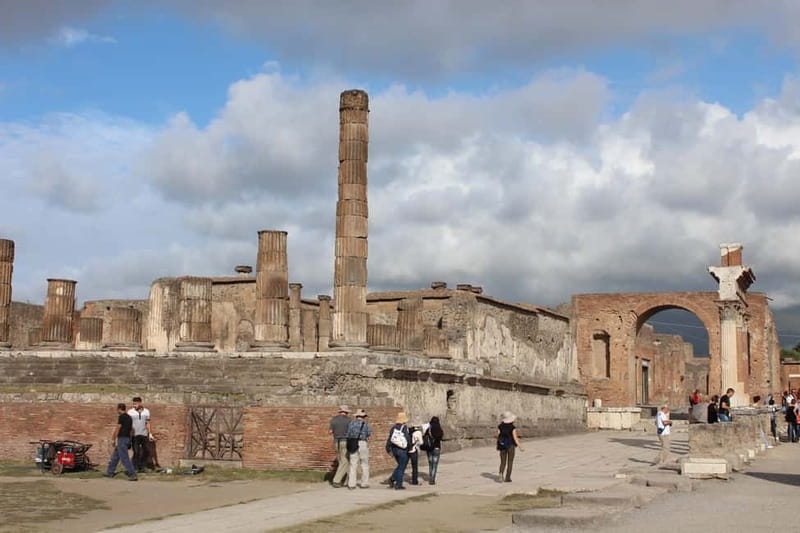
The House of the Vettii is one of the most famous residential sites in Pompeii, and this tour includes a photo stop plus a guided visit of about 10 minutes. This is where you can really see what made Roman elite homes different from everyday dwellings.
Frescoes and household layout communicate status. Even in a short visit, the archaeologist’s perspective helps you connect decorative choices to wealth, identity, and how people used rooms day-to-day.
If you love art and interior design, this stop is probably the best “wow-per-minute” in the route. Just remember: you will not have hours here. If you want to linger over paintings, you will likely need a separate return visit.
Vettius Placidus House and Thermopolium: where locals ate
The final major residential-and-food stop is the Vettius Placidus House and Thermopolium. You get another guided visit plus photo time of about 10 minutes.
This is a great combo because it places elite housing next to a very different everyday experience: eating and socializing. A thermopolium was basically a quick-service food spot, the Roman version of grabbing something hot and moving on with your day.
When the guide explains how these businesses worked, you start to see that Pompeii is not only tragedies and fancy villas. It is also quick meals, routines, and neighborhood commerce.
Back to Piazza Esedra: walking out with a clearer map
You finish the tour back at Piazza Esedra, the same area where you started. By then, you should feel like you can picture Pompeii with more order. Public space, entertainment, social hubs, and elite homes all connect instead of floating as separate landmarks.
One smart move: after the tour, use what you learned to pick one area to see at a slower pace. The rest of the park can be more enjoyable once you know what you are looking for.
Who this tour suits best (and who should skip it)
This tour is a strong choice if you:
- are visiting Pompeii for the first time and want a structured overview in a short window
- care about context and want an expert archaeologist to guide your reading of the site
- want priority entry so you do not lose half your afternoon to lines
- like small-group tours where earphones help you follow the story
This tour is not a good match if you:
- need wheelchair access, or you have mobility impairments
- have back problems or heart conditions that make walking and uneven ground risky
- want a long, slow pace with deep time in one specific building
Also, there are restrictions on what you can bring. Pets are not allowed, and large bags are limited. Keep that in mind so your day does not get derailed at the gate.
Quick, practical prep checklist
Bring:
- passport or ID card
- comfortable walking shoes (no flip-flops)
- hat and sunscreen, since you will be outside much of the time
Plan around:
- the dress code requirement for the Pompeii Archaeological Park
- the compulsory security check, even with skip-the-line entry
- bag limits (no big backpacks; max 30x30x15, and larger items must be deposited in the clockroom)
This is one of those tours where being ready makes everything feel smoother.
Should you book this Pompeii skip-the-line tour?
I think you should book it if you want the best chance of enjoying Pompeii in just 2 hours, with an archaeologist guiding your attention to what matters. The value is strongest when you factor in that you get the ticket, priority entry, and small-group earphones designed for up-close listening.
I would skip it if you need lots of time to move slowly, if you are sensitive to the adult-themed nature of the Lupanare stop, or if your mobility limits make uneven ground and continuous walking a problem.
If you are on the fence, this is the kind of tour that helps you avoid the most common first-time Pompeii frustration: seeing a bunch of famous ruins without understanding what you are looking at. With this guide-led route, you walk out with a map in your head, not just photos on your phone.
FAQ
How long is the Pompeii skip-the-line guided tour?
The tour lasts 2 hours.
Where do I meet the guide in Pompeii?
Meet the guide at the Towns of Italy-Vox Kiosk in Piazza Esedra, 80045 Pompeii (NA), next to the Coffeeshop Vittoria.
What languages are offered on the tour?
The tour is monolingual, offered in either English or Spanish only.
What is included in the price?
Your tour includes the skip-the-line Pompeii ruin ticket, a professional archaeologist guide, earphones for groups up to 5 people, and a monolingual guided experience in English or Spanish.
Do I need to bring ID, and is there a dress code?
Yes. Bring a passport or ID card. A dress code is required for entry into the Pompeii Archaeological Park, and entry can be refused if you do not follow it.
Is there still a security check even with skip-the-line access?
Yes. Even with skip-the-line entrance, there is still a compulsory security check that can cause some delays.
Are backpacks or big bags allowed?
No backpacks or big bags are allowed. The limit is max 30x30x15, and items that do not fit must be deposited in the clockroom.
Who should not book this tour?
It is not suitable for people with back problems, mobility impairments, heart problems, or wheelchair users.
More Guided Tours in Pompeii Archaeological Site
More Tours in Pompeii Archaeological Site

More Tour Reviews in Pompeii Archaeological Site
Not for you? Here's more nearby things to do in Pompeii Archaeological Site we have reviewed



Tour Reviews, compared.
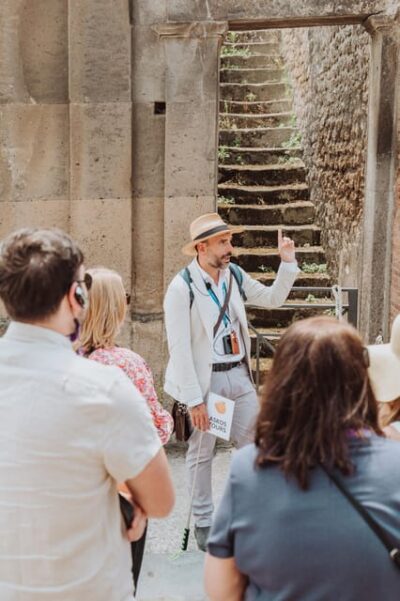 ★ 4.8Pompeii: Entry Ticket and Guided Tour with an ArchaeologistFrom $3519,459 reviews
 ★ 4.2Pompeii: Entry Ticket with Optional Audio GuideFrom $2612,360 reviews
 ★ 4.8Pompeii: Small Group Tour with an ArchaeologistFrom $4012,264 reviews
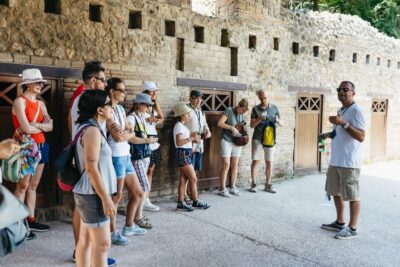 ★ 4.3Pompeii Ruins & Mount Vesuvius Day TourFrom $12011,459 reviews
 ★ 4.6Sorrento, Positano and Amalfi Full-Day TourFrom $10710,988 reviews
 ★ 5.0Sorrento, Positano & Amalfi Coast – Small Group TourFrom $768,643 reviews
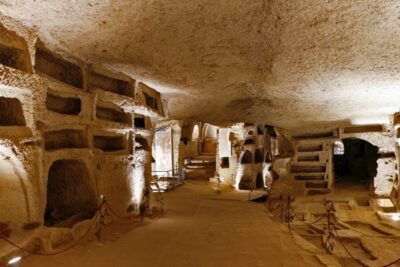 ★ 4.6Catacombs of San Gennaro Entry Ticket & Guided TourFrom $157,941 reviews
★ 5.0Pompeii Small Group Tour with an ArchaeologistFrom $356,593 reviews
★ 4.6Catacombs of San Gennaro Entry Ticket & Guided TourFrom $157,941 reviews
★ 5.0Pompeii Small Group Tour with an ArchaeologistFrom $356,593 reviews
Browse the lists this tour appears in