
Tour review · TOUR REVIEWS
Neapolitan pasta homemade Cooking Lesson
Making pasta in Naples feels instant and practical. This Neapolitan cooking lesson is built around hands-on dough work, from learning how egg pasta comes together to rolling, cutting, and filling your own ravioli and fettuccine, with guidance from the friendly host Daniel.
I especially like the way the class mixes technique with real food you can taste, including a starter featuring tomato from Vesuvio and homemade bread while your dough rests. One possible drawback: the whole experience is about 2 hours, so if you already cook pasta often, you might want a longer session or more advanced focus, and it is also not recommended if you are gluten intolerant.
Quick Hits Before You Go
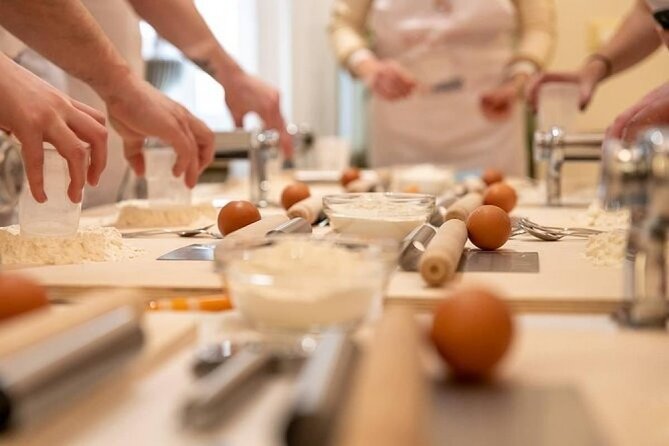
- Hand-rolled, no machinery: You use a rolling pin and traditional methods, not pasta machines.
- You learn the pasta lineup: Ravioli and fettuccine are hands-on, while tagliolini and pappardelle are also covered.
- A tasting break while dough rests: You sample organic Vesuvio tomato and homemade bread as the dough works.
- Two sauces, plus lunch: Your cooked pasta is seasoned with sauces, then you eat what you made with wine.
- Small-group feel: Maximum group size is 35, with time to work together in your group.
- Clear value if you want a finished meal: Lunch and drinks basics are included, with extras limited to what you order after.
Why Neapolitan Pasta Feels Different in Naples
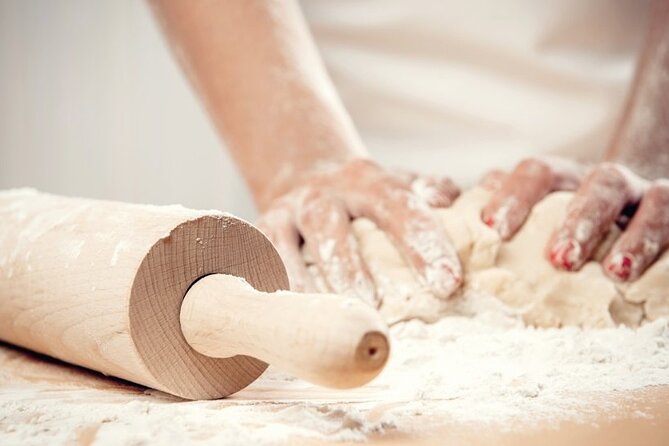
There are cooking classes where you watch. Then there are cooking classes where the lesson sticks because your hands do the work. This one belongs to the second group. In Naples, pasta is not treated like a science project. It is treated like something you make, eat, and make again.
You start with the basics of pasta types. That matters more than it sounds, because the shapes are not random. Different cuts hold sauce differently, and they each “want” slightly different handling. Even if you only remember a few takeaways, understanding what you are making helps you repeat it at home without turning your kitchen into a trial-and-error lab.
What makes this class feel especially local is the ingredient moment built in. While your dough rests, you taste organic products, including tomato from Vesuvio, plus homemade bread. That is not just a snack. It frames the whole day as Neapolitan, where the sauce world starts with good tomatoes and bread that does not taste like it came from a bag.
You can also read our reviews of more cooking classes in Naples

Meet-Up Spot and How the Two Hours Flow
You will meet at Via delle Zite, 30, 80139 Napoli. It is near public transportation, which is a practical plus in a city where streets and walking shortcuts can surprise you.
The experience runs about 2 hours, and it ends back at the meeting point. You also get a mobile ticket, so you are not trying to manage paper tickets in a crowded street situation.
As for the flow, here is the rhythm you can expect:
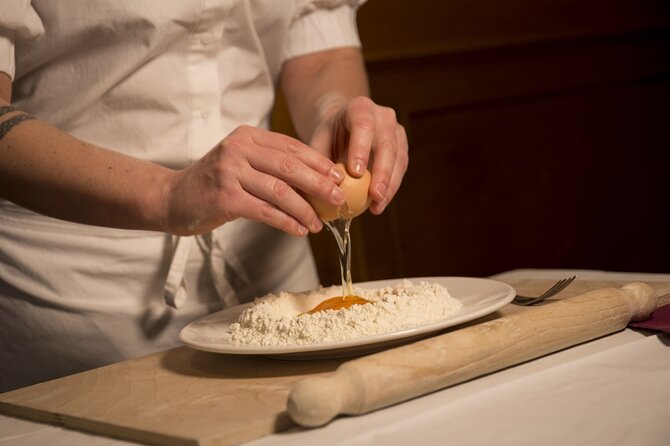
- A quick explanation of pasta types, then you begin egg pasta preparation.
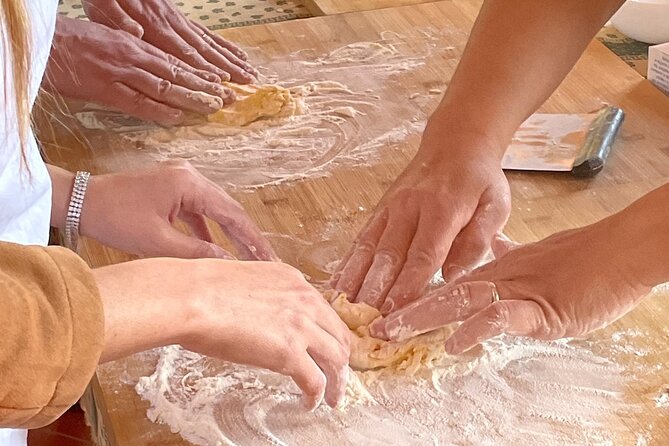
- Dough gets mixed and you learn the ingredients, with guidance on the steps.
- While the dough rests, you taste the local starter, including Vesuvio tomato and homemade bread.
- You roll out the dough by hand, cut shapes, and make ravioli and fettuccine.
- There is also teaching on tagliolini and pappardelle, so you leave with more than just two shapes in your head.
- Your pasta cooks in water, then it gets finished with two different sauces.
- Lunch is included, and it is built around the pasta you made.
Because it is tightly timed, the class works best when you come ready to participate instead of taking it like a casual dinner stroll.
The Dough Lesson: Egg Pasta, Resting, and Traditional Rolling
The heart of the class is the dough. You learn how to make egg pasta according to a family recipe, then you get a clear description of what is going into the dough.
One detail I really appreciate is the emphasis on resting time. Dough resting is not a vague “wait a bit” moment. It is where the dough relaxes and becomes workable. You will feel the difference when you roll and cut later, and the course builds around that timing. While the dough rests, you do not just stand around, you taste local products.
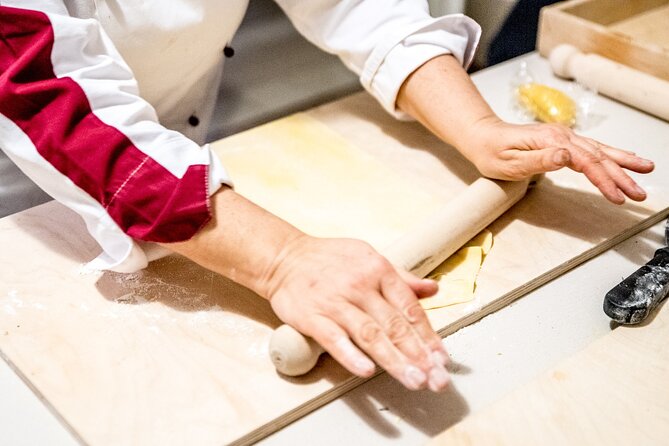
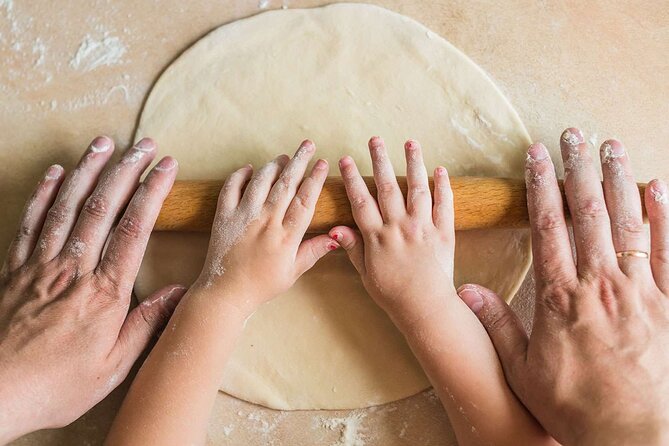
Then comes the most satisfying part for many people: rolling the dough out with a rolling pin. You will not use machinery. That choice is practical. It forces you to learn how the dough behaves and how to adjust your technique as you stretch it. It also gives you a method you can actually repeat at home without buying special equipment.
In short, you leave with more than a recipe card. You leave with a sense of the dough texture, how it should feel, and how to move from sheet to cut.
Ravioli and Fettuccine, Plus the Shapes You Learn to Think About
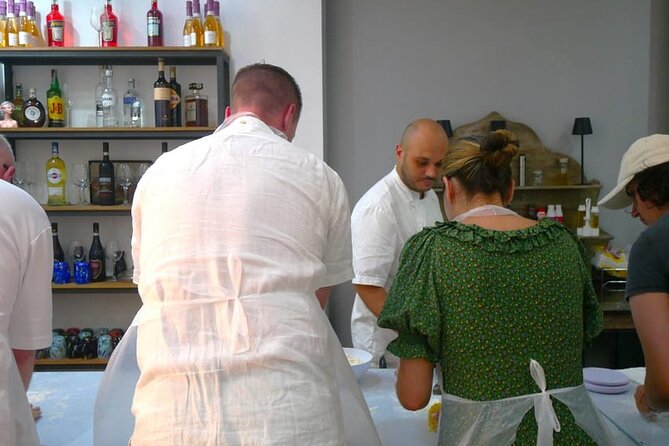
You make ravioli and fettuccine hands-on. The class also teaches you how to prepare tagliolini and pappardelle, so you are not limited to the two things on your plate.
Here is how those shapes “make sense” in your cooking brain:
- Ravioli are about portion and sealing. Your filling matters, but technique matters too: getting dough pieces cut cleanly and formed so they cook well.
- Fettuccine are about ribbon thickness and consistency. If the ribbons are too thick, the texture can get heavy; if too thin, they can turn delicate in cooking.
- Tagliolini are typically narrower ribbons, which can feel a bit lighter. Learning them helps you understand pasta proportions.
- Pappardelle are broader ribbons, and that wider shape tends to feel great with sauces that cling.
The course does not position these as separate “recipes you never touch again.” It positions them as options you understand. That is why the upfront explanation of pasta types is valuable, even when it feels like classroom time.
For the filling, you mix the ingredients of the filling, then you mix it with the ravioli. You also learn how to work with the dough once it is cut into portions ready for filling.
Filling, Cooking, and Two Sauces That Bring It All Together
Once your pasta is shaped, it is cooked in water. Then it is seasoned with two different sauces after a few minutes. This is a smart approach for a class. You get the pasta experience first, then you learn how finishing matters.
Sauce timing changes everything. If pasta is cooked and plated too early, it can lose its ideal texture by the time sauce goes on. By cooking and then finishing quickly, the class helps you connect cause and effect.
You also get that earlier flavor anchor from the local tasting: organic tomato from Vesuvio plus homemade bread. Even though you are not promised a full menu of starters and desserts here, those flavors tell you what “quality” tastes like in this setting. You taste good ingredients, then you build your pasta around that expectation.
More Naples tours, ruins, coast days, and city experiences to compare
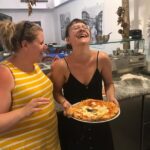
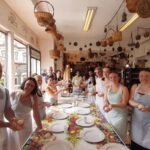
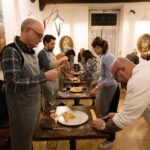
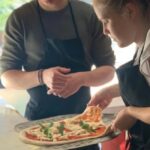
Lunch Value: Wine, Soda, and What $90.76 Buys in Naples
At $90.76 per person, this is not a throwaway activity. You are paying for:
- Guided hands-on pasta making (dough, rolling, cutting, filling).
- A meal built from what you made.
- A tasting portion featuring local products.
- Instruction focused on traditional, no-machine methods.
The included lunch is your fettuccine and ravioli homemade with wine, plus soda/pop. That matters because many cooking classes quietly charge extra for the food. Here, your “work” leads to a real plate, and wine is included with that lunch.
The main limitation is also clearly stated: other drinks after the first one are not included. So if you plan to treat this like a long, multi-drink evening, the final cost can rise.
Still, value often comes down to what you want out of Naples. If you want an authentic, practical cooking skill and a meal that feels connected to the work, the price starts to make sense. If you just want a quick taste experience with minimal technique, you could feel like the budget was aimed more at instruction and a finished plate than at a full evening show.
Who This Class Is Best For
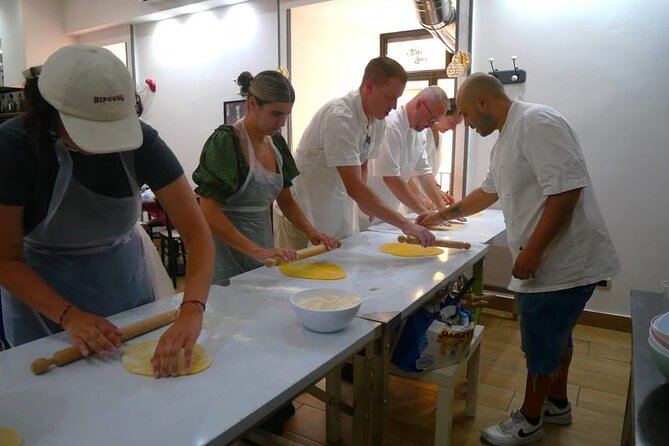
This experience is ideal if you want to learn how to make homemade pasta you can reproduce at home. It is hands-on, it is technique driven, and it is set up so you get to eat what you made.
It also helps if you like a group setting. You make friends with your working group, and the class is designed for collaboration during shaping, cutting, and cooking.
Two groups should pay attention before booking:
- Gluten intolerant: it is explicitly not recommended for people who cannot eat gluten.
- Advanced cooks or people who already do pasta classes at home: because the session is about 2 hours, you might not get as much depth as you would in a longer, more specialized course. The negative feedback about value being low for some people fits that timing reality.
Tips to Get More From Your Pasta Day
You can make the most of a 2-hour class with a few simple moves.
First, come hungry but not starving. You will eat lunch as part of the experience, and you will also taste local products while the dough rests.
Second, take notes on the part you usually skip at home: the dough feel. Recipes can be written on paper, but dough behavior is harder to guess. If you remember what the dough felt like when it was ready to roll, you will repeat success more often.
Third, ask questions about thickness and handling while you have someone right there. Rolling by hand is where people either learn or give up. If you get even one adjustment tip during rolling, it can change your results at home.
Finally, when they show tagliolini and pappardelle, pay attention to the reasoning, not just the shape. That’s the kind of “why” that makes you a better cook, not just someone who follows steps.
Should You Book This Neapolitan Pasta Cooking Lesson?
If you want a practical Naples food experience where you learn the method, shape pasta yourself, taste local ingredients, and then eat your own ravioli and fettuccine for lunch, this is an easy yes. The strongest part is the hands-on approach, the no-machine rolling lesson, and the fact that the class ends with a real meal built from your work.
Skip it if you are gluten intolerant, or if you are already comfortable making fresh pasta and you are expecting a long, advanced deep course. The timing is tight by design, so you will likely get more enjoyment if you treat it as a skill-building session, not a full day culinary marathon.
FAQ
What is the duration of the Neapolitan pasta cooking lesson?
It lasts about 2 hours.
Where does the experience start and end?
The meeting point is Via delle Zite, 30, 80139 Napoli NA, Italy, and the activity ends back at the meeting point.
What pasta will I make during the class?
You will make ravioli and fettuccine. The class also shows how to prepare tagliolini and pappardelle.
Is lunch included?
Yes. Lunch includes your homemade fettuccine and ravioli with wine, plus soda/pop.
Is wine included, and are other drinks included?
Wine is included with lunch as part of the included items. Other drinks after the first one are not included.
Is the class suitable for gluten intolerant guests?
No, it is not recommended for people who are gluten intolerant.
Is there a limit on group size?
Yes. The maximum group size is 35 travelers.
What is the meeting area like for getting there?
The meeting point is near public transportation.
What is the cancellation policy?
You can cancel for a full refund up to 24 hours in advance of the experience start time, with free cancellation stated.
More Workshops & Classes in Naples
More Cooking Classes in Naples
More Tour Reviews in Naples

Not for you? Here's more nearby things to do in Naples we have reviewed




Tour Reviews, compared.
 ★ 4.8Pompeii: Entry Ticket and Guided Tour with an ArchaeologistFrom $3519,459 reviews
 ★ 4.2Pompeii: Entry Ticket with Optional Audio GuideFrom $2612,360 reviews
 ★ 4.8Pompeii: Small Group Tour with an ArchaeologistFrom $4012,264 reviews
 ★ 4.3Pompeii Ruins & Mount Vesuvius Day TourFrom $12011,459 reviews
 ★ 4.6Sorrento, Positano and Amalfi Full-Day TourFrom $10710,988 reviews
 ★ 5.0Sorrento, Positano & Amalfi Coast – Small Group TourFrom $768,643 reviews
 ★ 4.6Catacombs of San Gennaro Entry Ticket & Guided TourFrom $157,941 reviews
★ 5.0Pompeii Small Group Tour with an ArchaeologistFrom $356,593 reviews
★ 4.6Catacombs of San Gennaro Entry Ticket & Guided TourFrom $157,941 reviews
★ 5.0Pompeii Small Group Tour with an ArchaeologistFrom $356,593 reviews
Browse the lists this tour appears in