
Tour review · TOUR REVIEWS
Pompeii Private Tour with an Archaeologist Guide
Pompeii gets easier to read with a guide. This private Pompeii tour with an archaeologist helps you understand what you are looking at, not just where things are, with one-on-one attention and time to ask questions as you walk. You will hit key stops like the Forum area and the Stabian Baths, so you leave with a sense of how the city worked, from daily life to major public spaces.
The main catch is time. At about 2 hours, you will see major highlights, but Pompeii is huge, so you may still want extra time to wander afterward. Also, the Pompeii entrance ticket is not included in the tour price, so plan for park entry at the ruins before you go in.
Key highlights at a glance
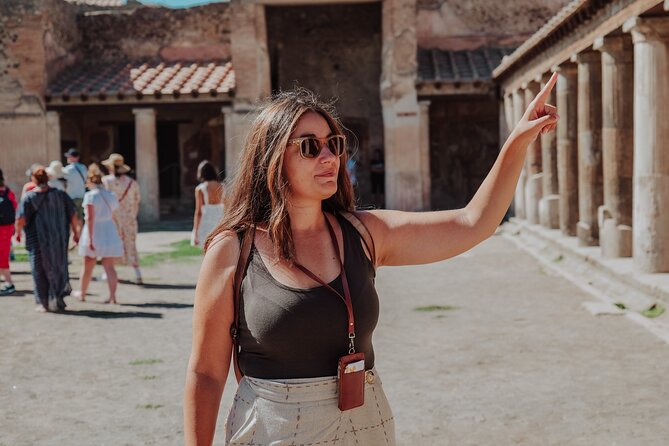
- Archaeologist-led private pacing, with real time for your questions
- Crowd-smart routing so you are not stuck staring at other people’s shoulders
- Forum and bath stops that quickly show Pompeii’s public life
- A route through homes and everyday spots, including the Casa dei Vettii and a Termopolium
- Teatro Grande and major streets like Via dell’Abbondanza, for a strong orientation fast
- English guidance that works well for first-time visitors who want clarity
Why an archaeologist guide changes everything in Pompeii
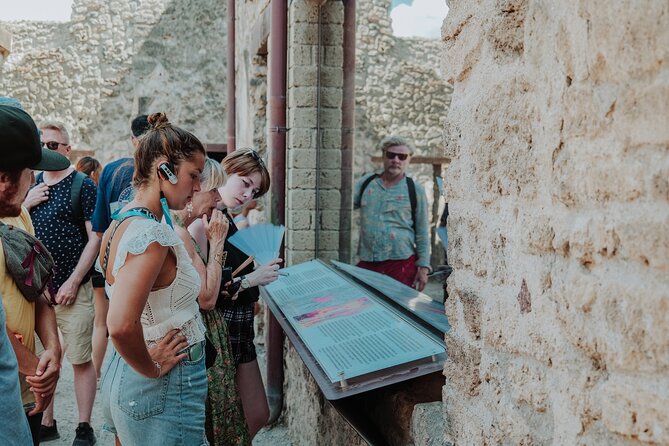
Pompeii is one of those places where you can walk for an hour and still feel like you learned nothing. The ruins are impressive, but they can also be confusing, especially when paths split and signage is limited. With an archaeologist guide, you get the missing links, what things likely were for, why certain buildings matter, and how daily routines connected to public spaces.
I like that this tour is truly private. That matters because Pompeii is busy, and stopping to ask questions is easier when you are not trying to keep a big group moving. In multiple guide experiences shared by past visitors, guides such as Rossana, Mena, Paolo, and Jolanda are described as both passionate and focused, which usually means better explanations and better pacing.
The second big win is selection. A 2-hour walk can easily turn into random sightseeing. Here, the route is built around Pompeii’s most readable areas, so you get a fast map of the city’s priorities: homes, public spaces, baths, and the Forum zone.
You can also read our reviews of more guided tours in Pompeii

Before you go: shoes, timing, and a realistic 2-hour expectation
This is a walking tour on uneven, ancient surfaces. The simple advice that makes a difference is to wear closed shoes, not flip-flops. In Pompeii, it’s not just about comfort, it’s about traction and not losing time to foot pain.
Weather and pace matter too. One reason private tours score well is that a good guide can slow down or speed up depending on your group. If you are traveling with kids, moving carefully, or just want to linger in front of a wall painting or floor detail, a private format makes that much more doable.
Here’s the expectation to set: after 2 hours, you will feel you have seen the essentials, but you might also feel the urge to keep going. That is not a failure of the tour, it’s Pompeii. If you only have one visit window, you can still stretch the day by planning a bit of self-guided roaming after your guided portion.
The 2-hour Pompeii route: from Porta Marina to the Forum zone
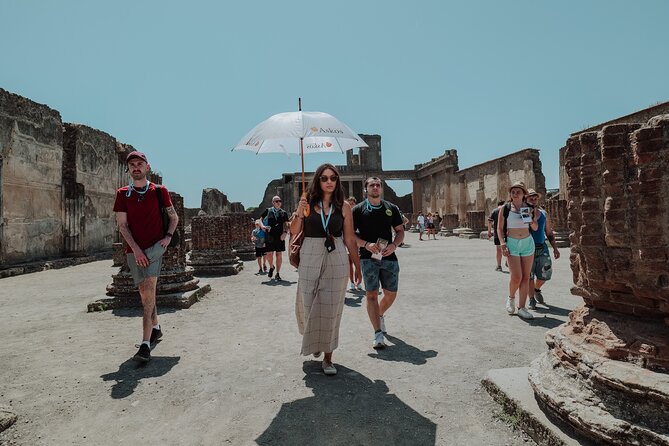
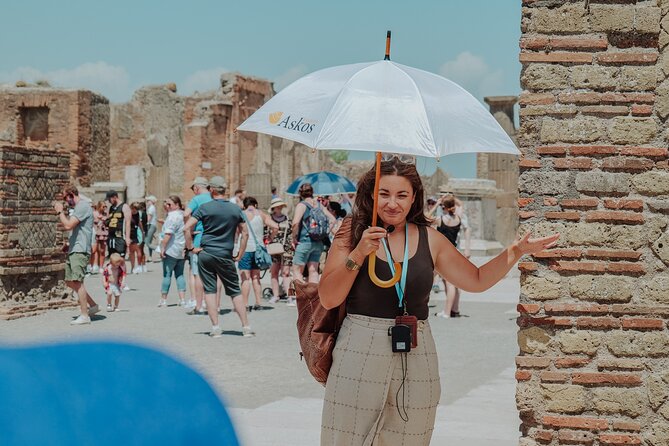
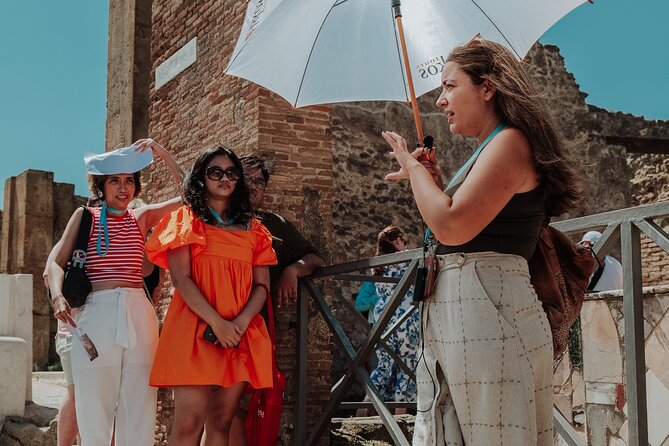
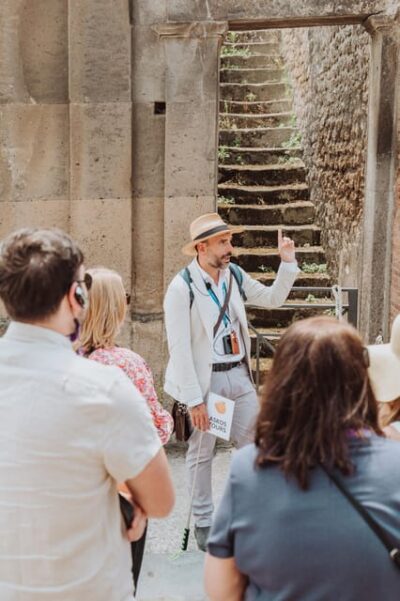
Your tour starts at the main entrance area, Porta Marina Superiore, where the guide is holding a sign that says Askos Tours. From there, the route flows through major zones so you get a coherent picture instead of wandering in circles.
The best part of a structured route is that it helps you learn while you move. Pompeii is full of small surprises, but without context, it’s easy to miss what is important. With a guide, you know what you are looking at, and you get permission to pause without feeling like you are slowing everyone down.
Stop by stop, this is what the tour is built to cover:
Casa dei Vettii, then the Lupanar and Termopolium area
You will move from the archaeological park entrance to Casa dei Vettii (House of the Vettii). This is one of the stops that helps you understand how Pompeii’s residents lived day to day. A well-run private tour tends to focus on what makes these homes worth your attention, not just the walls you can already see.
Next comes Lupanar. Even if you do not know the story behind the building name, the stop is useful because it signals how Pompeii contained spaces for specific social activity, not only grand villas and official buildings. You will also likely get context from your guide on what makes that site part of the bigger city pattern.
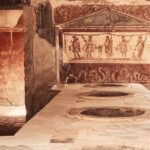
Then you head to the House and Thermopolium of Vetutius Placidus, including the Termopolium. This is a strong stop for understanding everyday movement. Multiple experiences shared by past visitors highlight how guides point out how people ate, shopped, and spent time, including comparisons that make ancient behavior feel familiar. If you like learning how ordinary life worked, this is often the moment Pompeii clicks.
Quick pacing note: several guides in past experiences are praised for keeping the walk smooth and for managing time so you do not feel rushed inside key spots. That matters because homes and street-level sites can tempt you to stand longer than planned.
Teatro Grande and the House of Faun: orientation through public spaces
From everyday spaces, the tour shifts into big-city energy.
You will visit Teatro Grande, one of Pompeii’s theatres. Even in a short stop, it is valuable because theatres tell you how entertainment and gatherings shaped public life. It also gives you a reference point for the layout of surrounding streets.
Next is House of Faun. This is another home stop, but the point is bigger than one building. It helps you see how residences related to the rest of the city, so you can picture how neighborhoods functioned rather than treating each ruin like a stand-alone postcard.
You can also read our reviews of more private tours in Pompeii


Stabian Baths and the street of Via dell’Abbondanza
The itinerary includes Stabian Baths (Terme Stabiane), which gives you a real sense of how important public bathing and social routines were. Baths are one of the most readable Pompeian sites because they show infrastructure and shared space, not just private rooms.
After the baths, you walk Via dell’Abbondanza, Pompeii’s famous main street. This is where the tour earns its keep for first-timers. Walking the street helps you understand scale and spacing. You also get a break from constantly stopping inside doorways, which can be helpful when you want both sightseeing and stamina.
If you are short on time, Via dell’Abbondanza is one of those experiences where even a brief walk makes Pompeii feel more like a city and less like a set of ruins.
Forum Baths, Macellum, and the Forum’s food and civic rhythm
Next up is Forum Baths, which reinforces Pompeii’s public-life theme. Then you will visit the Macellum. The Macellum is especially useful for connecting Pompeii to daily logistics. Markets and food areas are where the city’s routine becomes visible, and guides often use these stops to explain what changed and what stayed familiar in human behavior.
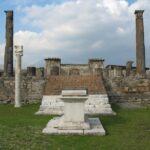
From there, you will see the House of Menander, another home stop that helps you compare different residential spaces. Then you move to the Granaries of the Forum, which ties back to how the city managed supply and storage. Finally, you reach the Foro de Pompeya (Forum) itself.
In 2 hours, the Forum sequence is the place where you get the strongest “big picture” payoff. One reason private guides score so high is that they can make the Forum feel like a lived space, not only a scenic ruin.
Why the order matters
The route is designed to go from entrance orientation into homes and street-level life, then back into public spaces and civic zones. That rhythm helps your brain build a map: you learn the city from multiple angles, rather than seeing every area in random order.
What makes the experience feel truly private
The selling point is not just that it says private on paper. In practice, private means the guide can adapt to your pace.
Past visitors repeatedly mention a guide who can:
- avoid the biggest crush points,
- keep a smooth walking rhythm,
- and wait for everyone to regroup before explaining details.
That last detail is small, but it affects everything. If a guide constantly leaves you behind, Pompeii becomes a race. If they pause at the right moments, the ruins become understandable.
You also get something that group tours often cannot provide: time to ask follow-up questions. On a site like Pompeii, the questions you naturally have after seeing one building often connect to the next stop. A private format lets that conversation build, instead of getting cut off.
The best souvenirs are understanding, not photos
Pompeii is packed with visual details, but the best outcome is when you can actually interpret what you see. In guide experiences shared by visitors, guides are praised for explaining how people lived, and for making comparisons that help modern visitors grasp daily routines.
A few examples of what guides tend to do well in this type of tour experience:
- point out practical details in homes,
- connect baths and public spaces to social habits,
- and help you imagine how streets and buildings fit together.
Even if you love photos, you will likely leave with fewer random pictures and more “I know what this is” shots. That’s the real value of having an archaeologist guide, not just someone who can recite facts.
Price and value: is 178.45 per person worth it?
At $178.45 per person for a 2-hour private tour, the price can feel steep at first, especially when the park entrance ticket is extra. If you are the type of traveler who already knows Pompeii’s main highlights and you enjoy wandering with no guidance, you might be fine doing it independently.
But for most people, the math changes when you factor in two things the tour is built to provide:
- Efficiency: the guide covers the highest-impact sites in a short window.
- Understanding: you do not just see the ruins, you learn what matters and why.
Private tours also tend to be worth it when your group has different needs. Families, couples, or friends who want to stop frequently, move at a slower pace, or spend time asking questions usually get more out of Pompeii this way than a rushed self-guided plan.
If you are able to travel with someone else, the value improves further because you are splitting the “private” benefit across more people. And since group discounts are mentioned, it is worth checking if you can reduce the per-person rate by traveling with a small group.
Who should book this Pompeii private archaeologist tour
This tour is a great fit if you:
- want a quick orientation to Pompeii’s big highlights,
- prefer a structured route over wandering,
- like asking questions and getting answers on the spot,
- are traveling with kids or anyone who benefits from a more patient pace,
- and you are visiting during hot or crowded periods, when having a guide helps you move smart.
It may not be the best match if you:
- want a long, slow day inside Pompeii with minimal structure,
- plan to spend many hours exploring beyond major highlights,
- or you are on a tight budget and happy to work from signage and guidebooks.
Should you book this Pompeii private tour?
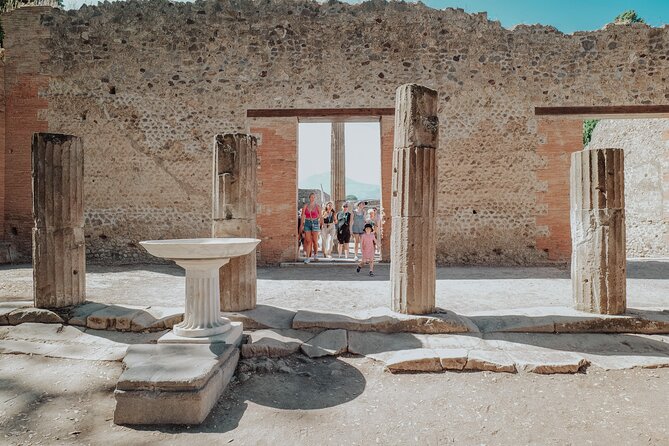
I’d book it if you want your Pompeii visit to feel clear and connected. This tour is built for fast comprehension: Forum and baths, plus homes and street life, all with archaeologist guidance and private pace. The main downside is simple, 2 hours is not enough for the whole site, and you will likely pay extra for park entry.
If your schedule is short, or you want to make sure you actually understand what you are seeing, this is the most practical way to get real value out of a Pompeii day.
FAQ
How long is the Pompeii private tour?
The tour lasts about 2 hours.
Is the tour in English?
Yes, the tour is offered in English.
What is the price per person?
The price is $178.45 per person.
Do I need to buy the Pompeii entrance ticket?
Yes. The Pompeii entrance ticket is not included in the tour price.
Where do we meet the guide?
Meet at Via Villa dei Misteri, 1, 80045 Pompei NA, Italy.
Is transportation included?
No. Transportation is not included.
Is this a private tour for my group only?
Yes. Only your group will participate.
Are service animals allowed?
Yes, service animals are allowed.
Can I cancel for a full refund?
Yes, you can cancel up to 24 hours in advance for a full refund.
More Guided Tours in Pompeii



More Tours in Pompeii


More Tour Reviews in Pompeii

Not for you? Here's more nearby things to do in Pompeii we have reviewed






Tour Reviews, compared.
 ★ 4.8Pompeii: Entry Ticket and Guided Tour with an ArchaeologistFrom $3519,459 reviews
 ★ 4.2Pompeii: Entry Ticket with Optional Audio GuideFrom $2612,360 reviews
 ★ 4.8Pompeii: Small Group Tour with an ArchaeologistFrom $4012,264 reviews
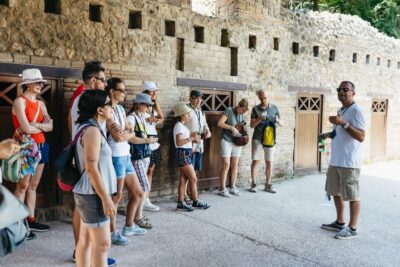 ★ 4.3Pompeii Ruins & Mount Vesuvius Day TourFrom $12011,459 reviews
 ★ 4.6Sorrento, Positano and Amalfi Full-Day TourFrom $10710,988 reviews
 ★ 5.0Sorrento, Positano & Amalfi Coast – Small Group TourFrom $768,643 reviews
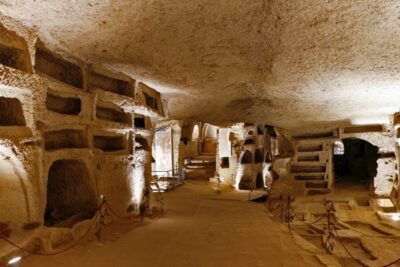 ★ 4.6Catacombs of San Gennaro Entry Ticket & Guided TourFrom $157,941 reviews
★ 5.0Pompeii Small Group Tour with an ArchaeologistFrom $356,593 reviews
★ 4.6Catacombs of San Gennaro Entry Ticket & Guided TourFrom $157,941 reviews
★ 5.0Pompeii Small Group Tour with an ArchaeologistFrom $356,593 reviews