
Tour review · TOUR REVIEWS
Private Tour with Official Guide through the wonders of Pompeii.
One city, 13 clues to its daily life.
This private walk through Pompeii is interesting because you move site to site with an official guide who helps you read what you are seeing, not just look at it. I like how the route hits the big visual anchors fast, from the Teatro Grande to the Foro de Pompeya, so you leave with a clear map in your head. One thing to consider is that the tour is only 2 to 3 hours, so you are not doing a slow, museum-style wander.
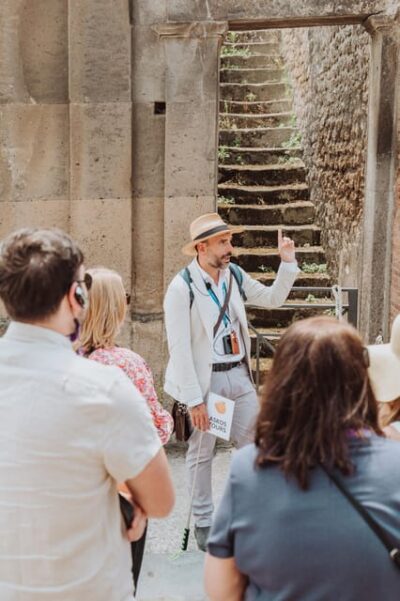
I also really liked the guide approach, especially the way Paolo brings Pompeii to life with stories, jokes, and the kind of explanations that connect details on the ground to real human routines. In one moment you are thinking about tragic plays, and the next you are spotting art and architecture choices that hint at status, leisure, and neighborhood life. If you care about the small stuff, this kind of guided pace is a big win.
The main drawback is practical: the Pompeii Archaeological Park ticket is not included, and tips are not included either. You will want to budget for that and plan for a bit of walking across an uneven ancient site.
Key things that make this Pompeii tour worth it
- Private, only your group: you are not stuck waiting for others to catch up or shuffle at each stop.
- Official guide plus a Pompeii map: you get both live context and something to refresh your memory later.
- A tight hit list of Pompeii essentials: theater, villas, baths, forums, temples, mosaics, street life, and a thermopolium.
- Bottled water included: handy when you are moving between sites for a couple hours.
- English language tour: easier for first-time visitors who want clear explanations.
- Stops are marked as admission ticket free within the route: you focus on Pompeii, while you still handle the main park entry separately.
Why a private Pompeii walk with an official guide works
Pompeii can feel like a lot at once. You arrive, you see stone walls, doorways, and murals in fragments, and your brain starts sorting what is important. A guided private format helps you get organized in real time.
With an official guide, you do not have to guess what you are looking at. The tour moves through a sequence that makes sense: public life (theaters, square, temples), then homes and art, then bathing and everyday street commerce. That order matters because it turns Pompeii from random ruins into a functioning city layout.
I also like that the guide style is not just lecture mode. The best parts are the quick stories and pointed attention to details you would otherwise miss, like the way architecture and decoration choices signal how people used space and status.
And yes, humor helps. When your guide peppers the walk with light jokes and quick historical connections, you actually remember the key points the next day.
You can also read our reviews of more guided tours in Pompeii


Cost and value: what you pay, what you still need
The price is $102.35 per person for a private tour in English, lasting about 2 to 3 hours. What makes it feel fair is what is included: the tour guide, a map of the Archaeological Park Pompeii, and bottled water.
What is not included is the part that often surprises people: the Archaeological Park Pompeii ticket. So your true budget is the tour price plus the main site entry. If you already planned to visit Pompeii, this setup still makes sense because you are paying for expertise and direction, not another museum admission.
Also note that tips are not included. That is normal for guided tours, but it is worth keeping a little extra cash or card plan ready.
Meeting point at Via Villa dei Misteri, start time, and tour timing
You meet at Via Villa dei Misteri, 1, 80045 Pompei NA, Italy and the tour starts at 12:30 pm. It ends back at the same meeting point, so you do not need to think about a second pickup or a complicated route plan.
The duration is listed as 2 to 3 hours (approx.), and the stop list reflects that. You will see a lot without the tour dragging, but you should still expect you are moving. If you want a slow pace with long stops to sit and soak in every corner, you might feel a little rushed. If you like structure and high-value stops, this timing fits well.
The tour uses a mobile ticket and offers group discounts. It helps to keep your phone charged and your ticket ready, especially since the meeting point is outdoors and you will be walking right away.
Good to know for planning: service animals are allowed, the experience is near public transportation, and it says most travelers can participate.
Teatro Grande: where Pompeii’s stage culture takes center stage
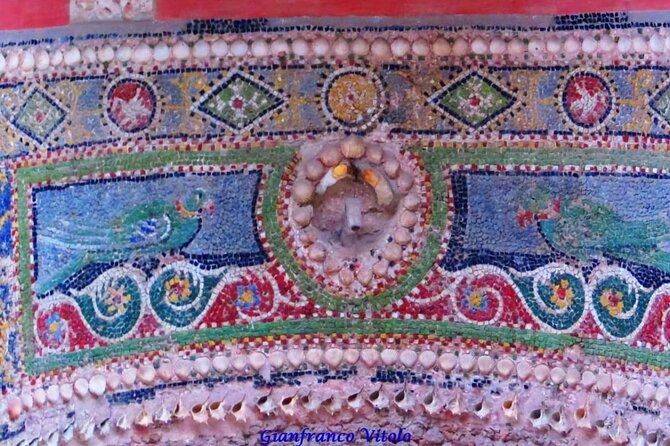
Your tour begins with the Teatro Grande, described as the Theater of great Greek-Roman tragedies and comedies. Even if you know nothing about ancient theaters, you will quickly get why this stop matters. It is a public space where art and entertainment shaped community life.
The key value here is contrast. When you jump from theater to homes, baths, and temples, you start to understand how Pompeii balanced leisure, status, belief, and daily routine in distinct city zones.
You also get a quick orientation advantage. After standing near a major landmark like Teatro Grande, the rest of the route feels more legible. It is easier to picture how neighborhoods connected to big public venues.
Time is short, around 10 minutes. That is enough for the essentials, but not for lingering like you would at a standalone museum. If your goal is to get the story quickly, this is the right start.
Casa dei Vettii and Casa del Fauno: frescoes, mosaics, and older-than-you-think homes
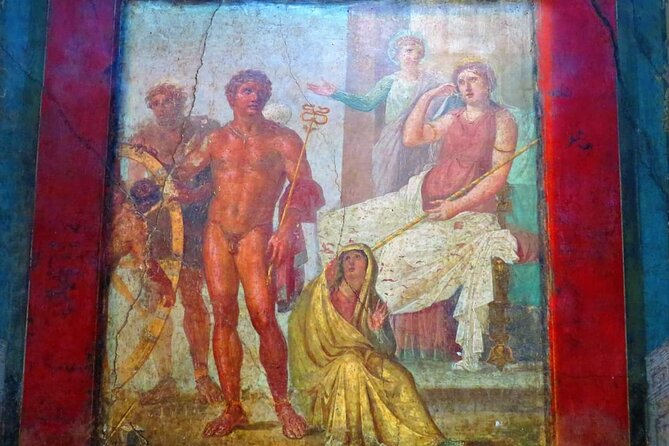
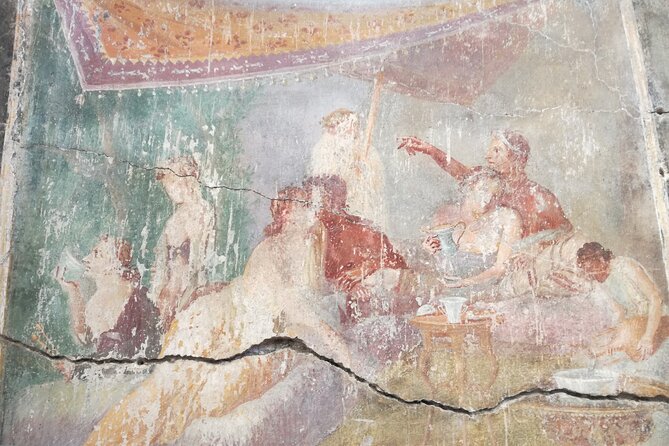
Next you visit Casa dei Vettii, a home centered on architecture plus frescoes and mosaics. This is one of those stops where a guide really earns their keep. A room full of wall art and floor patterns can look impressive, but without context you might not know what to look for.
I like how the tour keeps the emphasis on what you can actually spot. You get the idea of the home’s design choices and why decoration matters in a household setting.
Then the route goes to Casa del Fauno, one of the oldest villas in Pompeii. Older does not always mean more exciting on paper, but here it works because the guide ties the age to the way the place represents evolving tastes and early household life.
This pair of stops is smart for first-timers. You see one residence focused on decorative richness, and then you shift to a home that signals early roots. Together, they help you stop thinking of Pompeii as a single snapshot.
The time allocation is around 20 minutes for Casa dei Vettii and about 10 minutes for Casa del Fauno, so you get a feel for both without the tour getting bogged down.
You can also read our reviews of more private tours in Pompeii


Casa degli Amorini Dorati: art so specific you start spotting it before the guide says a word
Then comes Casa degli Amorini Dorati, described as a villa with beauty that is hard to put into words. That phrasing is a good warning, because it tells you what kind of attention the guide will bring. This stop is about details.
The practical advantage of having a guide here is that you can learn what to focus on. Instead of walking in and only thinking it looks pretty, you start noticing how art and layout work together, and why the design choices would have mattered to the people living there.
The tour allows about 20 minutes here, which is long enough to actually see the art style and the overall visual impact. It also gives you time to ask questions while the site is still fresh in your mind.
If you love houses and wall art, this is a key stop on the route.
Suburban Baths and Stabian Baths: spa life near the walls
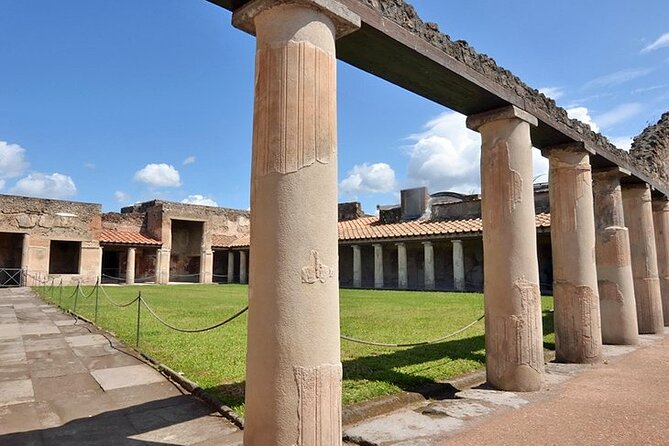
Pompeii is not only about houses and temples. It is also about the spaces where people relaxed, cleaned up, and interacted. That is why the tour includes Suburban Baths and Stabian Baths (Terme Stabiane).
Suburban Baths are described as an extraordinary spa built near the walls. This is the type of description that makes you look up from your feet. The guide’s job is to help you connect the setting to the purpose, so you see bathing areas as part of the city’s everyday rhythm, not just another ruin.
Then you head to Stabian Baths (Terme Stabiane), listed as the largest Baths of Pompeii. If you only remember one thing about the bathing stops, make it this: Pompeii had major public leisure infrastructure. You are not just seeing a room, you are seeing a system built for everyday use.
You get about 15 minutes at Suburban Baths and 20 minutes at the Stabian Baths. That works well because baths are easy to overwhelm if you do not have a path. With a guided route, you walk in with a plan and come out with a clearer sense of what each area likely meant.
Odeon and the smaller theater: singing tradition in stone
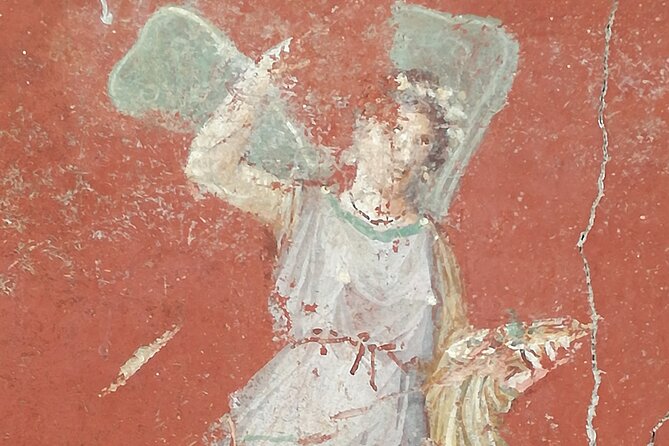
The tour then visits Odeon, also called Teatro Piccolo, described as a theater symbol of the singing tradition. This is a clever stop because it broadens the theater story beyond big-stage tragedies and comedies.
Instead of treating Pompeii’s performance culture as one thing, this helps you see variety. It also gives you another landmark to anchor your mental map, which makes later stops like the forum and temples easier to place.
Time here is about 10 minutes, so it is a focused, quick read. If you want long explanations, ask the guide questions on the spot. That is one of the benefits of a private group format.
Foro de Pompeya and the temples: where public decisions and beliefs met
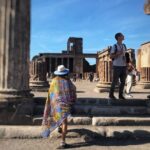
Next up is Foro de Pompeya, the main square. This stop is essential because a forum is where people gathered, talked, displayed status, and moved through the civic heart of the city. Even if you only spend a short time here, you can feel the logic of a city built around big public meeting areas.
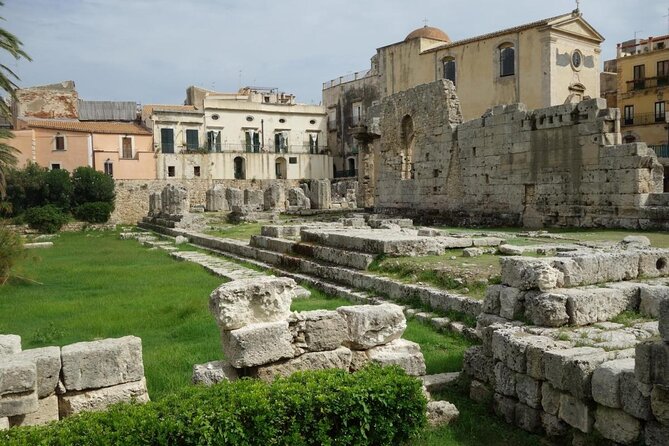
Then you go to Tempio di Giove Capitolino, described as the Temple of the temples. After that is Temple of Apollo, tied to Apollo as the god of the sun, son of Zeus.
I like that the tour does not lump all sacred spaces together. You get two distinct temple stops, and that gives the religious side of Pompeii more texture. It helps you understand that belief showed up in multiple big, visible ways across town.
These stops are each about 10 to 20 minutes combined depending on pacing, with Foro de Pompeya getting around 20 minutes, and each temple getting about 10 minutes. That is enough time to see the layout and listen for what the guide points out as important.
Casa del Poeta Tragico and Via dell’Abbondanza: mosaics and the city’s main street
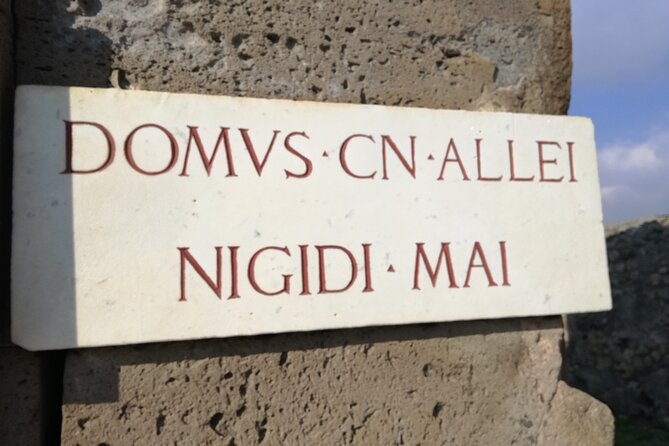
Now the tour shifts back into daily-life detail with Casa del Poeta Tragico, described as the home of the famous Mosaic. The big idea here is that art is not only decoration. It can be a signature, a statement, and a window into how households wanted to be seen.
This stop is very quick, around 5 minutes, but the short time works if the guide is pointing out exactly what makes the mosaic noteworthy. When you have limited time in Pompeii, short stops can still be high value if you focus on the right element.
After that is Via dell’Abbondanza, the main street. This is a relief after houses and temples because the street gives you a sense of movement and scale. You start thinking about where people walked, how shops and small eating places likely fit in, and how the city felt as you passed through.
You get about 10 minutes at the street stop, so it is more orientation than deep study. Still, it is a smart place to reset your eyes and connect the city’s big landmarks to everyday routes.
Thermopolium Regio VI, Insula VIII, 8: the quick-serve side of ancient Pompeii
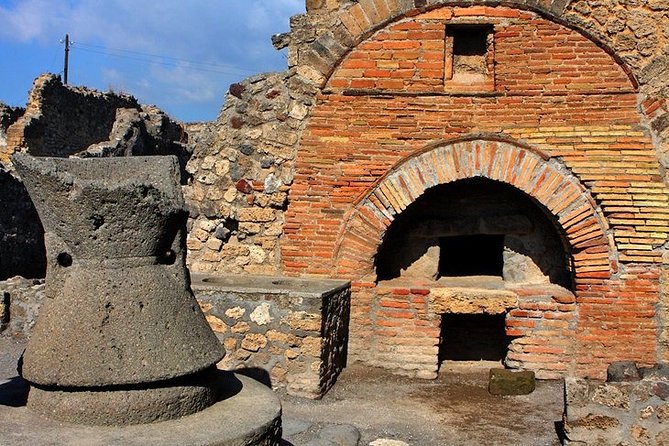
Finally, the route includes Thermopolium Regio VI, Insula VIII, 8, described as one of the restaurants of the time. A thermopolium is one of the best ways to bring Pompeii into focus as a place where people ate in a hurry and lived their routine, not only staged drama and worship.
This stop is short, about 5 minutes, which is enough if the guide explains what you should look for and how it fits into street life. Even a quick glance can make Pompeii feel less like an ancient theme park and more like a real city with habits you would recognize.
You end the tour back at the meeting point, so the day is tidy. You do not need to juggle transit mid-tour.
Best fit and practical tips for your Pompeii timing
This tour is a strong fit if you:
- want an English guide and a structured route through major sights
- like seeing theater, baths, homes, and public squares without spending half a day planning
- prefer private group pacing, especially if your group has different interests
- want help spotting details you would likely miss on your own
If your group wants lots of unhurried time at one single site, this may feel too fast. The tour is designed to cover many categories in a short window, which is great for first-timers but less ideal if you are chasing a single obsession, like mosaics only or baths only.
One practical note: since the Pompeii ticket is not included, make sure you line up your entry so you are not stalling at the start. Also, because you only get about 2 to 3 hours, wear comfortable shoes and plan for steady walking across uneven ruins.
And if your priority is art and explanation, ask questions while you still have the site right in front of you. The whole advantage of a private guide is that you can steer the conversation toward what you care about.
Should you book this Pompeii private tour?
I’d book this Pompeii private guided tour if you want a focused, high-signal visit. You get a clear sequence through major sights, plus an official guide, a Pompeii map, and bottled water, all in a tight 2 to 3 hours.
Skip it only if you already planned to spend the entire day inside the park without a structured route, or if your group wants long stays and deep replay at just a couple of sites. For most people doing Pompeii as a highlight, this strikes a good balance between coverage and clarity.
FAQ
Is the Pompeii Archaeological Park ticket included?
No. The tour includes the guide, a map of the park, and bottled water, but the Archaeological Park Pompeii ticket is not included.
How long is the private Pompeii tour?
It runs for about 2 to 3 hours.
What language is the tour offered in?
The tour is offered in English.
Where does the tour start and what time does it begin?
The meeting point is Via Villa dei Misteri, 1, 80045 Pompei NA, Italy, and the start time is 12:30 pm. The tour ends back at the meeting point.
Is this a private tour?
Yes. It is a private tour/activity, and only your group participates.
Can I cancel and get a full refund?
Yes, free cancellation is available. You can cancel up to 24 hours in advance for a full refund. If you cancel less than 24 hours before the start time, the amount paid is not refunded.
More Guided Tours in Pompeii



More Tours in Pompeii


More Tour Reviews in Pompeii

Not for you? Here's more nearby things to do in Pompeii we have reviewed







Tour Reviews, compared.
 ★ 4.8Pompeii: Entry Ticket and Guided Tour with an ArchaeologistFrom $3519,459 reviews
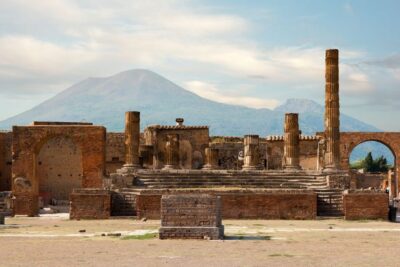 ★ 4.2Pompeii: Entry Ticket with Optional Audio GuideFrom $2612,360 reviews
 ★ 4.8Pompeii: Small Group Tour with an ArchaeologistFrom $4012,264 reviews
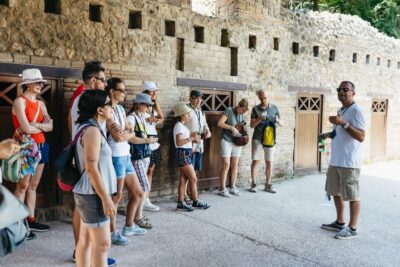 ★ 4.3Pompeii Ruins & Mount Vesuvius Day TourFrom $12011,459 reviews
 ★ 4.6Sorrento, Positano and Amalfi Full-Day TourFrom $10710,988 reviews
 ★ 5.0Sorrento, Positano & Amalfi Coast – Small Group TourFrom $768,643 reviews
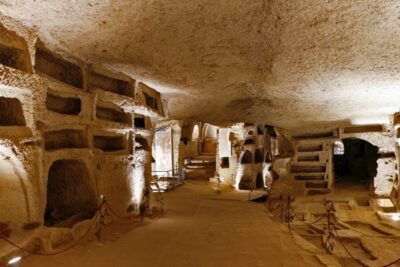 ★ 4.6Catacombs of San Gennaro Entry Ticket & Guided TourFrom $157,941 reviews
★ 5.0Pompeii Small Group Tour with an ArchaeologistFrom $356,593 reviews
★ 4.6Catacombs of San Gennaro Entry Ticket & Guided TourFrom $157,941 reviews
★ 5.0Pompeii Small Group Tour with an ArchaeologistFrom $356,593 reviews