
Tour review · TOUR REVIEWS
Pompeii and Herculaneum: Guided Tour with an Archaeologist
Pompeii and Herculaneum feel human in a way. This guided day turns Roman ruins into real streets, homes, and daily routines, led by an archaeologist who knows how to make the evidence click.
I really like two things right away: the small group size (up to 10) and the chance to see both sites in one day without feeling rushed. I also love the focus on the details that usually get skipped, like the Lupanare at Pompeii and the exceptionally well-preserved organic remains at Herculaneum, including wood and human remains.
One consideration: this is a walking tour, and it is not suitable for people with mobility impairments or wheelchair users. You will want comfortable shoes, water, and a hat, especially if you visit in warmer months.
Key highlights you will care about
- Up to 10 people means you can actually hear the guide and ask questions
- Professional archaeologist guide with hands-on explanations of what you are seeing
- Pompeii highlights include Porta Marina Inferiore, houses with mosaics and frescoes, baths, the Lupanare, and the Forum
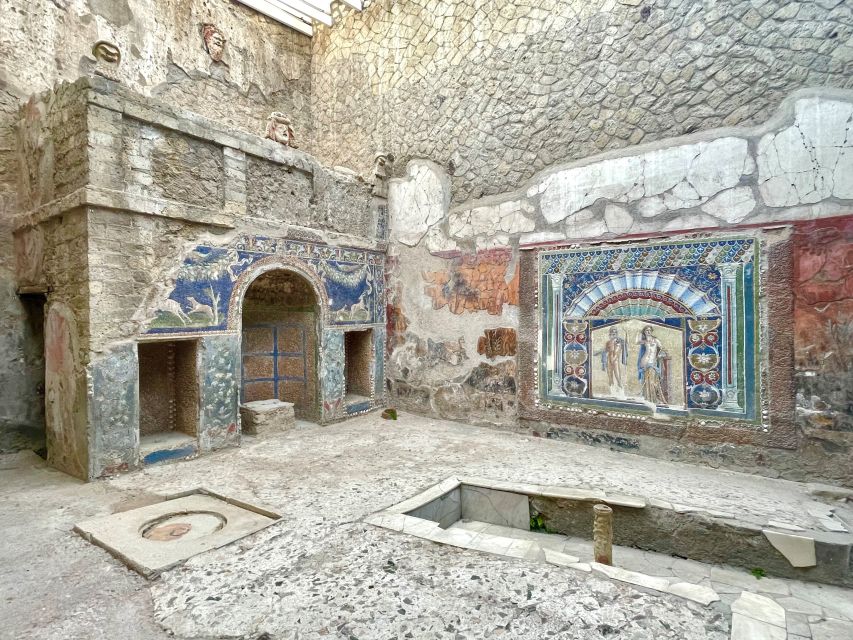
- Herculaneum conservation stands apart, with frescos, jewelry, skeletons, and preserved wood
- Skip-the-line entry tickets and headsets for groups larger than 8 help the day run smoothly
- A lunch break plus train time keeps the schedule realistic
Why this Pompeii and Herculaneum day works so well
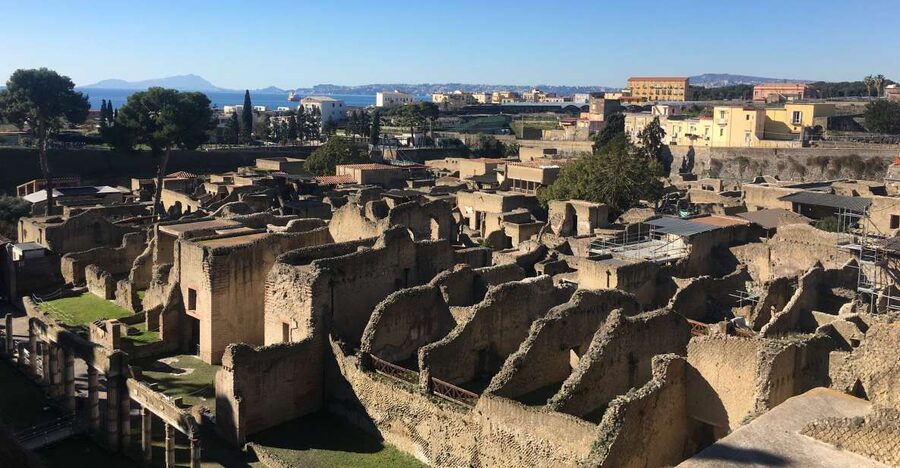
Seeing Pompeii alone is impressive. Seeing Pompeii and then Herculaneum the same day is smarter. You get two different snapshots of Roman life, shaped by how the eruption affected each city and how well each area survived over the centuries.
What makes this tour feel practical is the way it builds your understanding. You start in Pompeii, where the city plan and major public spaces help you orient quickly. Then you move to Herculaneum, where the preservation lets you look at homes and objects in a more intimate way. The result is that you do not just recognize ruins. You start to understand what people cooked, how they decorated, and what daily life likely looked like.
The guide really matters here. When the person leading you is an archaeologist, you spend less time guessing and more time connecting. And if you like photos, this itinerary gives you strong visual moments without turning the day into a photo-only sprint.
You can also read our reviews of more guided tours in Pompei Campania

Meeting at Suisse Restaurant and getting set up fast
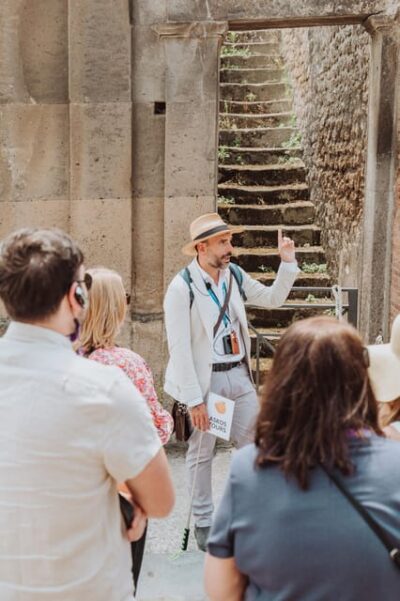
Your day begins at Ristorante Suisse. The guide meets you there and waits for you with a sign that has your name. That small touch is surprisingly helpful on a busy day around the park entrances.
The tour also includes entry tickets and uses headsets for groups larger than 8. That matters because Pompeii is loud and crowded. With headsets, you do not constantly strain to hear instructions while you are surrounded by other groups.
You will also want to be ready with the basics:
- Passport or ID card (original, not a photo)
- Comfortable shoes
- Hat and water
One logistics detail worth taking seriously: the Pompeii ticket is named. After booking, you will need to provide the first and last names of all participants. It is the kind of thing that can slow you down at the gate if you forget.
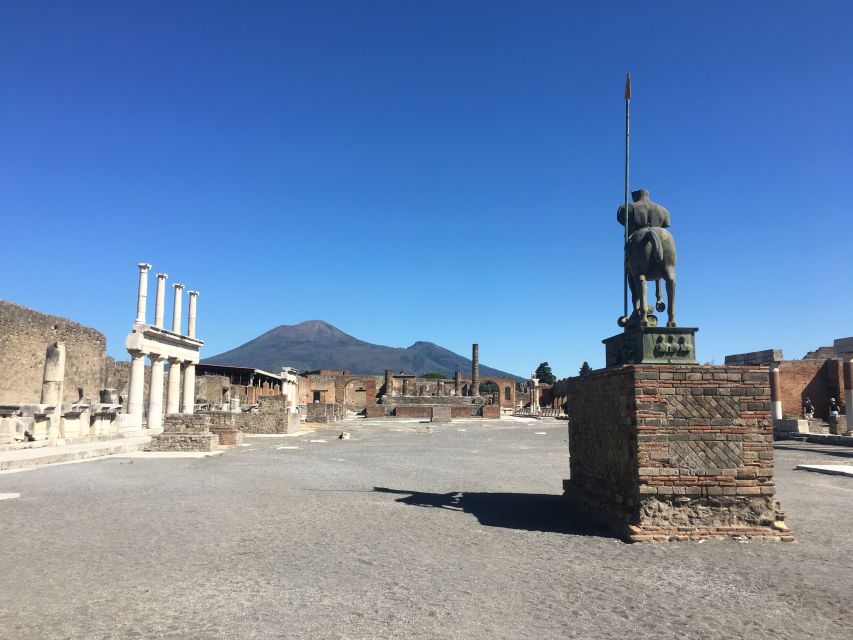
Pompeii with an archaeologist: from Porta Marina Inferiore to the Forum
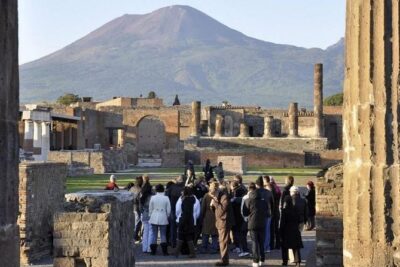
Pompeii is the headline for many people. It deserves the hype, but the difference is what you notice when someone guides you. In this tour, you start at Porta Marina Inferiore, then work through the area of the theatres. That opening stretch helps you see how the city funneled public life, entertainment, and foot traffic.
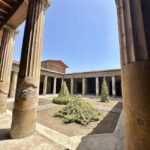
From there, the walk becomes about homes and everyday details. You move into ancient houses with mosaics, frescoes, and marble. These are not just pretty surfaces. The guide uses them to explain status, taste, and how Romans arranged spaces for work, visitors, and family life.
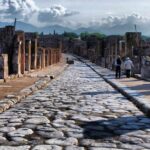
You will also pass by places that feel like the city’s heartbeat: shops, old Roman bakeries, and ancient snack bars. That is a smart sequence because it keeps Pompeii from becoming a checklist of monuments. You start picturing real routines like buying food, grabbing a quick bite, and moving through busy storefront streets.
Then you reach the public side of town. The tour visits the public baths and the Lupanare. The baths show how Romans approached cleanliness, social time, and leisure. The Lupanare can feel intense, but it is also one of the most direct ways to discuss social realities in Pompeii, especially when an archaeologist explains what the surviving evidence can and cannot prove.
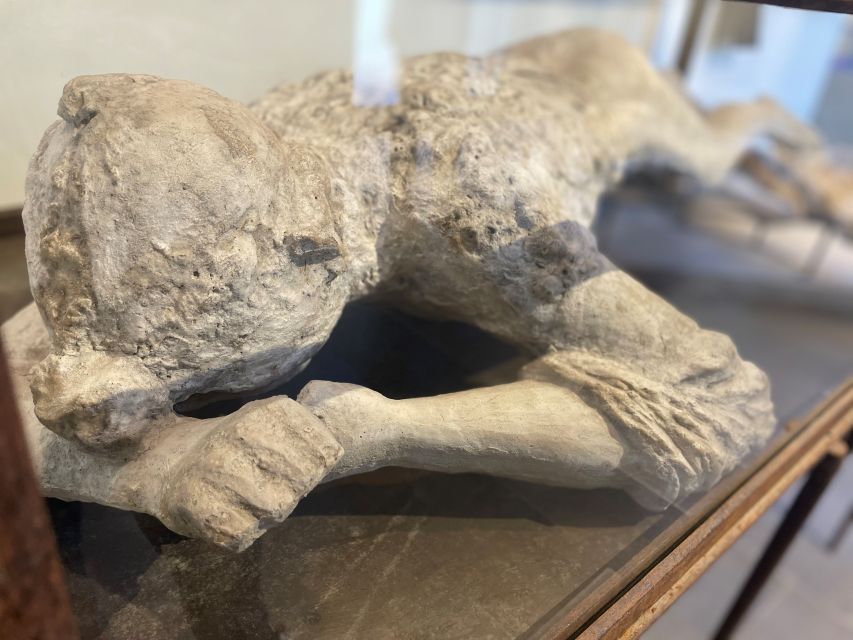
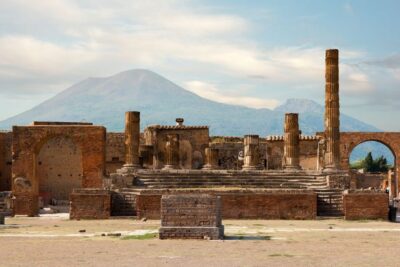
Finally, the day lands at the Forum, including plaster casts of the victims. This part can be emotionally heavy, and you will likely find that the guide’s context helps you process it. Instead of staring at remains like they are an isolated horror, you understand why these were people going about ordinary days, trapped by an eruption that changed everything.
A quick timing note: the Pompeii portion is about two hours. That sounds short compared to people wandering alone, but it is long enough to hit the core story points without turning the day into exhaustion. If you have visited Pompeii before, you may still like this because it organizes the site in a way that makes sense.
Lunch break where it actually helps your day
After about two hours in Pompeii, the tour pauses for lunch. You get one hour for a break, with free time to eat.
This is not just a mid-day rest. It is a timing tool. Pompeii crowds can spike, and fatigue can build fast on uneven stone. Using a real break helps you arrive fresh at Herculaneum, where the experience is different and you will want your energy.
You return to Ristorante Suisse as your anchor point. That is convenient because you are not trying to figure out where to eat while your legs are already tired. People also tend to like having food right at the meeting area, since you can plan breakfast and lunch around the tour rhythm.
Bring your own water if you can, and do not assume every restaurant will keep it cold or easy to find. Pompeii days can add up quickly.
The train jump to Herculaneum, then a new kind of preservation
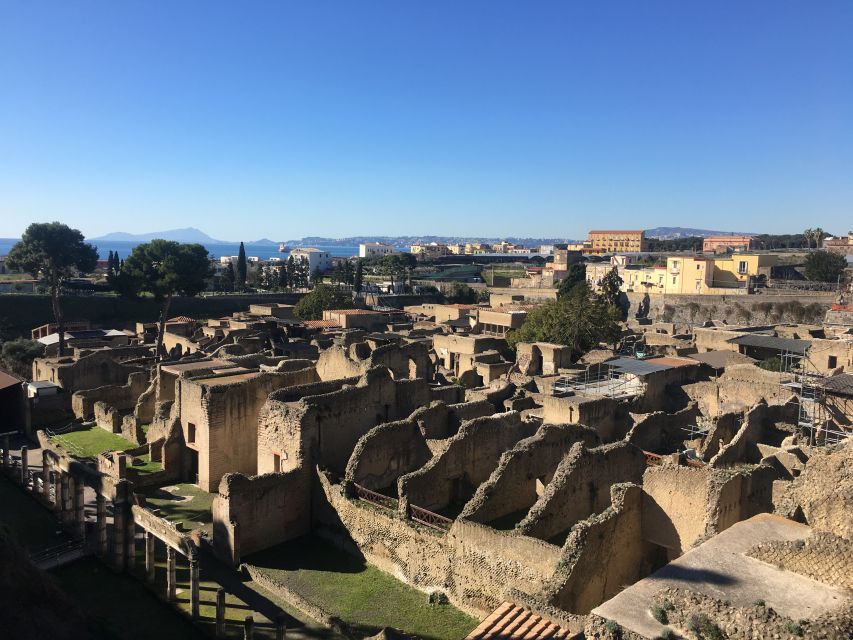
After lunch, you head to the train for the ride to Herculaneum. The transit time is around 30 minutes.
This leg matters because it changes your pace. You go from Pompeii’s bigger, more exposed feeling to Herculaneum’s calmer, more contained experience. And when you arrive, you are not starting from zero. The guide’s Pompeii context helps you compare what you see.
Herculaneum is often called a smaller site, and that is true. But the real reason it feels special is the state of burial and conservation. Where Pompeii can feel like a monumental cityscape, Herculaneum can feel like rooms, objects, and human presence captured in a different way.



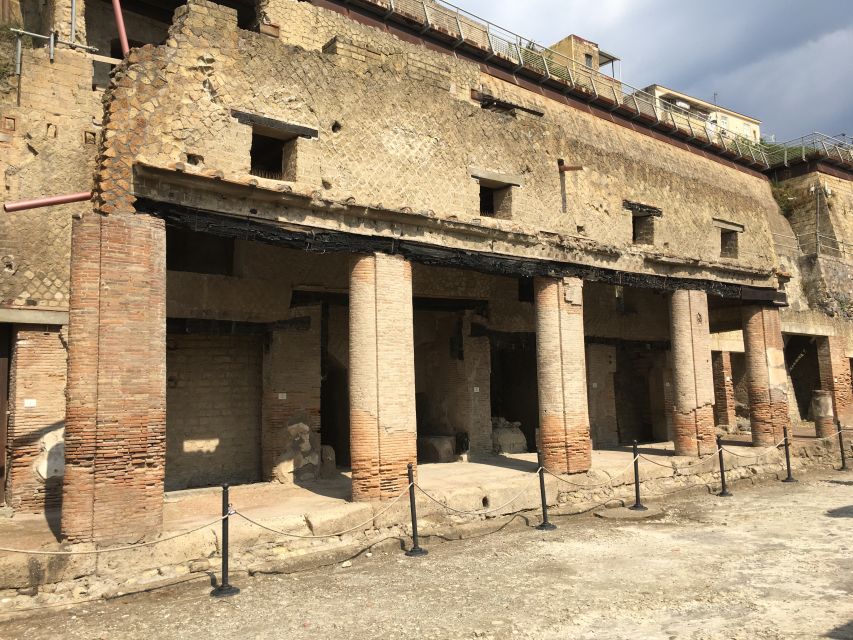
Herculaneum’s residences: frescoes, jewelry, skeletons, and preserved wood
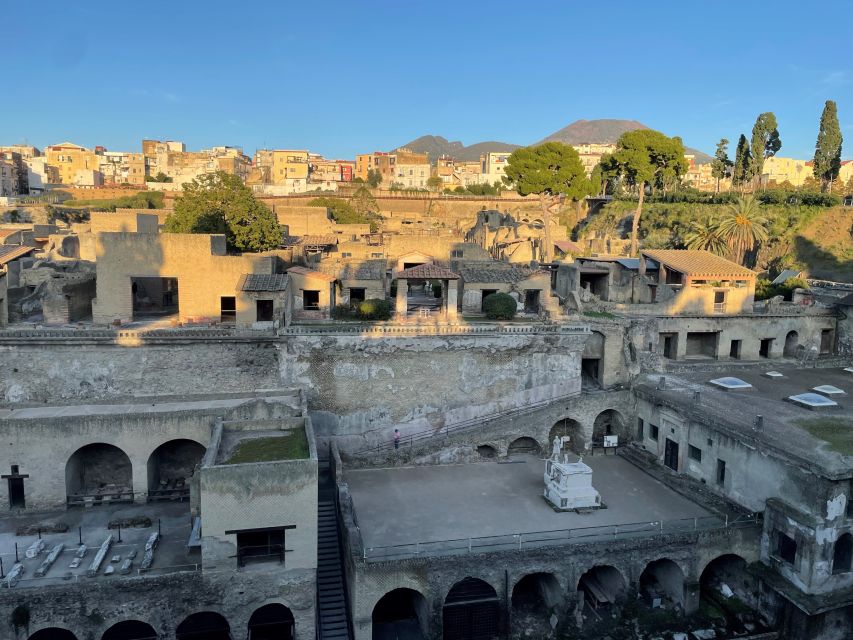
Herculaneum gets about 1.5 hours of guided time. The tour visits the archaeological park and focuses on the residences and interiors.
This is where you start appreciating how conditions can preserve more than walls. You see frescoes, marbles, mosaics, and jewelry, and you also encounter skeletons. The preserved remnants are not just dramatic. They give a clearer picture of material life, like how people decorated and what objects people valued.
One of the biggest wow factors here is the mention of exceptionally well-preserved wood. That is important because it changes what your brain can picture. In many archaeological sites, wood is gone. Here, enough survives that you can imagine furniture and structure in a more tangible way.
The tour’s style helps at this point. A funny, clear guide can be the difference between feeling overwhelmed and feeling informed. When the day stays organized, Herculaneum can feel less like a museum and more like an intimate place where daily life is still readable.
You also tend to find it less crowded than Pompeii. That matters if you want to linger at details or take photos without constantly moving because a different group is pushing past.
Small group size, headsets, and how your guide handles the crowds
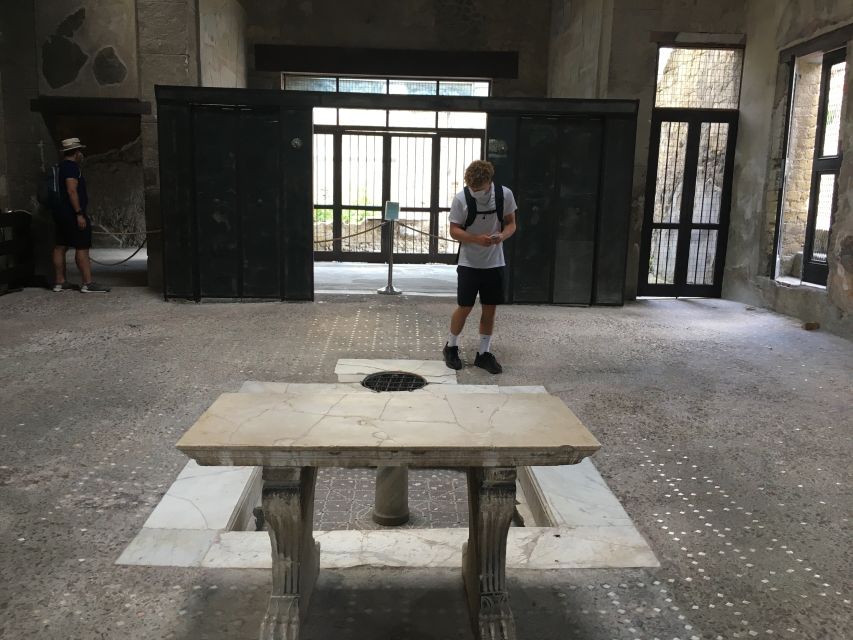
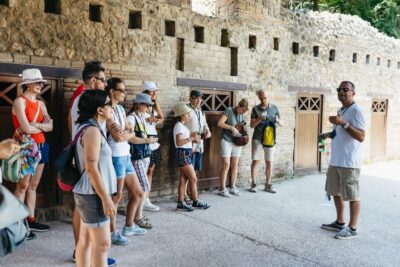
This tour is built for a small group, up to 10 people. That is not just comfort. It directly affects what you learn.
With fewer people, your archaeologist guide can:
- point out small features without getting lost in a crowd
- keep questions from turning into a long queue
- adjust the walking pace based on your group’s interest
When a guide spends time steering around heavier crowd zones, you feel it as less frustration and more attention. Some people also mention that the guide navigates around larger groups and chooses quieter alleys. That kind of crowd management can make a half-day feel calmer than it should.
For larger small groups, headsets kick in (for groups above 8). If you are hard of hearing, this feature is a practical win. It also reduces the need to compete with other tour voices while you are standing among stone walls.
Price and value: what $141.61 is really buying
The price is listed at $141.61 per person. That is not cheap, but it is not random either.
Here is what you are paying for, and why it matters:
- An archaeologist guide for a full half-day across two major sites
- Entry tickets included, so you avoid extra lines and last-minute ticket confusion
- Headsets when needed
- Pompeii ticket is named, which the provider handles as part of the process, saving you from gate-day surprises
- A structured day with a lunch break and train transfer, which reduces decision fatigue
If you tried to do Pompeii and Herculaneum on your own, you could spend less money. But you would likely pay back the savings in time and confusion, especially at Pompeii’s larger swaths. A guided route helps you see the right buildings, understand what you are looking at, and spend less time wandering without direction.
In other words, this price buys interpretation and efficiency. For most people, that is the difference between collecting photos and understanding a city.
What to expect from the guide, including the humor
One theme that comes through clearly is the guide’s personality. The day is described as very funny, and people also point out the guide’s patience, ability to keep everyone engaged, and willingness to answer questions.
There is also a consistent idea that this is not a scripted walk. The guide seems to adapt as the group moves, which can be a big deal if you have kids, if you care about specific details, or if you simply ask a lot of questions.
If you want archaeology explained in human terms, this style tends to work. You spend time talking about what the evidence suggests, and you also get context on the eruption and daily Roman life, not just facts about stones.
And if weather hits hard, the guide can help with real-world comfort. One example mentioned shade-seeking during a hot day. You cannot control the climate, but you can control how your day feels, and that is part of the value.
Who should book this Pompeii and Herculaneum tour
This is a great match if you:
- want the most important highlights at Pompeii and Herculaneum without spending days
- like photography but also want context for what you are photographing
- care about Roman life beyond the big monuments, like food, houses, baths, and public spaces
- travel as a family and want explanations that work for younger visitors too
- prefer a small group over big bus-tour crowds
It is also a strong choice if you already know some history and want to sharpen your understanding with an archaeologist’s perspective. Even people who have been to Pompeii before often appreciate the organized take and the Herculaneum addition, since Herculaneum changes the mood of the day.
The main mismatch is mobility. This tour is not suitable for wheelchair users or people with mobility impairments. If that applies to you, you will need to consider a different format.
Should you book this tour?
I think this is worth booking if you want a guided day that stays focused on what you are seeing, not just where you are walking. The combination of Pompeii’s major public life plus Herculaneum’s preservation, guided by an archaeologist like Benedetto, is a strong way to understand two Roman cities in one shot.
Book it if you value:
- small-group attention
- a clear, well-paced route
- practical logistics like skip-the-line tickets, headsets, and a lunch break
- the chance to see human remains and preserved materials with context
If you hate structured itineraries, or if you want to roam at your own speed for most of the day, you might prefer a self-guided approach. Pompeii can be huge, and you may want more time than two hours.
My bottom line: if you are doing Pompeii and Herculaneum in one day, this format is the most sensible way to make the ruins make sense.
FAQ
How long is the Pompeii and Herculaneum guided tour?
The tour lasts about 5 hours in total, including time in Pompeii, a lunch break, and the train ride to Herculaneum.
What is the group size?
It is a small group format, with up to 10 people. Private or small groups are available.
Is the tour guided by an archaeologist?
Yes. You get a guide who is an archaeologist.
Where do we meet, and where do we end?
You meet at Suisse Restaurant, with the guide waiting for you with a sign that has your name. The tour ends back at the meeting point.
Are entry tickets included?
Yes. Entry tickets are included in the tour price, and it includes skipping the ticket line.
Do we need headsets?
Headsets are included for groups larger than 8 people.
Is transportation included?
No. Transportation is not included. The schedule does include a train segment between the two sites.
What languages are available?
The live tour guide is available in English, Italian, and French.
What should I bring?
Bring your passport or ID card (original), comfortable shoes, a hat, and water.
Is it suitable for wheelchair users or limited mobility?
No. It is not suitable for people with mobility impairments or wheelchair users.
More Guided Tours in Pompei Campania
More Tours in Pompei Campania

More Tour Reviews in Pompei Campania
Not for you? Here's more nearby things to do in Pompei Campania we have reviewed




Tour Reviews, compared.
 ★ 4.8Pompeii: Entry Ticket and Guided Tour with an ArchaeologistFrom $3519,459 reviews
 ★ 4.2Pompeii: Entry Ticket with Optional Audio GuideFrom $2612,360 reviews
 ★ 4.8Pompeii: Small Group Tour with an ArchaeologistFrom $4012,264 reviews
 ★ 4.3Pompeii Ruins & Mount Vesuvius Day TourFrom $12011,459 reviews
 ★ 4.6Sorrento, Positano and Amalfi Full-Day TourFrom $10710,988 reviews
 ★ 5.0Sorrento, Positano & Amalfi Coast – Small Group TourFrom $768,643 reviews
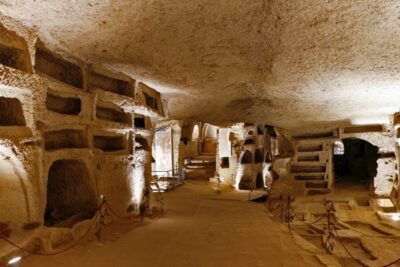 ★ 4.6Catacombs of San Gennaro Entry Ticket & Guided TourFrom $157,941 reviews
★ 5.0Pompeii Small Group Tour with an ArchaeologistFrom $356,593 reviews
★ 4.6Catacombs of San Gennaro Entry Ticket & Guided TourFrom $157,941 reviews
★ 5.0Pompeii Small Group Tour with an ArchaeologistFrom $356,593 reviews
Browse the lists this tour appears in