
Tour review · TOUR REVIEWS
Private Pompeii Tour with 3D Virtual Reality Headset
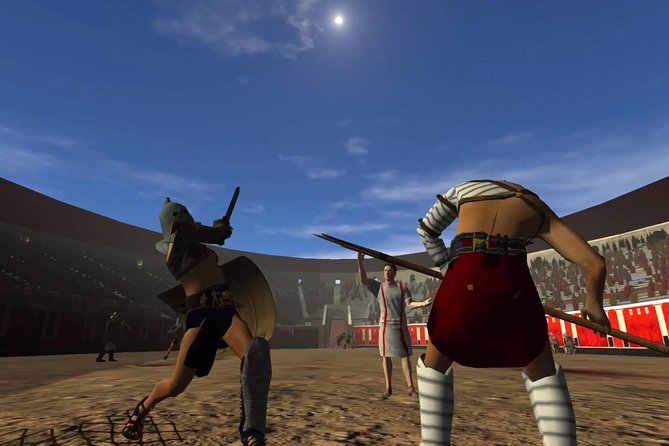
Two ways to see Pompeii at once. This tour pairs a 3D, 360-degree VR time travel experience with a licensed local guide and audio commentary, so the ruins feel closer to life than you expect. The biggest catch is that the VR visuals are not everyone’s cup of tea, with some animations feeling a bit cartoon-like, so it helps to like VR before you book.
I like that you get both the high-tech wow and the real-world context at Pompeii. You are not stuck staring at a headset the whole time, and you still walk among temples, homes, shops, theaters, and markets on the ground. One more consideration: the headset has health and safety limits, so if you have dizziness, seizure risk, or certain eye conditions, you will want to read the guidance carefully.
You can also pick the morning or afternoon slot, and you meet in a simple, easy-to-find spot at Piazza Esedra. Comfortable shoes matter here, since you are walking over uneven terrain. And yes, this runs in all weather, which is useful when Pompeii decides to rain without warning.
Key points before you go
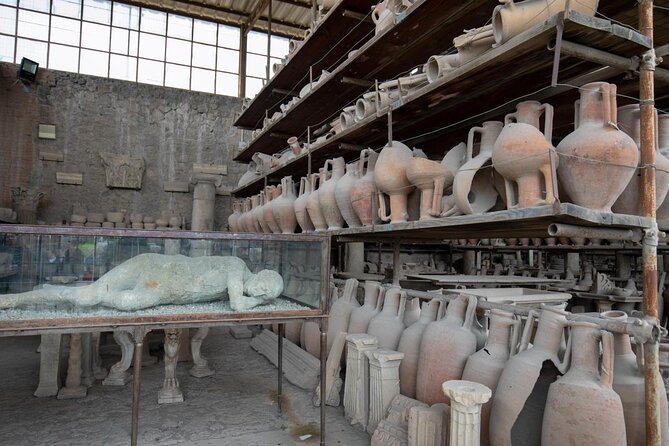
- 3D, 360-degree VR shows you Pompeii as it might have looked about 2,000 years ago before Vesuvius destroyed it.
- Licensed local guide + audio commentary helps you understand what you are seeing, not just watch effects.
- Skip-the-line entry and admission included means less time fussing and more time learning on site.
- Private group experience means it is only your group, with the pace set by your guide.
- Headset safety matters: Gear VR is not recommended for children under 13 and requires extra caution for certain medical conditions.
- All-weather operation and a meeting point near public transport make planning easier.
Why this Pompeii VR tour feels different from a standard guided walk
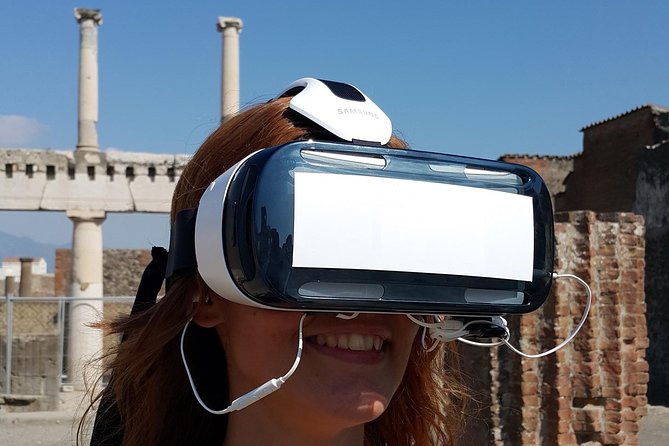
Pompeii can be overwhelming in a good way. You see streets, doorways, and crowd-size spaces, but your brain still has to do the hard part, imagining people and daily life where ash later froze everything. What makes this experience interesting is that you do that “imagine” work with help. The VR headset is designed to put you into a 360-degree view of ancient Pompeii, then your local guide adds the story so it connects to the site you are standing on.
The practical win is the pairing. A regular tour can explain buildings and city layout, but VR can help your eyes understand scale and setting first. Audio commentary and guided explanations can then steer you toward the details that matter, like how the city functioned as a lived-in place with homes, shops, theaters, and markets.
This is also a tour format that works when you like options. If you are tired of only reading plaques and only hearing dates, the headset gives you another entry point. If you want pure realism and nothing artificial, you might find the VR animation less satisfying, which is a fair concern. In fact, one review pointed out that the VR animations could be upgraded and felt like a cartoon, which is worth keeping in mind.
You can also read our reviews of more private tours in Pompeii



The VR portion: what you actually get from the 3D headset
This tour uses Gear VR style 3D headsets to show Pompeii around you in 360 degrees. That matters because you are not just getting a screen-based video. The setup is meant to surround you, so you can turn your head and see the reconstructed environment in multiple directions.
You should expect the VR experience to be closely tied to what you are walking through at the archaeological park. The idea is to see what it might have looked like before the eruption of Mount Vesuvius, then return to the real ground to make the connection. For first-timers, that can speed up your understanding. You start to recognize building types sooner, even before you know what words like forum or basilica mean in Pompeii’s context.
The trade-off is that VR reconstructions can only be as strong as their animation style. If you are expecting photoreal visuals, you may be disappointed. One review specifically said the animation felt basic and made the person wish they had done a normal tour instead. That does not mean the overall experience is bad, it just means this is not the same as modern high-end VR production. Your best bet is to go in thinking of the VR as a storytelling aid, not as perfect “time travel photography.”
The licensed guide part, and why it matters more than the tech
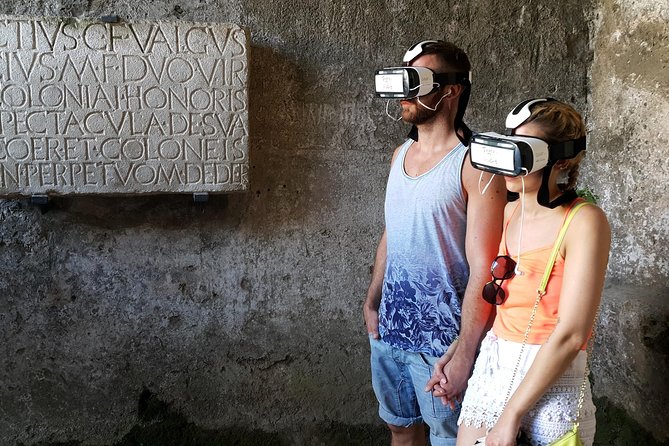
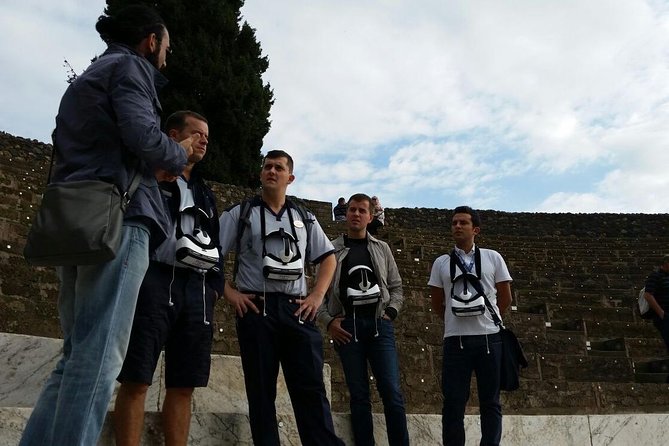
The headset experience is only half the value here. The other half is the licensed local guide, who can answer questions and give you context you cannot get from a headset alone. A good guide can point out what you should look for when you lift your head and face the ruins, and that is where tours often succeed or fail.
In the feedback I’m basing this on, the guide performance came up in a positive way, with one review calling the guide very good. That matters because Pompeii is full of small cues. Without guidance, you can wander and still miss the key ideas that make the place click. With guidance, you can understand why certain spaces existed and how they fit into daily life.
Also, the tour includes audio commentary. That sounds simple, but it helps you follow along without constantly trying to read or decode everything in your own head. When you are in a headset, your attention is already split. Audio is the bridge that keeps your understanding from turning into a disconnected sequence of visuals and walking.
Pompeii Archaeological Park: what you will see during the walk-through
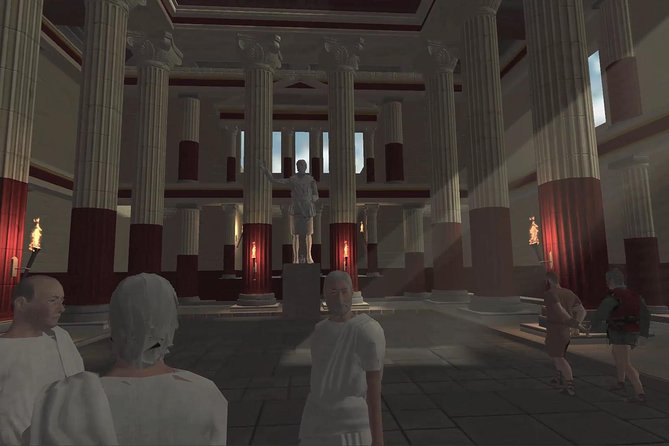
Once you are at Pompeii, the tour centers on the archaeological park itself. You will explore areas tied to everyday Roman life and public spaces: temples, homes, shops, theaters, and markets. The goal is to help you step back in time, not just tick off major monuments.
Here is how to get the most out of it. When your guide points to a building or a street layout, pause mentally and map it onto what you saw in the headset. Even if the VR animation is not perfect, it can still give you a visual scaffold. Then, when you look at the real stonework, you understand what you are seeing instead of just noticing that the wall is old.
The other benefit of having the headset tied to the site is that it can make the walking portion feel purposeful. Pompeii ruins can feel repetitive if you do not know what each area is for. With guidance and VR context, you can tell when you are in a more domestic zone versus a public or commercial one.
One practical tip: wear comfortable shoes. The terrain can be uneven, and you do not want blisters to steal your focus. Also, keep your hands and pockets free if possible. You may need to wear a lightweight bag across your shoulder during the tour, so plan for that.
Morning or afternoon choice: timing that can make or break your day

The tour gives you a choice of morning or afternoon. That is not a small detail at Pompeii. Light changes the look of stone, shadows can affect visibility, and crowds can change your overall pace.
It also matters because you will be doing both VR and walking. If you choose a time slot that matches your energy level, you’ll have an easier time staying engaged. A morning start can feel calmer, and an afternoon slot can be great if you want to sleep in a bit. Since the tour runs in all weather, the main thing is picking the time that fits your schedule rather than hunting for a perfect weather window.
If you are planning other stops the same day, aim to keep your plans flexible. The experience is listed as about 2 to 3 hours, so it can be longer than you expect if you ask questions or if your group moves slowly through the site.




Meeting point and ending back at Piazza Esedra: simpler logistics than most
This tour starts and ends at Piazza Esedra, 80045 Pompei NA, Italy. That round-trip simplicity can save stress. You are not dealing with a complicated drop-off point on the far side of the park.
Transport is not included, so you’ll need to handle getting to Pompeii on your own. On the plus side, the meeting point is near public transportation, which helps if you are using trains or buses. And because the tour ends where it began, you can build your next plan without guessing where you will be stranded.
Also, it is a private tour. That means only your group participates. For many people, that is the real value, even more than the VR. You tend to get more responsive pacing and less waiting around.
Price and value: what $217.49 per person really buys
At $217.49 per person, this is not a budget Pompeii option. But value is not only about being cheap, it is about what is included and what it replaces.
Here is what you get in the package:
- A licensed local guide
- A 3D 360-degree VR headset experience
- Skip-the-line entrance fee
- Admission ticket included
So you are paying for a guided Pompeii experience plus the headset technology. If you were to do a standard guided tour plus buy admission separately, you might end up in a similar total range once you add the basics. The headset is the differentiator, and that differentiator can be worth it if you enjoy VR as a learning tool.
Your decision should hinge on one question: do you think VR will help you understand Pompeii more than it will annoy you? If you are excited to see the city rebuilt around you, this price can feel fair. If you dislike motion, headaches, or artificial visuals, you may be better off spending the money on a purely traditional guide and walking without the headset.
One more value note: you can sometimes find group discounts. If you are traveling with friends or teens who are eligible, the per-person cost can feel easier to swallow.
Who should book this (and who should skip it)
This is a great fit for adults and older teens who want a fresh way to connect with Pompeii. One review highlighted that it worked well for adults and teens, calling the experience something you should do. If you have already been to Pompeii and want a new angle, the VR “then and now” approach can also be a fun way to reframe what you remember.
It can be less ideal for people who do not do well with VR. The tour specifically warns that 3D VR headsets are not recommended for children under 13 for health and safety reasons. Children between 9 and 12 may use the headsets at a parent’s discretion. Children under 9 are not permitted.
The medical warnings are thorough, and you should treat them seriously:
- If you have histories of seizures, dizziness, epilepsy, or related symptoms, consult a doctor first
- If you have preexisting binocular vision abnormalities, psychiatric disorders, heart conditions, are pregnant, or are elderly, consult a doctor before going
- If you have a pacemaker or other implanted medical device, the headset can emit radio waves that may affect nearby electronics, so consult your doctor or the device manufacturer
- If you experience symptoms like dizziness, disorientation, eye strain, nausea, or vision changes, stop immediately
So here is my practical take. If you are generally comfortable with VR on a good day and you do not have the listed risks, you are probably fine. If you have any doubt about motion sickness, seizure risk, or eye strain, skip this one and do a normal guided walk.
Tips to make the VR experience feel smoother
Even if you are medically cleared, you can make the VR portion more comfortable with a few smart habits.
First, wear comfortable shoes and dress for walking on uneven ground. That keeps your body stable, which helps your brain relax. Second, travel light. The tour notes that you may need to wear a lightweight bag across your shoulder during the tour, so avoid bulky daypacks that shift your balance.
Third, pay attention to the headset instructions and stop right away if you feel off. The tour spells out several discomfort and visual warning signs. Do not push through discomfort, because that can turn learning into pain.
Also, expect that you will spend part of your experience with your head tilted and your focus inside the headset. If you are prone to motion-related discomfort, consider choosing the time of day when you feel most steady and rested.
The one drawback to weigh before you book
Every good tour has a compromise. In this case, the compromise is the VR animation style. One review said the animation could be upgraded and felt more like a cartoon. That tells me two things.
One, the headset experience is a feature, not a miracle. It should help you visualize life in ancient Pompeii, but it may not deliver photoreal detail.
Two, if you are someone who prefers pure stone and guide narration only, the VR may feel like extra steps rather than the main event.
Your best approach is to treat this as a guided Pompeii experience with a VR storytelling layer. If you walk in expecting it to do more than storytelling, you might judge it too harshly.
Should you book this private Pompeii VR experience?
Book it if you want a smarter mix of technology and explanation. If you like the idea of seeing Pompeii rebuilt around you in 360 degrees, and you want a licensed local guide to connect it to what you’re standing in front of, this is an easy yes. The skip-the-line access and included admission also make it practical.
Skip it if VR makes you uneasy, even a little. If you have any of the medical risk factors listed for seizures, dizziness, epilepsy, binocular vision issues, heart conditions, pregnancy concerns, or pacemaker warnings, you should consult a doctor or choose a traditional tour format without VR.
If you are traveling with teens or older kids, double-check the age rules before you plan your day. Under 13 is not recommended by the manufacturer, and under 9 is not permitted.
If you are still deciding, here is the decision shortcut I would use: if you are excited by the concept of seeing ancient streets re-created around you, the value likely lands in a good place. If you are more motivated by unobstructed ruins and pure narration, you may prefer a standard guided Pompeii tour and save this for a day when you know you feel great with VR.
More Private Tours in Pompeii



More Tours in Pompeii


More Tour Reviews in Pompeii

Not for you? Here's more nearby things to do in Pompeii we have reviewed










Tour Reviews, compared.
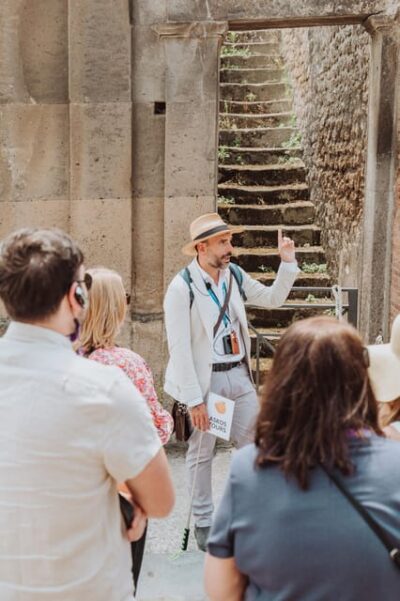 ★ 4.8Pompeii: Entry Ticket and Guided Tour with an ArchaeologistFrom $3519,459 reviews
 ★ 4.2Pompeii: Entry Ticket with Optional Audio GuideFrom $2612,360 reviews
 ★ 4.8Pompeii: Small Group Tour with an ArchaeologistFrom $4012,264 reviews
 ★ 4.3Pompeii Ruins & Mount Vesuvius Day TourFrom $12011,459 reviews
 ★ 4.6Sorrento, Positano and Amalfi Full-Day TourFrom $10710,988 reviews
 ★ 5.0Sorrento, Positano & Amalfi Coast – Small Group TourFrom $768,643 reviews
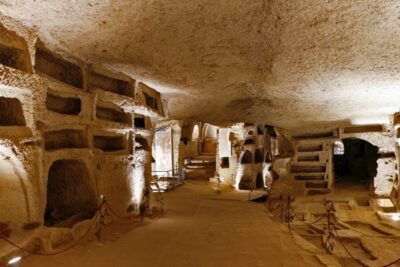 ★ 4.6Catacombs of San Gennaro Entry Ticket & Guided TourFrom $157,941 reviews
★ 5.0Pompeii Small Group Tour with an ArchaeologistFrom $356,593 reviews
★ 4.6Catacombs of San Gennaro Entry Ticket & Guided TourFrom $157,941 reviews
★ 5.0Pompeii Small Group Tour with an ArchaeologistFrom $356,593 reviews