
Tour review · TOUR REVIEWS
Private Pompeii Tour with 3D Virtual Reality Headset – Tour Assistant Only
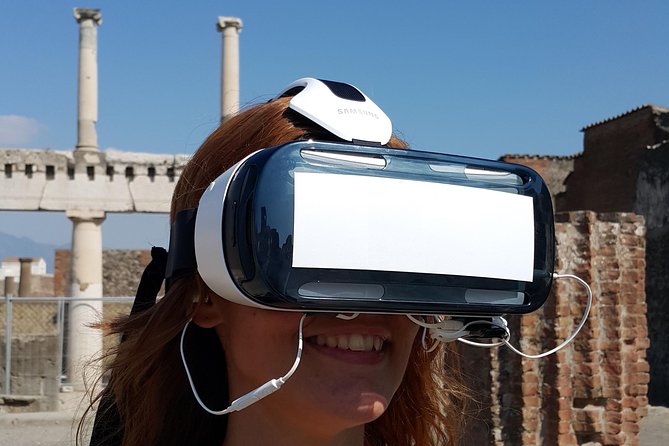
Pompeii changes when it is rebuilt in your head. This private tour mixes a real walk through the ruins with a 3D virtual reality history layer, so you can see temples, homes, shops, and streets as they may have looked before Vesuvius. I especially like the skip-the-line entrance fee and the fact that the VR includes audio commentary you can switch between several languages. One heads up, the tour assistant is not a licensed archaeological guide, so your questions about the site will have limits.
I also like the pacing. You get a short 5-minute VR training before you step into the park, then the assistant keeps you moving while the headsets handle the storytelling. The possible drawback is that VR does not fit everyone, especially if you are prone to dizziness or have specific medical conditions, so read the warnings before you book.
If you want Pompeii that feels more like a movie and less like a lecture, this is a smart option. You should still plan for real walking over uneven terrain, and bring expectations that the VR is video-based, not a free exploration of every corner.
Key points before you go
- Private, tour-assistant-led experience: only your group, with help focused on keeping things running smoothly.
- VR headset time with up to 15 3D videos: you will “see” major parts of Pompeii layered onto the ruins.
- Audio commentary in 6 languages: English plus Italian, German, French, Spanish, and Russian.
- VR minimum age is 9: and the manufacturer recommends not using the headsets under 13.
- Skip-the-line admission included: you pay for the ticket as part of the package.
- Assistant cannot answer archaeology questions: you get guidance and headset narration, not a licensed site lecture.
Why 3D VR in Pompeii can make the site click
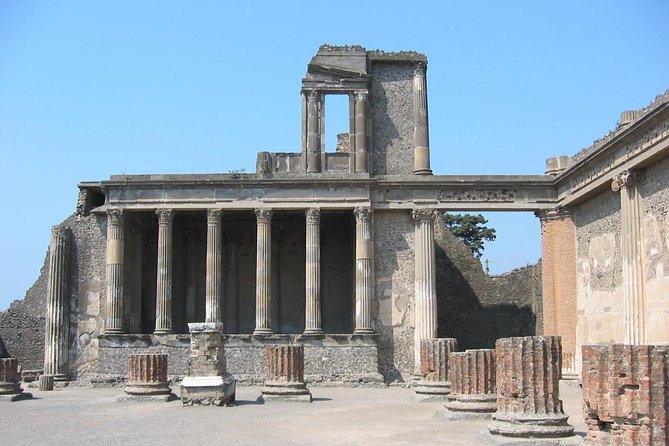
Pompeii is powerful, but it can also be visually tricky. Many buildings are ruined into outlines, stones, and walls, and your brain has to do the reconstruction work.
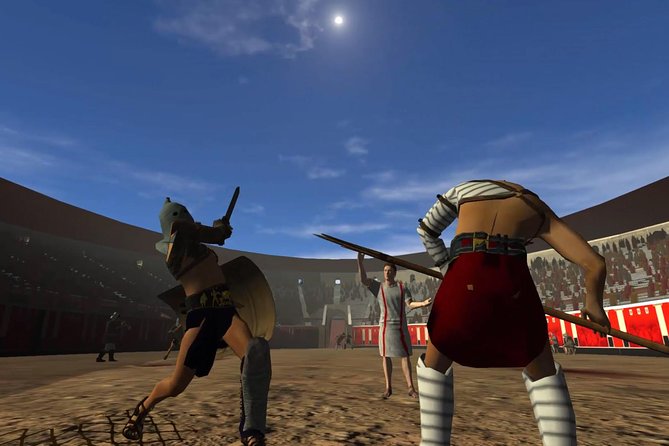
This tour reduces that mental load by layering reconstructions through the 3D headsets. As you walk, you watch VR segments recreate key areas like streets, market spaces, theaters, shops, and houses, bringing past life forward. The result is usually faster understanding, because you are not only reading remains, you are seeing a suggested “before” version while you are standing in place.
I also like that the experience is structured. You start with training, then you get headset time in the ruins, instead of trying to figure out gear while you are also navigating a big archaeological site. When the timing is handled for you, VR feels like part of the tour, not a stressful extra.
One more practical plus: the audio layer keeps you from constantly turning to your assistant for explanations. Even if you do not want a long back-and-forth, the headset narration can guide your attention to what matters as you move.
You can also read our reviews of more private tours in Pompeii



What private and tour-assistant-only really means
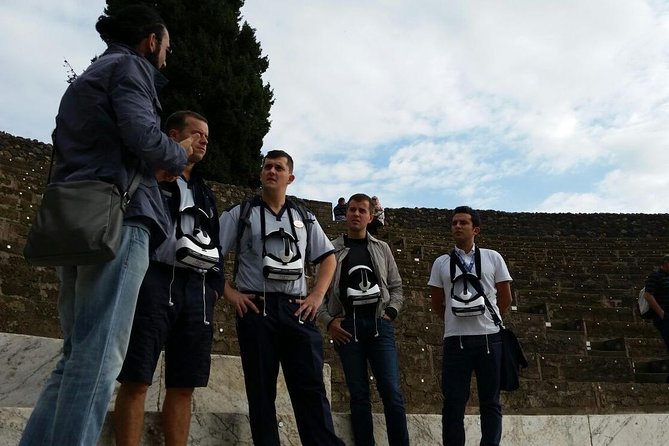
This is a private tour/activity, meaning only your group participates. That matters because Pompeii is busy and walking through it can be hectic, so having a dedicated assistant for your group is a relief.
Still, the label tour assistant only is important. Your escort speaks English and Italian, and they are not a licensed guide, so they are not allowed to answer questions about the archaeological site. Translation: you will get help with flow, headset use, and timing, but you should not rely on them for deep digs, scholarly debates, or detailed artifact explanations.
You do have a workaround built in. The headsets provide commentary in 6 languages, including English, so you can get history guidance through the device even when your assistant cannot lecture on the site. If you want answers, ask what the assistant can cover, but plan to treat the headset narration as the main information source.
This setup is also good for groups who do not want a strict Q and A. If you prefer a guided pace, plus audio storytelling, you will likely find it more comfortable.
Your 2.5 hours at the Pompeii Archaeological Park
The entire experience centers on the Pompeii Archaeological Park, with one main stop. You will walk the ruins and use the VR headsets during the route, with the assistant coordinating your movement and picture-taking opportunities.
A typical flow looks like this:
You meet at the designated start point, then you begin with a short 5-minute VR training. After that, you enter the ruins with your tour assistant, and you start the virtual segments while you are in the real spaces.
The tour runs about 2 hours 30 minutes. That is enough time to see major areas without feeling like you are sprinting. It is also long enough for the VR segments to become a pattern, rather than a one-off novelty.
One thing to keep in mind: the headset time is not just sitting still. You are walking over uneven terrain, so you need comfortable footwear and good balance. The headsets also require proper motion and coordination, so the pace will feel different than a standard “stroll and read plaques” visit.
At the end, you finish back in Pompei at the listed end point in Piazza Immacolata. There is no hotel pickup or drop-off, so you will want a plan for how you will arrive and where you will go next.
What you’ll see in the VR reconstructions
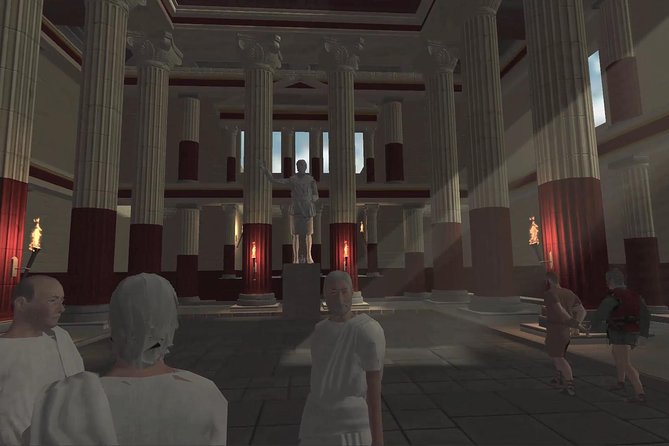
The VR portion is built around short, structured 3D videos. You can watch up to 15 of these videos during the walking experience, which helps keep it varied and prevents the usual VR problem of one long session that gets boring.
The reconstructions are aimed at showing Pompeii as it may have looked around 2,000 years ago, before the eruption of Mount Vesuvius. The VR content is described as bringing to life places like:
Temples, homes, shops, theaters, streets, and markets
In the VR experience, you may also notice time-specific scenes. One of the experiences people shared mentions stepping into a virtual 745 AD view. That suggests the headset storytelling may present certain eras or themed segments, not just one static “perfect Pompeii” look.
Now, a reality check that helps you manage expectations: one review noted that graphics could be better. That does not automatically mean it will disappoint you, but it does mean you should not expect today’s top-tier game visuals. Think of it as historical visualization that supports your understanding, not a cinematic replacement for the real site.
If you want to get the most out of it, pay attention to how the headset narration points your eyes to features you can spot in stone around you. When VR and reality line up, the whole experience feels more meaningful.
Audio commentary and language options that actually matter
The assistant can only speak English and Italian, but the headset commentary is available in six languages: English, Italian, German, French, Spanish, and Russian.
This is a big deal for comfort. If your group has mixed language levels, you can still keep everyone listening to the same narration by selecting the same language option on the headset. You are not forced into one person translating, and you are not limited to whatever your assistant can explain on the spot.
Practically, you should plan to spend your attention on the headset audio while you are in motion. That means it is smart to choose a language you can follow easily. If you are comfortable with English, it is a solid option, but the key is picking what you can process quickly while walking.
Also, because the assistant is not a licensed guide, the headset narration becomes your main “why is this here?” explanation. Treat it as the tour’s brain and the walking as the tour’s stage.




VR comfort, age limits, and safety: read this part first
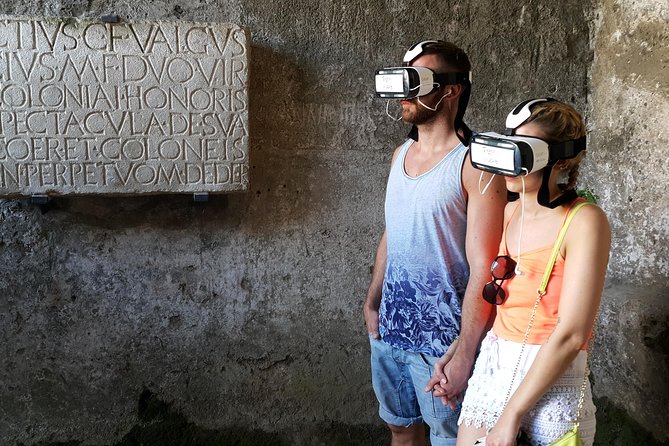
VR is fun, but it is also technical. This tour specifically warns that some people, about 1 in 4,000, may experience severe dizziness during VR. Anyone with a seizure history, loss of awareness, or symptoms linked to epileptic conditions should consult a doctor before using the headsets.
If you are pregnant, elderly, have pre-existing binocular vision abnormalities, psychiatric disorders, or a heart condition, the tour recommends consulting a doctor before taking part. If you have a pacemaker or other implanted medical device, the Gear VR can emit radio waves that may affect operation, so do not use it without medical advice.
The tour also lays out a clear “stop right away” approach. If you experience dizziness, disorientation, blurred or double vision, eye strain, nausea, involuntary movements, or other motion sickness-like symptoms, you should immediately discontinue headset use.
Age rules are equally important. A minimum age of 9 is required to use the VR headset, and the manufacturer recommends it not be used by children under 13. If you are traveling with kids, that means you should plan for more than one way to enjoy Pompeii, especially if your younger child is close to the minimum age.
Finally, you need unimpaired motion and balance for a comfortable experience. This is not a “sit and watch” activity. Wear comfortable shoes, and be ready for uneven ground.
Price and value: when this is worth the ticket
At $124.02 per person for about 2 hours 30 minutes, this tour is not a bargain-bin “quick pass.” But it is also not trying to be the most expensive private guide format either.
The value comes from three bundled things:
Skip-the-line admission
VR headsets provided per adult and youth
A private tour assistant to manage the experience flow
Skip-the-line matters because Pompeii entry can eat time. The VR gear matters because you are paying for a distinct product, not just a narrated walk. And the private assistant matters because you get someone coordinating training, headset use, and timing, which is hard to DIY without adding stress.
One more value cue: it is commonly booked about 41 days in advance on average. That suggests it is popular, and planning ahead usually helps you match your preferred morning or afternoon slot.
Is it worth it if you already have a deep-history guide booked? Maybe you will feel the VR is redundant. But if you want a fresh entry point to Pompeii that helps you visualize what you are seeing, this is a strong fit.
Graphics might not be state-of-the-art, and the assistant cannot answer archaeology questions, but the overall package gives you a guided pace plus a visual reconstruction layer.
Choosing morning vs afternoon, and how to plan the rest
You can pick either a morning or afternoon departure, which is useful. I like options because they let you match your energy level and the rest of your day’s itinerary.
The tour also operates in all safe weather conditions. So if rain is light, you can still go, but you should dress appropriately. Pompeii is outdoors, and comfort affects your ability to tolerate walking and headset use.
For transportation, the tour does not include transfers, but it notes that convenient and inexpensive trains run regularly throughout the day and evening. You are also near public transportation near the meeting point, which is helpful if you are exploring the region without renting a car.
Plan to travel light. Minimize bags and pocketbooks. You can wear a lightweight bag across your shoulder, which helps you keep both hands free for walking and headset adjustments.
Who this tour suits best
This tour fits best when you want Pompeii explained through structure, not through a long spoken lecture.
It is a good match for:
Families with kids who can handle headset use safely, especially if older teens like tech and visuals
First-time Pompeii visitors who want the site to make more sense quickly
People who like audio guidance and prefer not to stop every minute for questions
One review specifically described an older son who plays video games and found the VR part especially natural. That is the kind of match you can aim for: if your group enjoys interactive visual media, the headsets can feel like a fun upgrade rather than a gimmick.
It may be less ideal if:
You want a licensed guide who will answer any archaeology question you ask
You have a high sensitivity to motion sickness, dizziness, or visual strain
You are traveling with younger children who fall into the under-13 warning zone
Should you book this Pompeii VR tour?
I’d book it if you want a guided Pompeii walk plus 3D reconstructions that help you picture the living city, and you are comfortable relying on headset audio more than on a licensed guide.
If VR safety issues apply to you or someone in your group, do not “push through.” The tour’s own warnings are clear, and medical advice can prevent a bad experience.
If you have the time and you love archaeology detail, you might prefer a licensed guide format. But if your goal is to understand Pompeii fast, see it from a more complete visual angle, and keep your group moving smoothly, this private assistant-led plan is a smart use of your time.
FAQ
Is the Pompeii admission included?
Yes. The admission ticket to the Pompeii ruins is included, and the tour includes a skip-the-line entrance fee.
How long is the tour?
It is approximately 2 hours 30 minutes.
What time options do I have?
You can choose either a morning or an afternoon departure.
Is this a private tour?
Yes. It is private, and only your group will participate.
Does the tour include a licensed archaeological guide?
No. The tour uses a tour assistant, and the assistant is not allowed to answer questions about the archaeological site.
What languages are available during the tour?
The tour assistant speaks English and Italian. The audio commentary in the headsets is available in English, Italian, German, French, Spanish, and Russian.
What is the minimum age to use the VR headset?
The minimum age to use the headset is 9.
Is it recommended for young children?
The manufacturer recommends that the headsets not be used for children under 13. Parents assume responsibility if they choose to let younger kids use the headsets.
What should I wear for the walking part?
Wear comfortable shoes, since you will be walking over uneven terrain.
Where do I meet and where does the tour end?
Start: Hotel Vittoria, Piazza Esedra, 80045 Pompei NA, Italy. End: Piazza Immacolata, 80045 Pompei NA, Italy.
What is the cancellation window?
You can cancel for a full refund up to 24 hours before the experience starts.
More Private Tours in Pompeii



More Tours in Pompeii


More Tour Reviews in Pompeii

Not for you? Here's more nearby things to do in Pompeii we have reviewed










Tour Reviews, compared.
 ★ 4.8Pompeii: Entry Ticket and Guided Tour with an ArchaeologistFrom $3519,459 reviews
 ★ 4.2Pompeii: Entry Ticket with Optional Audio GuideFrom $2612,360 reviews
 ★ 4.8Pompeii: Small Group Tour with an ArchaeologistFrom $4012,264 reviews
 ★ 4.3Pompeii Ruins & Mount Vesuvius Day TourFrom $12011,459 reviews
 ★ 4.6Sorrento, Positano and Amalfi Full-Day TourFrom $10710,988 reviews
 ★ 5.0Sorrento, Positano & Amalfi Coast – Small Group TourFrom $768,643 reviews
 ★ 4.6Catacombs of San Gennaro Entry Ticket & Guided TourFrom $157,941 reviews
★ 5.0Pompeii Small Group Tour with an ArchaeologistFrom $356,593 reviews
★ 4.6Catacombs of San Gennaro Entry Ticket & Guided TourFrom $157,941 reviews
★ 5.0Pompeii Small Group Tour with an ArchaeologistFrom $356,593 reviews