
Tour review · TOUR REVIEWS
Exploring Pompeii
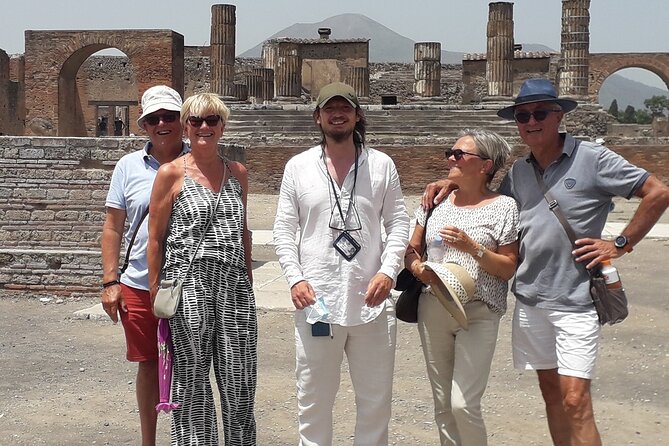
Pompeii hits hard, even in a short visit. This 2-hour private tour is a focused way to see the everyday and extraordinary sides of the ancient city, from painted homes and mosaics to the thermal baths and the plaster casts of victims from 79 AD. I also like that the guide is English-speaking and brings the ruins to life with real context, with names like Francesco popping up in standout experiences. One watch-out: the Pompeii admission ticket is not included, so you need to plan for entry separately.
For $36.04 per person, you’re mostly paying for guided time, not gate access. That makes it a strong fit if you want structure, a clearer route, and fewer awkward pauses where you wonder what you’re looking at. The main consideration is that you should be ready for a moderate amount of walking on uneven ground in the park.
Key Things to Know Before You Go
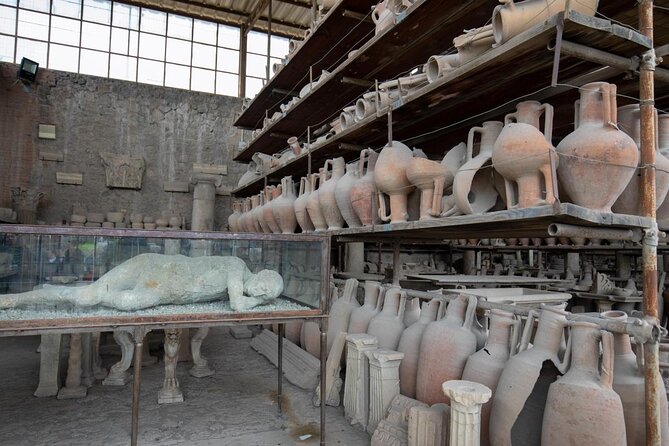
- Private tour, just your group: You get one guide’s attention rather than blending into a crowd.
- English language experience: Clear explanations if English is your comfort zone.
- 2 hours is fast, on purpose: You’ll see major highlights, not the whole archaeological park.
- Admission tickets are not included: Budget for entry to Pompeii separately.
- Moderate physical fitness level: Plan for walking through a large historic site.
- Near public transportation: Easy to reach without needing a car for your plan.
Pompeii in 2 Hours, What You Can Actually Get
Pompeii can feel like a huge “choose-your-own-adventure” problem the first time you arrive. This tour helps you solve it. In about 2 hours, you’ll hit the sites that explain how the city worked, how wealthy families lived, and what happened in the final moments.
The best part of a short, guided format is not speed for its own sake. It’s that you get a guided route that connects buildings and details into a story. You’re not just looking at stones, you’re understanding what people did there, ate there, worshipped in, and feared in.
The trade-off is that you are not touring every corner of the park. If you love wandering slowly and reading everything at your own pace, you may want extra time on your own after the tour.
You can also read our reviews of more tours and experiences in Pompeii.



Your Tour Guide: English, Personal Attention, and Real Storytelling
This is a private tour/activity, so you should expect the guide to tailor the pace to your group. That matters at Pompeii because some areas naturally slow you down, especially when you’re trying to wrap your head around what you see.
You’ll be in an English-offered experience, which is a big deal at Pompeii where the details can be easy to miss if you don’t have context. One name that stood out in strong experiences was Francesco, and the overall theme is clear: the guide’s command of the site makes your time count.
Even with the best guide, you still play a role. If you ask questions and keep an eye on how the ruins are connected, the tour feels less like a checklist and more like a real walk through daily life.
Archaeological Park Stop: Pompeii’s Daily Life in Roman Times
Your main stop is the Archaeological Park of Pompeii, which is where this tour earns its value. The route is designed to show you how a wealthy town functioned inside the Roman empire, with enough variety to keep things interesting for the full 2 hours.
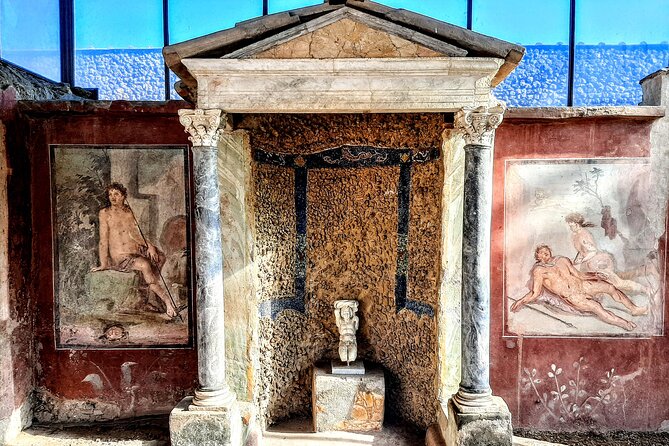
You should think of this stop in three layers. First, there are the elite homes and decorative details that show wealth. Second, there are public and shared spaces, like the thermal baths and major temples. Third, there’s the hard evidence from 79 AD, including the plaster casts, which turns the story from “ancient” into “human.”
A possible downside is emotional weight. The casts and the eruption context are meant to be a blunt reminder of what happened. If you’d rather keep things lighter, you may want to mentally brace yourself before you reach that portion.
Private Residences, Frescoes, and Mosaics You’ll Understand
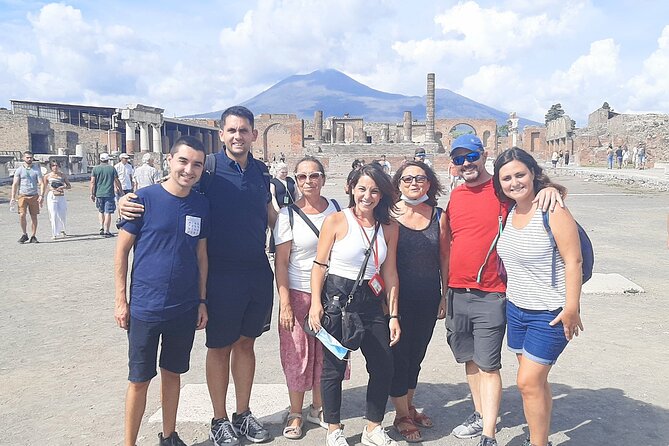
Pompeii is famous for its artwork, but a lot of people only see it as decoration. A guided format helps you see it as information. Painted frescoes and original mosaics are not random. They reflect taste, status, and how people spent their time inside their homes.
I like the way this tour’s focus on private Roman residences gives you a sense of household life, not just architecture. You’re better positioned to notice how spaces were used and how the look of a home signaled social standing.
One practical consideration: once you spot the frescoes and mosaics, it’s hard to stop staring. That’s not a problem if you’re the kind of traveler who enjoys details. It can be a problem if you have a strict schedule or a low tolerance for time spent looking closely.
Roman Shops, Temples, and the “Real City” Feeling
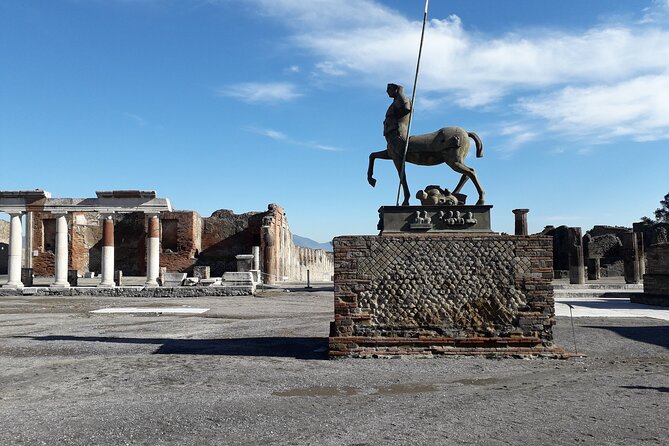
This tour isn’t only about luxury homes. You’ll also see Roman shops and the park’s most important temples. That balance is smart because it shifts your perspective from rich households to the city as a functioning place where people worked, traded, and worshipped.
Shops show everyday commerce, the kind that keeps a town alive. Temples show public religion and civic identity. Put together, they help you understand Pompeii as a city with routines, not just an archaeological site with highlights.
If you’re the sort of traveler who likes the “how did people live?” question, this is where the tour really pays off. You come away thinking in systems, homes plus markets plus worship, rather than a collection of separate ruins.


Thermal Baths: What People Did Together
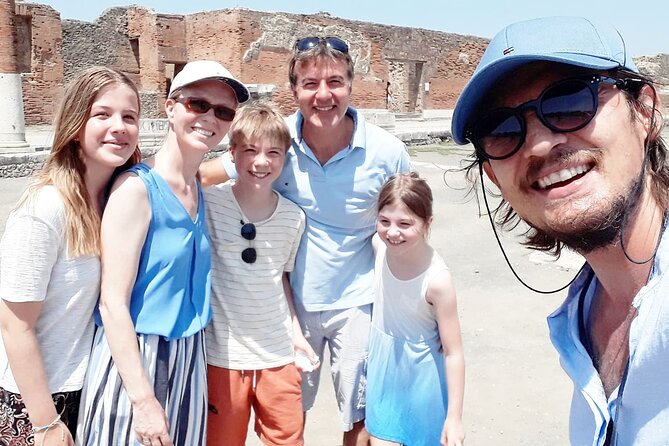
The thermal bath element is one of the most useful ways to understand Roman culture because it was social as much as it was practical. A bath complex is where people spent time, talked, and shared community space.
In a short tour, that kind of anchor helps. Instead of only seeing buildings you can’t quite picture in use, you get a concrete idea of routine. Even when the structures look fragmentary, the concept helps you connect the dots.
Keep in mind that ruins can be uneven and sometimes you have to change your viewing angle to make sense of what you’re seeing. If your group needs to pause frequently, a private format is a plus since your guide can adjust.
The Plaster Casts and 79 AD: A Brutal Reminder With Context
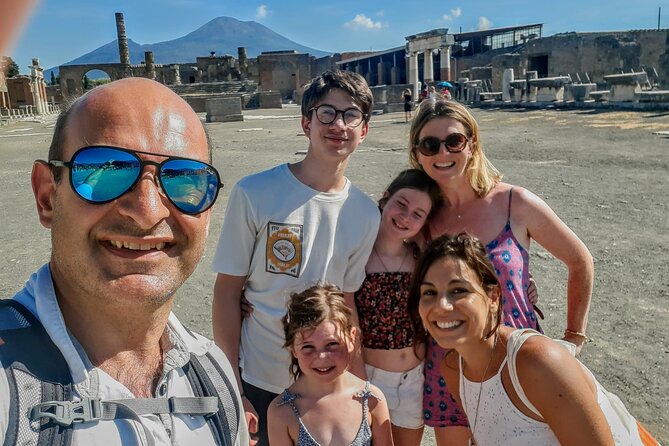
This is the part of Pompeii that makes people stop thinking about “tourist photos.” The tour includes the plaster casts of victims’ bodies, described as a brutal reminder of the last moments of the tragedy tied to the eruption of Volcano Vesuvius in 79 AD.
This moment is important because it changes the emotional center of the visit. You don’t just see stone buildings. You confront that Pompeii was someone’s home, someone’s street, someone’s final day.
If you are sensitive to heavy historical material, treat this as a heads-up, not a warning label. The tour includes it for a reason, to keep the story honest and human.
Price and Value: What You’re Paying For at $36.04
The price is $36.04 per person, and the key detail is that admission tickets are not included. In other words, you’re buying guided interpretation for your 2 hours, not the right to enter Pompeii.
That can actually be good value if you already plan to get your entry ticket. A guide helps you avoid getting lost in what you see. It also helps you connect what’s decorative, what’s functional, and what’s historically significant.
The only real drawback in the pricing setup is simple math. If you assume the tour price includes tickets, you’ll feel surprised when you check out. The fix is easy: treat the ticket as a separate line item and you’ll stay in control.
Scheduling and Demand: When You Book Matters
An average booking window of about 36 days in advance is a clue. It suggests this is not a product that people ignore last minute. If you’re traveling in peak periods or you want a specific time slot, earlier booking improves your odds.
You’ll receive confirmation at the time of booking, and the tour is private, so your group matters. The average lead time plus private format is a good combo for travelers who want predictability.
Getting There: Near Public Transportation
The tour meets near public transportation, which is helpful if you don’t want to plan a complicated ride. You’ll have an easier time getting to the start point without needing to lock into a car schedule.
That small logistic detail matters more than it sounds. When you save time on transport, you spend more time inside the park, and that’s the whole point of a short guided experience.
Who This Private Pompeii Tour Suits Best
This tour fits you if you want structure. You’ll like it if you arrive at Pompeii unsure what to prioritize, or if you want help linking homes, shops, temples, baths, and the final tragedy into one clear visit.
It also suits you if you prefer a private format. If you don’t want to share your guide’s time with strangers, this is the right direction. You’re with just your group for the whole 2 hours, and that can make the experience feel calmer and more personal.
It’s less ideal if you want to see every single area at an unhurried pace. This is a highlight route, not an exhaustive tour. Plan to add extra self-guided time if you want to linger.
Finally, consider physical comfort. The tour calls for moderate physical fitness, so you should be prepared for walking through an active archaeological park.
Should You Book Exploring Pompeii?
Yes, you should book this private Pompeii tour if you want a high-impact visit in a short time and you like the idea of a guide helping you read what you’re seeing. The best value is in the combination of major highlights, the clear Roman context, and the chance to understand what the frescoes, mosaics, bath space, temples, and the 79 AD casts mean in the bigger story.
Skip it or rethink it only if you truly want the entire park at your own pace, or if you’re not ready for the emotional weight of the plaster casts. And whichever you choose, plan for Pompeii entry tickets separately so the day stays smooth.
FAQ
Are Pompeii admission tickets included?
No. Biglietti/Tickets are not included, so you will need to purchase Pompeii entry separately.
How long is the Exploring Pompeii tour?
It runs for about 2 hours.
Is the tour offered in English?
Yes, it is offered in English.
Is this a private tour?
Yes. It is a private tour/activity, and only your group participates.
What physical ability do I need?
The tour is listed for travelers with a moderate physical fitness level.
Are service animals allowed?
Yes, service animals are allowed.
What happens if I cancel?
Free cancellation is available. You can cancel up to 24 hours in advance for a full refund, and changes within 24 hours are not accepted. The experience also has a minimum number of travelers, and if it is canceled due to that, you will be offered a different date or a full refund.
More Tour Reviews in Pompeii

Not for you? Here's more nearby things to do in Pompeii we have reviewed








Tour Reviews, compared.
 ★ 4.8Pompeii: Entry Ticket and Guided Tour with an ArchaeologistFrom $3519,459 reviews
 ★ 4.2Pompeii: Entry Ticket with Optional Audio GuideFrom $2612,360 reviews
 ★ 4.8Pompeii: Small Group Tour with an ArchaeologistFrom $4012,264 reviews
 ★ 4.3Pompeii Ruins & Mount Vesuvius Day TourFrom $12011,459 reviews
 ★ 4.6Sorrento, Positano and Amalfi Full-Day TourFrom $10710,988 reviews
 ★ 5.0Sorrento, Positano & Amalfi Coast – Small Group TourFrom $768,643 reviews
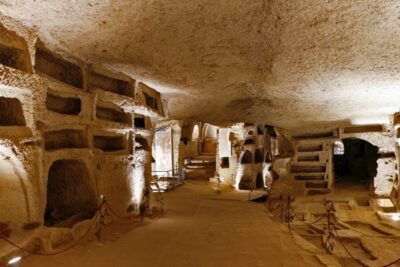 ★ 4.6Catacombs of San Gennaro Entry Ticket & Guided TourFrom $157,941 reviews
★ 5.0Pompeii Small Group Tour with an ArchaeologistFrom $356,593 reviews
★ 4.6Catacombs of San Gennaro Entry Ticket & Guided TourFrom $157,941 reviews
★ 5.0Pompeii Small Group Tour with an ArchaeologistFrom $356,593 reviews