
Tour review · TOUR REVIEWS
PompeiI Exclusive Tour with your Archaeologist in a Small Group
Pompeii makes more sense with an archaeologist. This small-group walk turns scattered ruins into a readable Roman city, with an expert guide who explains what you are looking at and why it matters. I especially like the priority entry idea, because gate lines are the one thing that can steal momentum in Pompeii.
I also like the pacing. Two hours is short enough to stay energetic, but long enough to hit the major highlights, from the Temple of Venus and the Forum heart to the baths and a stop at a thermopolium, the ancient street-side diner. One thing to consider is that you still do not see everything, since the tour focuses on the most important sites in a tight, efficient loop.
Key points you will feel on the ground
- Skip-the-line style access helps you start strong without wasting time at the entrance.
- Archaeology-led explanations give you context for temples, markets, and daily-life spaces.
- A focused two-hour route keeps you walking, not wandering.
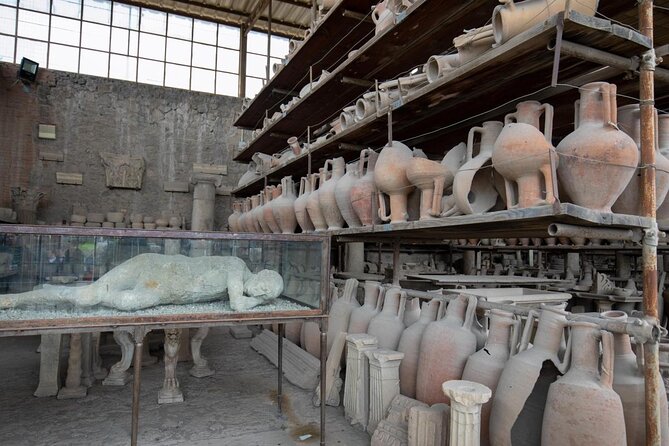
- Plaster casts at the Macellum area can make the 79 AD story hit with real clarity.
- Small group cap (up to 15) means you get answers, not just speeches.
First steps at Porta Marina Superiore, where the city begins
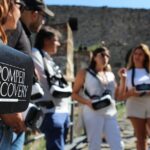
You meet the group at Via Villa dei Misteri, 1, in Pompeii, and from there you are set up to enter the archaeological area smoothly. Your first real stop is at Porta Marina Superiore, the western entrance to the ancient city. The guide meets you outside the site area with a sign that says Pompeii VIP, so you know you are in the right place.
This opening matters. Pompeii is not laid out like a neat museum floorplan, so getting your bearings early makes everything easier later. Once you enter, your guide does the job most people miss, which is linking streets, buildings, and civic space into one story.
You also get a practical advantage right away. The tour is designed so you can use a separate priority line at the gate, which helps you avoid the slow, stop-and-go grind when the crowds are thick. Even if you arrive early, there is something to be said for not gambling on how long the line will be.
You can also read our reviews of more tours and experiences in Pompeii.
Temples and the Forum core: seeing Pompeii’s main ideas fast
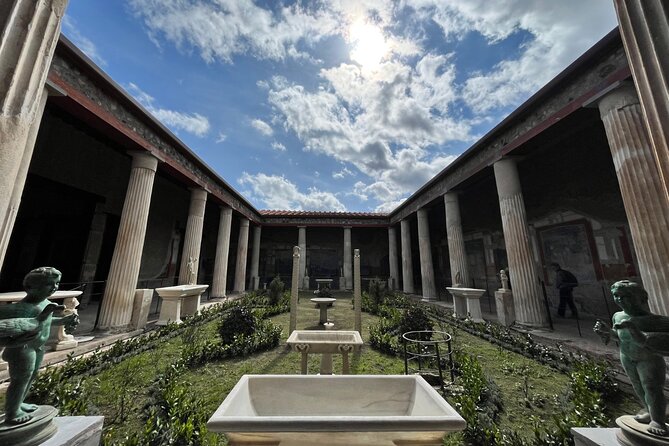
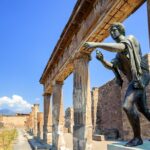
After Porta Marina Superiore, the route moves into the city’s most readable zone. You start with the Temple of Venus, a dedicated space tied to the patron goddess of Pompeii. Then you continue into the Forum area, where Pompeii functioned as the administrative and social center, not just a place to admire ruins.
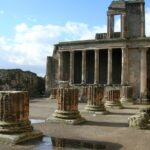
One of the best stops is the Basilica in the Forum. You learn why this was the most lavish building in that public square area, and how it worked for business and administration of justice. When you see the scale and layout with a guide explaining the purpose, it stops looking like random stone walls and starts looking like a working civic machine.
From there you hit the Sanctuary of Apollo, positioned along the street that climbed from Porta Marina toward the public center. This is a key Pompeii lesson in urban planning: religious sites were often placed where people already had to walk and gather.
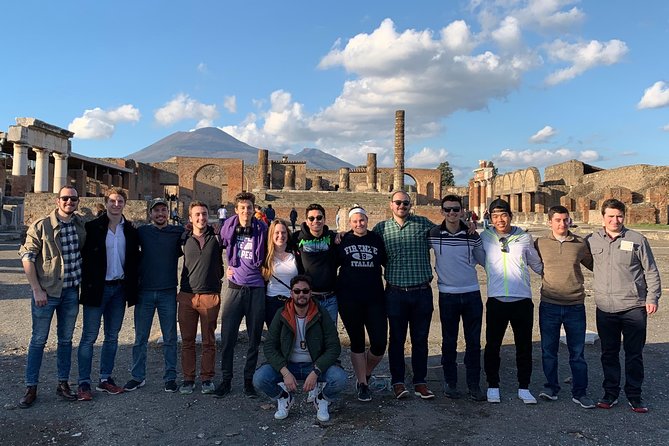
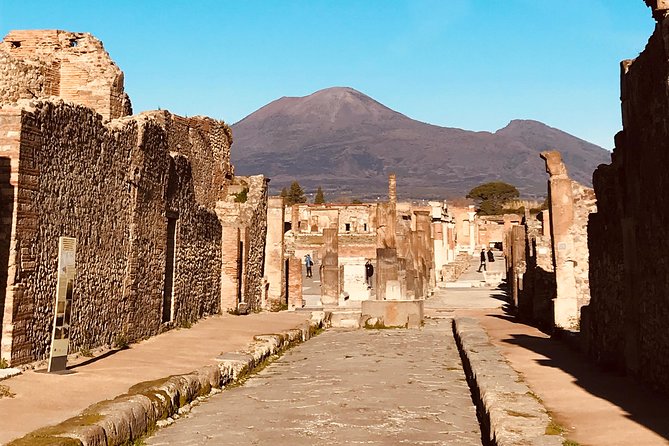
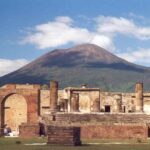
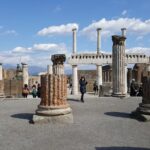
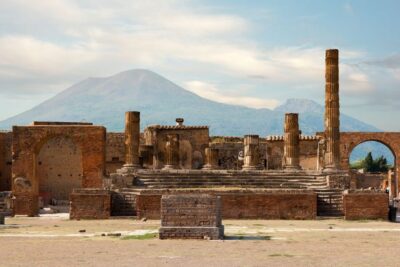
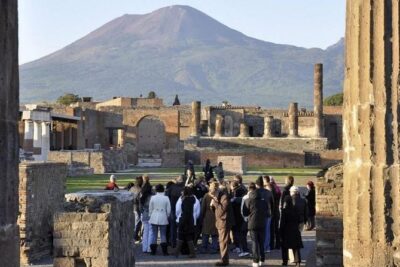
Then comes the Forum’s visual center. You see the Forum Main Square and the Temple of Jupiter on the northern side of the Forum, with Vesuvius rising behind it. That view is one reason Pompeii grabs you, but the guide helps you connect the view to the city’s structure and daily movement, not just the photo.
Markets, baths, and the thermopolium: daily life in plain sight
Pompeii is famous for big-name houses, but the lived-in city is what feels real. This tour spends time on the places where people ate, bought goods, and cooled off.
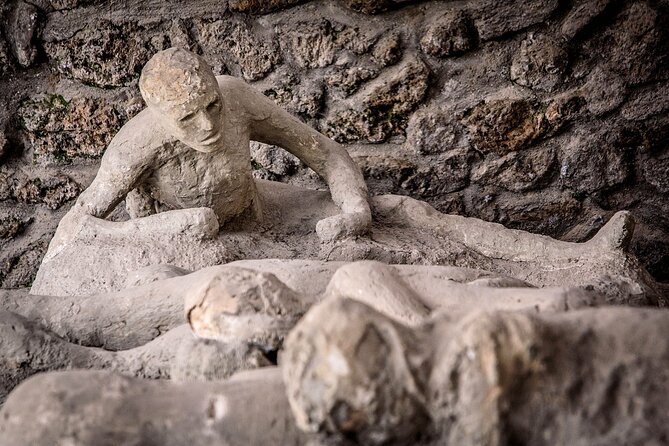
You visit the Macellum, a monumental market building used for selling food and daily consumer products. Here you may also see plaster casts from Bodies projects. These casts are an archaeological method used to recreate what people looked like at the moment of the eruption, and that detail can be a quiet gut-check when you finally understand this was not a distant disaster, it was neighbors, families, and workers.
Next you get Forum Baths, one of the better-preserved parts of the city. Pompeii’s bathing complex had separate entrances for women and men, and this stop is a good reminder that Roman life was structured in visible ways. Even if you are not a history nerd, you can often understand the function just by how the space is organized.
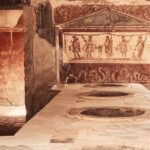
Then you step into a Thermopolium, specifically the Thermopolium of Vetuzio Placido. This is where the tour becomes more than monuments. A thermopolium was basically an ancient diner, a refreshment stop for inhabitants, and that makes the ruins feel like a city you could have visited for lunch.
These are also the stops that help you understand why Pompeii is so important. When you grasp daily routines, the tragedy becomes clearer too, because you see what was normal before it stopped.
House stops, from the House of the Faun to Vettii wealth
The tour includes time around two famous homes, which is where Pompeii often becomes personal. You visit the House of the Faun, one of the largest houses in Pompeii. You can also spot a sidewalk welcome inscription in Latin, HAVE, which is the kind of detail that makes the site feel less like an exhibit and more like a real place people lived and walked through.
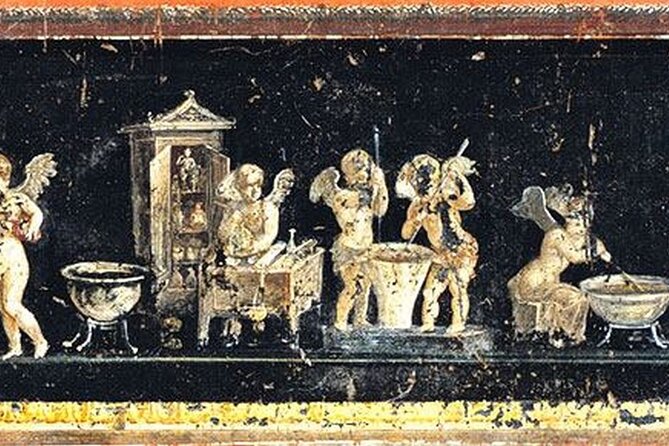
Then you move toward the House of the Vettii, one of the richest and best-known homes in Pompeii. This home is connected to Priapus, the god of prosperity, and the guide’s explanations help you read the imagery and symbolism instead of just passing it.
There is one practical caveat. The interiors and access for these houses can be subject to seasonal openings and closings, so do not assume every room will be available every day. The upside is that even when you cannot go everywhere, you still get the key takeaways about wealth, layout, and how elite households sat within the street grid.
After the house area, you walk along Via dell’Abbondanza, the ancient main street, known as the decumanus maximus. This part is simple but powerful. When you see the main artery, you start to understand where foot traffic moved, where commerce could happen, and how the city’s layout guided life.
Teatro Grande and what to do after the two hours
The last major stop is Teatro Grande, the theater where comedies and tragedies in the Greco-Roman tradition were performed. This is a good close because it adds culture to everything you saw before. You have civic buildings, worship spaces, markets, baths, and houses, and then the theater brings performance and public gatherings into the picture.
Ten minutes at a theater can sound short, but it is a great way to avoid the common Pompeii trap. People often spend too long chasing one famous building, then run out of time and miss how everything connects. This tour is designed to keep you moving, so you leave with a mental map.
What you do after depends on your interests. If you want more houses, aim for areas that complement what you already learned. If you want the disaster side of the story in more detail, you can plan your next visit with the plaster cast stop in your mind. And if you want quieter exploration, choose a second route on a different part of the park so you are not just repeating the same streets.

Small group size and archaeologist guidance, the stuff you notice
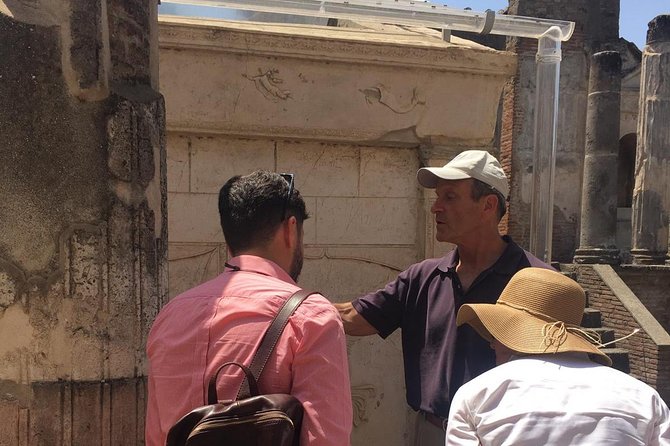
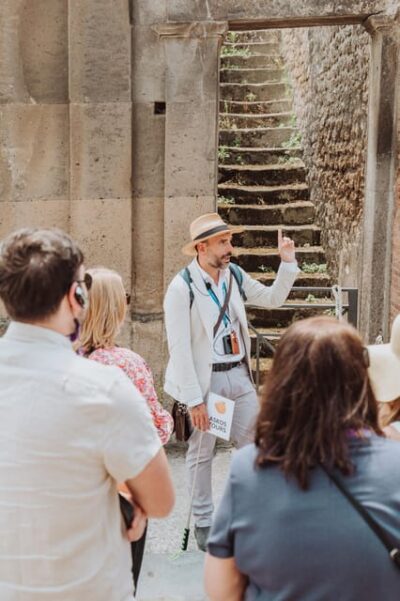
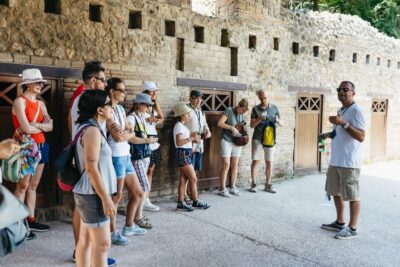
This is capped at a maximum of 15 travelers, which changes how Pompeii feels. You can ask questions without shouting, and you are not being rushed through as if the guide is reading a script at full speed. The “archaeologist with small group” format also tends to mean the explanations are about how archaeologists know what they know, not just a label stuck on a wall.
Across guide experiences, names like Ricardo, Rafael, Raffaele, Ornella, Antonio, and PierLuigi appear with the same theme: they connect objects and spaces to how people lived. You often get clear answers, plus small story threads that make you remember the next stop better.
One more practical tip. Pompeii walks are not forgiving, so wear shoes that can handle uneven stone and long stretches. And if you are handed any audio device during the walk, test it early. Nothing kills a great guide moment faster than bad sound.
Price and value: the $30.25 tour fee plus the site ticket
The tour price is $30.25 per person for about two hours. The key point is that Pompeii admission is not included in that price, and the archaeological park ticket is listed at €19 per adult, free under 18.
So what do you really pay? In practical terms, you should budget for the tour fee plus the site entry ticket. The good news is you do not have to pay for every single stop separately. Your money goes toward the guide expertise, the focused route, and the priority entry advantage.
Also watch the ticket wording. The tour ticket is not the same as the Pompeii park entry ticket. You will be given a link to purchase entrance tickets online, and that link is sent the afternoon before your tour. That helps you avoid confusion on the day, which can happen because Pompeii ticket lines and tour check-in are not the same thing.
If you want smoother logistics, do the pre-purchase. It saves you from figuring it out while standing in a busy place.
Should you book this Pompeii VIP small-group tour?
Book it if you want to see Pompeii efficiently and understand what you are looking at. This is a strong choice for first-timers, people short on time, and anyone who does not want to guess their way through the Forum and temples.
I would skip it if your goal is to roam at your own pace for many hours, or if you specifically want a larger list of sites beyond the main highlights. This route is focused, and that focus is exactly why many people enjoy it so much.
One more decision shortcut: if you are worried you will miss the meaning of Pompeii, this is the antidote. If you are excited to learn the “why” behind temples, markets, baths, and houses, you will get your value fast.
FAQ
Do I need to buy Pompeii admission tickets separately?
Yes. Pompeii Archaeological Park admission is not included. The park ticket is listed as €19 per adult, and free for under 18. You can buy entrance tickets online using a link provided the afternoon before the tour.
How long is the tour?
It is about 2 hours. The route is designed to cover the key parts of Pompeii within that time window.
Is this tour in English?
Yes, the tour is offered in English.
How big is the group?
The tour is a small group with a maximum of 15 travelers.
What happens if weather is bad?
This experience requires good weather. If it is canceled due to poor weather, you will be offered a different date or a full refund.
Can I cancel for free?
Yes, you can cancel for free up to 24 hours in advance of the experience start time for a full refund. If you cancel less than 24 hours before, the amount paid is not refunded.
More Tours in Pompeii

More Tour Reviews in Pompeii
Not for you? Here's more nearby things to do in Pompeii we have reviewed




Tour Reviews, compared.
 ★ 4.8Pompeii: Entry Ticket and Guided Tour with an ArchaeologistFrom $3519,459 reviews
 ★ 4.2Pompeii: Entry Ticket with Optional Audio GuideFrom $2612,360 reviews
 ★ 4.8Pompeii: Small Group Tour with an ArchaeologistFrom $4012,264 reviews
 ★ 4.3Pompeii Ruins & Mount Vesuvius Day TourFrom $12011,459 reviews
 ★ 4.6Sorrento, Positano and Amalfi Full-Day TourFrom $10710,988 reviews
 ★ 5.0Sorrento, Positano & Amalfi Coast – Small Group TourFrom $768,643 reviews
 ★ 4.6Catacombs of San Gennaro Entry Ticket & Guided TourFrom $157,941 reviews
★ 5.0Pompeii Small Group Tour with an ArchaeologistFrom $356,593 reviews
★ 4.6Catacombs of San Gennaro Entry Ticket & Guided TourFrom $157,941 reviews
★ 5.0Pompeii Small Group Tour with an ArchaeologistFrom $356,593 reviews