
Tour review · TOUR REVIEWS
Pompeii Ancient City Walking Tour – Italian & English Guide
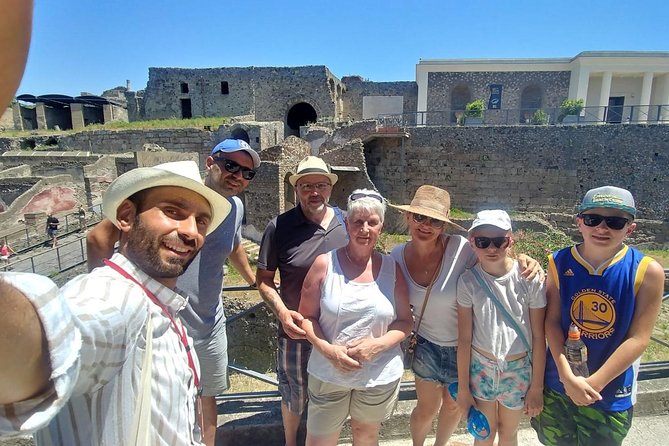
Pompeii hits hard, even on day one. This Pompeii ancient city walking tour gives you a guide-led route through the big-ticket sights, so you are not just wandering in the dust looking for meaning. I like the facilitation at the ticket office entrance, which helps you get started faster. I also like that the tour hits both the grand public buildings and the private houses with famous art. One possible drawback to plan around is that the main entrance ticket is not included, so you will pay extra on arrival and you still want to pace yourself because several stops are brief.
You get Italian and English guide support on a group format that keeps things manageable, with a maximum of 25 people. You will spend your time outdoors in a major site, so good weather matters, and you will want comfortable shoes for uneven stone. The meeting point is Piazza Porta Marina, and the tour ends back there, which makes logistics simpler after a long two days.
Key things to know before you walk Pompeii
- Ticket office help: included facilitation helps you get past the entry gate more smoothly
- Two full days on site: you cover major Pompeii highlights without trying to cram everything into one marathon morning
- Art-focused villa visits: houses and villas with mosaics and frescoes get special attention
- Roman public spectacles and sacred spaces: amphitheater and temples are part of the route, not just houses
- Small group feel: capped at 25 travelers for a more guided experience
Two days in Pompeii, and why that pacing feels worth it
Pompeii is huge. Even when you know what you want to see, it is easy to lose time and motivation. This tour spreads the experience across two days, which means you can actually process what you are seeing, instead of treating it like a checklist.
The structure also makes the guide’s job easier. When you are not racing, the explanations can connect the dots between religious buildings, civic life, and the daily signals of wealth you can still spot in the houses.
You can also read our reviews of more walking tours in Pompeii

Where you meet at Piazza Porta Marina, and how that saves effort
You meet in Piazza Porta Marina, Pompei, right in the heart of the action. Starting there helps because you are not hunting for a random side street or wasting your first hour getting oriented.
Just as important, the tour includes facilitation at the entrance to the ticket office. That is not glamorous, but it matters. Pompeii’s entrance flow can be the difference between a smooth start and a tense delay, especially if your group has mixed arrival times.
First stop inside: Pompeii Archaeological Park basics, and what to look for
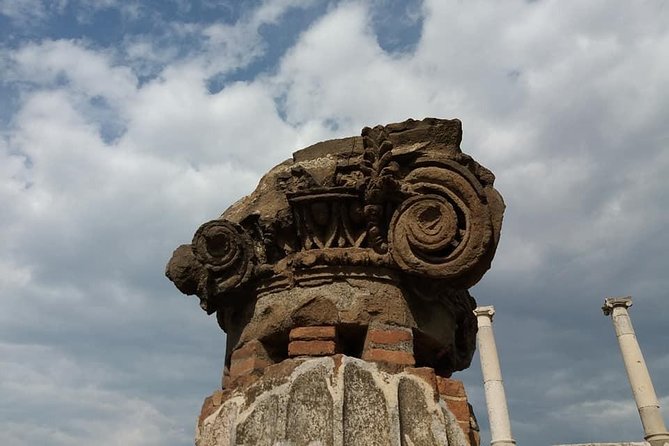
Once you enter the Pompeological area with your guide, the tour focuses on big, readable landmarks. You start near major cluster points including the Anfiteatro, the Tempio di Apollo, and the Tempio di Giove.
This first segment is about orientation. You get a tour route that runs through recognizable structures and then links them to the kind of life that surrounded them. Admission for the park is not included, so the practical move is to come prepared with your ticket plan before you meet.
The Anfiteatro: built for spectacle, designed for order
The Roman amphitheater is one of the easiest “wow” stops to understand. It was built in 80 a.C., and the scale is hard to miss. You can also learn the social logic behind the seating, organized into three sections based on class.
Even if you only spend about 10 minutes here, it is one of those places where the guide can make you notice what you would otherwise ignore, like how the building was designed to control who sits where during public events.
The Tempio di Giove Capitolino: religion, power, and the Roman trio
The guide also pulls you toward the Temple of Jupiter Capitoline, tied to the Roman belief system around the Capitolian triad: Jupiter, Juno, and Minerva. When Vesuvio appears in the background, it adds emotional weight to the scene, because this is the setting where everyday grandeur coexisted with a natural threat looming beyond the city.
It is a short stop, but the takeaway is bigger. You get a clearer sense of why temples sat at the center of civic identity, not tucked away like background decoration.
You can also read our reviews of more guided tours in Pompeii



Temple of Apollo and the bronze statue idea
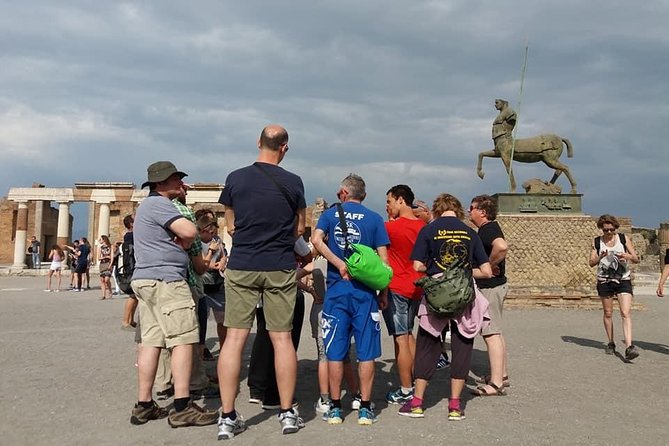
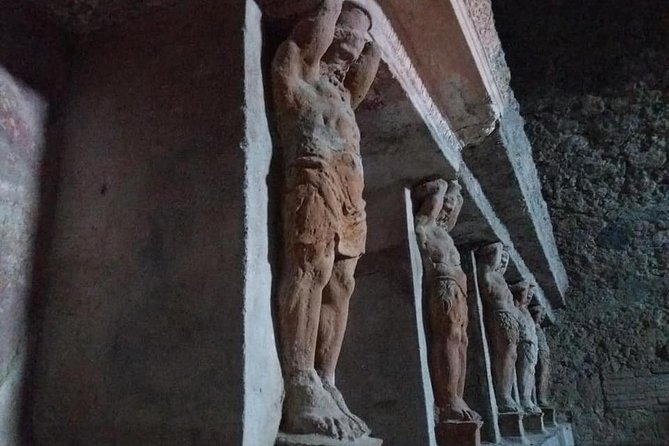
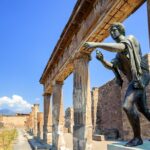
The Temple of Apollo is treated as one of the older religious buildings you will encounter on the walk. The key detail here is what the temple holds: a reproduction of a bronze statue of Apollo shown holding a bow and arrow.
The value of this stop is less about the object itself and more about how the guide frames its meaning in the religious life of Pompeii. If you tend to rush through statues and altars, this is one stop where a bit of guidance helps you see the point.
Casa del Fauno: mosaics, scale, and the Alexander moment
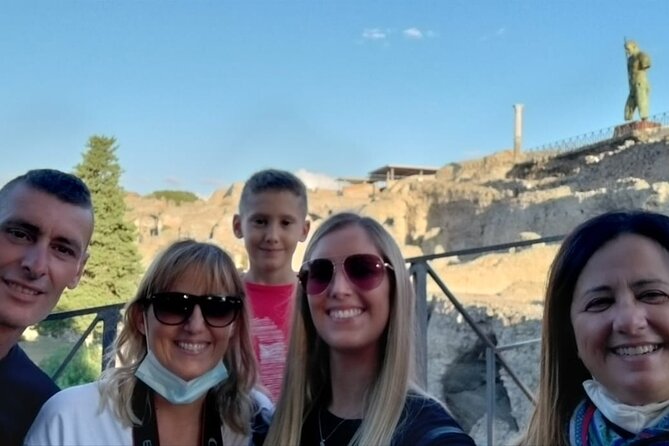
After the public buildings, you move into domestic Pompeii, and that is where the experience often clicks. Casa del Fauno is one of the larger residences, and you spend time on its famous floor art.
The standout is a reproduction of the famous Alexander mosaic, depicting the battle between Alexander the Great and King Darius III. Even without getting stuck in scholarly detail, you can still see why this kind of art mattered. It is not just decoration, it signals taste, money, and cultural awareness.
Casa del Menandro: why names matter in these houses
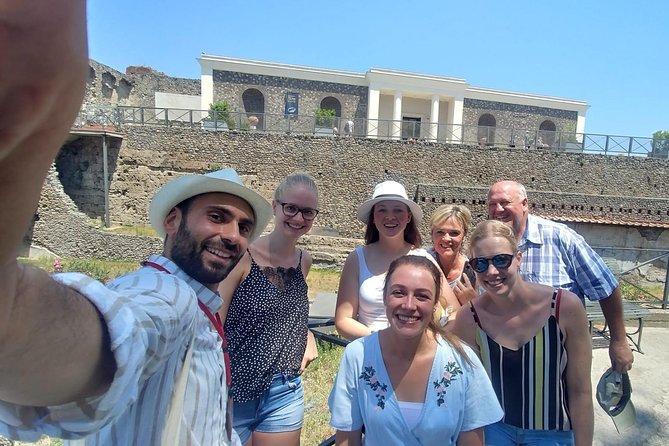
Next comes Casa del Menandro. The important thing to know is that the name does not come from the owners. Instead, it comes from an artwork: a fresco that depicts Menander, the Greek poet.
This is a good example of why a guided visit beats a self-guided scan. When you know what the name refers to, you start seeing the house as a story, not a random pile of rooms.
Casa dei Vettii: freed slaves who still spent big
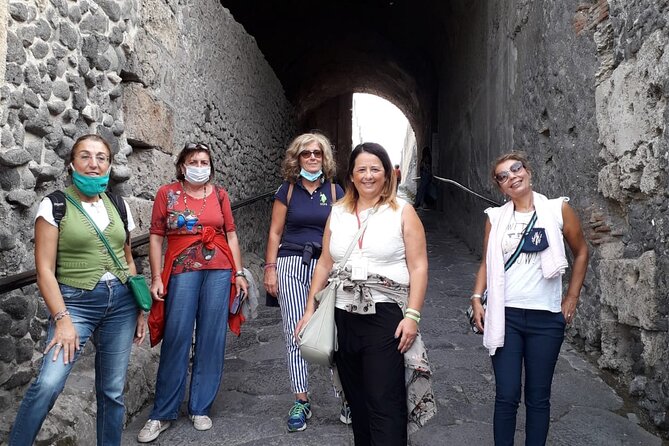
Casa dei Vettii is another house stop that the guide uses to show social transformation. The brothers Vettii were freed slaves, and instead of going quiet, they invested in a home that displayed status through wall art and frescoes.
The practical takeaway for you is that you will not just be looking at what is left. You will learn how to interpret it. Painted walls, carefully chosen scenes, and the sheer attention to visual impact help explain why these homes are still so compelling.
Villa dei Misteri: the nine scenes you will remember later
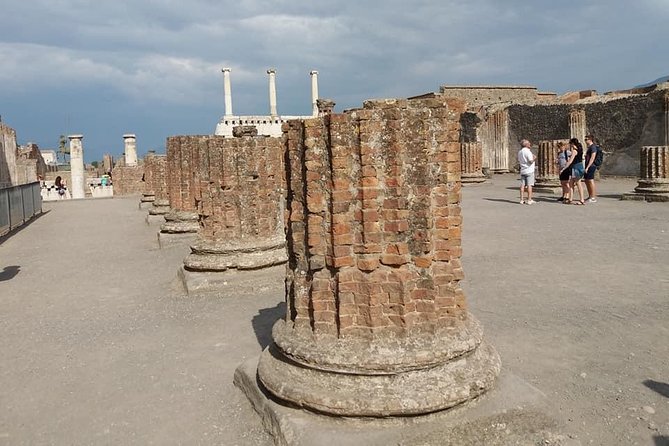
If you want one stop that feels like a highlight reel, this is it. The Villa dei Misteri focuses on the “Camera d’Iniziazione,” where nine painted scenes run in sequence.
You learn what the scenes represent, a rite of passage for a bride moving into adulthood, tied to the cult of Dionysus, the Greek god connected with wine and fertility. The nine-scene format matters because it is not one image, it is a narrative.
Even with a short time window, this is the kind of stop where a guide’s framing helps you read the sequence instead of treating it like nine separate paintings.
Roman Catholic Sanctuary of Pompeii on day two, and why it is a calmer change of pace
On day two, the tour shifts away from the archaeological park and includes a visit to the Roman Catholic Sanctuary of Pompeii. You get a free visit there, and the entrance is included.
This stop works as a mental reset. After two days of ancient public life and domestic art, a sanctuary visit gives you a different lens on the same place, and it often feels less about interpreting ruins and more about experiencing a living tradition in the modern city around Pompeii.
Price and value: $36.12 plus the entry fee reality
The listed tour price is $36.12 per person. That is the portion you are paying for guide-led access and included facilitation at the ticket office entrance.
What is not included is the main Pompeii entrance ticket, which is €22.00 per person. So the honest budgeting move is to think of this as a guided experience plus an additional site admission you must cover separately.
Is it still good value? In my view, yes, because you are paying for a structured route across the park highlights and for help turning stone and paintings into something you can understand. If you had zero interest in art, temples, and the way houses reflect social signals, you might feel less satisfied. But if you want meaning with your walking, the math tends to work.
Group size, guide language, and how to plan if your group is mixed
The tour caps at 25 people, which typically keeps the pace from getting too chaotic. Language support is offered in English, and there is flexibility if your group needs Italian explanations too.
I especially appreciate that the guide experience described here includes the ability to handle a mixed-language situation. If you are traveling with family or friends who do not share one language, this kind of adaptability can make the difference between feeling lost and staying included.
Practical tips that make the two-day format easier
Pompeii rewards people who slow down just a little. Since many of the house and monument stops are around 10 minutes, you will want a strategy for what you want to remember.
- Pick one or two art stops you care about most, and take a moment to focus before you move on
- Wear shoes you trust on uneven ground, since the tour is built around walking between key zones
- Bring water and plan for outdoor time, especially because the experience requires good weather
Also, note that the guide facilitation helps at the ticket office, but it does not replace the need to get your entry ticket. Arriving prepared keeps the day from starting stressful.
Who this tour is best for
This tour fits best if you want a guided route that balances the big monuments with the houses that show off Pompeii’s art.
You will like it if you:
- want help making sense of temples, public spectacle, and domestic spaces
- care about mosaics and frescoes, like the Alexander mosaic and the Villa dei Misteri scenes
- prefer a small-group structure rather than a lone walk
You might not love it as much if you prefer ultra-deep time in every room. The stop durations here are designed to cover the major highlights, not to stay for long study sessions.
Should you book this Pompeii walking tour?
Yes, if your goal is to see the core Pompeii highlights with a guide who explains what you are looking at. I think the biggest wins are the ticket office facilitation, the two-day pacing, and the art-focused stops that make Pompeii feel less like ruins and more like lived-in culture.
Before you book, make sure the extra €22 site admission fits your budget, and check that your travel dates line up with good weather. If you do that, you are set up for a visit that is structured, memorable, and actually easier to enjoy than trying to design your own route on the fly.
FAQ
Is the Pompeii entrance ticket included?
No. The Pompeii entrance fee is €22.00 per person, and it is not included in the tour price.
How long is the Pompeii walking tour?
It runs for approximately 2 days, spread across two day sessions.
What language is the tour offered in?
The tour is offered in English. The guide may also repeat explanations in Italian if needed for a mixed group.
Where do we meet for the tour?
The meeting point is Piazza Porta Marina, 80045 Pompei NA, Italy.
How big are the groups?
This experience has a maximum of 25 travelers.
Does the tour include admission to the Roman Catholic Sanctuary of Pompeii?
Yes. The Sanctuary visit includes admission, and it is listed as a free visit with ticket included.
Are service animals allowed?
Yes, service animals are allowed.
What happens if weather is poor?
The experience requires good weather. If it is canceled due to poor weather, you will be offered a different date or a full refund.
Can I get a refund if I cancel?
You can cancel up to 24 hours in advance for a full refund. If you cancel less than 24 hours before the start time, the amount paid will not be refunded.
More Walking Tours in Pompeii
More Tours in Pompeii

More Tour Reviews in Pompeii

Not for you? Here's more nearby things to do in Pompeii we have reviewed





Tour Reviews, compared.
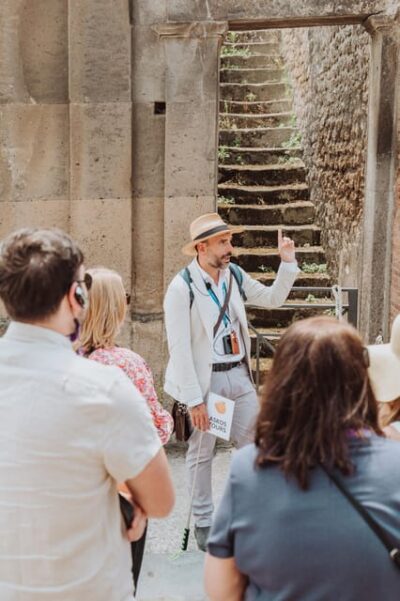 ★ 4.8Pompeii: Entry Ticket and Guided Tour with an ArchaeologistFrom $3519,459 reviews
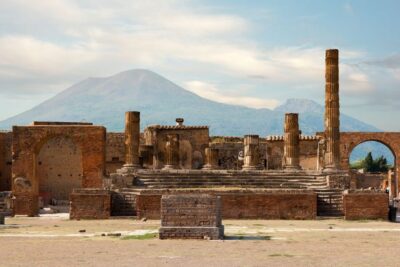 ★ 4.2Pompeii: Entry Ticket with Optional Audio GuideFrom $2612,360 reviews
 ★ 4.8Pompeii: Small Group Tour with an ArchaeologistFrom $4012,264 reviews
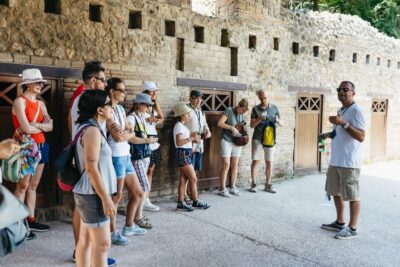 ★ 4.3Pompeii Ruins & Mount Vesuvius Day TourFrom $12011,459 reviews
 ★ 4.6Sorrento, Positano and Amalfi Full-Day TourFrom $10710,988 reviews
 ★ 5.0Sorrento, Positano & Amalfi Coast – Small Group TourFrom $768,643 reviews
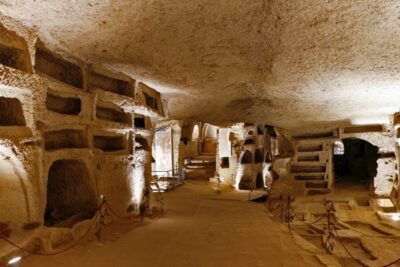 ★ 4.6Catacombs of San Gennaro Entry Ticket & Guided TourFrom $157,941 reviews
★ 5.0Pompeii Small Group Tour with an ArchaeologistFrom $356,593 reviews
★ 4.6Catacombs of San Gennaro Entry Ticket & Guided TourFrom $157,941 reviews
★ 5.0Pompeii Small Group Tour with an ArchaeologistFrom $356,593 reviews
Browse the lists this tour appears in