
Tour review · TOUR REVIEWS
Pompeii and Herculaneum small group Excursion from Naples
Two buried cities, one tight day.
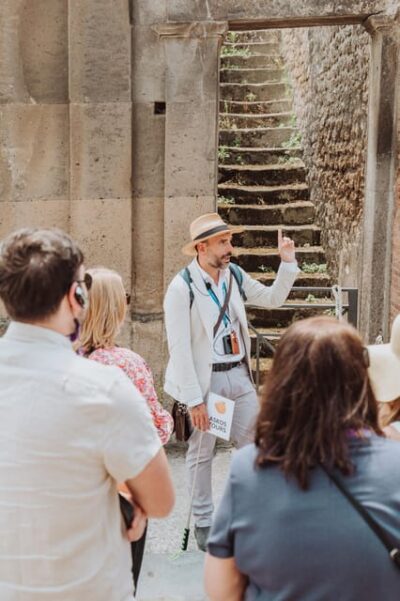
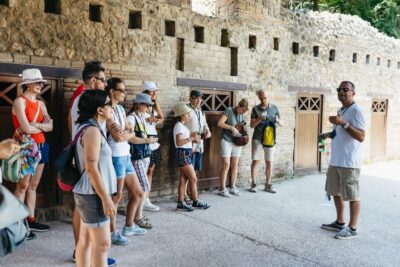
This shore excursion from Naples lets you hit Pompeii and Herculaneum in a single day, with archaeologist-led interpretation, round-trip minibus transport, and fast-track entries so your time goes to ruins, not lines. I especially liked how the tour is built around a small group, so you are not stuck listening to explanations from the far end of a crowd, and how the guide helps you understand what you are seeing instead of just pointing at stones.
I love the port-style pickup and direct transport from Naples Central Station area, because it means you do not waste time finding a meeting spot or piecing together transit. I also love the Pompeii Express fast entry plus the guided stops at major highlights, which keeps the day moving without feeling like a sprint.
One possible drawback: the route is active, and you will do a fair amount of walking in about 7 hours. If you want a fully slow, sit-everywhere museum pace, you might find the schedule a bit tight.
Key highlights to know before you go
- Small group cap (max 20), so the guide can actually manage the flow
- Pompeii Express skip-the-line entry, which helps you spend time inside the park
- Archaeologist-led guidance at both sites, with context for Roman daily life
- Two longer anchors (about 2 hours each) at Pompeii and Herculaneum archaeological parks
- A highlight route with many quick stops, so you see more than just one area
- Masks required during the visit, plus on-site health screening
Naples pickup that makes the day feel organized
The meeting point is at Starhotels Terminus, Piazza Giuseppe Garibaldi 91, Naples. If you are arriving by train, the tour is set up with pickup options from Naples Central Station or train station, which is a big deal if you do not want to gamble on last-minute connections.
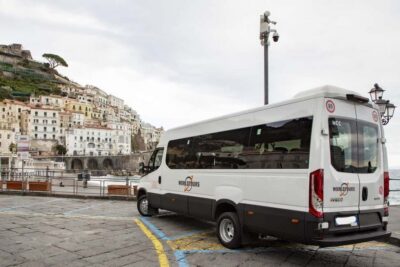
You are also not left to fend for yourself once you arrive. A professional driver brings you by minibus, and that matters because the day is timed. You are aiming to be at the sites when you still have energy, not after an unpredictable transfer.
If you are traveling with a service animal, note that service animals are allowed. Also, the start point is near public transportation, which can be useful if you need a backup plan getting to the hotel area.
You can also read our reviews of more tours and experiences in Pompeii.

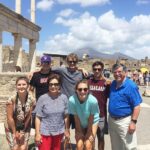
Pompeii Express and the first two hours at the archaeological park
Pompeii Archaeological Park is your first big stop, with about 2 hours there and admission included. The point of the Pompeii Express entry is simple: you get in faster, so the group spends more time looking at ruins and less time stacked in a line.
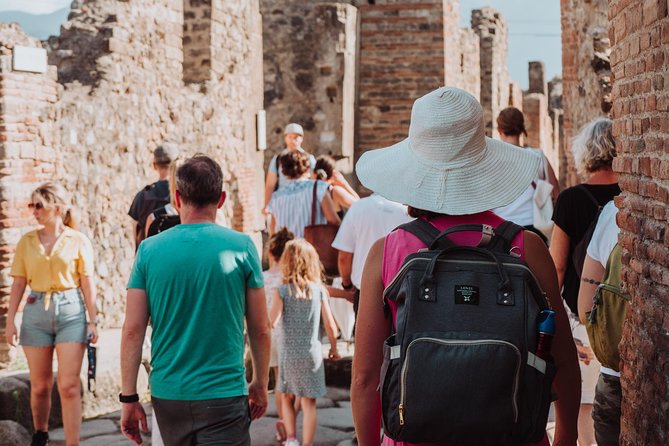
Once inside, expect the guide to steer you through highlights and explain what you are seeing in plain language. This is where small-group size really shows. With a cap around 20, the guide can pause for questions without losing the whole group.
A practical tip: Pompeii is not the kind of place where you can casually drift. You will want comfortable shoes and a bottle of water, since the day is packed and the “quick stop” moments still involve walking.
Basilica, Forum, and the street that defines Pompeii life
After the main park time, the tour works in short, focused looks. The Basilica stop is brief, around 5 minutes, but it is a classic Pompeii landmark that helps you orient the site.
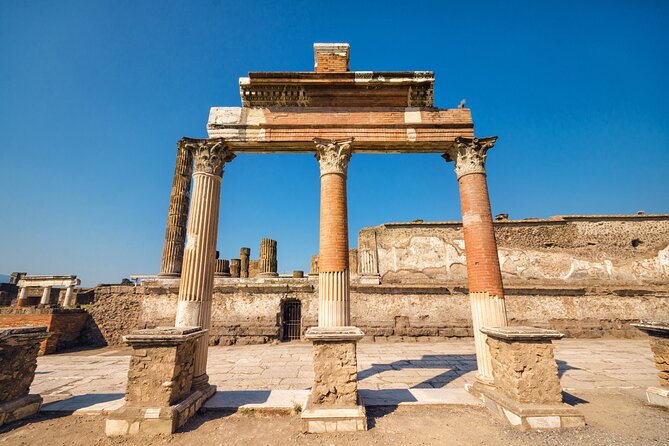
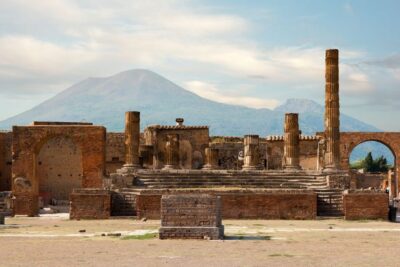
Then you hit the heart of public life with the Forum, about 10 minutes. This stop is more than photos. It is the chance to understand how the city worked as a social and political center, and your guide’s job is to point out what the ruins suggest about everyday routines.
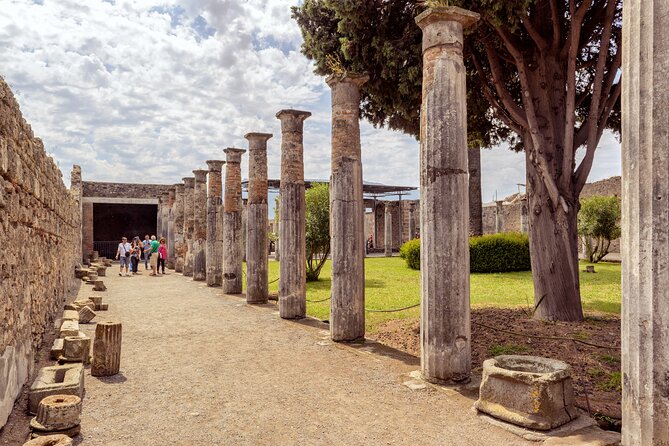
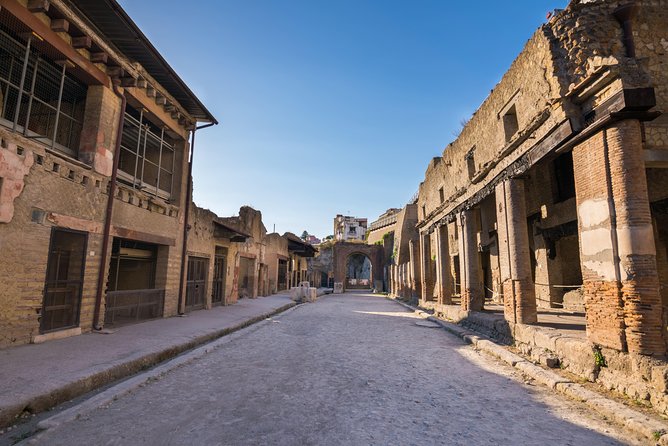
Next comes Via dell’Abbondanza, again around 10 minutes. This street stop is ideal if you want the feel of walking through an ancient town plan, not just viewing isolated monuments. The guide can connect the street layout to how people likely moved through the city.
Houses that show Roman domestic details
From the street, you move into the small-window approach: you see famous household spaces without trying to do everything. The House of Menander is on the list for about 10 minutes. Even in a short visit, a house like this can be a useful reality check, because it turns Pompeii from “public ruins” into “places people lived.”
You also have a look at the Granaries of the Forum (around 10 minutes). That is a smart inclusion because it broadens the city beyond temples and theatres, and helps you notice the practical parts of how goods and food would have moved.
A fun moment for many people is the Lupanar, also about 10 minutes. This is a good stop if you want to understand that Pompeii was not just monuments. It included the full range of human activity, and the guide’s interpretation tends to keep it factual rather than sensational.
Baths and theatres, Pompeii’s public entertainment side
The tour includes the Stabian Baths (Terme Stabiane) for about 10 minutes. Baths are a great Pompeii segment because they sit at the overlap of daily life and public space. Your guide can help you “read” the layout so it feels less like a maze of rooms.
Then you get two theatre stops, short but memorable. The Odeon (Teatro Piccolo) is about 5 minutes, and the Teatro Grande is also about 5 minutes. These quick visits are perfect for getting a sense of scale and purpose, even if you cannot linger like you would on a slower, independent day.
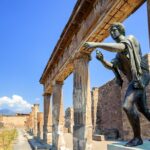

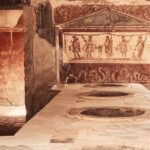
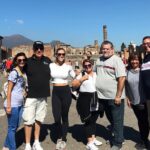
House of the Faun and the walking route effect
The House of the Faun is included for about 10 minutes. This can be a highlight if you like houses with standout character, but the bigger value here is the walking route effect. You feel how the route strings Pompeii’s “big idea” areas together, rather than jumping randomly.
If you prefer to spend 30 minutes in one place and leave the rest alone, this tour might frustrate you. But if you want a guided hit list plus context, it delivers.
The switch to Herculaneum: why the second city matters
After Pompeii, you move on to Herculaneum, with time built into the day. One detail that comes through clearly: you are not just rushing from ruins to ruins with zero pause. There is time for a break, and you can often fit in lunch between Pompeii and Herculaneum if you plan ahead.
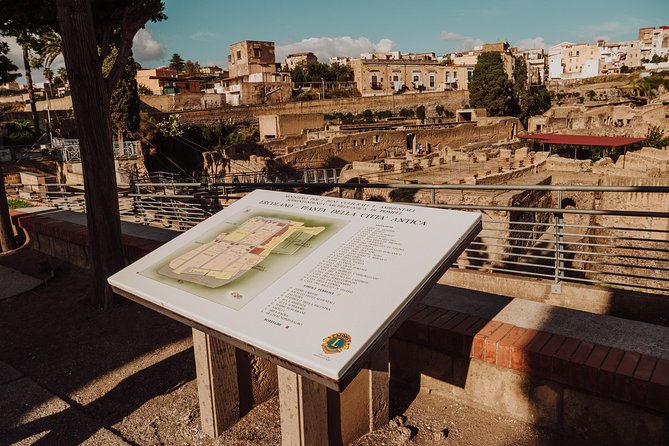
Herculaneum Archaeological Park is the second long anchor at about 2 hours, with admission included. If Pompeii is about the public city you can “read” in layers, Herculaneum tends to feel more intimate in the way the spaces are presented. Your guide’s explanation helps you notice differences in layout and daily life.
Then the tour keeps the highlight rhythm with quick stops, mostly around 5 to 10 minutes each. That means you will see a lot of named locations without getting bogged down.
Herculaneum highlights: houses, courtyards, and the thermal stop
The first featured house stop is House of the Deer (about 10 minutes). Even when time is short, houses are where you get the most visual clues about how people used space.
Next is the La Terrazza di M. Nonio Balbo (about 5 minutes). A terrace stop is a smart change of pace. You shift from doorways and rooms to a view concept, and it helps your brain map the site in three dimensions.
Then you visit the College of the Augustales (about 10 minutes). This stop is useful if you want the public or semi-public side of Herculaneum, beyond just private living spaces.
A quick interior-and-design highlight follows at Casa del Rilievo di Telefo (about 5 minutes). Even in a short look, stops like this can give you a better sense of how art and decoration show up in domestic settings.
The wooden partition house and the House of the Skeleton
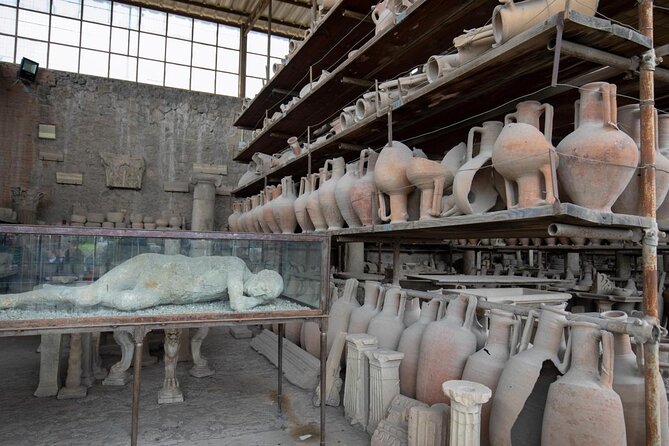
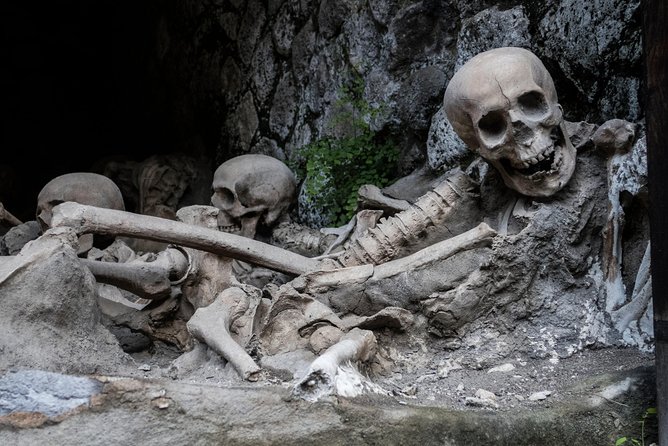
Two stops that often feel especially striking are Partem Domus lignea, Casa del Tramezzo di Legno (about 10 minutes) and the House of the Skeleton (about 10 minutes). Both add variety to what you will otherwise see, because your eyes go from “general ancient ruin” to “specific preserved feature.”
Again, the value is not that you stare at one item for an hour. It is that you get a guided frame so those features make sense in context.
Central Thermae and the House of the Black Salon
The tour includes the Central Thermae (about 10 minutes). Baths are a reliable anchor at both cities because they help you compare how leisure and routine show up in different places.
You then get a look at House of the Black Salon (about 5 minutes). A short visit can still be meaningful if your guide points out what makes the room notable. It gives you something concrete to remember when the rest of the day feels like a blur of streets and walls.
Final Herculaneum stops that round out the feel of the city
The tour rounds out with several additional house and courtyard stops: Casa Sannitica (about 10 minutes), Casa del Bel Cortile (about 10 minutes), and House of the Grand Portal (about 10 minutes). These are the kind of visits that make the site feel like a real place, not just a list of monuments.
If you like architectural variety, this final stretch helps. If you are tired, it can feel like too much looking. Still, the pacing keeps you moving instead of waiting in long lines.
Guides like Rafael, Gennaro, and Michele set the tone
What makes this tour work is the human factor. Many guides listed in feedback, including Rafael, Gennaro, Michele Lamberti, Vincenzo, and Giulia, are described as funny, engaging, and able to explain what you are seeing without overwhelming you.
One pattern I would count on: the guide keeps the group organized and adjusts explanations based on the mix of people. That can mean your guide spends a bit more time on architecture and Roman city life if you want details, or keeps it brisk if you just want the highlights.
You also get a steady rhythm. The “quick stop” moments are short by design, so your guide becomes the translator. Without that, Pompeii and Herculaneum can feel like beautiful rubble. With it, the ruins start behaving like stories.
Price and value: $173.27 buys time, not just entry tickets
The price is listed at $173.27 per person, and it is not just about paying to get in. You are paying for several things at once:
- Skip-the-line Pompeii entry via Pompeii Express
- Herculaneum entry included (listed as €16 each)
- Archaeologist guide time at both sites
- Transport by minibus with a professional driver
- Port-style pickup from the Naples station area
You do not get meals and drinks included, so budget for that separately. But the trade-off is that you are likely spending less time in transit and more time on-site. If you were to DIY this day from Naples, the biggest cost is usually stress and lost time, not the ticket fees.
Also, the tour caps at max 20 travelers, which is a real value point for comfort and flow. Large groups can turn “guided” into “follow me through the crowd.” Here, the structure supports a better experience.
What you should bring for a 7-hour ruins day
Because the day runs about 7 hours (approx.), plan like you are going to be on your feet for a while. Comfortable, grippy shoes are the non-negotiable.
Bring your own mask, because mask use is mandatory during the visit. The tour also notes body temperature screening as part of access control, plus social distancing measures. I would still recommend bringing a small bottle of hand sanitizer, even if it is not explicitly listed.
Finally, bring a simple day plan for food. Since meals are not included, it helps to know where you can grab lunch between Pompeii and Herculaneum.
Should you book this Pompeii and Herculaneum small group tour?
I think you should book it if you want the best use of a limited day in Naples. This is ideal for first-timers who feel overwhelmed by the size of Pompeii and Herculaneum and want an archaeologist guide to help you interpret what you are walking through.
Book it if you hate waiting in lines. Between the Pompeii Express fast entry and the transport organization, the day feels built to protect your time.
Skip it if you want an unhurried, sit-and-stare approach or you are sensitive to walking. The schedule hits many named stops with short durations, and that can feel like a lot if you want slow travel.
If you match the tour’s pace, you will leave with a strong sense of how two Roman cities looked and felt, plus a guided explanation that makes the ruins easier to remember when the day is over.
FAQ
How long is the Pompeii and Herculaneum small group excursion?
The tour runs about 7 hours (approx.).
Is pickup from Naples Central Station included?
Yes, the tour offers pickup, with round-trip transportation by minibus arranged from Naples Central Station or the train station area.
Are entrance tickets to Pompeii and Herculaneum included?
Yes. Admission is included for Pompeii with Pompeii Express entry tickets, and Herculaneum entry tickets are included as well.
Do I need to bring my own meals or drinks?
Meals and drinks are not included, so you will need to plan for lunch on your own during the day.
What COVID-19 related rules are required during the visit?
The use of masks is mandatory, masks must be brought by you during the visit. The tour also states that temperature screening may be used for access, and social distancing must be maintained.
What is the cancellation policy?
You can cancel for a full refund if you cancel at least 24 hours before the experience’s start time. If you cancel less than 24 hours before, the amount you paid is not refunded.
More Tours in Pompeii

More Tour Reviews in Pompeii
Not for you? Here's more nearby things to do in Pompeii we have reviewed






Tour Reviews, compared.
 ★ 4.8Pompeii: Entry Ticket and Guided Tour with an ArchaeologistFrom $3519,459 reviews
 ★ 4.2Pompeii: Entry Ticket with Optional Audio GuideFrom $2612,360 reviews
 ★ 4.8Pompeii: Small Group Tour with an ArchaeologistFrom $4012,264 reviews
 ★ 4.3Pompeii Ruins & Mount Vesuvius Day TourFrom $12011,459 reviews
 ★ 4.6Sorrento, Positano and Amalfi Full-Day TourFrom $10710,988 reviews
 ★ 5.0Sorrento, Positano & Amalfi Coast – Small Group TourFrom $768,643 reviews
 ★ 4.6Catacombs of San Gennaro Entry Ticket & Guided TourFrom $157,941 reviews
★ 5.0Pompeii Small Group Tour with an ArchaeologistFrom $356,593 reviews
★ 4.6Catacombs of San Gennaro Entry Ticket & Guided TourFrom $157,941 reviews
★ 5.0Pompeii Small Group Tour with an ArchaeologistFrom $356,593 reviews
Browse the lists this tour appears in