
Tour review · TOUR REVIEWS
Pompeii and Mount Vesuvius Small Group Tour
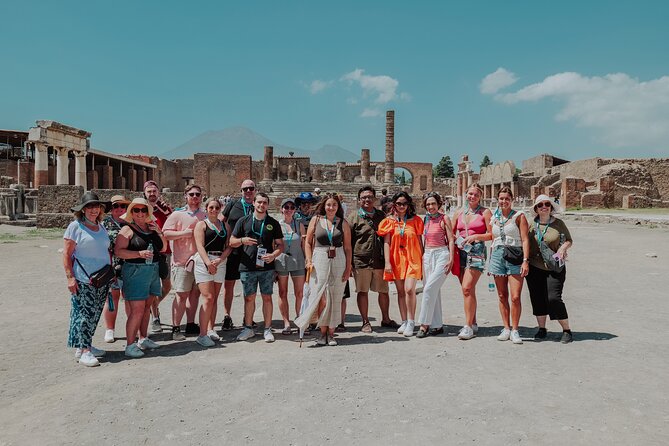
Pompeii plus a live volcano is a big day. In one Pompeii and Vesuvius outing (about 8 hours), you get Pompeii explained by an archaeologist and the crater rim at Vesuvius, with easy minivan transfers and a hike guide. The one real catch is the uphill crater walk, plus weather can limit what you see.
You start at the Pompeii side with a clear meeting point, then move through the ruins in a smart order that helps the city make sense fast. The group stays small (max 14 on the transport), so your questions do not vanish into the crowd. Pack for a long walk day, and bring shoes you trust.
Key things to know before you go
- Archaeologist-led Pompeii: a 2-hour, interpretive walk that helps you understand what you are looking at.
- A crater hike with exact effort: first 30 minutes involve stepped walking, and the final 500 m is steep uphill.
- Vesuvius National Park views built in: on clear days, you can look over the Bay of Naples, Capri, Ischia, and the Sorrento coast.
- Small-group minivan transfer: modern vehicle back and forth between Pompeii and Vesuvius to save time and hassle.
- Herculaneum is the weather backup: if Vesuvius becomes inaccessible due to force majeure, the tour includes Herculaneum instead.
- No food included: you will plan your own lunch and snacks between Pompeii and the volcano.
Pompeii and Vesuvius in one day, without the chaos
This is the kind of tour that makes sense if you have a limited time window in the Naples area. Pompeii can easily swallow half a day on its own, and Vesuvius is not quick either. Doing them together means you spend the day in the right place, not bouncing between train stations, buses, and ticket lines.
What I like is the structure. Pompeii is guided for long enough to give you context, then you transfer to Vesuvius with a licensed hiking guide for the ascent and crater area. You end up with two different perspectives of the eruption: the city at ground level, then the volcano’s edge high above.
The downside is also simple. This is not a sit-and-smile tour. Even when the path is open, you are committing to a hike with steep sections and wind on the summit area.
You can also read our reviews of more tours and experiences in Pompeii.

Meeting at Via Villa dei Misteri and finding your guide at Porta Marina Superiore
The tour starts at Via Villa dei Misteri, 2, 80045 Pompei NA. From there, you connect with the Pompeii entrance experience at the archaeological site’s main access point, Porta Marina Superiore.
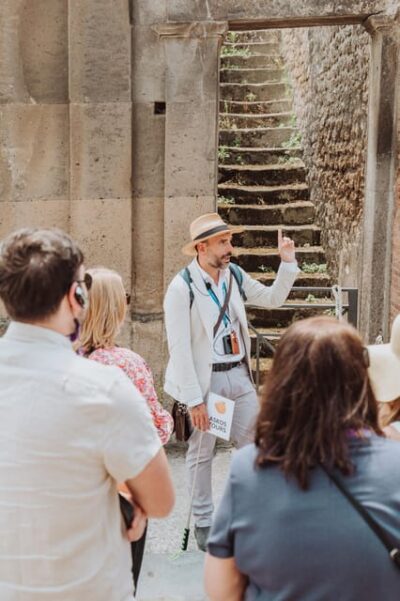
Your guide will be holding a sign with the company name Askos Tours, which matters more than it sounds. Pompeii entrances can feel confusing at first, and having a clear meet spot reduces the stress. It also helps you get moving sooner, which is the real value with an 8-hour day.
Expect that the Pompeii ticket part is handled for you. The Pompeii ruins guidance includes admission, so you are not standing around while others queue.
The Pompeii route that teaches you how the city worked
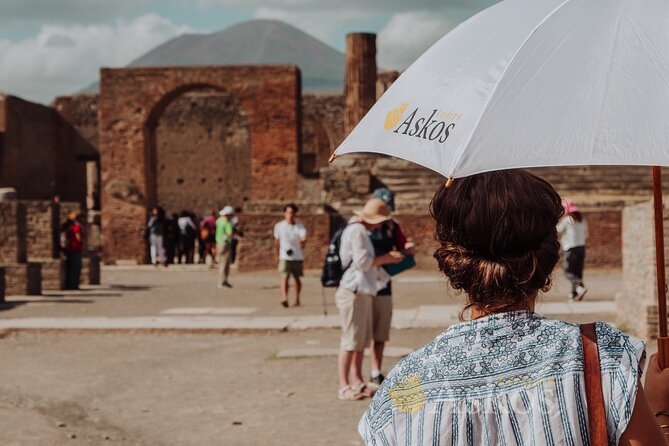
Pompeii ruins are spread out. Without a plan, you can end up sprinting between big sights and still not understand what you are seeing. This tour is designed to avoid that.
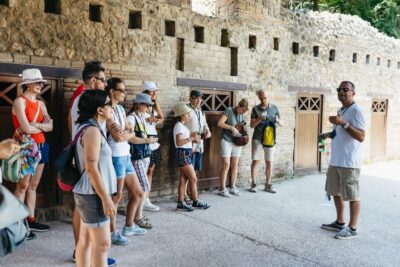
You spend about 2 hours with an archaeologist at the start. Then you pass through the forum area and a sequence of major buildings that show off different sides of daily life, from civic space to private wealth to public bathing.
Here is the order you will feel most in your body, and why it matters:
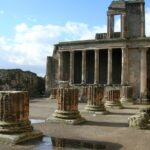
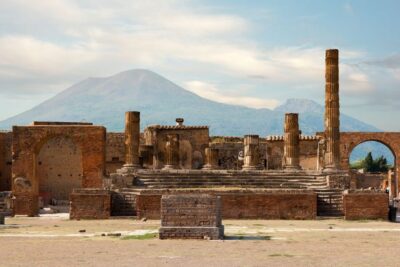
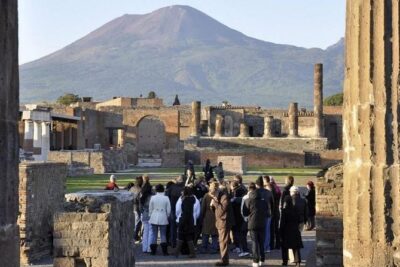
Foro de Pompeya, the city’s main square
You get a look at the ancient main square, the kind of place where public life happened. Even a short stop here helps you understand the layout of what follows. When you see the forum area early, it becomes easier to place the temples, markets, and civic buildings you will notice later.
Granaries of the Forum, plus victims and unusual details
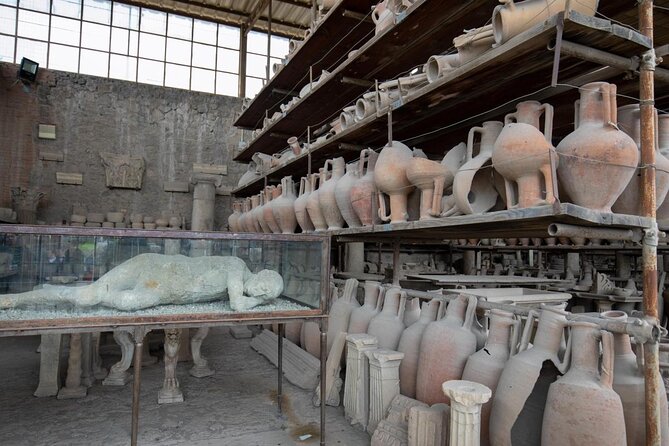
Next up is the Granaries of the Forum, where you can see striking features tied to daily commerce. The stop also includes casts of victims from the eruption, and you may spot casts such as a dog and a tree. Those small details are chilling, but they make the human scale of the disaster more real than a textbook description.


House of Menander, luxury you can actually see
Then comes one of the richest homes in Pompeii, the House of Menander. What makes this stop effective is the contrast. After civic space and practical buildings, you now see wealth expressed through architecture, decoration, and everyday objects.
A short stop here can still change how you look at the rest of the city. You start thinking: Who lived like this, who served them, and what did they expect guests to notice?
Stabian Baths (Terme Stabiane), the oldest thermal complex
The Stabian Baths cover a large area and are described as the oldest thermal complex in the city. Baths were not just about cleanliness. They were social spaces, part of the rhythm of the city.
Seeing the scale helps you understand why Pompeii felt built for routine. It is easier to imagine conversations, gossip, and recovery after work when you can picture the rooms and corridors.
Lupanar, the famous brothel
The Lupanar is the most famous brothel in the ruined Roman city. It is not everyone’s favorite topic, but it is historically important. This stop gives you a more complete picture of Pompeii life, including the less polite side of entertainment and commerce.
If you want a fuller sense of Roman society, this is one of the most direct stops on the route.
House of the Faun, a big private residence
The House of Faun is one of the largest and most impressive private residences. This is another place where scale does the teaching. Even if your time at each spot is short, you start noticing how Pompeii homes could function like status statements.
Theatres: Teatro Piccolo and Teatro Grande
You also get a look at the Teatro Piccolo and then the Teatro Grande. These stops help you understand that Pompeii was not only work and markets. It was performance, public gatherings, and shared stories.
Pompeii in 2 hours plus stops, what you gain and what you miss
The format is efficient, but it is still a trade. Some stops are longer than others, and you will not see every single excavation.
The payoff is that you do get meaning fast. You leave with a mental map of civic life, bathing culture, elite homes, and public entertainment.
Lunch timing, food decisions, and how to avoid a bad stomach on Vesuvius
Food and drinks are not included, so your day needs a plan. There are breaks baked into the Pompeii portion as you move between key points, and then you have time to handle your own lunch before the crater hike.
In practical terms:
- Keep your lunch light enough to stay comfortable on a steep walk.
- If you are sensitive to heat, avoid heavy, greasy meals.
- Bring water if you can, since you will be outside more than inside.
Also, think about timing. Once you head toward Vesuvius, the day can run long in real life. You do not want to spend the last hour hunting for food while everyone else is gearing up.
Vesuvius National Park: steps, steep uphill, and the crater’s edge
This is the part of the tour you feel. You transfer to Mount Vesuvius through Vesuvius National Park and then join a hike that ends at the crater area.
Here are the effort details that matter most:
- The first 30 minutes involve step walking to reach the crater area.
- The last 500 m is a very steep uphill walk.
- Closed-in shoes are essential.
You are also dealing with mountain conditions. Wind can pick up quickly, and the summit area can feel much cooler or harsher than Pompeii below. That is why wearing the right footwear and choosing your pace matter.
The goal at the top is to see the crater. The tour description notes that the crater still smokes slightly, and you are also chasing wide views when visibility is good.
One more thing that is easy to underestimate: even when the path is open, you might hit wind and fog. A good guide helps you keep moving calmly, stops when needed, and explains what you can still learn even if the view is muted.
The Bay of Naples views you want, and what happens in fog
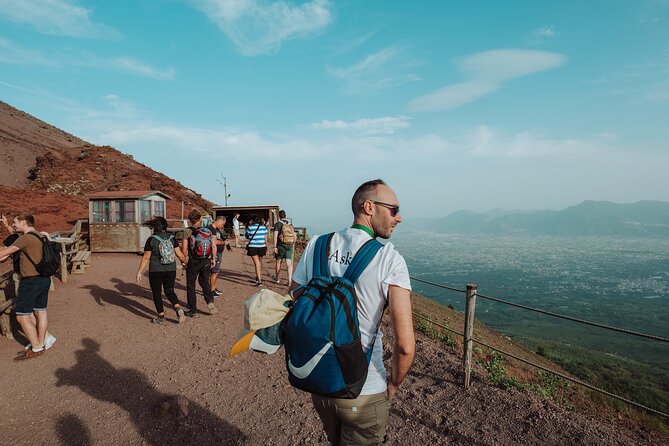
On clear days, the summit delivers panorama territory: the Bay of Naples, Capri, Ischia, and the Sorrento coast. You also get a sense of how close the world-famous towns sit to an active volcano.
But Vesuvius weather can be dramatic. If clouds roll in, you might climb partway and lose the horizon. If the crater walk becomes unsafe or inaccessible due to force majeure, the plan shifts to Herculaneum instead of Vesuvius.
I like that the tour is built around this kind of reality. Volcano outings are not like museum schedules. Weather is part of the experience, and having a substitute site means you do not lose the whole second half of the day.
For context, Herculaneum is often a strong partner to Pompeii because it helps you compare how different parts of the eruption affected daily life. If Vesuvius is closed, you are still doing serious archaeology, not just waiting around.
Guides and pacing: why the human factor is a big deal here
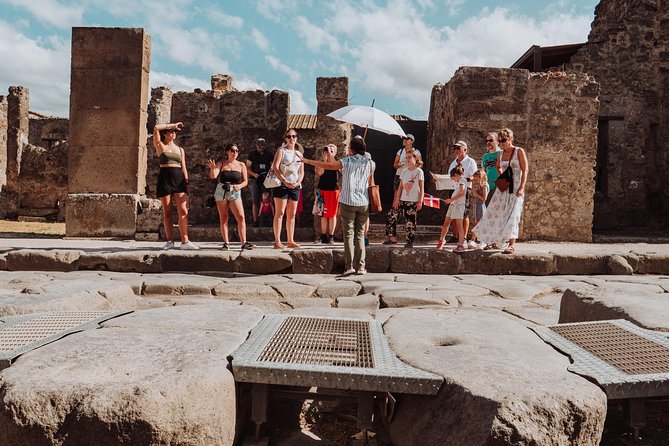
What makes this tour work for many people is the combination of interpretation and pacing.
For Pompeii, you are led by an archaeologist for about 2 hours. Based on guide names that show up on this route, you might be with people like Simona, Raffaela, Anna, Nicoletta, Teresa, Benedetto, Daniela, Antonella, or Guilia. When the guide has an archaeologist background, the ruins stop being random walls and start turning into a story of urban design, daily routines, and how the eruption changed everything.
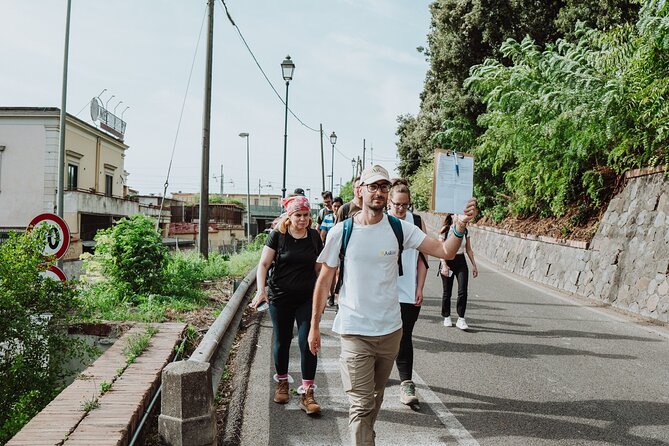
For Vesuvius, you get a licensed hiking guide. People often talk about Mario as the hike guide for this part, with a pace that matches the group, plus clear explanations along the way. Even when weather cuts visibility, a guide can still point out where to look and what geologic story you are observing.
This matters because you do not just want facts. You want a flow that helps you keep your footing, manage effort, and stay focused on what you came to see.
Small-group minivan logistics and the road down the mountain
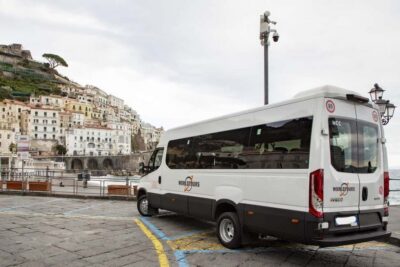
The tour uses transportation by a modern minibus, handling up to 14 people. That is a key value detail. Pompeii to Vesuvius is not a short hop, and local roads can be winding. A small vehicle usually means less chaos and fewer transfer headaches.
A couple practical notes:
- Expect you are back and forth in the same day, so you need to plan for timing and energy.
- The tour description says it ends back at the meeting point in Pompeii.
- One client mentioned a drop at Napoli Centrale, which could be a day-to-day or operational choice. If end location matters to your itinerary, ask before you go.
If you are doing a tight Naples schedule, being dropped at a major station can save time and reduce the need to figure out your next connection on the fly.
Price of $119.77: when this tour feels like a smart buy
At $119.77 per person, you are paying for convenience, interpretation, and guided climbing time, not just transportation.
Here is what you typically get for the money:
- A 2-hour archaeologist-guided Pompeii experience.
- Entrance included for Pompeii and Mount Vesuvius (the volcano entry fee is listed as 11.00 euros, so confirm what your final total includes at booking).
- Modern minivan transfers between Pompeii and Vesuvius.
- A licensed hiking guide for the Vesuvius portion.
- A small group size, max 14.
What is not included is food and drinks, so you should budget for lunch and water.
If you were to cobble together a self-guided plan, you could easily spend extra time on transit and ticket logistics. For many travelers, that is where the price starts to feel justified: you buy back your day, and you get expert context while you are there.
Who should book this Pompeii and Vesuvius tour
This fits best if you:
- Want two major sites in one day.
- Like having an expert guide translate the ruins into human stories.
- Are comfortable walking for a long day.
You should consider skipping it if:
- You have mobility or walking limitations. The tour is not recommended for mobility/walking issues or impairments.
- You are traveling with young kids, since children under 6 are not allowed.
- You do not do well with steep uphill walking. The climb has a very steep final 500 m and a stepped section early on.
If you go in summer heat, plan for hotter conditions too. Even if you take it slow, you will still feel the effort, because the terrain is real.
Should you book? My call for the right traveler
Book this tour if you want a guided day that gives you a clear storyline: Pompeii as a functioning city, then Vesuvius as the eruption source with views from the crater edge when conditions allow.
I would not book it if you are hoping for a gentle stroll or if weather changes would ruin your mood. Volcano access is weather-dependent, and the tour may swap Vesuvius for Herculaneum if the crater path is not accessible.
If you match the basic fitness and footwear needs, this is a solid value package. You get expert Pompeii interpretation, a real crater hike experience, and less hassle than building your own plan.
FAQ
How long is the Pompeii and Mount Vesuvius small group tour?
The tour runs about 8 hours (approx.).
Where do we meet for the Pompeii and Vesuvius tour?
You start at Via Villa dei Misteri, 2, 80045 Pompei NA, Italy. You meet your guide at the Pompeii ruins main entrance called Porta Marina Superiore.
What group size is this tour?
The tour has a maximum of 14 travelers. The Pompeii archaeologist guidance is listed for groups up to 20 people.
Are admission tickets included?
Pompeii ruins guidance includes the admission ticket, and Mount Vesuvius admission fees are listed as included. The volcano entry ticket is shown as 11.00 euros in the additional information.
What should I wear for the Mount Vesuvius part?
Wear closed-in shoes because the last 500 m is steep uphill. The tour also advises comfortable shoes, and in summer bring sunglasses and sunscreen.
What happens if Mount Vesuvius is not accessible?
If Vesuvius is not accessible due to force majeure, the tour will include a visit to Herculaneum instead of Vesuvius.
Is food included?
No. Food and drinks are not included.
Can I cancel for a full refund?
Yes. You can cancel up to 24 hours in advance for a full refund.
More Tours in Pompeii

More Tour Reviews in Pompeii
Not for you? Here's more nearby things to do in Pompeii we have reviewed




Tour Reviews, compared.
 ★ 4.8Pompeii: Entry Ticket and Guided Tour with an ArchaeologistFrom $3519,459 reviews
 ★ 4.2Pompeii: Entry Ticket with Optional Audio GuideFrom $2612,360 reviews
 ★ 4.8Pompeii: Small Group Tour with an ArchaeologistFrom $4012,264 reviews
 ★ 4.3Pompeii Ruins & Mount Vesuvius Day TourFrom $12011,459 reviews
 ★ 4.6Sorrento, Positano and Amalfi Full-Day TourFrom $10710,988 reviews
 ★ 5.0Sorrento, Positano & Amalfi Coast – Small Group TourFrom $768,643 reviews
 ★ 4.6Catacombs of San Gennaro Entry Ticket & Guided TourFrom $157,941 reviews
★ 5.0Pompeii Small Group Tour with an ArchaeologistFrom $356,593 reviews
★ 4.6Catacombs of San Gennaro Entry Ticket & Guided TourFrom $157,941 reviews
★ 5.0Pompeii Small Group Tour with an ArchaeologistFrom $356,593 reviews
Browse the lists this tour appears in