
Tour review · TOUR REVIEWS
Pompeii with an archaeologist, the original!!!
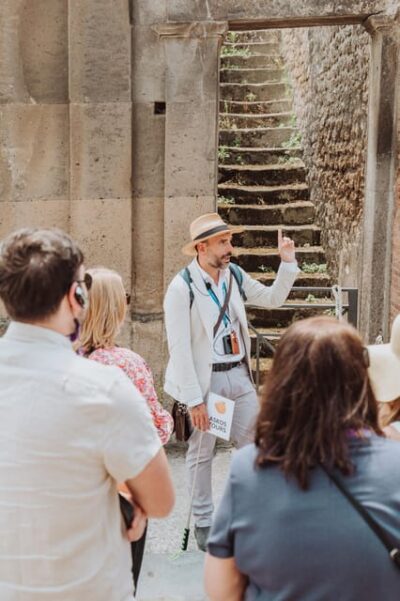
Pompeii gets clear fast with an excavator archaeologist. This private visit is led by an actual archaeologist, and the guide is not a general-language tour, it is archaeology training plus real site research. I like learning Roman daily life through site-specific explanations, and I really appreciate the English communication quality highlighted by previous guests, including Valeria’s excellent guidance. The main drawback to plan around is that the entrance ticket is not included in the tour price.
You will spend about 2 hours in the Pompeii Archaeological Park, seeing major landmarks tied to everyday routines, not just famous facades. The afternoon timing is designed to help with comfort, and the late-day light adds an extra layer to what you are seeing. Go in with a weather mindset, because the experience runs best under good conditions.
Key things to know before you go
- A real archaeologist leads the whole tour, not an off-the-shelf guide script
- Small private group (up to 8) means questions get answered, not squeezed
- Afternoon timing is planned to reduce heat and crowds while keeping strong light for viewing
- You focus on daily life, not only monuments
- Entrance fee is separate, so budget for the site ticket
- Mobile ticket makes it easier to get started at the park
Why a true archaeologist matters in Pompeii
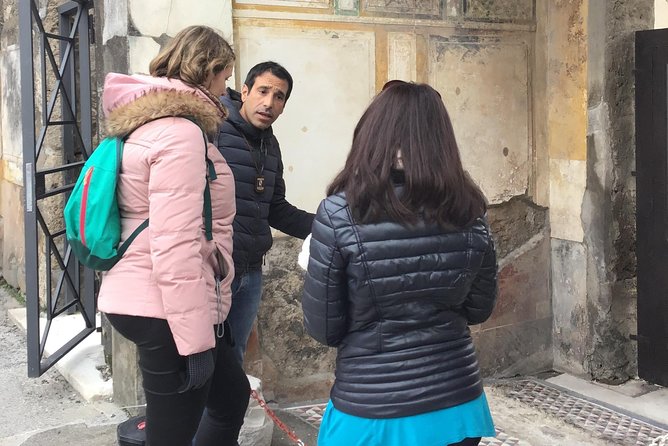
Pompeii is one of those places where a “nice guide” can still leave you with half-formed ideas. You see streets, rooms, and rubble, but you might not understand what you are looking at or why it was placed the way it was. The big value here is that the visit is led by someone trained in archaeology who has carried out research projects at the site.
This matters because Pompeii is not just a list of highlights. It is a frozen time capsule from 79 AD, when Vesuvius buried a Roman city of about 66 hectares. When you have an archaeologist in charge, you get better context for things like how shops related to street life, how public spaces worked, and how domestic decoration fit daily routine. You are not being asked to “figure it out” from signs.
I also like that the tour is described as not an agency setup. It is a private visit with the archaeologist or trusted colleagues, which usually means the explanations stay consistent and purposeful. In past feedback, Valeria stood out for fun delivery and clear English, which is exactly what you want when the topic is detailed.
You can also read our reviews of more tours and experiences in Pompeii.



What a 2-hour Pompeii visit actually covers
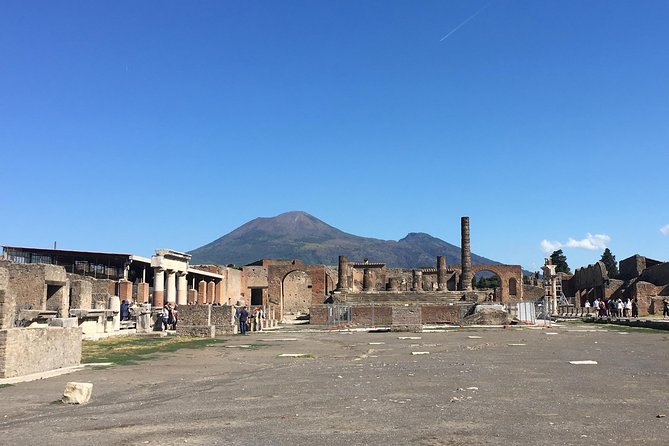
This tour is built around a single focused stop: Pompeii Archaeological Park. The timing is about 2 hours, which is short enough to keep it manageable, but long enough to move beyond postcard views and into the “how did people live here” layer.
You can expect to walk through key areas that represent different parts of Roman life. The tour description explicitly calls out several familiar Pompeii features, including:
- a typical house with decorations
- shops
- thermal baths
- the theater
- the lupanary
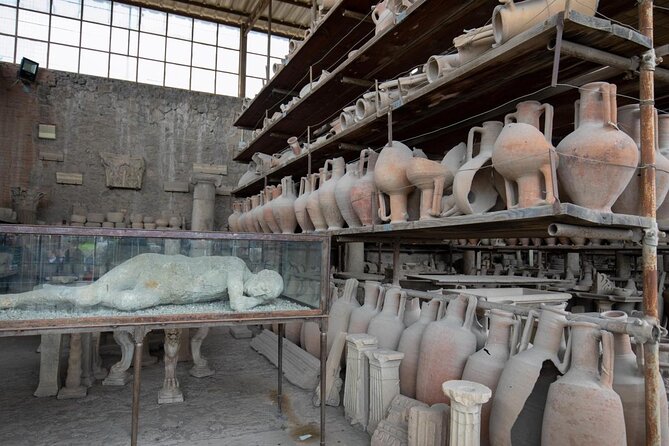
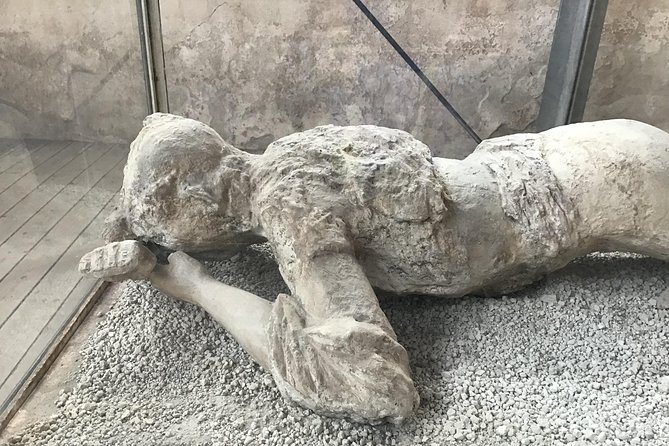
- the casting molds
- plus everyday-life habits woven through the route
Because the visit is built by an archaeologist, the route is less about checking boxes and more about connecting objects to behavior. That is how Pompeii becomes understandable, from street-level activity to leisure and public culture.
One practical consideration: Pompeii is still a large outdoor site. Two hours is excellent for a first orientation, but it is not enough to see everything. If you also want to linger on your own, you’ll likely want to leave extra time after the tour.
Stop-by-stop highlights inside Pompeii Archaeological Park
This experience keeps the focus on major structures while still explaining what they meant in daily life. Here is how each highlight tends to land when you view it with archaeological interpretation.
The “typical house” and its decorations
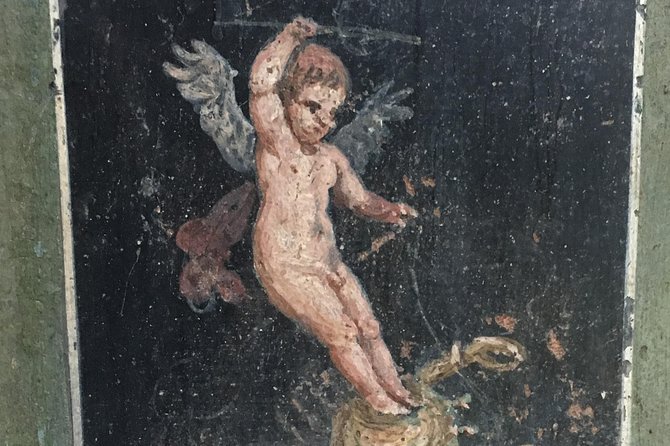
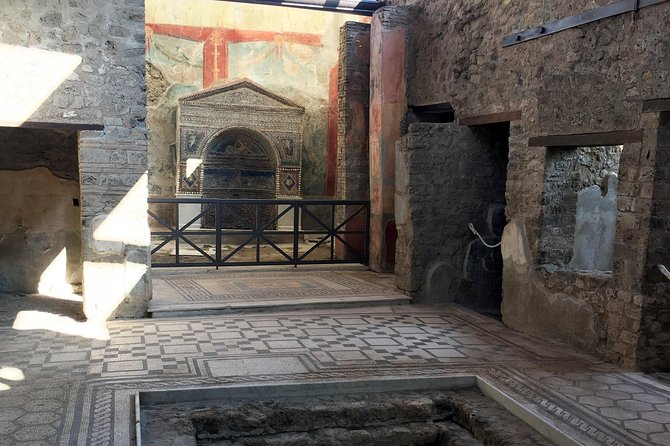
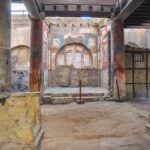
A Roman house is a whole statement of status, privacy, and routine. The tour aims to show you a typical house, including the decorative elements. With an archaeologist guiding you, you are more likely to understand what those decorations were doing: signaling wealth, shaping mood, and separating spaces used for different parts of the day.
Watch for how rooms connect and how the layout supports daily movement. You will get more from it if you treat it like a blueprint for routine rather than a museum room.
Shops and street life
Shops are where Pompeii becomes real in your head. You see a storefront, but you also want to understand the rhythm: where customers stood, how transactions worked, and how noise and foot traffic would have shaped the street.
An archaeologist-led visit tends to connect these dots. It is not only about what the shop looked like, it is about how it fit into the neighborhood fabric.



Thermal baths and leisure
Thermal baths in Pompeii represent comfort, health, and social time. This is also where you can learn a lot about Roman habits, because bath culture was a daily or frequent activity for many residents.
Even within a short tour, the bath stop is powerful because it gives you the chance to see both function and culture. Expect the guide to help you connect spaces to stages of a bath routine.
The theater and public culture
The theater is where Roman life shifts from daily routines to public performance and communal events. In a standard walking tour, the theater can feel like a big stone bowl. With archaeological interpretation, it becomes more about the audience experience and how the city organized entertainment.
This is one reason Pompeii feels less like ruins and more like a living city that stopped abruptly.
The lupanary and social history
The lupanary is often described quickly in generic tours. Here, it is included as a key stop. With an archaeologist at the helm, you should expect discussion aimed at context and interpretation, not just shock value.
Think of this as Pompeii’s social reality component. Roman cities had systems and hierarchies, and buildings like this help you see that the everyday included more than homes and temples.
The casting molds
The tour description specifically mentions the casting molds. This is a detail that can make Pompeii click emotionally and intellectually. Seeing molds tied to what happened during the eruption gives you a direct connection between the archaeological record and human experience.
Even if you have read about Pompeii before, a guided explanation can help you understand what the molds represent and how archaeologists interpret evidence.
How the afternoon timing helps you enjoy Pompeii
Pompeii can be brutal in strong sun. This tour is designed and calibrated to avoid the heat and the crowds, then adds a practical bonus: the charm of the light at the end of the day.
That sounds like marketing, but timing genuinely changes the experience. Late-day light helps you see texture in stone and surfaces. It also makes moving through the site less draining, so you can actually absorb explanations.
I also like the “avoid crowds” intent. When you are in a place with heavy visitor flow, you can lose the thread if you are constantly stepping aside or trying to hear over noise. A route planned with comfort in mind is a value add, especially for a 2-hour tour where you want the full payoff.
Value and pricing: what $226.89 per group buys you
The price is listed as $226.89 per group, up to 8 people, and the tour lasts about 2 hours. That can sound high if you only compare it to the cost of a basic group ticketed tour. But you are not paying only for entry-time narration.
You are paying for:
- a private format
- an archaeologist-led visit
- and local government guide inclusion alongside the archaeologist team
In other words, you are buying expertise plus time and access to ask questions. If you split it across a small group, the per-person value often becomes much more reasonable, especially for families and small friend groups.
There is also one clear budget note: the entrance fee is not included. Adults have a ticket price of 19 euros, young people aged 18 to 24 who are EU community members pay 3 euros, and minors have free entry. You should factor that into your total spend so you do not get surprised at the start.
If your priority is understanding Pompeii correctly, this is one of the safer bets. You are choosing the depth angle, and it is the right place to spend money on expert interpretation.
Meeting at Ristorante Suisse, then back to the same place
You will meet at Ristorante Suisse, Piazza Esedra 10/13, 80045 Pompei NA, Italy. The activity ends back at the meeting point, so you do not need to figure out a second pickup or chase transportation changes mid-visit.
This “same starting point and ending point” setup is practical. It reduces friction, especially if you are planning the rest of your day around Pompeii. It also helps if your group includes people who prefer predictable logistics.
You also get a mobile ticket, which makes the check-in step simpler. And the tour is near public transportation, so you have options if you do not want to rely only on taxis or private cars.
What to look for while your archaeologist explains
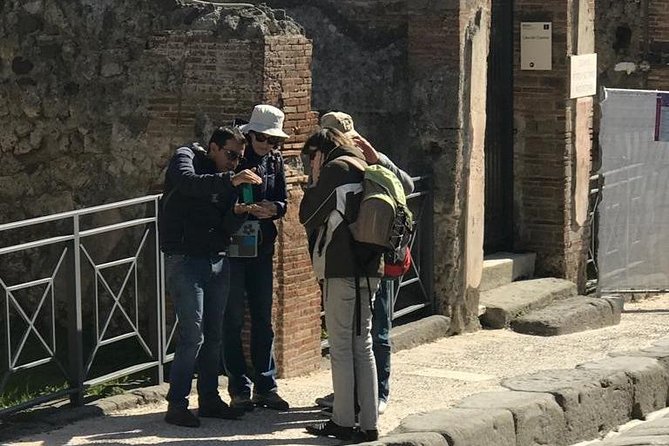
To get the most out of a short Pompeii window, I suggest you do a little mental prep before you meet your guide. Here are smart things to focus on as you walk, without needing special prior knowledge.
- Pay attention to how daily life maps onto buildings. Houses, shops, baths, and theaters each tell a different story.
- Notice transitions. Street to home, public to private, leisure to routine.
- Ask how archaeologists interpret evidence. Pompeii is not only ruins, it is data.
- Use the casting molds stop as your emotional anchor. Then connect it back to the rest of what you see.
- If you have mobility limits, pace yourself early. Two hours can feel longer at Pompeii walking speeds.
Because the tour is private, you can also tailor questions to your interests. If you love architecture, ask about layout and materials. If you prefer human stories, ask how everyday habits show up in the archaeological record.
Who this private Pompeii tour is for
This is a strong fit for people who want Pompeii to make sense, not just look impressive in photos.
It is especially good for:
- small groups up to 8 who want a shared, guided explanation
- travelers who have basic Pompeii knowledge and want to level up through archaeology
- families who want a more structured visit that stays focused on how people lived
- anyone who cares about language quality, since prior feedback highlighted Valeria’s clear communication and fun delivery
If you are someone who loves wandering independently without structure, you might prefer a self-guided plan. But if your goal is understanding, this is built for you.
Should you book Pompeii with an archaeologist, the original?
Yes, if you value expert interpretation over a generic overview, book it. The biggest reason is simple: you are not hiring a “tour voice.” You are hiring an archaeologist with site research experience, plus a local government guide.
Also, the format is practical: private group up to 8, about 2 hours, and an afternoon plan that aims to reduce heat and crowd pressure. Add the specific Pompeii stops, like thermal baths, theater, the lupanary, and the casting molds, and you get a route that helps Pompeii feel like real Roman life rather than only stone fragments.
Just be sure to budget for the separate entrance ticket, and choose a day with good weather.
If you want Pompeii to be more than scenery, this is one of the better ways to see it.
FAQ
Is the Pompeii entrance fee included?
No. The entrance ticket is listed as not included. It costs 19 euros for adults, 3 euros for young people aged 18-24 who are EU community members, and is free for minors.
How long is the tour?
It is approximately 2 hours.
How much does the tour cost?
The price is $226.89 per group, up to 8 people.
Is this a private tour?
Yes. It is a private visit, and only your group participates.
Where do we meet?
You meet at Ristorante Suisse, Piazza Esedra, 10/13, 80045 Pompei NA, Italy, and the tour ends back at the same meeting point.
Do I need to bring a paper ticket?
No. The tour uses a mobile ticket.
Who guides the visit?
The visit is led by an archaeologist. The tour description also notes a local government guide is included.
When do I get confirmation after booking?
Confirmation is received within 48 hours of booking, subject to availability.
What if the weather is bad?
The experience requires good weather. If it is canceled due to poor weather, you will be offered a different date or a full refund.
Can I cancel for a refund?
Yes, you can cancel for a full refund up to 24 hours in advance of the experience start time. After that, refunds are not available.
Is it accessible and are service animals allowed?
Service animals are allowed, and the meeting area is near public transportation.
More Tour Reviews in Pompeii

Not for you? Here's more nearby things to do in Pompeii we have reviewed







Tour Reviews, compared.
 ★ 4.8Pompeii: Entry Ticket and Guided Tour with an ArchaeologistFrom $3519,459 reviews
 ★ 4.2Pompeii: Entry Ticket with Optional Audio GuideFrom $2612,360 reviews
 ★ 4.8Pompeii: Small Group Tour with an ArchaeologistFrom $4012,264 reviews
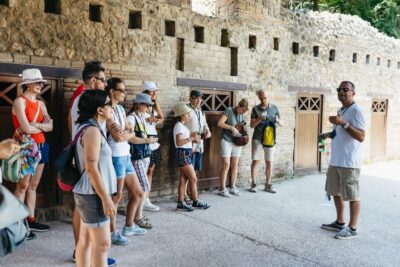 ★ 4.3Pompeii Ruins & Mount Vesuvius Day TourFrom $12011,459 reviews
 ★ 4.6Sorrento, Positano and Amalfi Full-Day TourFrom $10710,988 reviews
 ★ 5.0Sorrento, Positano & Amalfi Coast – Small Group TourFrom $768,643 reviews
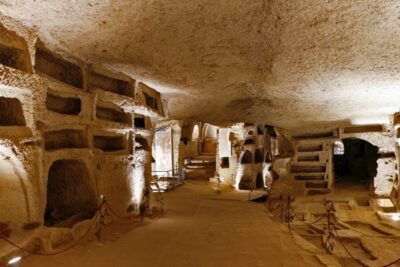 ★ 4.6Catacombs of San Gennaro Entry Ticket & Guided TourFrom $157,941 reviews
★ 5.0Pompeii Small Group Tour with an ArchaeologistFrom $356,593 reviews
★ 4.6Catacombs of San Gennaro Entry Ticket & Guided TourFrom $157,941 reviews
★ 5.0Pompeii Small Group Tour with an ArchaeologistFrom $356,593 reviews