
Pompeii feels alive fast, even on wheels. I like two things right away: the skip-the-line admission, and the 2-kilometer accessible route that helps everyone reach major sights without losing the day to stairs and detours. This 2-hour guided visit focuses on the best-preserved parts of the ancient city, so you get real context instead of just wandering.
You’ll cover the big landmarks most people come for, plus the in-between details that make Roman life click. The stop-and-explain approach works well when you have limited time or mobility needs. One thing to consider: access to the starting area can be a challenge for some wheelchair users, so it pays to plan your route to the Amphitheatre carefully before the tour.
If you want Pompeii without the stress, this is a practical pick. The day stays focused, the guide sets the pace, and you’ll leave with a clear sense of how this city worked before Vesuvius changed everything.
Key Highlights Worth Knowing Before You Go
- Skip-the-line entry helps you start seeing Pompeii sooner, not after a queue shuffle
- Accessible path around 2 kilometers keeps the route manageable for wheelchairs and scooters
- Forum, Theater, and Thermal Baths are built into the tour flow for maximum hit rate
- Daily-life stops like mills, domus spaces, and the Gladiators’ Gym explain how people lived
- The Lupanare focus gives context to the famous erotic frescoes, with guidance on what you’re looking at
- Your group only means the guide can keep things moving at your pace
Pompeii’s One-Town Story: Why This Place Hooks You
Pompeii is one of those rare ruins where the layout still makes sense. Streets still connect neighborhoods. Public spaces still feel like gathering points. Homes and workshops still hint at routines. That’s why a good guide changes everything: they translate the stones into daily habits.
In 79 AD, Vesuvius erupted and buried the city under ash and rubble. What makes Pompeii so powerful is not just the disaster, it’s the frozen snapshot of real Roman life. The ruins were brought back into view later, starting in the 18th century, and since then the Archaeological Park has become a kind of outdoor classroom.
What I like about this tour format is that it doesn’t treat Pompeii like a checklist. It’s organized along a special route designed to be reachable, so you can spend your time learning rather than fighting access barriers.
You can also read our reviews of more tours and experiences in Pompeii.



Skip-the-Line Ticket Plus Guided Direction
The tour includes skip-the-line admission, which matters more than it sounds. Pompeii is popular, and waiting eats into your best viewing window. When you’re on a timed plan and a limited walking route, every minute counts.
The other half of the value is the guide. You’re not just handed a headset and left to interpret fragments. The guide brings stories and small details into focus, including how Romans used key spaces like baths, forums, and theaters. That guide-led structure is especially helpful if you want to understand what you’re seeing without constantly stopping to read panels.
Also, you get a mobile ticket, which keeps things simple. No frantic searching for paper while you’re trying to get into the site.
The Amphitheatre Start: Getting Oriented Before You Roll
You begin at the Amphitheatre of Pompeii in Piazza Immacolata, 80045 Pompei NA, Italy. Starting here works for two reasons.
First, it gives you orientation. The amphitheater is a strong anchor landmark, and a good guide can use it to frame how entertainment and public life fit into the city. Second, it sets the tone for the tour’s pacing, since the rest of the highlights are covered along the accessible route.
One caution from accessibility-focused reviews: the path to the starting area can be tricky for some wheelchair users. If you’re using a wheelchair or scooter, do a quick pre-check of how you’ll reach the meeting point from nearby public transport, so you aren’t improvising at the last second.
The 2-Hour Pompeii Route: Main Streets and Key Neighborhood Life
This tour is about 2 hours total, and it aims to hit the big moments without turning into a sprint. The route follows a special path that is about 2 kilometers long, which helps make Pompeii more reachable for everyone.
Along the way, you’ll walk through main streets and get a guided sense of daily life in Roman times. That street-level context is important. Pompeii isn’t just impressive buildings, it’s a working urban system, streets, shops, and civic spaces all connected.
You’ll also cover places tied to Roman social habits and routines. That includes the role of baths, the way people moved through public areas like the forum, and what entertainment looked like in a city where even leisure had structure.
The tight timing is the trade-off. In two hours you’ll focus on essentials, not every corner of the park. If you dream of a slow, deep exploration with lots of stops to read, you might want a longer visit after this or instead.
Thermal Baths and Public Spaces: When Roman Leisure Becomes Real
A highlight stop is the thermal baths. Baths in Pompeii aren’t just a place to wash. They show how Romans mixed comfort, hygiene, and social life. When the guide explains what spaces were for, the ruins stop feeling random and start feeling functional.
You’ll also see how public entertainment and gathering worked through visits tied to major public structures like the Theater and the Forum. The Theater gives you a sense of performance culture and civic attention. The Forum shows the city’s political and social heartbeat.
These stops are great for first-timers because they quickly connect “big picture” to “I can see how this worked.”
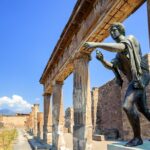

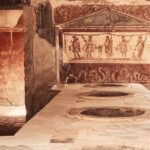

Domus, the Gladiators’ Gym, and the Mills
This tour doesn’t only focus on the glamorous public monuments. You’ll also move through areas that hint at ordinary life and specialized work.
You’ll visit a domus (a Roman home space), which helps you understand domestic layout and social hierarchy. Even if the exact use of every room varies by house, the guided storytelling makes the architecture feel understandable instead of mysterious.
You’ll also see the Gladiators’ Gym. That’s the kind of stop that can surprise people. It’s not just muscle and combat lore. It’s where training and discipline connected to public spectacle.
And then there are the mills. Seeing mills in a city tour is a smart reminder that food production mattered daily. It helps you picture the labor behind dinner, not just the entertainment after.
If your goal is to understand Pompeii as a living city, this mix of home, work, and leisure is one of the strongest parts of the tour design.
Lupanare Stops and the Erotic Frescoes: What to Expect
One of the most talked-about parts of Pompeii is the Lupanare, famous for erotic frescoes. This tour includes it as part of the highlight flow.
The value here is not the shock factor. It’s the context. When a guide explains what you’re looking at, you can interpret these images as part of Roman commercial and social life rather than treating them like a single sensational moment.
That said, this stop may be uncomfortable for some people. If you’re traveling with kids, or you have personal sensitivities, plan for it. You might want to discuss expectations with your group before you arrive, so you can decide how you’ll handle that section of the route.
Pleasure Houses, Forum Energy, and Theater Atmosphere
Along the way, you’ll also visit pleasure houses and other areas tied to how Romans experienced nightlife and social status. Combined with the Forum and Theater, the tour paints a full picture: civic life by day, public entertainment and social spaces by night.
The Forum is especially useful because it ties many other sights together. The forum functionally explains how people met, exchanged news, and participated in civic identity.
The Theater then shows a different side of public life: performance as communal experience. Even if you’re not an opera person, you can still appreciate the structure and what it meant to gather together in a Roman city.
Private Group Pace: What That Means for Accessibility
This is listed as a private tour/activity, meaning it’s only your group. That matters if you’re navigating Pompeii on a wheelchair or scooter.
A private format often makes it easier for the guide to adjust pacing, handle questions, and manage movement across different surfaces. In accessibility-focused reviews, people specifically praised guides for making sure scooter and wheelchair visitors could see what mattered and not just follow along at someone else’s tempo.
Guides named in reviews include Mariano and Momma, both recognized for being supportive and making sure visitors could access key viewpoints. I’d treat that as a good sign that the guide approach tends to be practical, not hands-off.
Price and Value: Is $254.67 a Good Deal?
At $254.67 per person, this isn’t the cheapest way to see Pompeii. But it also isn’t a generic sightseeing tour.
Here’s how I’d judge value:
- You get skip-the-line admission, which saves time in a place where queues can be brutal.
- Admission and a guided tour are included, so you’re paying for direction, not just entry.
- The route is planned around accessibility, including the special path of about 2 kilometers. That reduces the risk of “we tried, and now we’re stuck.”
- It’s private, so you are less likely to be rushed by a large mixed group.
If you’re traveling with mobility constraints, the value often lands differently. The cost is easier to justify when the plan removes friction and helps you actually reach the highlights.
If you’re a solo traveler on a flexible schedule and you’re comfortable self-guiding, a cheaper entry ticket might make sense. But if you want a clear order to the day, plus accessibility built into the plan, this pricing can feel fair.
Timing: Why Booking Ahead Helps
On average, this tour is booked about 76 days in advance. That’s a hint that accessible slots can go quickly, especially during busy periods.
If you’re choosing travel dates around school holidays or peak season, I’d book early. If you’re visiting in a calmer month, you might still find fewer options than you expect once you filter for wheelchair-friendly routes and guided entry.
Should You Book This Wheelchair Accessible Pompeii Tour?
Book it if you want Pompeii’s top highlights in a guided, accessible format, and you’d rather spend your time learning than negotiating access. It’s a strong match for first-timers who want Forum, Theater, Thermal Baths, plus daily-life stops like mills and domus spaces, all within 2 hours.
I’d think twice if you’re looking for a long, slow, do-everything visit. This tour is designed for a focused route around about 2 kilometers, so you may want a separate self-guided walk afterward if you want extra wandering time.
And if mobility access is a top concern, do a little prep on how you’ll reach the Amphitheatre of Pompeii. One accessibility-focused review described trouble getting to the start area, so I’d treat “meeting point access” as part of your planning, not an afterthought.
FAQ
Is this Pompeii tour wheelchair accessible?
It’s designed as a wheelchair accessible Pompeii experience, with a special route that makes Pompeii more reachable for everyone.
How long is the tour?
The tour runs for about 2 hours.
Is the admission ticket included?
Yes. The skip-the-line ticket and admission are included.
What does the tour include besides admission?
You get a guided tour with a guide leading you through the main highlights.
Where do you meet, and where does the tour end?
You meet at the Amphitheatre of Pompeii, Piazza Immacolata, 80045 Pompei NA, Italy. The tour ends back at the meeting point.
Is this a private tour?
Yes. It’s listed as private, meaning only your group participates.
Are service animals allowed?
Yes, service animals are allowed.
Are tips included in the price?
No. Tips are not included.
What is the cancellation policy?
Free cancellation is available if you cancel up to 24 hours in advance of the experience start time for a full refund. If you cancel less than 24 hours before, the amount you paid is not refunded.
More Tours in Pompeii

More Tour Reviews in Pompeii
Not for you? Here's more nearby things to do in Pompeii we have reviewed









Tour Reviews, compared.
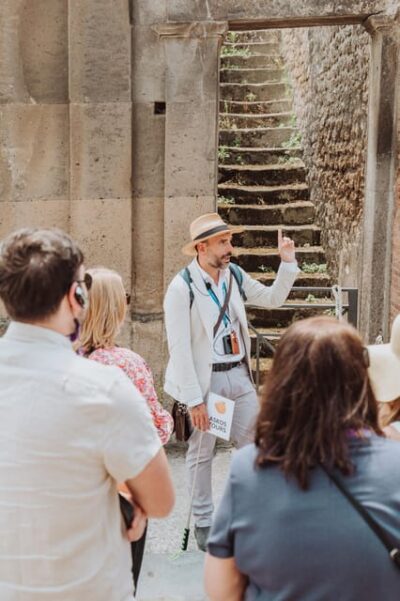 ★ 4.8Pompeii: Entry Ticket and Guided Tour with an ArchaeologistFrom $3519,459 reviews
 ★ 4.2Pompeii: Entry Ticket with Optional Audio GuideFrom $2612,360 reviews
 ★ 4.8Pompeii: Small Group Tour with an ArchaeologistFrom $4012,264 reviews
 ★ 4.3Pompeii Ruins & Mount Vesuvius Day TourFrom $12011,459 reviews
 ★ 4.6Sorrento, Positano and Amalfi Full-Day TourFrom $10710,988 reviews
 ★ 5.0Sorrento, Positano & Amalfi Coast – Small Group TourFrom $768,643 reviews
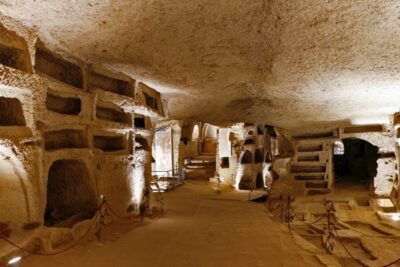 ★ 4.6Catacombs of San Gennaro Entry Ticket & Guided TourFrom $157,941 reviews
★ 5.0Pompeii Small Group Tour with an ArchaeologistFrom $356,593 reviews
★ 4.6Catacombs of San Gennaro Entry Ticket & Guided TourFrom $157,941 reviews
★ 5.0Pompeii Small Group Tour with an ArchaeologistFrom $356,593 reviews