
Tour review · TOUR REVIEWS
2.5-Hour Guided Tour of Pompeii with an Archaeologist
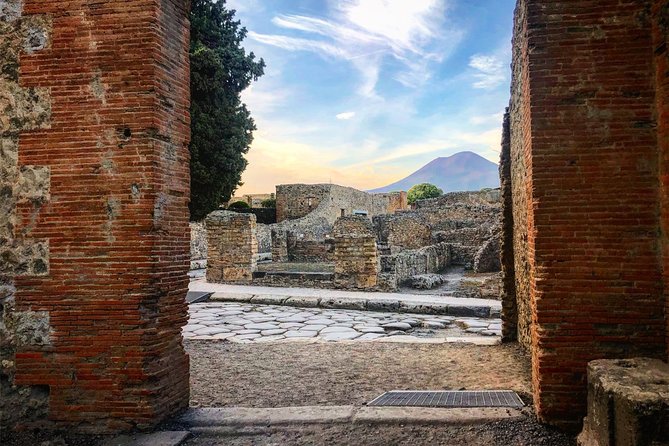
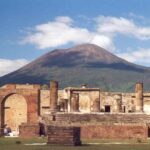
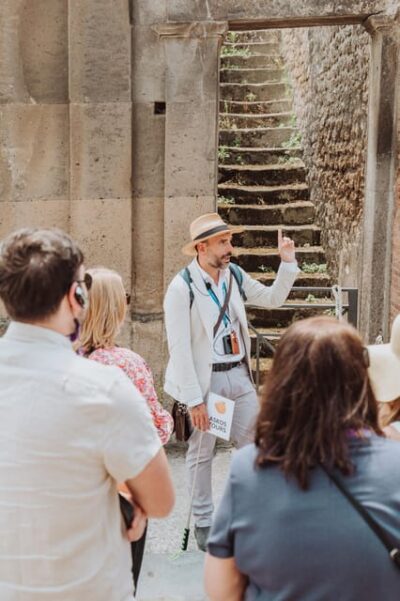
Pompeii gets real fast, once you have a plan. This 2.5-hour guided walk focuses on the best surviving parts of the city, with skip-the-line entry and an archaeologist who explains what you are looking at before you start wandering. You also get to track how life in Pompeii worked right up to the AD 79 eruption of Mount Vesuvius.
I especially like the format: a small group and a clear route through the western side of town, so the day does not melt into aimless milling. I also like that the visit connects major public spaces with everyday details, so the ruins feel less like random stones and more like a functioning city.
One thing to consider is timing can vary. The tour is advertised at about 2 hours 30 minutes, but some departures can run closer to 2 hours depending on start time and how the group moves, and that can affect how much free time you have afterward.
Key highlights to look for
- Skip-the-line access so you spend less time in the queue and more time inside the park.
- Western Pompeii route focused on top structures, not a scattered hit-and-miss loop.
- Archaeologist-led explanations that connect buildings to real daily life before AD 79.
- Forum-area finish that sets you up to keep exploring on your own.
- Shade and pacing choices that matter in the heat, since the ruins are largely outdoors.
Entering Pompeii’s western heart with a clear route
Pompeii is huge, and it can trick you. If you show up with only a guidebook, you will see a lot, but you may not understand why certain spots matter. This tour solves that problem by steering you through the western part of the archaeological park and focusing on major anchors of city life.
You start at Ristorante Bar Sgambati on Via Villa dei Misteri. From there, you are guided through the Archaeological Park of Pompeii, with the emphasis on what people used these spaces for. It is the kind of structure that helps you notice details you might otherwise miss, like how public buildings were arranged for crowds and how domestic areas reveal routines and habits.
Also, the tour is built for an English-speaking group. If you want context, this is the difference between seeing Pompeii and learning Pompeii.
You can also read our reviews of more guided tours in Pompeii

What skip-the-line really buys you (and what it does not)
The price here is $71.20 per person, and the value comes from what is included: entrance tickets plus skip-the-line access. That matters because Pompeii can be a time sink at busy hours, and time is your real currency in a place built on outdoor walking.
Skip-the-line does not mean zero waiting at all costs. It usually means you avoid the longest part of the queue and get into the park more smoothly. Once you are inside, though, your guided time is where the money shows up, because you get a route and interpretation instead of pure wandering.
If you are traveling in peak season or you dislike being stuck in a line, this is the sort of booking that keeps your day from getting derailed. If you love self-paced travel and you have the stamina to read signs carefully, you could do Pompeii without a guide. But for many first-timers, a guided start is the quickest route to understanding the city.
The Basilica and Forum: where civic life happened
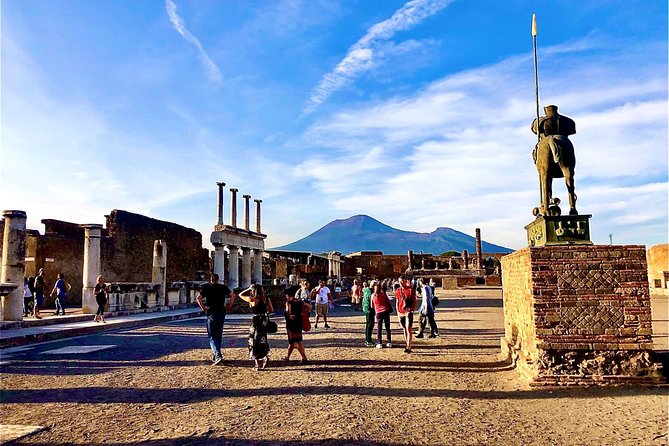
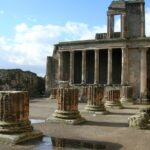
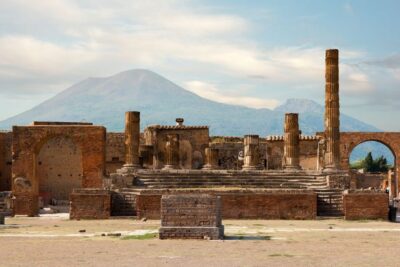
Public Pompeii is your anchor. The tour highlights major civic structures such as the Basilica and the Forum, which is where residents gathered for business, decisions, and daily public activity.
In plain terms, the Basilica matters because it shows how Romans organized public space for work and official matters. Even without a long lecture, you can see why crowds flowed here. The Forum matters because it was the social and administrative center, the place where people repeatedly intersected.
What you gain from a guide in these spots is not just facts. You learn how to read the layout: where you would stand, where conversations likely happened, and why the buildings were arranged for visibility and movement. That is the difference between seeing impressive ruins and understanding how a city functioned.
Thermal baths and the science of everyday Roman comfort
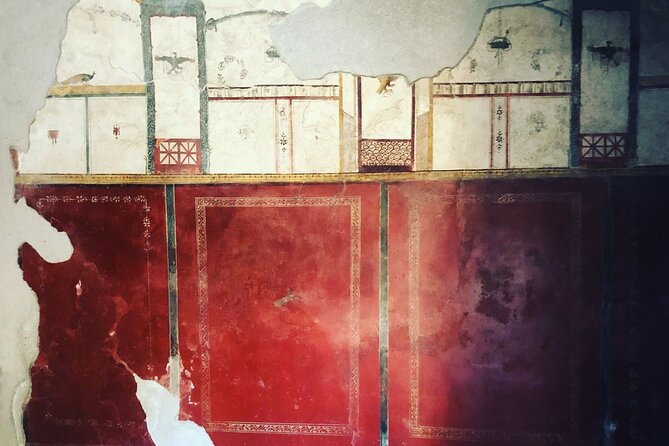
Pompeii’s public life was not all politics and commerce. The tour includes the thermal baths, which are one of the best places to understand Roman daily routine and priorities.
Bathing was social, and the spaces were designed for repeated use. Even if you only catch pieces while walking past, you start to see the system: movement through rooms, changing temperatures, and the idea that leisure could be part of the schedule.
If you like places where history feels practical, this is a great stop. Baths turn Pompeii from a tragic story into a lived-in rhythm. And because baths were used by many people, they help you picture what ordinary days may have looked like before AD 79.
Bakery and homes: the clues behind daily routines
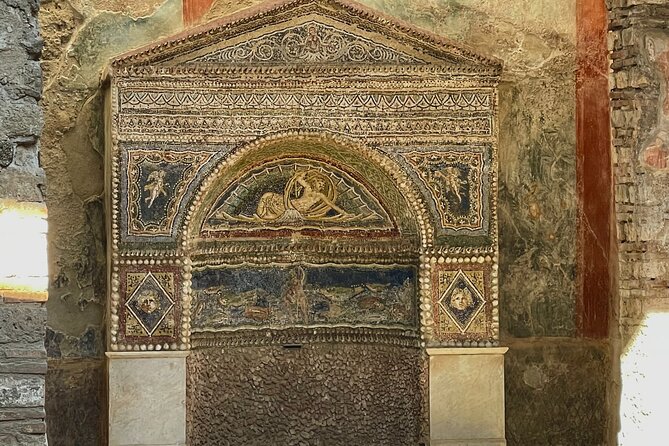
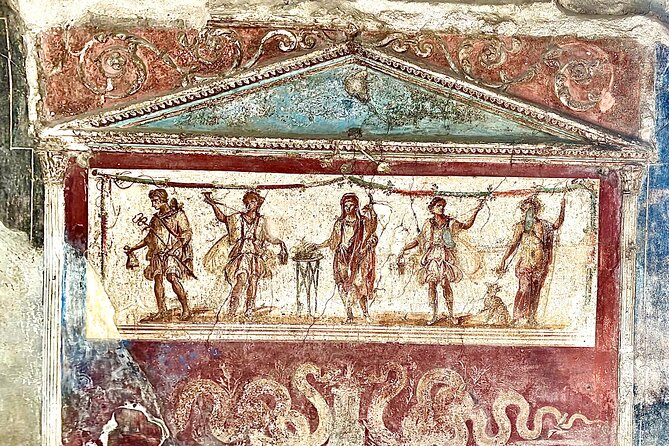
This tour also passes points like a bakery and residential houses. Those are big deals because they shift the perspective from monuments to ordinary life.
The bakery stop is about how food supply worked. Pompeii was not just a stage for grand buildings, it depended on production and delivery. When you understand that, you notice how everyday functions connect to the city layout around commerce and movement.
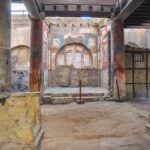
Residential houses do something similar. You begin to see Pompeii as a place where people cooked, stored supplies, hosted, worked, and managed family life. In the reviews tied to this experience, guides like Francesco and Paulo are singled out for bringing these moments to life with stories about how people lived and how social status affected daily choices such as dress. That storytelling angle can make the houses and small details feel more concrete.

Group size, timing, and heat: the practical Pompeii reality check
Pompeii walking is real walking. The tour duration is listed at about 2 hours 30 minutes, with the guided visit positioned as 2 hours 30 minutes and an included admission ticket. That said, you should plan your expectations with a little flexibility.
Group size is described in two ways in the information you get: a maximum of 10 people in the small group description, and a maximum of 15 travelers in the tour limit. Either way, the goal is small. In practice, smaller groups usually mean fewer bottlenecks at viewpoints and less time waiting for the whole line to move.
Heat matters too. The ruins are outdoors, and even with shade, there can be long stretches in direct sun. Reviews include strong praise for guides who actively managed shade and pacing, including Francesco and guides who reportedly found comfortable spots to explain what you are seeing. I would still plan for sunscreen, water, and a hat, since the day does not slow down just because you booked a guided tour.
Finally, the tour finish point matters for your day plan. This ends at the Forum of Pompeii, Via Villa dei Misteri, 2. That is helpful because it puts you near a central area where it is easier to continue exploring independently, rather than dropping you in the middle of nowhere.
Guide style matters, and names give you a clue
The biggest variable in Pompeii tours is the human factor: how the guide speaks, how well they manage questions, and how they balance storytelling with factual structure.
Across the feedback tied to this experience, certain names come up again and again. Guides such as Francesco and Paulo are repeatedly described as entertaining and able to answer questions, and Ana, Monica, and Vicenzo are also mentioned with praise for clarity and engagement. In one case, Emmanuel from the provider also helped with a schedule change when a traveler struggled to get a cab from Positano to Pompeii, which shows this team can be flexible when logistics get messy.
At the same time, not every departure hits the same mark for every person. There are a few complaints about explanations feeling brief, one guide responding dismissively to questions, and some comments about the tour being too light on historical depth. There are also complaints about the guide spending more time on non-museum visuals and about the tour ending earlier than expected.
So here is my practical advice: if you care a lot about detailed historical argument, make sure you pick a departure time that suits you. Then be ready with questions you can ask clearly. A good guide will use your curiosity to deepen the walk, not shut it down.
What a strong Pompeii tour should feel like on the ground
When the experience is going well, you notice three things quickly.
First, you start recognizing building types. Basilica, Forum, baths, and homes stop being random stops. You understand what each one is for and what clues to look for.
Second, the guide’s pacing helps your brain. With Pompeii, you cannot sprint through every wall and still remember it. A well-run small group tour spaces the walking so explanations land.
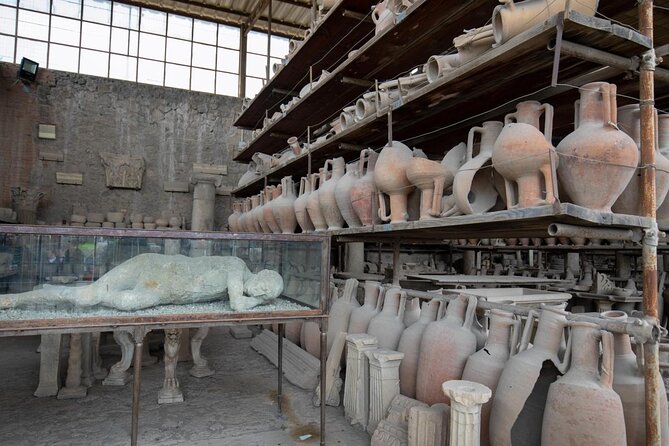
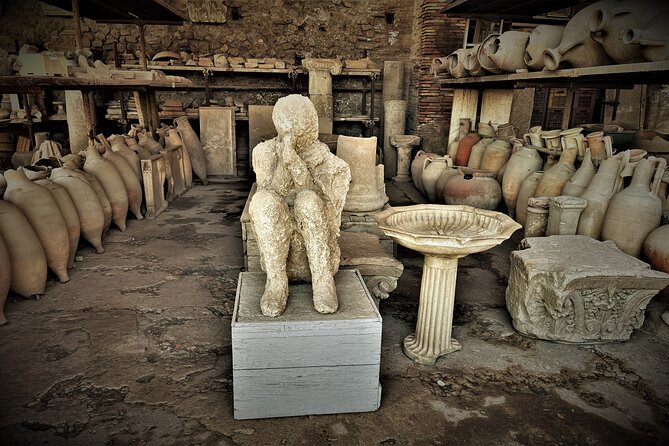
Third, you feel the timeline. The AD 79 eruption gives the story its dramatic edge, but a good archaeologist focuses you on what existed right before the catastrophe. That makes Pompeii feel less like a haunting museum and more like a city paused in motion.
Continuing after the tour: use the Forum finish wisely
Because the tour ends at the Forum of Pompeii, you are not boxed in right at the exit gate. You are left near a central zone, which is a smart move. If you still have energy, you can keep exploring with more confidence because you already have a framework from the guided walk.
If you are tired, you can also do a calmer version of Pompeii from the Forum area, using your new knowledge to choose where to go next. Either way, you are better positioned than if you ended at a distant fringe of the park.
Should you book this Pompeii archaeologist tour?
Book it if you want a structured, small-group introduction to Pompeii’s western highlights with an archaeologist and skip-the-line access. It is a strong choice for first-timers, for people who like daily-life context, and for anyone who wants their Pompeii day to feel organized instead of overwhelming.
I would think twice if you need a very deep, lecture-style history session from start to finish, or if your schedule is so tight that even a tour that runs closer to 2 hours could stress you out. In that case, aim for a time buffer and be ready to ask focused questions.
If you do decide to go, bring water and sun protection. Then go with the attitude of a curious walker, not a passive listener. When a guide is good, Pompeii rewards that mindset fast.
FAQ
How long is the guided Pompeii tour?
The tour is listed at about 2 hours 30 minutes.
What is included in the price?
The package includes a 2 hour 30 minute visit with an archaeological guide, entrance tickets, and skip-the-line access.
Is transportation included?
No. Parking and transport are not included.
Where does the tour start?
The meeting point is Ristorante Bar Sgambati, Via Villa dei Misteri, 1, 80045 Pompei NA, Italy.
Where does the tour end?
The tour ends at the Forum of Pompeii, Via Villa dei Misteri, 2, 80045 Pompei NA, Italy.
What language is the tour offered in?
The tour is offered in English.
How big is the group?
It is described as a small group with a maximum of 10 people, and the overall activity limit is listed as a maximum of 15 travelers.
Is the ticket mobile, and do I get confirmation right away?
You get a mobile ticket, and confirmation is received at the time of booking.
What is the cancellation policy?
You can cancel for free up to 24 hours before the start time for a full refund. Canceling less than 24 hours before the start time does not receive a refund.
What happens if the tour is canceled due to weather or not enough travelers?
The experience requires good weather. If canceled due to poor weather, you are offered a different date or a full refund. If canceled because the minimum number of travelers is not met, you are offered a different date or experience, or a full refund.
More Guided Tours in Pompeii



More Tours in Pompeii

More Tour Reviews in Pompeii

Not for you? Here's more nearby things to do in Pompeii we have reviewed




Tour Reviews, compared.
 ★ 4.8Pompeii: Entry Ticket and Guided Tour with an ArchaeologistFrom $3519,459 reviews
 ★ 4.2Pompeii: Entry Ticket with Optional Audio GuideFrom $2612,360 reviews
 ★ 4.8Pompeii: Small Group Tour with an ArchaeologistFrom $4012,264 reviews
 ★ 4.3Pompeii Ruins & Mount Vesuvius Day TourFrom $12011,459 reviews
 ★ 4.6Sorrento, Positano and Amalfi Full-Day TourFrom $10710,988 reviews
 ★ 5.0Sorrento, Positano & Amalfi Coast – Small Group TourFrom $768,643 reviews
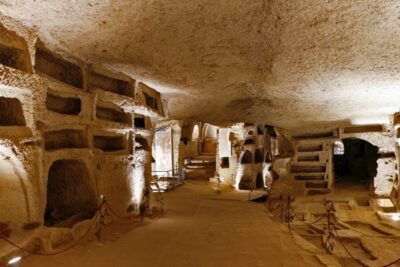 ★ 4.6Catacombs of San Gennaro Entry Ticket & Guided TourFrom $157,941 reviews
★ 5.0Pompeii Small Group Tour with an ArchaeologistFrom $356,593 reviews
★ 4.6Catacombs of San Gennaro Entry Ticket & Guided TourFrom $157,941 reviews
★ 5.0Pompeii Small Group Tour with an ArchaeologistFrom $356,593 reviews