
Tour review · TOUR REVIEWS
Pompeii: Guided Tour with Archaeologist with max. 12 People
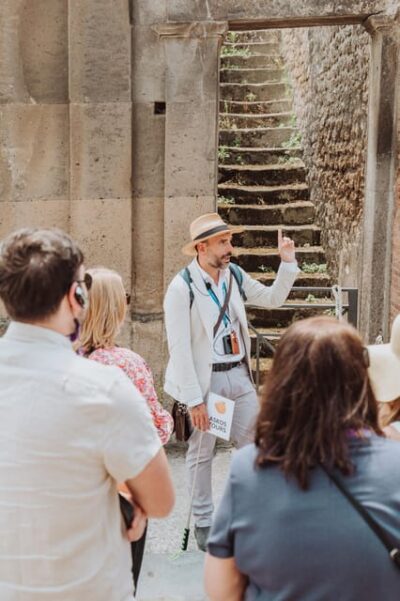
Pompeii hits differently when an archaeologist talks. You get a focused, small-group route through Roman streets and everyday spaces, with AD 79 and the eruption story tied directly to what you are looking at.
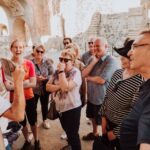
What I love most is having Benedetto Tourist Guide guide the walk, not just recite facts, and the route actually feels like a day in Pompeii, not a highlight reel. I also like that the group stays small, up to 12 people, so questions stay part of the experience, not an afterthought.
One drawback to consider: the tour is only 2 hours, and Pompeii is huge. If you want to wander slowly, you will probably leave with a wish list for your extra time.
Key Things That Make This Tour Worth It
- An archaeologist-led walk with context tied to the exact spaces you stand in
- Small group size, max 12 for easier pacing and better interaction
- Real highlights in a logical order, including House of Menander and the Forum
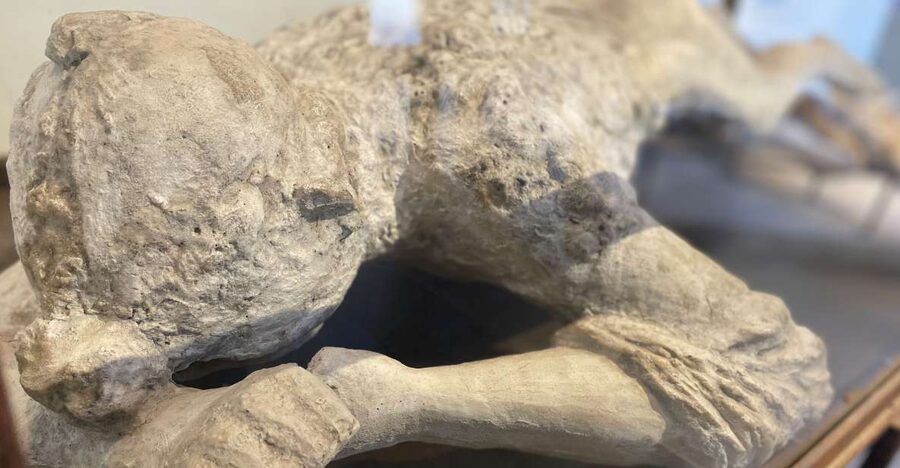
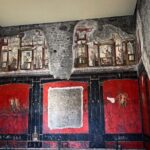
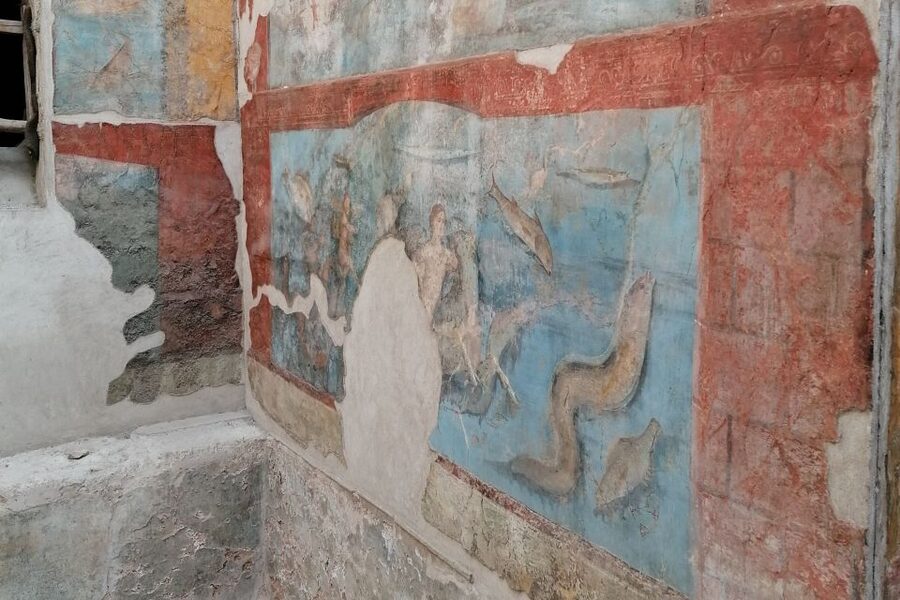
- Frescoes and plaster casts that connect art to a real human story
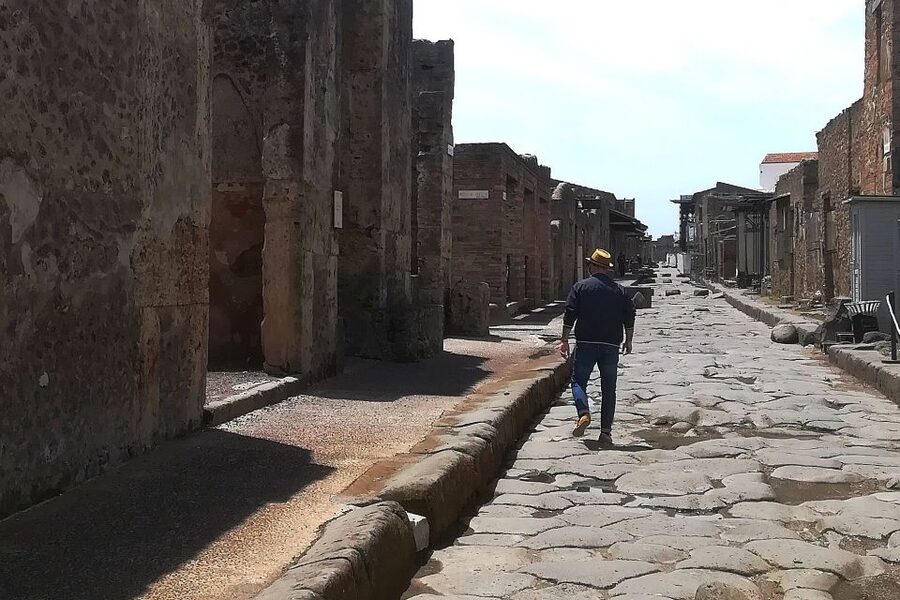
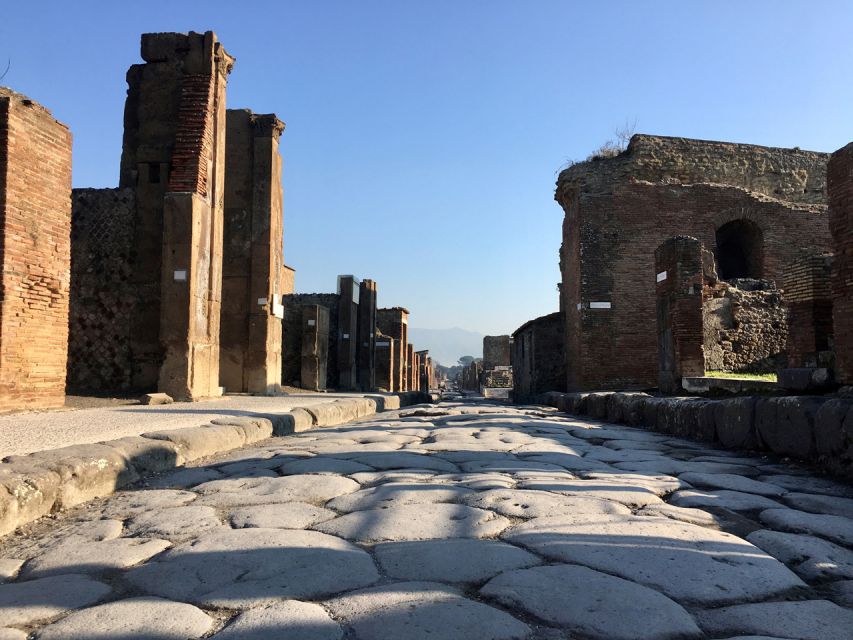
- Original Roman road walking, so you feel the city layout instead of just seeing ruins
- Included express entry and free time, so you can keep exploring after the guided portion
Entering Pompeii With an Archaeologist Guide
Pompeii is one of those places where your brain instantly goes: How did people live here, day to day? This tour answers that question by using the city itself like a textbook. You start with the big event, AD 79, and then you move through the parts of town that show Roman life.
The most praised part is Benedetto himself. People describe him as interactive, funny at the right times, and able to steer the tour based on what the group wants. One of the best signs for a tour like this is when the guide can explain both the tragedy and the everyday routine. Here, you are shown streets, shopfront-like spaces, homes with decorations, and major public sites, so you understand how a Roman city worked before it was buried.
You should also know what kind of experience this is. This is not a slow museum crawl. It is an efficient walk with stops that matter, built for first-time Pompeii visitors and repeaters alike. If you like when history has texture, this one delivers.
You can also read our reviews of more guided tours in Pompei Campania

Fast Entry and a Practical Meeting Point at Suisse Restaurant
Meeting point matters in Pompeii, because you do not want to waste time guessing where to go. Your guide meets you at Suisse Restaurant, and you will spot them with a sign with your name written on it.
There is also an express entry ticket included, plus the tour provides free time to explore the archaeological site after the guided portion. That combination is a big deal for value. It reduces friction at the start, and it gives you a chance to follow your curiosity instead of being whisked along until the clock runs out.
You should plan for headsets if the group ends up larger than 8 people. That is included as well, and it helps you keep track of the story even when walking near other visitors.
Two practical notes you cannot ignore:
- Pompeii tickets are named, so you must provide first and last names for all participants after booking.
- You need your passport or ID card in the original, not a photo.
Porta Marina Inferiore and the Theater Quarter: Get Oriented
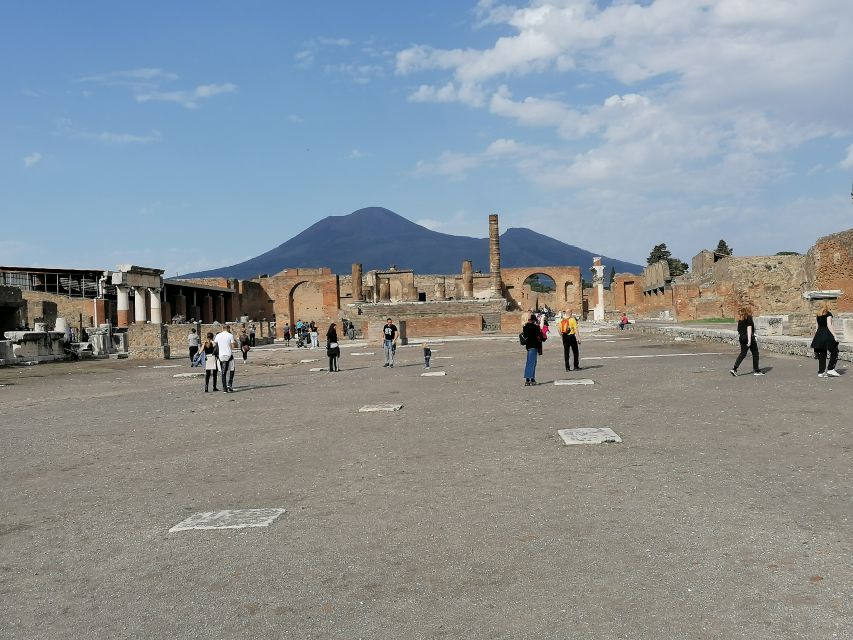
The tour begins at Porta Marina Inferiore, then it moves through the area of the theaters. This opening stretch is smart because it helps you get your bearings fast. Pompeii is not laid out like a neat open-air exhibit with clear signage everywhere. Starting at a city gate area and then working through a major public quarter gives you a sense of how the city moved and where people gathered.
From there, you are not just admiring stone. You are walking in a way that helps you picture daily movement: where locals would pass, where crowds would form, and how public spaces sit inside the urban grid. You will also start seeing the “Roman city” vibe take shape. It is the difference between thinking Pompeii is just walls and thinking of it as lived-in streets.
This is also where crowd management starts to matter. Multiple people highlighted that Benedetto consciously steers the group to avoid long waits and the most jammed areas. Even a great site can feel stressful if your time is eaten by bottlenecks. Here, the goal is to keep your visit moving.
House of Menander to Terme Stabiane: Art, Mosaics, and Daily Routine
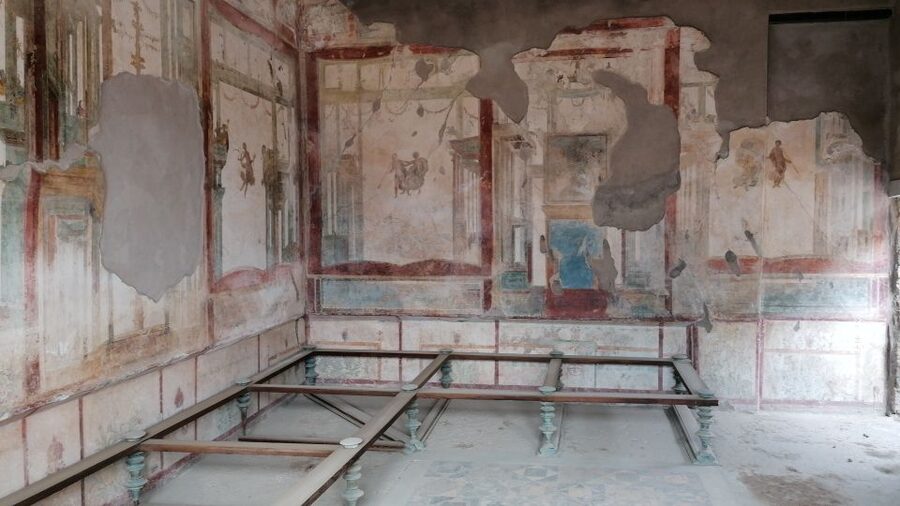
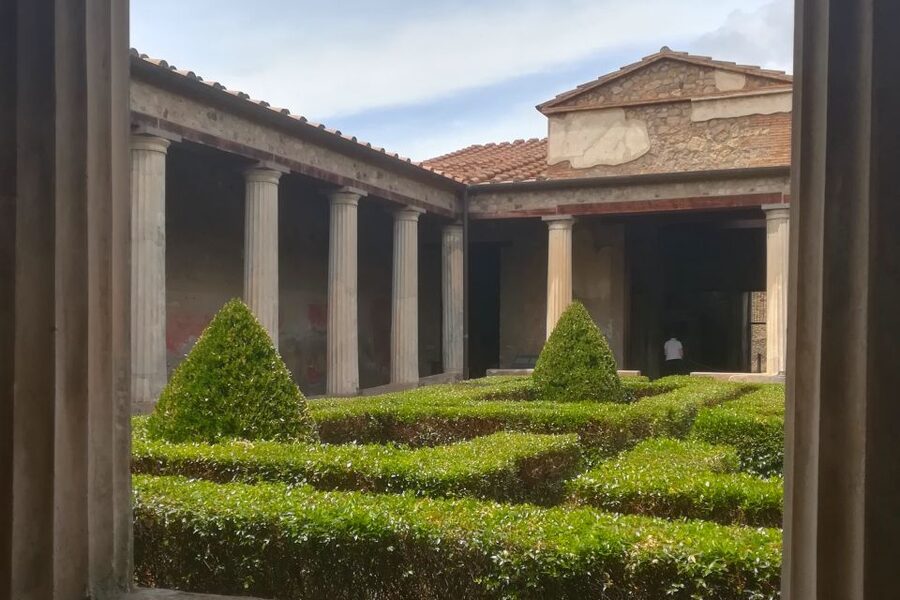
Next up is the House of Menander. This is one of those stops where you stop treating ruins as background. Homes in Pompeii show taste, status, and everyday preferences, and you will be looking for the details that make the decorations feel alive. The tour specifically highlights wonderful frescoes and mosaics, plus marbles, so you get art plus the setting it belonged to.
Then the route shifts into Terme Stabiane, Pompeii’s public baths. If you only see “big monuments,” Pompeii stays abstract. Baths pull you back into routine: where people would socialize, wash, and spend time. It is a strong counterbalance to the homes you saw earlier, because it shows that Pompeii was not just about private luxury. It was also about community life.
One practical detail I appreciate here: the tour keeps things varied. You go from home decoration to communal facilities to street-level life. That rhythm helps the visit feel like a story, not a list.
Also, expect walking. Pompeii is uneven and exposed in places, and the tour includes essentials like recommending comfortable shoes, plus bringing a hat and water.
Forum and Temple of Jupiter: Politics, Worship, and Big Public Spaces
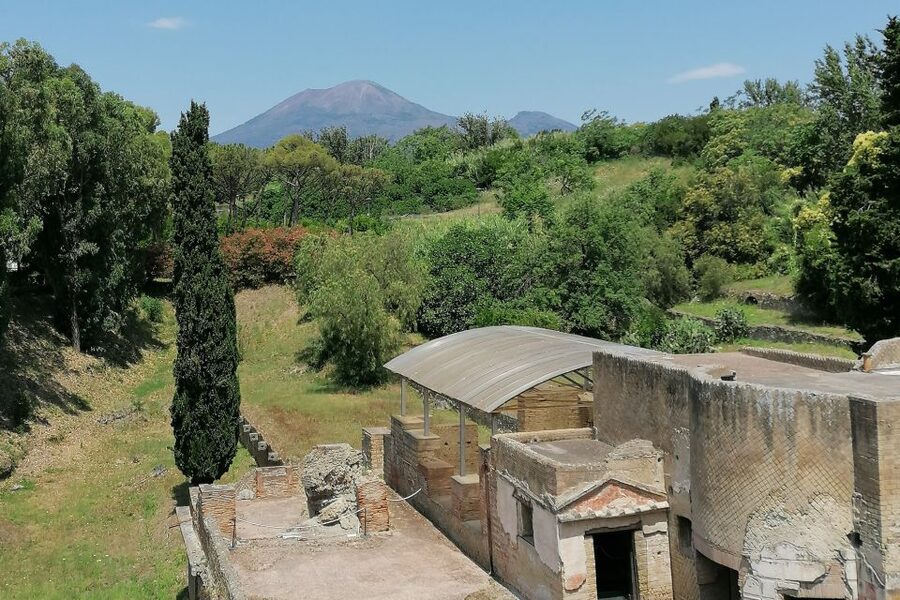
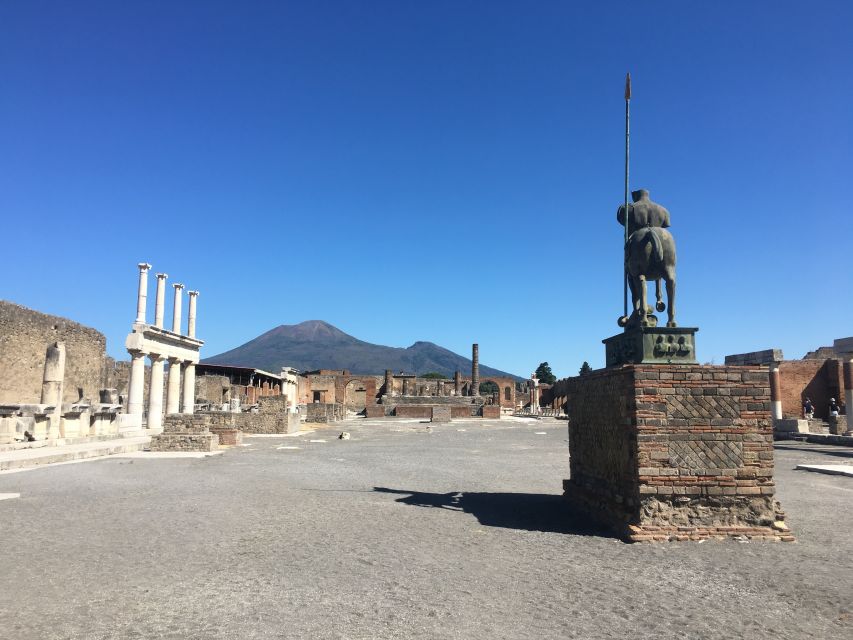
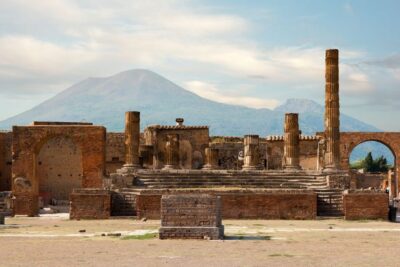
The tour then aims you toward the public heart of Pompeii: the Foro Civile di Pompei and the Forum area, including the Temple of Jupiter.
This is where the tour’s focus on “major and famous buildings” becomes clear. The Forum and associated civic structures help you understand what the Romans did in public: governance, ceremonies, and civic identity. The Temple of Jupiter stop gives you a direct connection to Roman religious life, not just architecture as decoration.
If you are wondering why you should care about the Forum when you could just focus on the flashier rooms, here is the answer: Pompeii reads better once you know the city’s center of gravity. You start noticing how other areas relate to it.
This part of the walk also sets you up for the most emotionally intense stop on the itinerary.



Macellum, Basilica, and the Lupanare: The City as a Neighborhood
After the Forum and major public spaces, the tour moves into the more human scale of daily city life: the Macellum of Pompeii, the Basilica, and the Lupanare.
The Macellum is the food market area, so you get a slice of economics and daily habits. The Basilica is a public building where civic activity happens, and it helps connect the Forum to what people did throughout their day. Put simply, this stop sequence gives you the “city machine,” not just the “city centerpiece.”
Then you reach the Lupanare, famously known as the brothel. It is not a pleasant stop, but it is part of why Pompeii feels so real. Roman life included commerce, service work, and places adults used. Seeing it in context helps you avoid treating the city like an all-purpose ruins theme park.
This is also a place where a small group can be helpful. You can ask questions, and you can walk through the space with your guide’s pacing instead of getting lost in a rush.
How the Victim Plaster Casts Change the Visit
One of the tour highlights is the plaster casts of the victims. The route ends at the Forum public buildings area and includes these casts as a must-see moment.
These casts can feel like an abrupt emotional turn, because they remove the distance you may feel when ruins are just architecture. You are seeing people portrayed in the aftermath of AD 79, and that makes the rest of the visit hit harder. Earlier stops, like homes and baths, stop being “interesting” and start being reminders that these were real lives.
If you want a tour that balances art and shock, this is a good fit. You get frescoes and decoration with the human story anchored at the end.
A practical tip: if you are sensitive to heavier subjects, plan how you want to process it. You are still given free time after the tour, so you can step back, walk slowly, and decide how you want the rest of the day to feel.
Walking Comfort, Time, and What to Do After the 2 Hours
At 2 hours, you are not seeing everything Pompeii. What you are doing is learning how to see Pompeii. That is the real value of a guided pass with an archaeologist.
When the guided portion ends, you have included free time to explore on your own. This is ideal because Pompeii rewards independent wandering once you have the context. After the tour, your brain will know what you are looking for: domestic decoration, street layouts, public civic sites, and the emotional impact of the casts.
What to bring is straightforward and matters:
- Passport or ID card (original)
- Comfortable shoes for uneven surfaces
- Hat
- Water
Heat is usually a factor in Pompeii. If you start early in the day, you often feel the benefit, and a good guide can also help you pause where shade exists. People who went on this tour specifically praised Benedetto for staying considerate during hot conditions.
One more thing: this tour is not suitable for people with mobility impairments or wheelchair users. Pompeii’s terrain and access constraints are the issue.
Price and Value: Why $65 Works Better Than DIY
At $65 per person for a 2-hour guided experience, you are paying for three things that are hard to replicate on your own:
- Professional archaeologist interpretation at the exact spots where it matters.
- Express entry that helps reduce startup stress.
- A route with intent, designed to hit big Roman life moments, not just the most famous viewpoints.
DIY Pompeii can be done, but it often becomes a scavenger hunt. Many people leave feeling like they saw a lot of stone and still wonder how it all fit together. The structure here prevents that. You walk a coherent path and get explanations while you are standing there.
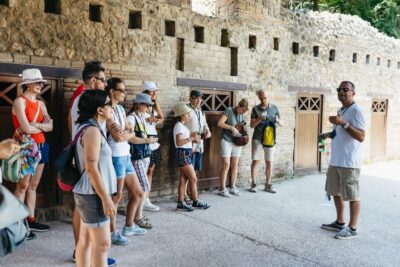
Small-group format also adds value. In groups of up to 12, it is easier to keep pace with one another and ask questions. Headsets are provided if needed, so you can still hear the story as the group moves.
If you can only do one “serious” Pompeii activity, this is one of the best bets for getting meaning out of your time.
Should You Book This Pompeii Archaeologist Tour?
Book it if you want Pompeii to feel understandable quickly. This tour is especially good for first-timers, people who care about Roman daily life, and anyone who likes when history includes both the beauty and the weight.
Skip it if you dislike walking, need wheelchair-friendly access, or you want a long, unguided meander. Pompeii deserves that too, but this is built for a tight, high-quality guided overview.
If you do book, bring your ID, wear shoes you trust, and plan to use the included free time after the tour. You will get the best of both worlds: expert context first, then your own pace once you know where to look.
FAQ
Where does the tour meet?
The guide meets you at Suisse Restaurant. You will see a sign with your name written on it.
How long is the Pompeii guided tour?
The tour duration is 2 hours.
What is the group size limit?
The tour is a small group with a maximum of 12 people.
How much does it cost?
The price is $65 per person.
Is express entry included?
Yes. You get an express entry ticket to Pompeii, and the tour includes skipping the ticket line.
Are headsets provided?
Headsets are included for groups larger than 8 people.
What languages are available?
The live tour guide is available in Italian, English, and French.
What should I bring?
Bring your passport or ID card (original), comfortable shoes, a hat, and water.
Is the Pompeii ticket personalized?
Yes. The Pompeii ticket is named, and after booking you need to provide the first and last name of all participants.
Is transportation or food included?
No. Food and drinks are not included, and transportation is not included.
More Guided Tours in Pompei Campania
More Tours in Pompei Campania

More Tour Reviews in Pompei Campania
Not for you? Here's more nearby things to do in Pompei Campania we have reviewed







Tour Reviews, compared.
 ★ 4.8Pompeii: Entry Ticket and Guided Tour with an ArchaeologistFrom $3519,459 reviews
 ★ 4.2Pompeii: Entry Ticket with Optional Audio GuideFrom $2612,360 reviews
 ★ 4.8Pompeii: Small Group Tour with an ArchaeologistFrom $4012,264 reviews
 ★ 4.3Pompeii Ruins & Mount Vesuvius Day TourFrom $12011,459 reviews
 ★ 4.6Sorrento, Positano and Amalfi Full-Day TourFrom $10710,988 reviews
 ★ 5.0Sorrento, Positano & Amalfi Coast – Small Group TourFrom $768,643 reviews
 ★ 4.6Catacombs of San Gennaro Entry Ticket & Guided TourFrom $157,941 reviews
★ 5.0Pompeii Small Group Tour with an ArchaeologistFrom $356,593 reviews
★ 4.6Catacombs of San Gennaro Entry Ticket & Guided TourFrom $157,941 reviews
★ 5.0Pompeii Small Group Tour with an ArchaeologistFrom $356,593 reviews