
Tour review · TOUR REVIEWS
Pompeii Ruins: Virtual Tour 360° with Authorized Storyteller
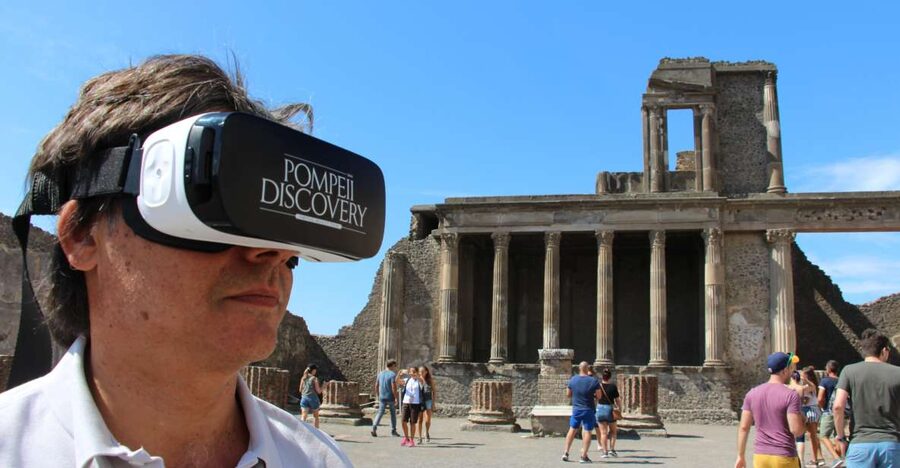
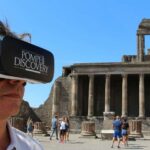
Pompeii feels bigger when time rewinds. This 360° virtual reality experience pairs a live, authorized Storyteller with VR views of nine famous spots, so you are not just reading stones, you are watching daily life in 79 A.D. I like that the VR doesn’t replace the guide, it complements the explanations. I also love that you get a private group feel, with a headset at the ready for every participant. One thing to consider: the ruins still require walking, and VR plus crowds can be a bit much if you want a slow, quiet visit.
The biggest value here is how the tour blends real-site guidance with 3D scenes of what Pompeii looked like before Vesuvius. You will move through major public areas like the Forum and Basilica, then shift into more human-scale spaces like homes, a bakery, and even the Lupanar, including theatrical and shop activity moments staged through VR. In feedback, a guide named Maria Novella is highlighted for making the narrative land, and that matters because the best use of a headset is when the story is clear.
Key highlights at a glance
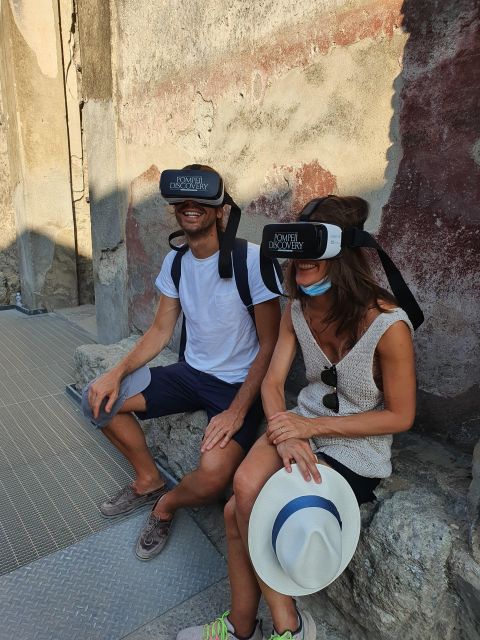
- Authorized local Storyteller plus live narration in English or Italian
- 360° VR brings nine major Pompeii locations to life in 3D
- Skip-the-ticket-line included (entrance ticket still extra)
- Forum, Basilica, Baths, homes, theatre, Quadriporticus, Lupanar all on one flow
- Theatrical and shop activity moments built into the experience
- Educational credibility noted through recognition connected to the European Parliament and a University of Amsterdam case study
Pompeii with VR: why it makes sense here
Pompeii is one of those places where your first reaction is, wow, this is incredible, followed by a second reaction that is harder: what am I actually looking at? The walls are there, the layout is there, but time has been frozen in ash.
That is where the 360° layer helps. Instead of only being told that the Forum was the social and political hub, you get a guided walkthrough where the headset adds a 3D sense of scale and purpose. The tour is built to help your brain connect what you see now with what used to happen there. It is not just eye candy either. The stops are paired with story beats, including city life, activities in shops, gladiator training scenes, and nightlife inside and around the Lupanar.
Also, the experience is not positioned as a solo VR show. It is a guided ruins tour first, with VR as an “extra lens.” That balance matters because Pompeii is full of subtle details, and a great guide can steer your attention to what you might otherwise miss.
You can also read our reviews of more tours and experiences in Pompei Campania.



Price and logistics: what is included, what is not
The price is $226.57 per group (up to 2 people). That is a group rate, not a per-person rate you multiply across. It can be good value if you are traveling as a couple or small pair and you want the guided-plus-headset format without turning it into a big-group scramble.
One practical note: the entrance ticket of the ruins is not included. So when you compare total cost, you will add the site ticket on top.
The tour is valid for 1 day, and starting times depend on availability. You also get skip-the-ticket-line, which helps if you are arriving when the crowds are at their most stubborn. Finally, it is a private group experience, and that tends to make the storytelling feel more personal and manageable, especially when the VR headset is involved.
If you hate uncertainty, bring that “check your time window” mindset, because your start time can matter for entry flow and the quality of your visit.
Your route through Pompeii: nine VR moments you should look for
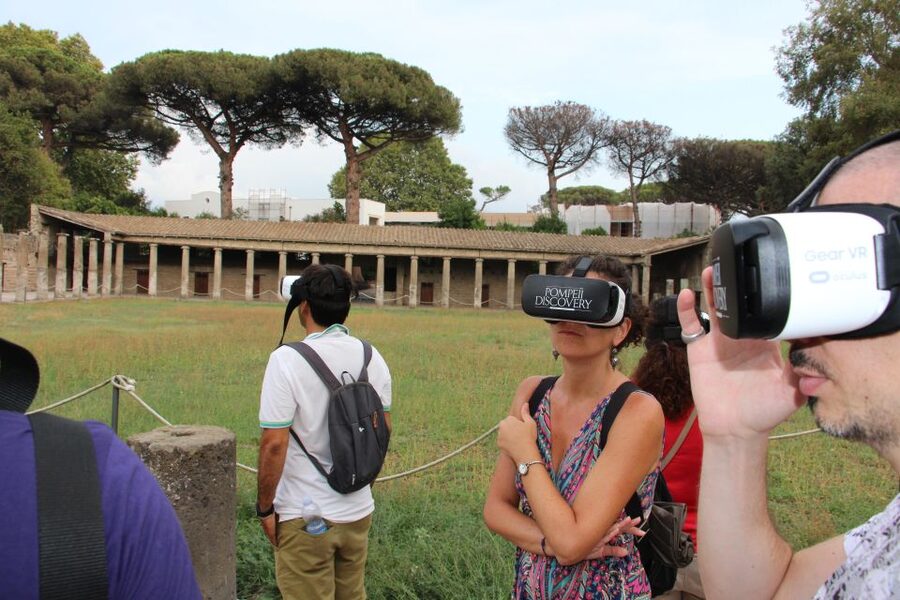
This tour is designed around a guided walkthrough enriched by VR for nine famous places. Here is what you will cover, and why each stop matters for your understanding of Pompeii.
The Forum and Basilica: the city’s main stage
Start with the Forum. This is where Pompeii’s civic life happened, the place you associate with markets, public announcements, and people meeting up. In a normal walkthrough, you might see the space and feel impressed, but it can still feel abstract.
With VR added, the tour experience pushes beyond the “cool ruins” stage and into “I can picture how it functioned.” You get a clearer sense of what the area meant in daily life, and your guide ties the visuals to real explanations.
Then comes the imposing Basilica. This building type is closely tied to public administration and civic gatherings in Roman cities. The Basilica at Pompeii is a strong visual anchor, and the guide’s narration helps you understand why it dominated the streetside atmosphere. When the tour is done well, you do not just notice architecture, you understand the social purpose behind it.
Consideration: if you are prone to motion sickness, VR can feel intense for some people. The tour keeps you in a guided structure, but the headset experience is still a technology layer. If that is you, plan on taking brief pauses during the tour stops.
Baths plus a house: everyday life, not just temples
Next, you visit the Baths, the kind of place that helps Pompeii feel real because it is human-scale. Bathing wasn’t only about cleanliness. It was social time, routine, and a daily rhythm for many residents. The VR component is meant to recreate that sense of developed city life before 79 A.D.
After the Baths, you will see either the House of the Faun or the House of Menander. Both are “home” stops, which is a big shift from public monuments. This part matters because Pompeii is not only about what authorities built. It is also about how families lived, how rooms were arranged, and how different social classes experienced space.
The guide will use the VR storytelling to help you imagine movement through rooms and the role these houses played in neighborhood life. If you like history that feels like it has people in it, these home sections are where the tour tends to click.
Practical tip: expect uneven ground. Comfortable shoes are not optional here. You will walk between areas, and Pompeii does not do flat, smooth surfaces.

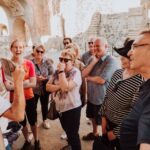
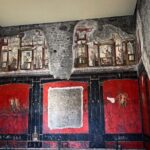
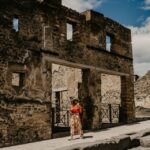

The Bakery and Large Theatre: work and public entertainment
The Bakery is a great choice for breaking the “monuments only” trap. Pompeii’s economy was tied to food production, and a bakery stop lets you connect daily needs to the physical space you are seeing. It is also the kind of stop where VR can make the activity feel less frozen.
Then you move to the Large Theatre. Theatre was entertainment, debate, and a social gathering spot all at once. Even if you have visited Roman ruins before, the theatre layout gives you another anchor point for how cities functioned as entertainment hubs.
The value of having both the bakery and the theatre in one tour is the range. One stop supports “how people got fed.” The other supports “how people passed time and gathered in public.”
Quadriporticus: gladiators training, with a story layer
The Quadriporticus is a name you might remember later because it connects to gladiatorial culture. This is where the tour includes a very specific VR highlight: gladiators training scenes.
Even with no VR, the architecture and layout help you picture the space. With VR, the tour tries to push your imagination into what training and preparation might have looked like in motion. The guide then ties those scenes into the broader city story.
If you are a fan of Roman spectacle, this is a standout section. If you are not, the good news is that you still learn how spectacle fit into the social calendar and why spaces like this mattered.
The Lupanar: nightlife, and why it is handled differently
The Lupanar can be the most memorable stop, and not because everyone wants the same thing from a tour. It is a sensitive subject, and you should treat it that way.
The tour includes VR for the experience of nightlife around and inside the Lupanar. That means you will not only look at the structure and layout, you are guided through a narrative framing meant to explain what this place meant in the city.
In practice, this stop is valuable because Pompeii is complete only when you include the full range of Roman life, not just the polished civic buildings. The guide’s narration is what keeps it from feeling like shock tourism, and the VR layer is there to help you understand daily reality rather than just stare at walls.
My advice: if you prefer a strictly “monuments and architecture” visit, you might find this section emotionally louder than the others. If you accept that Pompeii was a whole society, it lands as one of the most educational moments of the entire route.
The role of the Storyteller: why the guide quality matters
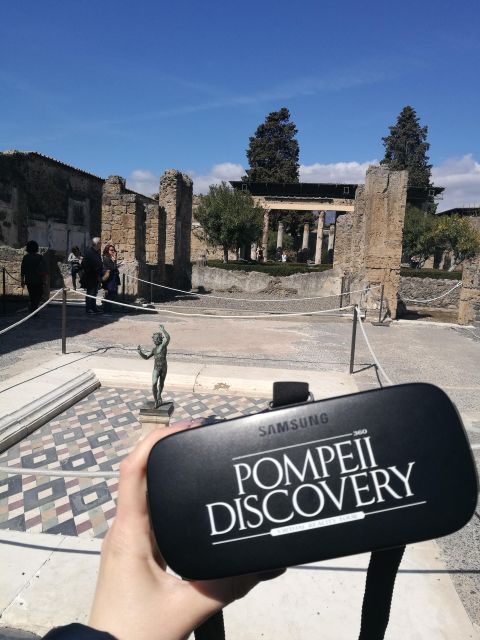
This experience is built around a local authorized guide, called a Storyteller, plus live narration in English or Italian. That detail is not small. Pompeii can be overwhelming even with good signage, and the VR works best when it is explained clearly.
One thing I take from the strong feedback is that the best moments are where the guide’s storytelling and the VR “snap” together. A guide named Maria Novella is specifically mentioned as professional, with explanations that amplified the site beauty through the virtual layer. Another note highlights that the augmented reality device adds real value rather than feeling like a distraction.
I like that the tour is not only “look at this, then next.” The VR scenes are tethered to the narrative, and the headset becomes a tool for your understanding instead of a replacement for your guide.
The educational credibility angle you can feel in the experience
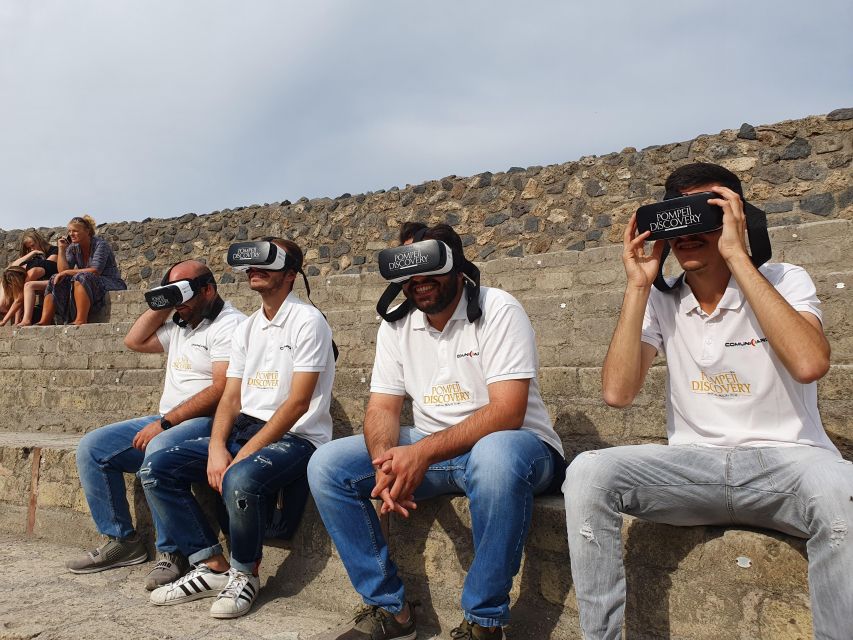
You will see references to recognition for its informative value and connections to academic study. Whether you care about that or not, it points to something you can notice during the visit: the story has structure.
The tour is designed to show nine specific places, then connect them to themes like public civic life, daily routine, food production, entertainment, spectacle, and nightlife. That theme mapping is the difference between a random tech add-on and a learning experience that helps you remember Pompeii in a coherent way.
If you like tours where you walk out with a better mental map, this format is built for you.
What it is like on the ground: pacing, walking, and your comfort
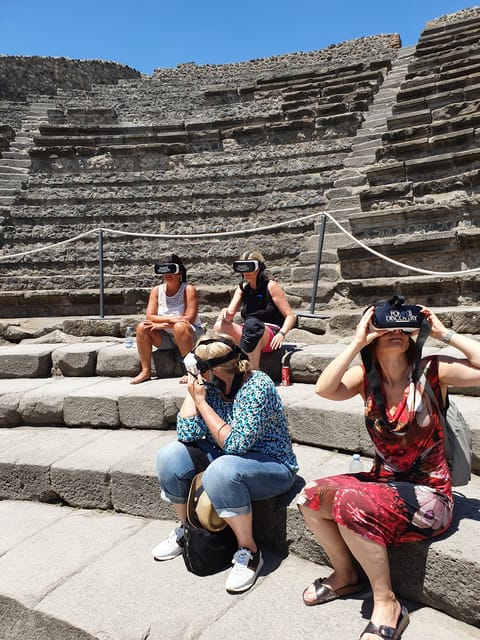
Even with VR, Pompeii is still Pompeii. You will be moving between areas, standing to look, and listening while you wear headsets. So plan it like a walking day, not a quick drive-by.
What helps most is the tour structure:
- It is private group style, so you are not lost in a huge crowd.
- Headset segments are likely tied to the nine landmark stops, so you are not waiting around aimlessly.
- The guided flow keeps you oriented, which matters when the ruins can look similar from a distance.
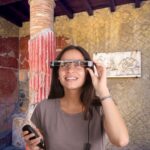
Bring comfortable shoes. If you plan to wear glasses, consider how you normally handle headgear in museums and crowded indoor spaces. The tour does not list technical specs beyond providing VR headsets, so I can only say to be ready for the usual “VR gear meets human comfort” reality.
Also, the tour is not suitable for people with epilepsy, and it is not suitable for children under 8. That is worth taking seriously. VR can be intense for some bodies, and you do not want to gamble with medical limitations.
Who this tour suits best (and who should look elsewhere)
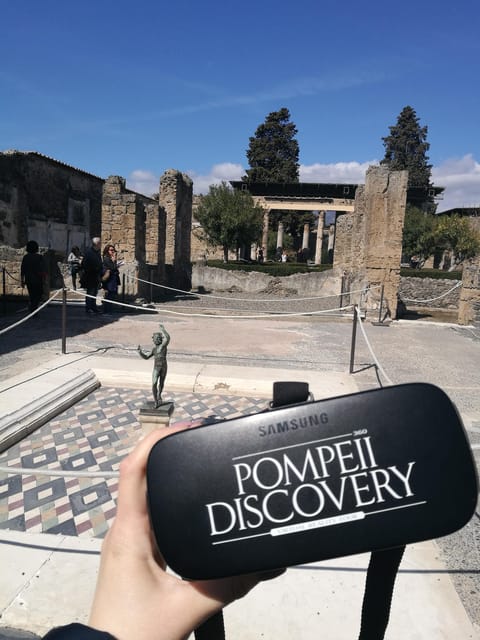
This is a great choice if:
- You want a live guide, not a headset-only audio script
- You struggle to visualize Roman daily life from ruins alone
- You enjoy seeing both civic spaces and human-scale places like homes, a bakery, and the Lupanar
- You are traveling as a couple or small pair and like private-group experiences
You might skip it if:
- You want a totally self-paced ruins wander with no structured stops
- You are sensitive to VR stimulation
- You are traveling with children under 8, since this tour is not suitable for them
- You are trying to do Pompeii while avoiding any walking, because the ruins require it
Practical tips before you go
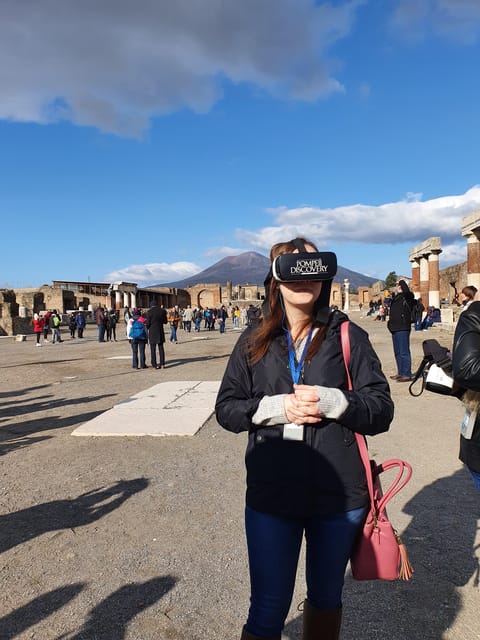
A few small things make your experience smoother.
- Wear comfortable shoes for uneven ground and frequent stop-and-listen moments.
- If traveling with children, bring passport or ID card for children, since the tour lists that requirement.
- Since the entrance ticket is not included, plan for that cost so you do not get surprised at the gate.
- Bring the mindset that you are getting a “guided story plus VR lens,” not just a VR show of Pompeii.
One more practical thought: if you have strong preferences about pace, tell yourself you will be switching between physical ruins and VR scenes. That is the point, but it takes a little mental flexibility.
Should you book Pompeii Discovery Virtual Tour 360°?
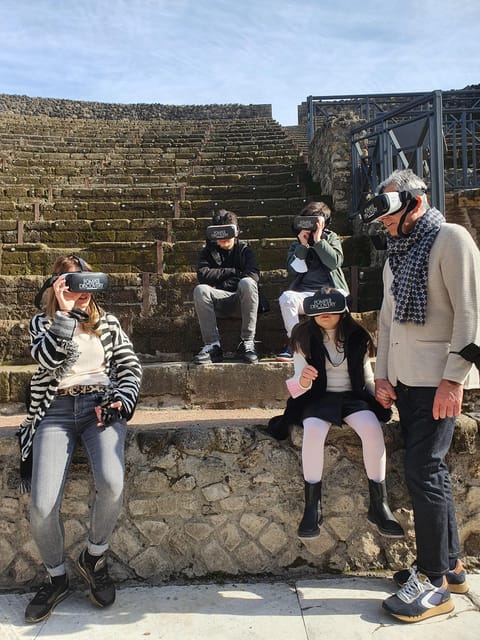
If you want Pompeii to feel like a lived-in city instead of a set of monuments, I think this is a smart booking. The core value is the combination: a live authorized guide plus 360° VR that targets nine specific places tied to real themes of daily life before 79 A.D. The feedback you have on the guide quality and the way VR adds real value is exactly what you hope for in a format like this.
The biggest reason to say yes is simple: you will leave with a better mental picture of what each place was for. The biggest reason to say no is also simple: if you dislike VR or you are not comfortable with a structured guided walk, you might prefer a traditional ruins-only tour.
If you are visiting Pompeii for the first time, or if you have been before and want a stronger sense of “how it worked,” this is one of the more practical ways to get that effect.
FAQ
What is included in the Pompeii Discovery Virtual Reality 360° tour?
It includes a local authorized guide in your language, virtual reality headsets for each participant, and the guided tour enhanced with VR.
Do I need a separate entrance ticket for Pompeii?
Yes. The entrance ticket of the ruins is not included.
What languages are available for the live guide?
The live tour guide is offered in English and Italian.
Is this a private group tour?
Yes. It is listed as a private group.
How long is the tour valid?
The activity is valid for 1 day, with starting times depending on availability.
Is the tour suitable for children?
No. It is not suitable for children under 8 years.
Is the experience wheelchair accessible?
Yes. The tour is listed as wheelchair accessible.
More Tours in Pompei Campania

More Tour Reviews in Pompei Campania
Not for you? Here's more nearby things to do in Pompei Campania we have reviewed





Tour Reviews, compared.
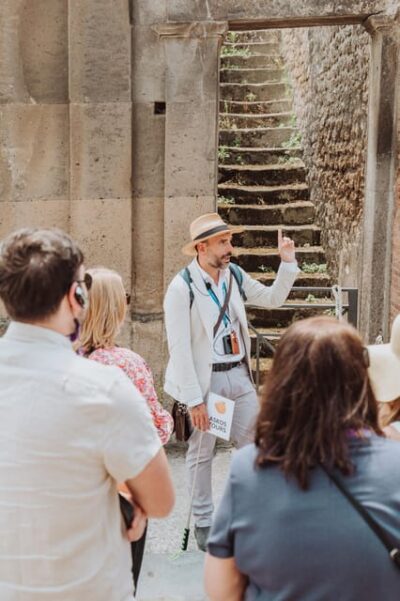 ★ 4.8Pompeii: Entry Ticket and Guided Tour with an ArchaeologistFrom $3519,459 reviews
 ★ 4.2Pompeii: Entry Ticket with Optional Audio GuideFrom $2612,360 reviews
 ★ 4.8Pompeii: Small Group Tour with an ArchaeologistFrom $4012,264 reviews
 ★ 4.3Pompeii Ruins & Mount Vesuvius Day TourFrom $12011,459 reviews
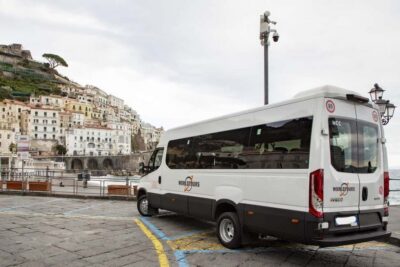 ★ 4.6Sorrento, Positano and Amalfi Full-Day TourFrom $10710,988 reviews
 ★ 5.0Sorrento, Positano & Amalfi Coast – Small Group TourFrom $768,643 reviews
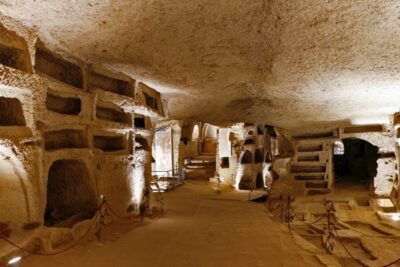 ★ 4.6Catacombs of San Gennaro Entry Ticket & Guided TourFrom $157,941 reviews
★ 5.0Pompeii Small Group Tour with an ArchaeologistFrom $356,593 reviews
★ 4.6Catacombs of San Gennaro Entry Ticket & Guided TourFrom $157,941 reviews
★ 5.0Pompeii Small Group Tour with an ArchaeologistFrom $356,593 reviews