

Tour review · TOUR REVIEWS
Guided Tours of Pompeii Excavations Historical and Cultural Itineraries
Pompeii stops feeling like ruins when someone connects the dots. This tour guides you through major sites in a clear historical and cultural frame, with the Villa dei Misteri and its famous Dionysian fresco as the emotional highlight. You’ll also get a strong sense that Pompeii wasn’t simply Greek or simply Roman, it was a Hellenistic commercial hub with ties stretching toward Asia Minor, India, and Persia.
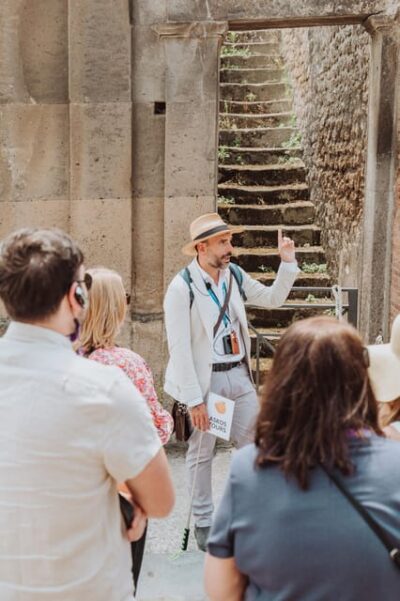
What I really like is the pacing and the small-group feel, capped at 15 people, plus a guide who works with archaeology, history, and philosophy, not just dates. The other win is how the stops fit together as a story of daily life, belief, and power, not just a checklist of walls. One consideration: you still need to plan for the Pompeii entrance ticket separately, since it is not included.
Key things that make this Pompeii tour worth your time
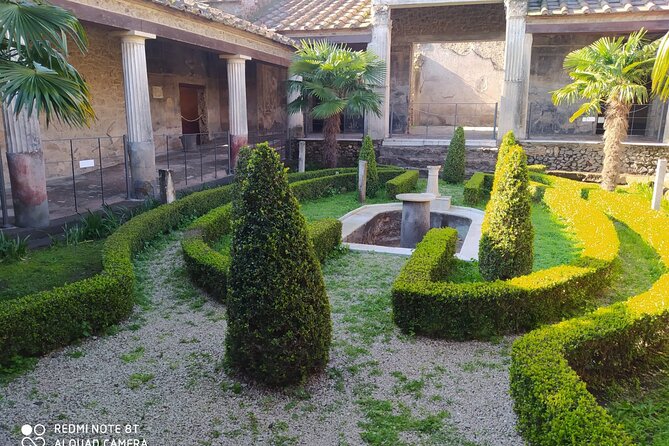
- Small group (max 15) so the guide can keep explanations tight and questions moving
- Villa dei Misteri with the Dionysian fresco, famous for its exceptional state of conservation
- Focus on cults and ideas, including the Dionysian and Isiac Mystery traditions
- A real walk through power spaces, from temples and the basilica to the forum
- Three standout domus for fresco cycles and mosaics, not just one or two “big photos”
- A guide-led interpretation that frames Pompeii as Hellenistic, linked to wider Mediterranean trade
A Hellenistic city story, not just Roman headlines
Pompeii is famous for the eruption. But the tour’s angle is different: you hear Pompeii presented as a Hellenistic city. That matters, because when you understand Pompeii as a trading and industrial center with connections out toward Asia Minor and beyond, the art and architecture start to make more sense. The fresco subjects, the religious blend, even the style of everyday spaces read less like random Roman decoration and more like a city with contacts and ideas flowing in.
You also get a cultural lens on why the “Most Living Among the Dead Cities” nickname feels so accurate. The ruins do not just show how people died. They show what people practiced, bought, cooked, argued about, worshipped, and hosted. The tour keeps that in the foreground, with stops arranged so you move from public life into private houses, then into the symbolic world of mystery cult imagery.
Another thoughtful element is the way the guide frames the eruption. You are not treated to a single dramatic explanation, instead you get a cultural interpretation that echoes how later audiences read disasters as divine punishment, with a reference to the idea of Sodom and Gomorrah. Even if you do not fully buy the theological framing, it gives you a way to understand how catastrophes get remembered.
You can also read our reviews of more guided tours in Pompeii

What you pay for: $57.62 in 4 hours (and what’s extra)
The price is $57.62 per person, and the tour runs about 4 hours 10 minutes. That is not only about seeing ten stops. It is about having someone connect the history and iconography for you while you walk, especially in places like the domus where details can blur together if you are on your own.
The important catch is what is not included. The Pompeii entrance ticket is separate, and snacks are not included either. So your real cost is likely a bit more than the headline price once you add the site admission and plan a quick water and snack strategy.
On timing: each stop is roughly 25 minutes. That is a good tempo for Pompeii. You get time to look closely, but you still keep moving, which helps when the park gets busy and the sun gets hot. The trade-off is that you cannot expect long, slow lingering at only one house. If you know you love mosaics or frescoes above everything else, you may want extra museum time on your own after the tour.
Getting oriented at Porta Marina for a smoother start
You begin at Porta Marina, specifically the official audioguide area on Via Villa dei Misteri, 2. The tour starts at 9:30 am, and the meeting and ending point are the same address.
That matters for practical reasons. You avoid wasting time finding a new drop-off spot mid-day, and you can treat the rest of your Pompeii time as a clean plan. Also, a mobile ticket is part of the setup, which usually means you are not scrambling with paper confirmations.
The tour is described as suitable for most travelers, and service animals are allowed. It is also near public transportation, which makes it easier to build Pompeii into a broader Naples area day if you are doing train and bus rather than a rental car.
Stop-by-stop: what you’ll actually see and why it matters
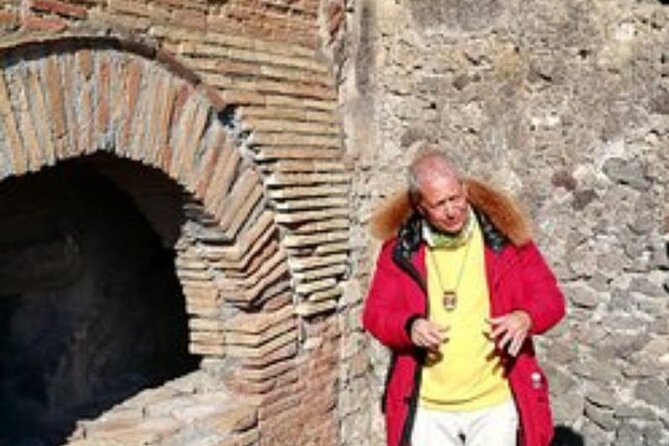
Pompeii Archaeological Park and the suburban baths (frigidarium and Nilotic art)
Your first stop is inside the Pompeii Archaeological Park, focused on the suburban baths. This is a smart opener because it grounds you in daily life right away. The frigidarium is where you can spot the kind of decorative intensity Pompeii is known for, including polychrome and glazed tilework and a nymphaeum designed with glass paste effects. You also get a look at a swimming pool area with Nilotic subjects, which is a useful reminder that Pompeians were not only thinking about the local world.
Why this stop is valuable: many ruins tours rush straight to temples and big houses. Baths are where you learn how people spent time, socialized, and cared about comfort. Even the choice of art themes can hint at cultural tastes and broader Mediterranean imagination.
Possible drawback: baths are sometimes less visually dramatic in photos than domus frescoes. If you are only chasing the most famous images, you might want to remind yourself that this is the setup, not the final payoff.
You can also read our reviews of more historical tours in Pompeii
Tempio di Venere: sailors, imperial cult, and a modern bronze touch
Next is the Tempio di Venere, which the itinerary frames as tied to the imperial cult and to Venus as a goddess connected with sailors. The temple sits on a terrace with views over the surrounding landscape, so it also gives your eyes a break from tight indoor spaces.
A notable detail here is the bronze statue by Igor Mitoraj representing Daedalus. That kind of contemporary installation can feel surprising in a Roman-era setting, but it can also act like a visual bridge. Daedalus connects to myth, and myth connects to how cultures explain skill, invention, danger, and punishment.
Why it matters: you get religion as a public identity system. This is not private prayer. It is the city speaking in official symbols, with maritime connections and imperial messaging all tangled together.
The Basilica of Pompeii: public power in three naves
Then you move to the Basilica of Pompeii, described as the grand Tribunal of Pompeii. Expect an architectural hit: it has three naves and it anticipates the typology of the later Christian basilica. It is also the largest public building in Pompeii.
This stop works because it gives you a sense of how “public life” was organized. Even if you do not care about legal history, the space communicates civic authority. It is where decisions happen, where people gather, where the city shows that it can function.
Practical note: it is a wide interior. You might have to keep your attention on what the guide points out, because otherwise it can become “big room, nice stones” instead of a clear story.
Temple of Apollo: Greek-form worship and bronze dominance
The Temple of Apollo is next, described as Greek in design and linked to ethical and prophetic worship. The itinerary also highlights two dominant bronze statues representing Apollo and Diana.
This stop helps you see how Pompeii’s religious identity blended influences. If the city is Hellenistic in character, Apollo is not just “a Roman god.” Apollo represents a different tradition of worship, and the presence of Diana in the sculptural program reinforces the idea that you are looking at a fusion, not a single straight line.
If you like symbolism, this is a good moment to slow down. Bronze statues often pull your attention immediately, and it is the perfect opportunity to ask yourself what a city wants to teach through its gods.
The Foro de Pompeya and Terme del Foro: commerce, administration, and wellness
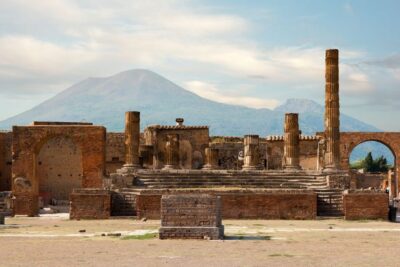
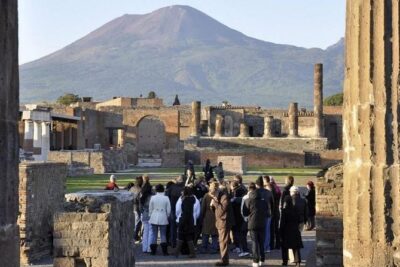
You then step into the Forum of Pompeii, framed as the commercial, administrative, and religious center. The forum complex is dominated by the grand Temple of Jupiter, Juno, and Minerva.
After that, you go to Terme del Foro, the wellness and SPA area for the community. This is one of those “only in Pompeii” combinations of city power and personal care. The tepidarium and its stuccoes from the Neronian school get special mention, and the calidarium includes an alabaster labrum of Egyptian origin.
Why this pairing matters: it shows you how public and private were not totally separate. People could handle business, perform religious identity, then unwind and care for their bodies close by. It also signals that trade and taste traveled widely, with Egyptian materials and artistic styles showing up far from Egypt.
Casa del Fauno: the biggest palace house and the Battle of Issus mosaic
Now you enter domestic Pompeii with Casa del Fauno, described as the largest house in Pompeii and a palace house from the Hellenistic era. This stop is anchored by a mosaic copy of the Battle of Issus (333 BC), depicting Alexander the Great versus Darius III of Persia.
Even if it is a copy, the subject choice is fascinating. You are not looking at generic decoration. You are looking at a household displaying a famous story about empire, military power, and cultural conflict in the style of the ancient world’s self-mythmaking.
Why you’ll like this stop: it gives you a feel for what wealthy Pompeians admired. It is not only gods and love stories. It is prestige, politics, and the idea that your home can broadcast your identity.
Potential drawback: if you are not into art history topics, you might want to focus on what the guide explains about why the battle imagery appears in a house setting, not just that it exists.
Casa dei Vettii: fourth Pompeian style, Priapus, and a whole wall of Cupids at work
Next is Casa dei Vettii, where the itinerary points to splendid frescoes from the fourth Pompeian style. This is also where you hear about the famous Priapus figure associated with the Neronian school, plus a major hall with Cupids intent on working activities. The mythological paintings highlighted include Daedalus and the Minotaur.
This is where Pompeii domestic art can start to feel like theater. Fourth Pompeian style often plays with illusion and energy, and the Cupids-at-work theme is the kind of unusual detail that makes your brain stop treating frescoes as mere background.
Why it matters: it is the house as a conversation starter. These are not neutral images. They teach taste, status, and belief through myth and playful symbolism.
Casa degli Amorini Dorati: Rhodian peristyle, obsidian mirrors, and Isis
Your next domus is Casa degli Amorini Dorati, described as a perfectly preserved Pompeian house with a Rhodian peristyle. Two standout details are mentioned: obsidian mirrors and, indoors, a shrine dedicated to the cult of Isis, plus a Lararium for the protector gods of the house. There are also frescoes connected to the Trojan War.
This stop feels especially rewarding because it mixes everyday household protection with wider religious currents. The Isis cult reference reinforces that Pompeii’s spiritual life was not a one-size-fits-all civic religion. It could be intimate. It could live in the home.
Why you’ll like it: the obsidian mirrors and the peristyle are the kind of details you can miss if you treat rooms like sets. With a guide who points them out, you start to see how much thought went into atmosphere and reflection.
Villa dei Misteri: the Dionysian fresco that people talk about for a reason
Finally, you reach Villa dei Misteri, the tour’s signature stop. This includes the famous Dionysian fresco from the first century BC, described as unique for its state of conservation.
This is not just a “famous painting” stop. The tour frames it through the lens of mystery cult life, tied to Dionysian and Isiac Mystery traditions. You also hear an interpretation of how the city’s cultural complex affected the wider Mediterranean world when “Mare Nostrum” was a sea that connected rather than divided.
Why it matters most at the end: by the time you get here, you have already seen public power, civic space, daily life, and private art. So the mystery imagery lands with more meaning. It stops being a random strange panel and becomes the culmination of the tour’s theme about how people tried to make sense of the world, including fear, hope, and transformation.
A practical consideration: frescoes can be visually demanding depending on light. If you can, keep your phone camera off at first and let your eyes adjust. The guide’s focus on what to look for helps a lot here.
Who this tour is best for, and who should think twice
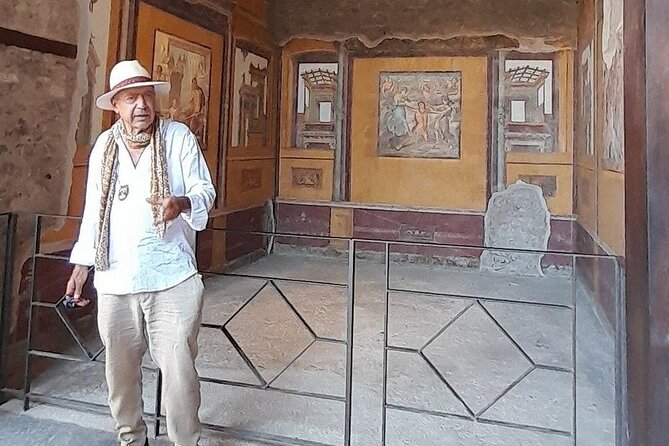
This is a strong fit if you want a guided narrative through Pompeii instead of a self-directed sprint. You’ll especially enjoy it if you like cultural interpretation, religious symbolism, and the way domus artwork reveals social identity.
It is also a good option for families and mixed ages because the guide-led structure keeps things moving, and the pace helps avoid the frustration of staring at ruins without knowing what you are looking at. If your group includes teens, you might find the way the guide links ancient behavior to modern thinking particularly effective.
Think twice if you plan to visit at a time when you already feel rushed, or if you are chasing maximum time in only one category like mosaics or only temples. This tour distributes time across many big sights, so you leave Pompeii with a broad overview, then you might need a second visit if you want to go deeper on your favorite niche.
Should you book this Pompeii guided tour?
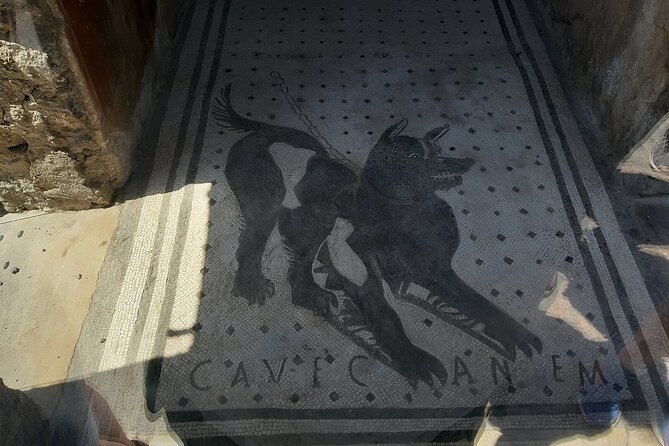
Yes, if you want the most efficient way to turn Pompeii from a photo stop into a connected story. The best reasons to book are the small-group cap (15 people), the focus on Pompeii as a Hellenistic city with cultural links, and the inclusion of Villa dei Misteri and its Dionysian fresco.
I’d book this over a purely generic “see everything” approach because the route is designed to build meaning: baths and civic spaces first, then houses with fresco cycles and symbolism, and finally the mystery-cult crescendo.
Just remember the two practical gotchas: you will pay for the Pompeii entrance ticket separately, and you should bring water or a snack plan since snacks are not included. If you handle those, you get a genuinely satisfying half-day with a clear guide-led point of view.
FAQ
How long is the Pompeii guided tour?
It lasts about 4 hours 10 minutes.
What time does the tour start?
The start time is 9:30 am.
Where do we meet for the tour?
You meet at Porta Marina audioguide official, Via Villa dei Misteri, 2, 80045 Pompei NA, Italy.
Is the entrance ticket to Pompeii included?
No. The entrance ticket to the Pompeii Ruins is not included.
Is snacks included in the tour price?
No, snacks are not included.
What group size should I expect?
The maximum is 15 travelers.
Do I need to print a ticket?
No. The tour uses a mobile ticket.
Who guides the tour?
The listed provider is Bruno Pisano.
Is there free cancellation?
Yes. You can cancel up to 24 hours in advance for a full refund.
More Guided Tours in Pompeii


More Tours in Pompeii

More Tour Reviews in Pompeii
Not for you? Here's more nearby things to do in Pompeii we have reviewed





Tour Reviews, compared.
 ★ 4.8Pompeii: Entry Ticket and Guided Tour with an ArchaeologistFrom $3519,459 reviews
 ★ 4.2Pompeii: Entry Ticket with Optional Audio GuideFrom $2612,360 reviews
 ★ 4.8Pompeii: Small Group Tour with an ArchaeologistFrom $4012,264 reviews
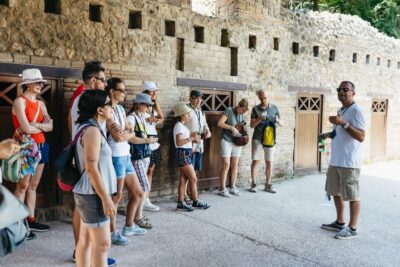 ★ 4.3Pompeii Ruins & Mount Vesuvius Day TourFrom $12011,459 reviews
 ★ 4.6Sorrento, Positano and Amalfi Full-Day TourFrom $10710,988 reviews
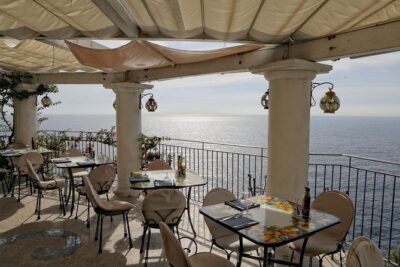 ★ 5.0Sorrento, Positano & Amalfi Coast – Small Group TourFrom $768,643 reviews
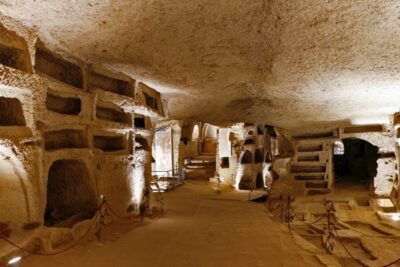 ★ 4.6Catacombs of San Gennaro Entry Ticket & Guided TourFrom $157,941 reviews
★ 5.0Pompeii Small Group Tour with an ArchaeologistFrom $356,593 reviews
★ 4.6Catacombs of San Gennaro Entry Ticket & Guided TourFrom $157,941 reviews
★ 5.0Pompeii Small Group Tour with an ArchaeologistFrom $356,593 reviews
Browse the lists this tour appears in