
Tour review · TOUR REVIEWS
Pompeii: Exclusive Private Walking Tour with an Archaeologist
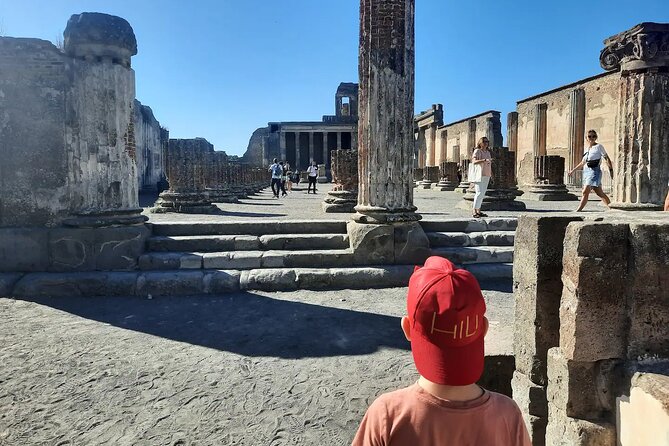
Pompeii feels personal with an archaeologist.
This exclusive, English-speaking private tour is built for speed and clarity, hitting the standout stops in about 2 hours, and guides like Clelia, Lello, and Ines focus on what you can actually see. I also like the route logic, from elite homes to public life, so the ruins make sense fast. One possible drawback: Pompeii entry is not included, and finding your guide at the start can be tricky if you arrive too late.
You’ll walk through key spaces without getting lost in trivia. The group stays small, up to 12 people, and you get a mobile ticket for the experience. If you’re relying on just one set of directions, I’d still plan extra time to connect with the guide at Coffee Shop Vittoria, Via Mare.
Key highlights to expect on this Pompeii walk
- Archaeologist-led explanations that help you picture daily life, not just read dates
- Seven major stops in about two hours, covering homes, baths, a brothel, and the Forum
- Elite house sights, including the large Casa del Menandro and Casa del Fauno
- Roman public life stops, like the Stabian Baths and Teatro Grande
- Easy “add-on” exploration, since the tour gives you clues you can follow after
Why this Pompeii tour is worth your time
Pompeii is not hard to admire. It is hard to understand. This tour helps with both, by pairing big sights with an archaeologist who can explain what you’re looking at as you walk.
The value here is not just that it’s private. It is that the route is chosen to teach you Pompeii’s “social map.” You start with grand domestic spaces, then shift to public bathing, street life, and major civic landmarks. That flow makes the place feel less like scattered stones and more like a living city.
At $421.03 per group (up to 12), you’re paying for structure. If you can fill the group, the cost per person drops fast. If it’s just two or three people, it’s pricier, but you still get an expert guide and a tight itinerary that saves you from wandering.
You can also read our reviews of more walking tours in Pompeii


Tickets and pacing, the two things that can trip you up
The tour includes the guided experience with an archaeologist, but it does not include the entry ticket to Pompeii. That matters because Pompeii admission is usually what controls access to the archaeological area. Even if individual stops list Admission Ticket Free, you should assume you still need your main Pompeii entry ticket in advance.
Pacing is also something to plan for. Two hours sounds short, but the itinerary is packed with high-impact sites. This is not a slow “sit and sketch” tour. It’s more like: walk, look, learn, move on. If you want to linger in the mosaics or take long photo pauses, build in time before or after the tour.
Finally, scheduling is competitive. On average, this tour is booked about 57 days ahead, so it’s smart to lock in your slot rather than waiting for a last-minute feeling.
The 2-hour route: Casa del Menandro, baths, Lupanar, and the main civic core
You’ll hit seven major stops, and each one plays a different role in the Pompeii story.
1) Casa del Menandro (House of Menander)
2) Stabian Baths (Terme Stabiane)
3) Lupanar (brothel)
4) Casa del Fauno (House of the Faun)
5) Teatro Grande (big theatre)
6) Via dell’Abbondanza (best preserved street)
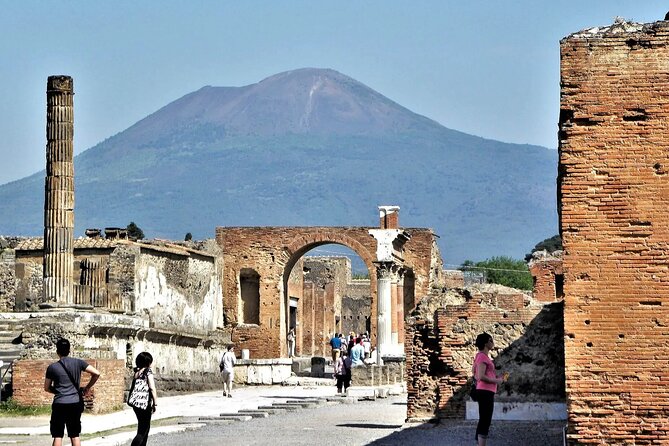
7) Foro de Pompeya (Forum, the main square)
What’s smart about this mix is that it covers different types of spaces: wealthy domestic, public infrastructure, intimate and controversial (the Lupanar), and civic power (the theatre and Forum). When the guide connects those dots, Pompeii starts to feel organized.
Casa del Menandro: luxury, mosaics, and scale you can feel
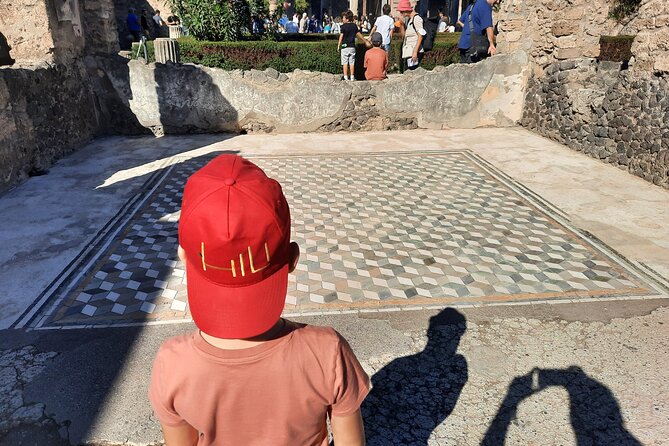
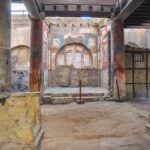
The tour starts at Casa del Menandro, one of Pompeii’s richest residences. It’s famous for architecture, decoration, and the preserved contents, and it covers about 1,800 square metres, taking up most of its insula.
Why I like this as a starting point for you: it gives you a baseline for wealth and design. Before you see public spaces and “messier” streets, you need to understand what a top-tier home looked like and how much effort went into daily life.
Practical takeaway: this is a great stop for noticing transitions. Even if you do not fully “get” everything on the first pass, you can spot how wealthy homes were arranged for display, privacy, and movement through rooms and courtyards.
Stabian Baths: the oldest, biggest public baths you’ll meet here
Next comes the Stabian Baths, the oldest and largest of Pompeii’s five public bath complexes. Construction dates back to around 125 BC, which makes it one of the oldest bath settings from the ancient world.
This is where Pompeii turns from private wealth into public routine. Baths in Roman cities were not just for hygiene. They were social hubs, workout spaces, and conversation centers. Seeing this complex early helps you understand how city life functioned beyond the house walls.
A good guide makes a difference here. In the tour experience, guides tend to explain what you’re looking at in practical terms: how these spaces likely worked day to day, and why the layout mattered.
You can also read our reviews of more private tours in Pompeii
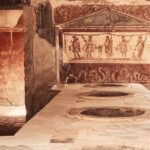


Lupanar: erotic wall art, but explained with context
Then you step into the Lupanar, Pompeii’s famous brothel. The draw is the erotic paintings on the walls, and the site is often the most talked-about stop for obvious reasons.
But the tour value is in how you’re guided. The best archaeologist-led tours keep this stop from becoming just shock value. You get the chance to place it in the broader city economy, norms, and built environment that allowed such spaces to exist.
If you prefer your sightseeing respectful and matter-of-fact, this stop can still work, as long as your guide keeps it anchored in interpretation. The tour format makes that easier because you’re not wandering alone at this emotional edge of the site.
Casa del Fauno: Hellenistic power inside a Roman city
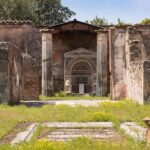
Casa del Fauno follows, and it’s a step up in “big palace” energy. Built in the 2nd century BC during the Samnite period (about 180 BC), it’s described as a grand Hellenistic palace framed by a peristyle.
I love this stop because it shows Pompeii as a place shaped by influences. You can see how style and status traveled, and how the city’s elite adapted architectural ideas to local life.
Look for the contrast between “home as display” and “home as organized space.” A peristyle is not just pretty columns. It signals a designed interior life, with courtyards and movement that make the house feel like a stage for daily interaction.
Teatro Grande and the best preserved street: how people moved and gathered
After the houses and the baths, the tour turns outward into public architecture.
Teatro Grande is the biggest theatre in Pompeii, so it’s a natural pivot into civic entertainment and gathering. You can usually picture audience energy faster here, because theatre design is meant to funnel attention.
Then you walk Via dell’Abbondanza, widely known as one of Pompeii’s best preserved streets. This is a key “walk-and-look” stop. Even if you do not study urban planning, the street gives you scale. You start to understand where commerce sat, how people would have moved, and why the city felt dense and connected.
If you like practical archaeology, this part is for you. It links buildings to movement, not just buildings to beauty.
Foro de Pompeya: the city’s main square in one guided sweep
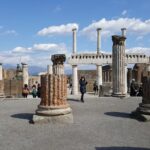
You finish at Foro de Pompeya, the most important square of the city. This is where the civic identity tightens. You’re no longer just seeing private luxury or public amenities. You’re seeing the stage for power, administration, announcements, and public life.
The Forum stop works well at the end of a short tour because it acts like a summary point you can feel in your body. You’ve already seen wealth in the houses, routine in the baths, odd corners in the Lupanar, and public culture at the theatre and along the main street. Now you get the big “center.”
And if you want to continue after the tour, this is a smart place to have context. You’ll know what kind of spaces you’re looking at as you wander back through the site.
What the archaeologist guide actually does for you
This type of tour stands or falls on the guide. The strong points in this experience come through in the personalities you may be assigned. Clelia, for example, is praised for making you picture ancient Pompeii through her explanations. Lello and Lelo are described as funny and engaging, with an ability to connect details to the bigger picture. Ines is credited with guiding people through the best spots in a big site, and making the walk feel both informative and enjoyable.
Here’s what that means for you, in practical terms:
- You learn how to look. Instead of seeing a wall, you learn what a feature likely meant in its setting.
- You get a narrative, not a checklist. That’s why two hours can feel like a full orientation.
- You can keep exploring afterward with more confidence, because you’re leaving with mental handles for what you see.
One caution from the experience data: there have been reports of a slightly difficult start, like trouble locating the guide at the meeting point, or the tour feeling more strict with one guide. I do not think that means it will happen every time, but it is enough for you to arrive on time and confirm the exact details in your message.
Meeting point at Coffee Shop Vittoria: how to connect quickly
The tour starts at Coffee Shop Vittoria, Via Mare, 80045 Pompei NA, Italy, and it ends back at the same meeting point. That’s convenient, but the key is finding the right person at the start.
If you are the type who hates last-minute scrambling, do this: arrive a few minutes early and keep your phone handy with the confirmation details. The experience notes include at least one case where the guide meeting location was harder to identify. You can reduce that risk by checking the company name and instructions shown in your booking message and matching them at the coffee shop area.
Also, since the meeting point is near public transportation, you have options. If you’re coming by train from Naples, you can make the timing work, but still give yourself a buffer so the tour start does not feel rushed.
Who this Pompeii private walking tour fits best
This tour is a good fit if you want:
- A guided, private route in a short time window
- A guide who explains what you’re seeing, not just reads facts
- High-value stops across different types of Pompeii spaces
- A group size small enough that the experience feels personal, up to 12 people
It also works well for families with older teens. The format is educational, but it’s built around walking and visual sites, so it doesn’t rely on classroom-style listening for long stretches.
If you’re a solo traveler who hates group noise, the private setup is a big plus. If you’re with a small group, this can be an efficient way to get your bearings and avoid the “I’ll just wander” trap that Pompeii can create.
Should you book this Pompeii archaeologist tour?
I’d book it if you want Pompeii to make sense in real time. The biggest strength is the combination of a tight route and interpretive guidance, especially at the houses, the baths, and the Forum. It’s also a smart value when your group can share the cost across up to 12 people.
Skip it or rethink the timing if you cannot buy Pompeii entry tickets in advance and you prefer a slower pace with lots of independent wandering during the tour. Also, if you know you often arrive late or rely on vague meeting points, plan extra time so you can connect with your guide.
FAQ
How long is the Pompeii private walking tour?
It runs for about 2 hours.
How many people are in the private group?
It is private, and the group size is up to 12 people, with only your group participating.
Is the entry ticket to Pompeii included?
No. Entry ticket to Pompeii is not included.
Where does the tour start and end?
It starts at Coffee Shop Vittoria, Via Mare, 80045 Pompei NA, Italy, and it ends back at the same meeting point.
What language is the tour offered in?
The tour is offered in English.
What is the cancellation policy?
You can cancel for a full refund if you cancel at least 24 hours in advance of the experience start time.
More Walking Tours in Pompeii

More Tours in Pompeii




More Tour Reviews in Pompeii

Not for you? Here's more nearby things to do in Pompeii we have reviewed







Tour Reviews, compared.
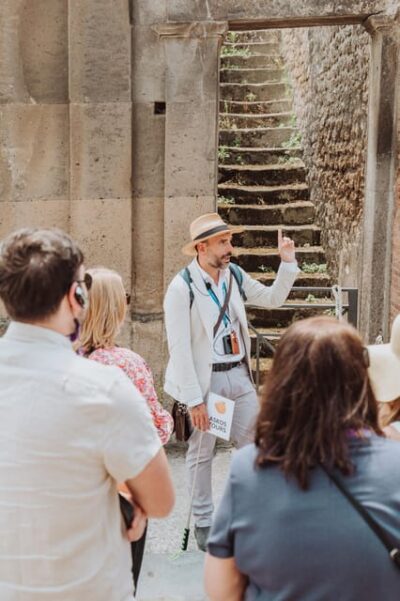 ★ 4.8Pompeii: Entry Ticket and Guided Tour with an ArchaeologistFrom $3519,459 reviews
 ★ 4.2Pompeii: Entry Ticket with Optional Audio GuideFrom $2612,360 reviews
 ★ 4.8Pompeii: Small Group Tour with an ArchaeologistFrom $4012,264 reviews
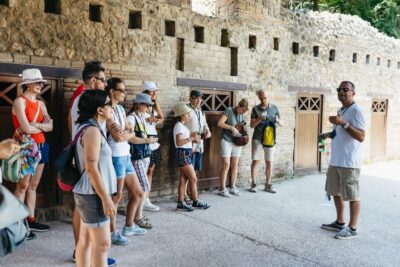 ★ 4.3Pompeii Ruins & Mount Vesuvius Day TourFrom $12011,459 reviews
 ★ 4.6Sorrento, Positano and Amalfi Full-Day TourFrom $10710,988 reviews
 ★ 5.0Sorrento, Positano & Amalfi Coast – Small Group TourFrom $768,643 reviews
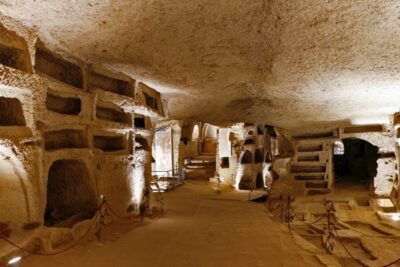 ★ 4.6Catacombs of San Gennaro Entry Ticket & Guided TourFrom $157,941 reviews
★ 5.0Pompeii Small Group Tour with an ArchaeologistFrom $356,593 reviews
★ 4.6Catacombs of San Gennaro Entry Ticket & Guided TourFrom $157,941 reviews
★ 5.0Pompeii Small Group Tour with an ArchaeologistFrom $356,593 reviews
Browse the lists this tour appears in