
Tour review · TOUR REVIEWS
Pompeii & Herculaneum Family Adventure | Guide+Transport+Tickets
Two cities, one eruption story. You get a private family guide and skip-the-line access while moving through Pompeii and Herculaneum in a way kids can actually follow. I especially like that Herculaneum feels personal, because the city was preserved by a volcanic surge that protected buildings, rooms, and everyday objects.
My favorite part is the contrast: at Herculaneum you see carbonized wood, mosaics, and even port life, then at Pompeii you get the bigger civic picture through the Forum, baths, markets, and a main theater. One thing to think about is the pace, it is an 8-hour day with lots of walking, and you will want solid shoes and sun protection.
Key highlights you will feel immediately
- Herculaneum’s preservation lets you picture real homes, shops, and streets, not just stone walls
- Roman boat finds at the Boat Pavilion turn the harbor story into something kids can visualize fast
- Carbonized wood in the Antiquarium shows how everyday items survived when the conditions were right
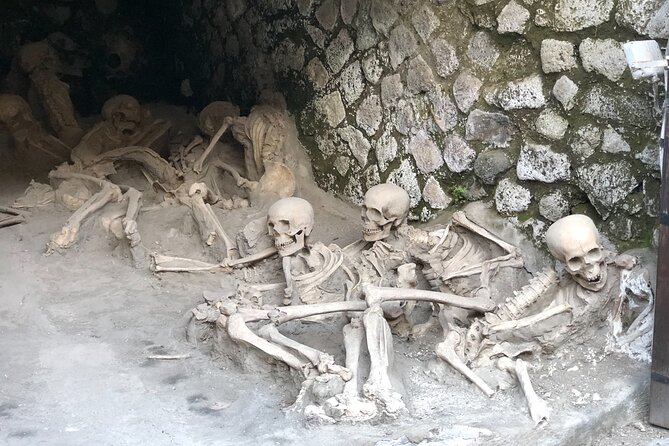
- A sensitive shoreline stop connects the eruption to human choices, including the discovery of many skeletons in boathouses
- Pompeii’s civic route (Porta Marina to Basilica, Forum, Macellum, baths) gives a clear “how the city worked” map in your head
- Family activities and booklet keep kids busy with games and prompts, so everyone lasts the full day
Pompeii plus Herculaneum, the family-friendly way
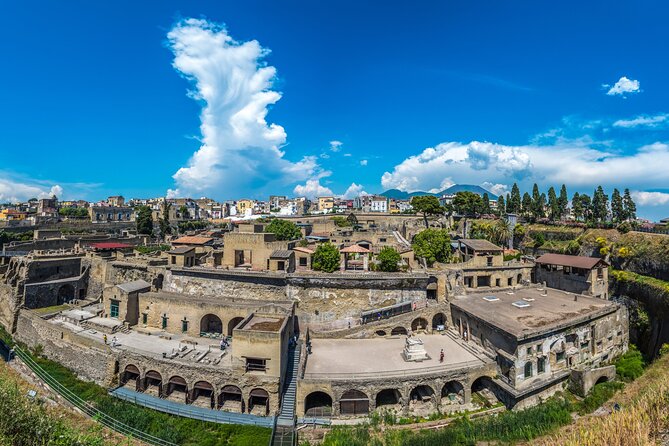
Most Pompeii days rush you through big, impressive ruins. This one does something smarter: it starts in Herculaneum, the smaller city that looks more like a lived-in town. If you want your kids to understand that these places were not just scenery, Herculaneum is the easier entry point.
Herculaneum was preserved in a very different way than Pompeii. Pompeii’s burial was more like ash and pumice coverage. Herculaneum’s fate was a fast, superheated surge that carbonized wood and sealed spaces higher up. The payoff is emotional and visual. You can stand in a street and point out details like painted walls, wooden beams and doors, and even furniture elements that survived.
Then you shift to Pompeii, the larger, more famous site where the scale is the point. Pompeii can feel overwhelming on your own. With a guide planning a route and using family-friendly prompts, you get a guided path through civic buildings, religion, markets, baths, and wealthy houses. That structure matters when you are traveling with children and trying to keep the day moving without losing the story.
More Naples tours, ruins, coast days, and city experiences to compare

Private pickup and skip-the-line tickets that reduce stress
This tour includes transport by private vehicle, and pickup is flexible from places like Naples, Sorrento, Pompeii, train stations, airports, and cruise ports. That matters because getting to Pompeii and Herculaneum is half the battle, especially if you are coordinating family schedules.
You also get skip-the-line entry for both sites. Lines and timed entry can steal energy. Here, you lose less time waiting and spend more time inside the ruins where the experience actually happens.
One practical detail: meals are only included if you select the pizza lunch option. Otherwise, plan on making your own food plan and bringing what you need. Bottled water is not included, so either buy it on site or plan to carry a refill solution if your family prefers that.
Your Blue Badge guide makes the ruins feel like real places
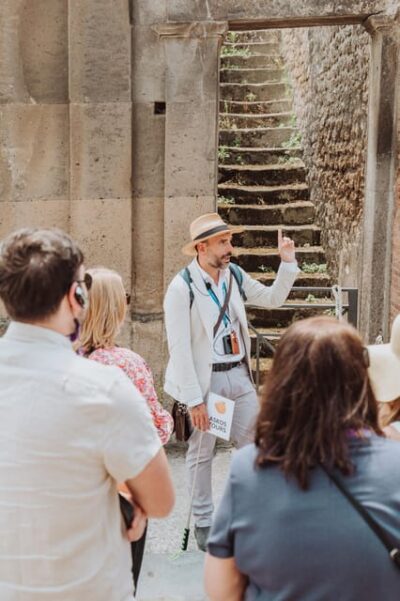
The biggest value is the private Blue Badge guide in both Pompeii and Herculaneum. This is not just someone pointing at plaques. The stops are built around explanation, pacing, and hands-on prompts that fit families.
One review singled out the guide Giuseppe D’Angelo for being knowledgeable, kind, and thoughtful. That kind of guide style matters when you are trying to balance adult curiosity with kid attention spans. You want someone who can slow down when a child asks a real question, without losing the thread of the story.
Expect the guide to keep translating archaeology into daily life. Instead of only dates and names, you will hear how Romans ate, shopped, prayed, trained, bathed, and traveled by sea. That day-long thread is what turns ruins into a place you can picture.
Herculaneum: the boat harbor stop kids remember
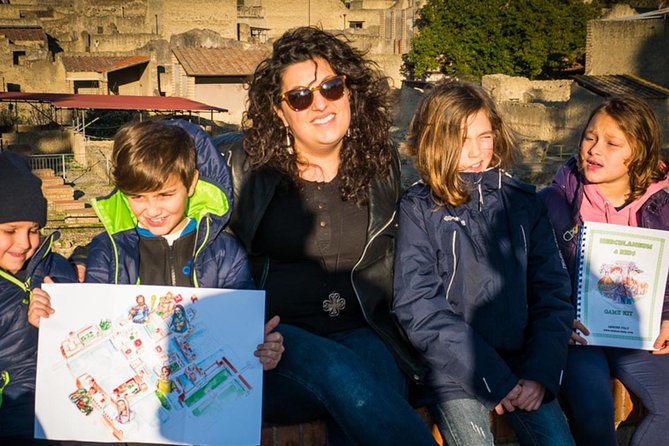
Your day begins at Parco Acheologico di Ercolano, and you will spend about 2 hours 30 minutes here. I love how this portion is designed like a sequence of everyday life, starting with the town’s connection to the sea.
First is the harbor-focused stop at the Boat Pavilion. This is where a Roman vessel and maritime equipment were discovered. For kids, it clicks instantly: they can imagine fishermen and sailors preparing to push off from a small harbor. For adults, the point is bigger than just the boat. It explains how Herculaneum functioned as part of trade and travel by sea, which makes the city feel like it had a job, not just an end.
Next comes a museum-style stop that feels hands-on even when you are standing still. Inside the Antiquarium, your guide highlights objects that survived in striking condition, including pieces of carbonized wood from furniture, doors, beams, and shelves. Kids are often amazed by the idea that wood can endure when it gets sealed by volcanic material. Adults get the science behind why these things are so rare in archaeology.
A shoreline moment that tells the human story gently
One of the most moving parts of Herculaneum is the walk down to the ancient shoreline. Your guide helps you picture boats being pulled ashore and goods arriving by sea. That geography is not random. It helps you understand how the town worked day to day and how people may have tried to escape during the eruption.
Then you get a very important, sensitive layer to the story. In 1980, archaeologists found over 300 skeletons inside boathouses here. This is the kind of stop where a family guide really earns their keep. The explanation is handled sensitively so families can absorb the human weight at their own pace.
If you are traveling with younger kids, you do not need to push through fast. This is exactly the sort of moment where a good guide can pause and let you decide how much you want to hear.
You can also read our reviews of more guided tours in Pompeii
House of the Deer, mosaics, and everyday luxury
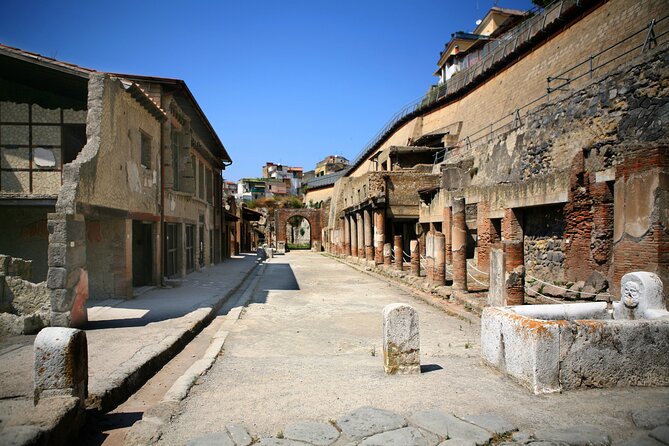
After the shoreline, you head through a string of Herculaneum homes and public spaces that show how different lives looked inside one small town.
A standout is the elegant seafront villa called the House of the Deer, famous for marble sculptures of deer attacked by dogs. Kids tend to latch onto the drama of the scene. Adults connect it to Roman luxury, sea views, and leisure culture. Even if you are not a sculpture person, the setting helps you imagine why wealthy families built and lived this way.
You will also visit an exercise courtyard where young citizens trained and socialized. This place adds context you might not expect. It shows how Romans treated physical training and civic life as connected, not separate.
Next, you enter a celebrated residence reopened after restoration, where you can see preserved wall paintings, wooden shutters, and upper-floor structures. The effect is almost like time travel for families, because you can see how rooms worked across levels, not just one flat layer.
The shop, the Neptune mosaic, and the women’s baths
Herculaneum also gives you two very useful “daily life” stops that are great for kids because they feel familiar.
First is an ancient shop with terracotta jars set into a marble counter. Your guide points out how residents bought food and drinks, much like a café or takeaway, and how original shelving elements survived. It helps kids understand that everyday commerce existed in Roman towns in a surprisingly direct way.
Then you visit a more elegant home known for a vivid mosaic panel of Neptune and Amphitrite, with deep blues and golden glass tesserae. The guide helps you connect the art to how the household worked, from dining spaces to painted walls and niches. It turns the house into a memory device.
After that comes the women’s section of the public baths. These baths are remarkably preserved, with benches, painted walls, and wooden shelving surviving. You’ll step into changing rooms and then into warm and hot areas where steam filled the space in the past. Your guide explains how baths were hygiene plus social time. Kids often compare it to a gym or spa, while adults get the routine logic of Roman life.
The cult hall and how the empire shaped local life
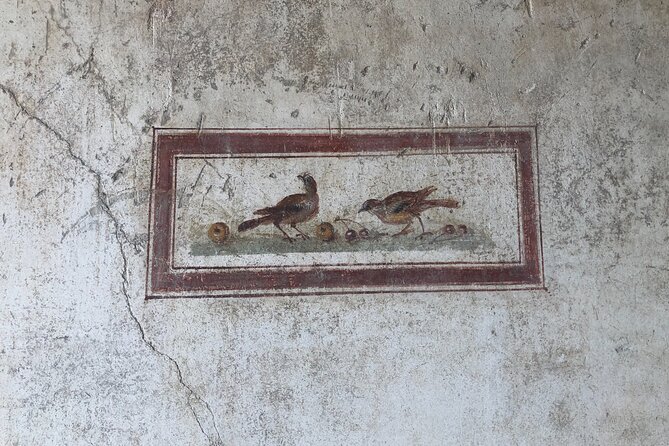
One more key Herculaneum stop is a richly decorated hall connected to the cult of the Emperor. Frescoes show mythological scenes, and the guide ties them to how religion, civic life, and imperial politics mixed in Roman society.
You will also hear about the Augustales, a prestigious local group of freedmen. This matters because it explains social hierarchy without turning the day into a lecture. It gives you a concrete picture of how identity and status worked in a real town.
Pompeii: Porta Marina to the Forum, with less guessing
After Herculaneum, you move to the Archaeological Park of Pompeii for another 2 hours 30 minutes. Pompeii is larger, so timing and route planning are essential. On busier days, your guide may suggest visiting in the afternoon when it can be less crowded. The itinerary is flexible depending on the day and season, and your guide can adjust around family needs and your schedule.
Pompeii’s story starts through movement. You begin at Porta Marina, one of the main gateways. Walking beneath the stone arch and along the walls helps you picture the city on the morning of the eruption: merchants entering, sailors coming from the port, and goods arriving from across the Mediterranean.
Then you walk into the Basilica, Pompeii’s most important civic building. Even without its roof, the structure shows authority. This is where legal disputes were heard and contracts were agreed. For adults, it makes the city feel organized. For kids, it gives a clear anchor point for understanding that Romans had systems, not just temples and streets.
Temple of Apollo and the view toward Vesuvius
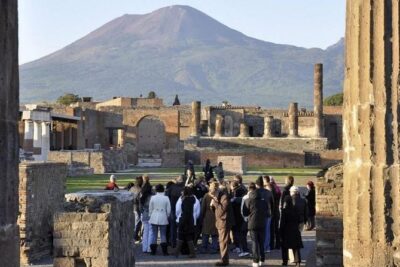
One reason people remember this tour is the way it gives the volcano a role without forcing a long hike. You will see the volcano from the bottom, with great photo views from both Pompeii and Herculaneum. You are not driving to the top.
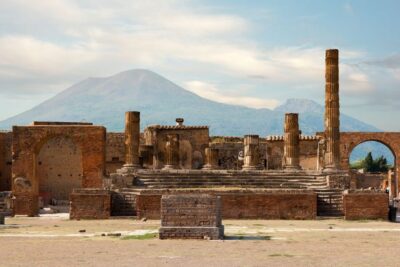
In Pompeii, the Temple of Apollo ties religion to identity and politics. Your family can imagine priests performing ceremonies while you spot references to Apollo and Diana. From the temple terrace, you also get a clear view toward Mount Vesuvius, which turns the site into a history and landscape frame you can actually photograph.
The Forum and Macellum: the city’s daily engine
Next is the beating heart of Pompeii, the Forum. Your guide brings it to life as a place for business deals, ceremonies, and speeches. Kids are invited to imagine vendors calling out, priests moving through crowds, and citizens circulating between temples and market spaces. Adults get the big picture of how Roman cities were built around civic life.
From there, you head to the Macellum, Pompeii’s marketplace. This is the place to understand what people ate and bought, including meat, fish, fruit, and imported delicacies. Your guide points out marble counters and storage vessels, which makes the shopping feel less abstract.
Then you visit the Forum Baths, which work as a fun and vivid stop. You’ll walk through changing rooms and heated bathing areas and spot mosaics and stucco decorations. Kids see the baths as a modern-style social space. Adults learn that bathing was routine, mixing hygiene, exercise, and conversation.
Wealthy homes and the street life that feels familiar
Pompeii gives you two different kinds of home experiences.
First is a grand aristocratic home with elegant gardens and intricate mosaics, including the famous mosaic with Alexander the Great in battle and a small bronze statue of the dancing faun. The guide helps you connect that art and layout to entertaining and status.
Then you get the restored House of the Vettii, known for vivid frescoes and a garden courtyard. Kids often enjoy spotting story-like myth panels. Adults get how the Vettii brothers rose in wealth and used art to display culture and rank.
Finally, you walk along Pompeii’s liveliest ancient street lined with bakeries, bars, and storefronts. Kids can hop across stepping stones, and adults get the routine feel of a place full of errands and midday snacks. Street fountains and shop counters make it feel familiar in a very grounded way.
A bird’s-eye view and a main theater for everyone
At some point, your guide will offer a raised platform view of an entire block, often described as a dollhouse-like effect. Rooms without roofs let you see kitchens, workshops, and dining areas. Adults can interpret how archaeologists reconstruct daily routines from these layouts. Kids just love watching the “tiny city” spread out.
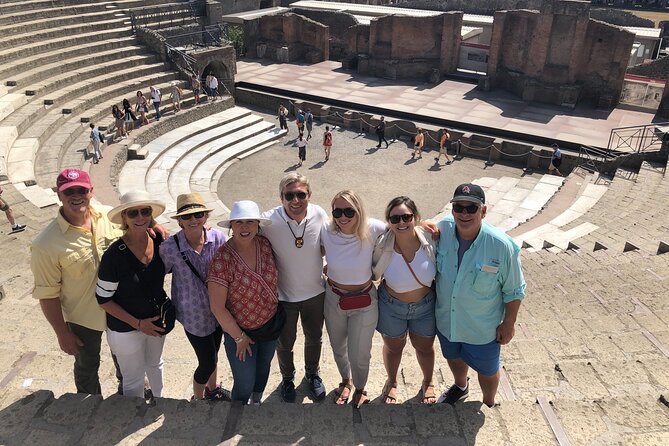
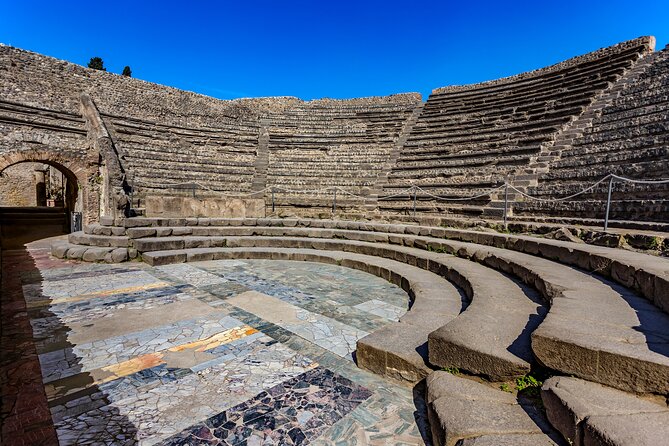
Then you step into Pompeii’s main theater, built directly into the hillside to help amplify sound. Kids can test the acoustics by calling out from the stage steps. Adults see how public entertainment shaped Roman culture, from comedies to musical performances. It’s one of those rare moments where the seating arrangement makes modern audience behavior feel familiar.
Antiquarium in Pompeii: objects you can hold in your head
To wrap up Pompeii, you visit the Antiquarium, where real artifacts recovered from excavations help connect ruins to people’s lives. You might see jewelry, coins, tools, and household objects. Kids often recognize items they have seen in the ruins and connect the dots.
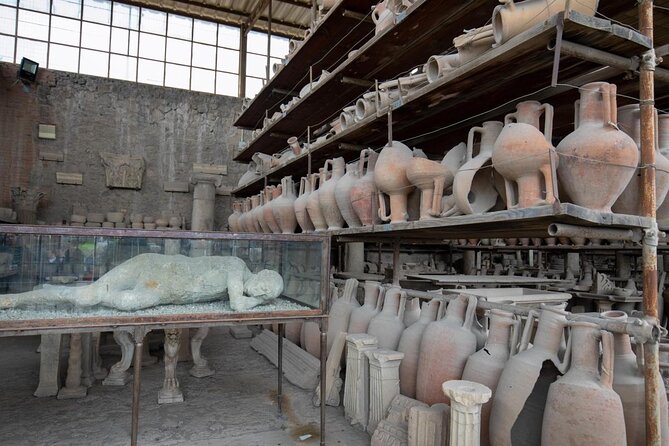
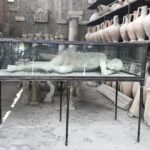
One extra human layer here is the introduction of plaster casts of eruption victims, handled in a sensitive way for families. It gives context that the site is not just buildings that survived, it is tied to real people who lived and died here.
Price and value: what you are really paying for
At $738.31 per person for an about 8-hour day, this is not a budget outing. The value comes from four big buckets you would otherwise have to piece together yourself:
- Private vehicle transport between Naples area bases and the sites
- A Blue Badge private guide doing two major sites in one day
- Skip-the-line tickets for both Pompeii and Herculaneum
- Family-friendly activities, booklet, and map, plus optional meals if you choose pizza lunch
It also helps that this kind of tour tends to sell well ahead of time. The average booking lead time is about 142 days, which tells me you will want to plan early if your dates are fixed.
If you can afford it, this is the type of tour that saves energy and helps kids learn without dragging the day into frustration. If you are traveling as a couple or older teens who do not need prompts, you might feel the structure is more than you need. For families, though, the guide route and activities are a huge part of why it works.
What to pack for an 8-hour ruin day
You will walk a lot, and you will be outside. The tour recommends comfortable walking shoes and sun block, and you should have a moderate physical fitness level. Bring a hat, and plan for breaks. If bottled water is not included, plan to buy or carry water you can manage with kids.
Also keep an eye on questions. The guide style here is set up for kids to ask things and for you to have time to respond without feeling rushed.
Should you book this Pompeii and Herculaneum family adventure?
Book it if:
- You want Herculaneum first, because it is the easier city to understand and picture
- You prefer a private guide who can keep kids engaged while still satisfying adults
- You like a clear route through civic life in Pompeii, not a random wander
Consider another option if:
- Your family has very limited walking tolerance, because it is a full-day plan across two major sites
- You want the freedom to stop for as long as you like at each place, with no structured pacing
If you are trying to make this day feel like a story your family remembers, the combination of Herculaneum’s preserved details and Pompeii’s civic highlights is a strong match. And if you are lucky enough to be guided by someone like Giuseppe D’Angelo, you get the kind of calm, thoughtful guiding style that turns a tough archaeology day into a smoother one.
FAQ
How long is the Pompeii and Herculaneum family tour?
It runs for about 8 hours.
Is pickup included, and where does it operate from?
Pickup is offered and is flexible from places like Naples, Sorrento, Pompeii, train stations, airports, and cruise ports. You choose your pickup place during booking.
Do we get skip-the-line tickets?
Yes. The tour includes Herculaneum and Pompeii Express skip-the-line tickets.
Is the tour in English?
The guide operates in English.
Is this a private tour?
Yes. It is private, and only your group participates.
Are meals included?
Meals are included only if you select the pizza lunch option. Otherwise, meals are not included.
Is bottled water provided?
No, bottled water is not included.
What should we wear or prepare for physically?
You should have moderate physical fitness. Comfortable walking shoes and sun block are recommended.
Can I cancel for a refund?
Yes. You can cancel up to 24 hours in advance for a full refund.
More Guided Tours in Pompeii
More Tickets in Pompeii
More Tour Reviews in Pompeii

Not for you? Here's more nearby things to do in Pompeii we have reviewed


Tour Reviews, compared.
 ★ 4.8Pompeii: Entry Ticket and Guided Tour with an ArchaeologistFrom $3519,459 reviews
 ★ 4.2Pompeii: Entry Ticket with Optional Audio GuideFrom $2612,360 reviews
 ★ 4.8Pompeii: Small Group Tour with an ArchaeologistFrom $4012,264 reviews
 ★ 4.3Pompeii Ruins & Mount Vesuvius Day TourFrom $12011,459 reviews
 ★ 4.6Sorrento, Positano and Amalfi Full-Day TourFrom $10710,988 reviews
 ★ 5.0Sorrento, Positano & Amalfi Coast – Small Group TourFrom $768,643 reviews
 ★ 4.6Catacombs of San Gennaro Entry Ticket & Guided TourFrom $157,941 reviews
★ 5.0Pompeii Small Group Tour with an ArchaeologistFrom $356,593 reviews
★ 4.6Catacombs of San Gennaro Entry Ticket & Guided TourFrom $157,941 reviews
★ 5.0Pompeii Small Group Tour with an ArchaeologistFrom $356,593 reviews
Browse the lists this tour appears in