
Tour review · TOUR REVIEWS
Pompeii: living with the volcano
One day before the volcano, the city still lived. This 2-hour private, English-guided walk in Pompeii Archaeological Park lets you picture daily life as if you were there the day before the 79 AD eruption, not just staring at stone.
I especially love how the guide focuses on daily routines you can spot in the ruins, like shops, streets, and the political chatter written on walls. My only real caution is that entrance tickets are not included, and Pompeii involves walking on uneven paths, so it helps to have moderate physical fitness.
Key Things You Should Know Before You Go
- Private and intimate: Only your group joins the guide, so questions are easier.
- Michele Arpa guides in English: Reviews highlight strong English and a friendly, fun style.
- You move like a local: The route follows the feel of a day in Pompeii, not just highlights.
- Entertainment, politics, leisure: Theater, amphitheater, walls with election names, spa time, then the civil forum.
- Tickets extra: The tour price includes the guide service, while site admission is separate.
A One-Day-Ahead Look at Pompeii’s Last Hours
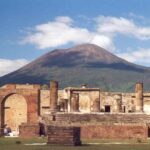
The name living with the volcano sets the tone right away. Instead of treating Pompeii as a frozen disaster, this tour frames it as a city that was fully functioning one day before everything changed in 79 AD.
That approach matters because ruins can turn into a list unless someone gives you the story thread. I like the way this tour pushes you into that mindset, so you’re constantly asking, What would a person here do, eat, vote for, and watch?
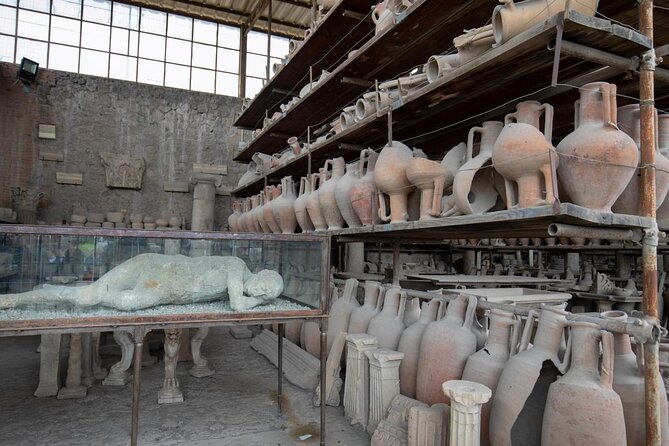
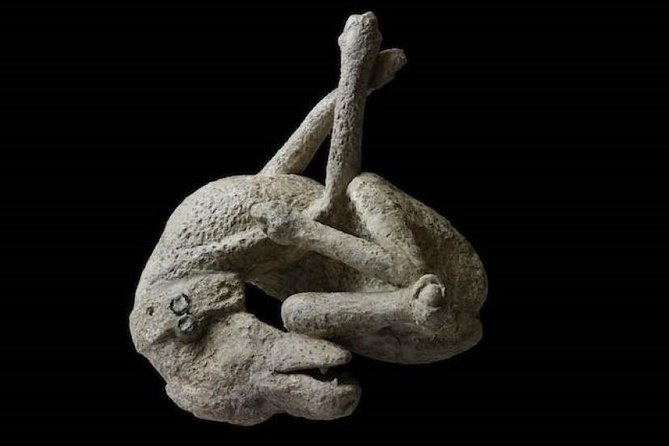
The guide’s narrative also connects the city to the human cost without turning it into a scary theme park. You’ll come across reminders of people who lost their lives in the frantic hours, preserved and later documented by archaeologists.
You can also read our reviews of more tours and experiences in Pompeii.
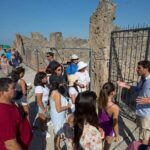
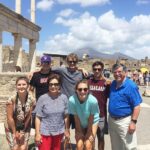
Your 2-Hour Game Plan Inside the Archaeological Park
This experience runs about 2 hours, and it starts at the Pompeii Archaeological Park meeting point (80045 Pompei). It ends back at the same place, which keeps logistics simple when you’re trying to fit Pompeii into a busy day.
It’s offered in English, and it’s private, meaning only your group participates. That matters at Pompeii, where the site is big, paths are uneven, and it’s easy to feel rushed on a crowded schedule.
One important practical point: the admission ticket to the site is not included. So while you’re paying for the guide service, you still need to budget for Pompeii park entry before you go in.
Walking Pompeii’s Streets Like You Belong There
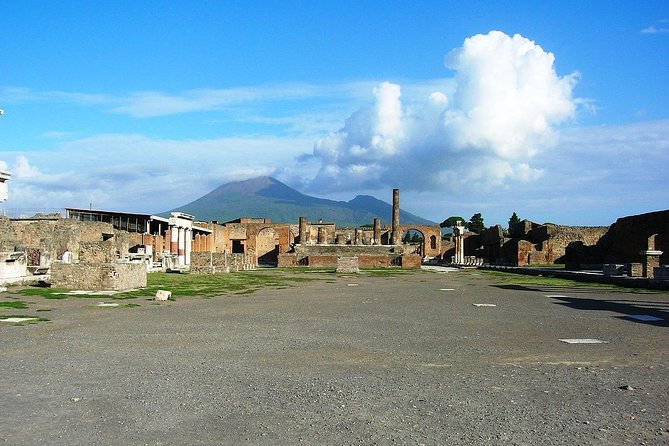
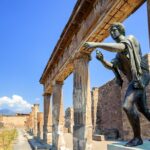
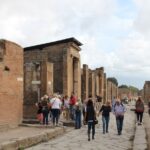
The tour begins with the Archaeological Park’s core areas, where buildings, shops, and streets form the skeleton of everyday life. The big value here is how the guide helps you read the city instead of just passing it.
As you walk, you’re not only looking for famous structures. You’re also picking up the smaller signals that make Pompeii feel human, like the idea of going about normal business just before disaster.
This is also where the tone of the tour really clicks: you’re encouraged to imagine what it would be like to be an inhabitant, moving from place to place as the day unfolds. In a couple of hours, you can’t see everything, but you can still get a strong sense of the city’s rhythm.
Theater and Amphitheater, Where Spectacle Rules the Day

One stop focuses on the theater and then the amphitheater, described as an immense venue where gladiator fights were part of life. The guide’s storytelling leans into the sensory feel of brutal entertainment, including the idea of the sharp, acrid taste tied to those events.
Why I like this part: it explains why public spectacle mattered. In ancient cities, large venues were where people gathered, argued, cheered, and spent time together, not just where a few performers did their job.
The drawback to flag: amphitheater-style spots can involve more uneven footing and standing time than quieter streets. If you’re short on stamina, pace yourself and plan for the fact that the “show” parts of Pompeii are still inside an outdoor archaeological site.
Reading Pompeii’s Politics on the Walls
After the entertainment stops, the tour shifts gears to something that makes the city feel startlingly familiar: elections. You’ll read names of candidates for magistrates’ elections on walls as part of the tour narrative.
That moment is more than trivia. It’s a reminder that Pompeii had civic life, not just sightseeing sites. Seeing election-related names ties the city to real public participation, the same way modern neighborhoods have signs, posters, and campaigns.
If you like history that feels connected to human behavior, this is the kind of detail that sticks. It helps you understand why people cared, gathered, and made choices that shaped their daily world.

Eating the 1st Century BC Reality, Take-Away to Luxury Domus
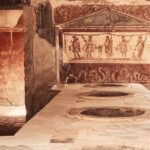
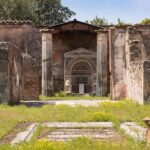
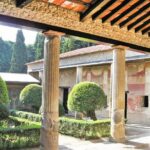
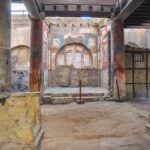
The tour doesn’t keep you in one lifestyle lane. It talks about eating with Pompeians in a take-away setting from the 1st century BC, then switching to the perspective of guests in a luxurious domus of the richest families.
This is a smart way to teach social structure. Pompeii wasn’t one uniform “ancient city look.” It had different classes, different spaces, and different ways of spending time and food.
In my view, the best payoff is how it changes what you notice as you walk. You start looking at the differences between ordinary street life and the more private, high-status domestic world, and the city reads like a system, not a postcard.
The Spa Moment, Leisure in a City That Was Still Moving
One of the tour’s more relaxing beats is a moment at the spa. Even with everything surrounding the eruption in 79 AD, the tour keeps returning to the fact that Pompeii had routine downtime.
Why that works: it prevents Pompeii from turning into only death and destruction. You’re seeing leisure as part of urban life, so the city feels whole for the time you’re there.
This is also where a guide’s presence matters. The spa areas can feel confusing without context, but with a live explanation, you get a clearer sense of how people might have structured their day.
The Civil Forum Square and the City’s Public Heart
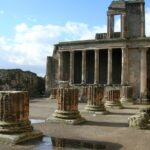
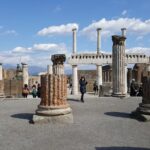
The route ends with the splendid square of the civil forum. This stop brings you back into a public zone, the kind of place where announcements, daily interactions, and civic life would all have braided together.
I like the forum moment because it ties the tour’s themes together. After entertainment, politics, meals, and leisure, you reach the area that feels like the center of public identity.
If you’re the kind of person who enjoys connecting locations into a single story, you’ll probably find this the most satisfying final stop. It gives your mental map a place where everything converges.
Michele Arpa and the Style That Makes Pompeii Feel Alive
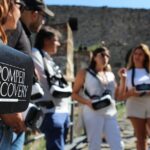
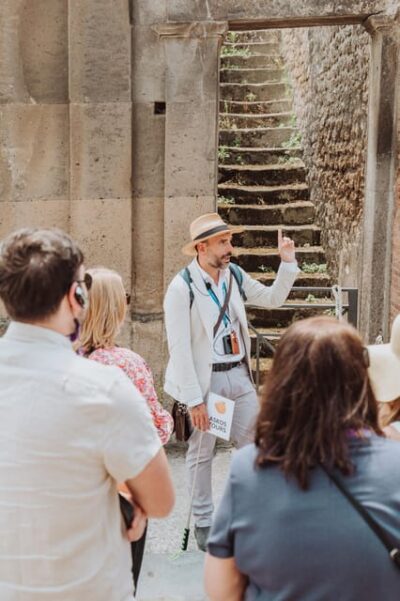
You’ll be guided by Michele Arpa, and the praise around him is consistent. People call out a fun, super-good guide who makes Pompeii come alive, especially through street walking and entering residences as part of the experience.
A recurring point is English ability and clarity. One review praises that he speaks English well, which is a big deal at Pompeii, where many signs and details are hard to interpret if you’re on your own.
Another strong theme is organization and care. In one account, Michele warned ahead when Pompeii exhibition areas were restricted due to Covid-19, then adjusted so the trip still felt worthwhile. That kind of flexibility helps you leave with a sense that the time mattered.
If you value a guide who doesn’t just list facts, but helps you understand what the places meant, this is likely a good match.
Price and Value: What $33.36 Buys You, and What It Doesn’t
At $33.36 per person, the price is positioned for people who want a guided experience without splurging on a full day. But you should treat it as guide service pricing, not complete Pompeii admission.
The tour includes a guide service, while entrance tickets to the site are not included. That’s actually common for Pompeii tours, but it matters for budgeting. Make sure you add admission when you plan your total cost.
So, is it good value? For me, it is, because you’re paying for interpretation, pacing, and connections between places. Pompeii can be overwhelming if you don’t know where to look, and a strong guide turns a short visit into a more meaningful one.
Getting There and Walking Comfortably on Uneven Ground
The meeting point is at the Pompeii Archaeological Park (80045 Pompei), and it’s near public transportation. That helps if you’re not driving directly into the site area.
The tour also asks for moderate physical fitness. It notes that due to the particular state of the roads, it is not recommended for visitors with mobility difficulties. This is one of those places where “short tour” still means walking on real outdoor surfaces.
On the positive side, service animals are allowed. So if that applies to your group, you can plan without having to guess whether it will be a problem.
Timing is another practical piece. The experience is listed as running Monday through Sunday from 9:30 AM to 11:30 AM, so you can pair it with other activities later in the day.
Should You Book Pompeii: Living With the Volcano?
Book it if you want Pompeii to feel like a functioning city right up until the eruption. This tour’s strength is the day-in-the-life approach, plus the stops that cover entertainment, politics, meals across social classes, leisure at the spa, and the civil forum square.
Skip it or consider an alternative if you have limited ability to handle uneven outdoor walking. Also, if you hate planning around separate admission tickets, you’ll need to add the park entry cost on top of the tour price.
Overall, I’d recommend this for first-time Pompeii visitors who want guidance and context without spending all day. If you want a short, focused experience led by Michele Arpa in English, it’s an efficient way to make the ruins feel human.
FAQ
How long is the Pompeii: living with the volcano tour?
It’s approximately 2 hours.
Is this tour offered in English?
Yes. The tour is offered in English.
What is included in the price?
The guide service is included.
Are entrance tickets to Pompeii included?
No. Entrance tickets to the site are not included.
Where does the tour start and end?
It starts at the Archaeological Park of Pompeii (80045 Pompei) and ends back at the same meeting point.
Is this a private tour?
Yes. It’s private, and only your group will participate.
Is the tour accessible for people with mobility difficulties?
It’s not recommended for visitors with mobility difficulties due to the state of the roads. It does note a moderate physical fitness level is required. Service animals are allowed.
More Tour Reviews in Pompeii

Not for you? Here's more nearby things to do in Pompeii we have reviewed




Tour Reviews, compared.
 ★ 4.8Pompeii: Entry Ticket and Guided Tour with an ArchaeologistFrom $3519,459 reviews
 ★ 4.2Pompeii: Entry Ticket with Optional Audio GuideFrom $2612,360 reviews
 ★ 4.8Pompeii: Small Group Tour with an ArchaeologistFrom $4012,264 reviews
 ★ 4.3Pompeii Ruins & Mount Vesuvius Day TourFrom $12011,459 reviews
 ★ 4.6Sorrento, Positano and Amalfi Full-Day TourFrom $10710,988 reviews
 ★ 5.0Sorrento, Positano & Amalfi Coast – Small Group TourFrom $768,643 reviews
 ★ 4.6Catacombs of San Gennaro Entry Ticket & Guided TourFrom $157,941 reviews
★ 5.0Pompeii Small Group Tour with an ArchaeologistFrom $356,593 reviews
★ 4.6Catacombs of San Gennaro Entry Ticket & Guided TourFrom $157,941 reviews
★ 5.0Pompeii Small Group Tour with an ArchaeologistFrom $356,593 reviews