
Tour review · TOUR REVIEWS
Pompeii tour with archaeologist
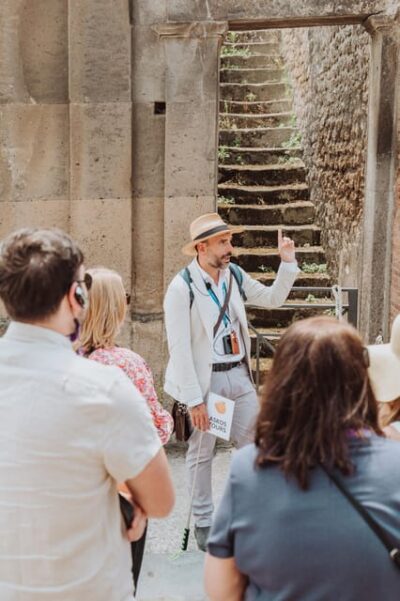
Pompeii makes more sense with a real guide. This archaeologist-led walk turns ruins into a story, from the city center to daily life, religion, and the eruption aftermath. I love that you get clear explanations without drowning in names, and you can actually ask questions as you go.
Two things I particularly like: the Forum storyline (with the granaries and plaster casts) and the way the tour points out specific visual details you might miss alone, like the Roman sundial at the Temple of Apollo and the famous mosaics in the House of the Faun. One small drawback to plan for is that Pompeii is outdoors, so the tour depends on good weather.
You are also not stuck in a huge crowd. The group is capped at 15, and the tour lasts about 2 hours 30 minutes, so you get a focused route that still leaves you energy to explore the excavations after the tour ends at the Forum.
Key takeaways before you go
- Archaeologist-led context that connects buildings to real life, politics, and the 79 AD eruption
- Small group size (max 15) that makes it easier to ask questions
- Forum highlights including the Granaries and casts connected to the disaster
- Big-art moments like the Dancing Faun bronze and the Alexander Mosaic
- Daily-life stops such as a well-preserved thermopolium and the Lupanar
- Ends at the Forum, so you can keep sightseeing on your own after the guided route
Why an archaeologist at Pompeii beats a self-guided scramble
Pompeii can feel like a puzzle where every piece is the same color of stone. What changes everything is interpretation. A guide who thinks like an archaeologist helps you see patterns: where people gathered, where money and food moved, and how religious and political power showed up in public architecture.
In this tour, you do not just get a checklist of what to look at. You get a guided narrative that frames Pompeii from its origins through the events around 79 AD. That matters because Pompeii is not frozen in one moment. It was changing, growing, and adapting right up to the eruption.
The tone also helps. Based on the way the guide work is described, it is an educational, question-friendly style, like a class that also happens to walk. That is ideal for first-timers, and it is also great if you have been to Pompeii before and felt overwhelmed, because the explanations are built to organize what you already see.
You can also read our reviews of more tours and experiences in Pompeii.
The 2.5-hour route, starting at Villa dei Misteri, ending at the Forum
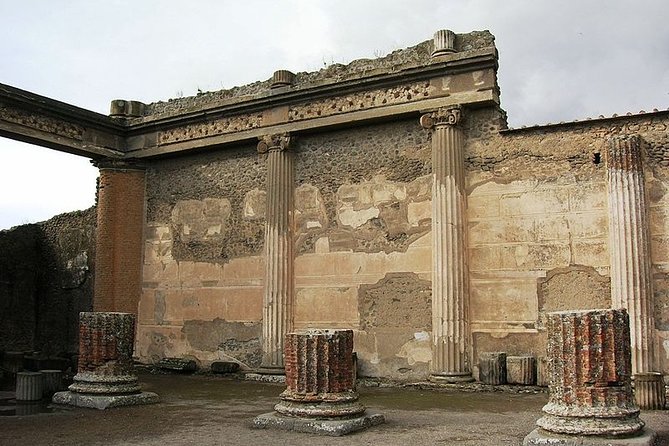
This tour starts at Pompei Scavi Villa Dei Misteri and finishes at the Foro di Pompei. That is a smart layout, because the Forum is the best place to end if you want to keep wandering on your own afterward. You can stretch the day and stay in the excavations without needing to find a new meeting point.
The duration is about 2 hours 30 minutes, and the route is paced in short segments. Many stops are around 5 to 15 minutes each, so you are not stuck in one spot for ages. That is exactly what you want in Pompeii, where shade is limited and walking adds up.
A big practical plus: the tour is offered in English (and also Italian or German), and you receive a mobile ticket. There is also a max of 15 travelers, which usually means you spend less time waiting and more time actually looking.
Forum to Granaries: Pompeii’s city center, plus the horror you can actually understand
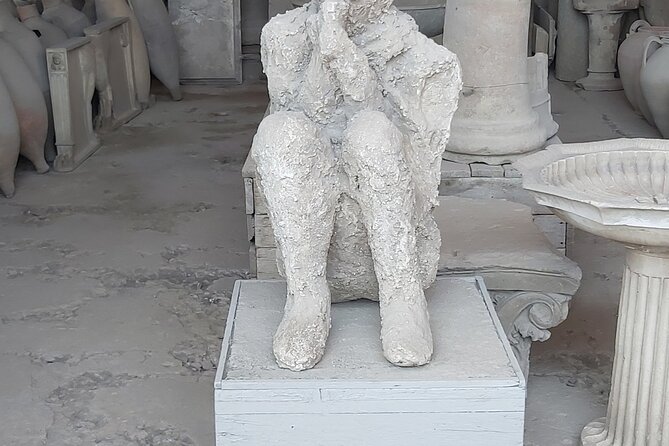
You kick things off at the Foro di Pompei. This is the social and political heart of the city. A good guide here does two jobs at once. First, you learn what the Forum was for. Second, you get the background to understand why the buildings look the way they do.
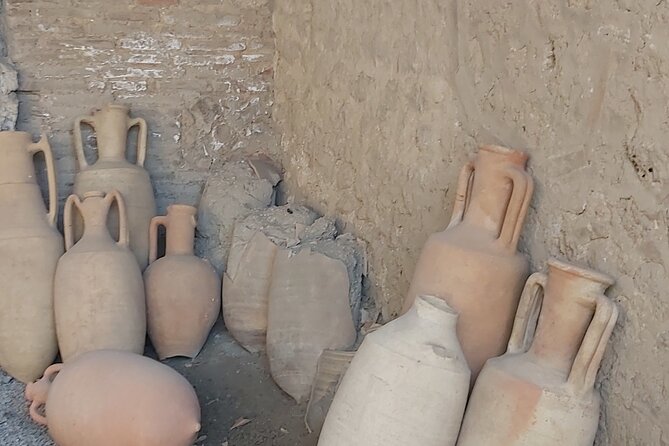
Next comes the Granai del Foro, the granaries. This is where the tour gets especially compelling, because you do not just hear about storage and supply. You see how archaeologists recover everyday details from what survived. The granaries included finds like amphorae, sculptures, and inscriptions, and the tour highlights the plaster casts of victims created from impressions left by the disaster.
That stop is emotional, but it is also educational. The casts are a way to make the eruption real in a place you can stand inside. If you are the kind of person who hates vague horror movies and wants something grounded, this is where the tour hits its stride.
Basilica and Temple of Apollo: public power and private belief in the same walk
From the Forum, you move to the Basilica, one of Pompeii’s most monumental buildings. Guides often rush past basilicas as generic big halls, but here you get the functions explained. The goal is to help you picture the space as it worked: where people conducted business and where public life played out.
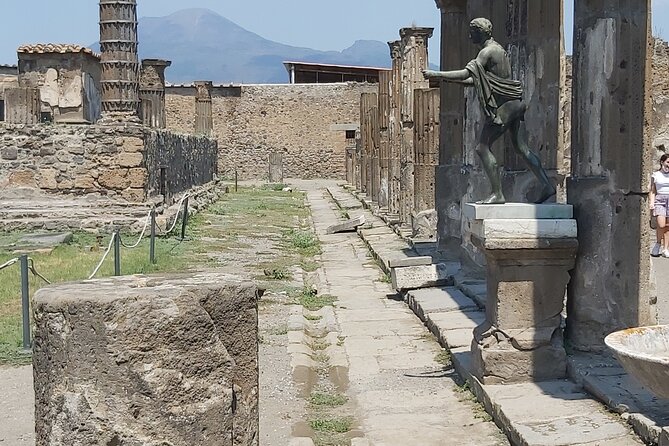
Then you reach the Temple of Apollo. This is one of those spots where the ruins look dramatic even before the explanation starts. The tour points out the temple’s original finds, including sculptures, altar and fountain elements, inscriptions, columns, and even a Roman sundial. That sundial detail is a great example of what makes an expert guide worth it: you start noticing timekeeping and ritual as part of the architecture, not just decoration.
If you love the intersection of art and function, this is a strong stretch. It also helps you understand how Romans built religion into daily life. You are not just seeing a temple. You are seeing a system.
Hotel Vittoria, Cave Canem, and the doorway into elite Pompeii
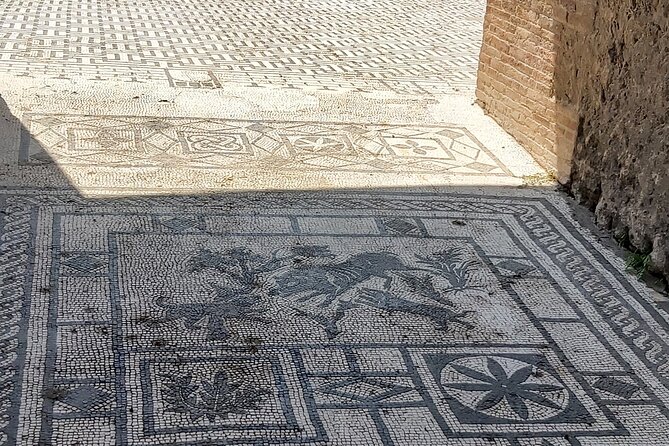
You get a quick look at the Hotel Vittoria, described as an ancient gateway to the city and the surrounding area. Even if that stop is short, it is useful because it reminds you Pompeii is not a theme park. It is a real city with boundaries, entrances, and routes that shaped movement.
The tour then spotlights the entrance mosaic Pompei Il Mosaico Cave Canem, placed at the entrance to the House of the Tragic Poet. The message is exactly what it sounds like, but the value here is the guide’s ability to connect a simple image to the wider idea of how homes advertised identity, wealth, and attitude. It is one of those details that makes Pompeii feel personal.

House of the Faun: huge scale, famous art, and why “largest” matters
Next up is the Casa del Fauno, the House of the Faun, described as the largest house in Pompeii. Scale matters here, because larger homes were not just bigger versions of the same plan. They reflected status, lifestyle, and how elite families used space.
This stop focuses on major masterpieces found there. You hear about the bronze sculpture of the Dancing Faun, and you also see the Alexander Mosaic, made of more than a million tiny colored tiles. The mosaic is one of the most visually overwhelming things in Pompeii, even when you are standing still. A guide helps you process it, instead of just admiring it for a moment and moving on.
If you want a reason to book a guided tour instead of reading a plaque, it is this kind of art. The interpretation gives context for subject and style, and it helps you connect the artwork to the people who lived around it.
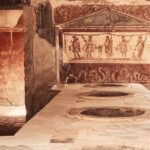
Thermopolium Regio VI, Insula VIII, 8: ancient fast food with real social meaning
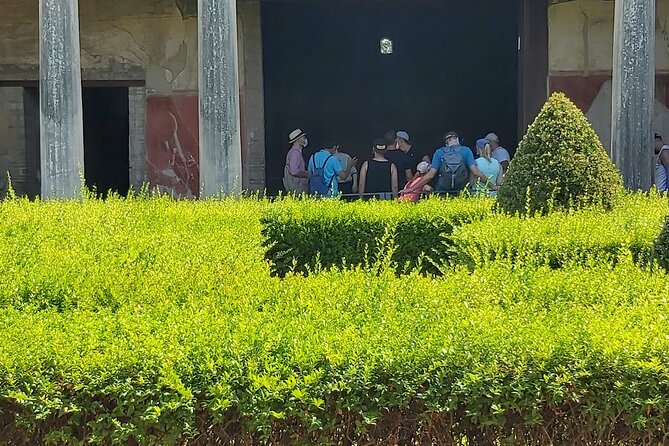
The tour moves to a thermopolium (a kind of ancient takeaway food place). Stop this one is short, but it is packed. A guide explains why these spots mattered, not just what they sold.
The emphasis is on social life and nutrition. Pompeii was full of everyday habits, and thermopolia were part of that rhythm. You start realizing that city life was not only temples and theaters. It was also where people ate when they were busy, where they gathered, and where food culture played out in public.
If you are curious about daily routines, this is the stop that brings Pompeii closest to the present day.
Theater district, main street planning, and the way Pompeii designed movement
A big part of Pompeii is how it moves. The tour includes Via dell’Abbondanza, a famous street that helps you understand the road network and the urban plan.
Then you head into the theater district, including the Teatro Grande and Teatro Piccolo, plus the Quadriportico dei Teatri. The value of a guide here is orientation. Pompeii’s theater spaces can be hard to “read” if you are not sure where to stand or what you should be noticing.
You learn how the theater zone functioned, and you get a sense for what the city’s entertainment options looked like at scale. It is also a relief, because it shifts you from religious and domestic spaces to a public, civic atmosphere.
Doric Temple and Triangular Forum: the oldest feel in Pompeii
The tour includes the Doric Temple, described as the oldest temple in Pompeii, along with the so-called Triangular Forum. This stop is brief, but it adds an important time layer. When you see the older remains explained in context, Pompeii stops feeling like one era only.
Older religious architecture also helps you understand how the city developed. It is easier to follow the story when you can trace change over time, even if your route is short.
Stabian Baths (Terme Stabiane): where comfort, routine, and architecture meet
Next comes the Stabian Baths, a major thermal building. If you think baths are just a place to wash, you will be surprised by how much social meaning gets attached to bathing in Roman life. The guide explains the building as an example of ancient thermal architecture, which gives you a lens for how these spaces were arranged and used.
This is another stop that makes Pompeii feel livable. Baths connect to routine, hygiene, and conversation. It turns the ruins from scenery into a system people used every day.
Lupanar: the brothel with preserved rooms and fresco scenes
You end with the Lupanar, described as Pompeii’s most spectacular example of an ancient brothel, famous for the exceptional state of conservation of the bedrooms and erotic frescoes depicting different amorous positions.
This stop is not for everyone, and you do not have to force it. But if you do want to understand Pompeii as a full society, not only the polite parts, it is an essential stop. You also get a lesson in how archaeologists interpret sites like this carefully, with attention to what is preserved and what can and cannot be concluded from it.
Even at a distance, the Lupanar helps balance the tour. It complements temples, theaters, and elite houses by showing the underbelly of everyday city life.
Price and value: is $42.01 a smart spend?
At $42.01 per person, this tour is positioned as a focused way to get expert interpretation without paying for a full day. The math gets better when you compare what you get in 2 hours 30 minutes: the Forum and Granaries, major temples, top houses and famous mosaics, plus everyday life stops like the thermopolium and baths.
What is not included matters. Food, drink, tip, and the entrance fee are not part of the tour price. So you should treat the headline price as guidance, not your total cost for the day. If you are on a tight budget, plan your Pompeii entry ticket in advance and keep it simple.
Still, I think it is strong value if you are the type of visitor who gets tired reading plaques. An archaeologist can help you prioritize, and that saves time and energy. It also helps you see the difference between what is impressive and what is meaningful.
One more practical note: the tour is commonly booked around 44 days in advance. That is a sign it fills up. If you can pick a date, pick it. Your future self will be grateful when you do not have to hunt for alternatives.
Who should book this Pompeii tour with an archaeologist?
This is ideal for you if:
- You want Pompeii explained in a logical order, not a random walk through scattered rooms
- You love standout art like mosaics, but also want the buildings and objects connected to life
- You want a small group setting, not a wall of people funneling past a guide
- You are in Pompeii for a limited time and want the big areas covered efficiently
You might choose something else if you already have a deep familiarity with Roman archaeology and you prefer to wander slowly with an audio guide. But if Pompeii has ever felt like sensory overload, this kind of structured route is exactly what helps.
Should you book it? My practical decision guide
Book this tour if you want the quickest path from ruins to understanding. The route hits Pompeii’s biggest story points: the Forum and Granaries, the temples, the elite homes and their masterpieces, and the daily-life and after-dark world of thermopolia and the Lupanar. You also finish at the Forum, so you can extend your visit without extra planning.
Skip it if you are only interested in a few buildings and you hate the idea of following a schedule. In that case, a self-guided visit can work, but you will likely miss how everything connects.
If you are ready to let an archaeologist turn Pompeii into a readable story, this one is an easy yes.
FAQ
What is the duration of the Pompeii tour with an archaeologist?
The tour lasts about 2 hours 30 minutes.
Where does the tour start and end?
It starts at Pompei Scavi Villa Dei Misteri and ends at Foro di Pompei.
What languages are available for the tour?
The guided tour is offered in Italian, English, or German.
Is the tour price all-inclusive?
No. The tour price includes the guided tour, but food, drink, tip, and the entrance fee are not included.
Do I need to bring an entrance ticket to Pompeii?
The tour does not include the entrance fee, so you should plan to have the relevant entrance sorted for visiting the excavations.
How big is the group?
The tour has a maximum of 15 travelers.
What if weather is bad or the minimum number of travelers is not reached?
The tour requires good weather. If it is canceled due to poor weather, you will be offered a different date or a full refund. If the minimum number of travelers is not met, you will also be offered a different date or a full refund.
Is free cancellation available?
Yes. You can cancel for a full refund up to 24 hours in advance of the experience start time.
More Tours in Pompeii
More Tour Reviews in Pompeii
Not for you? Here's more nearby things to do in Pompeii we have reviewed



Tour Reviews, compared.
 ★ 4.8Pompeii: Entry Ticket and Guided Tour with an ArchaeologistFrom $3519,459 reviews
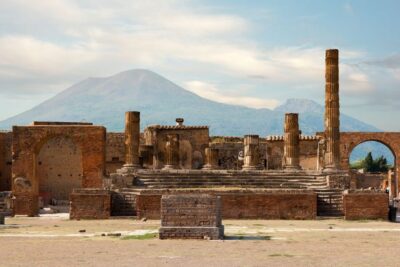 ★ 4.2Pompeii: Entry Ticket with Optional Audio GuideFrom $2612,360 reviews
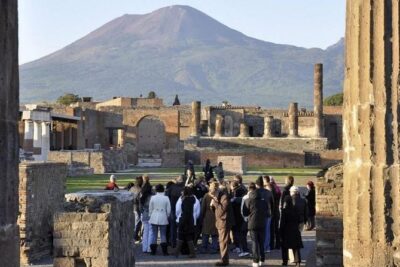 ★ 4.8Pompeii: Small Group Tour with an ArchaeologistFrom $4012,264 reviews
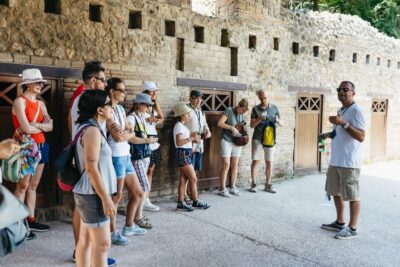 ★ 4.3Pompeii Ruins & Mount Vesuvius Day TourFrom $12011,459 reviews
 ★ 4.6Sorrento, Positano and Amalfi Full-Day TourFrom $10710,988 reviews
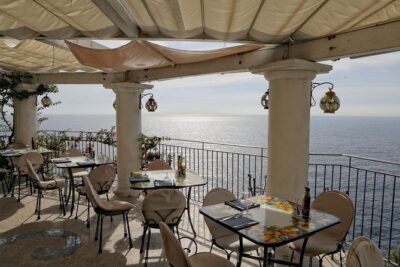 ★ 5.0Sorrento, Positano & Amalfi Coast – Small Group TourFrom $768,643 reviews
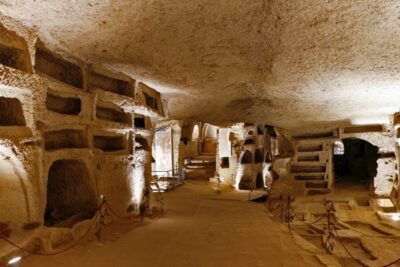 ★ 4.6Catacombs of San Gennaro Entry Ticket & Guided TourFrom $157,941 reviews
★ 5.0Pompeii Small Group Tour with an ArchaeologistFrom $356,593 reviews
★ 4.6Catacombs of San Gennaro Entry Ticket & Guided TourFrom $157,941 reviews
★ 5.0Pompeii Small Group Tour with an ArchaeologistFrom $356,593 reviews