
Tour review · TOUR REVIEWS
Pompeii with an archaeologist, small group!!!
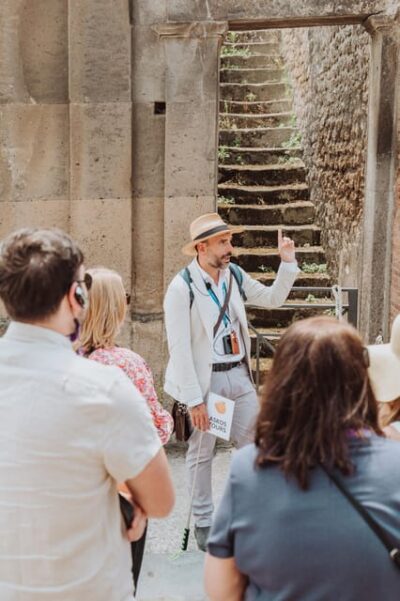
Pompeii hits different with an expert. I especially love the archaeologist-led storytelling and the way the walk stays focused on everyday Roman life, not just big ruins. The afternoon timing is also a win for comfort and photos. The only real drawback to consider is the visit is short, about 2 hours, so you will move at a brisk, highlights-first pace.
With a maximum of 12 people, this is the kind of Pompeii outing where you can actually hear explanations and ask practical questions. You’ll follow a route that covers major, recognizable Pompeii stops like houses, shops, baths, the theater, and the lupanary, plus a special feature involving moving molds, all with a Pompeii Express Entrance Ticket included.
Key Points to Know Before You Go
- Archaeologist-led guidance keeps the ruins readable, especially around daily life and Roman habits
- Small group size (12 max) means less queue stress and more room for questions
- Afternoon routing is designed to reduce heat and crowds, with nicer end-of-day light
- Two-hour highlights plan covers the most famous sites without eating your whole day
- Pompeii Express Entrance Ticket is included, saving you time at the gate
Why an Archaeologist Tour Helps in Pompeii
Pompeii is one of those places where you can stare at stones for hours and still feel like you missed the point. This kind of tour solves that problem by pairing what you see with a clear guide to what it meant back in Roman times. An archaeologist brings the kind of explanation that helps you connect architectural details to real life, like how people lived, worked, and spent their days.
I like that this visit is built around understanding the Roman city as a functioning place, not a museum with random rooms. You’re not just collecting photos of columns. You’re getting help reading the “typical house with its decorations,” the everyday shop spaces, and even stops tied to leisure and nightlife.
One more smart touch is that the archaeologist’s focus includes daily life habits. Pompeii is famous for being frozen in time, but the whole thrill is imagining what those routines looked like before the eruption of Vesuvius in 79 AD buried the city.
You can also read our reviews of more tours and experiences in Pompeii.

The Small Group Advantage, 12 People Max
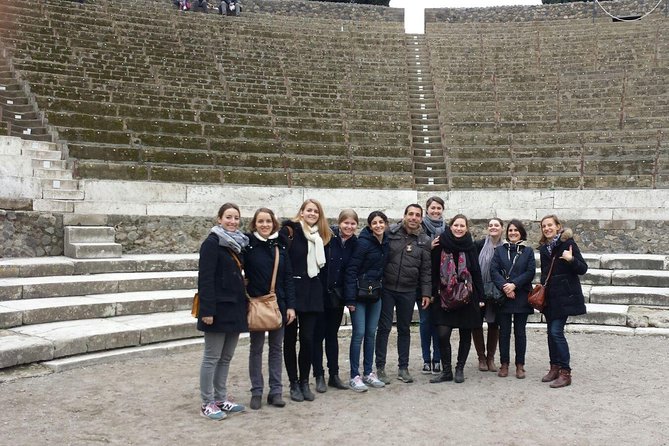
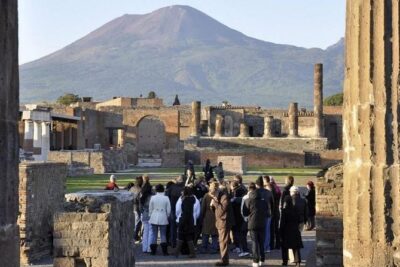
The group size matters a lot in Pompeii. It is a big site, and if you’re stuck behind a slow-moving cluster, your whole day turns into waiting. Here, the cap is 12 travelers max, which usually keeps the pace manageable and the experience more personal.
You also benefit from a smaller group during the “aha” moments. When the guide points out what you’re looking at, you are close enough to understand without playing head-tilt games. And since the tour is only about two hours, you want every minute to count. Small group tours tend to protect that time.
If you’re the type who gets frustrated by crowded tours, this structure helps. It is also family-friendly, which usually means the guide can keep things understandable for mixed ages, not just hardcore history buffs.
Meeting at Ristorante Suisse and the 2-Hour Rhythm
You start at Ristorante Suisse, Piazza Esedra, 10/13, 80045 Pompei NA, Italy. The tour ends back at the same place, so you do not have to worry about a complicated end-location.
Duration is about 2 hours, and that tells you everything about the style of visit: highlights, not everything. This is ideal if Pompeii is one big stop on a wider itinerary, or if you want a guided path that keeps you oriented. You’ll see the major featured sites, but you will not have time to wander freely into every corner.
A practical tip: wear comfortable shoes, because even a “quick” Pompeii visit involves lots of walking on uneven surfaces. Also bring a hat and water planning for warm weather, especially since the tour is designed to avoid the worst heat later in the day.
Pompeii’s Big Story: A Roman City Buried in 79 AD
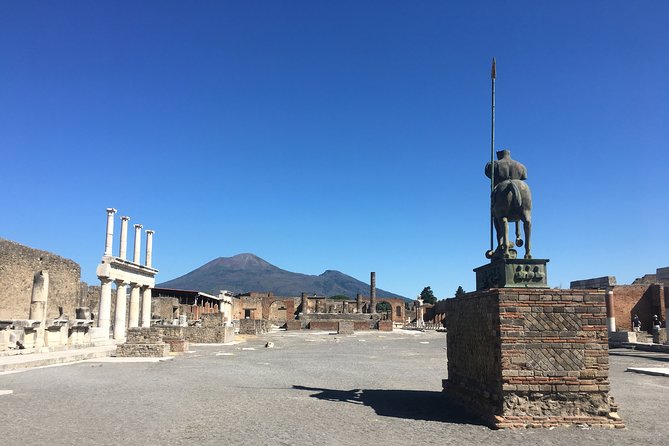
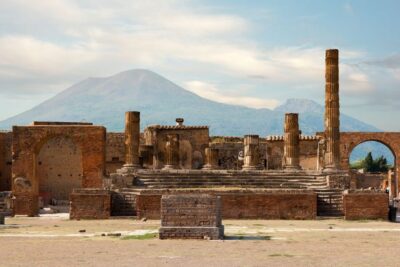
The tour frames Pompeii with its central event: a Roman city covering about 66 hectares was buried by the eruption of Vesuvius in 79 AD. That fact changes how you look at everything you see. It turns ruins into evidence, like layers of daily life preserved under ash.
What I like is how this framing stays relevant to the stops you visit. Pompeii is not just about tragedy, even though that is part of its power. The city’s preserved buildings let you understand how Romans structured life, from where they ate and shopped to how they relaxed and gathered for events.
During the walk, you focus on important and famous buildings, including the typical house with its decorations and places tied to public and semi-public life. That mix helps you build a mental map quickly, which is exactly what many visitors struggle with. In a short tour, getting oriented is half the value.
Houses and Shops: Reading Everyday Roman Life
This is where the tour becomes most “practical.” Seeing Pompeii is impressive, but it gets better when you understand what parts relate to daily routine.
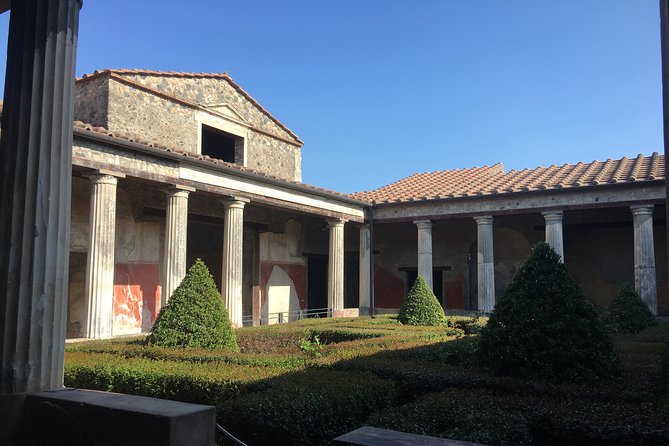
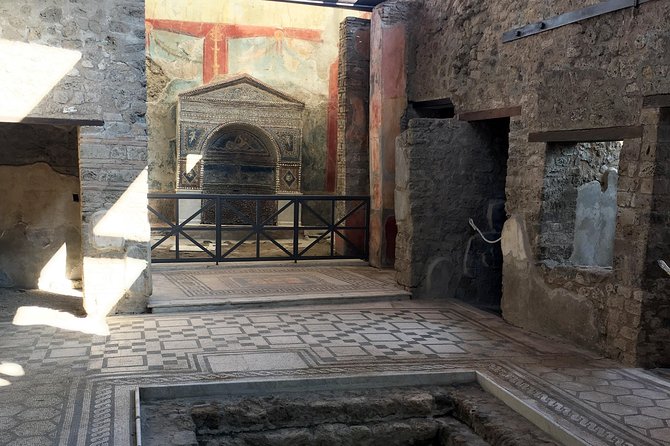
You’ll visit a typical house with its decorations, which matters because it helps you grasp what home life looked like in Roman times. Even without getting lost in a technical lecture, the house stop gives you a baseline for how people arranged space, and how decoration signaled taste and status.
Then you shift to shops, which keeps the city from feeling like it is only about elite residences. Shops make Pompeii feel commercial, like a city where people bought and sold goods right there in the streets. It is an important change of pace, and it is one of the reasons this tour works well for families: it feels like you’re exploring a lived-in place, not just touring monuments.
If you’re into photography, these stops are also strong because they show details tied to real functions. Doorways, storefront areas, and decorative elements tend to photograph well because they read as “something that was used,” not just something that survived.


Thermal Baths and the Theater: Leisure in Roman Style
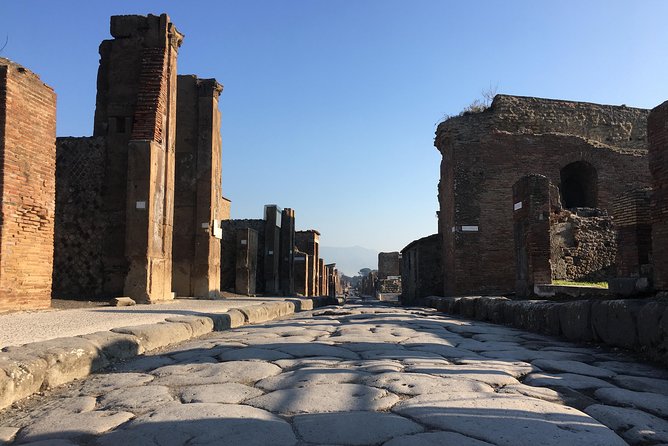
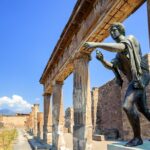
Next up are two big categories of Roman social life: relaxation and performance. You’ll visit the thermal baths, and that stop helps you picture how Romans spent time, not just where they lived.
Baths in Pompeii also give your guide an easy way to connect space to habit. You can think of the baths as a daily rhythm, part of public life and part of personal routine. Even if you only have two hours, this stop adds variety, because you are not staying in residential streets and small indoor rooms.
Then you’ll see the theater, which shifts the city toward gatherings and entertainment. A theater stop is valuable because it helps you understand that Pompeii had public spaces where people gathered, watched, and interacted. It is one of those Pompeii moments that makes the city feel like it had a pulse.
For many visitors, the baths and theater are also where the scale becomes clearer. You start to see why Pompeii mattered as a city, not just as a collection of buildings.
The Lupanar Stop and the Human Side of Pompeii
The tour includes a stop at the lupanary. It’s not a casual mention, because the topic is part of the city’s day-to-day realism. Including the lupanary is a way of confronting how complex Roman life really was, including darker corners of society.
I appreciate that the tour does not treat Pompeii as sanitized. When a tour includes places like the lupanary, it signals that the guide is aiming for an honest picture of how people used the city. The emphasis on daily life and habits ties the lupanary back to the overall theme: Pompeii was a full social world, not a postcard.
If you have strong sensitivities around this topic, you should know it is part of the route. The good news is that the stop is included as a defined segment within a structured tour, rather than a long detour.
The Moving Molds Moment: Why It Sticks
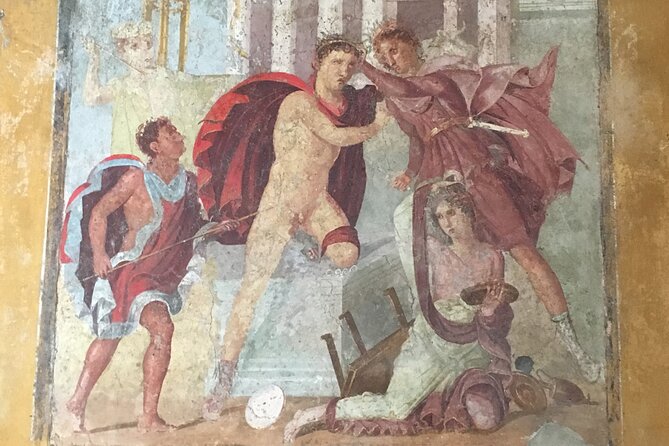
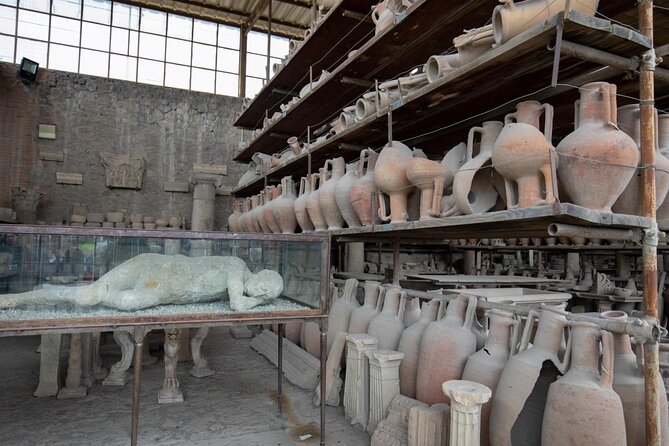
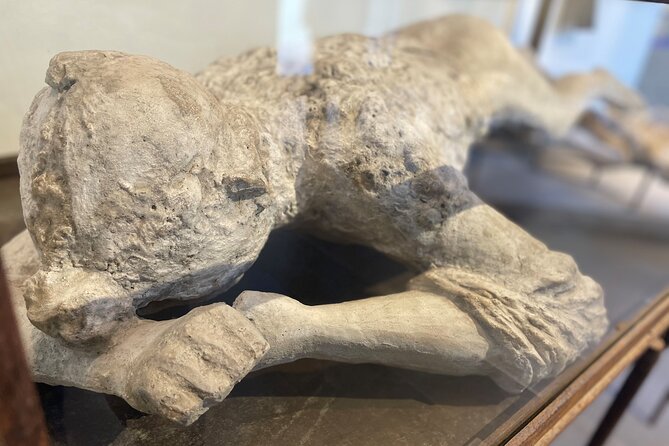
One of the most memorable pieces mentioned for this tour is the moving molds. I won’t pretend the name alone explains what you’re about to see, because the value is in how the archaeologist connects it to what the site represents.
What I can say from the way this kind of stop functions in Pompeii tours is simple: it helps you visualize people in a place that otherwise only shows architecture. When a guide brings you to a feature like moving molds, the goal is usually to make the human story concrete, not abstract.
In a two-hour format, this is the kind of stop that tends to stick in your mind. Even if you’ve seen pictures before, seeing it in context with an archaeologist’s explanation makes it feel different. This is also where good guides matter, because you want the moment framed clearly as part of the city’s story, not just a spectacle.
Timing Matters: How the Afternoon Route Beats Crowds
This tour is designed for the afternoon, specifically to avoid the heat and the busiest crowd flow. In Pompeii, those two things can turn a great visit into an endurance test. The timing also matters for how you experience the ruins visually, especially toward the end of the day.
The tour description mentions that the charm of the light at the end of the day makes it magical. Even if you’re not chasing dramatic photos, better light makes details easier to see, and it generally makes the walk feel less harsh.
Practical note: Pompeii can still be warm in the afternoon. Plan for sun and bring water. If weather is poor, the experience may be canceled and you’ll be offered a different date or a full refund, so keep an eye on conditions.
Price and Value: What $66.09 Gets You
At $66.09 per person, you are paying for a short guided experience with two key value drivers: an archaeologist and an included Pompeii Express Entrance Ticket.
Entrance fees in Pompeii add up fast, and express entry helps reduce dead time at the gate. Then you get the human value, which is the archaeologist guiding you through the most important buildings and tying them to daily life and habits. In other words, this price isn’t just for access. It is for interpretation.
The other value angle is time. Two hours is not enough to see everything, but it is enough to see the main highlights in a way that helps you understand what you’re seeing. If you would otherwise spend hours trying to figure out a self-guided route, a guided highlights plan can feel like a bargain.
One thing to know: lunch is not included, so you’ll want to plan food before or after. That’s not a dealbreaker, just something to add to your timing.
Who This Tour Fits Best (and Who Might Want More Time)
This is a strong choice for families. It is short, structured, and designed to keep the experience moving without turning it into a marathon. It is also good for people who like photography, because the route hits recognizable stops and the afternoon light helps.
It’s also a good fit if you care about archaeology but you do not want to be stuck in a lecture hall. The tour is designed around the visible evidence of Roman life in Pompeii, with an archaeologist helping you decode it.
Who might want a longer option? If you want to wander off-script for long, or you want to stop repeatedly to study every inscription and small detail, two hours may feel tight. For that, you’d likely want a longer guided or a self-guided day. This one is about clarity and highlights.
Should You Book This Small Group Pompeii Tour?
I’d book it if you want Pompeii that makes sense fast. The mix of an archaeologist guide, a 12-person max group, and an afternoon schedule built to reduce heat and crowds is a smart combo for most people.
I would skip it or pair it with more time if you know you want a slow, do-everything day. This tour is built for efficiency and understanding, not for endless roaming. If that sounds like you, you’ll probably leave Pompeii feeling oriented, impressed, and with a story you can actually explain to friends.
FAQ
How long is the Pompeii tour?
The tour is approximately 2 hours.
Is this a small group experience?
Yes. It is a small group with a maximum of 12 travelers.
What language is the tour offered in?
The tour is offered in English.
What is included in the price?
The tour includes a tour with an archaeologist, a small group, and a Pompeii Express Entrance Ticket.
Where do we meet for the tour?
The meeting point is Ristorante Suisse, Piazza Esedra, 10/13, 80045 Pompei NA, Italy.
Is lunch included?
No, lunch is not included.
What happens if the weather is poor?
If the experience is canceled due to poor weather, you’ll be offered a different date or a full refund.
Are cancellations refundable?
Yes. You can cancel up to 24 hours in advance for a full refund. Cancellation cut-off times are based on the local time of the experience.
More Tour Reviews in Pompeii

Not for you? Here's more nearby things to do in Pompeii we have reviewed




Tour Reviews, compared.
 ★ 4.8Pompeii: Entry Ticket and Guided Tour with an ArchaeologistFrom $3519,459 reviews
 ★ 4.2Pompeii: Entry Ticket with Optional Audio GuideFrom $2612,360 reviews
 ★ 4.8Pompeii: Small Group Tour with an ArchaeologistFrom $4012,264 reviews
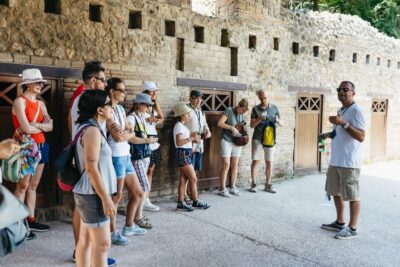 ★ 4.3Pompeii Ruins & Mount Vesuvius Day TourFrom $12011,459 reviews
 ★ 4.6Sorrento, Positano and Amalfi Full-Day TourFrom $10710,988 reviews
 ★ 5.0Sorrento, Positano & Amalfi Coast – Small Group TourFrom $768,643 reviews
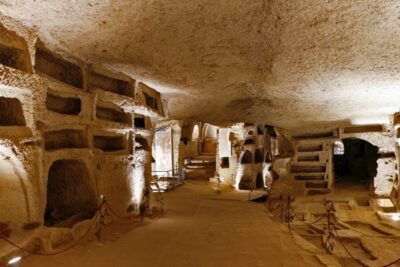 ★ 4.6Catacombs of San Gennaro Entry Ticket & Guided TourFrom $157,941 reviews
★ 5.0Pompeii Small Group Tour with an ArchaeologistFrom $356,593 reviews
★ 4.6Catacombs of San Gennaro Entry Ticket & Guided TourFrom $157,941 reviews
★ 5.0Pompeii Small Group Tour with an ArchaeologistFrom $356,593 reviews