

Tour review · TOUR REVIEWS
Stories of Pompeii: Small Group tour with archeology expert guide
Pompeii clicks faster with the right guide. This 2-hour small-group tour pairs an archaeology expert with a tight route through some of Pompeii’s most famous public spots, with the entrance ticket handled for you. I like that it is structured enough to keep momentum, yet detailed enough to make the ruins feel like real places.
You’ll get headsets when the group is bigger than 6, so you can actually hear explanations without craning your neck. The one thing to plan around is that this is a packed 2 hours, and the guided visit of Villa dei Misteri is not included, plus you cannot bring large bags into the site.
Key highlights at a glance
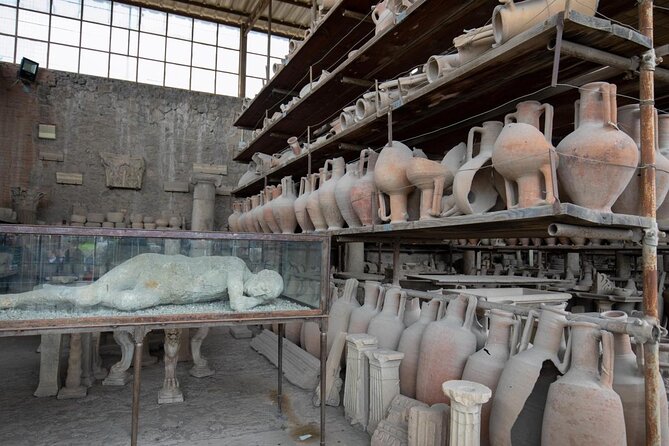
- Small group capped at 16, which usually means quicker questions and less waiting around.
- Entrance fees included, so you spend less time at ticket checks and more time walking.
- Headsets when needed, a simple upgrade that makes stories easier to follow.
- A public-places route, taking in the theatre, amphitheatre, baths, and everyday stops like a thermopolium.
- Roman life told through ruins, with guides such as Maria Novella and Pippo highlighted for storytelling that brings the site into focus.
Pompeii in Two Hours: the smart way to see the essentials
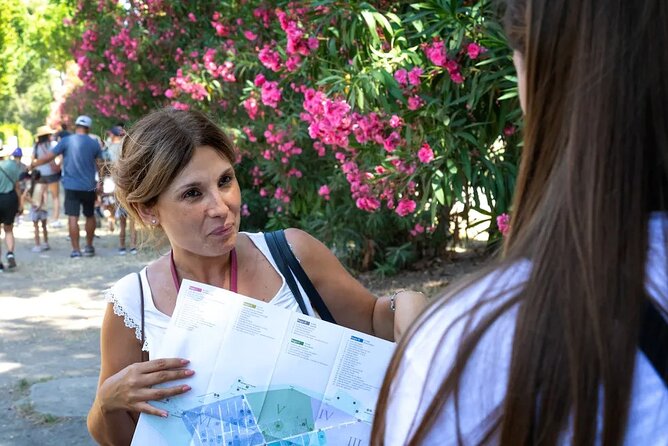
Pompeii is huge, and doing it on your own can turn into a blur of walls and streets. This tour is built around the idea that you want the biggest, most meaningful sights in a short window, with explanations attached to what you are seeing right now.
At about 2 hours, the pacing is ideal for first-timers. You are not trying to “cover everything,” you are focusing on key buildings that help you understand how a Roman city worked. That matters because Pompeii is not just dramatic ruins, it is a working snapshot of daily life paused in time.
The price, $54.44 per person, feels more reasonable once you remember what’s included. You are not only buying access to the archaeological park, you are also getting a local guide and the structure of a guided walk. If you were to wing it and then pay for a guide separately later, you’d often lose time and flexibility.
You can also read our reviews of more guided tours in Pompeii


Piazza Esedra start: how to get there on time and keep the day easy
The meeting point is Piazza Esedra, 80045 Pompei NA, Italy, and the tour ends at the Archaeological Park of Pompeii. That sounds straightforward, but Pompeii logistics can get annoying fast, especially if you rely on public transport that does not run like a Swiss train.
The practical advice here is simple: arrive early. You should plan to get to the site at least 15 minutes before the tour begins. Late arrivals are not guaranteed to be accommodated, and nothing ruins your morning like rushing while everyone else is already starting.
Also think about timing in hot months. The tour recommends bringing water and wearing comfortable shoes, and I agree. Pompeii’s surfaces can be uneven, and you will walk more than you think once you start weaving between buildings and viewpoints.
Entrance rules and bags: what to know before you show up
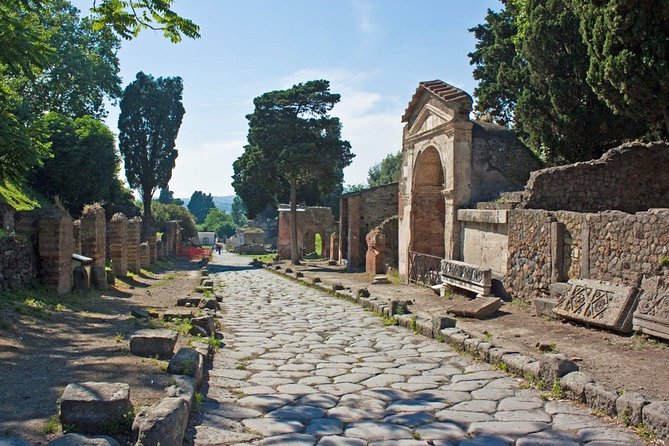
One of the most useful things about this experience is that it comes with a clear on-site rule set. You cannot bring large bags and backpacks inside the Pompeii site. The workaround is good: you can leave them at the entrance at a free cloakroom service and pick them up at the end.
This means you should pack light. A small day bag with water is typically the way to go, plus whatever you need for sun protection. Keep in mind you will be moving fairly quickly through different areas, so anything bulky just becomes dead weight.
If you are used to strolling museum-to-museum with a big backpack, adjust your plan. Pompeii is different, and the rule about bags is there to keep the flow moving.
Small-group experience: capped at 16 and designed for hearing the guide

The tour has a maximum of 16 travelers. For Pompeii, that sweet spot matters. Large crowds turn explanations into noise, and you end up repeating the same question to yourself over and over. With a group this size, you generally get better attention from the guide, and you can actually follow the logic of the route.
When the group exceeds 6 people, you receive headsets. That is a small detail that makes a big difference outdoors, where sound travels weirdly between stone walls. It also helps if you are walking a step behind, you do not lose the narration.
This is also a tour format that benefits from a bit of curiosity. If you like asking questions, you can usually do it without feeling like you’re holding up a moving crowd.
Theatre, brothel, baths, amphitheatre: what the stops really teach you
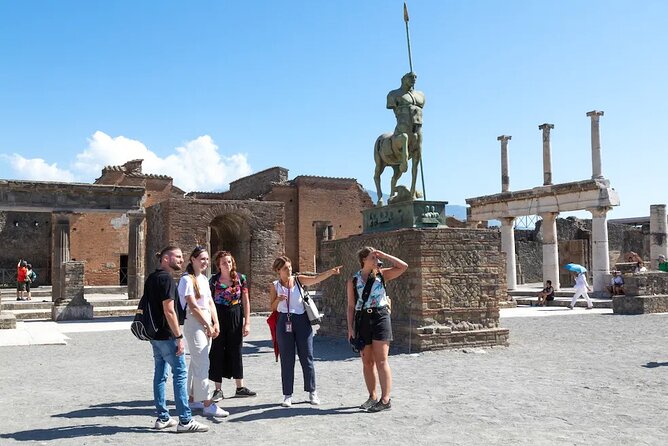
Even without seeing a printed route list ahead of time, you can expect the tour to focus on Roman public life and entertainment, plus a few everyday corners that show how normal people ate and interacted.
Here’s what you’ll likely connect with as you move through the site:

The theatre: culture and spectacle
A theatre in a Roman city was more than entertainment. It was where social norms got performed, where news and stories traveled, and where people gathered in a shared public space. When you stand in the theatre area during a guided walk, you are not just looking at seating, you are learning how communal events shaped daily rhythms.
One practical benefit: the theatre is a good “orientation” stop. It helps you understand the city’s layout and what kind of buildings went where.
The brothel: a surprising window into Roman daily life
The brothel stop tends to land like a plot twist, because Pompeii does not sanitize its past. This is where the tour’s storytelling approach becomes especially important. You are seeing a place that hints at economics, rules, and human behavior, not just sex and shock value.
I like that the tour includes this stop because it adds balance. Pompeii’s most famous buildings are only part of the picture. A city also has private transactions and public attitudes, and the guide helps you read what you see without turning it into a joke.
Spas and baths: social life you can feel
Pompeii’s bath areas and spas matter because they were daily hubs. People discussed news, exercised, relaxed, and socialized. Even if you have never used Roman-style bathing yourself, you can understand the function quickly when a guide explains the purpose of each space you pass.
The key value here is context. Without it, baths can look like rooms of stone. With context, they become a map of routines: before and after activities, meeting points, and the social texture of the city.
The amphitheatre: power, crowds, and spectacle
The amphitheatre is the place where Pompeii’s public side gets loud, even when you are standing quietly today. You learn how crowds gathered, how entertainment reflected authority, and why massive buildings like this were designed to hold people in motion and anticipation.
This stop also tends to give you great visual anchors. You can grasp the scale in a way that makes the rest of the city feel more connected.
The thermopolium: a fast-food clue from antiquity
A thermopolium is one of those buildings that makes Pompeii feel human because it looks like a practical business. It is essentially a place for quick meals and drinks, so you get a glimpse of everyday consumption habits.
If you are a “how did people actually live?” type, this is often the stop that hits hardest. You are not reading a grand monument, you are seeing a working corner of the city.
Plus, more stops along the way
The highlights list includes theatre, brothel, spas, amphitheatre, thermopolium, and more. That more is the real bonus. A guided tour is not only about specific big-name buildings, it’s about the in-between details, how one area leads to another, and how the guide connects the dots for you as you walk.
Why the guides matter: Maria Novella and Pippo style storytelling
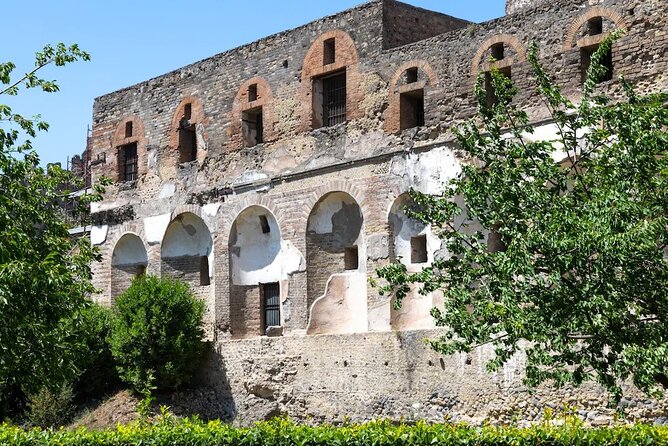
What makes this tour special is not just that it shows Pompeii’s main sights. It is how the guide frames them.
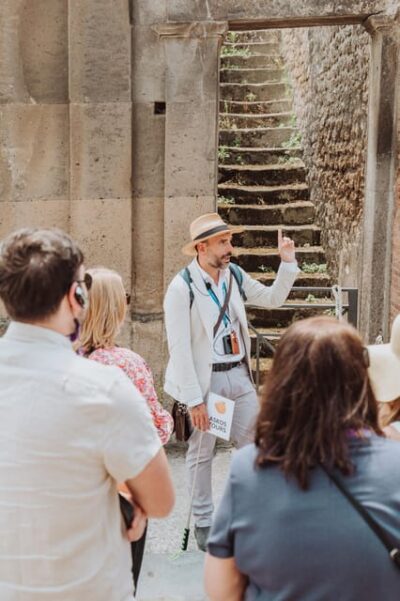
Maria Novella is highlighted for being a strong storyteller and for making the ruins feel alive. Pippo is also noted for preparation and lots of information shared in a friendly way. That combination matters: well-prepared delivery and a knack for narrative turn stone into scenes.
Here is the practical impact for you. On your own, you might read a description plaque and then move on. On this tour, the guide uses stories to help you remember what you saw. You end up understanding why certain buildings existed where they did, and what they say about Roman attitudes and daily routines.
If you want Pompeii to feel like a living city, not a homework assignment, this guide-led approach is the point.
What’s included, what’s not, and how to plan your day
Included:
- 2-hour small-group tour
- Friendly local guide
- Entrance fees
- Headset (for groups of more than 6 people)
Not included:
- Food and drinks
- Transportation to the meeting point
- Guided visit of Villa dei Misteri
So plan snacks separately if you need them, and do not count on food stops during the 2 hours. Also, if you are doing Pompeii as part of a day trip, plan your transit earlier than you think. The tour explicitly notes that public transport is not entirely efficient, so you want buffer time.
One extra note that helps: the duration is approximate, so keep expectations flexible. Pompeii has crowds, sightlines, and uneven walking. A guide keeps things moving, but you still want to enjoy the pauses.
Value check: ticket plus guide in a short, focused route
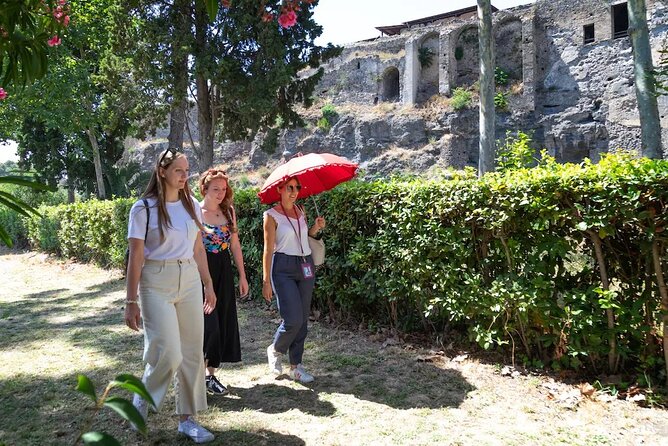
At $54.44, this is not the cheapest way to see Pompeii. It is also not “pay for nothing” pricing. You are paying for three things that add up fast:
- Entrance fees are included
- You get an expert local guide
- You get a structured walk across multiple major public buildings
- Headsets help you follow the explanation
If you prefer to read on your own, you can DIY Pompeii and spend less. But you may lose what you most want out of a first visit, understanding what each area meant to people in the city.
For many people, the value of a guided tour is simple: it helps you see the site the way it was intended to be understood, with less guesswork.
Villa dei Misteri is not included, so decide how you want to spend extra time
Villa dei Misteri is explicitly not included as a guided visit. That matters because it is a different kind of experience than the city center. If you are specifically drawn to frescoes and the domestic world beyond public buildings, you might want to add it separately.
If you do not have time for extra stops, then this tour still works well. It focuses on Pompeii as a city, with public spaces and everyday corners like a thermopolium giving you a fuller sense of how life functioned.
Who should book this Pompeii tour, and who might not
This tour fits best if:
- You want a guided route that hits major sites without spending the whole day planning
- You care about understanding Roman life, not just taking photos
- You are traveling with limited time and want maximum meaning per hour
It might not be ideal if:
- You want a slow, independent stroll with long pauses for reading every sign
- You are mainly interested in Villa dei Misteri and want it covered by the guide
- You plan to carry large bags and would prefer a no-bag workflow (since you must use the free cloakroom)
If you are traveling with kids, the small group size can be a plus, but do keep in mind the walking time and the heat. Bring water and stick to comfortable shoes.
Should you book Stories of Pompeii with an archaeology expert guide?
Yes, I would book it if this is your first Pompeii visit and you want a guided hit list that also explains the “why” behind what you see. The 2-hour length is long enough to feel satisfying, yet short enough to avoid museum burnout outside.
The biggest reasons to choose this specific option are the entrance included value, the small-group feel up to 16 people, and the storytelling reputation linked to guides like Maria Novella and Pippo. If you want Pompeii to feel like a place where people lived, not just a field of ruins, this format is a smart match.
If your schedule is very tight, aim to arrive early, travel light for the bag rules, and commit to comfortable shoes. Do those three things, and this tour can turn Pompeii into a clear, memorable story.
FAQ
How long is the Stories of Pompeii small-group tour?
It is approximately 2 hours.
What is the price for this Pompeii tour?
The listed price is $54.44 per person.
Is the entrance ticket to Pompeii included?
Yes. Entrance fees are included as part of the tour.
Is the tour in English?
Yes, it is offered in English.
How big is the group?
The tour has a maximum of 16 travelers.
Are headsets provided?
Headsets are included for groups of more than 6 people.
Where do you meet, and where does the tour end?
You start at Piazza Esedra, 80045 Pompei NA, Italy, and you end at the Archaeological Park of Pompeii, 80045 Pompei, Metropolitan City of Naples, Italy.
What is not included in the tour?
Food and drinks, transportation to the meeting point, and a guided visit of Villa dei Misteri are not included.
Can I bring a large backpack or bags into Pompeii?
No large bags and backpacks are allowed inside the site. You can leave them at the entrance using a free cloakroom service and retrieve them at the end.
What is the cancellation policy?
You can cancel for a full refund up to 24 hours in advance of the experience start time. If you cancel less than 24 hours before, the amount paid is not refunded.
More Guided Tours in Pompeii



More Tours in Pompeii


More Tour Reviews in Pompeii

Not for you? Here's more nearby things to do in Pompeii we have reviewed







Tour Reviews, compared.
 ★ 4.8Pompeii: Entry Ticket and Guided Tour with an ArchaeologistFrom $3519,459 reviews
 ★ 4.2Pompeii: Entry Ticket with Optional Audio GuideFrom $2612,360 reviews
 ★ 4.8Pompeii: Small Group Tour with an ArchaeologistFrom $4012,264 reviews
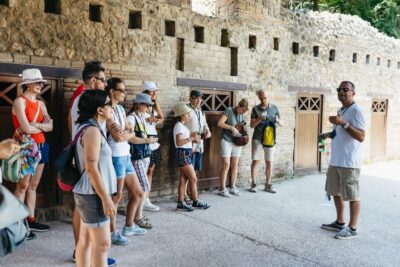 ★ 4.3Pompeii Ruins & Mount Vesuvius Day TourFrom $12011,459 reviews
 ★ 4.6Sorrento, Positano and Amalfi Full-Day TourFrom $10710,988 reviews
 ★ 5.0Sorrento, Positano & Amalfi Coast – Small Group TourFrom $768,643 reviews
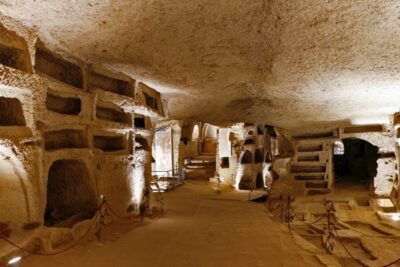 ★ 4.6Catacombs of San Gennaro Entry Ticket & Guided TourFrom $157,941 reviews
★ 5.0Pompeii Small Group Tour with an ArchaeologistFrom $356,593 reviews
★ 4.6Catacombs of San Gennaro Entry Ticket & Guided TourFrom $157,941 reviews
★ 5.0Pompeii Small Group Tour with an ArchaeologistFrom $356,593 reviews