
Tour review · TOUR REVIEWS
2 Hours Private Walking Tour in Pompeii with an Archaeologist
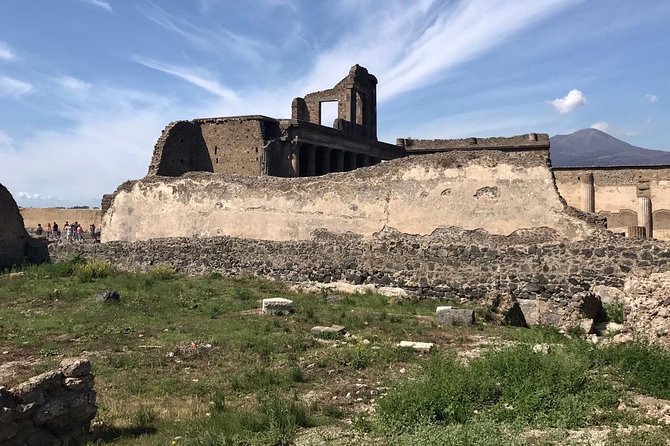
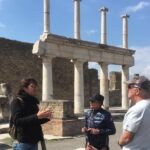
Pompeii reads better when someone explains it. A private walking tour with a licensed archaeologist helps you make sense of what you’re seeing, and I especially like the way the stop plan covers both major public landmarks and everyday Roman life. One thing to plan for: the Pompeii Archaeological Park entrance fee is extra at €20 per person.
You’ll cover a lot without feeling rushed, since the tour runs about 2 hours and you can pick from several start times. It also helps that the tour returns you to the same meeting spot, so you are not stuck with a transport puzzle after you finish. Do keep in mind this experience depends on good weather, so don’t count on rain-free luck.
Key things that make this Pompeii tour worth your time
- Private, archaeology-led pace that feels tailored to your questions
- Both public and private spaces including Forum, theatres, baths, and houses
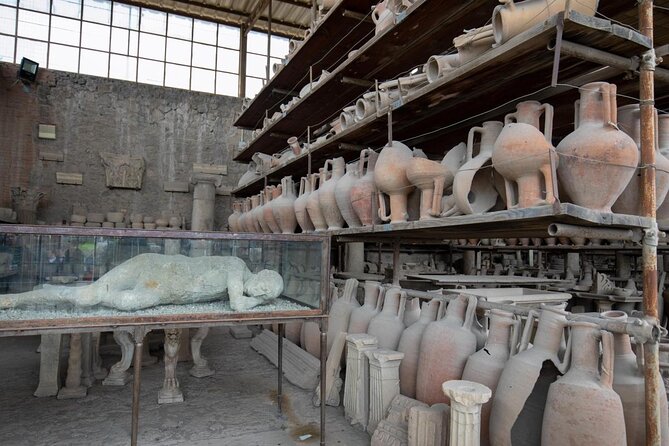
- Everyday Roman food and trade stops such as thermopolium and bakery areas
- Off-the-main-route possibilities, so you get more than the same photo circuit
- Clear structure in just 2 hours, with admission handled separately
- Easy logistics: mobile ticket, near public transportation, start and end at Piazza Esedra
How a 2-hour private walk helps you read Pompeii
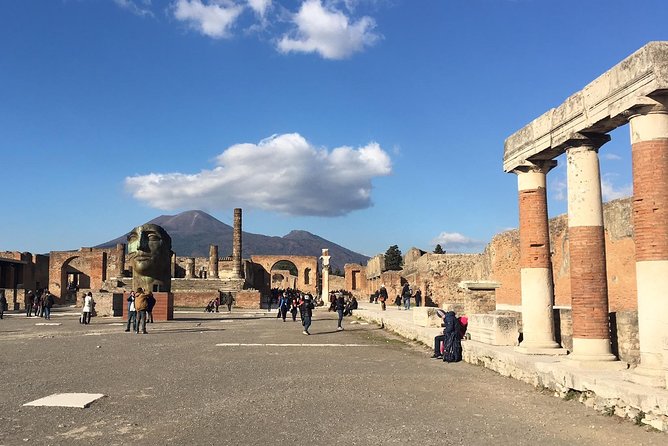
Pompeii is huge, and it can feel like you are walking through an open-air museum with no map for your brain. The smart move here is focusing on a tight run of high-value sights, while an archaeologist guide translates the stones into everyday use.
In a short tour like this, you get something more useful than a checklist. You learn how the city worked as a lived-in place. The public areas show how Romans gathered, worshipped, argued, and relaxed. Then you get a turn toward the private and commercial side, where you can picture meals, crafts, and housing.
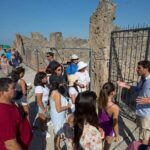
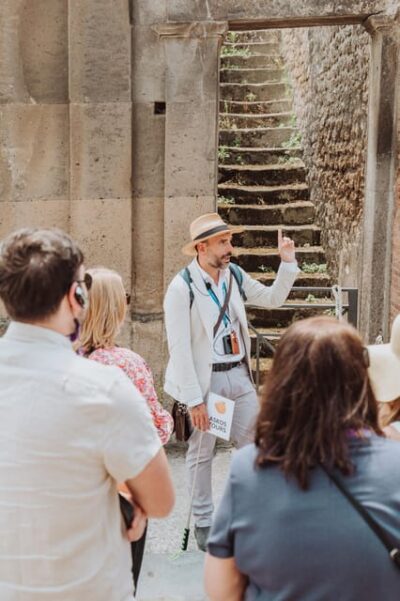
The “private” part matters too. With a small group up to 8, you are more likely to get explanations that match your pace, not just a rapid lecture timed for a larger crowd. If you enjoy asking why a space looked the way it did, this format usually pays off.
You can also read our reviews of more walking tours in Pompeii


Getting oriented at Piazza Esedra (and why it matters)
The tour starts at Piazza Esedra, 10/13, 80045 Pompei NA, Italy, and ends back at the same meeting point. That sounds simple, but it reduces a lot of stress. You can arrive, meet your guide, and then walk deeper into Pompeii without worrying about how to get back across the site after the tour.
You’ll also have a mobile ticket, which is handy in Italy where paper tickets can feel old-school. Add the fact that the meeting area is near public transportation, and your day plan becomes easier if you are bouncing between Naples and Pompeii or keeping things flexible.
Because the tour runs about 2 hours, you should aim to arrive a few minutes early. Pompeii has crowds, ticket lines elsewhere, and lots of streets and entrances that can slow you down. Getting your start calm lets you enjoy the walk instead of measuring time in your head.
The Pompeii public highlights: Forum, theatres, thermal baths, and the Sacred Area
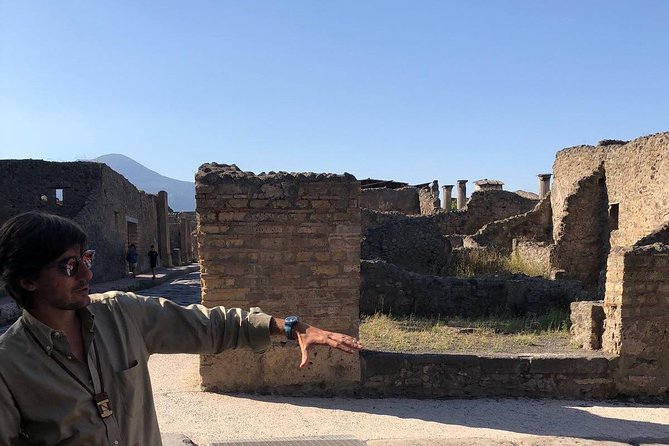
Your visit is built around the most important public heart of the city. This is where Pompeii stops being a set of pretty ruins and starts becoming a functioning city in your mind.
Here are the big public areas you can expect to understand clearly:
Theatres
Pompeii’s theatres were social machines. You’ll get context for who used them and why they mattered to public life. Even if you do not catch a performance, you can still follow the logic of the space: seating, visibility, and the role of entertainment in Roman culture.
Thermal Baths
Roman baths were not just for washing. They were a daily stop for relaxation, conversation, and sometimes business. If you have ever wondered how Romans mixed leisure and routine, baths are the best place to ask. Seeing the layout with an archaeologist helps you understand what you are looking at, rather than just guessing by location.
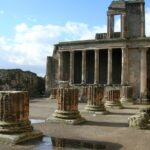
Forum, the main square
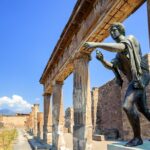
The Forum is where civic life happened. It’s the natural place to learn how public space tells a story about power, communication, and community. When you see the Forum with clear explanation, the city’s priorities become obvious fast.
Sacred Area
Religious spaces can be tricky to interpret from ground level alone. This stop helps you place the Sacred Area in the broader idea of why Pompeii’s people gathered, celebrated, and practiced faith in visible ways.
A practical note: these public spaces can also be your most crowded moments, depending on the time you choose. The benefit of a private tour is that you are not just stuck in the flow. You can slow down where it matters and keep moving where the explanations fit.
Roman daily life in real spaces: thermopolium, bakery, fabric market, and houses
The tour keeps going into the “how did people live day to day” layer of Pompeii. This is where you start to feel the city as a set of habits, not a monument.
Here are the types of private and commercial spaces you can expect:
Thermopolium (Roman fast-food)
This is the most fun category on the route. A thermopolium was basically a place to eat quickly and on schedule. With an archaeologist explaining the setting, you can connect the physical layout to the real routine of grabbing food, eating near where you bought it, and moving on. It’s a great way to make Pompeii feel modern in your imagination, without turning it into a theme park.
Bakery
Food production and distribution were everyday realities. The bakery stop gives you a sense of how residents relied on services and supply chains, not just home cooking.
Fabric Market
Markets tell you what people bought, traded, and worked on. A fabric market connects Pompeii to labor and crafts, and it helps you understand the city’s economy beyond “tourist streets.”
Houses
Housing is where you see the contrast between private space and public spectacle. Even if you are not an architecture person, houses help you grasp how ordinary Romans organized family life, daily movement, and access to different rooms. It also gives you an anchor for understanding the city as layered by social function.
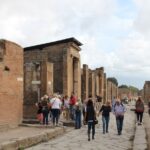
One of the smartest details in this tour plan is that it includes a chance to see areas beyond the most obvious tourist track. You are not promised a specific secret hallway, but you do have the possibility to discover quieter parts out of the main routes. That matters because Pompeii’s best moments often come when you slow down and the crowd noise drops.
Why “private buildings” change the way you see Pompeii
If you only see monuments, Pompeii can feel like a show. If you also see private buildings and small commercial areas, it becomes a place you could live in, at least in your imagination.
That’s the real value of mixing public sights like theatres and the Forum with daily-life stops like a thermopolium and bakery. It answers the big question most visitors have, how did people actually spend their day? Public spaces show how Romans showed up as a community. Private and work-adjacent spaces show the rhythm of meals, trade, and home life.
For you, that means better recall later. You remember places you understood, not just places you photographed. And in a short 2-hour tour window, this approach prevents the common problem of leaving Pompeii with a “cool, but what now” feeling.
You can also read our reviews of more private tours in Pompeii


Tickets, entrance fees, and the real value of the group price
Let’s talk numbers plainly. The tour price is $336.43 per group, for up to 8 people, and the duration is about 2 hours.
The key catch is that the Pompeii Archaeological Park entrance fee is not included, and it is €20.00 per person. So your total cost will depend on how many people are in your group.
Here’s how to think about value:
- If you are traveling solo or as a couple, you may feel the per-person entrance fee more strongly on top of the group price.
- If you are a family or a small group, the private guide cost spreads out, and the tour starts to look like strong value for the time you save and the explanations you get.
- Because this is a licensed archaeologist-led walk, you are not only paying for access. You are paying for interpretation, so you spend your time learning instead of guessing.
Also note that the tour includes the guide, while the site entrance is separate. That’s common in Italy, but it is still the part that surprises people. If you budget the €20 per person upfront, you’ll be glad you did.
Timing, walking comfort, and weather planning
This is a walking tour, and Pompeii is uneven, with stone surfaces and open air. Even without detailed elevation notes, you should treat it as a serious walking session. Wear comfortable shoes with grip, and bring sun protection. If you run hot, bring water.
Weather matters here. This experience requires good weather. If it gets canceled due to poor weather, you are offered a different date or a full refund.
Because you can choose from several tour times, it helps to select a start time that fits your energy and the day’s conditions. If you hate midday heat, pick a safer time of day. The tour is only about 2 hours, but Pompeii’s sun can still feel long when you stop to look closely.
Who this Pompeii tour fits best
This private Pompeii tour works especially well if:
- You want an expert guide who can explain what you see in plain terms
- You like structure, a planned route, and a short time commitment
- You care about daily life topics, not just big monuments
- You are traveling with up to 8 people and want the whole experience to stay focused on your group
It also suits most people who can participate in a walking tour. If you rely on a service animal, service animals are allowed. The meeting point is near public transportation, which is useful if you are not bringing a car.
Finally, if you want good odds that the guide experience will match your expectations, this activity shows a 5 out of 5 rating from 15 reviews and a 100% recommendation rate in the feedback data provided. That doesn’t guarantee any one guide, but it is a strong signal about consistency.
Should you book this Pompeii private walking tour?
I’d book it if you want Pompeii explained, not just walked. The route blends major public spaces with everyday sites like a thermopolium, bakery, and fabric market, so you leave with a clearer picture of what Roman life felt like. In just 2 hours, it’s a smart way to get meaning from the ruins.
I would hesitate if €20 per person entrance fee adds strain to your budget, or if you’re expecting a long, meandering full-day Pompeii experience. This is focused and time-limited by design. It’s built for understanding, not for endless wandering.
If you are aiming for value, the best fit is a small group that can take advantage of the up-to-8 private format. And because confirmation is subject to availability, it’s smart to plan ahead, especially since it’s often booked about 7 days in advance on average.
FAQ
How much does the Pompeii private walking tour cost?
The price is $336.43 per group, and the group size can be up to 8 people.
What is included, and what is not included in the tour price?
Included is a licensed guide with a degree in Archaeology. Not included is the Pompeii Archaeological Park entrance fee, which is €20.00 per person.
How long is the tour, and what language is it in?
The tour lasts about 2 hours. It is offered in English.
Where is the meeting point, and where does the tour end?
You meet at Piazza Esedra, 10/13, 80045 Pompei NA, Italy. The tour ends back at the same meeting point.
Is this tour private or shared with other groups?
It is a private tour/activity. Only your group participates.
What happens if I cancel, or if the weather is poor?
The experience is non-refundable and cannot be changed. If it is canceled due to poor weather, you will be offered a different date or a full refund.
Are service animals allowed on this tour?
Yes, service animals are allowed.
More Walking Tours in Pompeii
More Tours in Pompeii



More Tour Reviews in Pompeii

Not for you? Here's more nearby things to do in Pompeii we have reviewed





Tour Reviews, compared.
 ★ 4.8Pompeii: Entry Ticket and Guided Tour with an ArchaeologistFrom $3519,459 reviews
 ★ 4.2Pompeii: Entry Ticket with Optional Audio GuideFrom $2612,360 reviews
 ★ 4.8Pompeii: Small Group Tour with an ArchaeologistFrom $4012,264 reviews
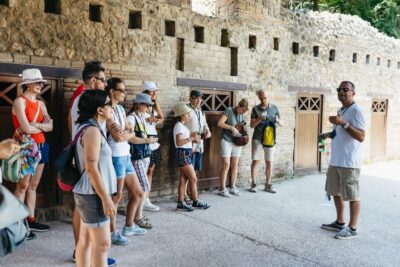 ★ 4.3Pompeii Ruins & Mount Vesuvius Day TourFrom $12011,459 reviews
 ★ 4.6Sorrento, Positano and Amalfi Full-Day TourFrom $10710,988 reviews
 ★ 5.0Sorrento, Positano & Amalfi Coast – Small Group TourFrom $768,643 reviews
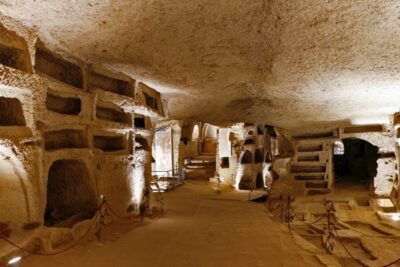 ★ 4.6Catacombs of San Gennaro Entry Ticket & Guided TourFrom $157,941 reviews
★ 5.0Pompeii Small Group Tour with an ArchaeologistFrom $356,593 reviews
★ 4.6Catacombs of San Gennaro Entry Ticket & Guided TourFrom $157,941 reviews
★ 5.0Pompeii Small Group Tour with an ArchaeologistFrom $356,593 reviews
Browse the lists this tour appears in