
Tour review · TOUR REVIEWS
Private Pompeii & Amalfi Coast Tour: Sorrento & Positano -Tickets
Pompeii plus Amalfi in one day is a smart combo. You get priority access to Pompeii and a tight, guided route inside the ruins, then you roll into the coast with onboard English commentary and planned time in both Sorrento and Positano.
Two things I especially like: the focus on the Pompeii sights that actually help you understand the city, and the fact that the driving day feels organized instead of chaotic.
One possible drawback: it is a long day with walking on uneven ancient surfaces, so plan for a moderate fitness level and bring good shoes.
Key Points Worth Knowing
- Pompeii skip-the-line, priority access saves time when you want more hours for ruins.
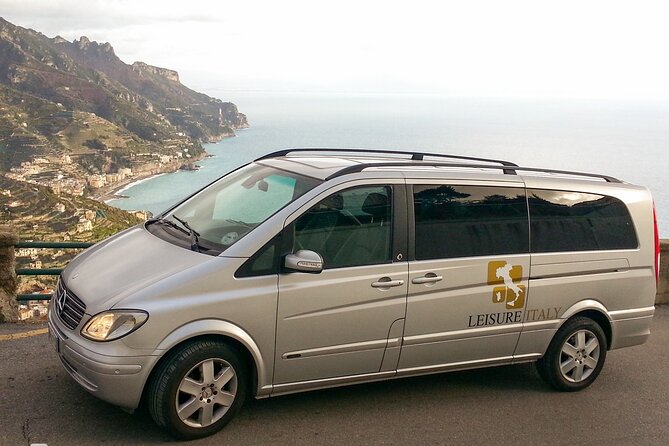
- Private Mercedes minivan with pickup means less fuss, more comfort, and AC for the ride.
- A guide inside Pompeii (optional optional guide route) helps you connect the dots fast.
- Amalfi Coast road stops and photo time keep the views the main event.
- Family-friendly Pompeii for kids option uses games and storytelling, which is a big win for ages 6 to 11.
- Real free time in Sorrento and Positano lets you choose cafes, gelato, and the waterfront at your pace.
One Day, Two Icons: Pompeii Then Amalfi’s Coastal Drama
This is the kind of day trip that works when you want maximum “wow per hour,” but not a nonstop blur. You start with Pompeii, where priority entry matters because the place is popular and timing gets tight. Then the day shifts to the Amalfi Coast road, where the drive itself is part of the experience, not just a route between cities.
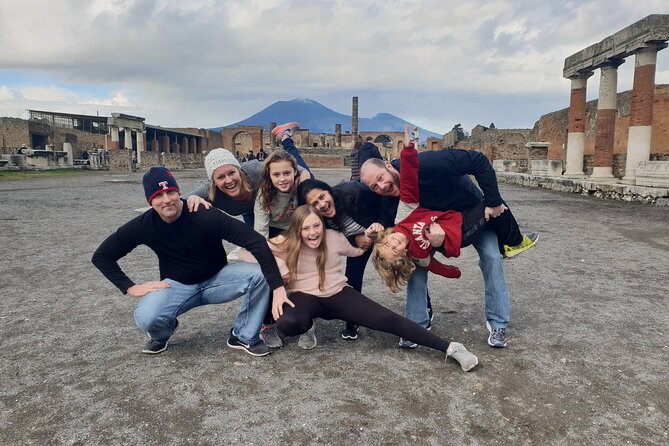
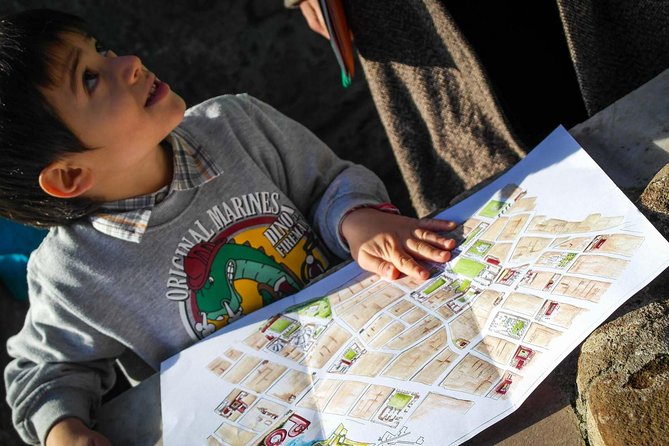
What makes this tour feel practical is the balance. You do have a structured Pompeii walk with key stops, but later you get breathing room in Sorrento and Positano to wander, snack, and enjoy the views without being herded constantly. And if you are traveling with kids, the Pompeii portion can be turned into a more game-and-story style visit. In a family tour I heard about, the kids stayed excited largely because the guide used games and patient explanations, with a map approach that helped them feel oriented instead of lost.
More Naples tours, ruins, coast days, and city experiences to compare


Pompeii: Priority Access and a Guided Route That Helps You See the Whole City
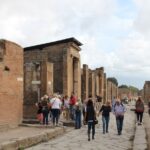
Pompeii is not just one monument. It is a whole town, and the easiest way to waste time there is to wander without a plan. This tour handles that problem with priority access and a guided selection of highlights inside the Archaeological Park of Pompeii.
The core visit runs about 2 hours with your guide selecting the highlights. From the way the tour is set up, the goal is to show you the places that explain how Pompeii worked: public life (Forum), religion (Temple of Apollo), daily routines (bath facilities), shopping and food (Macellum), elite homes (House of the Vettii), and performance culture (Teatro Grande). You do not need to know Roman history to get a lot out of it.
Where the guide really pays off
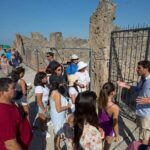
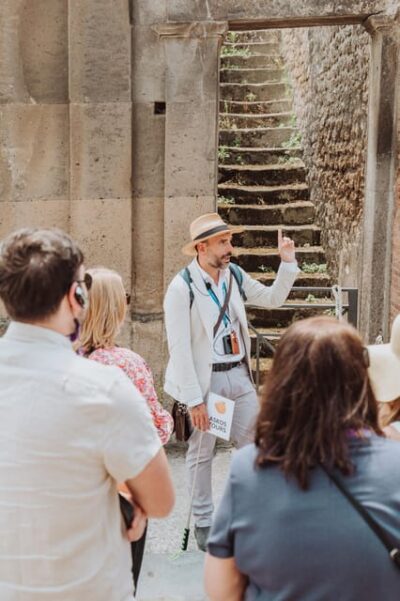
A good Pompeii guide helps you connect small details to big ideas. For example, when you see civic buildings clustered around the Forum, you start to understand the city was designed like a stage for public decisions and social life. And when you move from markets to houses, you can picture how wealth, work, and daily routines sat side by side.
For families, there is a Pompeii for kids experience designed for ages roughly 6 to 11. It is described as activities and games tied to the town itself. In the family story I heard, the guide Giuseppe kept kids engaged with stories and a fun approach, and that patience with questions made the experience work even when the kids slowed things down.
The Archaeological Park Stops That Actually Build Understanding
After the main guided walk, you also hit several short, high-impact stops. These are brief, but they matter because they cover different parts of the city, so you come away with a more complete picture of Pompeii.
Porta Marina and the city’s “front door”
Porta Marina was a key entry point near the port area, tied to how Pompeii controlled access and protected itself. The quick stop is worth it because it gives you a physical sense of arrival and movement, plus it connects to the defensive walls idea. You even get the chance to see the stone ramp walk area in the region.
A practical tip here: if you are sensitive to stairs or uneven ground, just take your time and let your driver and guide know. This area is manageable, but you still want comfortable footing.
You can also read our reviews of more private tours in Pompeii
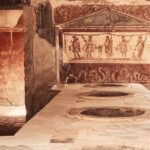
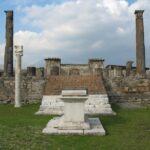
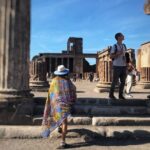

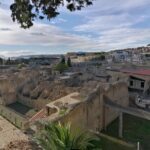

Basilica, a public hall for politics and business
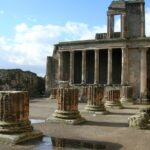
Pompeii’s Basilica was used for business, justice, and political life. It dates to the 2nd century BC and includes tall columns and an open rectangular space. Even in a short visit, it is one of those “this is where decisions happened” spots, which helps the Forum section make more sense.
Temple of Apollo, religion with a clear visual center
The Temple of Apollo was dedicated to Apollo, tied to sun, music, and prophecy. It sits near the Forum area, so it creates a logical link between civic space and spiritual life. In the ruins, what stands out is the open courtyard feel and the sense of a religious gathering point.
If you like contrasts, this stop is helpful: public life around the Forum, then a clear shift to where people made offerings and sought guidance.
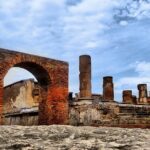
The Forum, Pompeii’s civic heart
This is where Pompeii feels most like a living place. You see the square’s arrangement from elevated walkways and terraces, which is a big advantage. From up high, you get a better read on how temples, administrative buildings, and market structures framed everyday public activity.
The viewpoint also helps you place major ruins in relation to each other, including the Capitolium, Basilica, and Macellum. In plain terms: you learn where to look when you are standing there, not just what you are looking at.
Macellum, the food market logic
The Macellum was a covered food market where vendors sold fish, meat, fruit, and imported goods. The description of the stalls, storerooms, and central shrine is the key: it shows how the city organized food supply and daily commerce.
Even if you only spend a few minutes here, you can still get a feel for Pompeii as a functioning economy, not a museum of “old stuff.”
Forum Baths, where daily life met conversation
The Forum Baths were elegant public baths split into men’s and women’s areas, with changing rooms and warm and hot bathing halls. They were heated by a hypocaust system, which is the kind of detail that makes ancient engineering feel real.
What I like about this stop is how it connects to daily life. Bathing was hygiene, leisure, and social time. You start to picture the town’s rhythm beyond the big-ticket ruins.
House of the Vettii, elite taste and fine frescoes
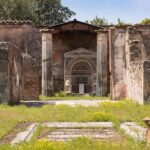
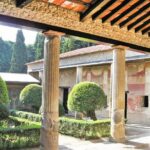
The House of the Vettii is known for rich frescoes and a smart architectural layout. Built around atria and peristyle gardens, it reflects the lifestyle and ambitions of wealthy merchant owners.
This is one of those stops where the ruins shift from “public city” to “private aspiration.” It is also a good mental reset if you want something visually intense after the Forum area.
Insula dei Casti Amanti, a neighborhood caught mid-moment
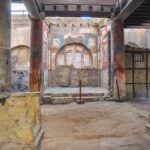
This area is named after a famous fresco of lovers. Today you access it via elevated ramps designed to preserve fragile surfaces below. That layout is a clever approach because you get panoramic views into workshops and domestic rooms without trampling what matters.
What makes it interesting is the sense of a neighborhood in progress, with preserved frescoes, painted signs, and half-finished renovations. It is a rare way to feel everyday work and home life running side by side right up to the eruption.
Teatro Grande, performance space and crowd energy
The Teatro Grande gives you the Roman drama and entertainment angle. Standing within the theatre area or looking down from terraces helps you see the semicircular seating tiers, the stage building, and the orchestra area.
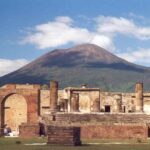
It also helps you understand why performances drew crowds. Plus, the acoustics and views toward the city and Mount Vesuvius are part of why the theatre remains so striking.
Antiquarium di Pompei, artifacts that set the emotional tone
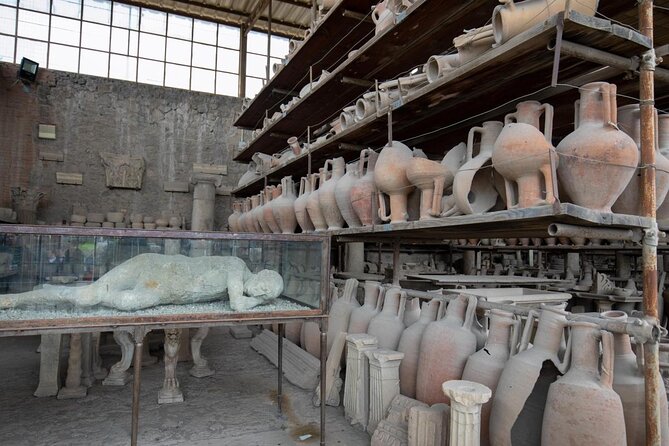
The Antiquarium is the best kind of museum stop: it helps you understand Pompeii before you spend the rest of the day looking at ruins. You move through galleries with statues, household items, inscriptions, jewelry, and other recovered artifacts. The final rooms include plaster casts of victims and eruption material.
This is where the day turns from “cool city layout” to “how could this happen.” It is a powerful framing tool for the outdoor sites that come after.
From SS145 Cliffs to Sorrento Strolls: Making the Coast Feel Easy
After Pompeii, the tour shifts gears to the Bay of Naples views. One of the route highlights is the drive along Strada Statale 145, winding along cliffs toward Sorrento. From the vehicle, you look down on terraced lemon groves, small ports, and fishing villages, with Mount Vesuvius sometimes visible across the water.
This is one of those roads you appreciate more from the window than from a checklist. The curves and panoramic turnouts create that travel-feeling, where each bend offers a new postcard angle.
Sorrento: one hour to get your bearings
In Sorrento you get about 1 hour to explore on your own. That time is long enough to do something simple and satisfying: grab coffee, wander a few lanes, and find a viewpoint if you are quick.
The visit references a few anchor spots:
- Piazza Tasso, the social hub where cafes and pastry shops crowd around a lively square
- Corso Italia, the main promenade for browsing shops and doing that late afternoon passeggiata thing
- Cloister of San Francesco, a quiet break with portico and pointed arches
I like this setup because it gives you options. If you want people-watching, you go Piazza Tasso. If you want shopping and walking, you go Corso Italia. If you need a breather, you slip into the cloister area.
Amalfi Coast Road Time: Photos, Turns, and the SS163 Viewpoint Effect
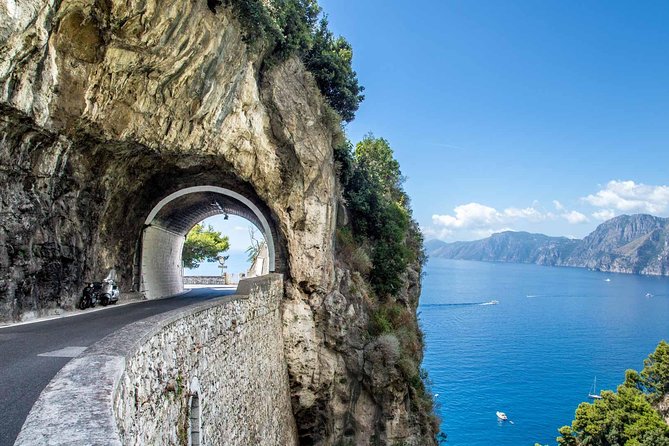
The tour then brings you along the Amalfi Coast road (SS163). The value here is that the road is treated like a destination, not a hallway. You get scenic photo stops where it is easy to pull over and frame the coastline.
What you are looking at is a dramatic mix of rugged headlands and towns clinging to steep slopes. Lemon groves sit in valleys. Pastel-colored towns step downward toward the sea. It is the kind of geography that makes you slow down naturally, even if you are not a big photographer.
Positano: Beachfront Color and the Santa Maria Assunta Dome

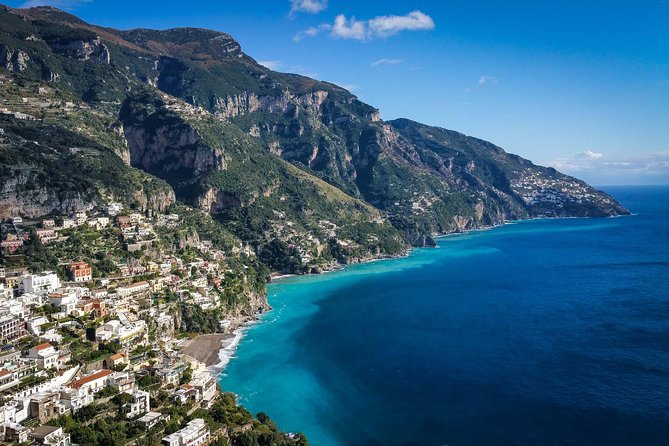
Positano is where the day becomes visually theatrical. The town rises almost vertically from the sea, with narrow stairways and pastel houses that create that instantly recognizable silhouette.
You get about 1 hour in Positano for your own wandering. That is enough time to choose what matters to you most:
- Spiaggia Grande for the main beach scene and waterfront energy
- Santa Maria Assunta for the iconic majolica-tiled dome and the chance to view the harbor from the church steps
Spiaggia Grande, the town’s social stage
Spiaggia Grande sits right at the base of the cliffside houses. The waterfront gives you a full view of Positano’s cascading look and the lively beach promenade. It also acts like a practical hub because boats and ferries connect to nearby coastal towns.
If you want a low-effort, high-reward move: walk along the shoreline area, grab something small to eat, then head back toward the church viewpoint.
Chiesa di Santa Maria Assunta, the dome and the Black Madonna story
The Church of Santa Maria Assunta is Positano’s signature landmark, with a colorful majolica-tiled dome visible over the waterfront. Inside, you see marble altars and side chapels, and the Black Madonna icon tied to local legends. From the church steps, the view opens dramatically toward Spiaggia Grande.
Even if you do not go inside for long, the viewpoint angle is a good use of your hour in town.
The Price: Does $486.47 Per Person Make Sense?
At $486.47 per person, this is not a budget-only day trip. But it is also not “just transport and vibes.” Your money goes into several concrete pieces:
- Pompeii Express skip-the-line tickets and priority access
- Private transportation in a Mercedes minivan with AC, plus an English speaking driver
- Live commentary on board
- A structured guided route inside Pompeii with multiple key stops
Here is the value logic I would use: if you tried to do this on your own, you would be paying for tickets, then spending time coordinating transport and figuring out where to focus in Pompeii. This tour pays for organization, time savings, and guidance. For families and first-time visitors, that is often worth it, especially when the day includes both Pompeii and two coastal towns.
Also, it is a private tour, so you are not tied to strangers’ pace. The downside is that the price per person stays high even if your group is small, so it is a better deal when shared among travelers who will actually use all the planned stops.
Practical Tips So Your Day Runs Smooth
A few details matter for enjoying the day, not just surviving it.
Your comfort checklist
Bring comfortable walking shoes and sun gear. Pompeii requires steady footing, and the ruins include uneven ground. Also bring water if you can, since lunch is not included.
If you want a less intense Pompeii day
For people who do not want to take the entire walk inside Pompeii, there are cafés and gift shops right outside the entrance. You can still enjoy the overall trip without forcing a long internal walk.
Timing and shoes
The itinerary includes several quick stops after the main guided walk. You’ll move in short bursts, so you want shoes you can trust. If you need frequent breaks, tell the guide early so the pace can be adjusted.
Mobile ticket and passport
You receive a mobile ticket. Also, on the day of travel, you need a current valid passport, or at least a picture of it.
Lunch
Lunch is not included unless you request it. Plan to eat on your own in Sorrento or Positano during your free time if you want something flexible.
Should You Book This Private Pompeii and Amalfi Tour?
Book it if you want a day that hits the big hits without wasting half your time figuring things out. The priority Pompeii access, the guided highlights, and the private Mercedes transfer are the main reasons to choose it. The Sorrento and Positano free time also helps, because you get to enjoy the coast in your own way instead of treating it like a rushed photo stop parade.
Skip it if you are traveling at a very slow pace, hate walking on uneven surfaces, or you only care about one city. This is a full, structured day. If you want a lighter touch in Pompeii, you might prefer a half-day plan.
If you do book, it is easy to see why people give it strong scores like 4.9 out of 5 and a high recommendation rate. For many, it is the rare combo of organized Pompeii insight plus Amalfi scenery you can actually enjoy.
FAQ
Is pickup included?
Yes. Pickup is offered from Naples, Sorrento, Pompeii, and other locations like hotels, vacation rentals, train stations, airports, and cruise terminals/ports. You need to specify your pickup place when booking.
How long is the tour?
The duration is listed as about 8 to 9 hours.
What is included with the Pompeii entry?
You get Pompeii Express skip-the-line tickets, priority access, and admission tickets are included for each listed Pompeii stop.
Do I have a guide at Pompeii?
Yes. The tour includes a private guide for the Pompeii walking tour selecting highlights. The guide route is optional, but it is part of how the Pompeii portion is described.
Is lunch included?
No. Lunch is not included if requested.
What should I bring?
Bring comfortable walking shoes and sun gear. You also need a current valid passport or a picture of it on the day of travel.
Is this tour private?
Yes. It is a private tour/activity, meaning only your group participates.
More Tickets in Pompeii


More Tours in Pompeii



More Tour Reviews in Pompeii

Not for you? Here's more nearby things to do in Pompeii we have reviewed




Tour Reviews, compared.
 ★ 4.8Pompeii: Entry Ticket and Guided Tour with an ArchaeologistFrom $3519,459 reviews
 ★ 4.2Pompeii: Entry Ticket with Optional Audio GuideFrom $2612,360 reviews
 ★ 4.8Pompeii: Small Group Tour with an ArchaeologistFrom $4012,264 reviews
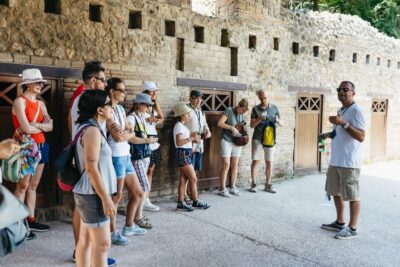 ★ 4.3Pompeii Ruins & Mount Vesuvius Day TourFrom $12011,459 reviews
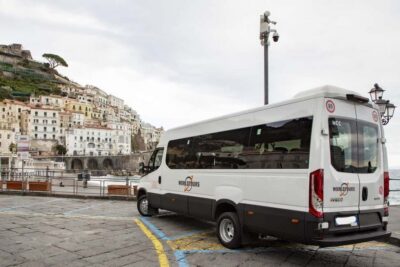 ★ 4.6Sorrento, Positano and Amalfi Full-Day TourFrom $10710,988 reviews
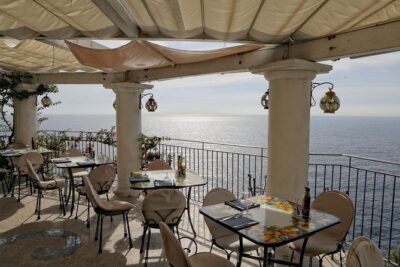 ★ 5.0Sorrento, Positano & Amalfi Coast – Small Group TourFrom $768,643 reviews
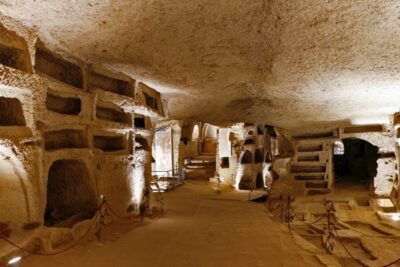 ★ 4.6Catacombs of San Gennaro Entry Ticket & Guided TourFrom $157,941 reviews
★ 5.0Pompeii Small Group Tour with an ArchaeologistFrom $356,593 reviews
★ 4.6Catacombs of San Gennaro Entry Ticket & Guided TourFrom $157,941 reviews
★ 5.0Pompeii Small Group Tour with an ArchaeologistFrom $356,593 reviews