
Tour review · TOUR REVIEWS
Pompeii: Tour with Archaeologist Guide & Skip-the-Line Entry
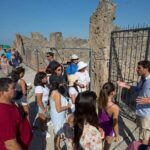
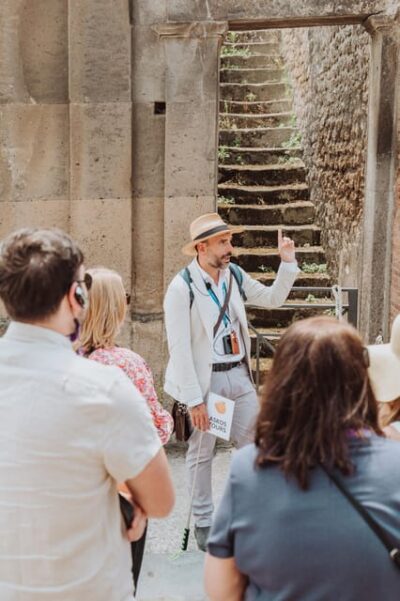
Pompeii hits fast, and then it keeps hitting. This short tour is built around an archaeologist guide plus skip-the-line entry, so you spend your limited time walking the site instead of waiting at the gate. I like how the guide frames Pompeii’s “last day” story, not as a lecture, but as a route through real places you can see.
I especially like the stop mix: the amphitheater, the private Roman houses with frescoes, the Stabian Baths, the lupanare, and the Forum. In two hours, you get enough structure to understand how the city worked, where people gathered, and what everyday life looked like.
One thing to consider is the pace. At this length and with up to 25 people in the group, you will move fairly briskly, so if you want slow, deep photo sessions in just one area, you might wish you had more time.
Key highlights
- Skip-the-line entry handled for you so the guide can get tickets and keep you moving
- Archaeologist guide who connects buildings to the eruption story from 79 AD
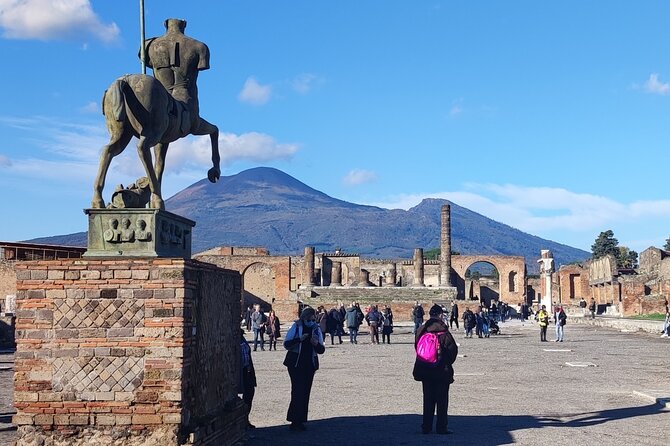
- Signature Pompeii stops like the amphitheater, Via dell’Abbondanza, the Forum, and the Basilica
- Stabian Baths and the lupanare for a fuller picture of daily life
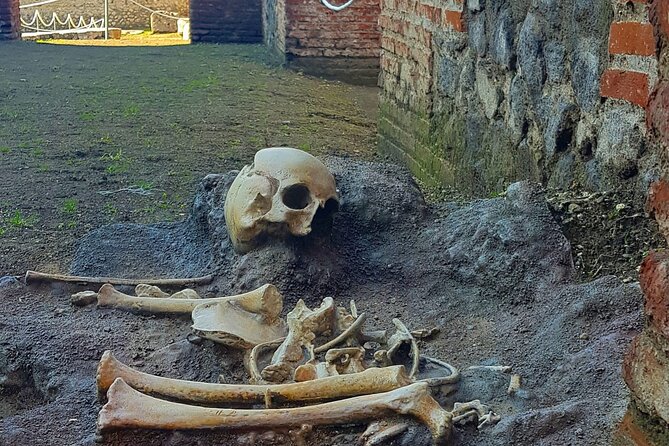
- 1863 plaster casts tied to Arch. Giuseppe Fiorelli for a memorable, human detail
An archaeologist guide makes Pompeii feel specific
Pompeii can be a “wow” site even without a guide, but it also risks turning into a blur of stone corners and street grids. What I like about this tour is the archaeologist-led framing. You are not just told what things are called, you get a sense of what they meant to the people living there.
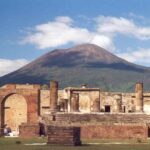
The eruption of 79 AD is the through-line, and the tour format helps you keep that context while you walk. You start seeing the city as a place with schedules, routines, and public spaces, then you see how the eruption froze it all in place. That shift in perspective is why Pompeii sticks in your mind.
You can also read our reviews of more guided tours in Pompeii

Meeting near Piazza Esedra, then getting into the park fast
You meet at a practical spot in Pompeii: near Coffee Shop Vittoria bar around Piazza Esedra. The ticket redemption point is also listed at Piazza Esedra (Tour & Audio Guide, Piazza Esedra, 2), which is helpful if you want to arrive with a simple plan.
The tour also lists a start address for Travelcampania (Via Plinio, 107). In practice, the important thing is to plan to be at Piazza Esedra early enough to find your guide and check in without stress.
Once you’re in the flow, you get a real advantage: the listing says the guide buys the entrance tickets for you with skip-the-line service. That matters because Pompeii’s entry lines can eat up your best energy, especially if you booked a compact tour like this one.
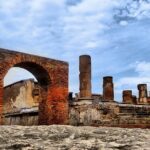
Teatro Grande and the amphitheater, Pompeii’s loudest room
The first stop is Teatro Grande, and right away you are working with Pompeii’s public face. From there, the tour moves into the amphitheater area.
What you’ll get here is not just architecture. You’ll learn basic notions about the UNESCO site and how these spaces fit into civic life. I like this approach because theaters and amphitheaters are built for crowds, so they help you picture Pompeii as an active city, not a museum of ruins.
The route then carries you through major named streets and landmarks. One of the streets you are shown is Via dell’Abbondanza, which is one of the best “orientation” paths for first-timers. When a guide points you to the right street axis, you stop feeling lost and start feeling like you’re walking through a real neighborhood.
Roman houses with frescoes, where daily beauty still survives
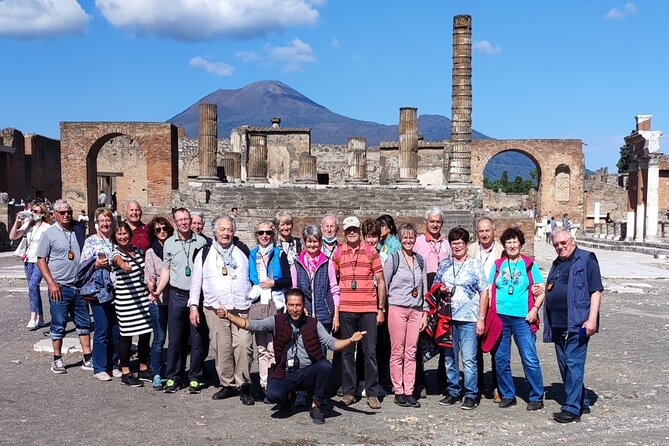
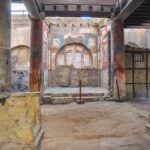
A big reason to choose a guided Pompeii tour is the contrast between the monumental and the domestic. This one includes the private Roman houses (domus) with frescoes, which gives you a better sense of what people chose to decorate and display.
You also get to see how these homes connect back to the broader city layout. The guide’s explanations help you recognize that you’re not just looking at walls. You’re looking at spaces for conversation, cooking rhythms, and household routines that were interrupted.
The tour also highlights the idea of perfectly preserved, everyday objects. You do not need to be an art expert to appreciate this part. Seeing small, practical items that survived helps the story feel less abstract. It turns Pompeii from tragedy into a place with ordinary rhythms.
Stabian Baths and the Forum-Basilica zone for real city life

Next comes the Stabian baths, and this is where the tour pays off if you care about daily habits. Baths are one of those places where public life and private routines overlap. You can learn a lot just by thinking through who used these spaces and when.
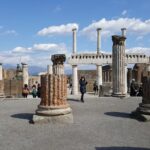
After the baths, the tour moves toward the heart of public administration and gathering: the Forum and the Basilica are both on the route. This is a smart pairing because the Forum helps you understand civic power and community life, while the Basilica supports the idea of public business and meeting spaces.
If you’re the kind of person who likes to understand how cities work, this section is a highlight. You’re basically getting the Pompeii “who does what” map in a walking loop.
More Naples tours, ruins, coast days, and city experiences to compare


Lupanare and the casts by Giuseppe Fiorelli, the parts people remember
Two stops on this tour are often the reason Pompeii is talked about long after the visit: the lupanare and the casts.
The lupanare is one of the more striking sites because it’s connected to the everyday reality of the city, including the services businesses offered. The tour includes it as a named stop, and the guide’s explanations tie it back into Pompeii’s last-day picture rather than leaving it as shock value.
Then you hit the casts, including the first casts made in 1863 by Arch. Giuseppe Fiorelli. This is one of the most meaningful parts of the route because it gives the story a human scale. It also helps you understand why Pompeii is different from other volcanic disasters that destroyed towns without leaving such vivid traces behind.
The review notes that the site and history are amazing, and I get why. Even if you think you already know Pompeii basics, the casts and their connection to Fiorelli’s work make the tragedy feel specific instead of generic.
The 2-hour format: good for structure, short for wandering
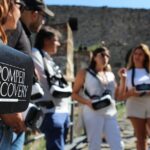
This tour runs for about 2 hours, and the group size is capped at 25 people. That’s the kind of setup that works well for many first-timers because you get a guided spine without losing the whole day.
Still, manage your expectations. Two hours is not enough to linger over every fresco, every corner, or every photo-worthy doorway. You’ll walk, listen, and hit key sites in sequence. If you want time to sit down, sketch, or zoom in on details, you might feel a little rushed.
The listing also notes moderate physical fitness is recommended. Pompeii is uneven and outdoors for much of the route, so wear shoes that can handle real ground. The good news is the tour stays focused. You are not hiking between far-flung areas for hours.
At the end, the tour ends at Foro di Pompei near Via Villa dei Misteri. The listing also says that if you prefer, you can stay inside the archaeological park. That’s a nice option because it lets you turn the guided highlights into a longer free-walk session afterward, if you’ve got energy.
Price, skip-the-line value, and when this is a smart deal
The price is $57.84 per person, and the listing says the admission ticket is included. For a UNESCO site with time-consuming entry, that inclusion is part of the value.
The bigger value is time. The guide handles skip-the-line entry by purchasing entrance tickets. If you show up at the wrong hour or if lines are slow, a guided plan like this can save your afternoon. For many people, saving that waiting time is worth more than the difference between cheaper tickets and a guided program.
Is it perfect value? The rating is 3.8 based on a small number of reviews, and one comment said the tour was a good option but not 100 percent impressive. That lines up with what I’d call the main tradeoff: it’s short. You get the essentials, but you do not get a slow, deep crawl through every famous spot.
So, this tour is best value if you want a well-shaped introduction and you like getting context from a guide. If you want to spend most of your time reading, photographing, and wandering at your own speed, you may prefer an audio guide plus extra hours.
Who should book this Pompeii skip-the-line tour?
I’d book this one if you fit any of these profiles:
- You want an archaeologist guide to help you connect buildings, streets, and the eruption story
- You have limited time in Pompeii and want a solid “greatest hits” route in about 2 hours
- You like the specific mix of amphitheater, domus with frescoes, Stabian Baths, the lupanare, the Forum, and the Basilica
- You want the practical win of skip-the-line entry handled for you
It’s also a decent option if you’re traveling with service animals, since the listing says they are allowed.
Should you book this Pompeii tour with Travelcampania?
If your goal is to see the key parts of Pompeii with a guide who can explain what you’re looking at, yes, I think this is a smart booking. The route covers the big architectural anchors and the human-scale details like the 1863 Fiorelli casts, and the short duration keeps it efficient.
If you want time to linger, you might feel squeezed. But if you treat the tour as your Pompeii foundation, then use the extra time afterward to wander on your own, you get the best of both worlds.
FAQ
How long is the Pompeii tour?
The tour runs for about 2 hours.
Does this tour include skip-the-line entry and admission?
Yes. The listing notes skip-the-line service, with the guide purchasing entrance tickets, and admission is included.
Where do I meet, and where does the tour end?
You meet near Coffee Shop Vittoria bar at Piazza Esedra (Ticket Redemption Point: Tour & Audio Guide, Piazza Esedra, 2). The tour ends at Foro di Pompei (Via Villa dei Misteri, 2).
What stops and areas does the tour cover?
You’ll see Teatro Grande and major Pompeii highlights including the amphitheater, domus with frescoes, Via dell’Abbondanza, the Stabian baths, the lupanare, the Forum, the Basilica, and the first casts made in 1863 by Arch. Giuseppe Fiorelli.
What is the maximum group size?
The tour has a maximum of 25 travelers.
What physical fitness level do I need?
The listing says a moderate physical fitness level is recommended.
Are service animals allowed?
Yes, service animals are allowed.
Is cancellation free?
Yes, free cancellation is offered. You can cancel up to 24 hours in advance for a full refund.
More Guided Tours in Pompeii



More Tours in Pompeii

More Tour Reviews in Pompeii
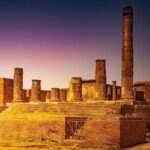
Not for you? Here's more nearby things to do in Pompeii we have reviewed
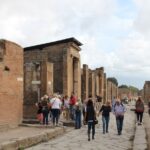
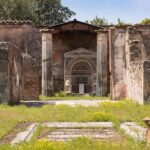
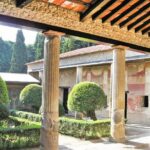





Tour Reviews, compared.
 ★ 4.8Pompeii: Entry Ticket and Guided Tour with an ArchaeologistFrom $3519,459 reviews
 ★ 4.2Pompeii: Entry Ticket with Optional Audio GuideFrom $2612,360 reviews
 ★ 4.8Pompeii: Small Group Tour with an ArchaeologistFrom $4012,264 reviews
 ★ 4.3Pompeii Ruins & Mount Vesuvius Day TourFrom $12011,459 reviews
 ★ 4.6Sorrento, Positano and Amalfi Full-Day TourFrom $10710,988 reviews
 ★ 5.0Sorrento, Positano & Amalfi Coast – Small Group TourFrom $768,643 reviews
 ★ 4.6Catacombs of San Gennaro Entry Ticket & Guided TourFrom $157,941 reviews
★ 5.0Pompeii Small Group Tour with an ArchaeologistFrom $356,593 reviews
★ 4.6Catacombs of San Gennaro Entry Ticket & Guided TourFrom $157,941 reviews
★ 5.0Pompeii Small Group Tour with an ArchaeologistFrom $356,593 reviews
Browse the lists this tour appears in