
Tour review · TOUR REVIEWS
Ancient Pompeii Private Tour: Skip the Line & Kid-Friendly Option
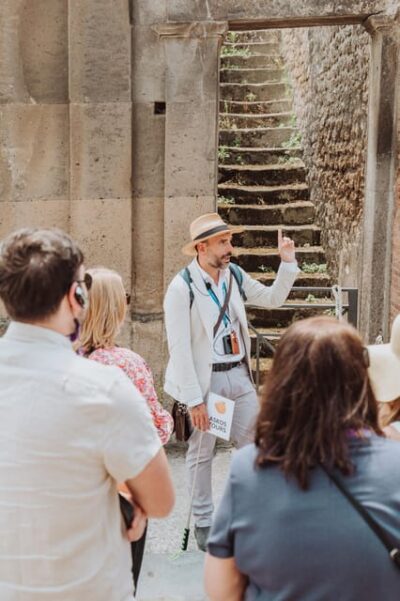
Pompeii hits you fast, and hard. This private tour gives you skip-the-line entry plus an English-speaking, blue badge guide, so you spend your time walking the best parts instead of waiting. I also like the fact that the route can be tailored, so if you care more about daily life, architecture, or the disaster story, your guide can adjust.
The second reason I’m a fan is the family option: you get a Pompeii4kids kit with a map, stickers, and activities, plus games and clues that keep kids engaged without turning it into a boring lecture. One possible consideration: Pompeii is a real walking site, and if your group has slower mobility, you’ll want to set the pace early so nobody feels rushed.
Pompeii Private Tour: the highlights that matter
- Skip-the-line tickets built into the experience, so the day starts moving
- Private, blue badge guidance that can flex to your interests and your group
- Kid-focused Pompeii4kids kit with a sticker map, activities, and guided games
- Forum to Via dell’Abbondanza route that shows politics, markets, and everyday street life
- Terme del Foro (Forum Baths) where you can walk through the bathing sequence
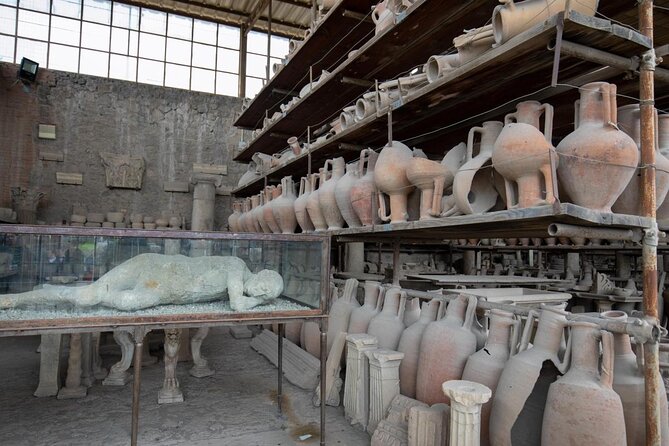
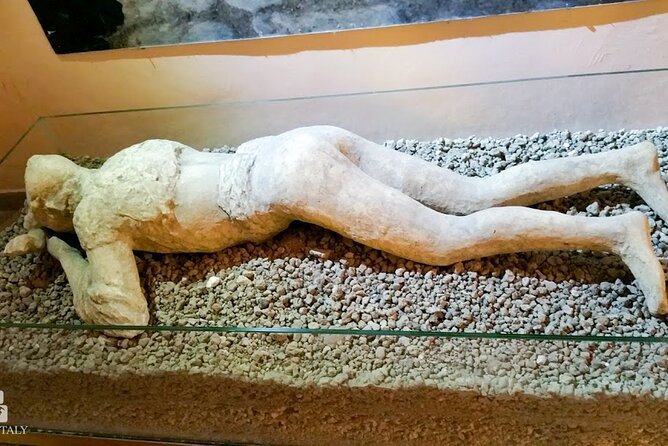
- Antiquarium casts of victims that give the eruption story an emotional punch
Skip-the-Line Private Guide in Pompeii, with Real Time to See
Pompeii can be overwhelming. It’s huge, it’s uneven, and it’s full of details that you will miss if you wander without help. What I like about this tour is that it’s built to get you into the action quickly, with skip-the-line tickets included and a guide who can keep the story moving.
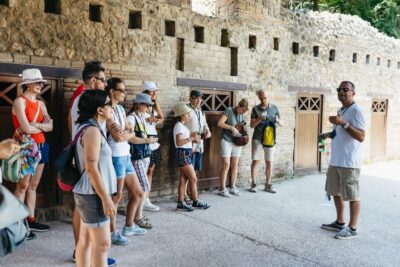
You’re looking at about two hours of touring time, which is just long enough to hit the city’s biggest “this is why it mattered” locations. It’s also private, so it’s only your group participating. That changes the feel right away. Instead of juggling other visitors, your guide can slow down for questions, camera breaks, or a moment that kids suddenly care about.
You can also read our reviews of more private tours in Pompeii

Family-Friendly Pompeii: why the Pompeii4kids kit works
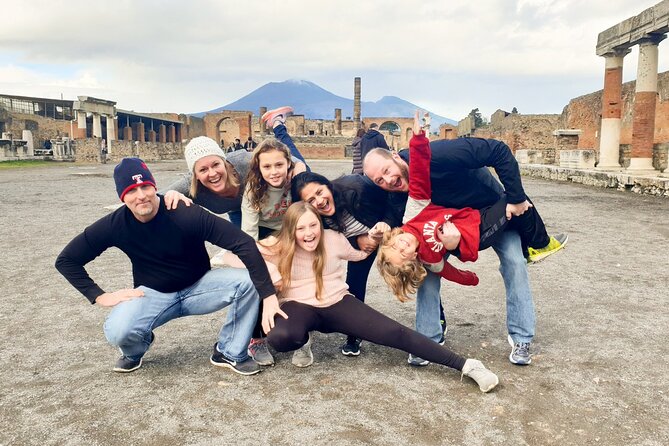
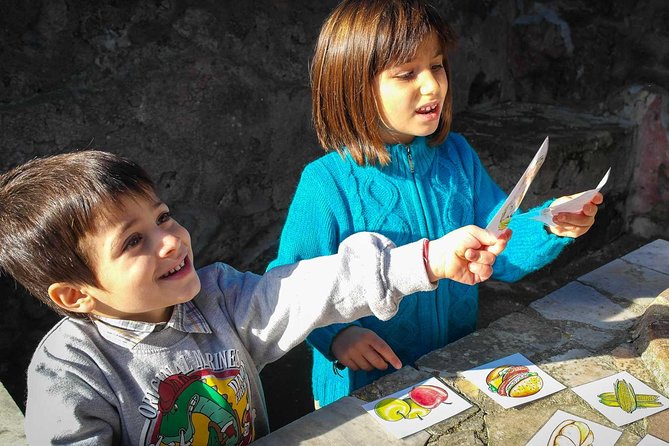
If you’re traveling with kids, this is the version I’d choose. The family option is designed specifically for younger visitors, with a kid-friendly map, stickers, and activities. Your guide also tailors the route for youngsters, using games, puzzles, and clues to make the buildings feel personal.
The age guidance mentioned is 6 to 11 for the family option, and in practice it seems to fit a wider range too. In review stories, I saw families bringing children from preschool ages up through older kids, and the common thread was how the guide kept everyone participating. One dad even described how his kids stayed captivated through the heat, and the route didn’t feel too long for younger attention spans.
The adult bonus is real. Kids often ask the best questions, like how people ate, what jobs looked like, and why streets had stepping-stones. Those answers land for adults too, because Pompeii becomes less about ruins and more about people.
Meeting Point at Via Villa dei Misteri, and what to expect on arrival
You’ll meet at Via Villa dei Misteri, 2, 80045 Pompei (NA), Italy, and the tour ends back at the same meeting point. That matters because it keeps the day simple. No complicated logistics, no surprise detours to find your way back.
It’s also listed as being near public transportation, which is useful if you’re coming from Naples or splitting plans with other stops in the area. You’ll want good walking shoes because Pompeii’s surfaces can be rough and uneven. The fitness level is described as moderate, so plan for steady walking and a few stretches where you’ll stand and look.
Bring a sense of flexibility too. Pompeii mornings can start breezy and end hot, and this site has real sun exposure. The guides in the stories I read sounded practiced at finding workable shade when the weather turns.
Your Early Walking Plan: orientation, gates, streets, and everyday life
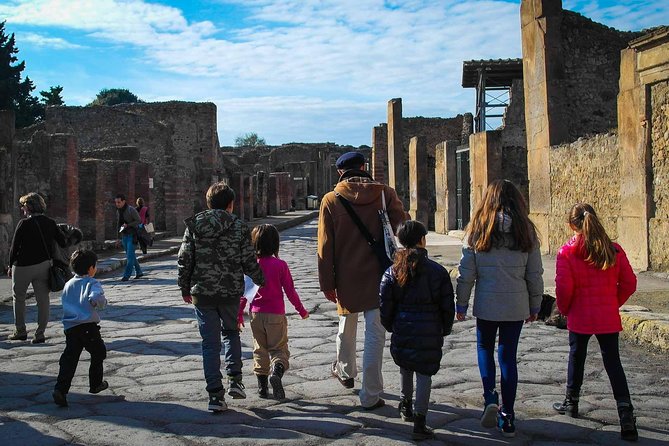
The tour starts with the big-picture orientation you need to actually enjoy Pompeii. You’ll be guided through signature parts of the archaeological park, including city walls and the Porta Marina area, which was tied to the harbor entry. Then you’ll move into the street-level experience, including the feel of basalt-laden streets and squares.
This is where the skip-the-line access pays off. Instead of using your energy on queues, you’re immediately learning how to read the place. Your guide explains how the eruption preserved structures and even everyday details, so you’re not just seeing objects, you’re understanding what they were doing in Roman life.
Also, expect some of those fascinating “only Pompeii” touches. The general highlights include stepping-stones across often-flooded streets, and the general vibe of a city with sewage problems that Roman engineers were still dealing with in their own way. It’s grim in places, but it’s also honest, which makes the story stick.
If you like learning from the human side, this tour naturally steers you there, including a stop connected to an ancient brothel and discussion of Roman habits. It’s not shock-tourism. It’s context.
Forum of Pompeii and Terme del Foro: politics and Roman bathing
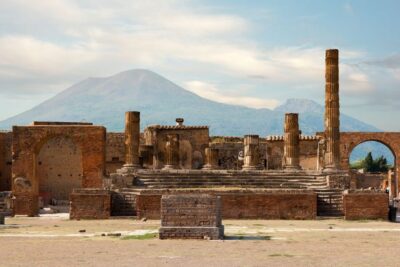
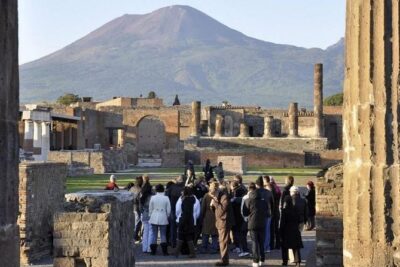
The heart of Pompeii is the Forum, and this tour gives it real time. The Forum wasn’t just pretty stone. It was the city’s main political, religious, and commercial center, laid out as a rectangular plaza with dimensions around 157 by 38 meters, and designed so chariot traffic was restricted. Your guide explains what the Forum was for, and why the layout signals power and civic life.
Right after, you’ll shift to Terme del Foro (Forum Baths). These are one of the best-preserved public bath complexes, built around 80 BC, and notable for still being operational at the time of the eruption in 79 AD. This stop is often a favorite because you can walk the bathing sequence in order. You’ll pass through areas associated with:
- Apodyterium (changing room)
- Frigidarium (cold bath)
- Tepidarium (warm room)
- Calidarium (hot room)
And because Pompeii is the kind of site that loves details, the bath rooms are described as having barrel-vaulted ceilings and stucco reliefs, plus terracotta figures called telamones. If you’ve ever wondered what “public life” meant in ancient Rome, this is one of the clearest answers you’ll get on a two-hour visit.
A practical tip: baths are great, but they can be busy spots. Since you’re on a private tour with skip-the-line entry, your guide can better manage timing around crowds. In the stories I read, guides were also quick at creating a less hectic rhythm.
More Naples tours, ruins, coast days, and city experiences to compare


Via dell’Abbondanza: the street where daily life shows up
From the Forum area, you walk down Via dell’Abbondanza, described as Pompeii’s longest and most important street and part of the main commercial and social artery (the Decumanus Inferior). This is exactly the kind of street where Pompeii feels like a living city instead of a museum.
You’ll see the street’s role as a connector between major areas, from the Forum toward the Sarno Gate. Your guide’s job here is to translate stones into routine: shops, movement, where people gathered, and why street life mattered.
One of the nice things about a private guide is the ability to slow down at the points that actually interest your group. If kids want the big picture, they’ll hear the story. If adults want the architectural clues, they can get those too.
Temple of Apollo, Basilica, and big religious or political statements
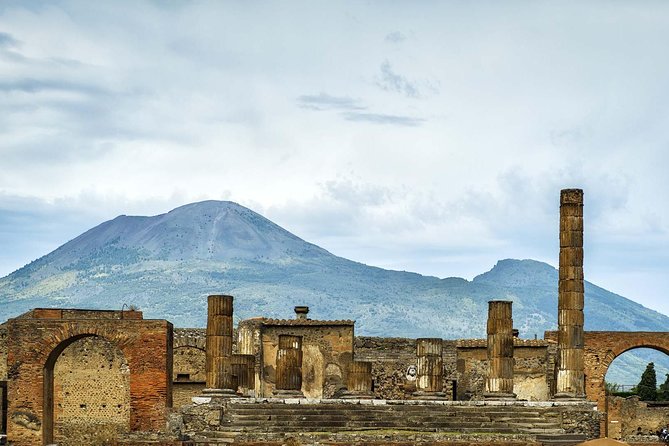
This tour hits key “public building” landmarks in the Forum zone.
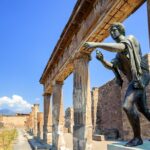
The Temple of Apollo is an important religious site with origins dating back to the 6th century BC. In the Forum area, it becomes a landmark that helps you locate the wider civic layout. Your guide points out the mixed Greek and Italic elements, including an elevated podium reached by stairs and a portico with 48 columns. There are also bronze replicas of Apollo as an archer and his twin sister Diana, with the note that original bronze masterpieces are preserved in the National Archaeological Museum in Naples.
Then you move to the Basilica, described as Pompeii’s most imposing public building in the southwestern corner of the Forum. It dates back to the 2nd century BC and is cited as one of the oldest examples of its kind in the Roman world. Your guide explains how structures like this supported civic functions, not just ceremonies.
The drawback to keep in mind is that “public building stops” can be brief. The tour is about two hours total, so these moments are usually short but focused. If you want deeper time in any single structure, tell your guide up front, and they can shift the emphasis.
Casa dei Vettii and Teatro Grande: wealth, art, and architecture
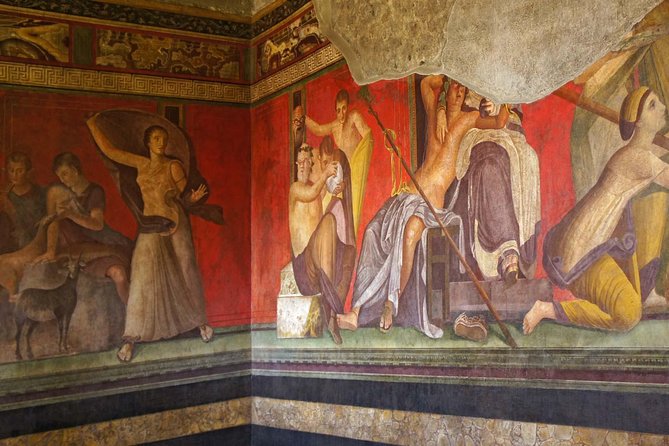
One of the most memorable stops is Casa dei Vettii. It’s often called the Sistine Chapel of Pompeii because of the visual intensity, and it reopened in 2023 after a meticulous 20-year restoration. This home belonged to Aulus Vettius Conviva and Aulus Vettius Restitutus, described as freedmen who became wealthy wine merchants. The message of the house is status, displayed through luxury and careful design.
What I like here is the “why” behind the walls. Your guide doesn’t just point out pretty surfaces. They connect the owners’ background to what you see, so the building becomes a story about social mobility and aspiration.
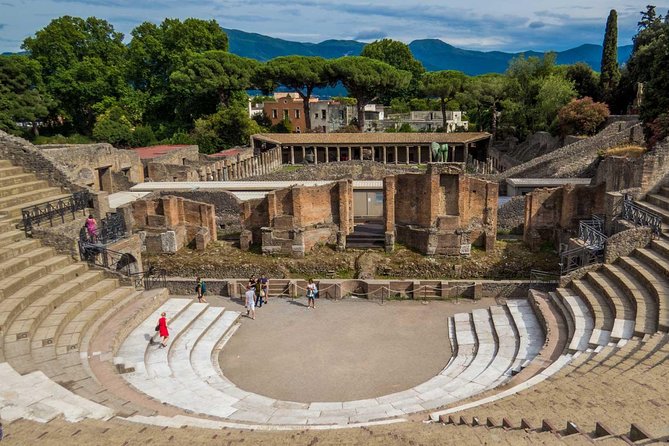
Then you head to Teatro Grande. This is one of the world’s oldest surviving masonry theaters, built originally in the 2nd century BC. It’s carved into a natural lava hillside, and your guide explains how it shows the transition from Greek to Roman architectural styles.
For families, this can land well. Kids often enjoy theaters because it’s easy to imagine performances. For adults, it’s a clear example of how Rome adapted earlier Greek forms to local needs and tastes.
Antiquarium di Pompei: the casts of victims and what they change
You’ll finish with the Antiquarium di Pompei, the site’s main museum in a climate-controlled space. This is where fragile artifacts and important finds are kept for viewing, and it’s also where the emotional core of Pompeii shows up.
The guide will take you to the famous plaster casts of victims. The description notes that some casts remain in situ at the ruins, but the Antiquarium displays several poignant plaster casts preserved in their final moments, including children.
This stop is not light. But it’s also what turns Pompeii from a set of ruins into a real disaster story. If you’ve ever wondered why the eruption narrative matters beyond history class, this is the moment that makes it personal.
Price and value: what $165.05 per person buys you
The price listed is $165.05 per person for about two hours. That’s not cheap, especially for families. But value here comes from a few things that are hard to get on your own:
- Skip-the-line tickets included
Pompeii lines can eat up your day. Here, you’re designed to lose less time.
- A private blue badge guide with flexible pacing
You’re paying for interpretation and for someone to spot the important details. Reviews and the general pattern of guide praise point strongly to guides who keep both adults and kids engaged, including names like Francesca, Anna, and Viviana.
- The family kit (if you select it)
The Pompeii4kids materials, including the map, stickers, and activity book elements, are part of what makes this option “family-friendly” instead of “family managed.”
One practical caution: the description includes a note that admission fees are not included, but the tour summary also lists admission fee as included and says admission ticket included at multiple stops. Before you go, double-check what your booking confirms for your exact date, so you don’t get surprised by any extra payment at entry.
So who should book this tour?
This is a strong pick if you:
- Want a private Pompeii visit where your guide can steer the story to what you care about
- Are traveling with kids and want a real plan for keeping them engaged, not just adult explanations
- Don’t want to spend half a day figuring out what to see first
It’s also a good choice if you want the emotional core of Pompeii handled thoughtfully. The Antiquarium casts stop is timed as part of the experience, not tacked on as an afterthought.
If your group includes anyone with mobility issues, set expectations with the guide at the start. One review mentioned the tour feeling rushed for a group with mobility challenges. In a private tour, you can usually correct that, but you have to speak up early.
Final decision: should you book it?
Yes, I think you should book this tour if you want Pompeii done efficiently and meaningfully. Skip-the-line access plus a private guide is the easiest way to get value out of limited time, and the family option is one of the clearest “kid plan” approaches available for Pompeii.
If you’re a slow walker, someone with limited mobility, or you simply want unhurried time in one specific area, consider booking the private tour anyway, then tell your guide exactly what pace you need and what you want to emphasize. That’s the best way to turn the two-hour plan into a calm, satisfying visit rather than a checklist sprint.
FAQ
How long is the Pompeii private tour?
It’s listed as approximately 2 hours.
Is this tour private?
Yes. It’s a private tour/activity, and only your group participates.
What language is the tour offered in?
It’s offered in English.
Does the tour include skip-the-line tickets?
Skip-the-line tickets are included as part of the experience.
Where does the tour start, and where does it end?
The tour starts at Via Villa dei Misteri, 2, 80045 Pompei NA, Italy and ends back at the same meeting point.
Is hotel pickup or drop-off included?
No. Pick up and drop off not included.
What is included for families?
If you choose the family option, you get a Pompeii4kids kit with a map, stickers, activities, and an activity book, plus games and clues geared toward kids.
Do admission tickets cost extra?
The information provided is mixed: admission fee is listed as included, but there is also a note saying admission fees are not included. Double-check your booking details for your date.
Is there a passport requirement for children?
Yes. A current valid passport is required on the day of travel for children under 18 years.
Can I cancel for free?
Free cancellation is available. You can cancel up to 24 hours in advance for a full refund. If you cancel less than 24 hours before the start time, the amount paid is not refunded.
More Private Tours in Pompeii

More Tours in Pompeii

More Tour Reviews in Pompeii
Not for you? Here's more nearby things to do in Pompeii we have reviewed






Tour Reviews, compared.
 ★ 4.8Pompeii: Entry Ticket and Guided Tour with an ArchaeologistFrom $3519,459 reviews
 ★ 4.2Pompeii: Entry Ticket with Optional Audio GuideFrom $2612,360 reviews
 ★ 4.8Pompeii: Small Group Tour with an ArchaeologistFrom $4012,264 reviews
 ★ 4.3Pompeii Ruins & Mount Vesuvius Day TourFrom $12011,459 reviews
 ★ 4.6Sorrento, Positano and Amalfi Full-Day TourFrom $10710,988 reviews
 ★ 5.0Sorrento, Positano & Amalfi Coast – Small Group TourFrom $768,643 reviews
 ★ 4.6Catacombs of San Gennaro Entry Ticket & Guided TourFrom $157,941 reviews
★ 5.0Pompeii Small Group Tour with an ArchaeologistFrom $356,593 reviews
★ 4.6Catacombs of San Gennaro Entry Ticket & Guided TourFrom $157,941 reviews
★ 5.0Pompeii Small Group Tour with an ArchaeologistFrom $356,593 reviews
Browse the lists this tour appears in