
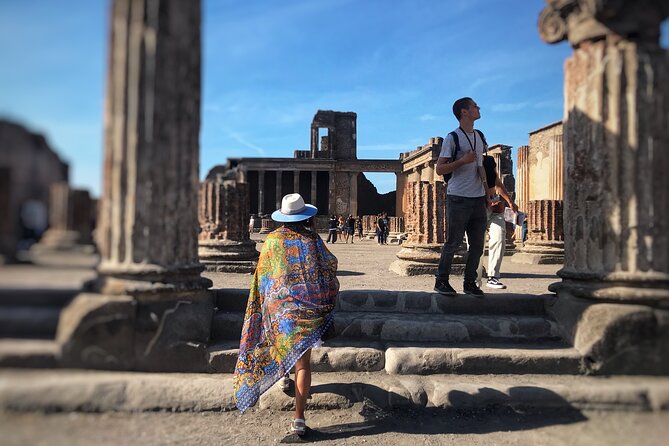
Tour review · TOUR REVIEWS
Pompeii Private Tour with an Archaeologist and Skip The Line
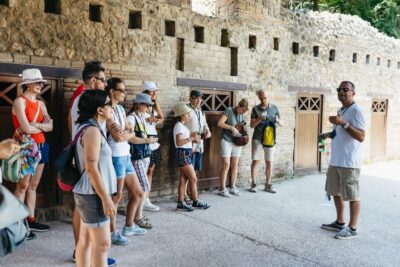
One ruin, many lives, and real-time storytelling. This private Pompeii experience is interesting because you cover the site’s most important zones in a tight route, with an archaeologist-led guide helping you connect streets, buildings, and daily habits. I like that it’s built for speed and clarity, not wandering. You’ll also get to hear context that makes the famous plaster casts and forum buildings feel less like postcards and more like evidence.
Two things I especially like: first, the guide-led pacing hits big moments without you getting stuck in crowd bottlenecks. Second, the route is clearly designed to show how Pompeii worked as a whole city, from entertainment and worship to shopping, justice, and bathing. You’ll move through the theaters area, cross Via dell’Abbondanza, and end up at luxury and industry clues without it feeling random.
One possible drawback: Pompeii entry tickets are not included in the tour price. The site admission is 19 euros per person (free for under 18 with ID or passport checks), so you’ll want to buy tickets through the official link the company sends before your tour. If you skip that step, your skip-the-line plan may not match what you expected.
Key highlights you will actually feel during the tour
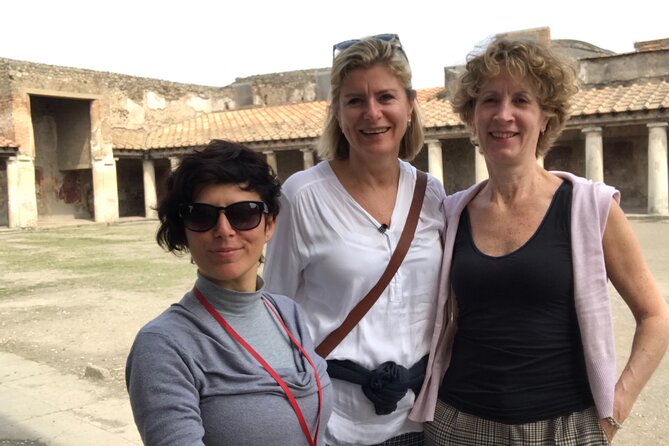
- Skip-the-line approach paired with a ticket link so your entry goes faster once you have the Pompeii admission sorted.
- Archaeologist-led stops across entertainment, religion, justice, and everyday commerce, so you see the city as a system.
- Odeion acoustics demo stop and a strong focus on how Romans designed public spaces.
- Plaster casts and the Forum granaries area where the human story and daily infrastructure meet.
- Stabian Baths and the Lupanar district which are the Pompeii “wow” factors people remember for years.
Pompeii in 2 hours, without the crowd trap
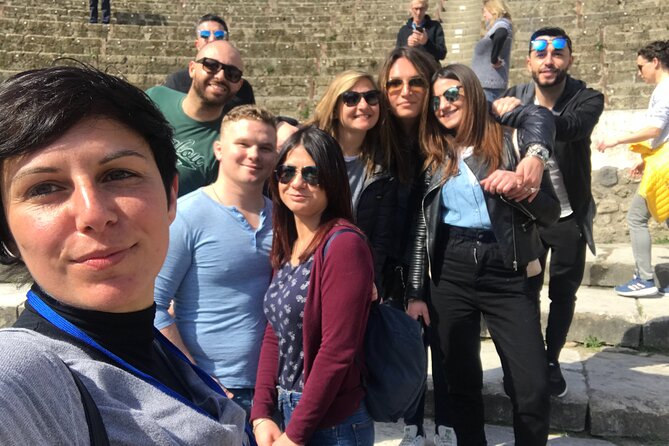
Pompeii is big enough to eat an entire day, and the site is popular enough to punish slow plans. This tour solves that problem by using a private, archaeologist-led route that aims to hit the key areas in about 2 hours. The pacing matters because Pompeii is an open-air site, and time is always the limiting factor, whether it is heat, crowds, or just the urge to keep moving.
You will start at Piazza Esedra in Pompeii and end back there. Expect a loop that takes you through the core city fabric, including the theaters zone, a major street crossing, the Forum area, and then toward the luxury end with Casa del Fauno. It is short, but the way the route is stitched together makes it easier to remember what you saw, because each block explains a different part of civic life.
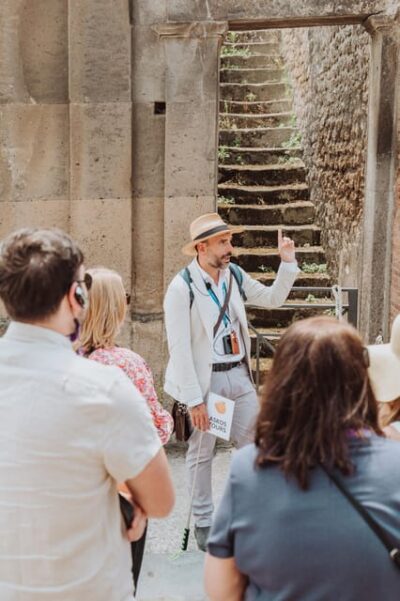
This is also a true private tour for your group, up to 10 people. That is a big deal for Pompeii, where families, couples, and multigenerational groups often want different pacing. Based on guide feedback trends (names like Luisa and Eliana come up frequently), the better tours are the ones where the guide adapts to your interests and keeps everyone engaged, not just a lecture that drifts past you.
You can also read our reviews of more private tours in Pompeii

Price and logistics: the ticket thing you must not miss
Let’s talk numbers in a way that helps you plan.
- The tour price is $375.05 per group (up to 10 people).
- Pompeii site admission is 19 euros per person and under-18s have free tickets with ID or passport checks.
- English is the standard language, with other languages only if requested.
The important part: the Pompeii entry ticket is not included. The tour also advertises skip-the-line, but the skip is practical only if you have your admission sorted. In fact, the company sends you a link one day before your tour to buy tickets online to help you avoid the ticket office line. In high season, doing this in advance is strongly wise.
So what is the value? The tour price is not “cheap,” but you are paying for:
- a private archaeologist-guided route,
- a plan that gets you into the right zones efficiently,
- and interpretation that makes the ruins make sense instead of staying as outlines.
If your group is 6 to 10 people, the per-person math gets more reasonable fast, because the guide time is shared across the group. If it is just 2 people, you might ask yourself whether you value guidance more than savings, because Pompeii can be done independently, but the payoff here is time saved and meaning gained.
Meet at Piazza Esedra, then go straight for the core
Your meeting point is Piazza Esedra, 10, 80045 Pompei NA. The tour ends back at the same place. That detail matters because Pompeii can be disorienting even when you are map-savvy. Starting and ending at the same point reduces the “where do we go next?” stress.
You also get a mobile ticket workflow. The company provides a link so you can purchase online and then use that for entry. Bring your phone, and have the ticket ready. And if you tend to lose time on check-ins, arrive a few minutes early. With a 2-hour schedule, those minutes add up.
One more practical point: the tour is offered in English, and it is one-language unless you ask for multiple languages. If you are traveling with people who do not do well in English, plan ahead. Pompeii facts are easier when everyone can follow the story in the same language.
Stop-by-stop: what each Pompeii area teaches you
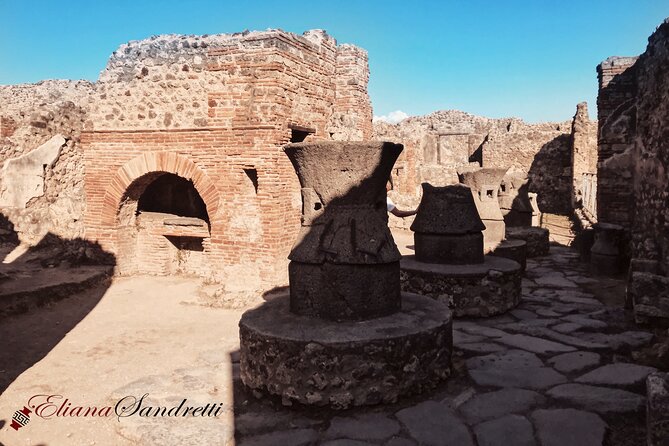
This route is designed like a learning path. You see entertainment and engineering, then civic power, then the personal side of daily life, and finally the luxury end.
Pompeii Archaeological Park: the essentials first
You begin in the Pompeii Archaeological Park area, where the entrance ticket is required but not included in the tour price. After tickets are handled, the tour focuses on the major anchors that let you understand the city quickly.
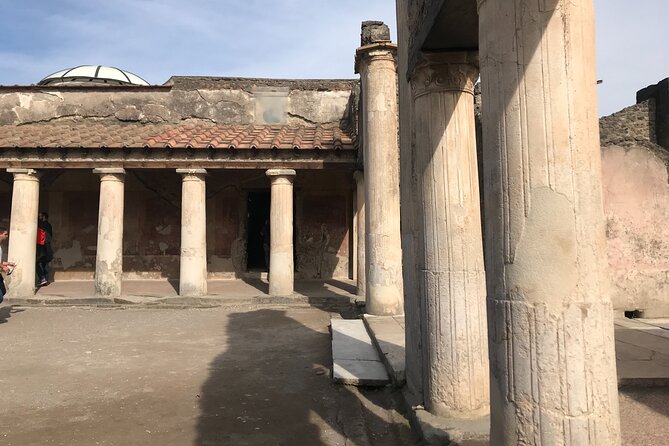
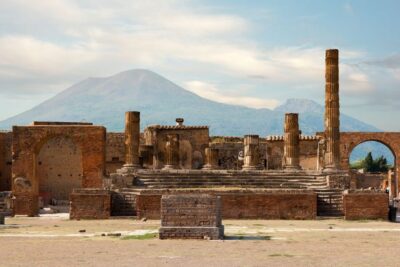
You will visit the theaters, temples, a rich house, the Stabian baths, and commercial zones including shops and fast food areas. You will also see the Lupanar area (the brothel district) and the Forum (main square), plus the Area of the Gladiators. A standout stop here is the casts area, where plaster figures represent victims who died during the eruption of 79 AD.
The reason this order works is simple: Pompeii becomes easier to read when you start with “what people did” before you start with “how the city was built.” The theaters and baths explain leisure. Temples explain belief. Shops and food explain routine. The Forum explains power. And the casts explain what happened when the city’s timeline ended.
A note on value: the casts are one of those places where the raw setting would be moving but confusing. With an archaeologist guiding you through what you are looking at, the details become clearer, and you can see why these casts are such a major part of Pompeii’s impact.
More Naples tours, ruins, coast days, and city experiences to compare


The Small Theater (Odeion): why Romans obsessed over sound
Next you visit the Small Theater (Odeion) to hear how Romans recreated perfect acoustics. This stop is short, around 15 minutes, but it is one of the more memorable moments because it turns “ruins” into “design.” Roman public spaces were not just for watching. They were engineering projects meant to work.
Even if you are not a theater person, this is the kind of detail that makes Pompeii feel alive: you start to notice proportions, layout, and the intention behind materials.
Teatro Grande: the big stage everyone pictures
Then you move to the Teatro Grande, the Great Theater of Pompeii. This is the most important theater on the site, and your time here is about 15 minutes. This is where you get the classic view of Pompeii as a society that invested in large-scale entertainment.
The payoff is how the guide often connects the theater to politics and social life. In other words, you are not just looking at seating. You are learning why these venues mattered to real people.
Via dell’Abbondanza: the main street that ties zones together
You cross Via dell’Abbondanza, Pompeii’s main street. This segment is brief, but it functions like a transition in the story. After the entertainment and civic power stops, the street walk helps you reset your mental map.
If you like to photograph streets with a clear sense of direction, this is the part of the tour where your camera will suddenly make more sense, because you understand what the street connected.
Granai del Foro: granaries, tools, and the human timeline
At Granai del Foro (Forum granaries), you visit an area linked with casts and also with the archaeological deposit. The tour time here is about 15 minutes. You can admire the deposit full of amphorae and work tools.
This is a clever stop because it balances two themes:
- how Pompeii stored food and handled supply,
- and how the eruption froze daily life in place.
The casts here bring the emotion. The amphorae and tools bring the routine. Put together, you get a fuller picture of what was lost.
Stabian Baths: the Roman spa you can feel
Next comes the Stabian Baths (Terme Stabiane), often described as the best SPA of the Roman Empire in Pompeii. Your time here is about 15 minutes.
This is one of the best “wow” stops because baths were not a small side activity. They were a place to socialize, relax, and keep civic rhythm. Even if you are touring on a tight schedule, this stop tends to stick because you can imagine the movement: rooms, heat stages, and the flow between spaces.
One practical drawback: baths areas can get busy because Pompeii’s shade and seating are limited. A guide who knows where to stand and how to keep your group moving quickly can make a big difference.
Foro di Pompei: markets, temples, and the center of decisions
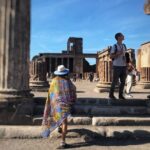
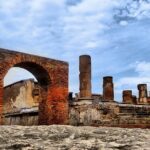
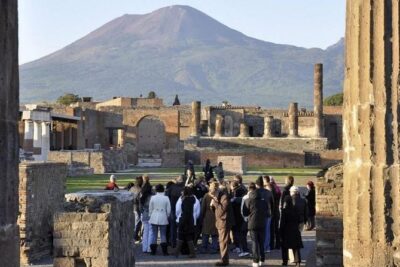
Then you reach Foro di Pompei, the ancient Forum of Pompeii. This is the main square with markets and temples, and the tour spends about 10 minutes here.
The Forum is where you understand civic identity. It is easy to look at the stones and miss the point. With guidance, you connect what you see to why it mattered: public life was anchored here.
Basilica: where justice was administered
You also visit Pompei La Basilica, the ancient court where justice was administered. Time here is about 15 minutes. A basilica stop is valuable because it explains governance in plain terms. It is not abstract history. It is the physical place where rules and decisions happened.
Temple of Jupiter: religion inside the main square
You also visit the Temple of Jupiter, present in the main square. This stop is brief, but it rounds out the religion theme you started earlier with other temple zones. The big idea is that Pompeii’s civic life blended worship with everyday governance.
Quadriporticus of the theaters and Gladiator Barracks: training life
Then you visit the Quadriporticus of the theatres, and specifically the area linked to the Gladiator Barracks, where you can see apartments and where gladiators trained. Time is about 15 minutes.
This part changes the tone. The earlier entertainment stops show leisure for the audience. Gladiator training shows work, discipline, and the human side of a brutal profession.
If you enjoy “how people actually lived,” this is a strong segment. It also helps you see the theaters zone as more than a viewing platform.
Vicolo del Lupanare: the ancient red district
Next is Vicolo del Lupanare, described as the ancient red district light, with the brothel area. The tour time is about 15 minutes, and this segment is listed as free.
This stop is not for everyone, but it matters historically because it shows how the city handled commerce of desire like any other part of the economy. With a good guide, you can look at it without getting lost in sensationalism and instead understand how the spaces functioned.
Temple of Venus: veneration of the city divinity
You also visit the Temple of Venus, where the divinity of the city was venerated. This is another short stop, but it reinforces Pompeii’s blend of public life and faith.
Casa del Fauno: luxury that changes your sense of the whole site
Finally, you reach Casa del Fauno, the House of the Faun, one of the richest and most luxurious residences in Pompeii. Time is about 15 minutes.
This ending is strategic. When you see luxury after learning about baths, markets, justice, and daily commerce, the contrast helps you understand social structure. You start noticing who had space, light, and beauty, and you see what the city’s top tier enjoyed when the rest of Pompeii kept moving.
It is a good way to end a short tour: not with a single building, but with a perspective shift.
What makes guides like Luisa and Eliana stand out
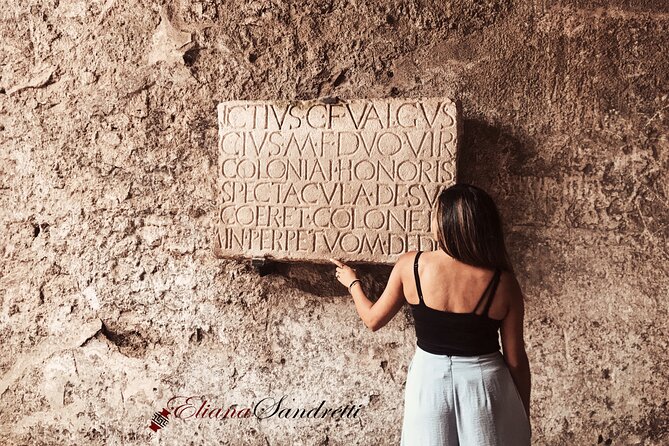
A private tour lives and dies on the guide. In the feedback patterns, a few names come up repeatedly, including Luisa, Eliana, Luciana, Antonio, and Danilo. The common thread is passion plus organization.
Here is what that translates to for you:
- You get explanations that connect buildings to behavior, so you understand what you are looking at rather than just reading plaques.
- You are more likely to get thoughtful answers to questions instead of a rushed script.
- The route tends to avoid crowds when possible, which is huge at Pompeii.
There is also strong evidence of customization. Families with kids have described guides tailoring the pace and finding shade when it was hot. Multigenerational groups have reported the guide kept things comfortable and avoided unnecessary strain. On rainy days, some guides have reportedly kept momentum by adjusting entry routing and explaining things through images while you wait.
That kind of practical flexibility is what you are really buying when you pay for a private archaeologist-led tour.
Is this tour worth the money for you?
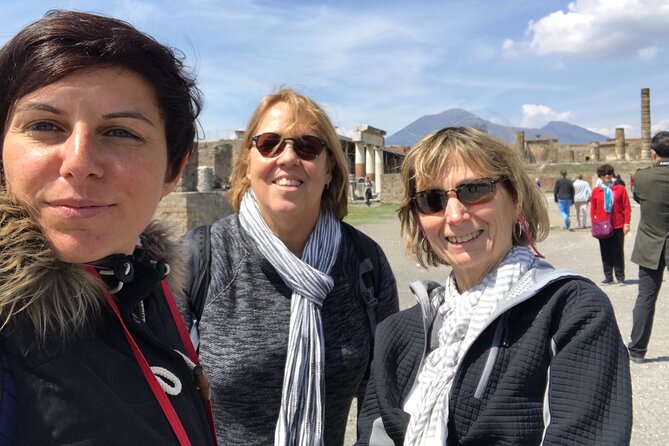
This tour is a good fit if you:
- want to see Pompeii’s highlights in about 2 hours,
- dislike big crowd lines and prefer a plan,
- want your visit to make sense, not just be a walk through stones,
- are traveling with a group of up to 10 and can share the group price,
- care about interpretation, especially around the Forum, baths, and the casts.
It might be less satisfying if you:
- prefer going slowly with lots of free time to linger,
- want every detail without being guided through a set route,
- are trying to keep costs ultra-low since the Pompeii ticket is a separate 19 euros per person.
One smart strategy: treat this as your “orientation and meaning” day. Do the tour, then explore independently afterward. Since Pompeii is huge, you will know what you want to return to, and where your interests are strongest.
Should you book this Pompeii private tour with an archaeologist?
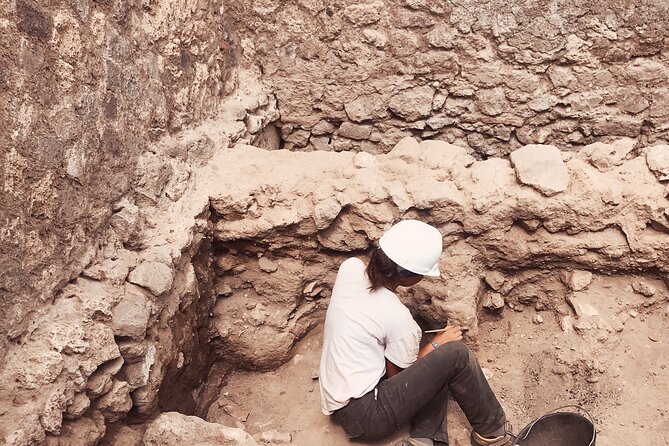
I would book it if your priority is high value use of time plus a guide who helps you read the ruins like evidence. The structure is built for clarity: theaters, Forum power, baths, brothel district, casts, then a luxury ending.
Just go in prepared on the biggest gotcha: buy the Pompeii admission ticket. Use the official link they send the day before, especially in high season. If you handle that part, the skip-the-line promise is much more likely to match your expectations.
If you are booking for a family, a mixed-age group, or anyone who gets overwhelmed by crowds, this is also one of those rare paid options that can genuinely make Pompeii feel manageable and even fun.
FAQ
Is Pompeii admission included in the tour price?
No. The Pompeii site entrance ticket costs 19 euros per person, and it is free for under 18 with ID or passport.
How long is the private Pompeii tour?
It runs about 2 hours.
How many people are in a group?
It is priced for up to 10 people per group and is a private tour for only your group.
What language is the tour offered in?
The tour is offered in English. Other languages can be arranged only on request.
Where do we meet, and where does the tour end?
You meet at Piazza Esedra, 10, 80045 Pompei NA, Italy, and the tour ends back at the same meeting point.
Are refreshments included?
Food and drinks are not included.
Can I buy tickets online in advance?
Yes. You receive a link one day before the tour to buy online tickets in advance to help you skip the ticket office line.
What if the weather is bad?
The experience requires good weather. If it is canceled due to poor weather, you can choose another date or get a full refund.
Is there a skip-the-line benefit?
Yes, the tour includes skip the line. You still need to have your Pompeii admission ticket as required for entry.
Are service animals allowed?
Yes, service animals are allowed.
What about cancellation and refunds?
Free cancellation is available if you cancel at least 24 hours in advance for a full refund. If you cancel less than 24 hours before the start time, the amount paid is not refunded.
More Private Tours in Pompeii

More Tours in Pompeii

More Tour Reviews in Pompeii
Not for you? Here's more nearby things to do in Pompeii we have reviewed




Tour Reviews, compared.
 ★ 4.8Pompeii: Entry Ticket and Guided Tour with an ArchaeologistFrom $3519,459 reviews
 ★ 4.2Pompeii: Entry Ticket with Optional Audio GuideFrom $2612,360 reviews
 ★ 4.8Pompeii: Small Group Tour with an ArchaeologistFrom $4012,264 reviews
 ★ 4.3Pompeii Ruins & Mount Vesuvius Day TourFrom $12011,459 reviews
 ★ 4.6Sorrento, Positano and Amalfi Full-Day TourFrom $10710,988 reviews
 ★ 5.0Sorrento, Positano & Amalfi Coast – Small Group TourFrom $768,643 reviews
 ★ 4.6Catacombs of San Gennaro Entry Ticket & Guided TourFrom $157,941 reviews
★ 5.0Pompeii Small Group Tour with an ArchaeologistFrom $356,593 reviews
★ 4.6Catacombs of San Gennaro Entry Ticket & Guided TourFrom $157,941 reviews
★ 5.0Pompeii Small Group Tour with an ArchaeologistFrom $356,593 reviews
Browse the lists this tour appears in