
Tour review · TOUR REVIEWS
Pompeii: Afternoon to Sunset Guided Tour with Ticket
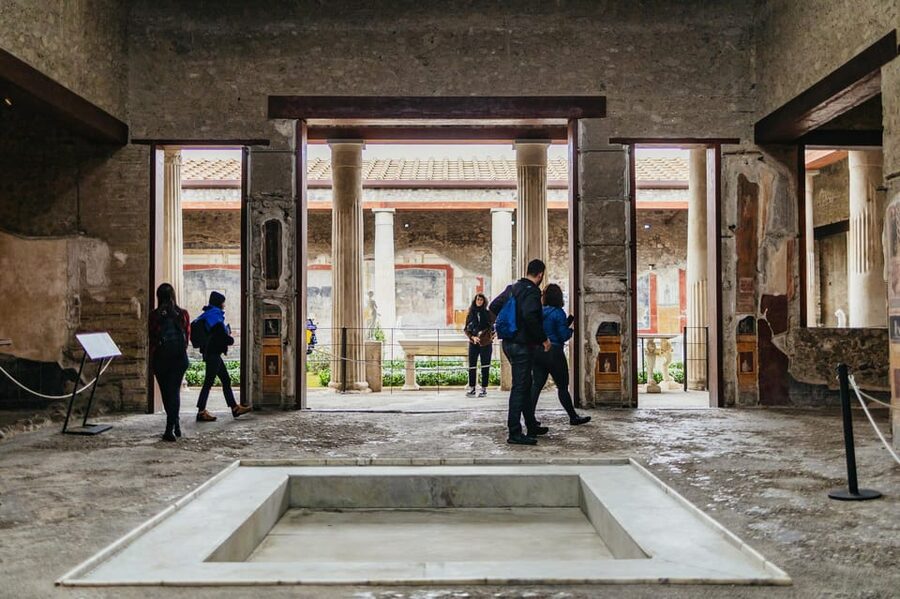
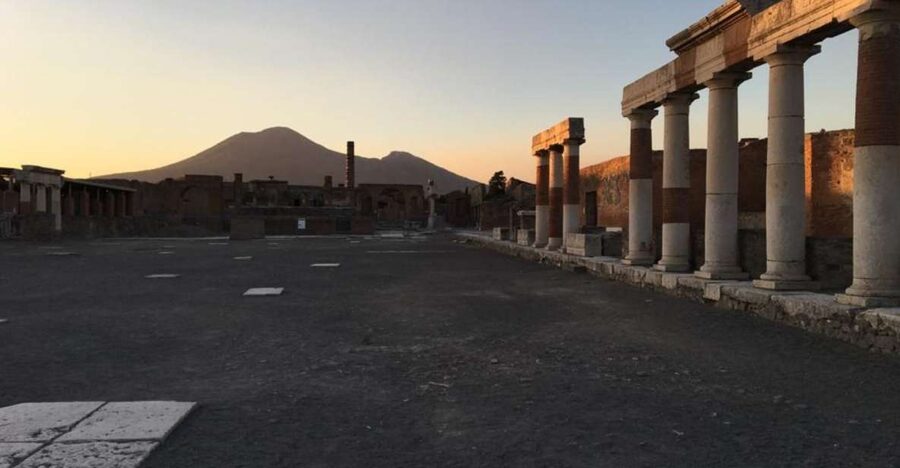
Pompeii at sunset turns ruins into real scenes. This 2.5-hour guided walk with an archaeologist guide helps you connect the big-name monuments (Forum, Baths, Theater) to everyday Roman life, then closes with Vesuvius stories as the light softens.
I especially love two things. First, you get skip-the-line entry plus a focused route, so you spend less time queuing and more time actually seeing the city. Second, the guides bring the place to life with clear explanations and plenty of time for questions, with some groups even led by archaeologists and long-time locals like Angelo, Anna, Sasa, and Francesco (often called Franky). One drawback to plan for: this is still a walking tour on uneven ancient surfaces, and it is not suitable for people with mobility impairments.
Key Takeaways You’ll Care About
- Archaeologist-led storytelling that links buildings to daily life
- Skip-the-line ticket via a separate entrance to save your time
- Sunset timing for calmer light, cooler temperatures, and smaller crowd feel
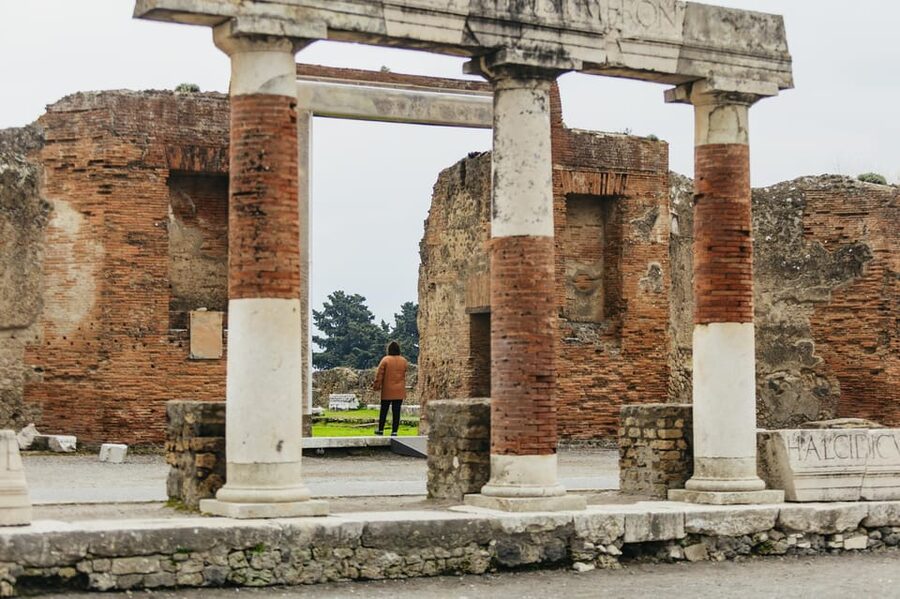
- High-impact Pompeii stops such as the Forum, Basilica, Thermal Baths, and Theater
- Small-group energy that makes questions feel easy (often around 5 to 10 people)
Meeting at Ristorante Bar Sgambati, Then Straight to Pompeii
Your tour starts at Ristorante Bar Sgambati, and you’ll look for a red Enjoy Pompeii sign. This matters because Pompeii is huge, and any delay at the start eats into the only thing you cannot get back: your limited 2.5 hours.
I like the simplicity here. No complicated instructions, no long transfer described, just a clear meeting place and a direct path into the site. In a few past groups, the meeting spot was also described as easy to find, near the train station, which is handy if you are using public transport to reach Pompeii.
From there, you head to the entrance where the tour includes skip-the-line entry. That separate entrance helps you avoid the worst of the waiting, which is a big deal at Pompeii, especially if you are visiting in peak season.
More Naples tours, ruins, coast days, and city experiences to compare

Skip-the-Line Tickets: How You Use the Time You Paid For
This tour includes your entry ticket, and it is set up to get you inside without the main line. For a short, guided visit, this is real value. A half-day at Pompeii can disappear quickly if you lose time to queues.
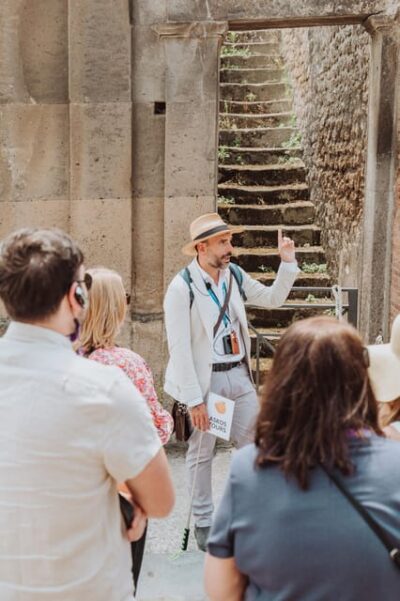
Once you are in, you will not feel like you are wandering with a map. You walk with a guide who is steering you toward the most meaningful stops, including civic buildings and places tied to daily routines. You also get the benefit of a human pace, not the rush of a self-guided plan where you can accidentally miss what makes each area click.
Also, the tour tends to run with smaller groups, so you are more likely to get answers that fit what you ask. Several guide experiences highlighted humor, patience, and clear explanations, which makes the walking feel smoother and less like homework.
The Afternoon-to-Sunset Window: Why the Timing Works
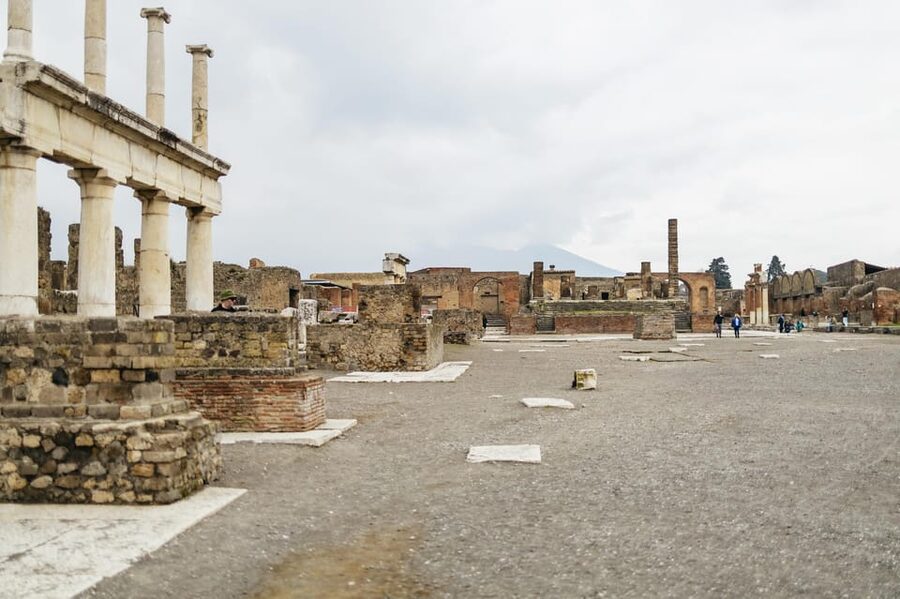
The big idea is simple: you see Pompeii in the softer part of the day. That is not just for aesthetics. Reviews and past tours also point to better comfort and fewer crowds as you get closer to evening, which makes a difference when you are covering Pompeii on foot.
A 2.5-hour slot is ideal for first-timers who want highlights without committing a full day. You still get the major anchors: Forum-area civic spaces, the Thermal Baths, the Theater, and neighborhood details like housing blocks and a bakery. Then you end with the sun setting over the ruins, when the atmosphere shifts from hot and chaotic to calm.
In practice, sunset also helps with pacing. Guides frequently manage shade breaks during explanations, so you can keep stamina for walking without feeling like you are melting.
New Antiquarium: Getting Oriented Before You Start Walking
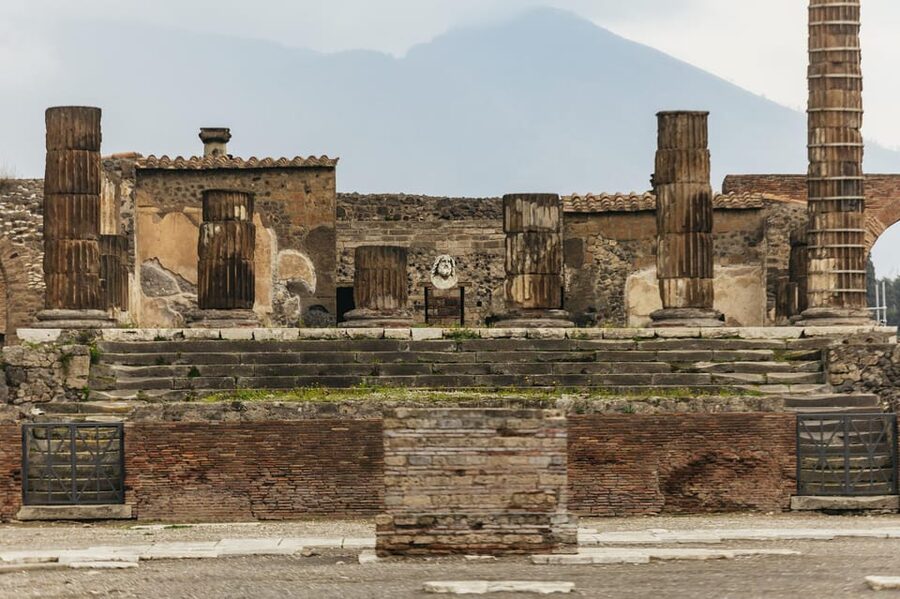
You will spend part of your visit at the new Antiquarium, which is a smart way to begin. Without a bit of orientation, Pompeii can feel like a list of famous structures. With it, you start recognizing how the city functioned and why the layout matters.
The Antiquarium helps you read the ruins. You begin connecting what you see to the lives of people who lived there, not just to the eruption date on the calendar. And because this tour is paced for 2.5 hours, starting with context is the difference between seeing buildings and understanding them.
A good guide also uses this early time to set expectations: where you are going next, what to look for, and what clues the buildings give you about Roman civic life. You will feel this especially once you step into the Forum area.
Forum and Basilica: Pompeii’s Civic Heart in Stone
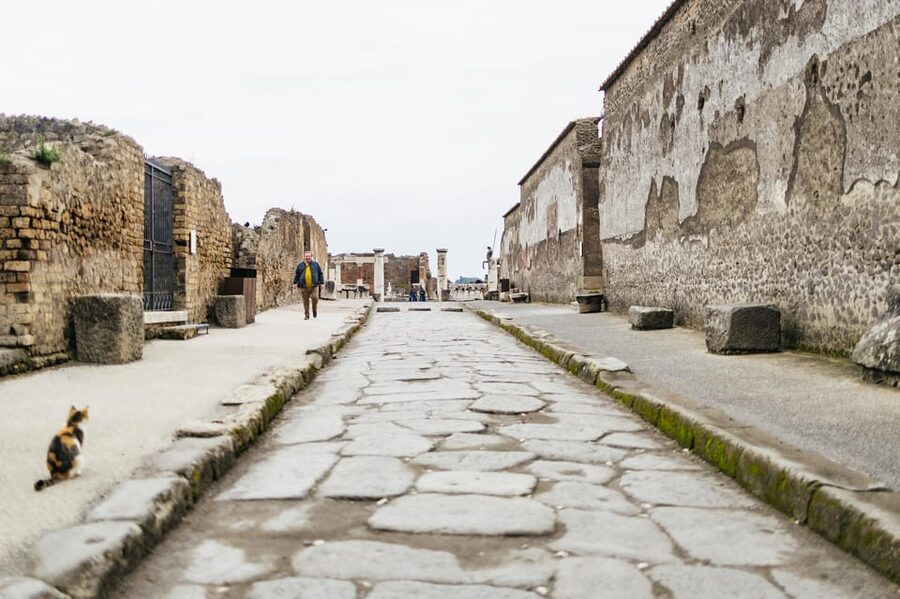
The Forum is where Pompeii shows its public face. This is where civic decisions, social life, and Roman identity met in one dense area. Your guide brings the Forum to life by connecting it to day-to-day behavior, not just big political ideas.
Right alongside it, you’ll see the Basilica, another key civic space. Even if you are not an architecture specialist, the guide format helps: you learn what a basilica did in Roman public life, and why its design and placement were practical for crowds and commerce.
What I like about this part of the tour is that it teaches you how to look. You start noticing how entrances, open spaces, and surrounding buildings shaped movement. Instead of walking past walls, you start thinking like a Roman visitor: where would you go first, what would you do there, and how would a typical day feel?
You can also read our reviews of more guided tours in Pompei Campania
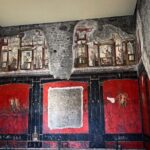
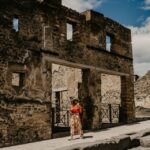
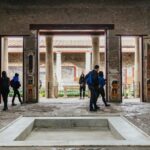

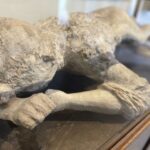
Thermal Baths and Street Life: Where Romans Cleaned Up and Socialized
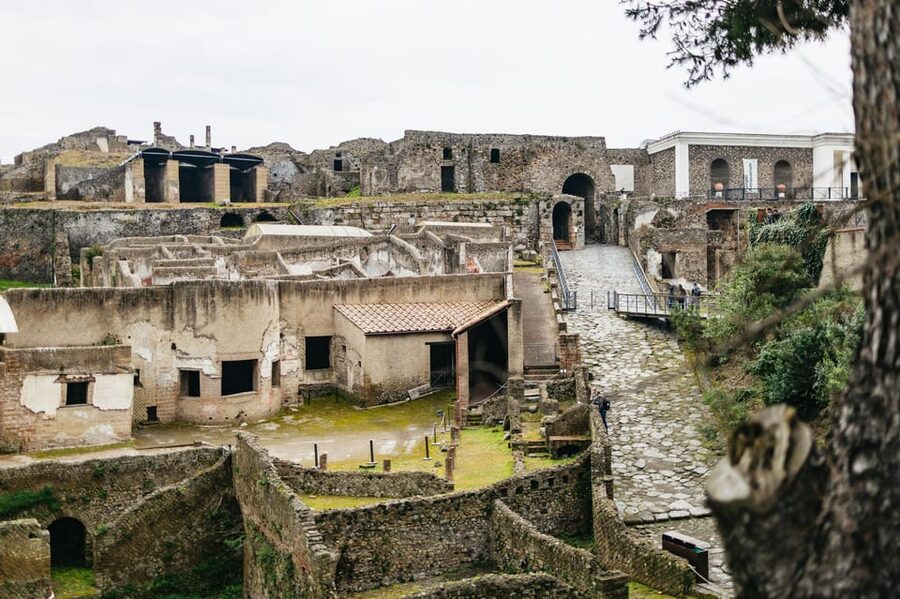
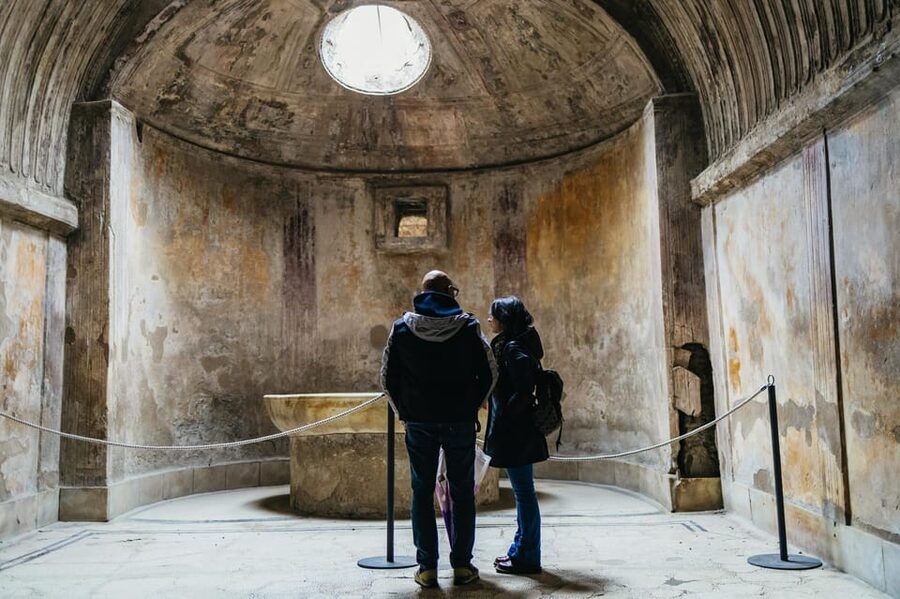
The Thermal Baths are one of the most impressive parts of Pompeii because they combine engineering, routine, and social behavior. Your guide helps you see beyond the scale. You learn how the baths fit into daily habits and how the space supported meeting, relaxing, and staying connected.
This stop also works well for the tour length. It is detailed enough to feel meaningful, but it does not require the full-day wandering that an independent visit often leads to. You get the essential layout and the reasons it mattered.
Just as important, you also explore commercial and residential clues. Highlights include a bakery and typical housing blocks. This is where Pompeii stops being only public buildings. You begin seeing how neighborhoods supported daily needs, where people likely ate, worked, and lived close together.
A practical note: this area is still full of stone surfaces and uneven ground. Several guide experiences emphasized being mindful of footing and slowing down when needed, so bring patience and let the guide manage the pace.
Theater Walkthrough: Public Entertainment That Feels Personal
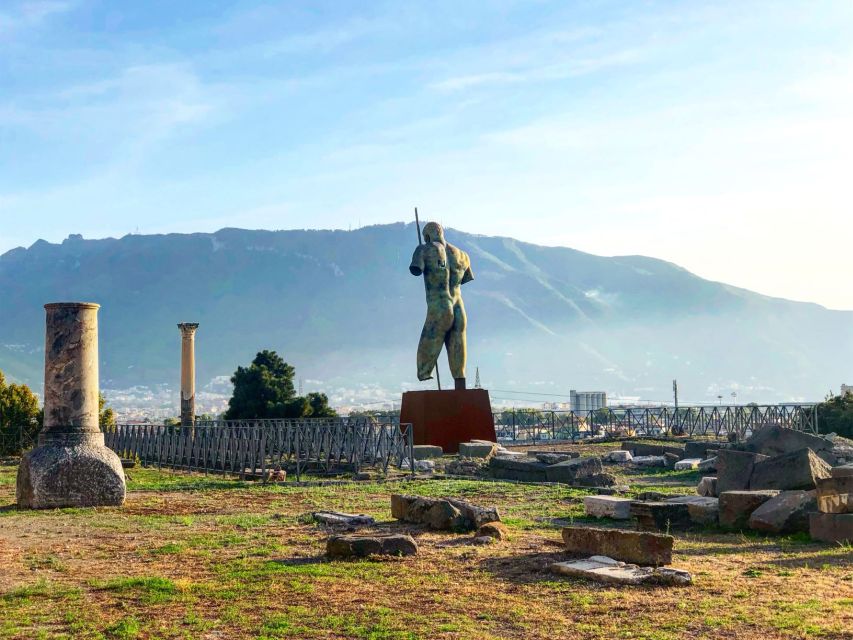
Pompeii’s Theater gives you a different window into life: public entertainment. It is not just a structure to photograph. With a good guide, you understand why crowds gathered, what kinds of performances were part of Roman culture, and how a theater fit into the daily rhythm of the city.
The theater stop also helps break up the emotional weight of other parts of Pompeii. Even though the eruption hangs over everything, the Theater reminds you that people in 79 AD had routines, tastes, and community events, just like anywhere else.
What you get on this tour is a curated look, not a museum-style lecture. You walk, you pause, you look, and then you move on, which keeps the experience active and human.
Vesuvius in 79 AD: How the Eruption Changed Pompeii and Beyond
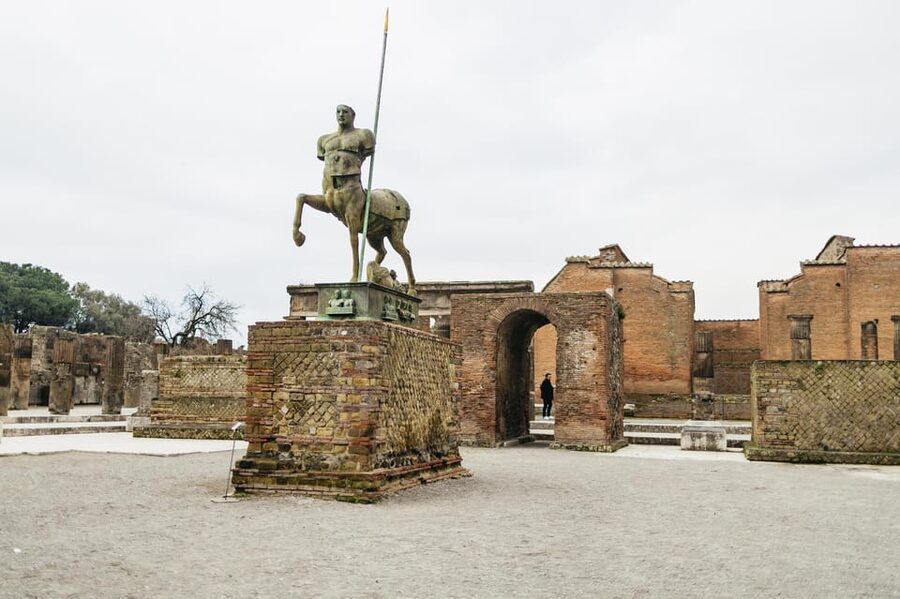
One of the most valuable parts of the tour is the way the guide frames the eruption and its impact. You will hear how the catastrophe affected the city itself, but also how it echoes into wider history and later societies.
This is where context matters. Pompeii is famous because it is preserved, but preservation is not the whole story. The eruption changed everyday life instantly, and that shock is what your guide connects back to the buildings you just walked through.
By the time you reach this section, you have already seen places that represent normal life: civic spaces, baths, neighborhood housing, and a theater. So when the eruption explanation comes, it lands harder, because you can picture what was interrupted.
In the final stretch, the tour also shifts into atmosphere. You are not rushing to hit one more photo stop. You are walking at sunset, letting the light and scale do some of the emotional work.
The Guide Factor: Why This Tour Feels Different
The biggest repeat theme is the people leading the walk. Guides named in past groups include Angelo, Anna, Sasa, Francesco (Frankie), and Luigi. What they share in common is the ability to make the site feel understandable, with stories and answers that do not treat you like you are just passing through.
A few standout patterns show up again and again:
- They keep groups engaged with humor and a lively tone
- They make time for questions without making you feel rushed
- They help with stamina by choosing good spots to pause, including shade
- They guide you to key highlights so you do not waste effort on low-value detours
If you get Francesco, Frankie, Angelo, or Anna, you are likely in for a tour that feels like it is built around conversation, not just a script. And if your group is small, that effect multiplies. One group experience described an intimate format with only a handful of people, which is where the Q and A energy really works.
Price and Value: Is $58 Worth It for a 2.5-Hour Pompeii Tour?
At $58 per person for 2.5 hours, this tour is priced like a guided shortcut to the essentials. The real value is not the price tag alone. It is what you get for it: a ticket included, skip-the-line access, and an archaeologist guide who chooses the route for impact.
If you tried to do Pompeii alone in a similar time window, you would likely miss something or spend too long just trying to figure out what you are looking at. Here, you trade some freedom for direction, and the payoff is understanding.
This is also one of those cases where the time slot matters. Afternoon-to-sunset timing is often easier on your body and your attention, and several guide-led experiences mention that the crowds feel thinner as the evening approach grows.
One more value point: after the guided portion ends, you may have time to explore further on your own. That is useful because Pompeii is endless, and your guided route can act like a map you actually want to follow.
What You Should Plan for After the Tour (Like the Arena)
This walk is focused, which means some big Pompeii sights might fall outside your guided window. For example, one past visitor called out the Arena as a must, and specifically noted it is not included in the tour.
That tip is worth taking seriously. If you care about the Arena, plan extra time after the tour so you are not scrambling. Think of the guided walk as the foundation, then use your remaining time to chase your personal priorities.
If you are catching a train or have a tight schedule, build in buffer time. One experience suggested planning a bit backwards so you do not feel rushed at the end.
Who This Tour Suits Best (and Who Should Rethink It)
This guided walk is a great match if you want Pompeii highlights without spending a full day. It is especially good for:
- First-timers who want the Forum, Baths, and Theater and a clear story
- People who prefer conversation and questions over solo wandering
- Travelers who want sunset atmosphere, but still want structure
It is not suitable for people with mobility impairments, heart problems, respiratory issues, or people over 95 years. Pompeii involves walking and uneven ancient ground, so do take that seriously rather than hoping you will manage.
If you are traveling with kids or mixed ages, small-group formats have worked well in past groups, including families with teens. A good guide can pace the stops and keep attention on what matters.
Should You Book This Pompeii Afternoon-to-Sunset Tour?
I think you should book this tour if your goal is to see Pompeii’s most important pieces in a short time and leave with a real sense of how people lived there. The combination of skip-the-line ticket, an archaeologist guide, and sunset timing makes it a smart value, not just a tour add-on.
You might skip it if you want total freedom to roam every corner at your own pace, because this is still a guided route. You also should consider the walking demands if your mobility or health situation makes longer uneven walking hard.
If you do book, my advice is simple: plan to use the guided time for the essentials, then add extra time only for the specific extras you care about, like the Arena.
FAQ
Where do I meet the guide?
Meet at Ristorante Bar Sgambati and look for a red Enjoy Pompeii sign.
How long is the guided tour?
The tour runs for 2.5 hours.
Does this include a Pompeii ticket?
Yes. Your skip-the-line entry ticket to Pompeii is included.
How does the skip-the-line entry work?
The ticket is used through a separate entrance, so you can avoid the main line.
What languages are available for the tour?
Live guides are offered in Italian, English, and French.
What should I bring with me?
Bring a sun hat and an ID card (a copy is accepted).
Is the tour suitable for people with mobility issues?
No. It is not suitable for people with mobility impairments.
Is there an age or health limit?
The tour is not suitable for people over 95 years, and it is also not suitable for those with heart problems or respiratory issues.
More Tickets in Pompei Campania
More Tours in Pompei Campania


More Tour Reviews in Pompei Campania

Not for you? Here's more nearby things to do in Pompei Campania we have reviewed






Tour Reviews, compared.
 ★ 4.8Pompeii: Entry Ticket and Guided Tour with an ArchaeologistFrom $3519,459 reviews
 ★ 4.2Pompeii: Entry Ticket with Optional Audio GuideFrom $2612,360 reviews
 ★ 4.8Pompeii: Small Group Tour with an ArchaeologistFrom $4012,264 reviews
 ★ 4.3Pompeii Ruins & Mount Vesuvius Day TourFrom $12011,459 reviews
 ★ 4.6Sorrento, Positano and Amalfi Full-Day TourFrom $10710,988 reviews
 ★ 5.0Sorrento, Positano & Amalfi Coast – Small Group TourFrom $768,643 reviews
 ★ 4.6Catacombs of San Gennaro Entry Ticket & Guided TourFrom $157,941 reviews
★ 5.0Pompeii Small Group Tour with an ArchaeologistFrom $356,593 reviews
★ 4.6Catacombs of San Gennaro Entry Ticket & Guided TourFrom $157,941 reviews
★ 5.0Pompeii Small Group Tour with an ArchaeologistFrom $356,593 reviews
Browse the lists this tour appears in