
Tour review · TOUR REVIEWS
Pompeii: Entry Ticket and Guided Tour with an Archaeologist
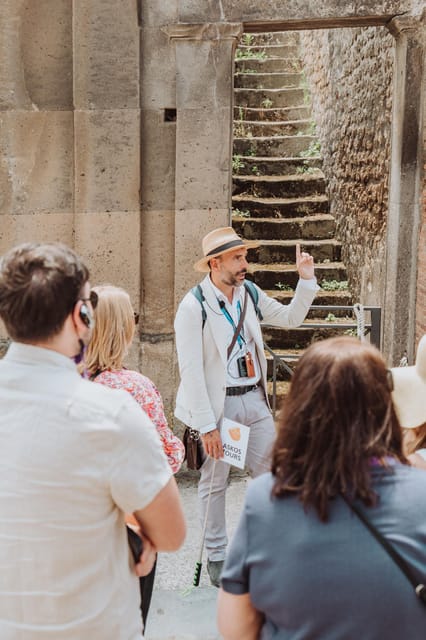
Pompeii is a city frozen in ash. This 2-hour walk, led by an archaeologist guide, turns what looks like rubble into clear 1st-century life, with smart stops like the Casa del Fauno and the House of Menander. Two things I especially liked: the skip-the-line entry and the small-group pace that lets the guide explain details instead of racing on. One thing to plan for is that you will be walking on uneven ground, with some steps, so comfortable shoes matter.
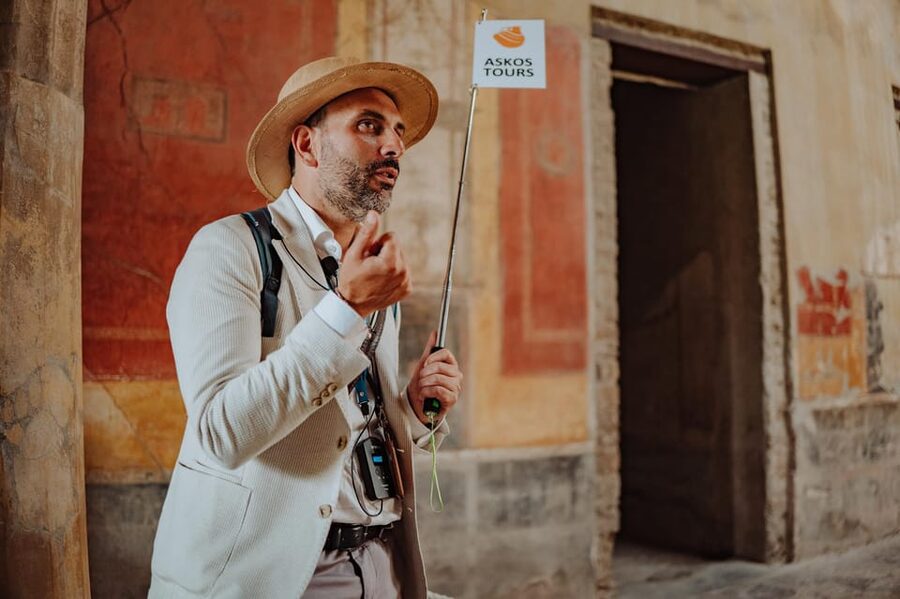
The tour hits Pompeii’s major zones without feeling like a checklist. You get set up with headsets when the group is larger, and you’ll also hear context that makes public buildings, homes, and even the darker parts of city life make sense. When I was looking at houses and street corners, I found the best payoff came from listening to archaeologist-style explanations, like the way guides such as Teresa, Anna Sorrento, and Alfredo are described as passionate and story-driven.
The main drawback is also the most practical one: it is not built for wheelchairs or mobility scooters, and it may be long enough that you’ll want water and snacks for afterward. If you want a completely relaxing stroll, Pompeii’s terrain and the tour’s walking rhythm might feel like more work than you expect.
Key Things You Should Know Before You Go
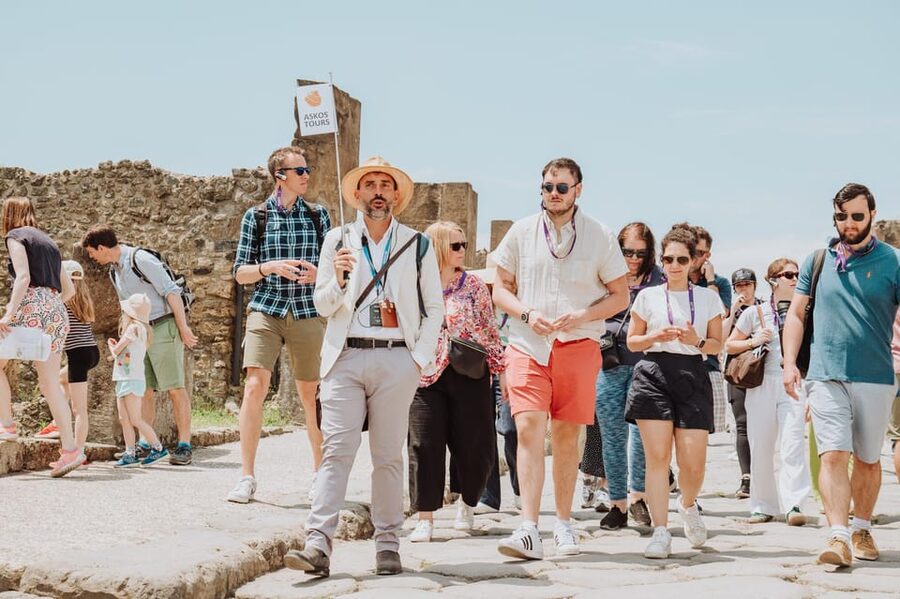
Small group size keeps Pompeii readable: up to 20 people, plus a focused route so you are not stuck staring at a wall with no context.
Skip-the-line access saves your holiday time: entry ticket is handled for you, so you start seeing Pompeii sooner.
Headsets help when crowds are loud: for groups of 10 or more, so you can hear the guide’s explanations even near busy spots.
You cover both power and daily life: forum spaces, baths, market areas, and standout homes like the House of Menander.
You end with a next-steps plan: your guide wraps up with recommendations for what to explore on your own afterward.
Plan for uneven ground and a few steps: this is a walk through an archaeological site, not a flat museum floor.
Skip-the-Line Entry and an Archaeologist Guide Make the First Visit Click
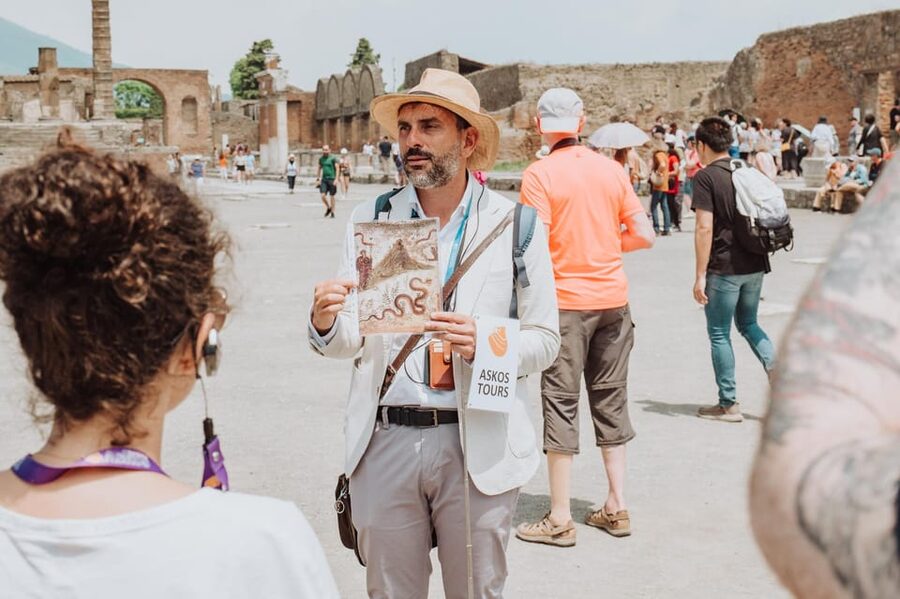
The big win here is how much the tour changes your experience fast. Pompeii is huge, and if you arrive cold, you can end up wandering from one impressive doorway to the next with no clear map of what you are looking at. With an archaeologist guide in charge of the story, you start connecting street layout, building purpose, and Roman daily routines.
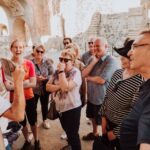
I also like the practical design of the group itself. This is a small group tour, capped at up to 20 people, and that size is just right for Pompeii. You can hear explanations, ask questions, and still keep moving. Guides in this format often get praised for turning facts into real scenes, like how Teresa and Anna Sorrento are described as personable and engaging, and how archaeologist-focused guides like Mike are noted for knowledge plus storytelling.
The ticket advantage matters too. Skip-the-line access means you spend less time in queues and more time inside the site while the day still feels fresh. For a place you want to see with energy, that is not a small detail.
More Naples tours, ruins, coast days, and city experiences to compare


Your 2-Hour Walk in Plain English, What Each Stop Feels Like
This tour is designed as a tight sampling of Pompeii’s most meaningful spaces. In practice, 2 hours in Pompeii is enough time to grasp the structure of the city, see key buildings up close, and still have momentum for your own follow-up exploring later.
You will start from one of the listed meeting options (the exact meeting point can vary based on the option you book). Then the route follows a logical path through Pompeii’s city life, from entrances and temples into civic areas and standout houses, before ending around market and bath spaces.
Here is what each main stop adds to your understanding, and what to watch for.
Porta Marina and the Temple Area, Getting Oriented Without a Map
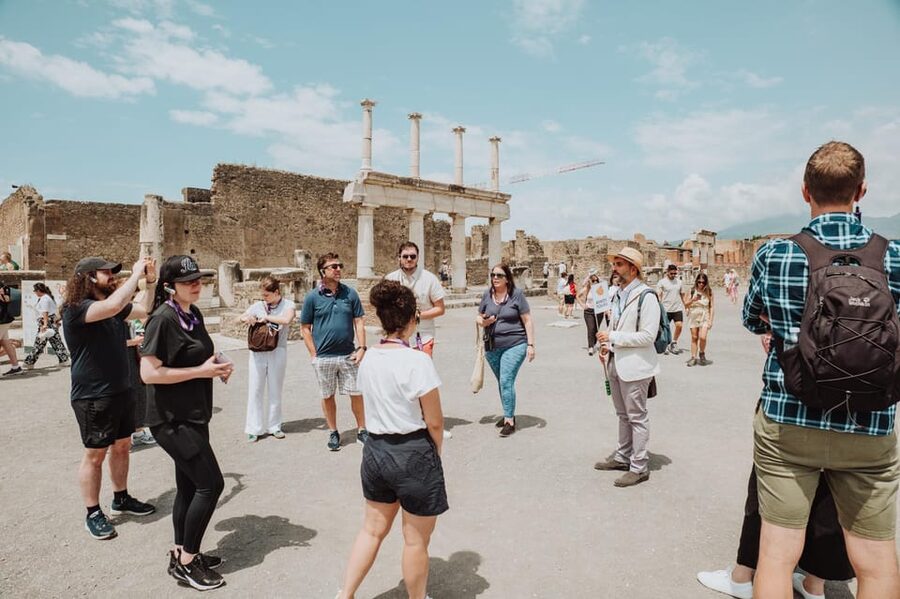
The tour starts with a pass by Porta Marina, the entrance zone, which is useful because it frames how Pompeii’s streets connect to the rest of the city. Even a short pass is valuable here, because Pompeii feels maze-like until you understand where major routes begin.
From there, you pass the Temple of Apollo. This kind of stop is not just about the temple walls. It helps you understand the religious setting that shaped public life. In Pompeii, religion was woven into civic identity, and a guide’s job is to show you what that meant in daily routines, not just in inscriptions.
A practical note: even these early parts include walking on rough, ancient surfaces. This is where wearing grippy shoes pays off. One reviewer advice that matches the reality of Pompeii paths is simple, good footwear and expect uneven ground.
Foro Civile di Pompei, Where Politics and Public Life Meet
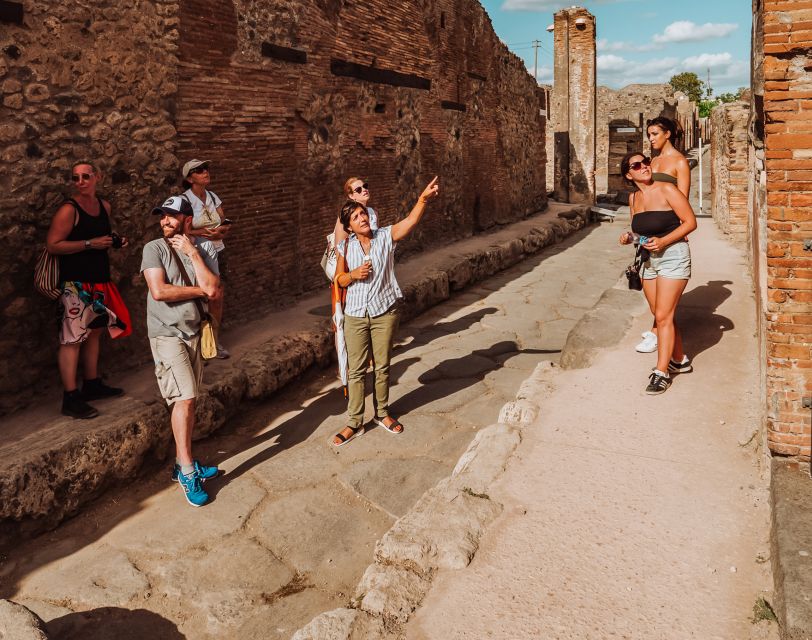
Next you get to Foro Civile di Pompei, the civic forum zone. This is where Pompeii stops being a collection of buildings and starts looking like a functioning city. You will see the setting where people met, discussed matters, and carried out everyday civic routines.
In a guided format, I love this stop because it teaches you to read the space. The forum is not only impressive, it is practical. A good guide will help you spot what indicates power, what indicates community activity, and how the architecture supports gatherings.
The drawback is that forums can be crowded and noisy. If your group is large, this is where the headsets become a big help. They are for exactly this moment, when you need the guide’s words over background chatter and moving crowds.
Casa del Fauno, Why This House Gets Everyone’s Attention
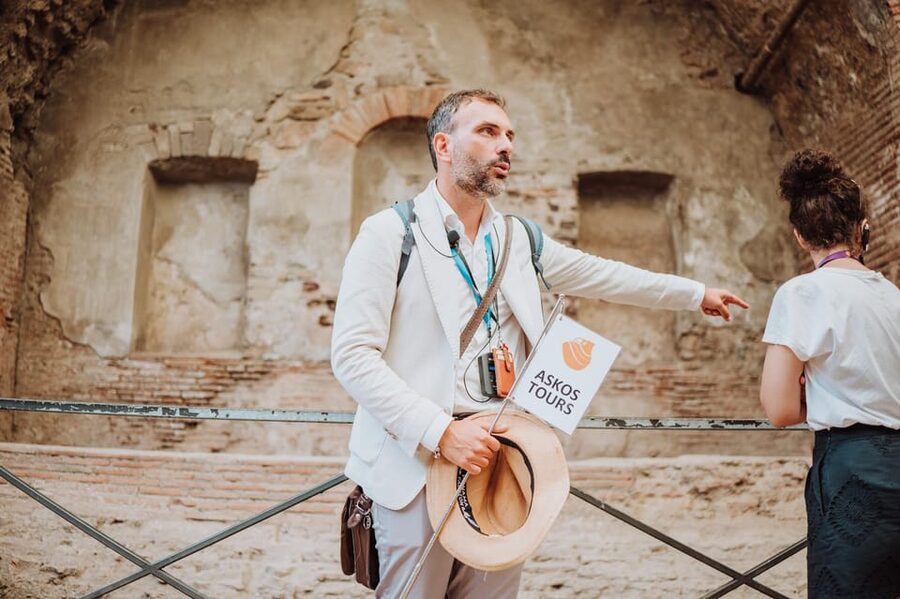
The tour includes a guided look at the House of the Faun, also called Casa del Fauno. This house is famous, and for once the fame is deserved. Even in a short guided visit, you can see why it became a reference point for Pompeii home life and Roman art.
A guided stop matters here because the power of the Casa del Fauno is not only in its scale. It is also in how the space is organized, from rooms to courtyards, and what that implies about wealth, status, and lifestyle. The guide’s job is to connect those details into a story you can actually visualize.
Time-wise, this is one of your longer guided segments. Expect a focused explanation rather than a quick glance. And do keep an eye out for the visual cues that show Roman taste, especially where art and decoration signal identity.
You can also read our reviews of more guided tours in Pompei Campania


Lupanar, Roman Entertainment and the City’s Harder Edges
Next is the Lupanar (brothel). This stop is often where Pompeii feels most human, because it reminds you the city had every kind of need, desire, and social reality. Even if you’d rather keep things polite, it is part of the city’s record, and a good archaeologist-style guide can handle it in a way that is factual, not sensational.
What I find useful about having it in a guided route is context. Without guidance, the Lupanar can turn into a photo stop. With guidance, you learn how such spaces fit into the broader urban environment, including how visitors navigated the building and how signage and layout functioned.
Also, be aware of physical conditions. Ancient interiors can be darker, narrower, and more uneven around edges. It is still worth it, just plan to move carefully and keep your pace steady.
House of Menander, Wealth, Style, and Everyday Domestic Clues
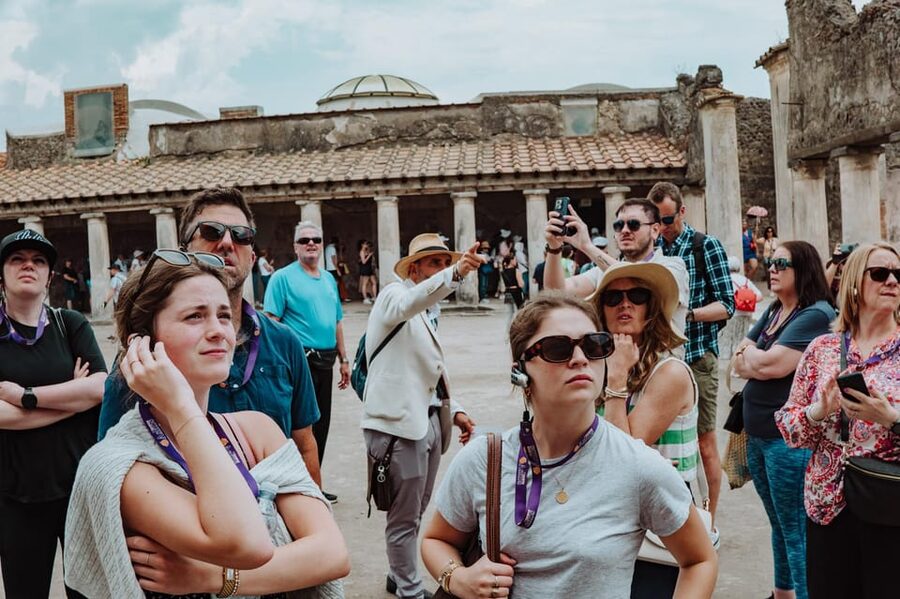
The House of Menander is another guided highlight. Houses like this one are key because Pompeii’s domestic spaces are where you learn what people actually lived with, not just what they worshipped or governed.
In a short visit, the goal is to interpret. Your guide helps you connect decorative choices, room arrangements, and the feel of the space to what mattered to the household. That is also why reviews consistently describe archaeologist-led guiding as a game changer for understanding daily life, not just architecture.
This stop is also a good place to slow down and look longer. You can take in details, compare them to what you saw in civic spaces, and notice how the city’s social world changed from street to household.
If you get a little museum fatigue, do not worry. The route is paced so that you still end the tour with more practical places, like markets and baths.
Macellum and Forum Baths, Trade and Routine Beyond the Temples
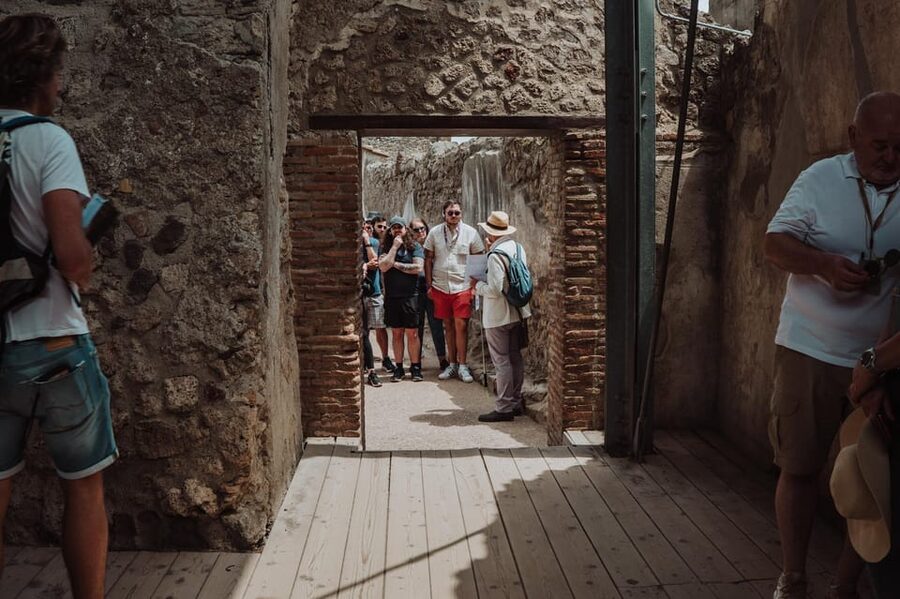
The tour wraps with two guided stops that help round out your sense of Pompeii as a living economy and a routine-driven place.
First, you visit the Macellum of Pompeii, the market area. This matters because it explains how food, goods, and commerce shaped daily schedules. In Pompeii, markets are not just where people bought stuff. They are where they communicated, met friends, and kept the city running.
Then you move to the Forum Baths. Baths were social space, part hygiene, part leisure, part status. A guided visit helps you understand that the bathing complex was not only about soaking. It was about rhythms of the day and how people spent time.
These two stops are also a nice tonal balance. You move from homes and a controversial site, back to daily routines that any visitor can grasp. If you want Pompeii to feel like a real place, not just a tragic snapshot, this ending helps.
Small Group Pace, Headsets, and Why Up to 20 People Works
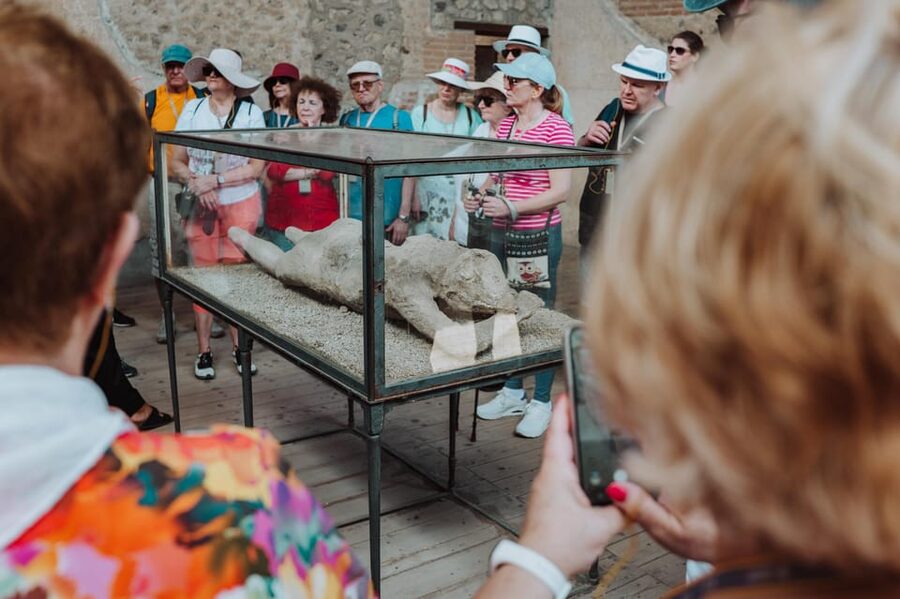
The small-group format is one of the highest-value parts of this tour. Up to 20 people keeps you close to the guide and makes it easier to ask questions. It also helps you avoid the classic issue of Pompeii tours, where you spend more time waiting than learning.
Headsets add another layer of comfort. They are included when the group is 10 people or more, so you can hear the guide’s explanations even when groups surge around popular spots. One clear practical consideration is that some people find ear pieces a bit fiddly in busy conditions, so if you are sensitive to audio gear, bring a small amount of patience. In real life, if you have to adjust them, you can still catch the story.
Guides are also described as funny and engaging, not just academic. People mention guides like Giancarlo, Paolo, and Mario as bringing Pompeii to life through context, humor, and clear explanations. That matters more than it sounds. Pompeii is full of surfaces and shapes. You need a guide to turn them into meaning.
Practical Tips That Actually Matter in Pompeii
Pompeii rewards preparation. Here are the issues that can make or break your experience, based on what shows up again and again in the advice you get with this kind of tour.
- Wear comfortable shoes with grip. Paths are uneven, and there are steps.
- Bring water, especially if you are doing this in cooler or wet weather when you might still forget hydration.
- Expect weather swings. Even rain does not stop the walking, so layer up and keep your footing careful.
- Plan for walking more than you think. Two hours sounds short, but Pompeii covers ground fast once you factor in stops and crowd movement.
- Save energy for after the tour. The guide’s wrap-up often includes suggestions, and having momentum makes follow-up exploration more enjoyable.
Value for $35, What You Get That You Would Miss on Your Own
At $35 per person, this tour sits in the sweet spot for Pompeii. The entrance ticket is included, so you are not juggling separate costs and forms. Then you add the guide value, which is where Pompeii tours either pay off or disappoint.
On your own, Pompeii can be overwhelming. You can certainly wander and take photos, but it is easy to miss the why behind what you are seeing. With an archaeologist guide and a planned route through top landmarks, you get a framework: civic life, domestic life, and public routine.
The skip-the-line access also adds real value. Pompeii is a place where time inside matters. If you lose an hour to entry queues, your energy drops, and your later self-guided exploring suffers.
Finally, the small group size keeps the experience from turning into a lecture you cannot hear. Combined with headsets for larger groups, it is a practical setup for a 2-hour visit.
Who This Tour Is Best For
This is a strong fit if you want meaning, not just sightseeing. You’ll probably be happiest with this tour if you:
- Want a guided introduction to Pompeii’s most important zones
- Like having a clear route so you do not get lost
- Prefer small groups over huge bus tours
- Enjoy history with real-world details about how people lived
It is less suitable if you need step-free access, or if mobility issues make uneven ancient surfaces difficult. The tour is not listed as appropriate for wheelchair users or people with mobility impairments, and mobility scooters are not allowed.
Ending With Recommendations, How to Continue After the 2 Hours
One of the most useful parts of a guided route is what happens next. Your guide ends with recommendations for further exploration, including ideas for how to keep seeing more of Pompeii after the tour ends.
That is why I like doing a short guided tour first. It gives you a mental map. Then you can choose what to revisit or expand on without feeling like you are guessing. Pompeii is the kind of site where you might want to see it more than once, and a guide helps you decide where your attention should go next.
Should You Book Pompeii With an Archaeologist?
If your goal is to understand Pompeii and not just walk through it, I think this is a smart booking. For $35, you get skip-the-line entry, a small group pace, and an archaeologist-led route through key houses, civic spaces, baths, and market life. That combination usually turns Pompeii from confusing into clear.
Book it if you like guidance, appreciate context, and want your first visit to feel like learning. Skip it only if you strongly prefer total freedom, hate walking on uneven ground, or need accessible routing that a site like this cannot provide.
FAQ
FAQ
Where does the tour start?
The meeting point may vary depending on the option you book, so you should check your confirmation details before heading out.
How long is the tour?
The duration is 2 hours, and you can check availability to see starting times.
Is skip-the-line entry included?
Yes. The entrance ticket includes skip-the-line access.
What is included in the price?
You get the Pompei Express entrance ticket, an archaeologist guide, a small group tour, and headsets for groups of 10 people or more.
What languages is the tour offered in?
The live tour guide is available in English, Spanish, French, Italian, Portuguese, and German.
Are mobility scooters allowed?
No. Mobility scooters are not allowed.
Are unaccompanied minors allowed?
No. Unaccompanied minors are not allowed.
Are pets allowed?
Only dogs that do not exceed 10 kg and a maximum height of 40 cm are permitted. They must be on a leash and held in your arms inside buildings, and you must collect their excrement.
Is it suitable for wheelchair users or people with mobility impairments?
No. It is not suitable for wheelchair users or people with mobility impairments.
What is the cancellation and payment policy?
You can cancel up to 24 hours in advance for a full refund. You can also reserve now and pay later, meaning you can book without paying today.
More Tickets in Pompei Campania

More Tours in Pompei Campania


More Tour Reviews in Pompei Campania

Not for you? Here's more nearby things to do in Pompei Campania we have reviewed








Tour Reviews, compared.
 ★ 4.2Pompeii: Entry Ticket with Optional Audio GuideFrom $2612,360 reviews
 ★ 4.8Pompeii: Small Group Tour with an ArchaeologistFrom $4012,264 reviews
 ★ 4.3Pompeii Ruins & Mount Vesuvius Day TourFrom $12011,459 reviews
 ★ 4.6Sorrento, Positano and Amalfi Full-Day TourFrom $10710,988 reviews
 ★ 5.0Sorrento, Positano & Amalfi Coast – Small Group TourFrom $768,643 reviews
 ★ 4.6Catacombs of San Gennaro Entry Ticket & Guided TourFrom $157,941 reviews
★ 5.0Pompeii Small Group Tour with an ArchaeologistFrom $356,593 reviews
★ 4.6Catacombs of San Gennaro Entry Ticket & Guided TourFrom $157,941 reviews
★ 5.0Pompeii Small Group Tour with an ArchaeologistFrom $356,593 reviews
 ★ 4.9Downtown Tour with Veiled Christ & St Clare TicketsFrom $576,462 reviews