
Tour review · TOUR REVIEWS
Pompeii: Skip-the-Line Ticket with Audio Guide and Map
Pompeii is easier when you control the pace. With skip-the-line entry, you can wander 66 hectares of Roman streets at your own tempo. Pair that with an audio guide and updated map, and you get the why behind what you see without being herded around.
I especially like the audio guide. It is straightforward to use, and it covers the site well enough that you are not stuck guessing at each doorway or wall. The other big plus is the updated map, which helps you plan a route so you do not lose time zigzagging.
One drawback to plan for is orientation. Signage can feel unclear, and the map may not line up perfectly with what your audio covers at every point.
Key things to know before you go

- Skip-the-line ticket helps you start sooner and keep your day flexible
- Audio guide in multiple languages (including English, Spanish, French, Italian, German, Russian, Hebrew, Portuguese, and Chinese)
- Updated map is there to help you build your own order of stops
- Pompeii is huge (about 66 hectares) and draws roughly 3 million visitors each year
- Heat and stamina matter since you will walk a lot across exposed ruins
- No large bags and it is not suitable for people with mobility impairments
Skip-the-line Pompeii entry for a self-guided day

This ticket is built for self-guided exploration. You get the entrance ticket plus an audio guide and a map, so you can decide how long to linger in each area instead of matching someone else’s pace.
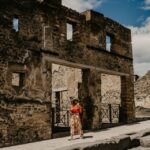
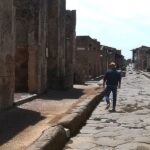
Pompeii is the kind of place where being in a rush can cost you understanding. You are looking at houses, public spaces, shops, and entertainment areas spread across a very large footprint. The skip-the-line part is useful because it removes one headache from the start, which matters when you are trying to make the most of a one-day visit.
You should also know that a self-guided format means you do real work up front: pick a direction, keep track of what you want to see, and check the audio as you walk. Some people love that freedom, including creating their own long route from about 10:00 to 17:00, staying on track without needing a live guide voice.
More Naples tours, ruins, coast days, and city experiences to compare


Audio guide languages and how to keep it user-friendly
The audio guide is included, with language options that cover a lot of travelers. You can select English, Chinese, French, Italian, German, Hebrew, Russian, Spanish, and Portuguese, which is a big deal if you are traveling with someone who wants their own language.
What I like about this setup is that it is designed to be usable on site. The audio does not require you to decode a screen or follow a strict route, so you can pause when you want, then press play again when you move on.
One real-world tip: do not assume the audio and the map will match perfectly at every single labeled item. You may find a few places where an item on the map feels like it belongs to another part of the audio. That is not fatal, but it does mean you should stay flexible and let the ruins guide your priorities.
Also, bring a way to keep your comfort in check. The audio does not replace your own basics. Pompeii’s walking load is real, and you will cover a lot of ground under sun, so water, sunscreen, and a hat are not optional extras.
Mapping your route when signage feels vague
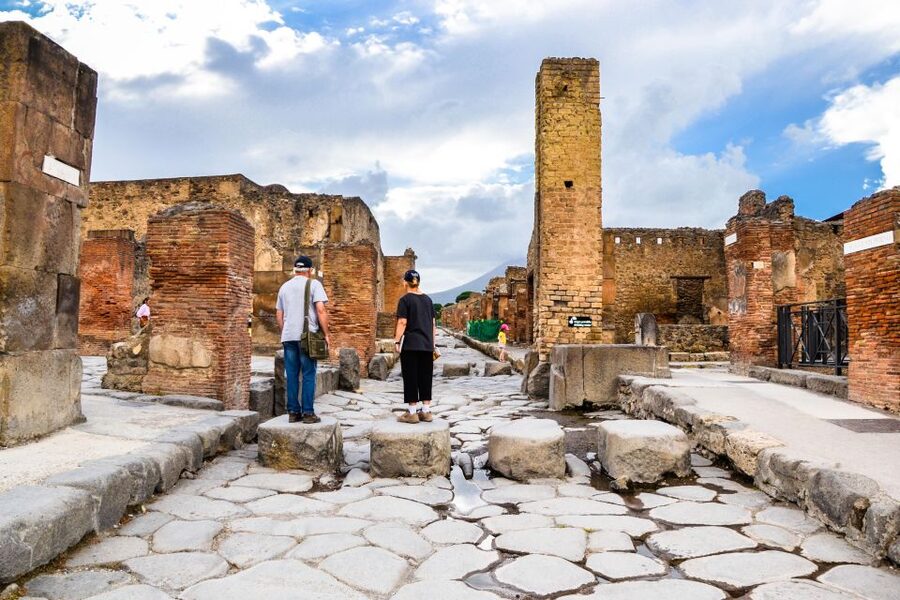
An updated map is included, and for a site this size, it is genuinely useful. Pompeii covers about 66 hectares, so without some planning you can end up spending too much time backtracking or walking in circles between clusters of ruins.
Here is the practical approach I recommend. Before you start, take a quick scan of the map and decide on a rough route order using the highlights you care about. Then use the audio guide to add context as you reach the right zones, rather than trying to cover everything end to end.
If the signage seems unclear, do not panic. Instead, treat the map as your anchor and let the audio tell you what you are standing in front of. You can also adjust on the fly, because the ticket is valid for one day and meant for flexible pacing.
One more point to keep your day smooth. The skip-the-line process generally helps, but you might still face short lines in specific situations. For example, at busy entry times, ticket categories like children’s tickets can still create a bit of waiting even though the main queue is reduced.
From domus and frescoes to thermopolium and shops
Pompeii is famous for its preserved everyday life, and this ticket nudges you toward understanding it. Your audio guide covers major categories you would otherwise miss, including frescoed houses (domus), shops, and thermopolis, which is essentially fast food from the ancient world.
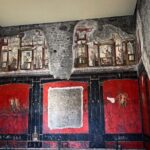
Start with domus if you want to grasp how wealth and routine worked. These homes can feel like a series of room-sized stories, and the audio helps connect what you see to how people lived. Even if you are not a history specialist, you can still notice how details repeat across buildings once you have a basic explanation from the guide.
Next, shift toward the street-level commercial world. Shops and thermopolis bring you closer to the pulse of the city, the places where people likely stopped during daily movement. The audio guide’s job here is to translate what you are seeing into something that makes sense, like how a space functioned rather than just what remains.
Drawback to keep in mind: this is not a short museum visit. If you try to sprint through houses, you will feel rushed by the scale and the number of rooms you pass. Plan for walking, and set expectations that this will be a long, satisfying day rather than a quick hit.
Public life and after-dark Pompeii: spas, temples, theaters, brothels
One of the strongest reasons to choose an audio guide over a purely visual visit is that Pompeii is not only pretty ruins. It is a map of public life, recreation, and the social reality of an ancient city.
Look for stops like spas and temples to understand civic rhythms. Spas give you a sense of communal space, while temples help you connect buildings to belief and public identity. The audio guide helps you keep these categories straight so you do not treat every stone layout as the same thing.
Then move toward entertainment and the adult side of Roman urban life, including theaters and brothels. It sounds edgy, but it is part of what makes Pompeii feel real. When the audio labels what you are looking at, you can connect the physical spaces to how people would have used them.
The value here is simple. Without guidance, Pompeii can feel like many similar-looking fragments. With the audio in your ear, it becomes a sequence of places with different roles, which makes your walk more satisfying.
You can also read our reviews of more guided tours in Pompei Campania


Casts of victims and the Roman amphitheater, in your own order
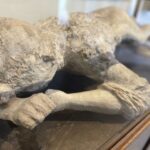
The eruption casts are one of the most emotionally heavy parts of the site, and they are specifically listed as a highlight. The audio guide can help you approach these spaces with clarity, so you understand what those shapes represent instead of treating them as just another photo spot.
From there, you can head to one of the best-preserved Roman amphitheaters. This is the kind of stop where you can quickly notice how design served crowds, sound, and visibility. Even if you are not an architecture nerd, the structure is readable once you give yourself a few minutes to scan the seating and stage space.
Because your ticket is self-guided, you can choose where to place these heavy and impressive areas in your day. If you are the type who likes to start with the biggest visuals first, go early. If you prefer to decompress after lots of walking, make space later.
The one thing I would not do is try to cram them in after you run out of energy. Pompeii rewards slow attention, especially at emotionally complex sites. If you are tired, you will rush past the meaning.
Timing, heat, and packing for 66 hectares
You are visiting a huge outdoor site. With Pompeii covering about 66 hectares, comfortable footwear is not a nice idea, it is the difference between a good day and a painful one.
Bring comfortable shoes, plus a hat, sunscreen, and water. That matches the real-world advice that you will feel the heat and you will need the basics to keep going. Pompeii can make it harder to find food when you are already walking and sweating, so plan around the fact that the day may eat up your energy before you find a break.
If you like structure, you can still use the audio and map to create mini-itineraries. For instance, you might do a morning block for homes and public spaces, then a later block for commercial life and entertainment. That keeps you from drifting, and it also protects your stamina.
Also, remember what is not allowed: luggage or large bags are not permitted. If you are carrying a big backpack, plan how you will handle it before you arrive. Light is faster and less stressful.
Price and value: is $44 per person worth it
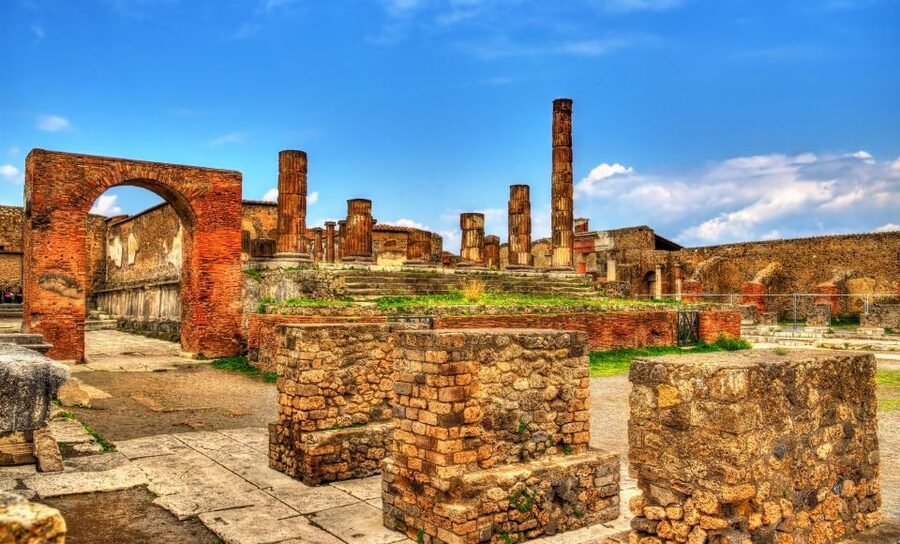
At $44 per person, you are paying for three things at once: Pompeii entrance access, an audio guide, and an updated map. In practice, that can be good value if you would otherwise pay separately for each piece or if you do not want to rely on uncertain on-site information.
The skip-the-line component is part of the value too. When you start earlier, you create more room to slow down later. And slowing down is what helps Pompeii land, since you are walking a lot and reading details along the way.
Is it worth it if you are a strict planning type? Often yes, because the ticket supports flexible pacing without sacrificing context. Is it worth it if you love a live guide’s storytelling? Maybe, but you are choosing an audio-based experience, so you will be responsible for your own momentum.
One thing to watch: despite skip-the-line, your total start time can still depend on ticket category and timing. If you are arriving at a popular hour, expect occasional friction. Still, overall, the setup is meant to reduce waiting so you can spend your time where it matters, on the ruins.
Who should book this Pompeii ticket, and who should skip it
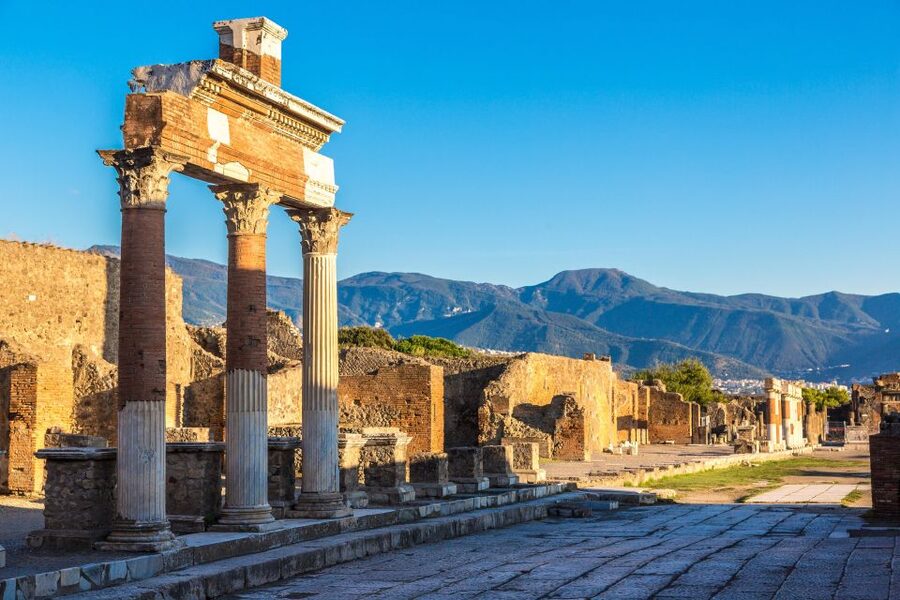
This ticket fits you if you want to explore at your own pace, with an audio guide doing the explaining. It also fits you if you like the idea of building a route across different categories, like homes, spas, shops, theaters, brothels, casts, and the amphitheater.
It is a solid choice for couples, friends, and solo visitors who can manage a map and prefer independence. One of the biggest pluses is that you can create a route that matches your energy, not the group schedule.
You should skip it if you need accessibility accommodations. The activity is not suitable for people with mobility impairments, and Pompeii’s walking terrain is not the kind that usually works for mobility limits.
Also consider your packing style. If you bring large luggage, you may run into restrictions, since luggage or large bags are not allowed.
Should you book this skip-the-line ticket with audio guide?
Book it if you want a low-stress Pompeii day where the information comes to you as you walk. The combination of skip-the-line entry, audio guide, and updated map helps you spend more time looking and less time figuring out what comes next.
Do not book it if you want a tightly managed, spoken-by-a-guide experience or if you rely on highly reliable wayfinding from signage alone. The map and audio are helpful, but orientation can still take some effort, especially if certain map items do not feel perfectly aligned with the audio in every spot.
My final advice for deciding: if you can handle basic self-navigation and you are willing to bring the essentials for heat and walking, this is a practical way to see Pompeii’s main highlights in one day.
FAQ
How long is the Pompeii experience?
It is valid for 1 day. You can check availability to see starting times.
What does the ticket include?
It includes the Pompeii entrance ticket, an audio guide, and an updated map.
What languages are available for the audio guide?
The audio guide is available in English, Chinese, French, Italian, German, Hebrew, Russian, Spanish, and Portuguese.
What languages does the host or greeter speak?
The host or greeter is available in English, Spanish, French, and Italian.
What time should I plan my visit?
The ticket is valid for 1 day, and starting times depend on availability, so you should check the available options when you book.
Is food included?
No. Food and drinks are not included.
What should I bring?
Bring comfortable shoes, a hat, sunscreen, and water.
Is luggage or a large bag allowed?
No. Luggage or large bags are not allowed.
Is this suitable for people with mobility impairments?
No, it is not suitable for people with mobility impairments.
More Guided Tours in Pompei Campania
More Tickets in Pompei Campania
More Tour Reviews in Pompei Campania


Not for you? Here's more nearby things to do in Pompei Campania we have reviewed









Tour Reviews, compared.
 ★ 4.8Pompeii: Entry Ticket and Guided Tour with an ArchaeologistFrom $3519,459 reviews
 ★ 4.2Pompeii: Entry Ticket with Optional Audio GuideFrom $2612,360 reviews
 ★ 4.8Pompeii: Small Group Tour with an ArchaeologistFrom $4012,264 reviews
 ★ 4.3Pompeii Ruins & Mount Vesuvius Day TourFrom $12011,459 reviews
 ★ 4.6Sorrento, Positano and Amalfi Full-Day TourFrom $10710,988 reviews
 ★ 5.0Sorrento, Positano & Amalfi Coast – Small Group TourFrom $768,643 reviews
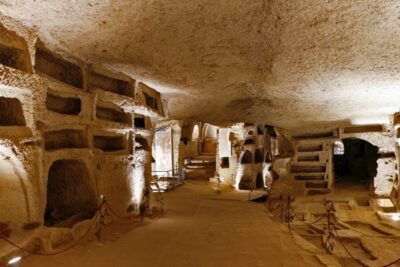 ★ 4.6Catacombs of San Gennaro Entry Ticket & Guided TourFrom $157,941 reviews
★ 5.0Pompeii Small Group Tour with an ArchaeologistFrom $356,593 reviews
★ 4.6Catacombs of San Gennaro Entry Ticket & Guided TourFrom $157,941 reviews
★ 5.0Pompeii Small Group Tour with an ArchaeologistFrom $356,593 reviews
Browse the lists this tour appears in