
Tour review · TOUR REVIEWS
Pompeii: Skip-the-Line Private Tour with Archaeologist Guide
Pompeii hits different when someone reads the stones. This private tour is built to get you past the worst waiting, then feed you the story through an archaeologist-led guide. I especially like the priority entrance to the ticket office, and I like how the visit focuses on real Roman daily life, from big public spaces to private homes.
One thing to plan for: the entrance ticket is not included, so you will still need to handle admission. Also, on the first Sunday of each month, entry can be free but tickets cannot be reserved ahead, so you may not get in.
Key things I’d zero in on
- Priority entrance to the ticket office helps you start seeing things sooner.
- Public Roman landmarks are part of the route: amphitheater, gymnasium, baths, forum, and even the brothel area.
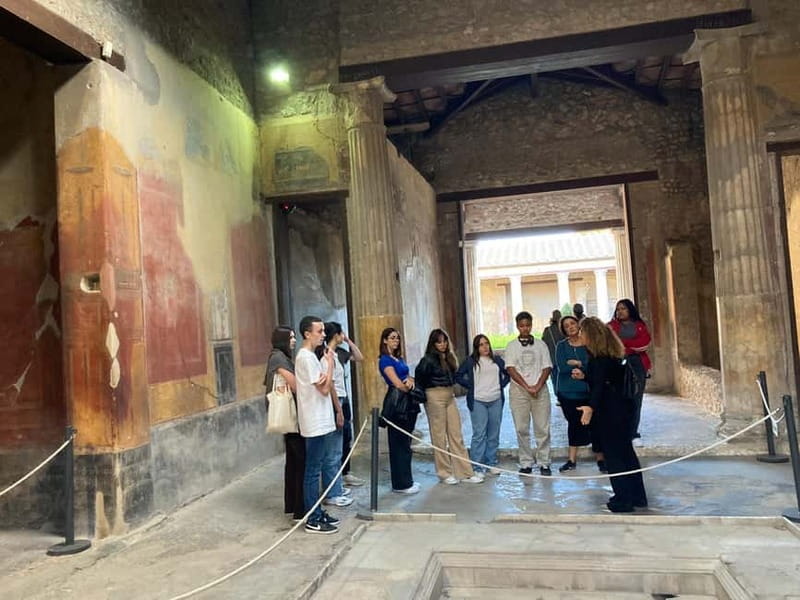
- Domus with mosaics and frescoes get real attention, not just a quick stop.
- Everyday shops you’d recognize today appear along the way, including laundry, bakery, and fast food style spots.
- Private-group pacing with a local archaeologist keeps the experience human and adaptable.
- Guided time plus free exploration after the tour lets you linger where you care most.
Why a private Pompeii tour with an archaeologist works
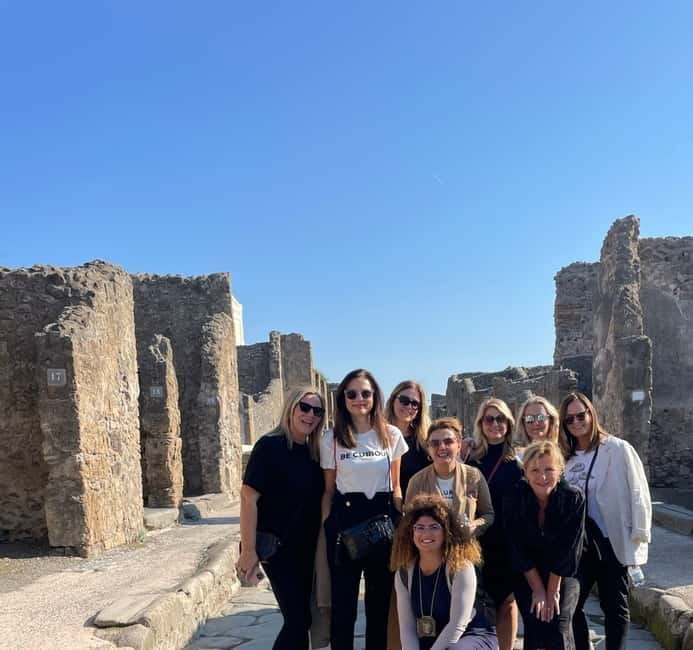
Pompeii is one of those places where the stones can look beautiful, but they can also feel confusing fast. A guide who thinks like an archaeologist helps you “read” what you see, and that makes the site click. You are not only looking at ruins, you are tracing how people lived, moved, worked, and relaxed.
I like that this tour is focused on the most important public viewpoints, because they show Pompeii as a functioning city, not just a set of dramatic images. You also get private-life context through the domus, where mosaics and frescoes show how residents decorated and displayed taste.
A private setup also matters. With a group built around you, your archaeologist guide can slow down where you want details and speed up when you are ready to move on.
You can also read our reviews of more guided tours in Pompei Campania

Skip-the-line starts at the ticket office, then you move smart
This tour’s skip-the-line advantage comes from a priority entrance to the ticket office. That is the part that often eats your time before you even reach the good stuff.
In practical terms, it means less time standing around and more time looking closely. Once the guide has you in and oriented, you get a guided route through the site’s standout areas. The tour is designed to keep your momentum, which is a big deal at Pompeii because you are always walking and always looking.
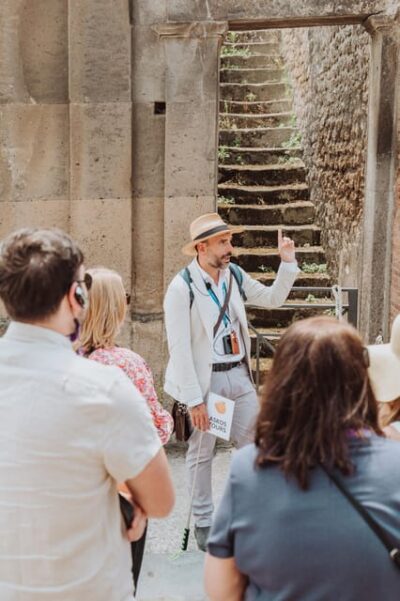
When you arrive, the guide meets you at the entrance to the excavations with a sign showing your names. That kind of meet-up is underrated, especially when you are trying to stay calm and on time in a busy place.
The public heart of Pompeii: amphitheater, gymnasium, baths, forum
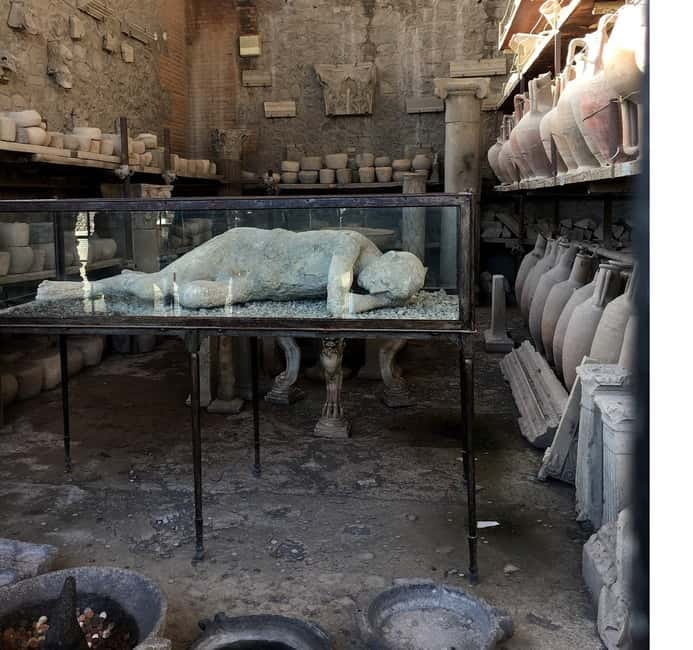
The best way to understand Pompeii is to start where people gathered. This tour does that with several major public buildings.
First, you head to the amphitheater, which helps you picture crowds and entertainment in Roman life. Then comes the gymnasium, useful for imagining exercise, training, and social routines. The baths follow, and that stop is key for understanding how public hygiene and leisure blended together in Roman culture.
Next is the forum, the center that made Pompeii feel like a real civic space. Even if you do not know the Latin or the exact political story, the layout and building purpose make it easier to grasp how daily decisions and public life happened.
Then, your guide ties it all together. You start to see how these places were not isolated monuments, they were parts of one city rhythm.
The brothel stop: seeing Pompeii as it really was
Pompeii does not shy away from human details, and this tour includes the ancient city brothel area. It is not there to shock you. It is there to complete the picture of daily life.
With an archaeologist guide, you get context for what you are looking at. That changes the stop from a headline moment into something you can actually interpret. You learn how different spaces served different roles, and how the city’s economy and social behavior were organized.
This is one of the stops I think you will remember most, partly because it breaks the “only the pretty parts” pattern. You get a more honest sense of how Romans used their city.
If you prefer a very polite, sanitized version of Pompeii, you might find this section less comfortable. For most people, though, it makes the ruins feel more real.
Domus mosaics and frescoes: where private life comes into focus
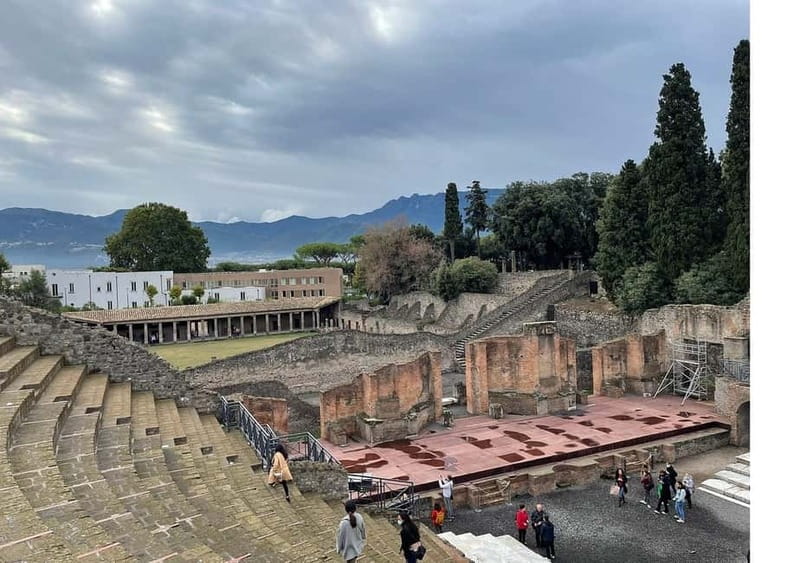
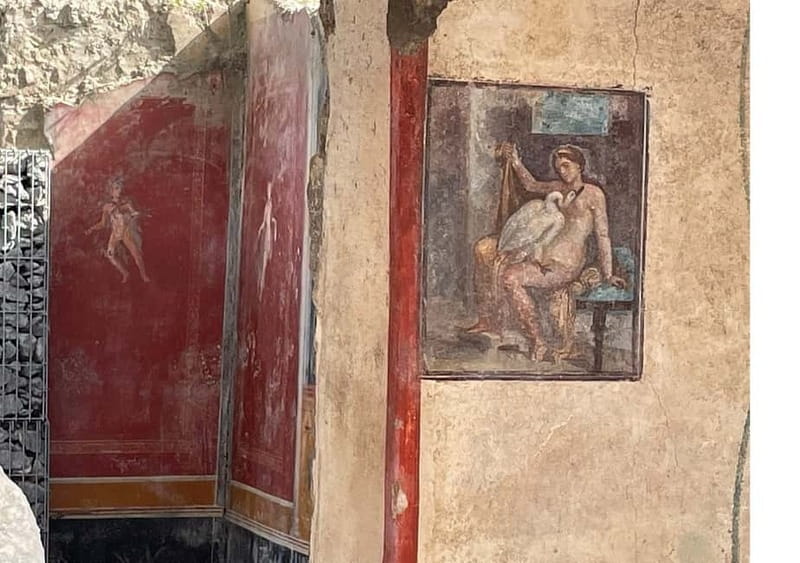
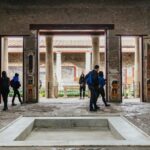
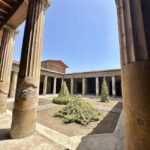
The tour’s private-life section centers on the ancient domus. This is where you get to slow down and appreciate the original decoration still visible today.
Why this matters is simple. Public buildings help you understand how people showed up together. The domus helps you understand what people surrounded themselves with at home. When you look at mosaics and frescoes through an archaeologist’s lens, you stop seeing them as pretty surfaces and start noticing what they communicate.
This is also where you can spot how design choices were tied to identity, taste, and status. The guide’s background as an archaeologist is what turns a casual glance into real understanding.
If you are the kind of visitor who loves “small details,” domus are your payoff. Even if you are more of a big-picture person, this section helps Pompeii feel lived-in.
You can also read our reviews of more private tours in Pompei Campania



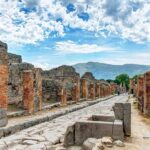

Pompeii’s everyday shops: laundry, bakery, and fast food spots
One of the most practical and fun parts of this tour is how it shows Pompeii as a place with errands and routines. You will encounter ancient shops that map surprisingly well onto modern life.
You get stops tied to things like laundry, bakery, and a fast food style setup. That wording might sound modern, but the point is to help you grasp how ordinary transactions worked in an ancient city.
I love this approach because it makes Pompeii less museum-like. Instead of only thinking about big names and grand buildings, you start thinking about everyday rhythms: getting food, cleaning clothes, grabbing something quick, and moving through a neighborhood with purpose.
This is the section where the tour feels most “useful.” It teaches you how to look, not just what to look at.
How 2.5 hours fits Pompeii without rushing you into burnout
The guided portion runs about 2.5 hours, which is a sweet spot for people who want real guidance but do not want their whole day swallowed by crowds and logistics.
At Pompeii, the biggest risk is trying to do everything and then absorbing nothing. A time-boxed private tour helps you focus on the most meaningful buildings and the clearest storytelling. You get public anchors, then domestic beauty, then everyday city life.
After the guided part, you have freedom to explore independently on your own. That is a smart design. You can go back to the parts that clicked, take a longer look at mosaics and frescoes, or just walk and connect dots without a clock pressuring you.
So yes, it is short enough to stay energetic, but it is long enough to do more than snap photos and leave.
Price and value: what $192.58 per group up to 20 really means
The price is listed as $192.58 per group, up to 20 people. That price structure is a big part of the value story because private does not automatically mean expensive per person.
If you have a small group, your per-person cost will be higher. If you can fill the group limit with friends or family, it can become a very cost-effective way to get an archaeologist guide instead of paying for multiple separate tickets and guides.
You also get what many people actually pay for at Pompeii: time saved at the ticket office, plus the guide’s ability to connect buildings to daily life. Entrance ticket costs are not included, so you should budget separately for admission. But the guiding itself is the core value.
For me, the value check is simple: do you want Pompeii explained by someone trained to interpret it? If yes, this pricing can make sense fast.
What to bring, and when to plan around the first Sunday
Come ready to walk and stand for stretches. The essentials are comfortable shoes, a sun hat, and water.
Timing matters too. On the first Sunday of each month, entrance is free of charge. The catch is important: tickets cannot be reserved ahead of time, so entry is not guaranteed. If you are traveling during that window and you must be inside, do not plan on free entry as your only option.
Also note the tour languages: English, French, and Italian. If you want the best experience, pick the language you feel most comfortable listening in, because Pompeii explanations work best when you can follow the details.
Finally, ask about needs early. The activity is listed as wheelchair accessible, but it is also listed as not suitable for people with mobility impairments. If you have accessibility questions, confirm what “accessible” means in practice for your situation before you go.
Should you book this Pompeii private tour?
Yes, I think you should book this tour if you want a guided Pompeii that feels like an actual city, not a photo stop. The combination of priority ticket office entry, an archaeologist guide, and a route through major public buildings plus domus mosaics and frescoes is exactly what helps the ruins make sense.
Skip this only if you are doing Pompeii purely on your own schedule and do not care about interpretation. Also think twice if you are relying on first-Sunday free entry, since entry is not guaranteed and tickets cannot be reserved ahead.
FAQ
What does the tour price include?
The tour includes a guided visit with an archaeologist guide and a priority entrance to the ticket office. It also includes freedom to explore the archaeological site independently after the tour.
Is the Pompeii entrance ticket included?
No. Entrance tickets are not included in the tour price.
How long is the tour?
The duration is 2.5 hours, with starting times based on availability.
Is this a private group tour?
Yes. It is a private group, priced per group up to 20 people.
Where do we meet the guide?
The guide waits at the entrance to the excavations with a sign displaying the clients’ names.
What languages are available for the live guide?
The live guide is available in English, French, and Italian.
Does the tour help you avoid lines?
Yes. The tour is set up to reduce waiting, with a priority entrance to the ticket office and skip-the-line access during the visit.
Is it wheelchair accessible?
It is listed as wheelchair accessible, but it is also listed as not suitable for people with mobility impairments. If you have mobility needs, confirm details with the provider before booking.
Are there special rules for the first Sunday of the month?
Yes. On the first Sunday of each month, entrance is free of charge, but tickets cannot be reserved ahead, so entry is not guaranteed.
What should I bring?
Bring comfortable shoes, a sun hat, and water.
More Guided Tours in Pompei Campania
More Tours in Pompei Campania


More Tour Reviews in Pompei Campania

Not for you? Here's more nearby things to do in Pompei Campania we have reviewed







Tour Reviews, compared.
 ★ 4.8Pompeii: Entry Ticket and Guided Tour with an ArchaeologistFrom $3519,459 reviews
 ★ 4.2Pompeii: Entry Ticket with Optional Audio GuideFrom $2612,360 reviews
 ★ 4.8Pompeii: Small Group Tour with an ArchaeologistFrom $4012,264 reviews
 ★ 4.3Pompeii Ruins & Mount Vesuvius Day TourFrom $12011,459 reviews
 ★ 4.6Sorrento, Positano and Amalfi Full-Day TourFrom $10710,988 reviews
 ★ 5.0Sorrento, Positano & Amalfi Coast – Small Group TourFrom $768,643 reviews
 ★ 4.6Catacombs of San Gennaro Entry Ticket & Guided TourFrom $157,941 reviews
★ 5.0Pompeii Small Group Tour with an ArchaeologistFrom $356,593 reviews
★ 4.6Catacombs of San Gennaro Entry Ticket & Guided TourFrom $157,941 reviews
★ 5.0Pompeii Small Group Tour with an ArchaeologistFrom $356,593 reviews
Browse the lists this tour appears in