
Tour review · TOUR REVIEWS
Pompeii VIP 3h Tour: Skip-the-line with your Archaeologist
Pompeii clicks into place with the right guide. I love the skip-the-line start and the fact that you’re touring with a trained archaeologist who can explain what you’re seeing, not just point at stones. I also like how the route hits the big headline stops plus newly opened houses you might not get on a standard walk. One thing to think about: the tickets are personal, so you must arrive on time and bring your ID.
This is a private group tour, about 3 hours, with admission tickets included and full assistance. You’ll get guided time at the forum, temples, baths, theatres, and the darker last-days sights in the Garden of the Fugitives, all without the usual ticket scramble.
Key points before you go
- Skip-the-line entry starting from Porta Marina Superiore, right by Hortus Bar
- Licensed archaeologist guidance for real excavation context, not generic talking points
- Recently opened domus and restored highlights like the House of Golden Cupids
- Last-days route that moves from everyday Pompeii to the Garden of the Fugitives and the Amphitheatre
- 3 hours in a tight plan, so comfortable shoes and smart timing matter
Entering Pompeii at Porta Marina Superiore, and why it sets the tone
Most Pompeii visits start with a scramble. This one starts with your ticket sorted and your guide ready, at Porta Marina Superiore (in front of Hortus Bar). That small detail matters. When you bypass the delay, you arrive at Pompeii in the right mood: ready to look, ready to ask, and not spending your best morning hunting for the correct entry lane.
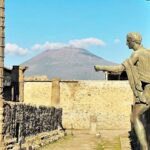
You also get a guided beginning with Vesuvius in the background. The tour’s first minutes are built to put you in the scene, not just in a museum queue. You’re walking in the area of the ancient main entrance, and your archaeologist frames what came before and what was uncovered afterward.
And since it’s a private group, the guide can slow down when something needs explanation, like how coins or artifacts help fix timelines. That turns Pompeii from a pretty ruin into a place with evidence behind every major claim.
More Naples tours, ruins, coast days, and city experiences to compare

Skip-the-line tickets that actually save time (and energy)
Skip-the-line is one of those phrases that can mean anything. Here, it’s specifically about getting your admission handled right away with skip-the-line service, plus the tour includes your tickets. That’s a practical win because Pompeii can be crowded, and it’s easy to lose your momentum before you even begin.
What I really like is how that time gets reused well. You do not just rush past sights. You start at the entrance and then move through a logical flow: Antiquarium and early highlights, forum and temples, then houses and gardens, and finally the entertainment spaces at the end. That pacing helps you connect neighborhoods to the people who lived there.
One caution: the tour has personal ticketing rules, so you still need to be on time. If you show up late, skip-the-line won’t help much. In other words, the tour saves you time, but you still have to show respect to the clock.
The Antiquarium, Vesuvius views, and the excavation stories you’ll remember
Early on, you pass the Antiquarium area where your archaeologist shows objects from the last excavations. This is a great moment because Pompeii has two layers: what you see in the streets and what archaeologists learned later, from digs, lab work, and careful comparisons.
Two examples of what your guide may point out:
- A coin that changed knowledge of the date of the eruption
- A heavy golden arm cuff, which helps connect what wealthy people wore to broader finds
You’ll be walking with Vesuvius in sight, which makes the science feel less abstract. Even if you’ve read about Pompeii before, it’s different to stand there with someone who can explain why small artifacts can shift big conclusions.
If you like tours where the facts have receipts, this is where you’ll feel it. You’re not only learning what Pompeii looked like, you’re learning how historians and archaeologists rebuilt the timeline and daily life from evidence.
Basilica and the Foro Civile: where politics, worship, and commerce meet
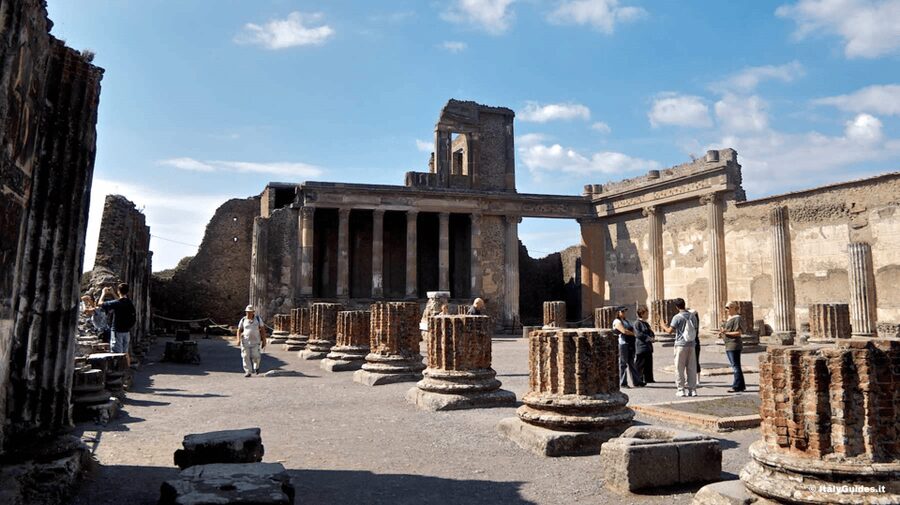
After the entrance area and antiquarian setup, the tour moves into the heart of civic life. You’ll visit the Basilica, the Forum (Foro Civile di Pompei), and key religious anchors like the Temple of Apollo.
Here’s what makes these stops click: the forum isn’t just one building. It’s a whole operating system. Courts and administration happen in one place, major temples anchor power and belief, and markets bring money and crowds into the same walking lanes.
In the forum area, you’ll also get guided context for how the market functioned and why certain spaces matter to the story of a Roman city. Your archaeologist can explain the difference between a space that was built for ritual versus a space built for trade, even when the ruins look similar at first glance.
This is also a good point to ask questions, because the guide can connect architecture to people. Pompeii’s big lesson is that public buildings tell you how communities organized work, worship, and authority.
The Greater Decumano, thermal systems, and everyday hangouts like the Lupanare
From the forum, the route follows the Greater Decumano, Pompeii’s main east-west spine. This is where you start thinking like a resident. You’re moving along the kinds of streets where people actually walked daily.
Two parts you’ll hear about here:
- The thermal system, which helps you understand how Roman bathing was engineered and social
- The Lupanare, a site that’s famous because it represents a specific side of urban life
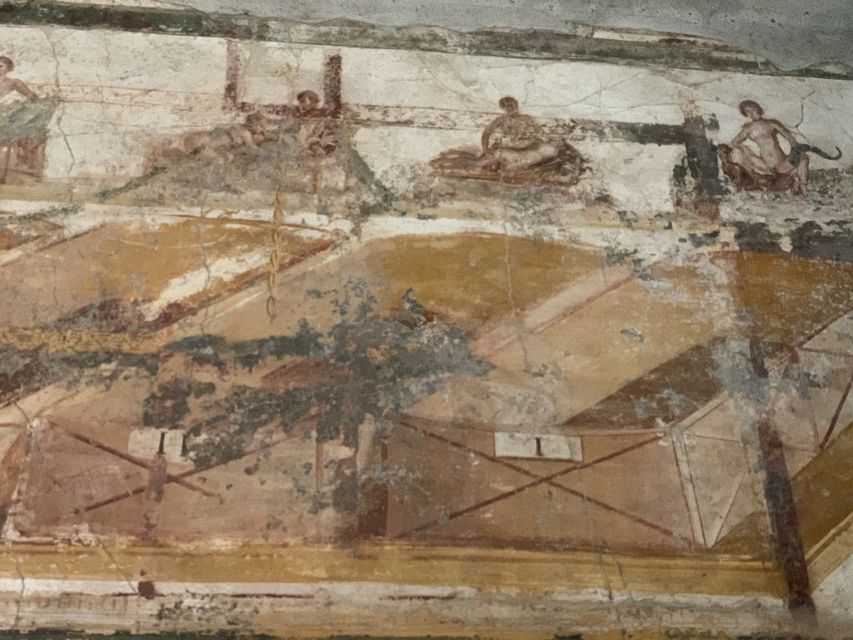
These are stops that can feel awkward or sensational if you only skim. With a good archaeologist, you get a more grounded view. You can learn how the space worked, what evidence survives, and how modern interpretations are built from what excavators recorded.
If you’re the type who worries you’ll feel rushed between big monuments, don’t. The point of the route is to keep you moving through linked themes: city design, daily routines, and the built infrastructure that made life possible.


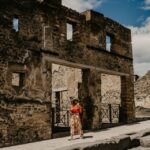

Macellum and Forum Baths: Pompeii’s “food and wash” engine
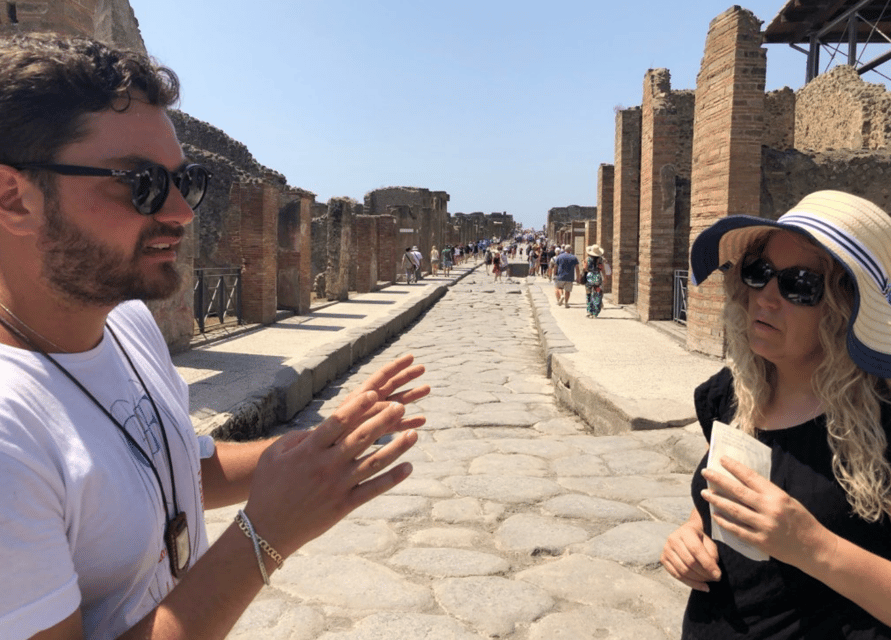
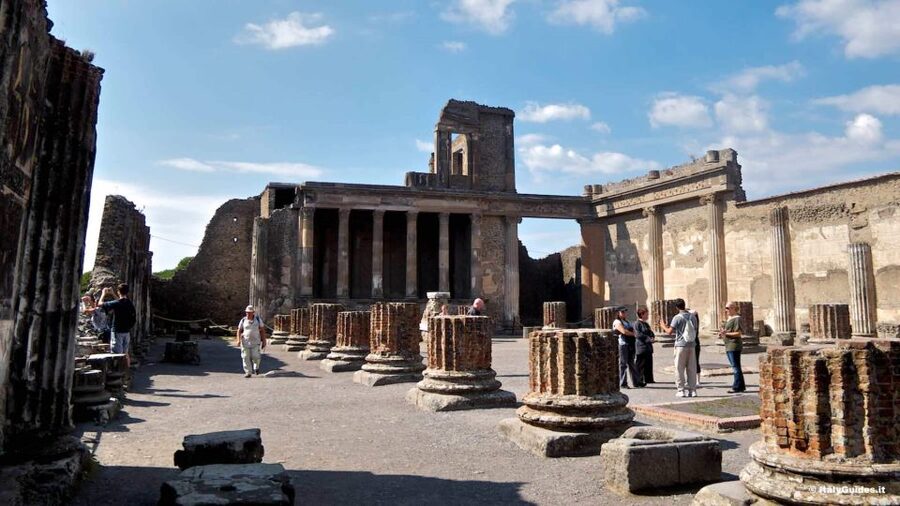
Next up are the Macellum of Pompeii and the Forum Baths. These are practical stops that show you how everyday needs shaped the urban plan.
The Macellum is where food supply and selling happen. Even in ruins, you can see how a market building becomes a social hub. A guide helps you connect the layout to the reality of buying, bargaining, and eating as part of civic life.
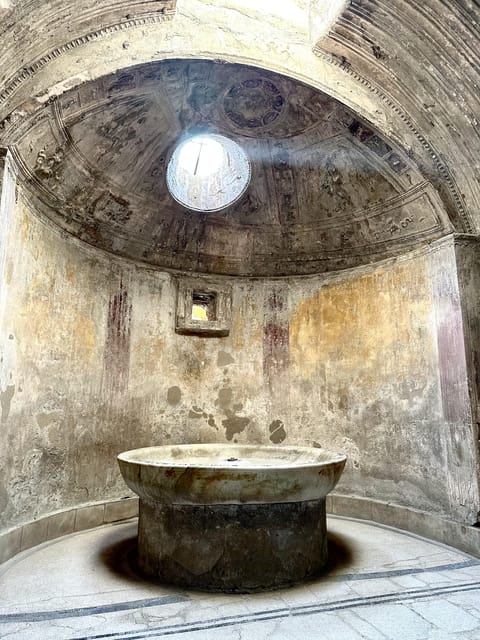
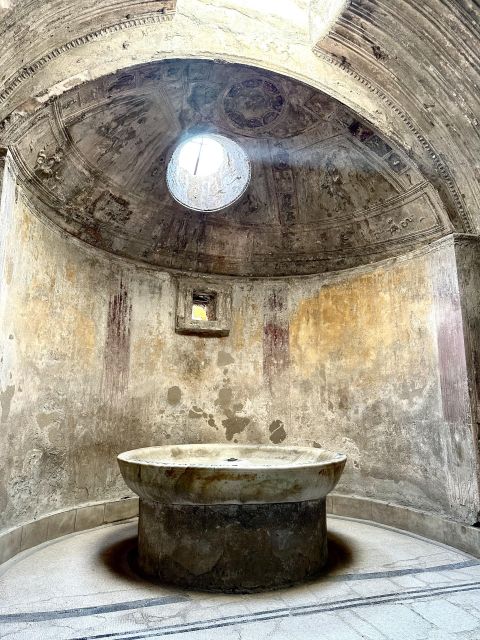
Then come the Forum Baths, where you can see how bathing was more than hygiene. It was routine, conversation, and status. Roman baths were complex, and Pompeii’s remains can show you how systems were designed, not just that bathing existed.
This is one of those sections where you’ll probably feel thankful you booked a guided tour. Without explanation, market and bath ruins can look like “another set of walls.” With context, they become a map of daily behavior.
Domus time: tragic stories, Jupiter, Menander, and recently opened rooms
The tour spends meaningful time in private spaces, moving through several notable houses and their context. You’ll visit:
- House of the Tragic Poet
- House of Menander
- Temple of Jupiter
- A set of recently opened domus (highlighted as part of the experience)
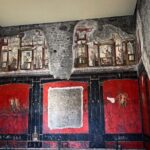
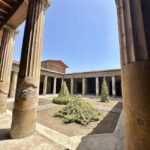
I like domus stops because Pompeii’s household life tells a different story than the forum. In public buildings, you learn how people organized power. In private homes, you learn taste, wealth, and how art and rooms worked together.
You may also see restored details tied to major finds, including the House of Golden Cupids. Restoration matters because it can show what was originally there, and it can also teach you how archaeology deals with damaged surfaces, missing parts, and interpretive limits.
If you love seeing both beauty and evidence, this section is a highlight. It’s not just, look at that mosaic. It’s, here is what it suggests about who lived here and what the excavators learned from the condition of the rooms.
The theatre, the Great Gymnasium, and the final public stage
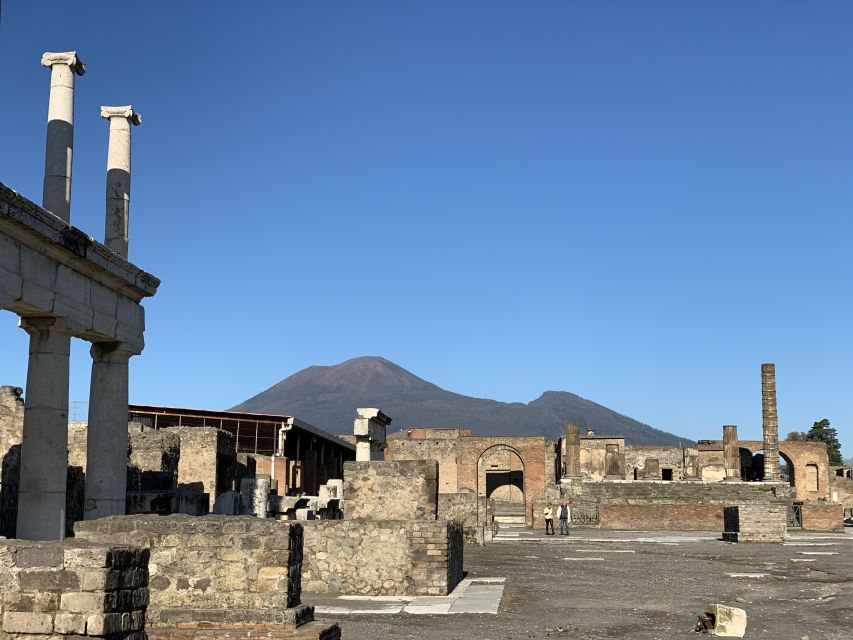
From homes and temples, the tour transitions to entertainment and gathering spaces. You’ll visit the Large Theatre, and the route also includes the Great Gymnasium, where daily objects are exposed before the tour ends at the Amphitheatre.
These stops are important because they round out Pompeii. A Roman city was not only work and religion. People gathered for performances, training, and social life.
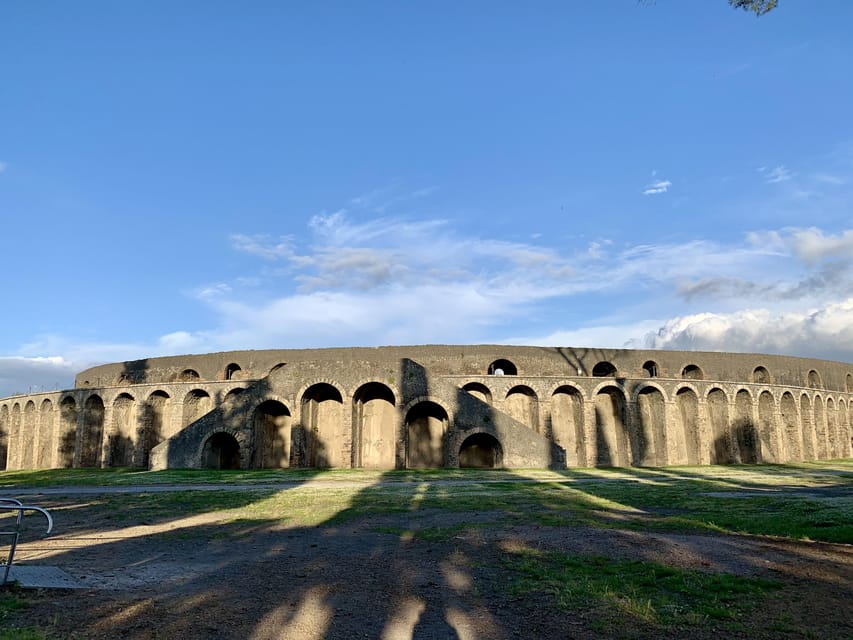
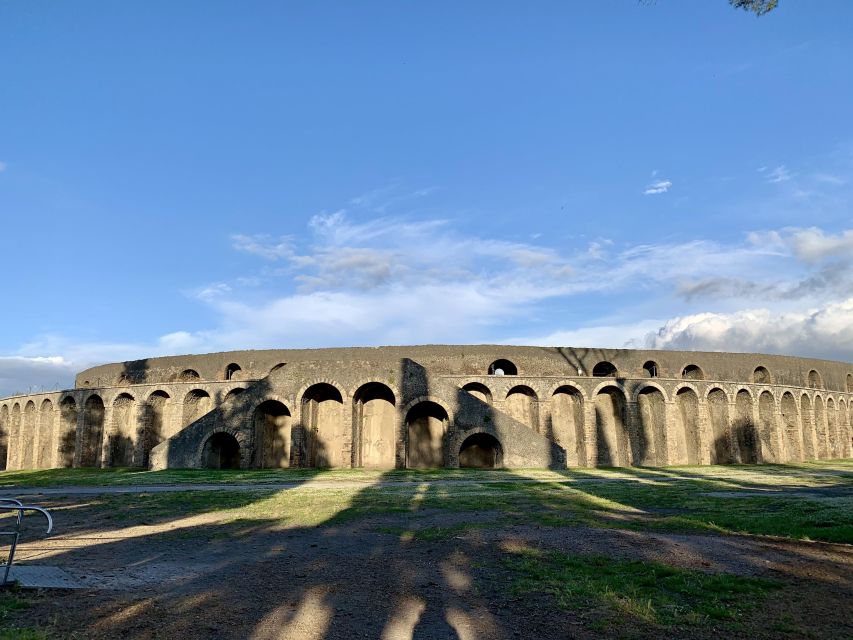
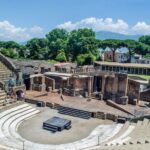
The Large Theatre is where you get a sense of scale and crowd behavior, while the amphitheatre caps the tour with a dramatic finale. Even if the stones are silent, the space tells you how humans used public venues to create community and spectacle.
This is also where a guide’s pacing matters. The best tours don’t just stack sights. They create a feeling of movement from ordinary life to the last-days reality, and the public stage is a perfect place to land that message.
The Garden of the Fugitives: the last-days sight that needs a careful guide
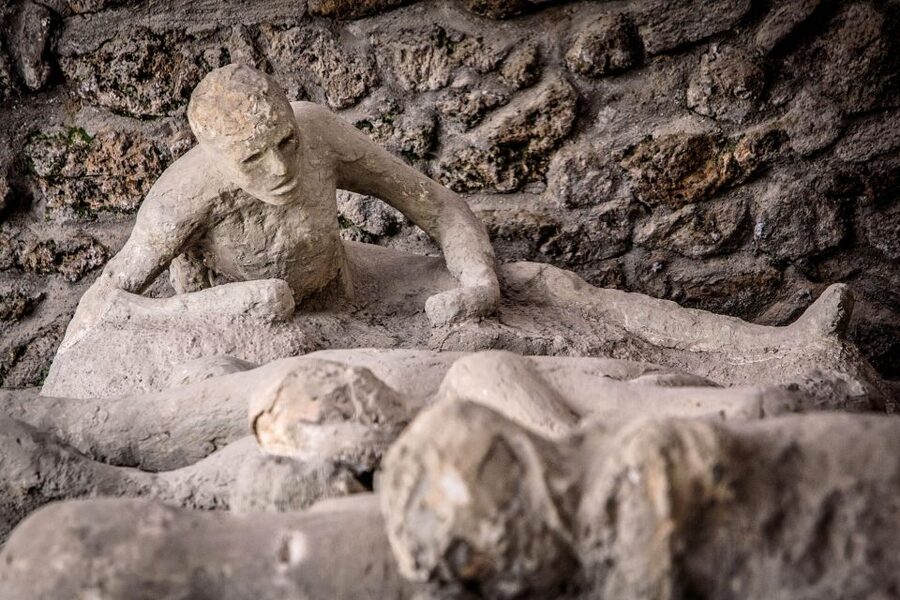
The tour reaches the Garden of the Fugitives, one of Pompeii’s most emotionally heavy areas. During the eruption, some people tried to escape, and the evidence survives in the form of body moulds.
You don’t need extra sensational framing here. What you need is a guide who can keep the explanation factual and respectful, tying the site to what we understand about eruption impact and why these individuals ended up there.
This is one of those moments where skip-the-line and archaeology facts all take on real weight. The tour has already taught you what daily life looked like. Now it shows what happened when normal life stopped.
If you’re sensitive to tragedy, it’s still worth visiting, but plan your own pace. Sit, look, and let the guide speak in measured context.
What the 3-hour pace feels like, and who it suits best
A 3-hour Pompeii tour is not a slow wander. It’s a focused plan that hits the major themes in a way that usually takes longer on your own. You’ll be walking between different zones, with guided time at each.
That pace is a strength if you:
- Want a guided narrative instead of random exploration
- Have limited time in Campania
- Care about excavation context, like artifact evidence and restored areas
- Prefer a private setting where you can ask follow-up questions
It can be a drawback if you:
- Want a long, flexible self-guided stroll
- Travel with mobility limits beyond wheelchair access
- Need frequent breaks, since the route is tight and includes several major stops
For most visitors, the 3-hour length is the sweet spot. It’s long enough to feel like you learned Pompeii, short enough to keep your day intact.
Price and value: why this costs more, and when it makes sense
The price shown is $407.83 per group, up to the limit listed as 1. That might sound steep until you break down what you’re actually paying for.
You’re paying for:
- A private guided tour with a personal archaeologist
- Admission tickets included
- Skip-the-line service
- Full assistance during the tour
For one traveler, it’s basically buying time and expert access. For a group, it becomes a question of how you’re splitting value. If you’re traveling alone, this is best if you really want the full archaeologist experience and don’t want to piece together multiple tickets and guides.
If you’re traveling with more people and can split costs, the value improves quickly, because you’re not paying for an extra guide per person in the same way a standard day might.
My practical advice: if Pompeii is the main event on your trip and you want facts grounded in excavation work, this price can feel fair. If you just want photos and a light overview, you might not need a private archaeologist tour.
Practical notes: tickets with full names, what to pack, and what not to bring
One part you should not ignore is the new ticketing rule from the Pompeii Archaeological Park. You must send your full name and surname for each participant so it can be added to the ticket. Bring an original ID or passport. Tickets are personal, so be on time.
What to bring:
- Comfortable shoes
- Sunscreen
- Comfortable clothes
What’s not allowed:
- Pets
- Alcohol and drugs
And two more practical reminders:
- Transportation is not included, so plan how you’ll reach the meeting point at Porta Marina Superiore.
- Food and drinks are not included, so bring your own plans for a snack or water before and after.
Wheelchair accessibility is listed, and since the tour is private, your guide can sometimes work with your pace as long as you can manage the route.
Should you book the Pompeii VIP 3h Tour with your archaeologist?
You should book if you want Pompeii to feel understandable and evidence-based. This tour is built around an archaeologist’s voice, personal skip-the-line entry, and a route that balances the big civic places with homes and the last-days tragedy at the Garden of the Fugitives.
You might skip it if you only need a quick look, plan to spend most of your time photographing from the roadside, or you’re not comfortable with a structured 3-hour walk.
If Pompeii is your one must-do in Campania, this is a strong choice. You’ll leave with more than memories. You’ll have a framework for what you saw, why it mattered, and how archaeologists know what they know.
FAQ
What is the meeting point for this Pompeii tour?
The tour starts at Porta Marina Superiore, right in front of Hortus Bar.
How long is the Pompeii VIP tour?
The tour lasts 3 hours.
Are admission tickets included?
Yes. Admission tickets are included.
Does the tour include skip-the-line entry?
Yes. The tour includes skip the line service.
Is this a private group tour?
Yes. The experience is listed as a private group tour.
What languages are available for the guide?
The tour is offered with live guides in English, French, Spanish, and Italian.
Is transportation included?
No. Transportation is not included.
What do I need to bring, and do I need ID?
Bring comfortable shoes, sunscreen, and comfortable clothes. You also need to bring an original ID or passport, since your full name and surname must be added to your ticket.
Is cancellation free?
Cancellation is listed as free up to 24 hours in advance for a full refund.
More VIP Experiences in Pompei Campania
More Tours in Pompei Campania

More Tour Reviews in Pompei Campania

Not for you? Here's more nearby things to do in Pompei Campania we have reviewed






Tour Reviews, compared.
 ★ 4.8Pompeii: Entry Ticket and Guided Tour with an ArchaeologistFrom $3519,459 reviews
 ★ 4.2Pompeii: Entry Ticket with Optional Audio GuideFrom $2612,360 reviews
 ★ 4.8Pompeii: Small Group Tour with an ArchaeologistFrom $4012,264 reviews
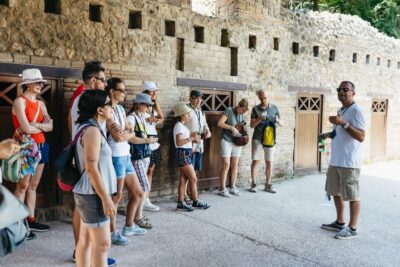 ★ 4.3Pompeii Ruins & Mount Vesuvius Day TourFrom $12011,459 reviews
 ★ 4.6Sorrento, Positano and Amalfi Full-Day TourFrom $10710,988 reviews
 ★ 5.0Sorrento, Positano & Amalfi Coast – Small Group TourFrom $768,643 reviews
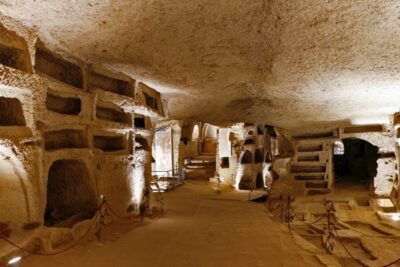 ★ 4.6Catacombs of San Gennaro Entry Ticket & Guided TourFrom $157,941 reviews
★ 5.0Pompeii Small Group Tour with an ArchaeologistFrom $356,593 reviews
★ 4.6Catacombs of San Gennaro Entry Ticket & Guided TourFrom $157,941 reviews
★ 5.0Pompeii Small Group Tour with an ArchaeologistFrom $356,593 reviews
Browse the lists this tour appears in