
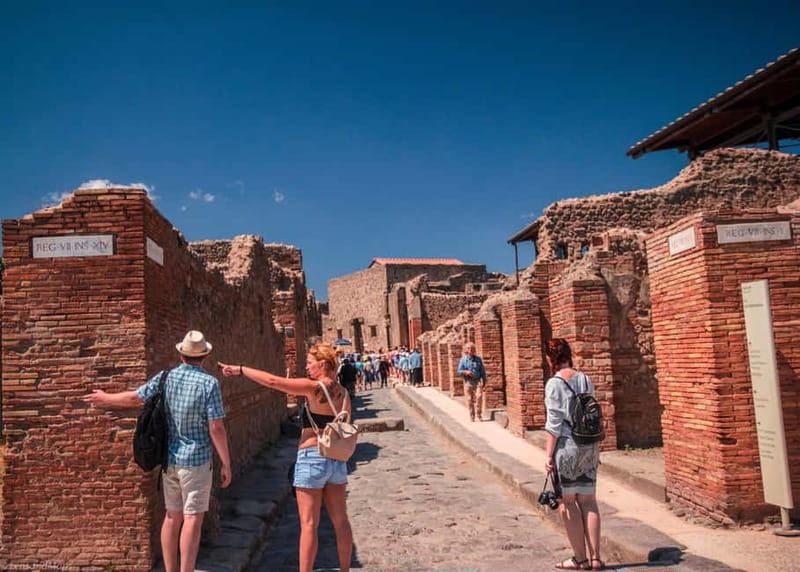
Tour review · TOUR REVIEWS
Pompeii Ruins 2-Hours Guided Tour and priority entry ticket
Pompeii packs a punch in two hours. This guided stop on the UNESCO site gives you the 79 AD story with an expert archeological guide, and I love how clearly they connect the eruption to everyday Roman life. I also really enjoyed seeing the preserved mosaics and frescoes, plus details like cooking utensils still displayed in the bakery area. The one drawback is the shared group pace, so if you want to linger in one corner, you’ll feel the clock.
You start at the Tempio Travel office in the Pompeii Circumvesuviana Station area (first floor). I like that the tour also includes skip-the-line entry, so you can spend your energy actually looking at Pompeii instead of queuing. After the guided portion, you get freedom to explore the archaeological site on your own, which is perfect if you want to slow down and re-focus.
Before you go, plan for the basics: comfortable shoes matter here, and in summer you’ll want a sunhat and water. Pompeii is an open-air site, and walking plus stairs plus uneven stone is real.
Key Highlights You’ll Notice Right Away
- Priority entry helps you spend less time in lines and more time inside the ruins
- An expert archeological guide that explains what you’re seeing and why it matters
- 79 AD eruption context that turns ruins into a story of real people and real panic
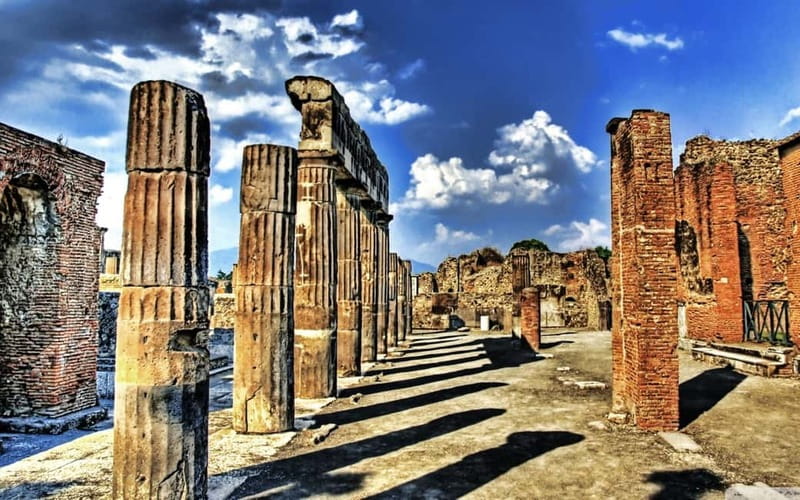
- Termopolia, mosaics, and frescoes that show Roman daily life in unusually clear detail
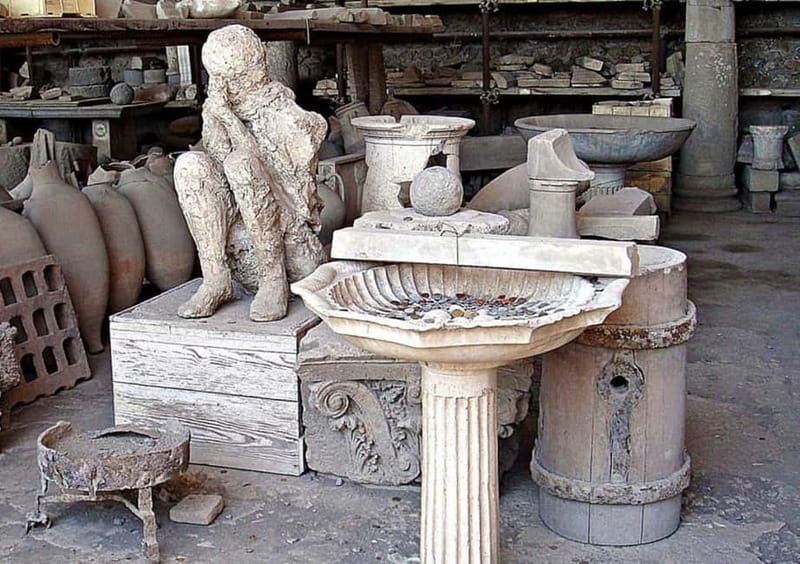
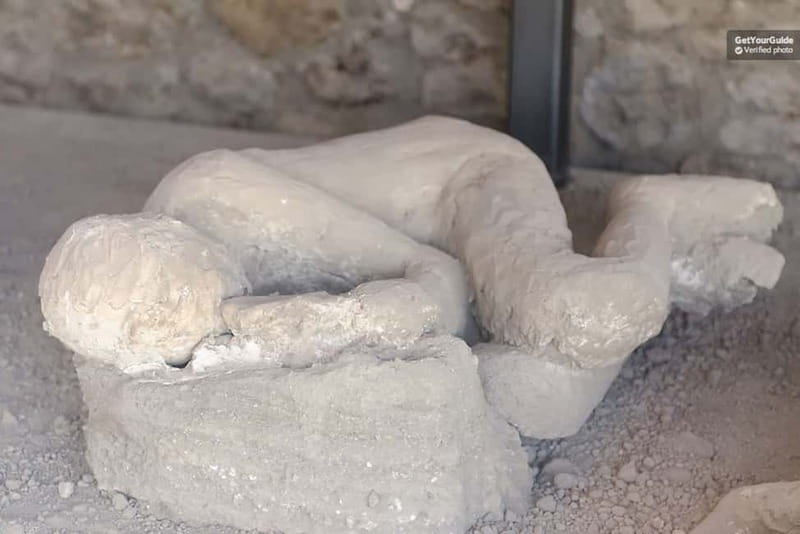
- Body casts that make the tragedy feel immediate and human
- 2 hours guided, then free exploring so you get both structure and choice
Getting Oriented at the Tempio Travel Office Near Pompeii Station
Your tour begins at the meeting point at the Tempio Travel office by Pompei Train Station, in the Pompeii Circumvesuviana Station area, first floor. The instructions ask you to arrive at least 15 minutes before departure, and I strongly recommend you do. In practice, that buffer helps you find the right desk, double-check your group, and avoid the pre-tour scramble.
Once you’re together, the tour’s first stop is at Via Villa dei Misteri, 1. That matters because Pompeii is huge and easy to get disoriented. Even when you think you know where you are, the streets and pathways can trick your sense of direction. Having a guide at the start helps you get your bearings fast.
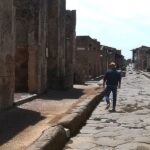
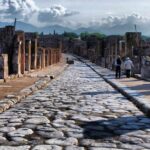
This is also the moment to tune yourself for the walking style of Pompeii. You’ll be going through a labyrinth of ruins, and the terrain is not “museum smooth.” If you’ve got shoes with good grip and you’re comfortable with lots of steady walking, you’ll enjoy the full 2 hours a lot more.
More Naples tours, ruins, coast days, and city experiences to compare


Priority Entry and the 2-Hour Guided Plan
The big practical win here is skip the line entrance with a priority entry ticket. That’s not just a time saver, it changes the whole experience. When you arrive and immediately step into the site, your brain stays in “explore mode.” You are not starting the tour already tired from waiting.
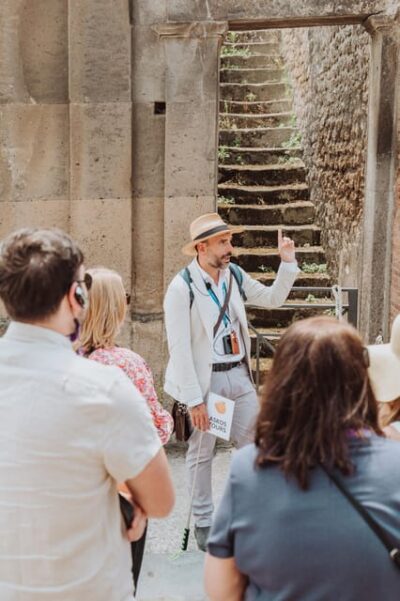
You’ll have a live tour guide for the 2-hour walkthrough. The tour is available in English and Italian, and you also get audio guide support in English and Italian. For larger groups (groups of 16 or more), headsets are available for listening to the guide. Translation: you should be able to hear the important parts of the story without constantly craning your neck.
Because it is a shared guided tour, the route is managed for the group. You’ll be taken to the most significant ruins, not everything in Pompeii. That’s a good thing for many people. Pompeii is too big to see well without a plan. But if you’re the type who wants to spend 45 minutes on one mosaic, you’ll need to use your post-tour freedom wisely.
Starting at Via Villa dei Misteri, Then Into Pompeii’s Street Grid
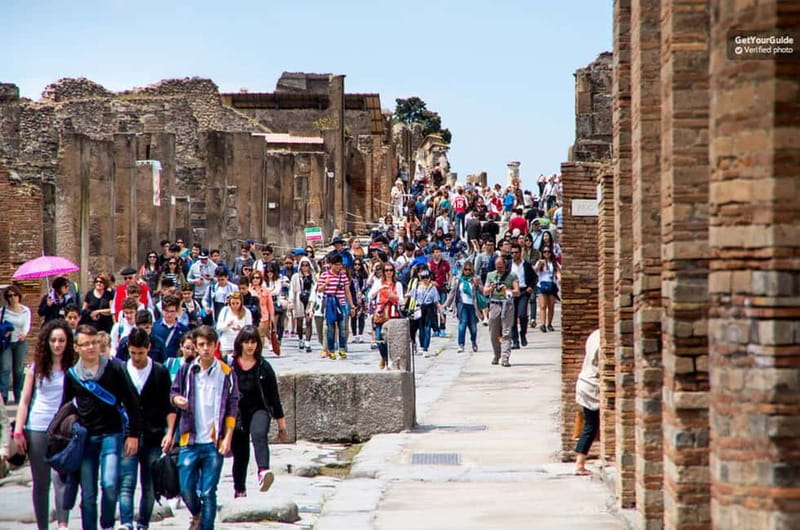
The tour’s start at Via Villa dei Misteri, 1 sets you up for the core idea of Pompeii: you’re not wandering into “random ruins.” You’re walking through a city preserved with enough detail that you can understand how people moved through daily life.
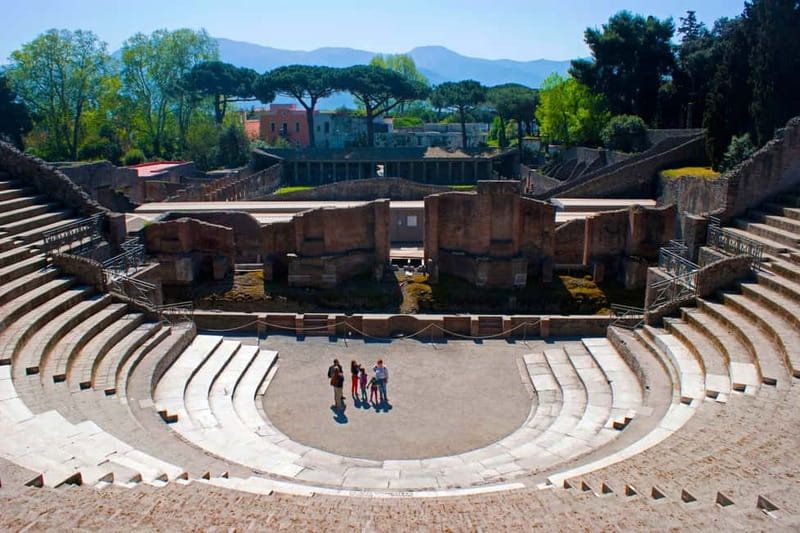
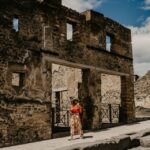
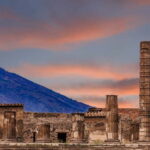
From there, the guide leads you around the Roman city that was buried by volcanic ash from Mount Vesuvius in 79 AD. The guide takes you through major public and residential areas, including theaters, famous villas, public baths, a bakery, and the Forum. Those stops are chosen because they help you see the big picture, not just scattered stones.
If you’ve visited other ancient sites, you’ll recognize the difference. Some places give you monuments. Pompeii gives you context. A street corner makes sense. A public building feels connected to what came next. Even when the city is broken, the layout still teaches you how it functioned.
The 79 AD Eruption Story: What the Guide Actually Helps You See
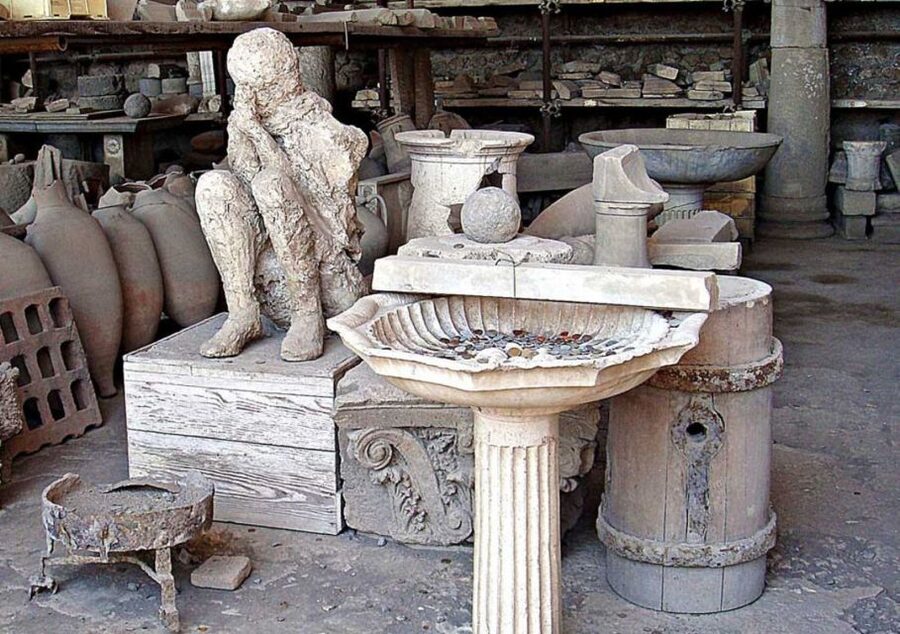
One of the most powerful elements of this tour is how the guide brings the 79 AD eruption into focus. You’ll hear about the tragic events of that day, and the story isn’t just a dramatic timeline. It’s tied directly to what you’re standing near.
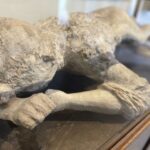
The most haunting part is the chance to see body casts of the citizens, frozen in time. That detail changes how you look at the space. Instead of thinking “sad history,” you start thinking about people caught in a moment they could not escape.
This is also where your 2-hour format becomes a benefit. Pompeii can turn into a long visual overload. With an expert guide, you’re guided toward the moments that help you understand what happened and why the site is so valuable today. The key is that the ruins are explained in plain language, tied to everyday life before the city was buried.
Termopolia, Mosaics, and the Food-Life Side of Pompeii
I especially liked the tour’s focus on what people did day to day. You’ll see termopolia, the Roman-style eateries with built-in counters. These spots matter because they show that Pompeii was not only about politics and temples. It was also about meals, routine, and quick stops during the day.
Then you hit the visual rewards: mosaics and frescoes. Pompeii’s preservation is famous for a reason. When you see mosaics that are still intact and frescoes with their colors and designs, you get a stronger sense of taste and style than you would from ruins that only show foundations.
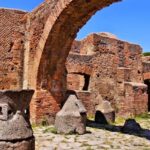
The bakery stop and the cooking utensils displayed there are another standout. I like that the tour does not treat artifacts like museum trophies. Instead, it frames them as evidence of daily work. If you care about how ordinary people lived, you’ll feel like the city is talking back.
One practical note: mosaics and small details reward patience. If you’re rushed or your shoes are already bothering you, you may skim. So it helps to go in ready to slow down for a few minutes at a time.
You can also read our reviews of more guided tours in Pompei Campania

The Forum, Public Baths, and the Social Pulse of Roman Life
If you want Pompeii to feel like a real city, the Forum is the anchor. You’ll see it on this tour, and that’s important because the Forum is where civic and public life concentrated. Even in ruin, you can start to understand why people gathered, discussed, and conducted business.
Next, public baths give you another angle on daily Roman routine. Baths weren’t just for cleaning. They were social spaces, places to talk and unwind as part of the rhythm of the day. Standing in a preserved bath complex helps you picture that routine in a way that text alone never quite does.
These stops also work well for first-timers. The guide takes you to the major sites so you can build mental landmarks. Once you understand where the Forum and baths fit into the city’s layout, the rest of Pompeii starts to make sense.
Theaters, Villas, and What “Household Life” Looks Like in Ruins
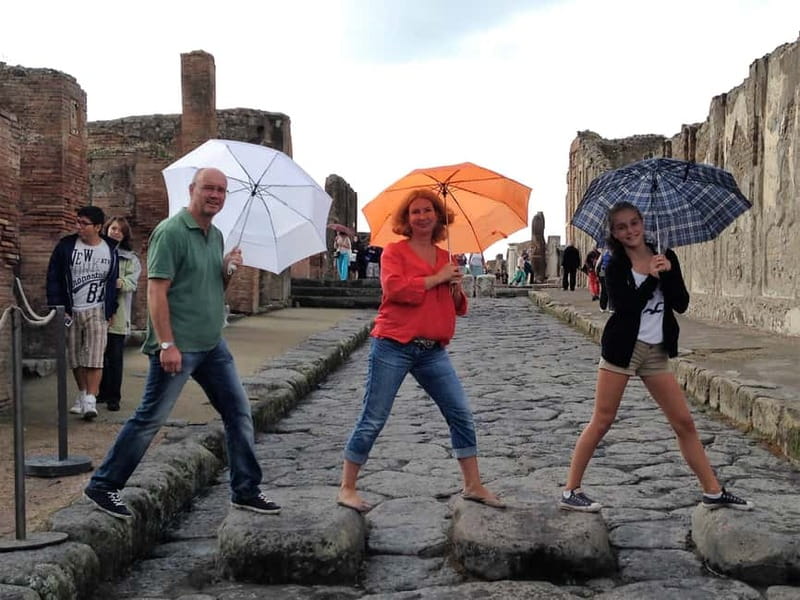
The tour also includes theaters and famous villas. I like including these because they show Pompeii beyond a single category. A theater tells you about entertainment and public culture. A villa hints at wealth and private space.
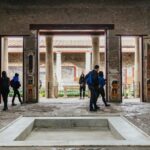
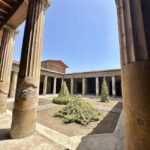
Villas in Pompeii often help you think in terms of rooms, daily movement, and the way different families used their homes. Even if you are not an architecture specialist, the guide’s walkthrough helps you read the layout. You start to see what rooms likely were used for, and how spaces connect.
A small caution: villas and theaters are part of what makes Pompeii so memorable, but they also take time to process. If your legs are tired early, your experience can feel more stressful. That’s why the comfortable shoes advice is not fluff.
Your Time After the Tour: How to Use the Freedom Well
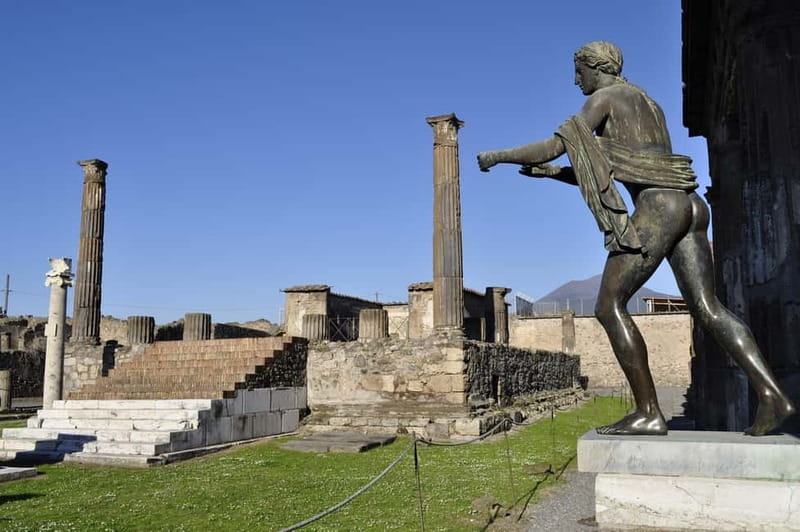
After the guided portion, you have freedom to explore the archaeological site on your own. I love this setup because it solves a common problem with Pompeii. A tour can teach you where to look, but it can also move you on before your curiosity is fully satisfied.
With your own time, you can do two smart things:
- Revisit the details that felt meaningful, like mosaics or termopolia, and spend longer than the guided pace allows.
- Walk a bit more slowly through areas you might have skimmed during the tour, especially if the guide passed quickly to keep the group moving.
You’ll get more out of this “free time” if you pay attention at the end of the guided tour. When you notice what the guide emphasized, you get clues about what’s worth returning to on your own.
Who This 2-Hour Pompeii Tour Fits Best
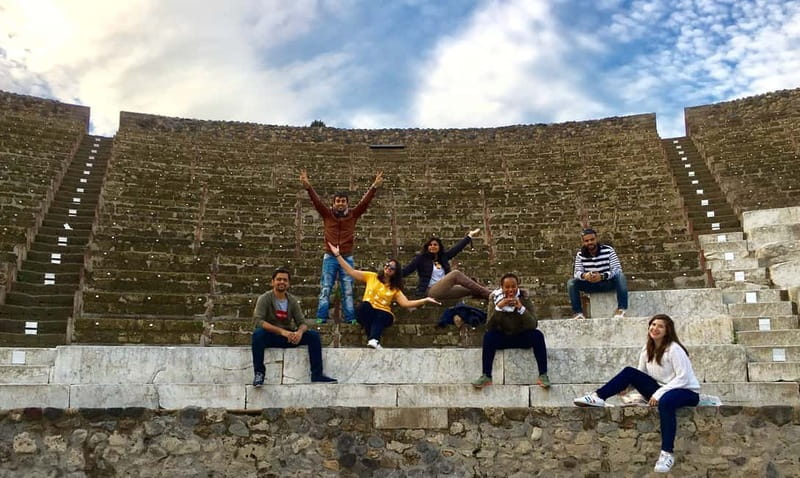
This Pompeii experience is a strong match if you want a clear, high-impact visit without feeling lost. It’s especially good for:
- First-timers who want the major sights covered in a focused route
- People who value expert explanation, not just wandering
- Travelers who want both guided structure and free time afterward
- Anyone interested in everyday Roman life, not only big monuments
It may be less ideal if you want total freedom to create your own route, or if you tend to take very long pauses at each stop. The tour is shared, and the guided plan is designed to show the most significant ruins within 2 hours.
Price and Value: Is $37.58 Worth It?
At $37.58 per person, this tour is priced as an efficient, guided “best-of” experience. You’re paying for three practical advantages: skip-the-line entry, an expert guide for 2 hours, and the added support of audio guide materials (with headsets available for groups of 16 or more).
If you tried to do Pompeii on your own, you’d still pay for admission and you’d still face the challenge of navigating a huge archaeological site without getting the story in context. Pompeii rewards understanding. When the guide points out what you’re looking at, your photos improve, your memory sticks, and the tragedy of 79 AD lands with more meaning.
So yes, it’s a fair value when you want the highlights plus the context. If you already plan to spend a full day on your own, or if you strongly prefer audio-only exploration, you might compare costs. But for most people who want a smart first visit, $37.58 feels like the ticket price equivalent of buying time and insight.
Practical Tips So You Don’t Miss the Best Parts
This is straightforward, but it matters:
- Wear comfortable shoes. Pompeii requires lots of walking on uneven stone.
- In summer, bring a sunhat and water. Shade can be limited depending on the route.
- Expect a shared group experience. Your best strategy is to go with the flow during the guided portion, then slow down during your free time.
- Be ready for a “story-driven” format. The tour isn’t just a checklist of ruins. It’s designed to connect what you see to Roman daily life and the eruption.
If you do those things, you’ll get more from every stop, from the termopolia and mosaics to the body casts that make the past feel painfully real.
Should You Book This Pompeii Ruins 2-Hour Guided Tour?
I’d book it if you want a focused Pompeii visit with priority entry and expert guidance that turns ruins into a coherent picture. The mix of public spaces like the Forum and baths, plus everyday-life details like termopolia and cooking utensils, is a smart way to see Pompeii beyond the “big name” sites. And the body casts and 79 AD eruption explanation provide the emotional anchor most people are looking for.
I wouldn’t book it if you need total route freedom or if you plan to spend long stretches staring at every single corner. Pompeii can swallow time, and this tour uses a tight 2-hour window. But for a first visit or a well-paced day in Campania, this one hits the right balance of structure, key highlights, and time to explore on your own afterward.
FAQ
What is the duration of the Pompeii guided tour?
The guided tour lasts 2 hours.
Does this tour include priority entry or skip-the-line tickets?
Yes. It includes skip-the-line entrance ticket.
Where do I meet for the tour?
You meet at the Pompeii-tickets – Tempio Travel office in Pompei Circumvesuviana Station, at first floor. Please arrive at least 15 minutes before departure.
What can I see during the tour?
The guide takes you to significant ruins, including theaters, famous villas, public baths, a bakery with cooking utensils still on display, the Forum, mosaics and frescoes, termopolia, and body casts.
Are the tours offered in English?
Yes. The tour and audio support are available in English and Italian.
What should I bring or wear?
Comfortable shoes are recommended. In summer, bring a sunhat and water.
More Tickets in Pompei Campania
More Tours in Pompei Campania


More Tour Reviews in Pompei Campania

Not for you? Here's more nearby things to do in Pompei Campania we have reviewed







Tour Reviews, compared.
 ★ 4.8Pompeii: Entry Ticket and Guided Tour with an ArchaeologistFrom $3519,459 reviews
 ★ 4.2Pompeii: Entry Ticket with Optional Audio GuideFrom $2612,360 reviews
 ★ 4.8Pompeii: Small Group Tour with an ArchaeologistFrom $4012,264 reviews
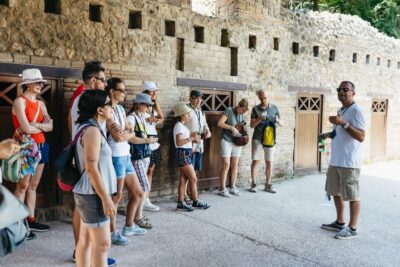 ★ 4.3Pompeii Ruins & Mount Vesuvius Day TourFrom $12011,459 reviews
 ★ 4.6Sorrento, Positano and Amalfi Full-Day TourFrom $10710,988 reviews
 ★ 5.0Sorrento, Positano & Amalfi Coast – Small Group TourFrom $768,643 reviews
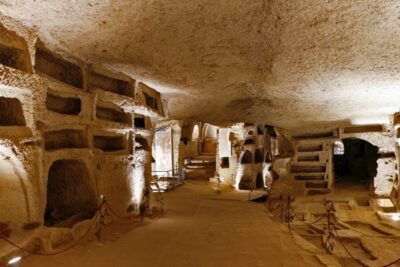 ★ 4.6Catacombs of San Gennaro Entry Ticket & Guided TourFrom $157,941 reviews
★ 5.0Pompeii Small Group Tour with an ArchaeologistFrom $356,593 reviews
★ 4.6Catacombs of San Gennaro Entry Ticket & Guided TourFrom $157,941 reviews
★ 5.0Pompeii Small Group Tour with an ArchaeologistFrom $356,593 reviews