
Tour review · TOUR REVIEWS
Pompeii: Skip-the-Line Entry & Audioguide
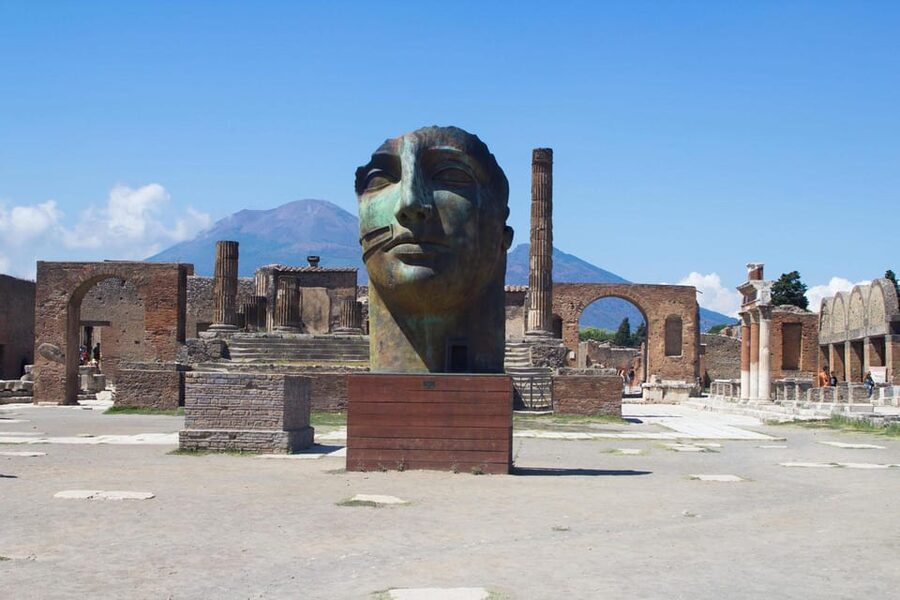
Pompeii hits you fast. With skip-the-line entry and a built-in audioguide, this is one of the easier ways to get into the ruins quickly and then explore without feeling rushed. You start right in Pompeii’s dramatic core, with Mount Vesuvius looming behind the stones.
I like that you can spend your time where your curiosity pulls you, from the central forum to quieter side streets. I also like that the audioguide gives you context as you walk, with options in many languages, so you are not just looking at walls, you are learning what they were for.
One thing to consider: value clarity. A few people have flagged pricing confusion around what exactly is included at check-in, and whether you are paying an extra amount for the audio device or a deposit. If you want the best deal, confirm the total price you are paying before you hand over anything.
Key Things You Should Know Before You Go
- Skip-the-line entry helps you start exploring sooner instead of waiting at the gate.
- Audioguide + paper map are made for self-paced walking, not a sprinting group tour.
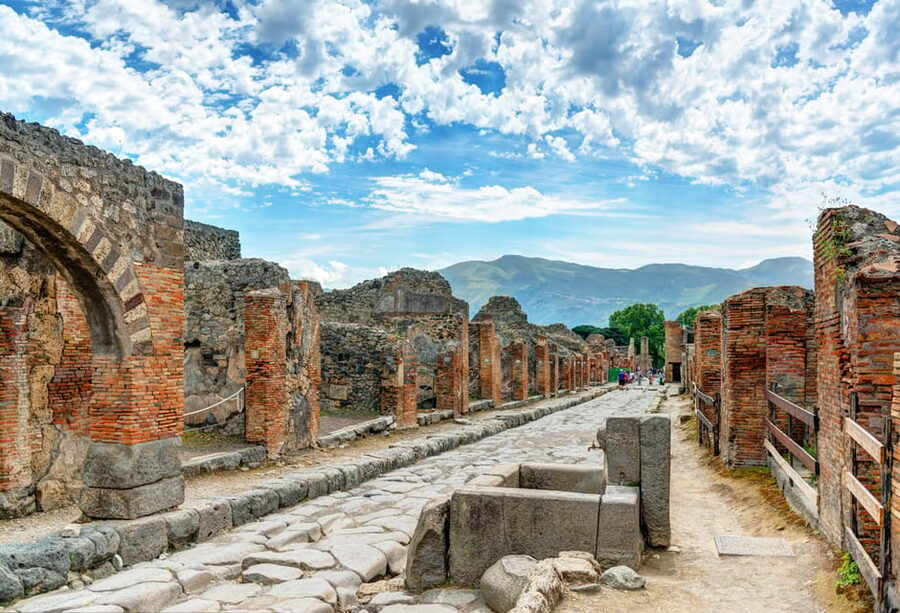
- The central forum is your anchor stop, with Mount Vesuvius in the background.
- You’ll see aqueduct and fountain remains, plus public baths, private homes, and business areas.
- The route can include the amphitheater and the dramatic theater area.
- Villa dei Misteri is not included, so plan your expectations if that is on your must-see list.
What Skip-the-Line Really Changes at Pompeii
Pompeii is popular, and that means lines can eat into your day. This experience’s main promise is straightforward: skip-the-line entry to the Pompeii Archaeological Park, so you can get moving while other people are still waiting.
What you gain is time and momentum. Instead of spending your first hour figuring out where to go, you walk in and begin the same experience that makes Pompeii so unforgettable: standing in the center of an ancient Roman city that was frozen in time by the 79 AD eruption of Vesuvius.
This is also why the self-paced format works so well here. You are not required to keep up with a fast-moving group. You can slow down in the forum area, then speed up through the streets, then pause again if a home, shop, fountain, or statue catches your eye.
One practical note: there is no hotel pickup, so you need to plan to arrive at the meeting point and go from there. Also, expect rules at the park entrance. Large bags are not allowed, smoking and alcohol or drugs are not allowed, and pets are restricted.
More Naples tours, ruins, coast days, and city experiences to compare

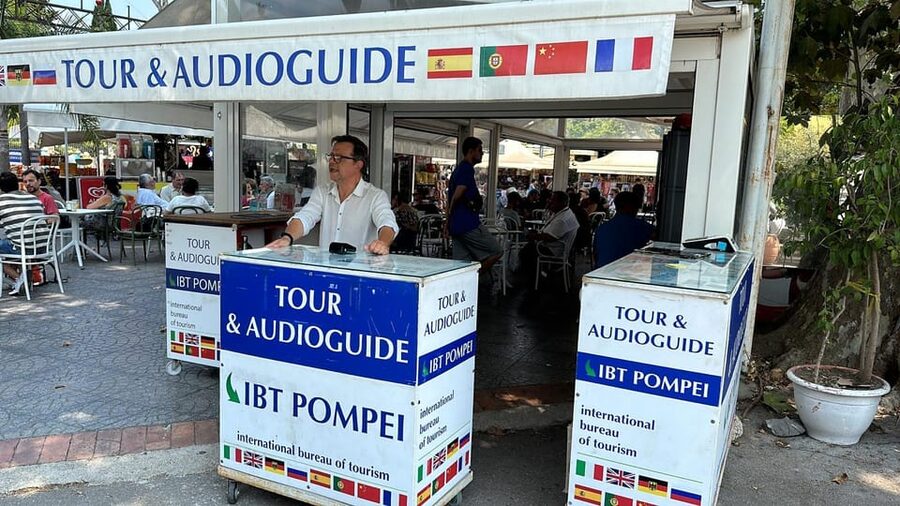
Finding the Meeting Point Near Chalet Donna Lucia
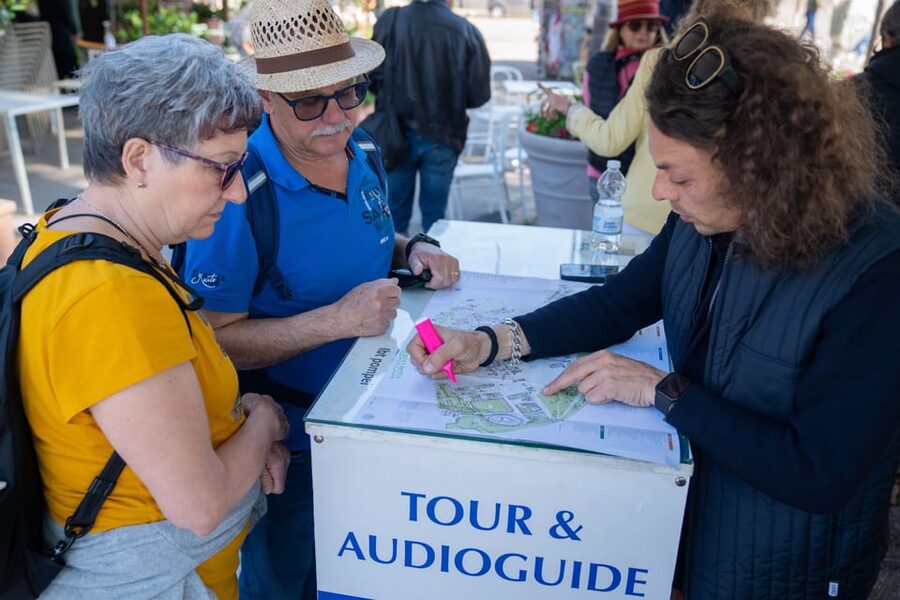
The meeting point is listed as the IBT Center/Touristation next to Chalet Donna Lucia. In practice, that kind of pinpoint detail matters, because Pompeii days often start with a quick decision: show up early and stay calm, or arrive late and start hunting.
I’d treat this as a sign to arrive a bit ahead of your chosen start time. With Pompeii, the park is the destination, but you still have to get organized at the meeting area first, especially if you are picking up the audio equipment or checking in.
If your plan includes a guided tour option, you might meet the guide here as well. One guide name that came up clearly in feedback was Daniel, and an introduction from him was described as helpful. Even if you do not choose a full guided format, it is nice when someone can help you get oriented fast.
The Audioguide Setup: How You Learn Without Getting Stuck
The big win of this experience is that you do not have to carry Pompeii in your head. The tour includes an audioguide and a paper city map, plus you can choose among many languages: Italian, English, French, Spanish, German, Portuguese, Chinese, and Japanese.
Here is how that helps your day. Pompeii can feel like a collection of ruins until someone connects the dots. The audioguide is designed to help you understand what you are looking at, including buildings and the site’s history, as you move through the park.
Because you have both a map and audio narration, you can follow a logical path while still stopping for what interests you. That matters with Pompeii because the city is large, and the most meaningful moments can happen when you linger at details like doorways, columns, fountains, and preserved art.
Small heads-up: at least one account described discomfort with leaving a passport as a deposit. The exact process is not spelled out here, but the lesson for you is simple. If the check-in desk asks for an ID deposit, decide ahead of time if you are comfortable with it.
First Major Stop: The Central Forum and Vesuvius in View
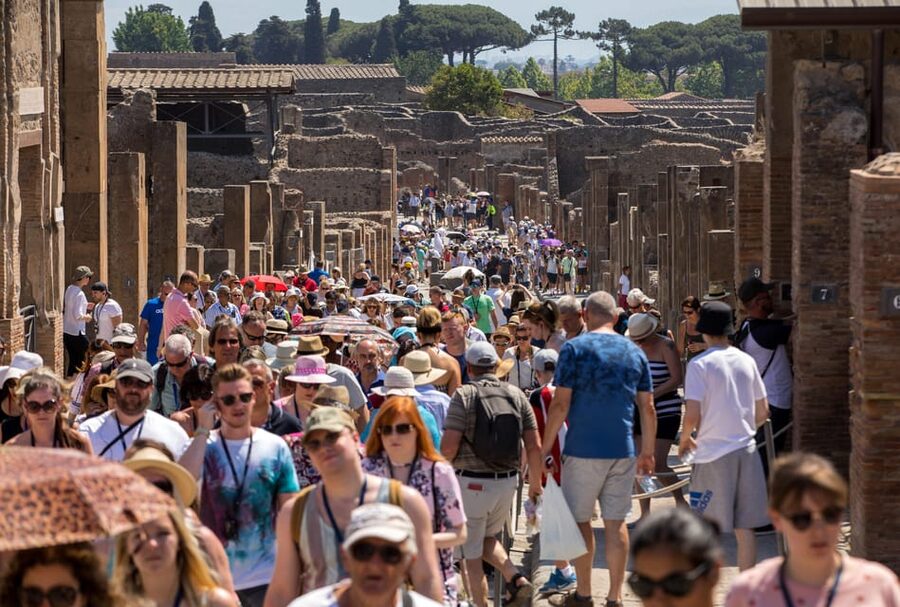
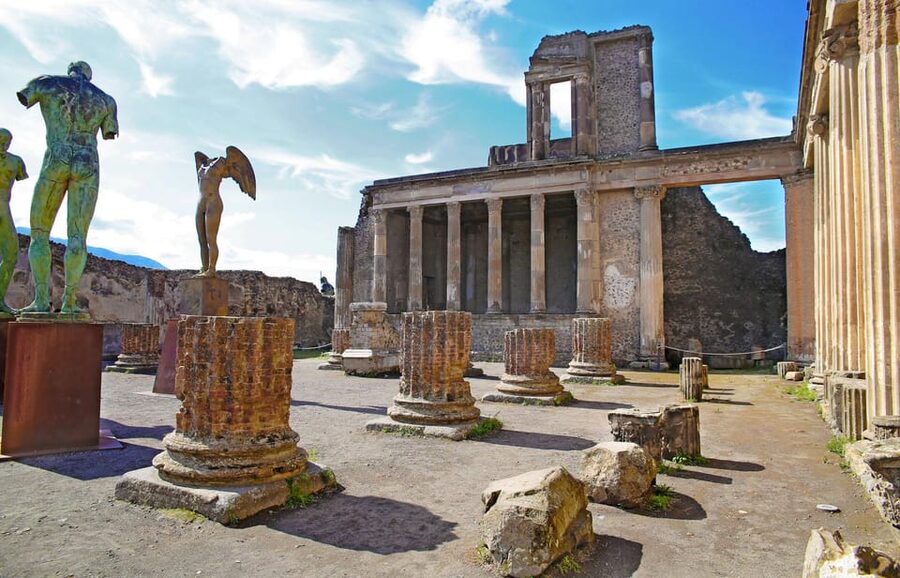
Your walk begins in Pompeii’s central area, built around the forum. This is the place you want early, because it gives you scale. You are looking at the kind of civic center where people would have gathered, argued, traded, and gone about daily life.
What I like about this stop is the contrast. You get stone remains that still suggest how impressive the area once was, like columns and doorways. Then, right behind and beyond the ruins, Mount Vesuvius looms in the background, making the eruption story feel immediate rather than textbook.
Standing here makes it easier to understand how the rest of the city connects. The forum is your mental anchor, and after that, the streets, homes, baths, businesses, fountains, and aqueduct remains start to read like parts of one coordinated system.
If you are the type of traveler who wants to see the biggest headline sights, the forum also helps you feel like your money is being used quickly. You are not wandering randomly for an hour waiting for the “real stuff.” The forum is the real stuff.
Walking the Streets: Aqueducts, Fountains, Baths, and Statues
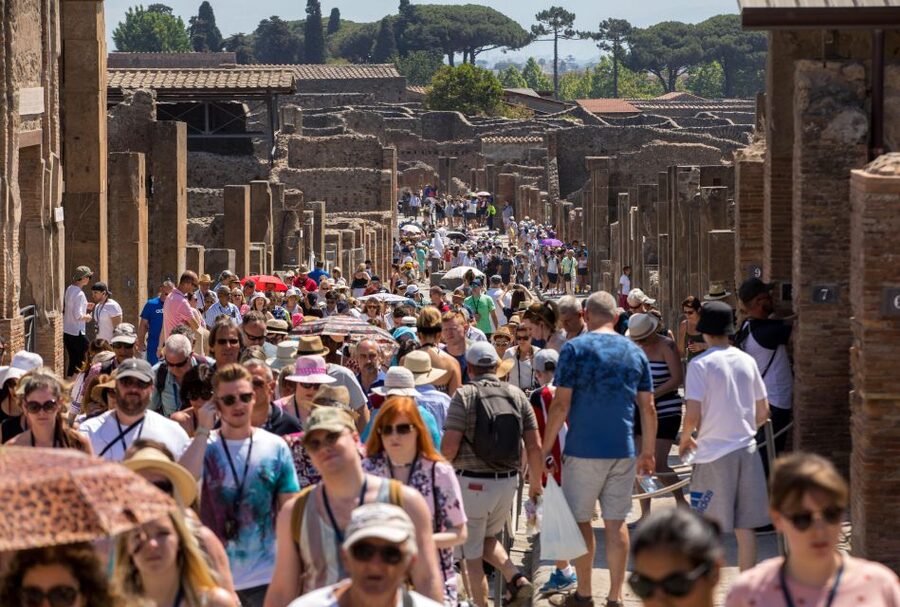
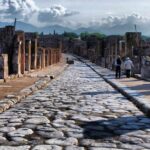
After the forum, the route continues through the city streets, where the remains show you how people lived and managed daily needs. This part of Pompeii is not just pretty ruins. It is infrastructure and routine, preserved in fragments.
You can expect to see:
- Aqueduct remains, which hint at how water reached different neighborhoods
- Fountains, showing how public and semi-public water features worked
- Public baths, which were major social spaces in Roman life
- Private houses, where domestic routines played out
- Businesses, where trade and services happened
- Statues and other sculptural pieces that helped shape the look of the city
What makes this valuable is the way it turns Pompeii from a single sight into a lived environment. Even if you do not memorize Roman terms, you start to recognize patterns: water systems here, gathering spaces there, homes with their own internal logic.
This is also where the self-paced audio format shines. If you like learning, you can pause the flow just long enough to absorb what the audioguide says about a particular building or area. If you prefer the vibe over the facts, you can keep moving and let the atmosphere do the work.



Roman Homes and Businesses, Including Frescoes
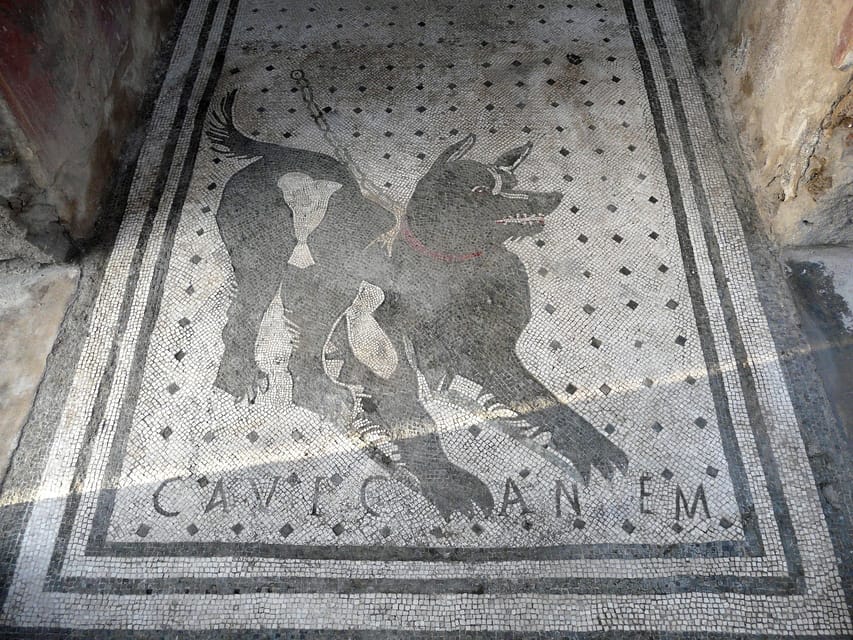
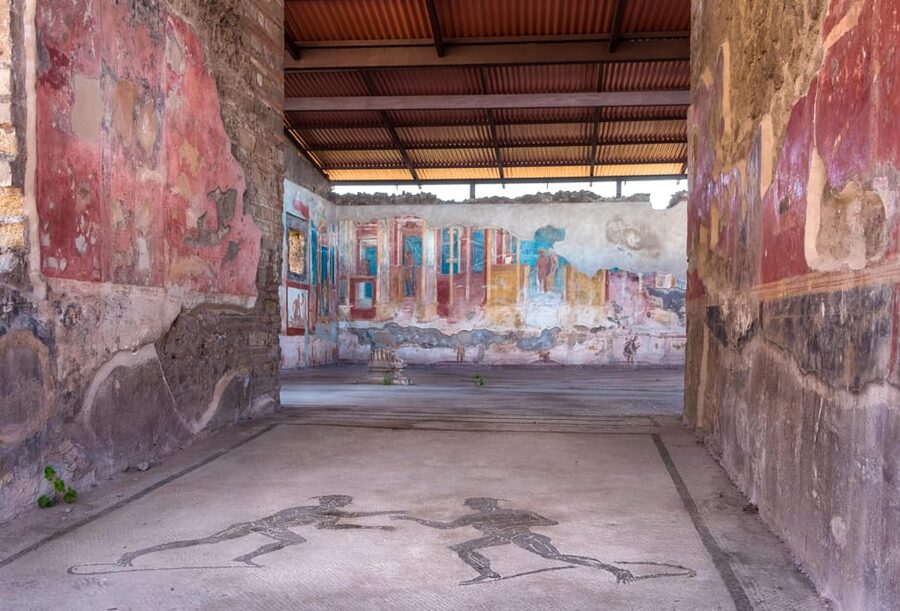
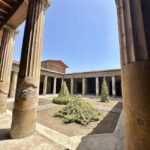
One of Pompeii’s most striking qualities is the art and interior decoration that somehow survived. This experience includes time where you can see remains of colorful frescoes from houses and businesses.
Why this matters: frescoes are not just decoration. They were a way to communicate taste, identity, and sometimes status. When you stand in front of these fragments, you understand that the Romans were paying attention to how spaces felt, not only how they functioned.
Homes and businesses also help you imagine routines. Doorways and wall openings tell you where people entered. Street-facing areas suggest commerce and passing trade. Internal spaces give a clue to privacy and household organization.
Also, remember you are exploring at your own pace. You can spend an extra 10 minutes in one house if the fresco remains grab you, or you can move on quickly if you are more interested in architecture and layout.
If you are hoping to see only the most famous interiors, go in expecting that Pompeii’s “best part” is often the exact spot you personally slow down for.
Amphitheater and Dramatic Theater: Where Spectators Once Gathered
Pompeii’s performance spaces are some of the most dramatic ruins, and this experience can include the amphitheater and the dramatic theater.
It’s hard to walk through these areas and not picture the crowd. The stones are shaped for viewing, and that design tells you what mattered: sightlines, noise, attention, and the thrill of communal entertainment.
The amphitheater area can help you understand the scale of public events. The dramatic theater helps you focus on performance and storytelling. Together, they show Pompeii as a place where people didn’t just work and shop. They also showed up for shows.
This portion of your visit is a good moment to use the audioguide deliberately. If you listen while you move, you connect what you see to what the space was designed to do.
What About Villa dei Misteri? Plan Around It
If Villa dei Misteri is on your wish list, this tour is not your full answer. Entrance to Villa dei Misteri is not included.
So you have two choices. You can treat this experience as your Pompeii foundation, then add Villa dei Misteri separately if you really want it. Or you can adjust your expectations and spend your time on the forum core, streets, homes and businesses, baths, and public entertainment areas that are part of this itinerary.
Either way, it helps to decide before you arrive. Pompeii has limited time for most people, and it is frustrating to reach a point where you realize a key site was simply not part of the package.
Price and Value: Is $53 Worth It?
The listed price is $53 per person, and the experience includes skip-the-line entry, an audioguide, and a paper map. There is no hotel pickup, and drinks and food are not included.
So is it worth it? For me, the value hinges on two things:
- Whether the skip-the-line access genuinely saves you time at the moment you arrive.
- Whether the audioguide is fully included with no surprise extras.
Some feedback flagged that a couple people felt they paid more than they expected compared with on-site options, and at least one mention questioned whether an audiophone had an extra cost. Another reported discomfort around a passport deposit.
I can’t confirm the exact check-in process here, but I can tell you how to protect yourself: when you get to the counter, verify your total and what equipment is included. You want clarity before anything gets handed over.
If you want a smooth start, the “easy to find and smooth process” type of comments are encouraging. When skip-the-line works as promised, you get more Pompeii per hour.
Best Fit: Who This Tour Works For
This experience is a good match if you:
- Want to enter Pompeii faster with skip-the-line entry
- Like exploring independently without a strict group pace
- Want audio narration in multiple languages while you walk
- Prefer a plan that covers big parts of the city center, homes and business areas, and performance spaces
It is also a reasonable fit for first-timers. The forum gives structure, and the audioguide helps you make sense of what you see.
If your main goal is squeezing the lowest possible price out of Pompeii, you might still consider whether a self-booking approach makes more sense. The value concerns in feedback suggest price can vary depending on what is bundled and how equipment fees are handled.
Quick Practical Rules Before You Enter
You’ll want to keep these constraints in mind so you don’t waste time at the gate:
- Bring a passport or ID card. ID is required for all participants.
- No pets (small dogs are permitted, but they must be on a leash, and they need to be carried when inside buildings).
- No smoking.
- No luggage or large bags.
- No alcohol and drugs are allowed.
Also, admission to all disabled visitors is mentioned as free with certification, which can matter if you are planning for accessibility needs.
Should You Book This Pompeii Skip-the-Line Audio Tour?
Book it if you want a straightforward Pompeii plan with skip-the-line entry, an included audioguide, and enough structure to cover the forum core, streets, baths, homes, businesses, aqueduct and fountain remains, plus the amphitheater and dramatic theater areas.
Skip it or at least double-check your totals if you care most about minimizing cost, because some feedback raised concerns about pricing mismatches and possible extras at check-in. If you decide to book, the safest move is to confirm what you are paying for and what equipment is included before the transaction is final.
For most people, this kind of setup is the best way to experience Pompeii without turning your day into a logistics puzzle. You spend more time walking through the streets, listening to the story behind the stones, and less time waiting at the entrance.
More Skip the Line in Pompei Campania


More Tour Reviews in Pompei Campania

Not for you? Here's more nearby things to do in Pompei Campania we have reviewed







Tour Reviews, compared.
 ★ 4.8Pompeii: Entry Ticket and Guided Tour with an ArchaeologistFrom $3519,459 reviews
 ★ 4.2Pompeii: Entry Ticket with Optional Audio GuideFrom $2612,360 reviews
 ★ 4.8Pompeii: Small Group Tour with an ArchaeologistFrom $4012,264 reviews
 ★ 4.3Pompeii Ruins & Mount Vesuvius Day TourFrom $12011,459 reviews
 ★ 4.6Sorrento, Positano and Amalfi Full-Day TourFrom $10710,988 reviews
 ★ 5.0Sorrento, Positano & Amalfi Coast – Small Group TourFrom $768,643 reviews
 ★ 4.6Catacombs of San Gennaro Entry Ticket & Guided TourFrom $157,941 reviews
★ 5.0Pompeii Small Group Tour with an ArchaeologistFrom $356,593 reviews
★ 4.6Catacombs of San Gennaro Entry Ticket & Guided TourFrom $157,941 reviews
★ 5.0Pompeii Small Group Tour with an ArchaeologistFrom $356,593 reviews
Browse the lists this tour appears in