
Tour review · TOUR REVIEWS
Pompeii Skip the Line Ticket + Guide Book with itineraries
Pompeii is huge, but you control the pace. I like the skip-the-line entry flow and the itinerary guidebook that gives you smart options for 2, 4, or 6 hours. One caution: even with the ticket, you may still hit a security line before you reach the turnstiles.
This is a straightforward day at Campania’s most famous ruins, with flexible entry from 9:00 am to 5:00 pm. You meet staff at the info point by VIA ROMA 123, then head to the reservation entrance at Piazza Anfiteatro with your voucher in hand.
Key Points to Know Before You Go
- Self-guided freedom with built-in timing through 2, 4, or 6 hour itineraries
- Skip-the-line entry for the park, plus a barcode scan at the entrance
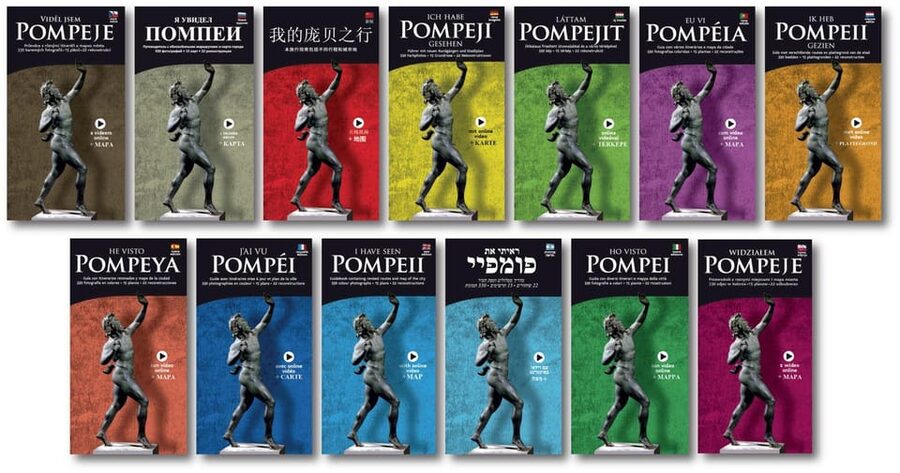
- A souvenir guidebook and updated map to help you navigate without guessing
- Lots of must-see categories in one day: houses, baths, shops, theaters, brothels, amphitheater, and victim casts
- Real-world tip: expect security checks and plan extra time at the pickup point
Pompeii Skip-the-Line, Explained the Practical Way
“Skip-the-line” sounds like zero waiting. In real life, it usually means you skip the line for the ticket purchase, but you may still need to pass through security screening. That matters because Pompeii is in the open air, and the clock moves fast once you’re inside.
Here’s how I’d think about it: your time is best spent walking and deciding what to linger on, not standing around. If you arrive prepared, the entry process can feel smooth, because once you’re past security, the barcode scanning and turnstiles are typically quick.
Also remember what you’re buying for $41 per person: you’re not just getting entry. You’re getting a guidebook designed to steer your choices, plus an updated map. That combination is what turns a “massive site” into a manageable plan.
More Naples tours, ruins, coast days, and city experiences to compare


Meeting at Piazza Anfiteatro and VIA ROMA 123 Without Confusion
Your reservation entrance is Piazza Anfiteatro. Before you reach that point, you meet staff at the information point located at VIA ROMA 123, Pompeii.
What to do is simple:
- Bring your voucher
- Show it to the staff at the VIA ROMA 123 information point
- Then go to the park entrance at Piazza Anfiteatro for access tied to your reservation
One real-world timing note: some people report that staff need a short window to get tickets ready because you start with a voucher, not a pre-issued ticket in hand. So, don’t assume you’ll stroll in instantly at the exact minute your entry window begins. Give yourself a little buffer, especially if you’re arriving from a bus or train station.
Your 2, 4, or 6 Hour Game Plan (Using the Guidebook Like a Pro)
This experience is self-guided. That sounds casual, but the guidebook is doing the heavy lifting. It includes itineraries for two, four, or six hours, plus background on the history of the city and its ruins. The updated map helps you find what you want without constantly backtracking.
Think of the guidebook as your “route brain.” You still choose your pace, but it keeps you from wandering aimlessly through a site that can feel endless.
Here’s a practical way to choose your timing option:
The 2-Hour Option: A Smart First Loop
If you only have a couple of hours, focus on impact over completeness. The guidebook itinerary for two hours is best for:
- Seeing a key public space like the Roman amphitheater area
- Walking the monumental streets and hitting a few standout building types
- Getting the feeling of how everyday Pompeii life worked, without overcommitting
Drawback: with only two hours, you’ll likely skim details in multiple places rather than slowing down for frescoes, inscriptions, and building layouts.
The 4-Hour Option: The Best Balance for Most People
Four hours is where you start to feel satisfied. This is usually the sweet spot for:
- Spending real time with the frescoed houses and their rooms
- Visiting some “public life” buildings like theaters and temples
- Including the more intense section with the casts of the victims
- Making time for commercial and street life, like shops and the Thermopolis (the period coffee-fast-food idea)
Drawback: Pompeii rewards slow walking, so if you rush through transfers between zones, you can end up tired and still wanting more time.
You can also read our reviews of more guided tours in Pompei Campania




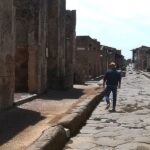
The 6-Hour Option: Go Deeper Without Stress
Six hours is the long-form plan, good if you:
- Want to compare building types across multiple neighborhoods
- Like to linger with artwork, room layouts, and different uses of space
- Want both entertainment venues and the quieter residential scenes
With six hours, you can realistically weave in more of the categories listed in the guidebook, including spas, additional theaters, brothels, and a fuller pass through the amphitheater zone plus victim casts.
Drawback: the site is big, and your feet will file a formal complaint by hour five. Comfortable shoes are not optional here.
What You Will Actually See at Pompeii (and What Each Area Feels Like)
Pompeii is not a single museum hall. It’s a whole city-sized puzzle. The guidebook helps you find meaningful pieces, but you should still understand what each category gives you.
Frescoed Houses and the Human Scale
Those frescoed houses are where you see Pompeii as lived-in, not just ruined. You can often notice how art and decoration were part of daily routines, not reserved for grand monuments.
Tip: when you stop at a house, give yourself one minute to scan room-to-room. You’ll get more from the layout than from any single detail.
Spas and Temples: Public Life and Belief
Pompeii’s spas show a side of Roman life that was social and physical, not just religious or administrative. Meanwhile, temples connect the space to belief and civic identity.
What you’ll love: these buildings make the city feel organized, not chaotic. Even after the eruption, the layout tells a story.
Potential drawback: if you’re moving too quickly, spas and temples can blur together. The fix is simple: slow down for one building type, then move on.
Shops and the Thermopolis: Everyday Speed
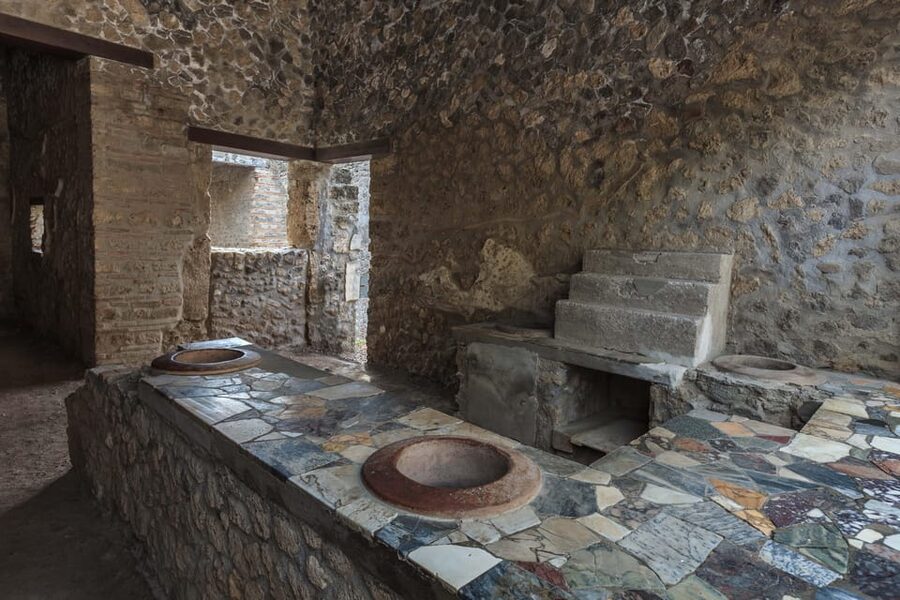
The Thermopolis is one of the most fun concepts because it’s basically a period food and drink stop where people grabbed something quickly. Pair it with the shops, and you start to see Pompeii’s street economy.
Practical take: plan a short break after these spots. You’ll walk a lot, and a food stop later helps you avoid the late-day burnout that makes ruins feel like a chore.
Theaters and Brothels: Entertainment and Reality
The theaters highlight performance spaces and Roman tastes for spectacle. The brothels can feel jarring, because they’re frank reminders that Roman cities had their own version of sex work and commerce.
These areas are not for everyone, but if you want the full picture of daily life, they belong on your route. Just pace yourself so the city stays interesting, not overwhelming.
Victim Casts: The Heaviest Stop
The casts of the victims are emotionally intense. This is the kind of stop where rushing feels wrong. If you choose the two-hour plan, consider whether you’re willing to accept a shorter moment here. In a four-hour or six-hour visit, you can give this area the attention it deserves.
Tip: bring yourself back to breathing normally before you move on. Pompeii is absorbing, and the day can swing from awe to grief fast.
The Amphitheater: A Best-Preserved Roman Anchor
One of the most satisfying pieces is the best-preserved Roman amphitheater on site. It gives you a clear anchor point. Even if you don’t remember every building, you’ll remember the shape and scale of this space.
This is also a great place to orient yourself mentally. Once you see it, the rest of the city starts to click.
Skip-the-Line Reality Checks: How to Protect Your Time
Here’s what I’d watch for, based on common real-world issues people run into:
- Security bag scanning may still require waiting, even if the ticket helps with the entry line.
- You might start with a voucher and then wait while staff retrieve or prepare tickets at VIA ROMA 123. That can add time before you even reach Piazza Anfiteatro.
- If the line for ticket purchase at the entrance is short anyway, the time saved can feel smaller than expected.
So how do you protect value? Arrive ready to move. Have your ID or passport in reach. Keep water in your bag. And if you’re planning your day around the clock, consider starting earlier so you’re not fighting fatigue.
One more time-of-day tip from day-to-day experience at Pompeii: it tends to feel quieter after about 4:30 pm. If your schedule allows, the late slot can make the ruins feel more breathable.
Walking, Heat, and the “Massive Site” Problem (Fixed With a Few Habits)
Pompeii can mean a long walk. If you go in with no plan, the distance surprises you.
Here are habits that make the day easier:
- Wear comfortable shoes. Your feet will do the itinerary for you.
- Bring water and a sun hat. Pompeii is open and exposed.
- If you’re using the map to jump between zones, pause for one clear moment at each decision point. Don’t keep walking while you’re still figuring out where you are.
- Build in micro-breaks after the most visually intense areas like houses with frescoes.
About facilities: you might find yourself searching for practical stops like toilets and cafes. The map is updated, but it may not provide the kind of facility detail you expect. So treat breaks as part of your plan, not an afterthought.
Price and Value: Is $41 a Good Deal?
At $41 per person, you’re paying for a package:
- Pompeii entrance ticket
- Updated map
- A guidebook with itineraries (and it stays with you as a souvenir)
- A structure for 2, 4, or 6 hours
That’s good value if you want freedom plus guidance. If you were going to buy an entrance ticket anyway, the real question becomes: does the guidebook help you make better use of your time? In my view, yes, because Pompeii is too big to “just wander” and still feel satisfied at the end.
When the value feels lower is when the lines are short or when you lose time at the pickup point before you reach the entrance. In those cases, you might not see a huge time savings over buying on the spot.
For best payoff:
- Choose the itinerary that matches your actual stamina
- Arrive prepared so entry is smooth
- Don’t underestimate walking time once you’re inside
Who This Pompeii Ticket Fits Best
This is a strong fit for travelers who:
- Want a self-guided visit instead of a fixed group tour
- Like to travel at their own pace but still want structure
- Prefer an educational guidebook in hand rather than an on-site live guide
- Are planning a first trip to Pompeii and want help prioritizing
It’s less ideal if:
- You hate walking and need frequent stops right at the entrance
- You expect skip-the-line to mean zero waiting for any kind of screening
- You want full guidance from a live instructor throughout the site, because a live guide is not included
Good news: the guidebook is translated into many languages, so you should be able to follow along even if your Italian is rusty. And staff support at the meeting point is available in English, Italian, Spanish, and French.
Booking Smart: Small Details That Make a Big Difference
A few details matter here:
- One guidebook is provided for every two reservations. If you’re traveling solo and expecting a book in your hand, double-check how the supplier handles that for your booking.
- Youth reduced pricing applies only for EU citizens aged 18 to 24. If you qualify, it can make the value even better.
- You can enter on your chosen day from 9:00 am until 5:00 pm, so plan backwards from what time you want to be finished.
Bring your passport or ID card, and stick to comfortable clothes. Pompeii is a day outdoors.
Should You Book This Pompeii Skip-the-Line Ticket and Itinerary Book?
Yes, I think you should book it if you want an easy, low-stress Pompeii day with a plan you can actually follow. The price is reasonable for the combination of entrance access, an updated map, and an itinerary guidebook that stays with you as a souvenir.
Book it especially if you’re the kind of person who likes control: you can slow down for frescoes, linger at the victim casts, then zoom through theaters and shops when your energy says yes.
Skip booking only if your biggest priority is guaranteed zero waiting. Even with skip-the-line wording, you should still expect security screening and some movement delays at the voucher pickup stage.
If you want Pompeii without chaos, this is one of the simplest ways to do it right.
FAQ
What is included with this Pompeii ticket?
It includes the Pompeii entrance ticket, a guide book (one book for every two reservations), an updated map, and itineraries for two, four, or six hours.
Is a live guide included?
No. A guide is not included. The experience is self-guided using the guide book and updated map.
What are the available itinerary lengths?
The guide book includes itineraries of two hours, four hours, and six hours.
Where do I meet staff?
You meet staff at the information point located at VIA ROMA 123, Pompeii. Your reservation entrance is Piazza Anfiteatro.
What time can I enter Pompeii?
You can enter from 9:00 am until 5:00 pm.
What languages are available?
The activity lists instruction support in English, Italian, Spanish, and French. The guide book is translated into 13 languages.
Is food or drinks included?
No. Food and drinks are not included.
Is transfer included?
No. Transfer is not included.
What should I bring?
Bring your passport or ID card, comfortable shoes, a sun hat, water, and comfortable clothes.
Is there a youth discount?
Yes. Youth price reduced (18 to 24 years old) applies only for EU citizens.
More Guided Tours in Pompei Campania
More Tickets in Pompei Campania
More Tour Reviews in Pompei Campania



Not for you? Here's more nearby things to do in Pompei Campania we have reviewed









Tour Reviews, compared.
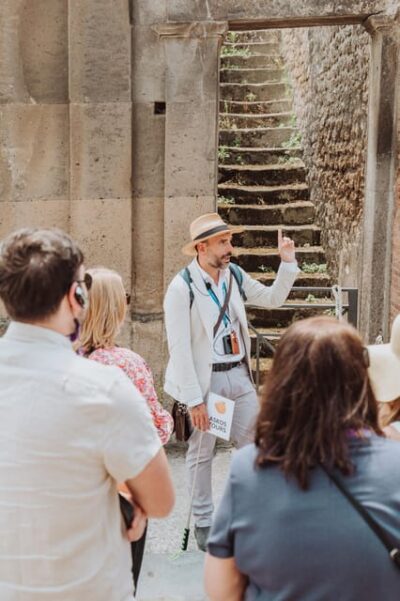 ★ 4.8Pompeii: Entry Ticket and Guided Tour with an ArchaeologistFrom $3519,459 reviews
 ★ 4.2Pompeii: Entry Ticket with Optional Audio GuideFrom $2612,360 reviews
 ★ 4.8Pompeii: Small Group Tour with an ArchaeologistFrom $4012,264 reviews
 ★ 4.3Pompeii Ruins & Mount Vesuvius Day TourFrom $12011,459 reviews
 ★ 4.6Sorrento, Positano and Amalfi Full-Day TourFrom $10710,988 reviews
 ★ 5.0Sorrento, Positano & Amalfi Coast – Small Group TourFrom $768,643 reviews
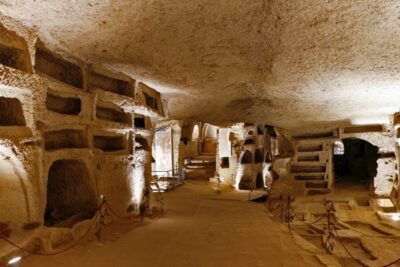 ★ 4.6Catacombs of San Gennaro Entry Ticket & Guided TourFrom $157,941 reviews
★ 5.0Pompeii Small Group Tour with an ArchaeologistFrom $356,593 reviews
★ 4.6Catacombs of San Gennaro Entry Ticket & Guided TourFrom $157,941 reviews
★ 5.0Pompeii Small Group Tour with an ArchaeologistFrom $356,593 reviews
Browse the lists this tour appears in