
Tour review · TOUR REVIEWS
Pompeii Small Group Guided Tour with Skip-the-line Admission
Pompeii is best with a plan. This small-group Pompeii guided tour packs the big public sights into about 2 hours, with skip-the-line admission to keep you moving. You’ll also get enough context to read what you’re seeing, from Roman street life to famous houses and the most haunting remains.
I like the practical pacing, especially the way the guide can help you navigate the busiest areas. I also like that the tour isn’t only temples and theatres, it includes the everyday side of Pompeii, like the thermopolia and pistrinum, plus Via dell’Abbondanza, the Forum, and the red-light district wall paintings. One possible drawback to consider: if the minimum group size is not met, you may be offered a switch to another tour type, and in at least one reported case that came with extra cost.
Key highlights at a glance
- Skip-the-line admission to cut down on waiting
- Max 15 travelers for easier questions and a calmer walk
- Roman street life stops, including thermopolia and pistrinum
- Famous house names like the House of Menander and House of the Faun
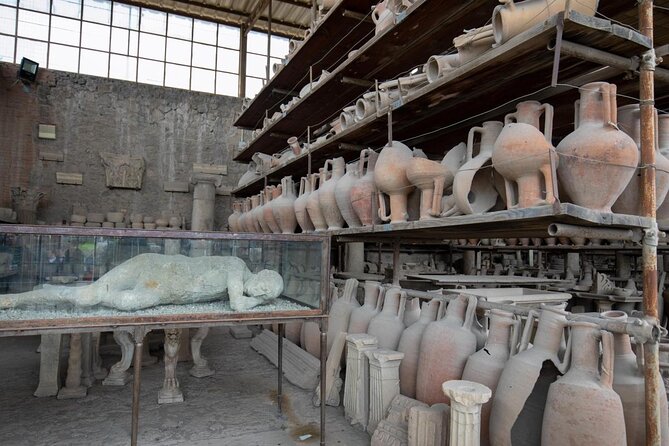
- Emotional focus on eruption victims shown as petrified bodies
- Wall-painting focus in Pompeii’s red-light district area
Pompeii in Two Hours, Skip-the-line Entry Included
Pompeii can overwhelm you fast. The streets look endless, the buildings blur together, and if you arrive without a game plan, you end up wandering instead of learning. This tour’s format helps you avoid that common problem. In about 2 hours, you get a curated sweep of the places most people come to see, with skip-the-line admission so your start doesn’t get eaten by queues.
You’re not just buying access. You’re buying direction. That matters in Pompeii because the ruins are fragmentary, and it helps to know what each stop represented in Roman daily life and civic culture. The tour also includes a mobile ticket, which is convenient when you’re juggling maps, sunscreen, and that one phone battery warning.
The big thing to understand is the time limit. Two hours is enough for highlights, not enough to see everything at a slow museum pace. If you want to linger in every house doorway, you’ll probably want to plan extra time after the tour.
You can also read our reviews of more guided tours in Pompeii

Small Group Size Means a More Human Walk
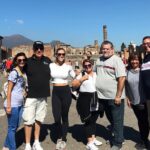
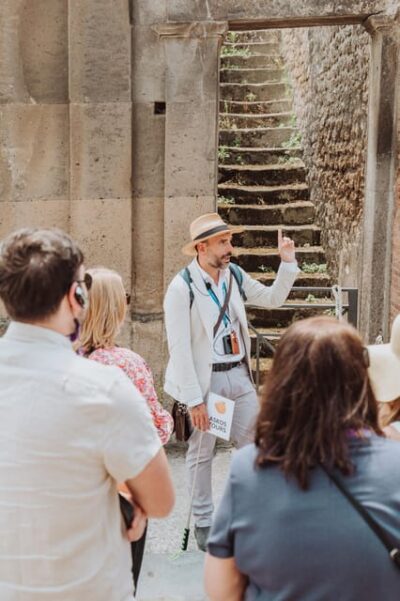
The group size cap is 15, which sounds small for a place with big crowds. In practice, that tends to mean the guide can keep an eye on the group and help you keep moving without constant regrouping. It also tends to make questions easier. If you’re the type who wonders what something used to be, this setup gives you a better chance to ask.
There’s also a real-world crowd factor. One guide name that comes up is Roberta, and people specifically praised her ability to make the history interesting and help avoid the heaviest congestion areas. Even if you do not get the same guide, the tour’s design clearly aims for crowd awareness rather than a straight line march.
If you’re traveling solo or as a couple, this group size is a sweet spot. You get the structure of a guided tour, but you’re not packed in like part of a stadium event.
Public Buildings and Roman Civic Life, The Core Route
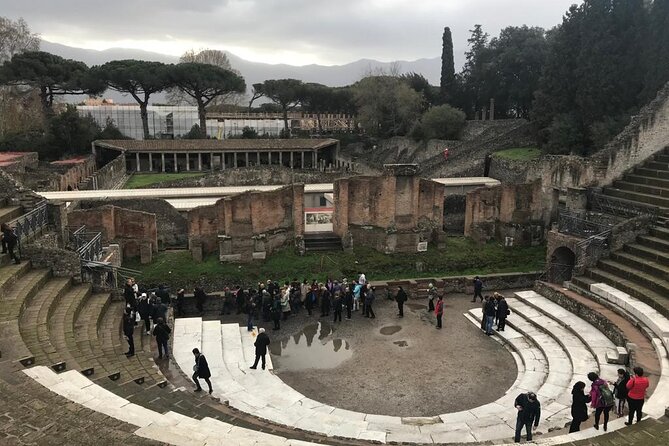
Your main stop is the Pompeii Archaeological Park, and your route focuses on major public buildings. That includes theatres, temples, and thermal baths, plus other civic spaces. This is smart because it gives you a framework for how Pompeii worked as a city, not just as a set of dramatic ruins.
Here’s what this focus does for you as a visitor. Once you understand the “public world,” the rest of what you see starts to click. You can better connect the street scenes to the places where people gathered, worshipped, performed, and socialized. Thermal baths, for example, are more than a cool architectural shell, they were a daily routine and a social hub. Theatres signal public entertainment and civic identity. Temples point to religious priorities. You don’t need a degree to get value from these stops, and a guided explanation helps you notice the right clues.
What to expect: you’ll walk through key areas that anchor the tour, then branch into street-level life and residences. What you might wish for: deeper time in any one theatre or bath. Since the tour is about highlights, it’s more “see it and understand it” than “study it for an hour.”
Roman Shops, Thermopolia, and Pistrinum, How People Ate
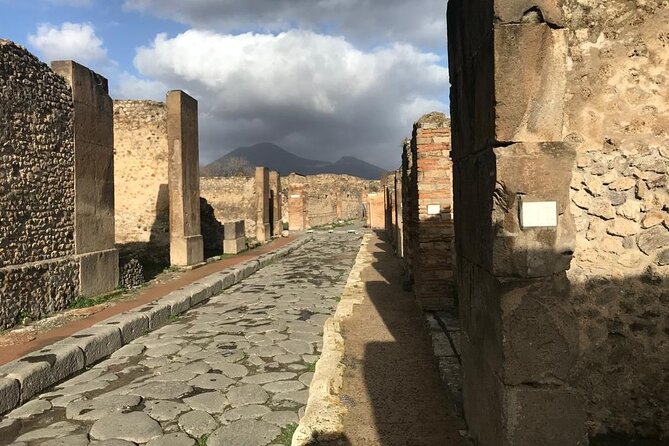
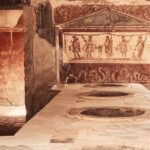
One of the most fun parts of Pompeii is the way daily needs are written into the ruins. This tour leans into that by highlighting traditional Roman shops, including the thermopolia and the pistrinum.
The thermopolia are an early form of fast food in Roman life. Think quick meals, served and eaten fast. The pistrinum is the Roman equivalent of a bakery. Even without going heavy on technical detail, these stops help you picture a normal day in Pompeii. You start thinking, not just looking.
I love tours that include this layer because it changes the vibe. Instead of treating Pompeii like a graveyard, you start treating it like a lived-in place. You can look at a counter or a storefront space and imagine transactions, smells, and habits. It’s also a great contrast if you’re coming from other ruins where everything feels ceremonial and distant.
Via dell’Abbondanza and the Forum, Streets and Squares
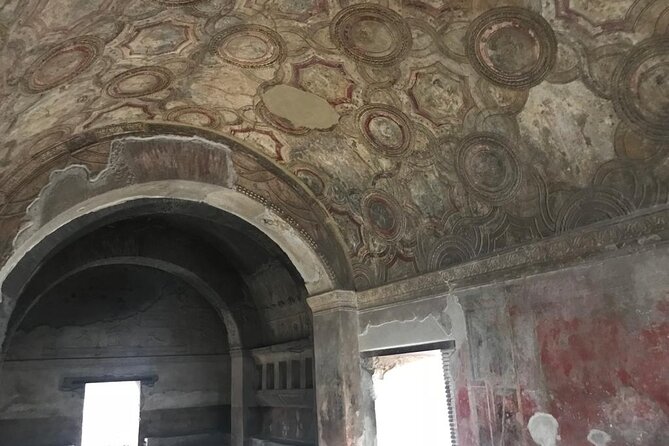
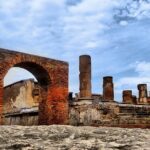
After the public buildings and shop scenes, the route moves to Via dell’Abbondanza, the main street, and then to the Forum, the main town square. This is where Pompeii stops being a set of buildings and starts behaving like a city you can mentally navigate.
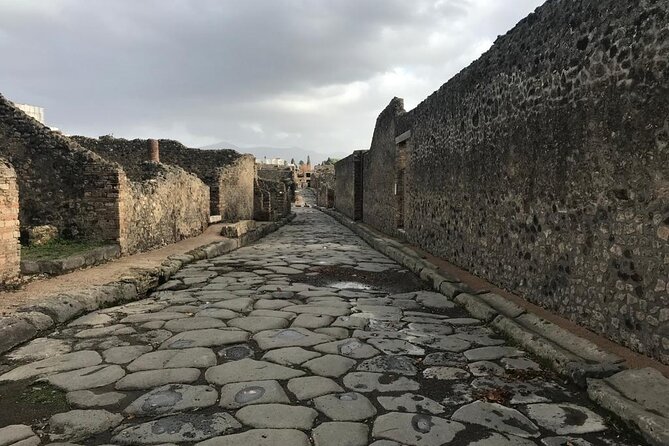
Via dell’Abbondanza is your “orientation” walk. It’s also a reminder that urban design matters. Streets were how people moved between work, markets, civic life, and home. The Forum is the social and political heartbeat of the city, and even in ruin form, it helps you understand why Pompeii mattered to the Romans who lived there.
If you’re the type who likes photo stops, this is where you can get some clear, story-driven shots. Instead of random angles, you’ll have a sense of why that street existed and why that square mattered.
More Naples tours, ruins, coast days, and city experiences to compare



Famous Residences, House Names You’ll Remember
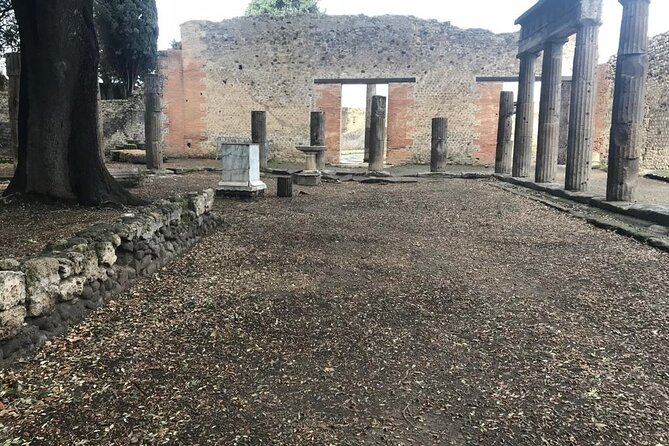
Pompeii is famous for residences, and this tour makes sure you hit several recognizable house names. Expect stops tied to the House of Menander, the House of the Faun, the House of the Vettii, and the House of Caecilius Iucundus, plus other well-known homes.
The value here is not that you get a long crawl through one mansion. It’s that you learn to read what “a house” meant in Pompeii. Residences tell you about wealth, status, and family life. They also highlight how Roman luxury expressed itself through layout and decorative choices.
Because the tour is time-limited, it’s best suited to visitors who want the big names and a clear understanding of what they represent. If you want to spend an entire afternoon in one residence, you may want to add independent time after the guided portion.
Pompeii’s Red-Light District and Wall Paintings
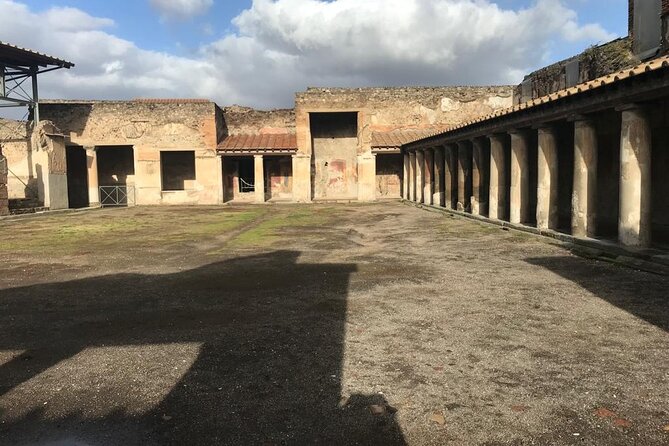
Yes, Pompeii has an infamous side, and this tour puts a special focus on the red-light district area and its suggestive wall paintings. That detail can feel surprising at first, but it also makes Pompeii more human.
Wall paintings are a direct reminder that people in Pompeii talked with their homes and businesses. They communicated through art, signage, and decoration, just like people do today. Seeing this kind of material helps you understand that Roman daily life included everything from civic pride to private interests.
This part of the route is also one of those moments where a guide’s direction helps. You might not know what you’re looking at or how it fits the broader neighborhood. With guidance, it becomes a meaningful piece of the city’s social record.
Eruption Victims as Petrified Bodies, Where the Tone Changes
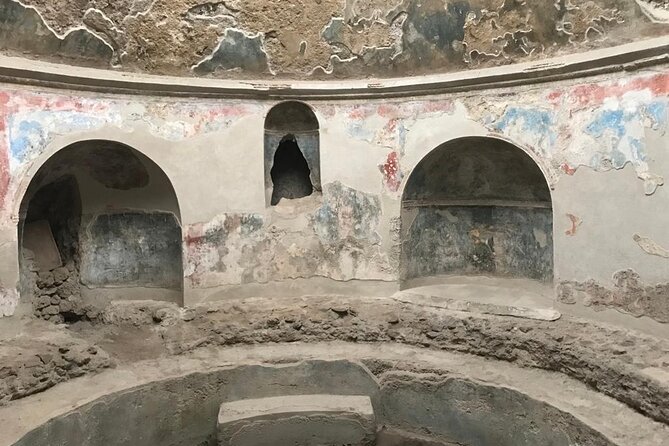
The tour ends up focusing on the poor victims of the eruption, shown as petrified bodies. This is the emotional center of any Pompeii visit, and it’s one reason guided tours can help even when you’re not a “history person.”
A guide’s role here is practical, not dramatic. You’re shown what the remains are, and you’re helped to understand why they are so important. That makes it easier to process what you’re seeing, instead of just feeling overwhelmed.
My tip for your own experience: if you’re sensitive to heavy topics, give yourself a moment before you move into this area. Then follow the guide’s pace. Pompeii is active on the senses, and the mood shift can hit suddenly.
Price and Value, Plus the One Real Caution
At $82.91 per person for a roughly 2 hour guided visit with skip-the-line admission, the value largely depends on what you want from Pompeii.
Here’s where the price makes sense:
- You get skip-the-line admission, which is a big time saver in high season.
- You get a small group, capped at 15, which makes the guide experience feel more personal.
- You get a structured tour plan, including public buildings, shops, major street routes, notable houses, and the emotional eruption focus.
Here’s the one caution. The minimum group size matters. If the group does not meet the required number, you may be offered a different date or experience, or a switch to another tour type. In one reported situation, a guide-led private option was suggested with an extra $60 add-on, and there was also confusion tied to whether entry tickets were included as expected. The lesson is simple: before you go, double-check exactly what your booking includes, especially entry ticket coverage, and be ready for changes if the minimum is not met.
That doesn’t mean the tour is bad. It means the best value comes when the group runs as described.
Timing, Getting There, and Staying Comfortable
The tour is offered in English and runs about 2 hours. That timing is usually perfect for a day that also includes other sites nearby, or for travelers who want Pompeii without losing half the day to walking and waiting.
It’s also noted as being near public transportation. That’s handy because you can plan a simple route in and out without complicated logistics.
Comfort tips, based on the reality of walking ruins: wear shoes you trust, bring water, and expect a warm day to feel warmer once you’re in direct sun. Since the tour is relatively short, you do not have long to recover if you arrive underprepared.
Who This Tour Suits Best
This is a strong fit if you want:
- Pompeii highlights in a short, organized time window
- A guided path that includes both civic buildings and everyday Roman life
- A small group experience with space to ask questions
- The emotional eruption focus, explained in a grounded way
- English language commentary throughout
It may be less ideal if you want to:
- Spend long hours in just one house or one building
- Avoid any mention of adult themes, since the red-light district wall paintings are part of the plan
- Browse Pompeii at a slow, independent pace with no structure at all
Should You Book This Pompeiiify Small Group Tour?
If you want a smart first pass through Pompeii, I’d book it. The combination of skip-the-line admission, a max group size of 15, and a route that covers public buildings, shops like the thermopolia and pistrinum, famous houses, the Via dell’Abbondanza, the Forum, and eruption victims gives you a complete picture without you needing to plan every turn yourself.
Just go in with one practical mindset: confirm what’s included in your ticket coverage, and know that minimum group size can affect how the operator handles last-minute changes. If everything is straightforward on your end, this is exactly the kind of tour that helps you leave Pompeii understanding more than you saw.
FAQ
How long is the Pompeii Small Group Guided Tour?
The tour lasts about 2 hours.
What is the price per person for this tour?
The price is $82.91 per person.
Is skip-the-line admission included?
Yes. The tour is described as offering skip-the-line admission.
Is the tour offered in English?
Yes, it is offered in English.
How many people are in the group?
The tour has a maximum of 15 travelers.
Do I get a mobile ticket?
Yes, the tour includes a mobile ticket.
Is free cancellation available, and up to when?
Yes. You can cancel up to 24 hours in advance for a full refund.
What happens if the minimum number of travelers is not met?
If the experience is canceled because the minimum isn’t met, you will be offered a different date or experience, or a full refund.
More Guided Tours in Pompeii



More Tours in Pompeii


More Tour Reviews in Pompeii

Not for you? Here's more nearby things to do in Pompeii we have reviewed








Tour Reviews, compared.
 ★ 4.8Pompeii: Entry Ticket and Guided Tour with an ArchaeologistFrom $3519,459 reviews
 ★ 4.2Pompeii: Entry Ticket with Optional Audio GuideFrom $2612,360 reviews
 ★ 4.8Pompeii: Small Group Tour with an ArchaeologistFrom $4012,264 reviews
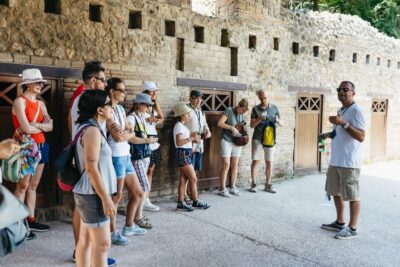 ★ 4.3Pompeii Ruins & Mount Vesuvius Day TourFrom $12011,459 reviews
 ★ 4.6Sorrento, Positano and Amalfi Full-Day TourFrom $10710,988 reviews
 ★ 5.0Sorrento, Positano & Amalfi Coast – Small Group TourFrom $768,643 reviews
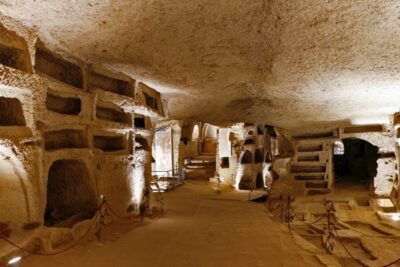 ★ 4.6Catacombs of San Gennaro Entry Ticket & Guided TourFrom $157,941 reviews
★ 5.0Pompeii Small Group Tour with an ArchaeologistFrom $356,593 reviews
★ 4.6Catacombs of San Gennaro Entry Ticket & Guided TourFrom $157,941 reviews
★ 5.0Pompeii Small Group Tour with an ArchaeologistFrom $356,593 reviews
Browse the lists this tour appears in