
Tour review · TOUR REVIEWS
Pompeii Small Group with an Archaeologist and Skip The Line
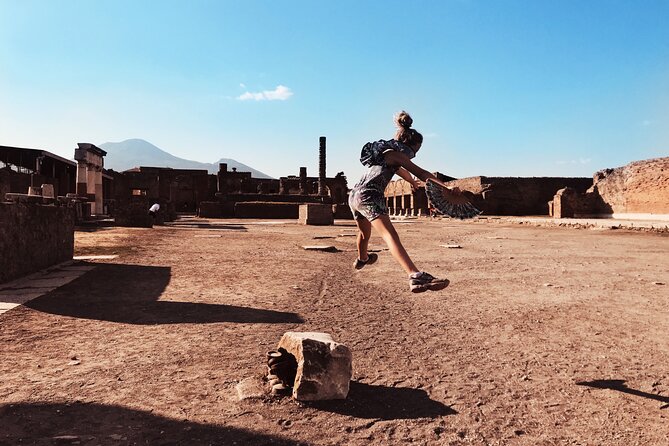
Pompeii feels impossible, until you walk it with a guide. This small-group tour uses skip-the-line entry and an on-site archaeologist to help you connect the big ruins to real daily life. You get a focused route that covers the city’s main public spaces, entertainment areas, and even the more surprising corners.
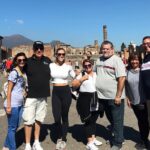
Two things I especially like: the small group size (up to 10) keeps the pace relaxed, and the guide experience is hands-on, with Eliana Sandretti leading many tours, including people who say she works at Pompeii and explains things in fresh, non-scripted ways. One consideration: the tour is about 2 hours, and several stops are short, so you need to accept a fast walk-through rather than a slow, linger-all-day museum vibe.
The Value of Skip-the-Line in Pompeii
Pompeii’s entry lines can eat your time fast. This tour starts with a fast-track approach, so you step into the park without losing your morning (or afternoon) to waiting. For a site this huge, saving time at the entrance matters more than it sounds.
You also start at a clear meeting point: Ristorante Suisse, Piazza Esedra, 10/13, 80045 Pompei. You get a mobile ticket, and the tour includes admission, so you are not juggling vouchers mid-walk. The tour returns to the meeting point at the end, which makes the logistics simpler than figuring out how to exit on your own.
Skip-the-line is not magic, though. You still have to walk. And because the itinerary packs the key areas into a tight schedule, the benefit is less about sitting longer in one room and more about getting to the good stuff while your energy is still intact.
Meet Eliana Sandretti, and Why the Guide Changes Everything
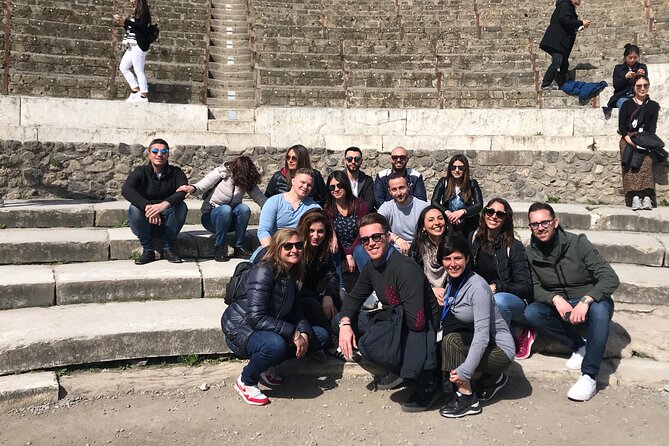
This is a guided experience first, and a ticket experience second. The core advantage is an archaeologist guide, and the name that comes up often is Eliana Sandretti. Some guides also fill in depending on timing, with names like Francesco and Dario showing up when circumstances shift.
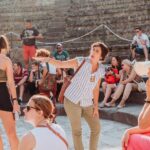
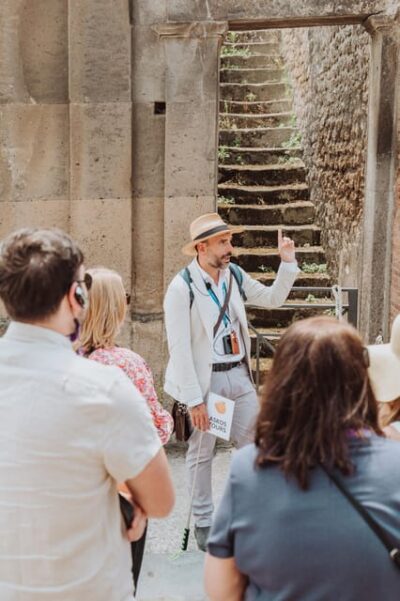
What you gain with an archaeologist is interpretation, not just description. Instead of pointing and moving on, the guide helps you understand what you are looking at: the purpose of spaces, the way buildings fit together, and what the city’s layout tells you about life in Pompeii. People specifically praised Eliana for bringing the city to life and for answering questions in a way that felt grounded in real excavation work, not generic talk.
One practical note: if you have hearing limitations, try to position yourself so you are not too far from the guide. One review mentioned that it could be hard to hear when the guide was a bit away and when surrounding noise interfered. In a lively open-air site, your position matters.
More Naples tours, ruins, coast days, and city experiences to compare
Two Hours Through the Most Important Pompeii Stops
The tour runs about 2 hours and aims to show you the key parts of the archaeological park in a short window. That is ideal when you only have a half-day in Pompeii, or when you do not want to spend your limited time wandering and guessing what matters.
The itinerary is built around a simple idea: move through Pompeii’s public and cultural heart first, then branch out to performance spaces, civic buildings, and residential or more specialized areas. Several stops are around 10 to 15 minutes, so you will see a lot, but you will not get a long, slow study session at every single location.
Here is the rhythm you can expect, and what each stop adds:
First Arrival, Small Theater, and a City Built for Performance
You enter the Pompeii Archaeological Park with your skip-the-line ticket already handled. Then you start at a small theater, described as the designated place for musical and singing performances. Even if you think you know Pompeii from photos, this early stop helps you reset your mental picture. Pompeii was not only a ruined backdrop. It was a living town with organized entertainment.
If you like context, this is a good start. It gives you a theme for the next parts of the route, so when you later see larger performance architecture, you are not just scanning ruins. You are connecting them to what people did for fun and community.
Teatro Grande: Greek-Roman Theater Meets Pompeii’s Street Grid
Next comes Teatro Grande, a bigger performance space where Greek-Roman comedies and tragedies were performed. This is one of the best examples of how Pompeii absorbed wider Greco-Roman culture while still functioning as its own civic world.
The tour gives you a short window here, about 15 minutes, so I recommend you use that time actively. Look at what is still visible, notice how the space is set up, and then ask a question if something confuses you. Guides on this tour are known for taking questions seriously, and with only two hours, your question can make the stop pay off more.
Cross the Main Street for Color, Then Move Into the Eruption Story
After the theater area, you cross the main street to admire its colors. This is a quick but memorable reset moment. It helps you see Pompeii as a place that once looked vivid, not just gray stone and scale models.
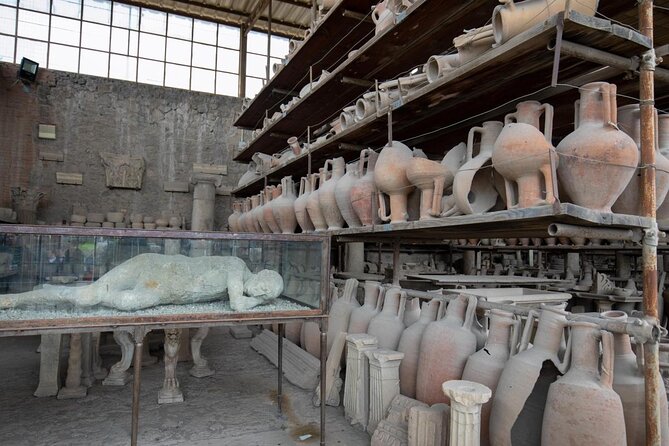
Then you head to Granai del Foro, the barns of the forum, where you can see casts of victims who died during the eruption of 79 AD. This is heavy material, and the stop is short, about 15 minutes. In practice, you might want to slow your breathing and give yourself a minute to absorb what you are seeing before moving on. A guide makes a real difference here by giving it structure, so the story does not blur into generic tragedy.

Stabian Baths Frescoes: The Visual Wow Moment
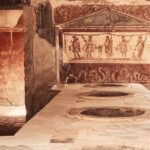
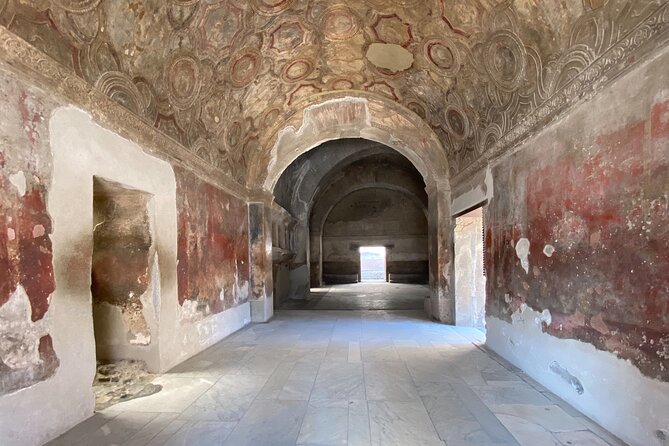
Right after Granai del Foro, you visit the Stabian Baths (Terme Stabiane), famous in the tour description for colorful, unforgettable frescoes. This stop is also about 15 minutes, and it is one of the places where people tend to feel they could stand longer.
The baths are valuable for one reason. You start seeing Pompeii not only as a civic stage, but as a daily-life setting. Public leisure, decoration, routine spaces. Even in a quick stop, frescoes tend to land emotionally, because your eyes naturally reach for color and detail.
Forum, Courts, and Temples: Pompeii’s Public Center
Once you are out of the baths, the route focuses on the city’s center and government spaces. This is where Pompeii starts to feel like a planned city rather than scattered ruins.
Foro di Pompei and Basilica Pompeii: The Forum as Civic Engine
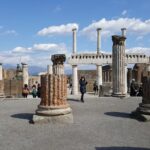
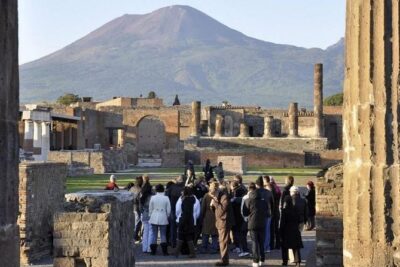
You then see Foro di Pompei, the ancient forum, described as the main square of the city. It is followed by Pompei La Basilica, the ancient seat of the court where justice was administered.
This pairing is smart. The forum is where life happened in public. The basilica is where official decisions happened. Together, they show you a practical split in civic space, where social life and legal authority overlap but also differ in purpose. When a guide explains what these buildings were for, you stop seeing them as impressive shells and start seeing them as systems.
You will spend about 10 minutes at the forum and around 15 minutes at the basilica. With that timing, the best way to get value is to look up, notice layout clues, and ask one question about function if you have one. The guide is there to turn your confusion into understanding quickly.
Temple of Jupiter with Vesuvius in View
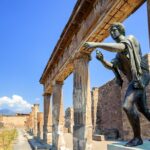
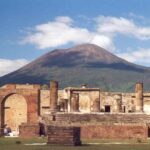
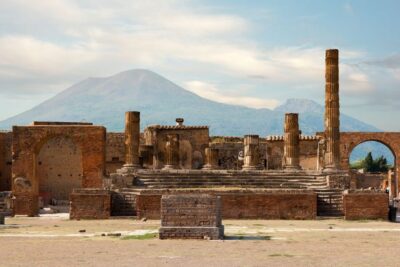
After the basilica stop, you visit the Temple of Jupiter, with imposing Vesuvius as a backdrop. Even if you already know Pompeii’s famous geography, this view can still hit. It reminds you that the city’s architecture and the mountain’s presence were part of the same world.
This stop is a short one, so aim to experience it visually first. Let your eyes take in the scale and the relationship between the ruins and the landscape. Then, if you want, ask what the temple represents within the city’s religious life.
Gladiator Barracks, Theatres Quadrangle, and the Lupanar Contrast
After the core civic center, the tour turns toward spaces that reveal different sides of Pompeii, including training culture and sexual commerce.
Quadriporticus of the Theatres and Gladiator Barracks
You visit the Quadriporticus of the theatres area, and the itinerary specifically points you to the Gladiator Barracks. The focus here is on apartments and the area where gladiators trained.
This is an interesting contrast to the earlier theater stops. One is about public performance for an audience. The other is about preparation and discipline behind the scenes. Even within a short visit, a guide can connect these dots so you understand the difference between showtime and training.
Lupanar: The Old Red Light District
Then you reach Lupanar, described as the old Red Light District. This is not the kind of site you see in every postcard itinerary. It gives you a more complete picture of how a city organizes commerce and entertainment.
Because the stop is about 15 minutes, you might find it helps to keep your expectations realistic. You are not going to get a deep, slow lecture on sexuality and social rules in two hours. But you can still learn how this space functioned in the city and how Pompeii fit together as a whole.
Some guides, including Eliana, are praised for covering multiple aspects of Pompeii’s society, including roles that people in Pompeii had. If you care about how the city worked socially, this contrast is one of the reasons the tour is worth doing.
Temple of Venus and Casa del Fauno: Luxury at the End of the Route
The tour finishes with a mix of religion and high-status living, which helps you end with a sense of range rather than ending on just one topic.
Temple of Venus: City Divinity in Stone
After Lupanar, you visit the Temple of Venus, where the divinity of the city was venerated. This is a short stop, but it fits the pattern of the itinerary: civic power earlier, cultural performance before that, and then religion as a final layer.
Casa del Fauno: One of Pompeii’s Richest Residences
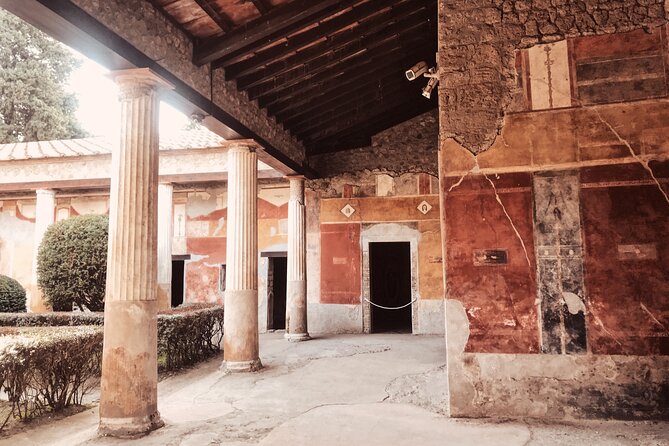
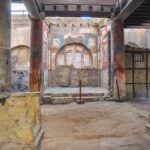
Finally, you visit Casa del Fauno, one of the richest and most luxurious residences in Pompeii. The point of this stop is not just to see pretty remains. It shows you how wealth expressed itself in built form.
The tour gives you about 15 minutes here. That is not long enough for total immersion, but it is enough to see the scale and understand why this home mattered. If you are a first-timer to Pompeii, this kind of finish is valuable because it prevents the experience from feeling one-note.
Price and Group Size: Is $217.69 Worth It?
At $217.69 per person for an about 2-hour outing, you are paying for three things: skip-the-line entry, an archaeologist guide, and a route that hits the biggest, most meaningful stops efficiently.
Is it expensive? Yes, compared to a self-guided entry. But the value comes from reducing wasted time and, more importantly, from having someone who can explain what you are seeing. Pompeii is not easy to read without help. The tour’s design aims to turn confusing ruins into a clear walking story.
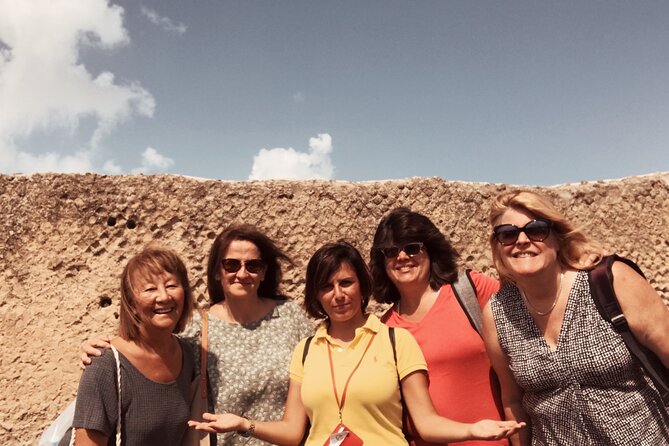
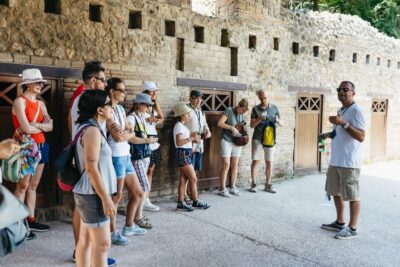
The group size is a maximum of 10, which is big enough to feel social but small enough for questions. Several people also mentioned their guides adjusted pace and priorities, which is exactly what you want in a site where heat and crowds can change your day instantly.
A possible drawback is that the tour can feel short at certain stops, because some are 10 to 15 minutes each. If you want a deep, slow dive into just one neighborhood of Pompeii, this is probably not the right format. But if you want the essentials with real interpretation, it is a strong match.
Also keep this in mind: some bookings can shift if the minimum group number is not met. In at least one case, a paid group booking ended up being adjusted or charged differently. I would treat that as a rare contingency, and I would read the confirmation details closely when you book.
Practical Tips for Pompeii Heat, Noise, and Listening
Pompeii in the sun can be intense. One review explicitly called out the need to come prepared with water, sunscreen, and a hat or umbrella. I agree with that. Even with a guide, you are walking outdoors for a couple of hours.
Here are a few practical moves that help you get more out of the time:
- Wear shoes that handle uneven ground. You will be stepping on stone and through uneven surfaces.
- If you are hard of hearing, aim to stay closer to the guide when the group pauses. Noise can make it harder farther away.
- Use the short stops well. Look, absorb, then ask one question. Don’t wait until the last minute.
- Bring something to drink and keep it accessible. You will cover a lot in a short span.
Language is English, and confirmation is received at booking time. Service animals are allowed, which is useful to know if it applies to your group.
Should You Book This Pompeii Small Group Tour?
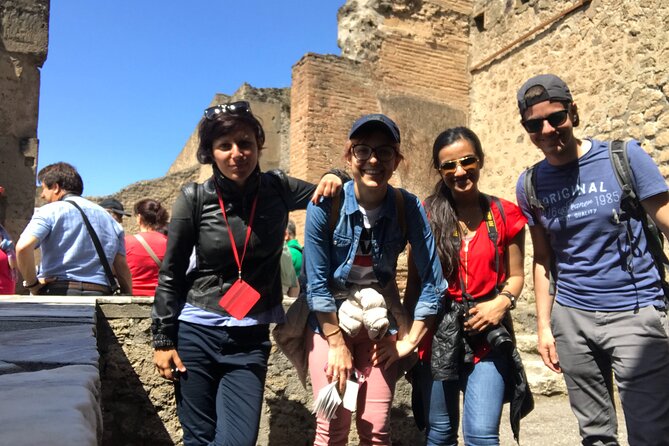
I think you should book this if you have limited time, want the most important Pompeii sights without stress, and you care about having explanations tied to what you are seeing. The combination of skip-the-line entry and a true archaeologist guide is the winning formula here, especially if you feel overwhelmed by Pompeii on your own.
Skip this tour if you want hours and hours in only a few spots, or if you are fully comfortable reading Pompeii without guidance. Also, if your biggest goal is photo time at one exact location, you might feel the short stop length.
If you fall in the middle, this is a smart way to get Pompeii onto your brain quickly, with a guide like Eliana Sandretti (or a strong stand-in like Francesco or Dario) helping the ruins make sense fast.
FAQ
How long is the Pompeii small group tour with skip the line?
It lasts about 2 hours.
What is the price per person?
The price is $217.69 per person.
Does the tour include skip the line entry tickets?
Yes. It includes fast-track skip-the-line tickets, and your admission is handled as part of the tour.
How many people are in the group?
The group size is limited to a maximum of 10 travelers.
Where do we meet, and where does the tour end?
The meeting point is Ristorante Suisse, Piazza Esedra, 10/13, 80045 Pompei NA, Italy. The tour ends back at the same meeting point.
Is the tour offered in English?
Yes, it is offered in English.
What is included and what is not included?
Included: authorized guide assistance, small-group tour, main attractions, entrance tickets, and an archaeologist and tour guide, plus fees and taxes for the ticket purchase. Not included: food and drinks, tips, and transport.
More Skip the Line in Pompeii


More Tour Reviews in Pompeii

Not for you? Here's more nearby things to do in Pompeii we have reviewed




Tour Reviews, compared.
 ★ 4.8Pompeii: Entry Ticket and Guided Tour with an ArchaeologistFrom $3519,459 reviews
 ★ 4.2Pompeii: Entry Ticket with Optional Audio GuideFrom $2612,360 reviews
 ★ 4.8Pompeii: Small Group Tour with an ArchaeologistFrom $4012,264 reviews
 ★ 4.3Pompeii Ruins & Mount Vesuvius Day TourFrom $12011,459 reviews
 ★ 4.6Sorrento, Positano and Amalfi Full-Day TourFrom $10710,988 reviews
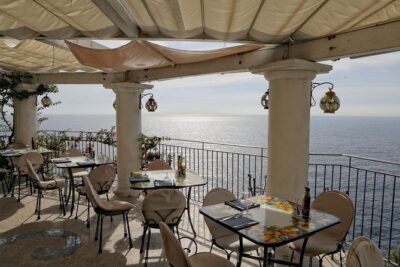 ★ 5.0Sorrento, Positano & Amalfi Coast – Small Group TourFrom $768,643 reviews
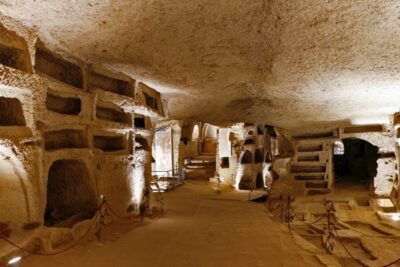 ★ 4.6Catacombs of San Gennaro Entry Ticket & Guided TourFrom $157,941 reviews
★ 5.0Pompeii Small Group Tour with an ArchaeologistFrom $356,593 reviews
★ 4.6Catacombs of San Gennaro Entry Ticket & Guided TourFrom $157,941 reviews
★ 5.0Pompeii Small Group Tour with an ArchaeologistFrom $356,593 reviews
Browse the lists this tour appears in