
Tour review · TOUR REVIEWS
Private Awesome Pompeii Family Tour + Guide, Transport & Tickets
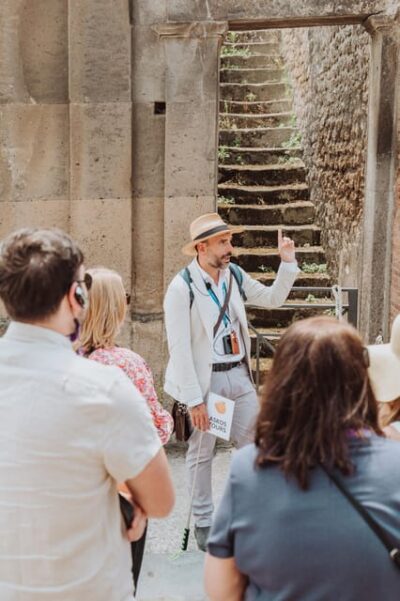
Pompeii gets easier with a guide at your side. This private, family-friendly tour in Pompeii focuses on real street-level understanding, with transport, tickets, and a route that keeps kids and adults engaged at a comfortable pace.
I especially liked the family pace and the chance to ask questions freely, which matters when you are touring with children. I also love that the guide helped you avoid the worst crowds by timing the visit thoughtfully, so the ruins feel less like a race and more like a story you can follow.
The one thing to weigh is the price, since it is $457.02 per person. It can be a smart splurge if you want privacy and a tailored experience, but it may feel steep if you are happy wandering on your own.
Key highlights to know before you go
- Private family guide in English, so your group stays together and questions are welcome
- Pickup in the Naples and Sorrento area (flexible meeting point, just specify where)
- Volcano views from the bottom, with no drive up and no need to climb to the top
- 2 hours inside Pompeii’s archaeological park with admission included
- Hands-on Roman life stops, from bath rooms and markets to the Grand Theatre
- Mobile ticket provided, plus a plan that works for moderate walking and good footwear
Private family pace, plus pickup from Naples or Sorrento
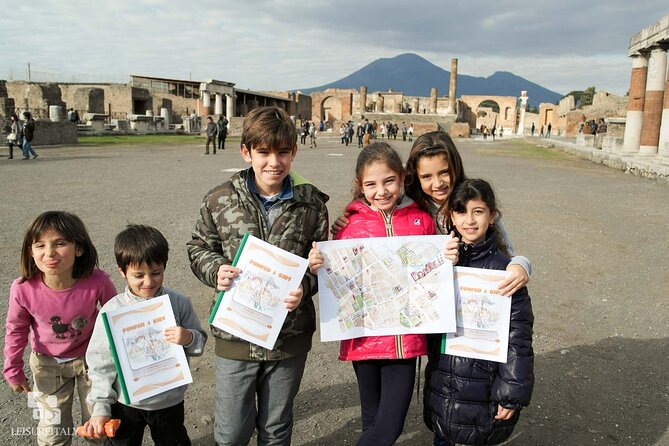
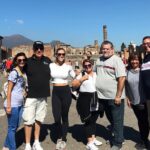
This is a true private tour, meaning only your group participates. That sounds obvious, but it changes everything in Pompeii, where crowds can make even a great plan feel stressful. With a guide, you can slow down for a question, regroup when kids spot something interesting, and keep the day from turning into a constant “move, move, move” scramble.
The other practical win is pickup. You can meet somewhere in the Naples and Sorrento area, and you tell the provider your pick-up place when you book. That removes one of the biggest hassles when visiting Pompeii, getting everyone from the coast to the park without added logistics.
You are also getting transport and tickets bundled in, plus the tour runs in English. If you have kids, or you simply want a human to translate the ruins into daily life, the private format is where your money goes.
Just plan for moderate walking. This is an outdoor archaeological site with stairs, uneven ground in places, and plenty of standing time. Good walking shoes matter, and from May to September you will want sun gear.
More Naples tours, ruins, coast days, and city experiences to compare

How the 4 to 5 hour plan stays manageable
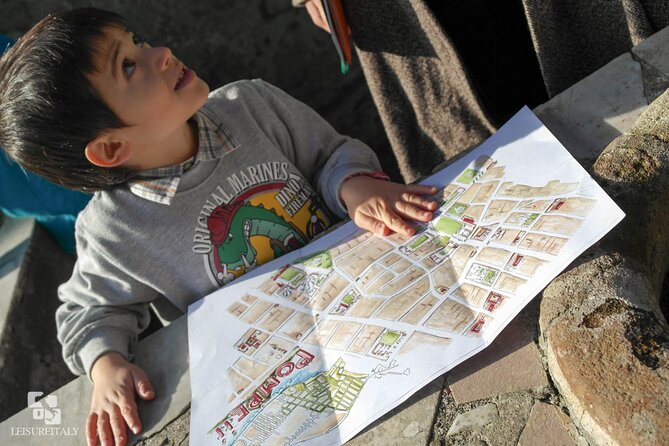
The tour runs about 4 to 5 hours, with the big anchor being 2 hours inside the Archaeological Park of Pompeii. That time window is ideal for families because it gives you enough depth to connect the dots, but not so long that everyone melts down before the end.
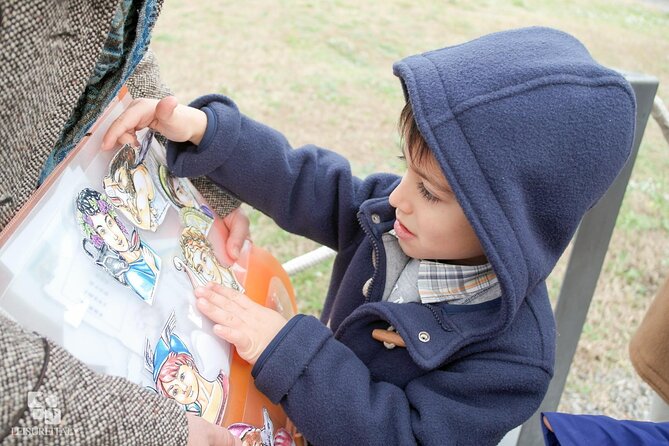
A big advantage of a private guide is flexibility in how you pace the route. You will see a sequence of major highlights, but you are not locked into a rigid group plan. If your child is fascinated by a mosaic, you can linger. If your teen wants details about Roman politics or religion, you can shift focus.
The stops are designed to build understanding step by step:
- You start at key entry points and public spaces, so you learn how the city was laid out.
- Then you move into everyday life, like markets, baths, and homes.
- Finally, you end in places that help you picture culture and memory, like the theatre and the museum area.
Bottom line: you do not just “see ruins.” You get a guided path through what Pompeii people actually did, from civic decisions to shopping habits.
Entering Pompeii through Porta Marina and the city walls
You begin at Porta Marina, one of Pompeii’s main gates. This is a smart starting point, because it helps you get your bearings fast. A gate is not just a doorway. It is where arrivals, movement, and trade flow into the city, and your guide uses the location to explain how Pompeii connected to surrounding areas and ports.
Then you connect that idea to the cinta muraria, the defensive walls. Understanding the walls changes your mental map. Suddenly you stop thinking of Pompeii as a single preserved neighborhood and start seeing it as a working city with protection, boundaries, and organized flow.
This first segment is also good for families because it is less claustrophobic than starting in the dense center. Kids can look at scale, adults can absorb the layout, and you can settle into the day with the guide setting expectations.
Basilica and Forum: Roman law, business, and civic life
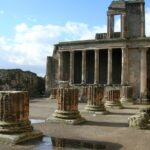
Next up is the Basilica, Pompeii’s major public hall for civic affairs. In a Roman city, the Basilica was where business and governance happened in a very physical way. Standing inside gives you a strong sense of how public life worked, not just how buildings looked.
Your guide explains the Basilica’s role in law, business, and political decisions. That matters because once you grasp the purpose of the space, the columns and interior geometry stop being just pretty architecture. They become the framework for everyday civic routines.
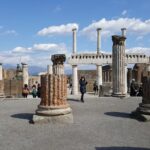
Then you step into the Forum of Pompeii, the heart of public life. Here, the idea is bigger: religion, commerce, and politics all share the same open area. This is one of the best stops for helping kids understand that ancient cities were not only temples and palaces. They were also workplaces and social hubs.
A practical tip for families: ask your guide to point out what would have felt important to people at the time. When you see the Forum as a place for decisions and transactions, it is much easier for children to remember what they just saw.
Temple of Apollo: where religion and politics mixed
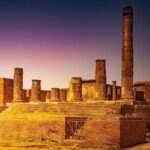
The Temple of Apollo adds the religious side of Pompeii’s “public life” picture. Your guide frames it as one of the most revered sanctuaries in the city, dedicated to the god tied to music, prophecy, and the arts.
This stop is atmospheric for a simple reason. Temples are designed to feel ceremonial. Even with the site as it is today, you can see how a sanctuary would command attention and shape community rituals.
It also helps you connect the dots between belief and public life. In Roman culture, religion was not separate from politics and civic identity. It was part of how decisions, ceremonies, and public meaning were organized.
If your family likes story-based learning, this is a great place to ask for details about how people might have participated in rituals. You will get more out of the columns and altar when you have a picture of the social moment around them.
You can also read our reviews of more guided tours in Pompeii



Macellum market stop and the food world of Pompeii

Now you get to the stuff people thought about every day: food and shopping. The Macellum was Pompeii’s main indoor market, and it is a strong “everyday life” contrast to the Forum’s civic spaces.
Your guide shows how stalls and counters would have worked, and how ingredients moved through the market. You get a sense of how people purchased and traded fish, meat, produce, grains, and spices. That is the kind of detail that makes ancient ruins feel personal, because everyone understands hunger and meals.
The Macellum also gives you a clear sense of behind-the-scenes operations, like storage areas and how the market functioned beyond the front display. For kids, this stop often lands because it feels like a real place, not just a monument.
Forum Baths and Casa del Fauno: bathing culture and elite life
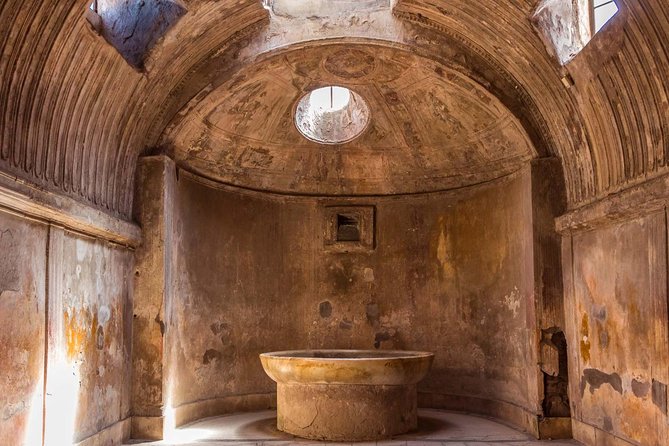
One of the most satisfying stops is the Terme del Foro (Forum Baths). Bathing in Roman cities was not only about hygiene. It was social time and business time. Your guide leads you through the preserved thermal rooms, where you can admire frescoes and stucco decoration, and also see original changing areas and marble basins.
This stop helps you understand Roman comfort and routine. It also works well for families because it gives you a break from open-sky walking, and the rooms are visually interesting even for younger children.
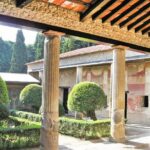
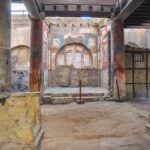
Then you move to Casa del Fauno, the House of the Faun. This is the luxury contrast, showing elite domestic life. Your guide highlights courtyards, the mosaic work including the famed “Alexander Mosaic,” and how art and architecture were used to display status.
The best part of pairing Baths with this mansion is pacing. You can compare everyday routines with wealthy lifestyle in a short stretch of time. That makes the social spread of Pompeii easier to grasp.
Via dell’Abbondanza and Insula of the Chaste Lovers: daily life and city density
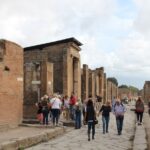
Walking along Via dell’Abbondanza is where Pompeii starts to feel like a lived-in city street. This was the busiest commercial route, lined with workshops, bakeries, taverns, and homes. Your guide connects the street to how trade and errands worked, including water fountains and raised stepping stones that shaped the flow of daily movement.
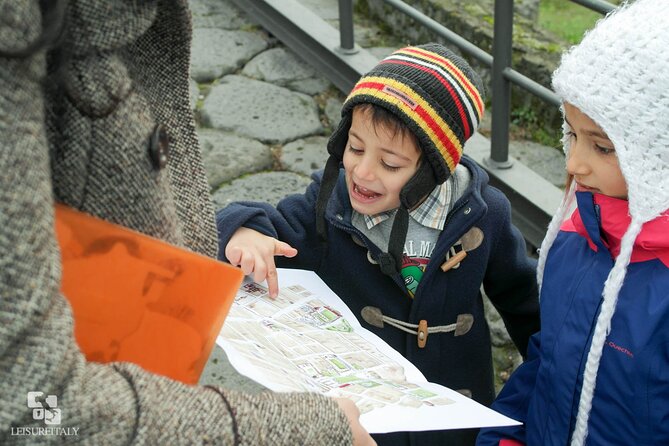
If your kids like “I spy” style challenges, this is a fun place to ask them to identify the types of places they think existed on the street. Even without turning it into a game, you can use the street scene to make ancient routines feel recognizable.
Then you reach Insula dei Casti Amanti, the Insula of the Chaste Lovers. Here, the experience shifts to interpretation. Your guide gives you an elevated viewpoint that helps you see how the block is arranged, from courtyards to working spaces.
This stop is especially helpful when families struggle with visualizing multi-room houses. From above, you can see how dense urban construction was and how many roles fit into one block.
Teatro Grande: sit where performances once happened
At the Teatro Grande (Grand Theatre), you step into the open-air performance space where comedies and tragedies once played to large audiences. Your guide leads you into the theatre bowl, and you can sit on original stone tiers, which makes it far more real than just standing and looking.
This is a high-reward stop because it adds sound and timing to the visual ruins. Your guide helps you imagine how voices might project across the space, and from the upper seats you also get wider views of surrounding ruins.
For families, this can be a calm reset point. It is structured seating time, and kids often enjoy the idea of acting and storytelling. Adults get the added satisfaction of picturing civic culture, not just daily chores.
Volcano views from the bottom, plus Antiquarium context
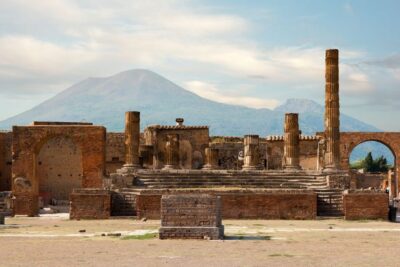
Pompeii’s views are part of the emotional hook of the whole site. In this tour you see the volcano from the bottom. That means no drive to the top and no need to hike uphill. It is a practical approach that still delivers the “wow, that eruption changed everything” feeling.
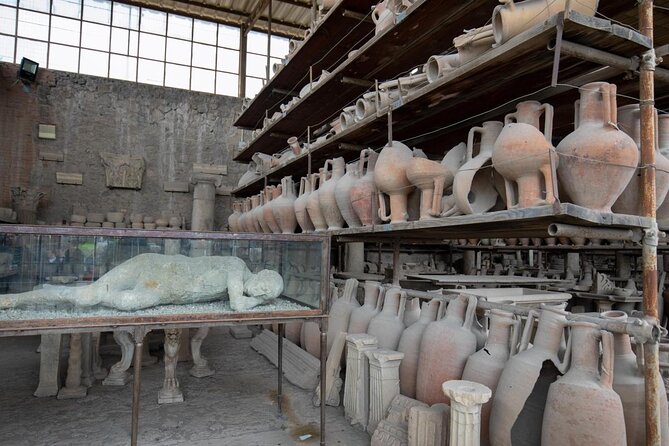
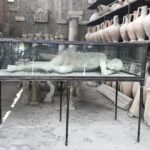
Then you head to the Antiquarium di Pompei, where the story gets anchored by objects. This is where you connect ruins in the open air with items that once lived in homes, shops, and temples. You see statues, frescoes, daily objects, and powerful casts related to the victims.
This museum stop matters because the open archaeological park can feel like a series of scenes. The Antiquarium gives you context, so when you look back at the streets and buildings, you understand what they contained and why the site still hits hard.
The best strategy here is to slow down. If your family is tired, tell your guide you want the key takeaways first, so everyone still leaves with a clear understanding.
Price and value: what $457.02 per person is really buying
Let’s talk money in plain terms. At $457.02 per person, this is not a budget add-on. You are paying for:
- A private family guide (English)
- Transport and tickets included
- A route built to keep the visit comfortable for kids, not just efficient for adults
- Mobile ticket handling, plus flexible pickup in the Naples and Sorrento area
So the value depends on your travel style. If you are the type who hates crowds, wants direct answers, and wants to keep your children engaged, the cost starts to make sense. Pompeii is big, and with a private guide you do not waste time figuring out what matters most.
If you can handle crowds and you already know Pompeii basics, you might get a similar set of ruins on your own for less. But you would lose the tailored pacing, the explanations matched to your family, and that extra layer of meaning that turns stones into daily life.
My practical rule: if your group includes kids, or if you want a stress-free day with someone managing the flow, this price feels more justified.
Who this tour suits best
This is best for families who want Pompeii without turning it into a long endurance event. The moderate fitness requirement and walking-focused route make it realistic, as long as you bring the right shoes and plan for sun if you are visiting in the hotter months.
It also fits travelers who like structure and context. The stops hit civic life, religion, markets, baths, domestic luxury, and performance culture. That variety helps different ages and interests stay interested.
If your group prefers pure self-guided wandering with no explanations, this might feel pricey. But if you want someone to translate the city into stories you can actually use, you will get a lot out of it.
Also note: service animals are allowed, and the tour is near public transportation, which can help if you need backup options for any day-of timing adjustments.
Should you book this private Pompeii family tour?
Yes, if you want Pompeii with a guide that can tailor the pacing to your family and keep everyone engaged. The combination of private format, English guidance, and a smart mix of civic, everyday, and cultural stops makes this a strong choice for families with limited time.
I would especially book it if you value two things: getting good explanations without crowd chaos, and seeing major highlights without guessing what to prioritize. At $457.02 per person, it is a splurge, but it is a splurge that buys time, clarity, and a smoother day.
If your group is flexible with walking and you can handle a half-day visit, you should feel good about booking.
FAQ
How long is the Pompeii private family tour?
It runs about 4 to 5 hours.
Is pickup available?
Yes. Pickup is flexible, and you can meet anywhere within the Naples and Sorrento area.
What language is the tour offered in?
The tour is offered in English.
Are tickets included?
Yes. Admission ticket details are included for the Pompeii archaeological park portion, and the other listed stops show admission as free.
Is this a private tour or a group tour?
This is a private tour/activity, and only your group will participate.
What level of walking is required?
You should have a moderate physical fitness level.
What should I bring for the walk?
Wear appropriate walking shoes. If you visit from May to September, bring sun gear.
What is the cancellation policy?
Free cancellation is allowed. You can cancel up to 24 hours in advance for a full refund. If you cancel less than 24 hours before the start time, the amount you paid is not refunded.
More Tickets in Pompeii

More Tours in Pompeii

More Tour Reviews in Pompeii
Not for you? Here's more nearby things to do in Pompeii we have reviewed





Tour Reviews, compared.
 ★ 4.8Pompeii: Entry Ticket and Guided Tour with an ArchaeologistFrom $3519,459 reviews
 ★ 4.2Pompeii: Entry Ticket with Optional Audio GuideFrom $2612,360 reviews
 ★ 4.8Pompeii: Small Group Tour with an ArchaeologistFrom $4012,264 reviews
 ★ 4.3Pompeii Ruins & Mount Vesuvius Day TourFrom $12011,459 reviews
 ★ 4.6Sorrento, Positano and Amalfi Full-Day TourFrom $10710,988 reviews
 ★ 5.0Sorrento, Positano & Amalfi Coast – Small Group TourFrom $768,643 reviews
 ★ 4.6Catacombs of San Gennaro Entry Ticket & Guided TourFrom $157,941 reviews
★ 5.0Pompeii Small Group Tour with an ArchaeologistFrom $356,593 reviews
★ 4.6Catacombs of San Gennaro Entry Ticket & Guided TourFrom $157,941 reviews
★ 5.0Pompeii Small Group Tour with an ArchaeologistFrom $356,593 reviews